Home Blog Page 4188

Chinese military aircraft makes first public landing on disputed island

0

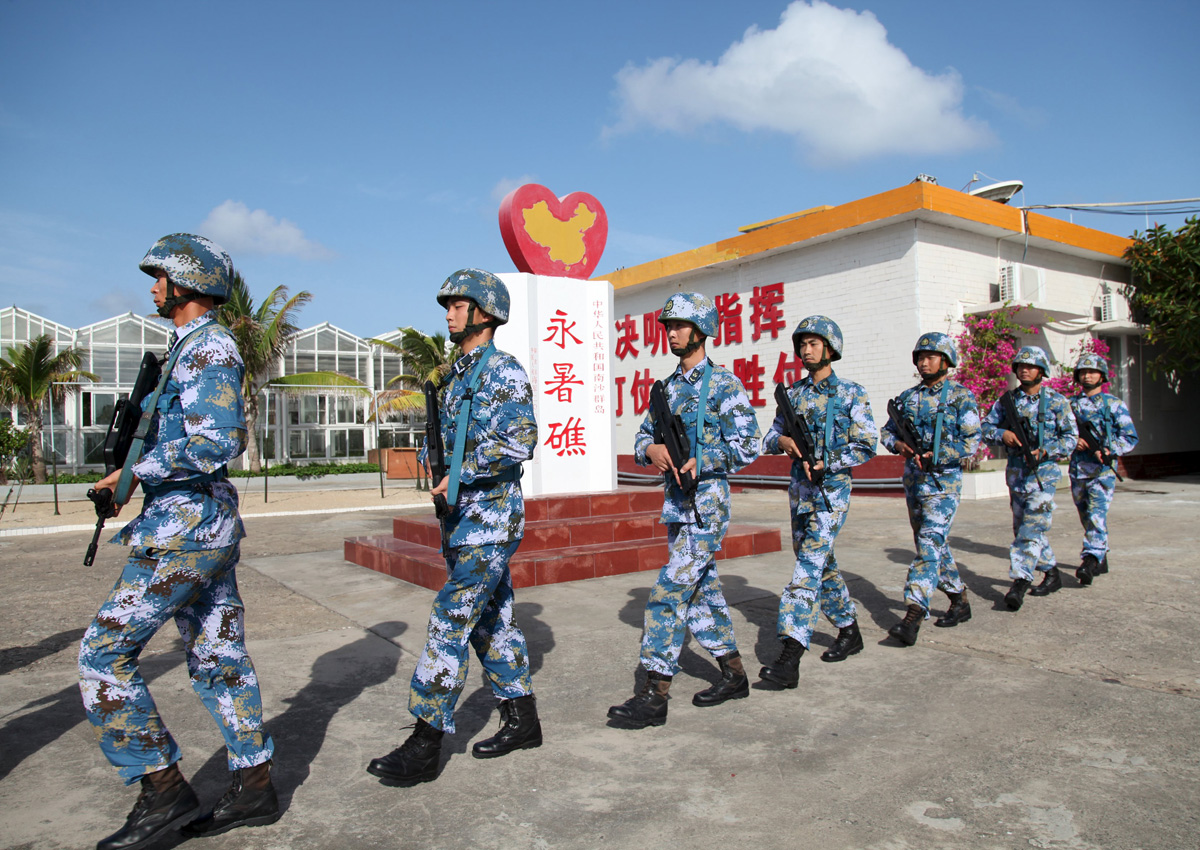
A Chinese military aircraft has for the first time publicly landed at a new airport on an island China has built in the disputed South China Sea, state media said on Monday, raising the prospect that China could base fighter jets there.

The United States has criticised China’s construction of artificial islands in the South China Sea and worries that it plans to use them for military purposes, even though China says it has no hostile intent.

The runway on the Fiery Cross Reef is 3,000 metres (10,000 feet) long and is one of three China has been building for more than a year by dredging sand up onto reefs and atolls in the Spratly archipelago.

Civilian flights began test runs there in January.

In a front-page story, the official People’s Liberation Army Daily said a military aircraft on patrol over the South China Sea on Sunday received an emergency call to land at Fiery Cross Reef to evacuate three seriously ill workers.

They were then taken in the transport aircraft back to Hainan island for treatment, it said, showing a picture of the aircraft on the ground in Hainan.

It was the first time China’s military had publicly admitted landing an aircraft on Fiery Cross Reef, the influential Global Times tabloid said.

It cited an military expert as saying the flight showed the airfield was up to military standards and could see fighter jets based there in the event of war.

The runways would be long enough to handle long-range bombers and transport aircraft as well as China’s best jet fighters, giving it a presence deep in the maritime heart of Southeast Asia that it has lacked until now.

More than US$5 trillion (S$6.79 trillion) of world trade is shipped through the South China Sea every year. Besides China’s territorial claims in the area, Vietnam, Malaysia, Brunei, the Philippines and Taiwan have rival claims.

Image: 
Category: 
Publication Date: 
Monday, April 18, 2016 – 12:07
Send to mobile app: 
Source: 


Story Type: 
Others

Source link

On the menu: Healthier meals across NUS campus

0

The National University of Singapore is going healthy campus-wide soon, with every stall to have information about the calories in their dishes.

The institution engaged a vendor this year to help count the calories in hundreds of dishes across all the food stalls and dining outlets on campus, starting with the science canteen last month.

Calorie information will eventually be displayed on the menus of all the stalls over the next few years.

Mr Foo Tung Mooi, director of NUS’ office of campus amenities, said the initiative aims to help students, staff and visitors make informed dining choices.

Last year, some of the university’s dining outlets were certified by the Health Promotion Board as part of its Healthier Dining Programme (HDP), which aims to increase accessibility to healthier food.

Under the scheme, which started in 2014, food stalls must provide at least one 500-calorie meal in their menus.

More than 1,500 outlets islandwide are involved in the HDP.

Tenants can work with qualified wholesalers under the HPB to get subsidised healthy ingredients, and chefs are trained to relook ingredients and cooking methods.

Dining outlets across five canteens, two foodcourts and 10 restaurants and cafes on NUS’ Kent Ridge and Bukit Timah campuses joined the HDP last year.

Other tertiary institutions such as Nanyang Technological University, SIM University and Singapore Management University also have some dining outlets that are HDP partners.

NUS said it does not track the obesity rates of its undergraduates, but The Straits Times reported in February that recent studies show that rising obesity in children and young adults will push up the rate of diabetes in Singapore.

A 2010 survey here showed that one in nine adults aged between 18 and 69 was obese, double the rate in 1992.

Obesity has been growing at a faster rate in people aged below 40. Weight gain begins when they start working and there is a drop in physical activity, say experts.

Obesity among schoolchildren has also risen – from 11 per cent in 2013 to 12 per cent in 2014, the Education Ministry said.

University food-stall operators said a good proportion of students choose the healthier meals on their menus.

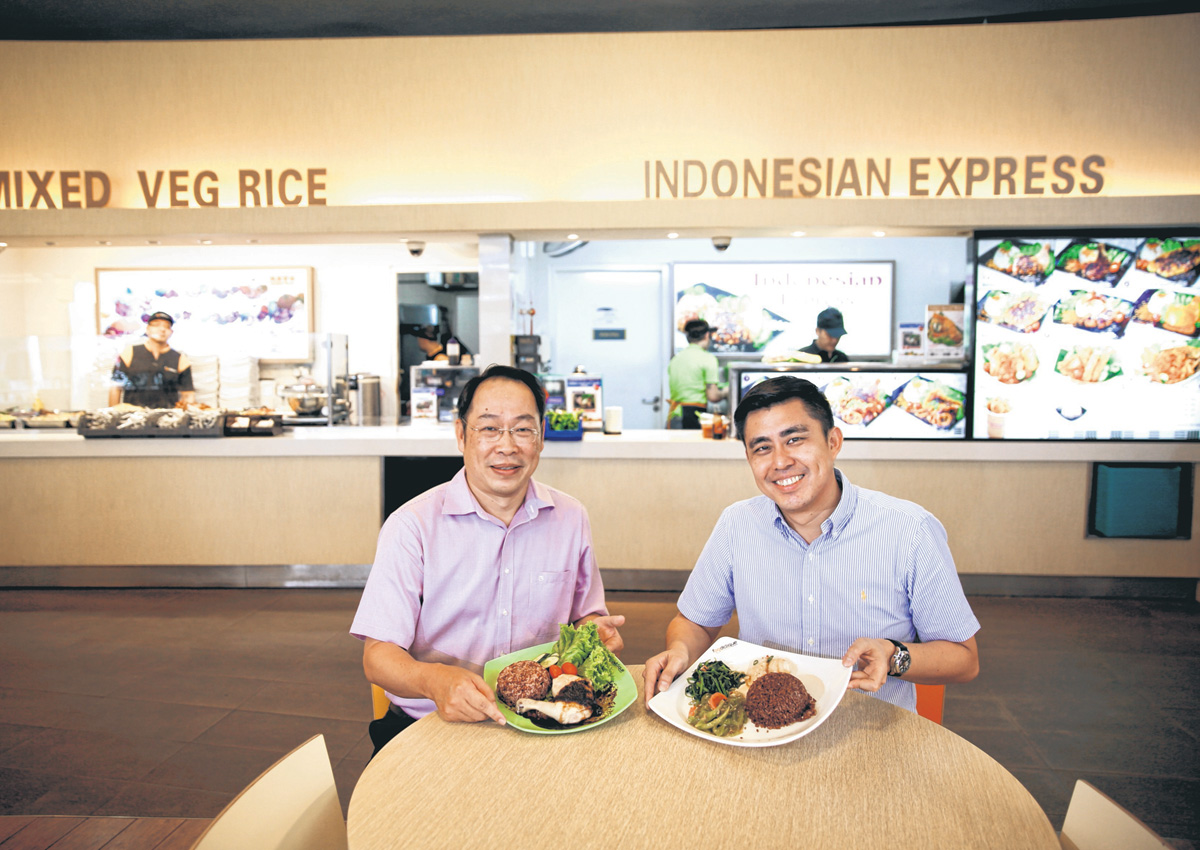
Mr Alson Ng, operator of Indonesian Express, which serves dishes such as ayam panggang and ayam penyet at its four stalls in NUS, said 20 per cent to 30 per cent of students and staff choose the healthier option – steamed chicken with brown rice.

The dish has 475 calories compared with the 650 calories of the grilled chicken set with white rice.

His stalls have also changed their preparation methods, by boiling the chicken to remove excess oil before grilling or frying it. This removes about 30 per cent of oil, said Mr Ng. “Students naturally like the fried or grilled options, but it’s good that they have the choice to eat healthily when on campus where many of them spend a lot of time,” he said.

“During lunchtime, the brown rice can be sold out within an hour. It costs just 20 to 30 cents more to switch to brown rice.”

Mr Sunny Peh, who runs FoodClique, a foodcourt at the NUS University Town, said: “Initially, the uptake (of the healthier dishes) wasn’t that much but, over time, with knowledge and publicity on healthier dining, people become more aware of healthier living.”

Mr Peh, who also owns a mixed vegetable stall at the foodcourt, said that besides using healthier oil, up to 70 per cent of the items at his stall are now vegetable dishes, up from less than 50 per cent in the past. There are also more dishes that are steamed or boiled, he said.

NUS science undergraduate Abigail Lai, 23, eats brown rice at her residential college, but said most undergraduates do not bother about healthier dining.

“Maybe it’s a lack of knowledge about food and diet, or they don’t think it’s very important,” she said. “Healthy food choices should start now, at a young age. Some things like calcium intake can’t be fixed after the age of 30.”

This article was first published on April 18, 2016.
Get a copy of The Straits Times or go to straitstimes.com for more stories.

Image: 
Category: 
Publication Date: 
Monday, April 18, 2016 – 17:10
Send to mobile app: 
Source: 


Story Type: 
Others

Source link

Zika virus 'likely to reach S'pore, so mosquito control vital'

0

Local travel patterns make it “almost inevitable” that the Zika virus will find its way here, said Senior Minister of State for the Environment and Water Resources Amy Khor yesterday.

This is because Singapore plays host to many foreign visitors and residents travel abroad frequently, making imported Zika cases likely.

“While we have instituted measures to tackle the Zika threat, it is also critical for the community… to play an active role in preventing the breeding of mosquitoes,” said Dr Khor, who is also Senior Minister of State for Health.

The Zika virus is spread by the Aedes mosquito, which also transmits dengue. Cases have been reported in neighbouring countries, including the Philippines, Thailand and East Malaysia.

Two weeks ago, Vietnam reported its first two cases of the virus.

The US Centres for Disease Control and Prevention confirmed last week a definite link between Zika and infants born with microcephaly, or abnormally small brains.

Speaking to around 500 women at a seminar organised by the People’s Association (PA), Dr Khor said that with the proven link between Zika infections and microcephaly in babies, pregnant women will be “particularly concerned” if the virus becomes entrenched here.

It is the first time that the PA has organised a grassroots event focusing on Zika.

At yesterday’s seminar, participants learnt about the origins and effects of the Zika virus from Dr Ng Wee Tong, an occupational medicine specialist with ST Healthcare.

“It belongs to the same virus family as dengue,” he said. “And like dengue, people can get bitten but have no symptoms at all.”

Zika infections can appear very similar to dengue infections, as both share similar symptoms, such as rashes, headaches and muscle pains.

But those infected by the Zika virus also tend to have conjunctivitis, more commonly known as red eyes. Anyone who shows these symptoms should see a doctor immediately.

In February, the National Environment Agency announced that it was stepping up efforts to stamp out the Aedes mosquito.

These include training more than 5,000 grassroots volunteers to educate residents on preventing mosquito breeding, and deploying another 20,000 mosquito traps by June.

Former nurse Alice Goh, who attended the seminar, said she felt that people need to take the Zika threat more seriously. She has two daughters, both of whom are of child-bearing age.

“People tend to think that it’s so far away and it won’t come here, but we have to be very alert and aware,” the 68-year-old said.


This article was first published on April 18, 2016.
Get a copy of The Straits Times or go to straitstimes.com for more stories.

Image: 
Category: 
Publication Date: 
Monday, April 18, 2016 – 14:00
Keywords: 
Send to mobile app: 
Source: 


Story Type: 
Others

Source link

He brought in 30 foreigners for fictitious jobs

0

A Singaporean man who brought in 30 Chinese nationals to work for a non-existent construction company has been jailed for more than two years.

Lim Kien Peng, 46, obtained work passes for them between May and November 2013 on the pretext of employing them at MNF Investments and Holdings, of which he was director.

But the company was a shell with no projects or contracts and Lim had no intention of providing work for them.

The workers were left to fend for themselves and had to seek employment elsewhere.

Lim was promised $30,000 for his part in the scam, though he never received it. He was charged with 30 counts of obtaining work passes for foreigners for a non-existent business and convicted on five of them.

He was jailed for 27 months on Tuesday, the Ministry of Manpower (MOM) said yesterday. The ministry added that as there was no evidence to suggest that the workers were complicit in the scam, it did not take action against them.

All 30 have been sent back to China. Investigations revealed that two were made to pay $8,000 each to obtain work passes through Lim.

For each offence, Lim could have been jailed for at least six months and fined up to $6,000.

If convicted of six or more charges, he would have been liable for caning. He has since been permanently barred from employing foreign workers.

Mr Kevin Teoh, divisional director of MOM’s Foreign Manpower Management Division, said: “This is one of the more severe cases involving the setting up of a shell company… A strong deterrence is necessary.”

Two years ago, the MOM dismantled three syndicates involved in setting up seven shell companies to bring in about 500 foreign workers. Last July, 41 people involved in a similar syndicate were arrested.


This article was first published on April 18, 2016.
Get a copy of The Straits Times or go to straitstimes.com for more stories.

Image: 
Publication Date: 
Monday, April 18, 2016 – 14:00
Send to mobile app: 
Source: 


Story Type: 
Others

Source link

Indonesia tells Singapore to mind its own business over the haze issue

0

IN comments certain to rile Singaporean officials, Indonesia’s Environment and Forestry Minister Siti Nurbaya said Singapore should stop commenting on Indonesia’s efforts to combat haze and fires, and “focus on their own role.”

Indonesia’s neighbors, Singapore and Malaysia, are frequently victims of haze from fires in Indonesian territory in what seems to be an annual affair. Jakarta has often been accused of not doing enough to address the problem, and the minister’s comments suggest that it is irritated over the criticism it receives.

While strongly defending her government’s commitment to curbing land and forest fires, Siti questioned Singapore’s role in doing the same.

“We have been consistent in sticking to our part of the bargain, especially by attempting to prevent the recurrence of land and forest fires and by consistently enforcing the law. So, my question is – what has the Singaporean government done? I feel that they should focus on their own role,” said the minister, according to a foresthints.news report posted on Saturday.

“There is really no need to comment too much on the part Indonesia is currently playing. However, with all due respect to my Singaporean counterpart, what are they doing? And where has it got them?”

She cited Indonesian President Joko Widodo’s strict enforcement of laws against companies found to be responsible for fires (even through negligence) – in particular, firms based in Singapore – as evidence that Jakarta is doing its fair share.

“This is just one example of how we are not shirking our responsibilities and are doing what is expected of us.”

She also emphasized the difficulties involved in implementing anti-haze and anti-fire policies in a large and complex country like Indonesia.

“We really appreciate the input provided to us by our Singaporean neighbors and cherish our bilateral partnership, but I would respectfully ask them to stop making so many comments, particularly when it comes to the fires and haze-related issues. We each have our own part to play and we should focus on carrying this out. We have already formulated some major polices on our own initiative which we are busy implementing.”

There has been general perception in the region and elsewhere that Indonesia’s land and forest fires problem have gotten from bad to worse, raising questions about both Jakarta’s sincerity and ability in confronting the issue.

Last year in September, during a particularly severe forest fire season, Indonesia gave out more emissions per day than the average daily emissions from all US economic activity, reported the World Resources Institute citing data from the Global Fire Emissions Database.

The post Indonesia tells Singapore to mind its own business over the haze issue appeared first on Asian Correspondent.

Source link

SRC members vote to retain most incumbents

0

SRC members vote to retain most incumbentsSingapore Recreation Club members have given a resounding show of support for its current management team, voting in 10 incumbents for the 12 posts at stake.

Vice-president Sarbjit Singh – standing for the top post – scored the highest winning margin, warding off rival Steven Goh by about 200 votes.

The keenly watched election, held at SRC’s annual general meeting on Saturday, was pitched as a choice between continuing with the team elected two years ago or reverting to the previous one led by veteran president Johnny Goh.

In the 2014 election, nine of the 12 posts went to members of the incumbent team, with Dr Johnny Goh and Mr Steven Goh among the three of the old guard who were re-elected.

Members of Dr Singh’s team re-elected this year include Mr Fabian Chan, who is the new vice-president, finance member Derrick D’Souza and games control board chairman Ronnie Chua.

Dr Goh, who was president for 22 years, was barred from running after he was suspended for eight months after a disciplinary probe for, among other things, “soliciting signatures for a false and malicious resolution”. He failed in his appeal against the suspension last month.

Dr Singh, an orthopaedic surgeon, said Saturday’s result was “a mandate to continue with the positive improvements and changes we have brought to the club “.

The committee plans to upgrade the gym’s facilities after members at the AGM approved a $185,000 budget boost for the purpose.

“As more and more members age and cannot be expected to take part in field games like football or hockey, a gym uplift would be an alternative,” said Dr Singh.

His other goal for the second term is to put in place a strong team to negotiate the club’s lease renewal terms with the Singapore Land Authority, expected to come up for review in 2018. “We will also try to minimise, if not stop, all the political infighting which members agree the club can do without,” he added.

Long-time SRC member Leo Meng Tong said he was “very happy” that most of the management had been re-elected, adding: “We want them to continue.

“They have brought back some sanity and peace and order to the club and that is what we want.”

Defeated rival Mr Goh told The Straits Times: “The members have spoken. I accept the members’ choice.” More than 900 members attended Saturday’s meeting.


This article was first published on April 18, 2016.
Get a copy of The Straits Times or go to straitstimes.com for more stories.

Image: 
Category: 
Publication Date: 
Monday, April 18, 2016 – 14:00
Send to mobile app: 
Source: 


Story Type: 
Others

Source link

Taking the hot seat in war on haze

0

Conservation veteran Nazir Foead is Indonesian President Joko Widodo’s frontman in the fight against the haze.

He is literally a man in the hot seat, and he knows he has to deliver where others failed.

As head of the newly created presidential Peatland Restoration Agency, he is tasked with leading a national effort to restore fire-prone peatlands to curb the annual fire risk.

To succeed, his agency will have to change the way bureaucrats, companies and farmers think about how they exploit the land – moving from development with little heed for the damage caused, to agricultural development that protects the land while benefiting communities and companies.

It’s a monumental challenge for a nation that has become synonymous with massive deforestation and rampant, poorly governed agricultural expansion.

But Mr Nazir, 49, an ethnic Chinese from Medan, is confident his agency can succeed. He said last year’s fires changed everything.

“The government was shocked to see what happened in 2015,” he told a sustainability conference in Singapore last Friday.

“I cannot emphasise more how serious Indonesia is, preparing actions, programmes and changing policies to prevent fires from happening. We understand that prevention actions have not been a focus.”

That had changed, he stressed.

He said he had the full support of the President and key ministries. But he faces a sceptical public and sceptical regional neighbours tired of seeing Indonesia’s forests and peatlands go up in smoke every year.

Mr Nazir, however, is used to getting his way. He spent 20 years at WWF coaxing bureaucrats and companies into making Indonesia a little greener.

Before becoming head of the peat agency in January this year, he led the Indonesia conservation initiative for the Climate and Land Use Alliance (CLUA), a collaboration by a group of United States foundations.

A key focus was encouraging palm oil as well as pulp and paper companies to be more environmentally responsible and to respect local communities. Preserving peatlands was another focus.

Mr Nazir brings that depth of understanding of the issues to his new ministerial-ranked role. Unlike many of his government peers, he does not belong to a political party, and has never worked in the bureaucracy or the corporate world. Thus, his new role represents a major shift in his career… and risks.

And those risks were daunting – so much so that he initially turned down the job, he told The Straits Times.

“I was in my comfort zone at the CLUA,” he said. “I loved the job. Leaving meant taking on a huge responsibility, maybe creating many more enemies in my career. But if we all were concerned about the risks in the first place, we would not start to make a change.”

“I believe in this President,” he added.

With Mr Joko, he shares a background in forestry. Both attended the forestry school at Gadjah Mada University, in Yogyakarta, although in different years.

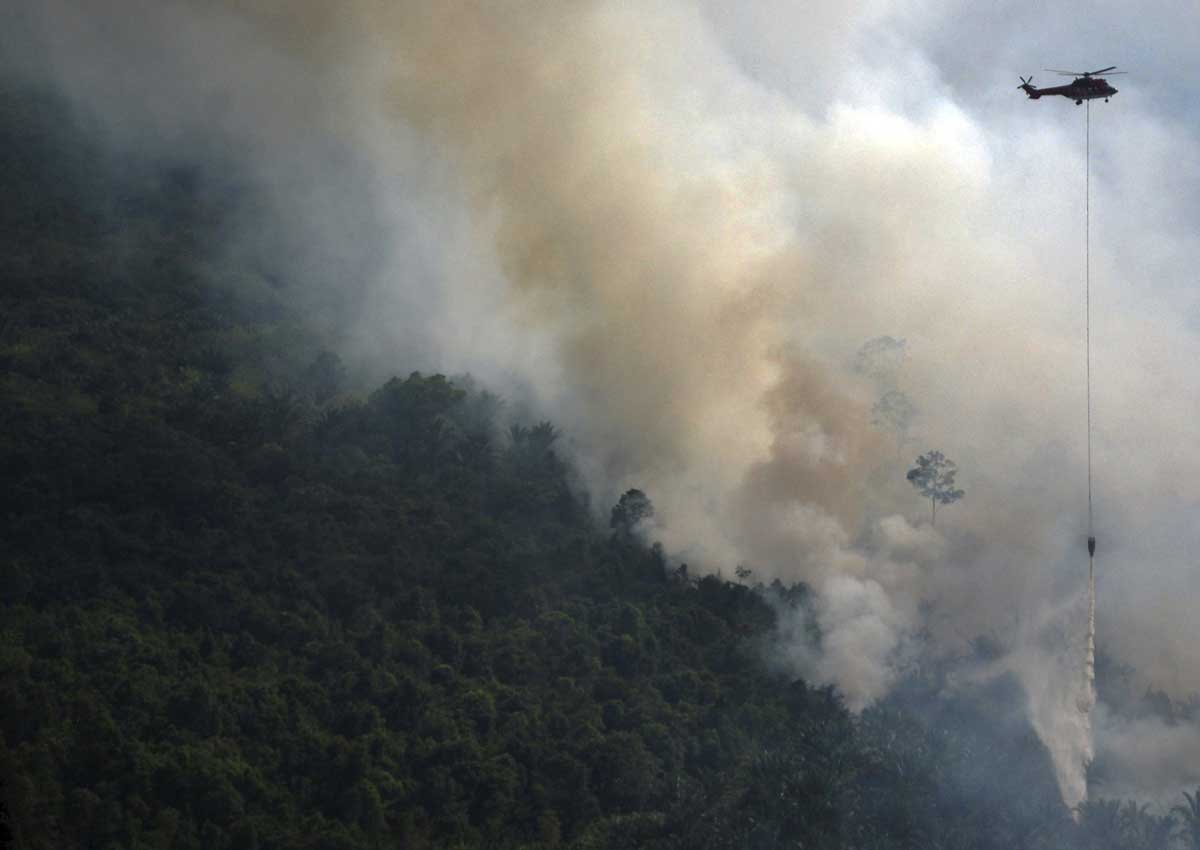
The new agency’s mission is to restore two million ha of peatlands within five years in seven provinces. Priority areas will be in Sumatra and Central Kalimantan, where most of last year’s fires raged. Nearly one million ha of peatlands went up in flames, producing the acrid smoke that blanketed the region.

Peat becomes highly flammable when cleared of forest and drained using deep drainage canals.

It can burn for weeks or months. Some peatlands are up to 8m deep, and an estimated 2 million km of canals have been dug over the years by loggers and plantation firms.

Damming the canals and reflooding the surrounding landscape is seen as the best way to reduce the fire risk.

But that pits Mr Nazir’s agency directly against companies with plantations on peatlands, as well as officials with vested interests in palm oil or other crops planted in peat.

On the sidelines of the sustainability conference organised by the Singapore Institute of International Affairs, Mr Nazir said his agency had already mapped 2.26 million ha of priority areas – sites where there have been a high fire frequency and where the peatlands are dry.

Of these, about 1.9 million ha are in cultivation areas, with 25 per cent on community lands. The remaining sites are in government conservation areas, which will be reflooded and returned to natural forest.

The agency is still finalising the map of areas to be restored, and companies are waiting to see how much of their land will be affected. But Mr Nazir noted that rewetting peatlands could benefit all sides.

“It is an easy logic. Instead of having these fires, we’re restoring the land and planting with agricultural crops, not only forest species, that increase Indonesia’s food security.”

He said there are about 100 species, including crops and timber, that can grow in flooded peatlands. These provide alternative incomes for companies and communities.

Land that is repeatedly burnt is already loss-making and non-productive, said Mr Nazir. Restoring it makes economic sense, and can help end conflicts between communities and companies.

“If the conflict can be resolved, the land can be flooded, and it can be planted with certain crops that benefit the companies and the farmers, everybody wins,” said Mr Nazir.

That runs counter to the view that clearing peatlands and burning the forest is profitable. In reality, doing so simply primes the land for more fires in future, said Mr Nazir.

It is this change in mindset that he hoped would take root.

Already, he said, the main pulpwood companies are keen to explore growing alternative peatland timber crops that can be used in their mills. He also pointed to the major palm oil and pulp firms supporting zero-deforestation, zero fires and zero peatland clearance in their green policies.

He said his agency had set a target of restoring 600,000ha by the end of this year and another 400,000ha next year, and had already begun work in Riau province near Singapore.

Moreover, he had received about US$135 million (S$183 million) in funding pledges from Norway, the US, the European Union, Britain and soon Japan, with major additional funding from the Indonesian government from next year.

He said the idea was to mainstream peatland restoration, and community livelihoods, so it became standard practice. That would be like hitting the jackpot, he added.


This article was first published on April 18, 2016.
Get a copy of The Straits Times or go to straitstimes.com for more stories.

Image: 
Category: 
Publication Date: 
Monday, April 18, 2016 – 14:00
Keywords: 
Send to mobile app: 
Source: 


Story Type: 
Others

Source link

Forest fires: Five cases going to Indonesian A-G

0

Indonesia’s Environment and Forestry Ministry will submit five cases of land and forest fires to the Attorney-General’s office by the end of the month, a ministry official told The Straits Times last Friday.

The cases are among 26 that are under investigation.

Mr Shaifuddin Akbar, a sub- director at the ministry who is in charge of coordinating the investigations, declined to name the culprits but said the cases involved illegal fires in Riau, Jambi, South Sumatra and Central Kalimantan provinces during last year’s transboundary haze crisis.

The ministry is pressing criminal charges against errant companies and smallholders accused of clearing land by burning, which in turn triggered uncontrolled fires between August and November last year. These offences carry a maximum sentence of 10 years and a maximum fine of 10 billion rupiah (S$1 million).

The Attorney-General’s office will write up indictments based on the criminal investigation dossier from the ministry, and table them in the district courts.

Mr Shaifuddin said the criminal cases had been slow due to an inadequate number of personnel.

“We are overloaded. Only 10 investigators are working on the 26 cases,” he told The Straits Times, adding that only five cases had reached an advanced, cross-examination stage.

His ministry has filed a request to the Law and Human Rights Ministry to boost the number of investigators. He said he needed more officials with an environment case investigator licence.

“We can work at full speed only after then,” Mr Shaifuddin said.

The criminal investigations are in addition to the administrative sanctions the Environment and Forestry Ministry imposed on companies late last year. Some had their business licences revoked, others suspended.

Concurrently, Indonesian police are also investigating companies and individuals that used illegal slash-and-burn techniques to clear land during last year’s haze season. None of these had reached the Attorney-General’s office.

Under Indonesian law, any criminal investigation dossier drawn up by an authorised body – including the police and the Environment and Forestry Ministry – must be submitted to the Attorney-General before trials begin.

When asked by The Straits Times at a recent doorstop for an update on prosecutions of companies accused of illegal land clearing, Attorney-General Muhammad Prasetyo said: “I haven’t been updated of any progress on this.”

wahyudis@sph.com.sg


This article was first published on April 18, 2016.
Get a copy of The Straits Times or go to straitstimes.com for more stories.

Image: 
Category: 
Publication Date: 
Monday, April 18, 2016 – 14:00
Send to mobile app: 
Source: 


Story Type: 
Others

Source link

More consumers, businesses coming forward for mediation: CASE

0

According to CASE, the number of mediated cases increased 52 per cent from 125 in 2014 to 190 in 2015.

Source link

New BioScreen system to strengthen checkpoint security

0

SINGAPORE – A new BioScreen system will be introduced to screen the thumbprints of visitors arriving and departing at our checkpoints, the Immigration & Checkpoints Authority (ICA) announced on Monday (April 18).

ICA said that the the new system will be introduced progressively from April 20 onwards, at the passenger halls of the sea and land checkpoints, followed by the air checkpoints.

This will enable ICA to strengthen its verification of the identities of travellers.

With BioScreen, travellers aged six and above using the manned counters at immigration checkpoints will be required to scan both their thumbprints upon arrival and departure.

In the initial phase at the Woodlands and Tuas land checkpoints, the BioScreen system will be implemented at the manned counters within the passenger halls. Bioscreen clearance for those travelling by motorcycles, cars and lorries will be implemented at a later date.

Singapore citizens and residents who use the enhanced Immigration Automated Clearance System (eIACS) or automated clearance lanes for departure and arrival will not be affected by the new system.

Eligible Singaporeans and residents are encouraged to use these automated lanes for immigration clearance. Those who use the manned counters at our checkpoints will be required to provide their thumbprints via the BioScreen system.

All foreign visitors are also required to scan their thumbprints each time theu arrive and depart Singapore.

debwong@sph.com.sg

Image: 
Category: 
Publication Date: 
Monday, April 18, 2016 – 11:31
Send to mobile app: 
Source: 


Story Type: 
Rewritten Story

Source link