Home Blog Page 4176

His art show is expression of hope despite pain

0

The nightmare began with a ringing in Mr Muhammad Khairul Ikwan’s ears last July.

Then he developed a migraine so severe he could barely stand and had to crawl to the toilet.

Doctors discovered he had Stage 4 colorectal cancer, which had spread from his intestines to his brain.

At age 23, the young man has lost much of his vision, hearing and hair, and no longer parties as he once did with friends.

But the Nanyang Academy of Fine Arts (Nafa) graduate is not wallowing in despair. Instead, he is launching an exhibition of 87 art pieces at the school on Thursday.

Titled Hope, the works represent his experience battling his illness.

He said: “I want people to see that hope can be anything – even negative things, like illness, can become positive things as well.

“I don’t want people to see pain as a hindrance to stop them from what they want to do in life. “

Jointly organised by Nafa and HCA Hospice Care, the exhibition fulfils one of Mr Khairul’s greatest wishes under the Star Pals palliative care programme for youth with life-limiting illnesses.

Mr Khairul is the second of four children. His mother is a secretary in a law firm, while his father is a safety supervisor in a shipping company.

Ms Nur Alwiyah, 25, a customer service officer at a call centre, said her brother is expected to live about nine more months .

Said Mr Khairul: “It’s shocking to go from healthy to seriously ill, but anger won’t make the illness go away.”

He now has chemotherapy fortnightly and wears a stoma bag to collect his waste, which goes out of his body through a hole in his abdomen.

In the four months he spent on art, he had to battle the side effects of chemotherapy, such as fatigue and vomiting but he soldiered on.

He used to listen to music while painting, but having lost most of his hearing. He now reads song lyrics or poetry for inspiration.

His favourite work in the exhibition is a series titled Spirits & I (Eye), a set of six watercolour paintings.

Three are in red and have an eye motif, which he describes as “surgical, with veins”, while three in blue are “water spirits rising up”.

“Because of my affected vision, I am going through so much pain. But at the same time, there are so many people lifting my spirits,” he said.

Apart from paintings, he is also exhibiting mixed media works with synthetic hair, photographs, a video and a fabric piece.

Calling art a therapeutic outlet, Mr Khairul said his role model is Japanese artist Yayoi Kusama, who uses her artwork as a way to express her mental illness.

The exhibition, which is free, will be at the Nafa on-air gallery from April 21 to 25.

And he is already dreaming of his next project, a photography exhibition with himself as the subject.

He said: “What’s the point of giving up when you’re still living? The only moment you give up is when you’re dead.

“If I can recover, it will be a miracle, but if I can’t, I will just keep on fighting, make more works of art and leave a legacy.”


This article was first published on April 19, 2016.
Get a copy of The Straits Times or go to straitstimes.com for more stories.
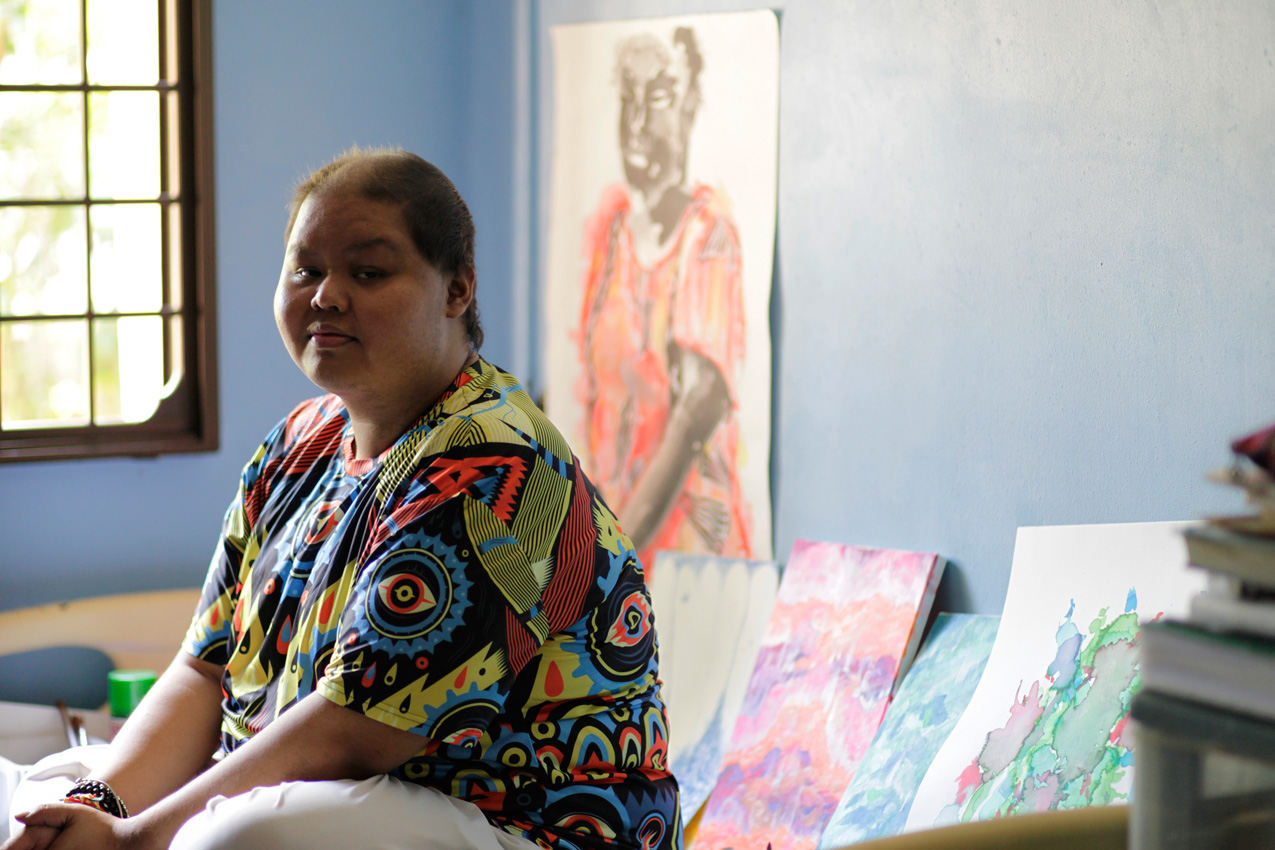
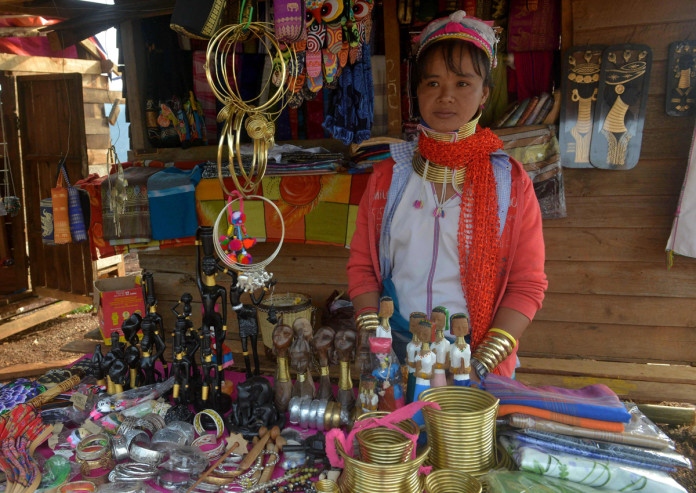
Image: 
Publication Date: 
Tuesday, April 19, 2016 – 17:00
Keywords: 
Send to mobile app: 
Source: 


Story Type: 
Others

Source link

Myanmar's 'long necked' women hope to turn tourism into homecoming

0

PHYO HEIN KYAW, MYANMAR – Wearing a stack of bronze neck coils – a sign of beauty for her Kayan tribe – Mu Par dreams of a time when all “long-necked” women can return to Myanmar from Thailand where they are a tourist attraction.

For years Kayan women and girls have been driven across the border by poverty and conflict to earn money posing in holidaymakers’ pictures in purpose-built Thai villages decried by rights campaigners as “human zoos”.

Now several have returned to their remote native Panpet area in Kayah state, Myanmar, with an entrepreneurial plan to reverse the flow of departures as their once junta-ruled homeland emerges from decades of solitude.

Mu Par came home just a few months ago having saved enough money after 14 years working in Thailand.

She now runs one of a dozen neat little shacks selling locally-made wooden dolls, scarves and individual bronze neck rings – giving tourists a more ethical window into their unique culture.

Lining up a neat row of handmade “long-neck dolls” at a new craft market, Mu Par hopes to entice tourists to her eastern Myanmar homeland, and provide for her four children, aged between four and 15.

“In Myanmar my children can attend school and also I am happy to be among my relatives,” the 33-year-old told AFP, as a handful of tourists milled through the area.

Once the preserve of intrepid travellers as it languished under junta rule, Myanmar is now a hot new tourist draw.

Arrivals have doubled in the past five years and numbers are expected to surge under a new government led by Aung San Suu Kyi’s pro-democracy party.

Much of tiny Kayah state was off limits to foreigners until recently.

Authorities now hope the region’s emerald hills and languid waterways will become the country’s next top travel destination.

Mu Par and her neighbours from Panpet’s cluster of five hamlets grouped together to build the market.

They share the profits from the 5,000 kyat (S$5.70) visitor entrance fee.

“If we can get many tourists here, we want all the Kayan girls in Thailand to come back,” she told AFP.

From as young as five years old, Kayan girls are given up to ten neck rings to wear, they then add a new one approximately every year until adulthood.

The practice, which gives them a giraffe-like appearance, painfully compresses their shoulders and collarbones, rather than actually stretching their necks.

A grown woman can wear as many as 25 rings, weighing a total of five kilos (11 pounds).

One local legend suggests women began wearing the rings to protect themselves against tigers, who once roamed the region in large numbers and bite the necks of their prey.

Men in the village also used to wear face-shaped masks on the backs of their heads in a bid to ward off tiger ambushes, according to local people, although the practice has since died out.

Fewer women now wear the coils, which force them to keep looking straight ahead.

Families often cannot afford the costly, handcrafted rings, while many young girls feel they are an impediment to getting a job outside of their region.

The women can remove their rings with the help of a specialist and their shoulders and collarbones can eventually return to normal, depending on the age when they are taken off.

Several dozen women and girls still wear the traditional bands, including those at the new handicraft market in Panpet.

Until recently they spent much of the year in Thailand, earning around 3,000 baht (S$115) a month in the tourist attraction villages, where most of the money goes to Thai tour agents.

“Asking them to pose for photographs for money is acting like they are in a human zoo,” said Phyoe Wai Yar Zar a Myanmar tourism official.

“Instead (in their home villages) people can buy their products like food, handmade crafts and souvenirs to support them.”

Image: 
Category: 
Publication Date: 
Tuesday, April 19, 2016 – 14:07
Keywords: 
Send to mobile app: 
Source: 


Story Type: 
Others

Source link

Japan quake survivors struggle with shortages, search for missing goes on

0

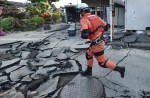
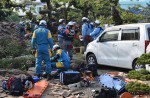
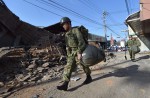
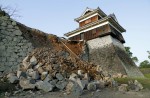
Survivors of a series of Japanese quakes measuring up to 7.3 struggled on Tuesday with shortages of food and water as the death toll rose to 44 and rescuers dug through mud and rubble for the missing, but hopes dimmed of finding them alive.

Japanese stocks bounced back from Monday’s slide, with electronics manufacturer Sony Corp climbing 6.7 percent after saying its image sensor plant in Kumamoto, shut after the quake, makes components mainly for digital cameras.

Flights resumed to the damaged airport in the southwestern area of Kumamoto, which suffered the worst of the damage, but aftershocks continued to rattle the region and survivors spent another night huddled in cars and evacuation centres, afraid to return to their damaged homes.

“It’s really tough,” one woman told TV Asahi, her two-month-old baby sleeping in blankets on the floor, at her side. “There’s no milk and only the diapers we brought with us. Once they run out, there’s nothing.”

About 30,000 rescuers dug through mud and splintered houses, and Japanese media reported that one of those missing was pulled out without signs of life on Tuesday, four days after the worst quake struck in the early hours of Saturday.

Eight remain missing and more than 1,000 were injured.

More than 94,000 people remained in evacuation centres, cut off from the world by destroyed roads, but television footage showed relief goods being unloaded from planes at the main airport and water services gradually being restored.

“These quakes have produced massive damage, and police, firemen and military personnel are making every effort to restore things,” Chief Cabinet Secretary Yoshihide Suga told a news conference, warning of further aftershocks.

A 5.8-magnitude quake hit the area late on Monday. Of more than 600 quakes hitting Kyushu since Thursday, more than 87 have registered at least a four on Japan’s intensity scale, strong enough to shake buildings.

The Kumamoto region is an important manufacturing hub and home to Japan’s only operating nuclear station, which has been declared safe.

The benchmark Nikkei rose 3.7 percent to 16,869.29 in mid-morning trade, with major exporters rebounding sharply after tumbling on Monday, hit by a stronger yen and worries that the earthquakes could disrupt their supply chains.

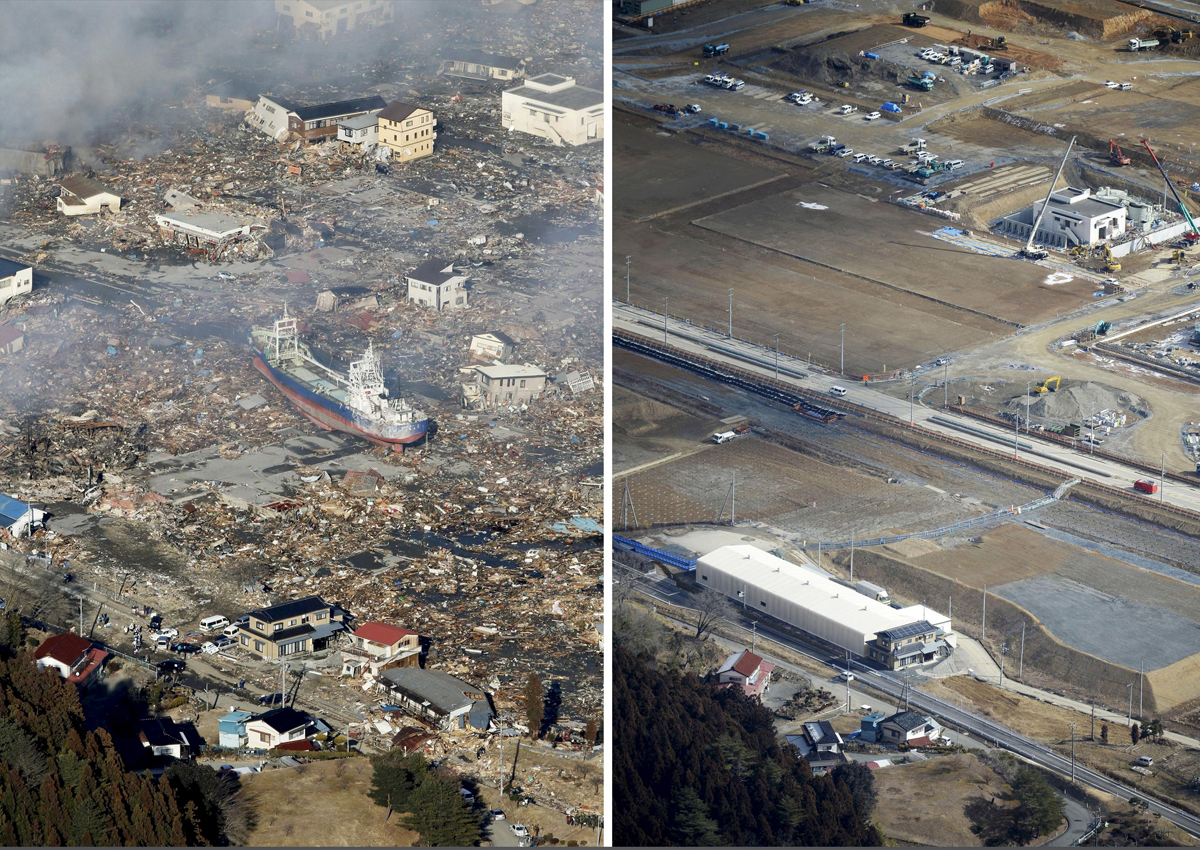
A 9-magnitude quake and tsunami in northern Japan in March 2011 caused the worst nuclear crisis since Chernobyl in 1986, shutting down the nuclear industry for safety checks and sending radiation spewing across the countryside.

Nearly 20,000 people were killed in the 2011 tsunami.

Image: 
Category: 
Publication Date: 
Tuesday, April 19, 2016 – 13:53
Keywords: 
Send to mobile app: 
Source: 


Story Type: 
Others

Source link

Panel advises LTA to replace power supply assets 5 years early

0

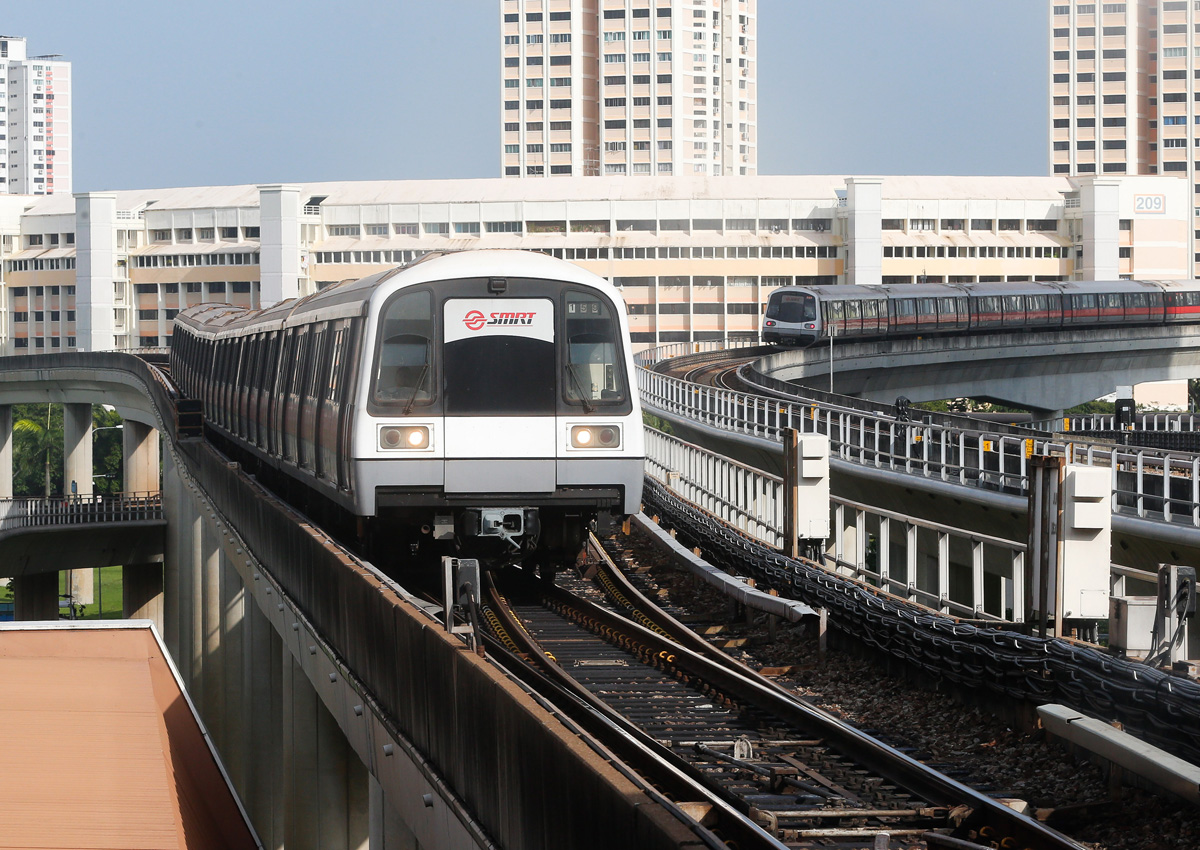
SINGAPORE – An Independent Advisory Panel (IAP) commissioned by the Land Transport Authority (LTA), has reviewed and recommended improvements to the MRT and LRT power supply systems.

According to LTA, IAP recommended several changes to operating standards and recovery actions to improve rail reliability.

It added that the design of the rail system should provide for a maximum downtime of five minutes during faults, with system recovery achieved within 20 minutes.

Here are a few recommendations:

1. Mitigate problems before they occur

– Monitor power equipment to detect faults early

– Consider replacing critical power supply assets five years before the end of specified lifespan

– Increase maintenance regime for assets due for replacement until they are fully replaced

2. Perform recovery options without affecting system performance

– Establishing the Intelligent Fault Identification System (iFIS) which will allow operators to pinpoint exact fault locations quickly

– Review protection systems so that they will trip only specific stretches when triggered.

3. Restore system performance quickly before fault escalates to power outage

– Enable faster switch-over to alternative power supply in the event of a loss of power supply

– Conduct exercises to hone operators’ familiarity with response and recovery efforts

– Create database to facilitate fault diagnosis for future incidents

Touching on the recommendations, LTA said that it is working with operators on the replacement schedule for ageing power assets.

It has also tested and will implement the Intelligent Fault Identification System for the Downtown Line, Thomson-East Coast Line and future lines. LTA will also expand this system to all existing lines.

It will also be replacing the voltage system to isolate power trips.

LTA added that it will work with operators to conduct technical exercises in a simulated live operating environment to improve recovery response.

Read the full report here

debwong@sph.com.sg

Image: 
Category: 
Publication Date: 
Tuesday, April 19, 2016 – 13:48
Keywords: 
Send to mobile app: 
Source: 


Story Type: 
Others

Source link

Aromatherapy diffuser fire death a 'tragic misadventure'

0

Six months after he died from a blaze he had unknowingly started, Mr Rizalludin Hassan’s four young children still miss him dearly.

“They look for their father still, (especially) my four-year-old son,” said his widow, Ms Nurul Asyikin Norman, 34, of their children aged one to nine.

The IT engineer, 34, was trying to light two aromatherapy diffusers in his master bedroom toilet on Oct 13 last year, when he unknowingly ignited vapours from an essential oil fluid, causing a flash fire.

He had second-degree burns on more than 80 per cent of his body and died in hospital nine days later.

Yesterday, State Coroner Marvin Bay found Mr Rizalludin’s death to be a “tragic misadventure”.

The extensive burns he suffered were from an “inadvertent flash fire”, the coroner said. “The circumstantial, forensic, testimonial and scene evidence points to the demise … to have arisen from an entirely accidental event.”

In his findings, the coroner warned users of aromatherapy diffusers to be mindful of the volatile nature of aromatherapy essential oils, and to adopt precautions when handling the fluids, particularly when refilling diffusers from high-volume refill containers.

Given that the lowest temperature at which the fluid’s vapours will ignite is 16 deg C, refill containers should not be left uncapped for extended periods of time, he said.

The refilling of diffusers, he added, “should also not be undertaken in any confined or unventilated spaces, where the vapours might build up to levels that can prove hazardous in the presence of any potential ignition source”.

And refill containers should also be kept “a significant distance” away from an ignited diffuser or any open flame, the coroner said.

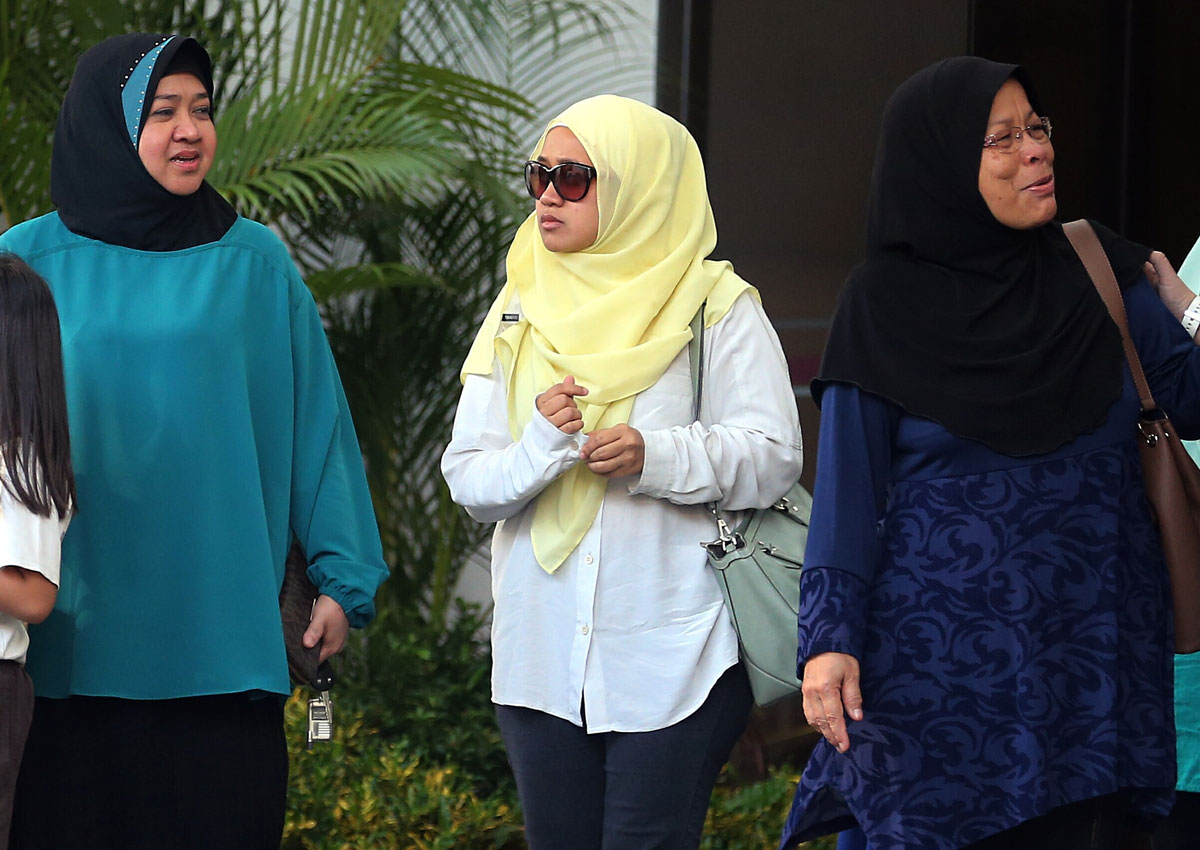
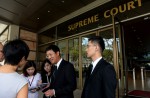
Ms Nurul Asyikin, her mother and her mother-in-law sobbed as Mr Bay read out his findings.

Asked how the family was coping, Ms Nurul Asyikin, a school teacher, said outside the court later: “We have a lot of support from family, especially my husband’s parents, friends and the public. We will try to recover.”

She added that the inquiry had brought back “painful images”.

On whether the family was considering a civil suit against the company that sold the diffuser, she said they have not decided, although they have consulted a lawyer.

Earlier yesterday, Shiang’s International operations manager Chok Wai Chen testified that the company, the brand owner of the Avita diffusers Mr Rizalludin used, required buyers to attend a safety briefing. But Ms Nurul Asyikin told him she never attended one.

Mr Chok said the oil refill fluid had to be imported as a kind of “dangerous goods” and a “flammable liquid”, but he said yesterday he was unaware that the liquid’s vapours were also flammable.

amirh@sph.com.sg


This article was first published on April 19, 2016.
Get a copy of The Straits Times or go to straitstimes.com for more stories.
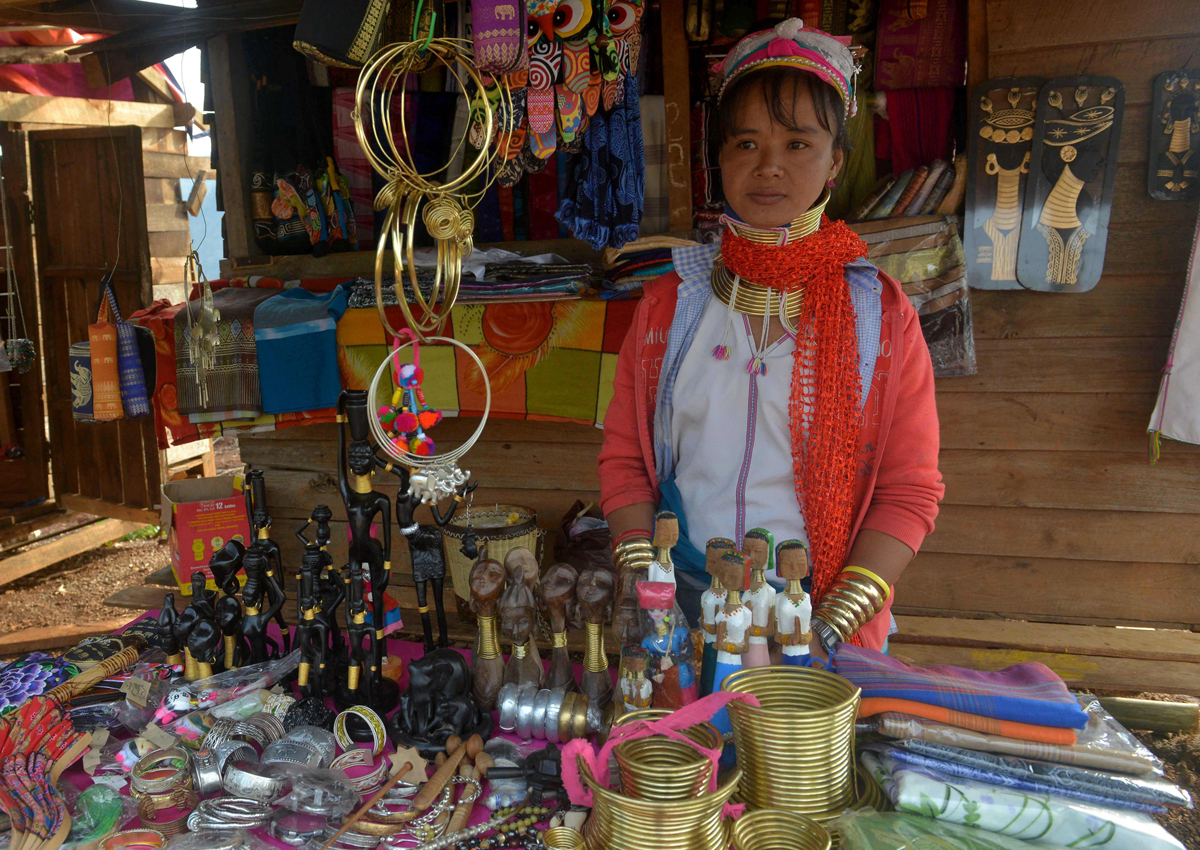
Image: 
Category: 
Publication Date: 
Tuesday, April 19, 2016 – 14:00
Send to mobile app: 
Source: 


Story Type: 
Others

Source link

Participants agree on need for minority president

0

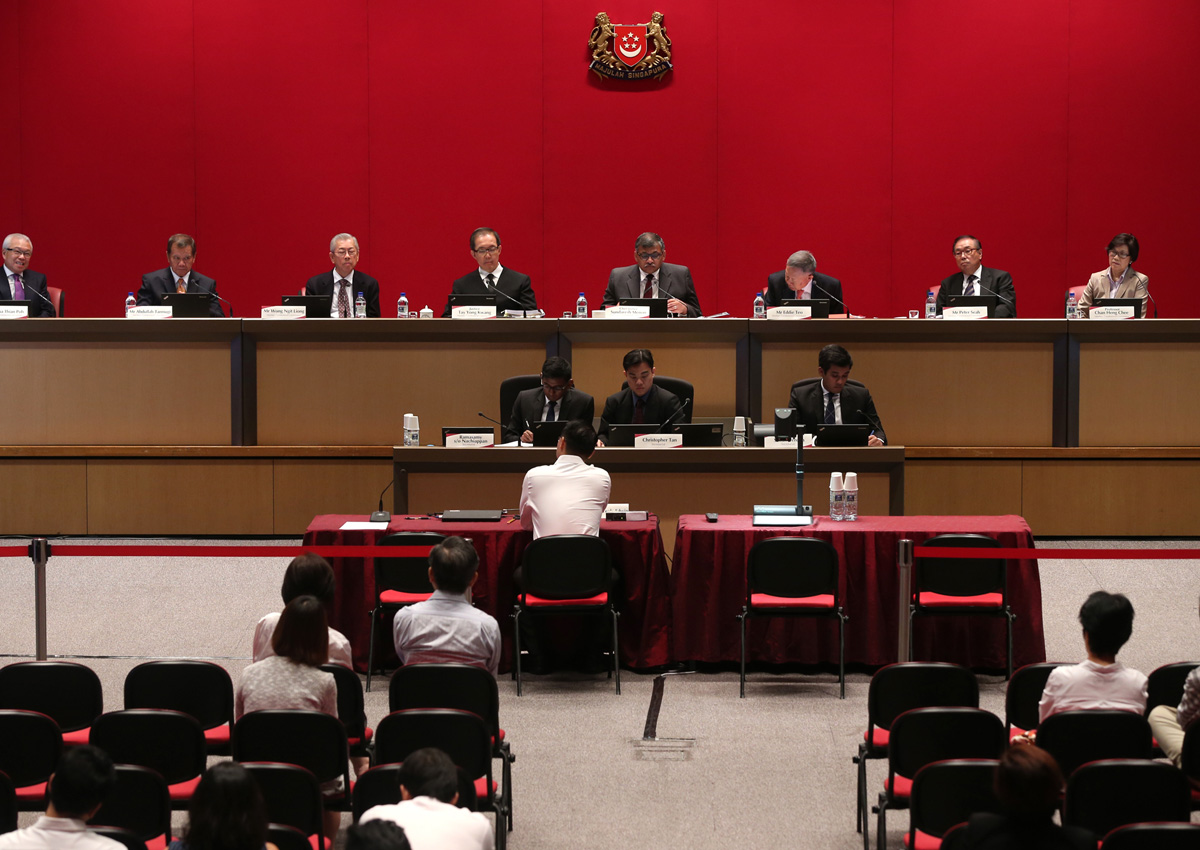
The issue of race dominated the first public hearing of the Constitutional Commission to review the elected presidency yesterday.

The people who gave their views agreed Singapore should have a minority-race president from time to time to reflect its status as a multiracial society.

But they differed on how to achieve this outcome, and proposed a variety of solutions.

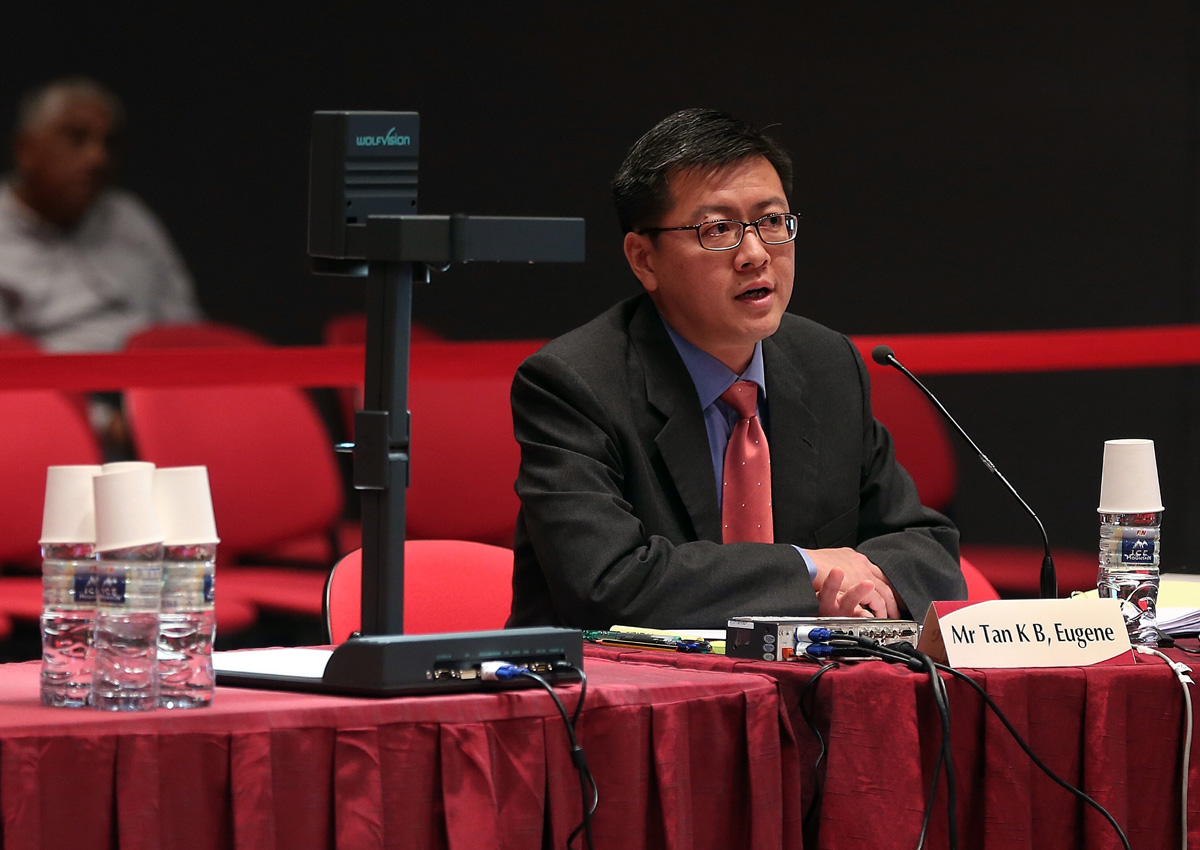
Singapore Management University law don Eugene Tan, 46, said that installing a legal framework to ensure a minority president would undermine the president’s legitimacy and amount to affirmative action, which he said “is not in our DNA”.

“Maybe I’m idealistic, I’m just very uncomfortable with institution design that engineers certain outcomes,” he added. Instead, candidates should be required to show a track record of championing multiracialism, he said.

Associate Professor Tan also suggested candidates must garner a specified percentage of minority votes to win the presidential election. Ballots can be colour-coded according to the voter’s race, he said, but conceded such a system may compromise voting secrecy.

The Association of Women for Action and Research, represented by its officials Corinna Lim and Jolene Tan, also did not favour measures to ensure the election of a minority president.

Ms Lim argued that the eligibility criteria to run for the office should be made less stringent, so that a bigger pool of people would qualify and naturally include more people of minority races and women as well.

The other four individuals who appeared before the commission suggested specific courses of action.

Institute of Policy Studies senior research fellow Mathew Mathews, 41, said if Singapore did not have a minority president for a number of terms, the next election should be reserved for minority candidates.

Chief Justice Sundaresh Menon, who chairs the commission, said the provision had a “natural sunset” as it would not be invoked if Singapore progressed towards a race-blind society and elected a minority president of its own accord.

Dr Mathews acknowledged some might criticise the move as tokenism, but pointed out that it was up to the minority president to win people over by doing a good job.

In-house legal officer Edwin Yeo, 42, proposed what he called a hybrid system that combined aspects of appointing and electing a president.

A presidential council could be set up to identify one candidate in consultation with the prime minister.

The candidate must then be approved by Parliament and face a nationwide election, in which Singaporeans would simply vote “yes” or “no” on the ballot. Such a framework allows the presidential council to put up a minority candidate, who, if elected, will have the people’s mandate to fulfil his custodial role.

It also avoids the divisiveness of pitting candidates against one another, which Mr Yeo said happened in the 2011 Presidential Election.

But a commission member, Justice Tay Yong Kwang, said the process could repeat indefinitely should a candidate fail to get elected. “It’s going to be very wearisome for the public. They will go, ‘Oh no, another election? This is the 10th time’,” he said to illustrate his point.

Academic Loke Hoe Yeong, 31, and law firm intern Brian Chang, 26, suggested a two-person ticket in which one of the candidates would have to be from a minority race.

Mr Loke said the second candidate could become the Speaker of Parliament, while Mr Chang said he or she could be chairman of the Council of Presidential Advisers.


This article was first published on April 19, 2016.
Get a copy of The Straits Times or go to straitstimes.com for more stories.

Image: 
Category: 
Publication Date: 
Tuesday, April 19, 2016 – 14:30
Send to mobile app: 
Source: 


Story Type: 
Others

Source link

Ex-tour guide's appeal over widow's new will dismissed

0

The High Court has dismissed an appeal by a former China tour guide to set aside a decision to recognise a new will made by a wealthy widow, which would result in her assets going mainly to charity instead of to him.

Yang Yin, 42, had argued that there was a procedural failure in the proceedings as the judge had denied his lawyers the chance to cross-examine witnesses who had given evidence to support the application for the new will.

Yang failed to get the application reheard.

In April last year, the Family Justice Courts had recognised a new will made by 89-year-old widow Chung Khin Chun, under which most of her assets – estimated to be worth $40 million – would go to charity.

The new will replaced an earlier one made in 2010, in which Yang stood to inherit everything.

The new will was recognised based on evidence given by several witnesses that Madam Chung had made the 2010 will under the undue influence of Yang, among other factors.

In his appeal, Yang said he wanted a “retrial” so that these witnesses could be cross-examined before the court decides whether undue influence had been exercised in the making of the 2010 will.

He also wanted to call on two key witnesses – the lawyer who had prepared the 2010 will and a prior one in 2009, as well as the doctor who had examined Madam Chung before she executed either will.

However, in her judgment, Justice Judith Prakash pointed out that Yang had been given opportunities to indicate if he wanted to call, cross-examine or subpoena witnesses, but chose to leave that decision to the courts.

Justice Prakash also noted that Yang did not rebut “serious” allegations that the earlier will was made under undue influence and fraud.

“Nowhere in his affidavit did the appellant (Yang) actually assert, for instance, that he had allowed (Madam Chung) free choice in her decisions,” said Justice Prakash.

“This was a surprising position to adopt, at any stage in the proceedings, in response to allegations which were both serious and specific,” she added.

The high-profile case involving Yang and the wealthy widow unfolded in 2014 after Madam Chung’s niece, Madam Hedy Mok, evicted Yang’s wife, who had been living in her aunt’s house for about a year with her two young children.

Yang is currently in remand after being denied bail in October 2014.

Yang faces more than 300 charges for allegedly falsifying receipts at his company and allegedly misappropriating $1.1 million from the estate of Madam Chung.

His criminal trial is scheduled to start next month.

Contacted yesterday, Yang’s lawyer Irving Choh said he would be getting instructions from his client on whether to appeal against the latest High Court decision.

Madam Mok told The Straits Times that her aunt is “happy” that there is progress in her case.

“We should respect her wishes,” she said, referring to her new will.

kcarolyn@sph.com.sg


This article was first published on April 19, 2016.
Get a copy of The Straits Times or go to straitstimes.com for more stories.

Image: 
Category: 
Publication Date: 
Tuesday, April 19, 2016 – 14:00
Keywords: 
Send to mobile app: 
Source: 


Story Type: 
Others

Source link

Commission hears views on having a minority-race president

0

The first public hearing on the review of the elected presidency yesterday was dominated by two issues: Whether Singapore should have a minority-race president from time to time, and what should be done to ensure this.

Said Chief Justice Sundaresh Menon: “The real question is whether there is a concern that a minority president may be unelectable because of the reality of our racial mix in society and whether that’s an acceptable state of affairs.”

He chairs the Constitutional Commission appointed by Prime Minister Lee Hsien Loong in February to review the office. The issue is one of three the commission is studying. The other two are the eligibility criteria of candidates, and the experience of those appointed to be the president’s advisers.

CJ Menon and seven commission members asked those invited to the hearing to elaborate on the views they had submitted earlier to the commission. Five Singaporeans and the Association of Women for Action and Research spoke on it.

While all agreed on the importance of having a minority-race president from time to time, to reflect Singapore’s multiracialism, they had different ideas on how to achieve it.

During the hearing, CJ Menon said the president’s role is a “fairly unique innovation that involves the executive creating a check and balance upon itself”.

This is because many of the powers vested in the president, like vetoing the decisions of the executive, typically fall entirely within the executive branch of the Government.

He also made clear that the commission’s task is to study proposed changes to the presidency and make recommendations.

When the changes should take effect is a political question best left to the Government, he added. He was replying to law don Eugene Tan, who said that with the next presidential election due by August next year, changing the criteria for candidacy “so late” could add an unnecessary political edge to the polls.

The commission received over 100 submissions and invited 20 individuals and groups to speak at the hearings. Only the Workers’ Party declined to participate. Said CJ Menon: “We have carefully considered all the submissions and will have regard to them as we proceed with our work in the months ahead.”

There are three more hearings. The report is expected to be submitted by the third quarter of this year.


This article was first published on April 19, 2016.
Get a copy of The Straits Times or go to straitstimes.com for more stories.

Image: 
Category: 
Publication Date: 
Tuesday, April 19, 2016 – 15:00
Send to mobile app: 
Source: 


Story Type: 
Others

Source link

NTUC Health opens first senior wellness centre in Marsiling

0

The centre has services catered to seniors, such as geriatric dental care and a senior-friendly gym, as well as recreational activities like a gardening club and weekly karaoke sessions. 

Source link

PM takes stock of Singapore's ties with Israel

0

Prime Minister Lee Hsien Loong arrived in Israel from Jordan yesterday, on the second leg of his week-long trip to the Middle East.

His first stop here was the Hebrew University of Jerusalem, where he met its leadership and received an honorary doctorate.

Speaking at the ceremony and thanking them for the honour, he took stock of Singapore’s long friendship with Israel, in particular the role it played in helping build a credible and professional Singapore Armed Forces (SAF).

“Without the IDF (Israel Defence Forces), the SAF could not have grown its capabilities, deterred threats, defended our island, and reassured Singaporeans and investors that Singapore was secure, and had a future,” he said. “We will always be grateful that Israel helped us and stood by us at a time of great need.”

PM Lee also expressed the hope that Israel and the Palestinians will take steps to resume direct negotiations and work towards a just and lasting two-state solution.

He noted that over the years, Singapore’s relationship with Israel has broadened beyond defence and security to collaborations in technology research and development.

Yesterday, PM Lee witnessed the signing of three agreements between the university and Singapore’s National Research Foundation, the National University of Singapore and Nanyang Technological University, respectively.

Hebrew University president Menahem Ben-Sasson said awarding the doctorate to PM Lee was to recognise his longstanding leadership as a champion of economic and civil reform, his investment in education, research and development, as well as his warm support of Israel-Singapore friendship and of the Jewish community in Singapore.

Singapore, he noted, was a model of a state run by scholars, “where the PM is himself in charge of research and innovation”.

In his speech, PM Lee noted that ties between the people of Israel and Singapore began long before both became independent.

The earliest Jews in Singapore arrived in the 19th century, mostly from the Middle East, and their descendants have contributed out of proportion to their numbers in the country. Among them Singapore’s first chief minister David Marshall.

Mr Lee noted that renowned physicist Albert Einstein visited Singapore in 1922 , met the local Jewish community and urged them to contribute to the Hebrew University of Jerusalem, which was set up in 1918 and opened its doors in 1925. The Jewish people in Singapore raised some £750 – worth about S$400,000 today. Israel, he added, reflects a remarkable human talent and “the indomitable spirit to overcome overwhelming odds” – from irrigating the desert to revolutionary advances in technology.

Singapore had much in common with Israel. Both are young nations that had to integrate diverse groups to create a common sense of nationhood, and both are determined to thrive despite their circumstances.

But there are also striking contrasts, he said. Israel can trace 5,000 years of Jewish history and its identity is as a Jewish state, while Singapore “is emphatically not a Chinese nation, but a multiracial, multi-religious society”.

Israel had to fight several wars to defend its right to exist, while Singapore has been fortunate never to have been at war with its neighbours, except during the Konfrontasi period – when Indonesia waged an undeclared war in the 1960s to oppose Malaysia’s formation.

Mr Lee noted that the Israeli-Palestinian problem is complex, and a solution remains elusive.

“Progress will require enormous imagination, determination and political leadership on both sides – as well as getting the stars aligned, in the right places in the firmament, with the great powers supporting you,” he said. This is why he was also visiting the Palestinian National Authority in Ramallah this week “to signal our friendship with both Israel and the Palestinians”, he added.

He also noted that the late Mr Lee Kuan Yew once told an Israeli general who helped start the SAF that Singapore learnt two things from Israel: “How to be strong, and how not to use our strength.” PM Lee said he was also moved by former Israeli PM Shimon Peres’ vision, in a recent interview, of Israel in 2048 – 100 years after its founding. Mr Peres believes 2048 will be much better for Israel and the Middle East, where borders will become less relevant and science and technology will transform societies, connect peoples and force them to become more open-minded to the world.

“Today, such a Middle East looks a long way off – more distant even than 2048,” Mr Lee said. “But I sincerely hope that one day, Mr Peres’ vision will be realised. Swords will be turned to ploughshares, Israel and your neighbours will live side by side in peace and prosperity, and your friends in Singapore and around the world will rejoice with you too.”

Yesterday, PM Lee also visited Jerusalem’s Old City. He will meet Israeli Prime Minister Benjamin Netanyahu today.


This article was first published on April 19, 2016.
Get a copy of The Straits Times or go to straitstimes.com for more stories.

Image: 
Publication Date: 
Tuesday, April 19, 2016 – 17:00
Send to mobile app: 
Source: 


Story Type: 
Others

Source link