Home Blog Page 4143

Captain in conflict

0

Chris Evans does not mince words about his career before he became an A-lister.

“If you look at my IMDb page, you’ll see that I made a decade of s***,” says the 34-year-old, whose name turns up in terrible teen comedies Not Another Teen Movie (2001) and The Perfect Score (2004) on the movie database.

To say that he is glad to have graduated to Steve Rogers/Captain America is an understatement. And he says he could not have achieved it without an ensemble of strong supporting players.

“I just wanna make good movies. But it’s a team sport. And that’s a beautiful thing. There is no way that anyone in the Marvel universe is vying for leadership or ownership,” says the actor yesterday, while in Singapore on a Captain America: Civil War publicity tour.

Fans and critics gush about how the volatility of Falcon (Anthony Mackie), the wit of Tony Stark (Robert Downey Jr) and the sarcasm of Ant-Man (Paul Rudd) are charismatic qualities. That sort of wise-cracking self-awareness is out of the question for Captain America, a character who embodies values from an era when men were strong and silent.

Evans talks about how his real personality is more like the edgy Human Torch/Johnny Storm he played in Fantastic Four (2005).

“He’s a selfless man and any conflict he has, he buries inside. In film, you want to see uncertainty and conflict. He doesn’t have that because he puts everyone else before him. I’d love to see him be more sharp and cynical,” he says of the Captain.

Marvel creator Stan Lee himself has reminded Evans that wearing red, white and blue means he should set an example in real life.

“He, in passing, reminded me that playing this role has an impact on people. It’s part of the joy and part of the burden,” Evans says.

Adding to that weight is that trait unique to the comics world – fans expect that, in real life, he should embody the virtues of his superhero character.

“It’s tricky and it’s in my mind. I could never be who Captain America is, but it does put a certain responsibility on your back. It echoes in my head about how I want to live my life,” says Evans.

“You have all these people – Mackie, Downey, Rudd – making jokes and they’re hilarious. But not everyone can make jokes. Some people have to be the rock.”

Mackie, on the other hand, has no such dissatisfaction with his character of Sam Wilson, aka Falcon, a former soldier who puts his wingpack and drones into service on behalf of his good friend Rogers.

“I enjoy how the character has grown. Every character and actor gets his moment to show his personality. Falcon’s relationship with the Captain speaks so much to people because they are truthful and vulnerable with each other,” says the 37-year-old.

That loyalty is put under strain in the movie when, to Falcon’s dismay, the Captain stands by his childhood pal Bucky, even after the latter is brainwashed into becoming an unstoppable assassin, Winter Soldier, by evil organisation Hydra.

“Bucky is the friend that nobody wants. This guy should be on probation. His parents should let him play Xbox and not let him leave the house,” says Mackie, who made his name in films such as Oscarwinning war drama The Hurt Locker (2008).

Actor Sebastian Stan, 33, naturally does not think his character of Winter Soldier should be hated or punished.

“I never know where they are going to take it, where the writers will take the character. Hero or victim? In this movie, I got to do a bit of both,” he says.

Civil War co-director Joe Russo thinks the superhero movie formula has become stale.

“We introduce the villain in the first act. Second act, the hero and villain come into conflict. Third act, the hero defeats the villain. We wanted to flip that on its head,” says the 44-year-old who, with his brother Anthony, directed Civil War and the previous instalment, Captain America: The Winter Soldier (2014).

Instead of having a villain with superhuman powers, the antagonist in Civil War is a man seeking revenge.

“The villain is empathetic. He’s suffered a loss and wants someone to pay,” Russo says.

He is also aware that the idea of a hero such as Captain America, who embodies old-fashioned values, could become a loaded symbol in a time when presidential hopeful Donald Trump wants to “make America great again”, in the words of the tycoon’s campaign slogan.

Russo says: “My father was a political figure. My brother and I have strong points of view in politics. We are interested in topicality and current events. So it’s gonna find its way into our storytelling.”

In the film, the Avengers are split over the question of accountability, he says.

“Who has the right to wield power? What rights do the strong have over the weak? The film is about that. The world is dealing with similar issues now. It’s forcing people to take extremist points of view.”


This article was first published on April 22, 2016.
Get a copy of The Straits Times or go to straitstimes.com for more stories.


Image: 
Category: 
Publication Date: 
Saturday, April 23, 2016 – 04:00
Send to mobile app: 
Source: 


Story Type: 
Others

Source link

A year on, millions of Nepal quake survivors wait for aid

0

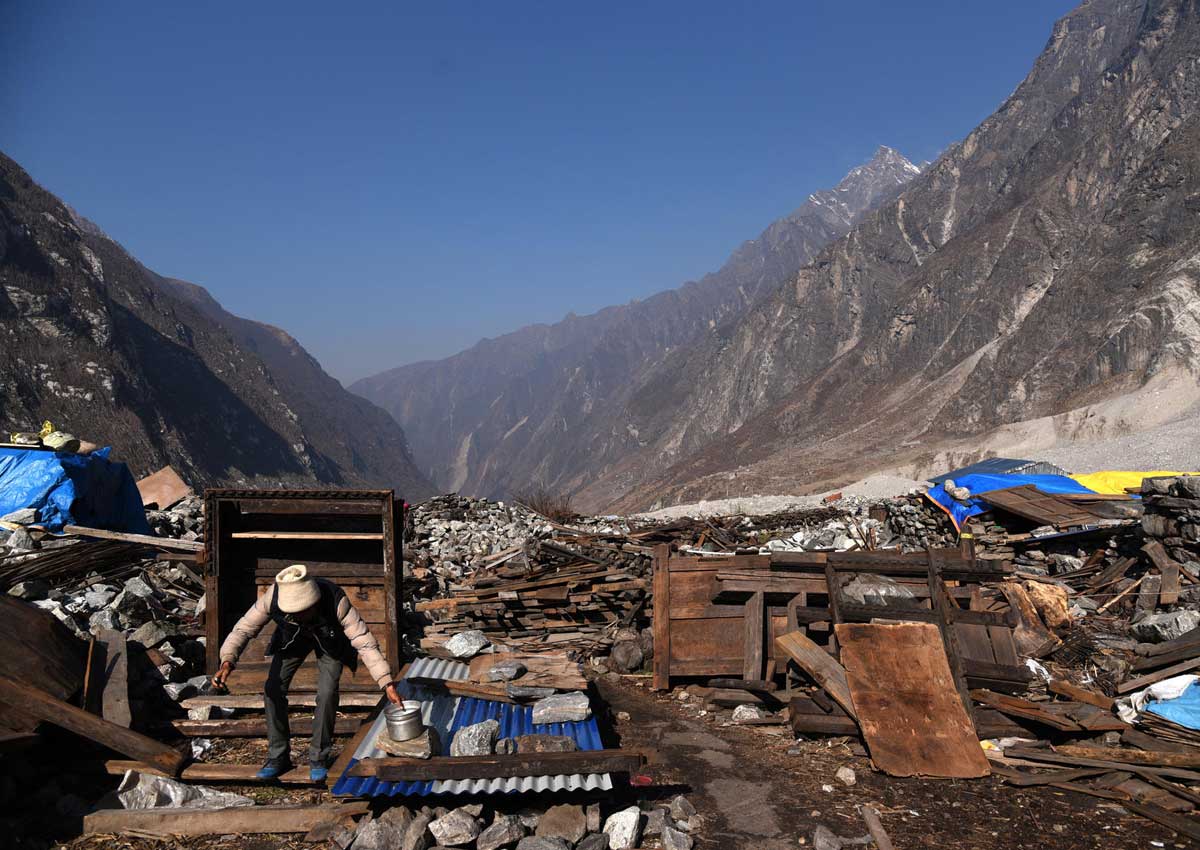
Kathmandu – A year after an earthquake flattened her home in Nepal, Menuka Rokaya still lives in a tent with her husband and nine-month-old baby as they await even a sliver of a US$4 billion (S$5.4 billion) aid fund.

“We have lived like this with a baby through monsoon and winter,” says Rokaya, one of an estimated four million people who are still homeless.

“The quake spared us, but it is difficult to survive now.

“Earlier, many people used to come here to help us. But… they have all disappeared now,” she told AFP as she nursed her young daughter.

The world rallied to donate money to help the desperately poor Himalayan nation after the 7.8-magnitude quake struck on April 25 last year.

Nearly 9,000 people lost their lives in the disaster while over half a million homes were destroyed.

But while US$4 billion in aid has been raised, wrangling between political parties over control of the funds has meant that most victims have received nothing beyond an initial small payout.

Read also: The thousand stars hotel in Nepal

Rokaya, who was six months pregnant when the quake brought down her home, now lives with her family in a tent that offers little protection from the cold and the rain.

“We haven’t heard anything about compensation. We don’t have any money, how can we rebuild?,” said Rokaya, who lives in a camp near Kathmandu airport.

The family has to survive on the US$10 that her husband earns a day as a tea-seller and meals are cooked on a stove inside their tent. They have to wash in a communal toilet on the camp site.

An estimated four million people are still living in sub-standard temporary shelters, according to the International Federation of Red Cross and Red Crescent Societies.

Many were living hand-to-mouth even before the quake, which dealt a huge blow to Nepal’s already fragile economy.

To make matters worse, protesters angered by the terms of a new national constitution mounted a blockade at the Indian border – the main entry point for fuel and other goods – creating crippling shortages that lasted for months.

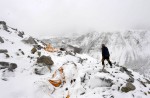
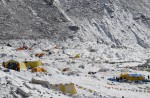
Tourism also took a nosedive as prospective visitors cancelled bookings following dozens of deaths in quake-triggered avalanches at Everest base camp and along the popular Langtang trekking route.

Work has begun on repairing the huge damage done to Nepal’s cultural heritage – a major tourist draw.

The famous royal squares of the Kathmandu Valley reopened to the public last June and masons have begun work on restoring other historic sites including the fifth-century Changu Narayan complex, but officials say it will take years to complete.

After months of bickering, the government finally established a National Reconstruction Authority (NRA) in December to oversee rebuilding and distribute funds.

Until then, rebuilding had effectively been put on hold because the government had instructed people to follow specific quake-resistant designs to qualify for aid – but had not released the blueprints.

“You had many organisations… willing to support housing reconstruction, but they had to act in a vacuum, a policy vacuum. So they could not start work,” said Jennifer Duyne, who heads the international and Nepali donor reconstruction effort.

Even aid organisations that had started to rebuild schools and health facilities were told to pause their efforts until the new body could review them, a process that took months.

And while the government promised US$2,000 for every home destroyed, fewer than 700 families have received the first instalment of US$500.

Read also: Standing tall on rocky ground: How 3 ordinary men stood by Nepal

NRA chief Sushil Gyewali said the organisation was now “expediting the process” of distributing funds.

But thousands of survivors have chosen to risk losing the government aid, and have instead taken out loans or turned to charities for help.

In Ramechhap district, east of Kathmandu, where 40,000 houses were damaged, Gurkha soldiers have been hard at work breaking rocks and laying down concrete to construct schools and build homes for veterans.

Famed for their ferocity and valour, the 2,500-strong Gurkha brigade largely made up of soldiers recruited mainly in Nepal, has been part of the British army for 200 years and served in Afghanistan and Iraq.

They plan to complete work on 1,200 houses by next year under a scheme run by the Britain-based Gurkha Welfare Trust.

“People are living under very poor conditions, just in a temporary shelter, so things are really bad,” said Sergeant Lal Rana.

“We are trying to help, but it won’t be enough because people need help all over Nepal.” For farmer Bhoj Raj Sunuwar, the Gurkhas, who arrived in his far-flung village of Bhuji days after the earthquake and before government officials showed up, have been a blessing.

Sunuwar, whose father served with them, has lived with his family in a temporary shelter since the disaster but is now looking forward to having a roof over his head thanks to their help.

“If they were not here we would be forced to spend another year in a shelter,” he told AFP.

“I have no hope from the government.”

Image: 
Category: 
Publication Date: 
Friday, April 22, 2016 – 16:06
Keywords: 
Send to mobile app: 
Source: 


Hermes ID: 
2 237 960
Hermes ID String: 
SY_NEPALQUAKE_0422
Hermes Author: 
SEANYAP
Story Type: 
Others

Source link

Man fails to take possession of flat due to legal issue

0

A High Court case has shown up problems that can arise when a person appointed to act for someone lacking mental capacity dies and is not automatically replaced.

“There appears to be nothing in the Mental Capacity Act (MCA)… that allows for any agency, such as the Office of the Public Guardian or the Insolvency and Public Trustee’s Office , to act in the place of the deceased deputy, ” said Judicial Commissioner Aedit Abdullah.

His remarks came in judgment grounds released yesterday in the case of a man who bought a $270,000 HDB flat from a dementia-ridden owner, whose daughter acted on his behalf.

The seller’s daughter, Ms Millicent Ruby De Silva, had obtained a court order in 2009 under the then Mental Disorders and Treatment Act, later replaced by the MCA. This authorised her to represent her father at court hearings but did not empower her to execute documents in relation to his properties.

Ms De Silva acted for her father in completing the sale of the unit in 2010 to Mr Peter Nathan, who was in a relationship with her. He moved in with them, but after she died in April 2012, his relationship with her father soured and he could not live with him any more.

Mr Nathan said the two surviving children of Mr Arthur De Silva Petiyaga, 75, who had dementia and other medical conditions, had declined to take care of him when approached.

He then took legal action to possess the house in 2014 but learnt he was not the registered owner of the flat as the late Ms De Silva’s signatures on the documents on her father’s behalf were invalid.

Mr Nathan then applied to the High Court for an order to “perfect” the sale of the flat to him. His lawyers from Vision Law LLC argued that all parties had consented to the sale then and it was appropriate for the court to intervene.

JC Abdullah disagreed and rejected the move, but not before exploring several avenues to try to resolve the case in the interest of all. He noted that Mr Nathan had to live in the open at times.

The best course was to appoint a a new deputy to look after the interests of Mr De Silva, but family members were unable or unwilling and neither was the Public Trustee or Public Guardian able to take up the task, noted the judge.

Noting that the late Ms De Silva had no powers to authorise the sale on her dad’s behalf in the first place, the judge said the court cannnot intervene in this case. While it could under the MCA, this case was not started under the MCA, he said.

He said the significant issue was that there was no mechanism to allow the Public Guardian or other agencies to act for Mr De Silva immediately after his daughter died.

He suggested if the courts had the flexibility for such cases, it could initiate MCA proceedings to appoint a deputy and give directions to resolve the case even if there was no such application.

He said such a “judge-led approach” would be a departure from the current adversarial-style arrangements. “This may be a matter for the relevant agencies to consider,” he added. Mr Nathan is appealing against the judgment.


This article was first published on April 22, 2016.
Get a copy of The Straits Times or go to straitstimes.com for more stories.

Image: 
Category: 
Publication Date: 
Saturday, April 23, 2016 – 06:30
Send to mobile app: 
Source: 


Story Type: 
Others

Source link

Tokyo cat cafe shut down for animal neglect

0

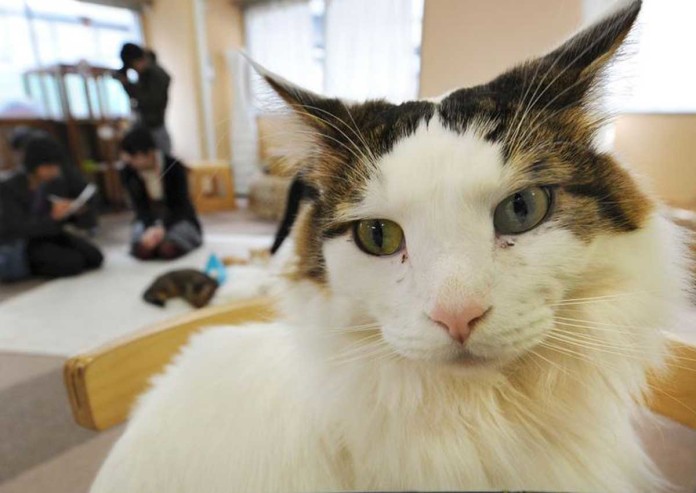
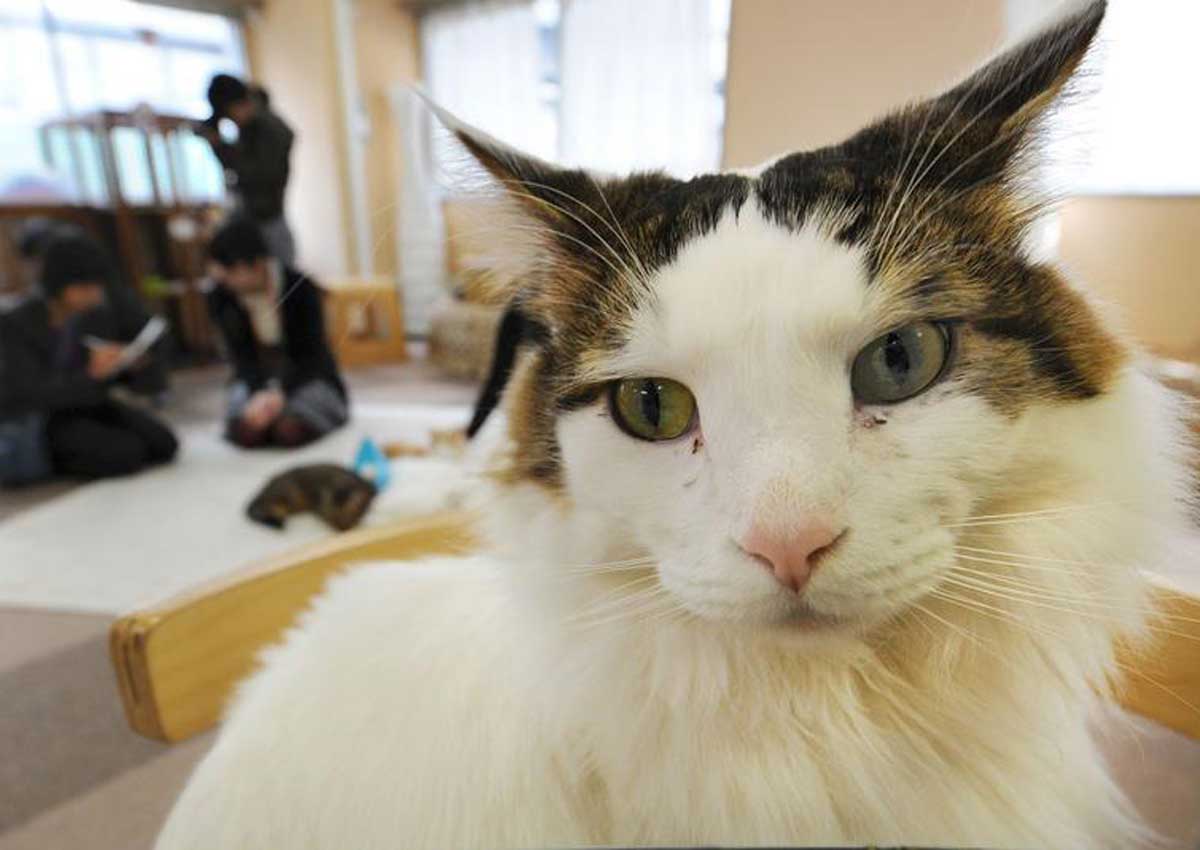
Tokyo – A Tokyo “cat cafe” has been raided by health inspectors and ordered to close its doors due to animal neglect after complaints about nasty smells coming from the premises.

The “Neko no Te” (cat’s paw) cafe – one of many in Tokyo where guests can stroke the fluffy felines while sipping on a cappuccino – was visited by authorities after the cooped-up kitties bred rapidly and began showing signs of illness, Tokyo officials said Friday.

A spokeswoman from the Tokyo Metropolitan Government’s Bureau of Social Welfare and Public Health told AFP the cafe had received several warnings over hygiene standards, before the patience of authorities snapped and they revoked its licence for 30 days.

“We issued repeated requests but there was no improvement,” said Yuriko Iwamoto.

“The property wasn’t being cleaned properly and it was beginning to smell very bad,” she added.

“In line with animal welfare laws we were therefore forced to order them to cease business.” Inspectors who went to the cafe in Tokyo’s Sumida ward found more than 60 cats crammed into a confined space of just 30 square metres (320 square feet) – despite it having applied to keep just 10 of the animals – after they bred due to a lack of cages.

“There were more cats than cages,” added Iwamoto. “The cages they did have were not properly controlled so they just multiplied.” The inspectors also discovered more than 40 cats displaying cold symptoms and pointed out there was insufficient space or opportunity for them to exercise.

As of last year, Tokyo had 58 registered cat cafes, which have also done a roaring trade across Japan, other parts of Asia and have even begun sprouting up in Europe.

Similar theme cafes are big business in Japan, where animal-loving guests can also share a relaxing drink with rabbits, goats and even owls.

Image: 
Category: 
Publication Date: 
Friday, April 22, 2016 – 16:04
Keywords: 
Send to mobile app: 
Source: 


Hermes ID: 
2 237 946
Hermes ID String: 
SY_CATCAFE_0422
Hermes Author: 
SEANYAP
Story Type: 
Others

Source link

PSLE changes: Govt 'must navigate sentiment carefully'

0

A flood of comments, including some “not so happy” ones, followed the announcement earlier this month of major changes to the education policy, including replacing the aggregate score used in the Primary School Leaving Examination (PSLE) with scoring bands.

Some said this will deepen social inequality as some parents will still try to game the system, while others asked why the changes, to take effect in 2021, will take so long.

Such “furious and strong” responses underline the need for the Government to navigate ground sentiments carefully before taking the next step in formulating public policy, said Acting Minister for Education (Higher Education and Skills) Ong Ye Kung at a dialogue yesterday.

With the PSLE aggregate score to be replaced by wider scoring bands, a big question is how pupils will be sorted into secondary schools. This will be announced in the next few months, said Mr Ong.

“Have we totally made up our mind (about) what to do? Actually we haven’t. We have to see what happens… then make the next moves,” he said.

His comments were made in response to Mr Charles Phua, 33, president of the Association for Public Affairs from the Lee Kuan Yew School of Public Policy, who asked how intangibles like social impact can be included in policy considerations.

The dialogue was part of the annual Chua Thian Poh Community Leadership Programme Symposium at the National University of Singapore (NUS), where Mr Ong, the guest of honour, spoke about the intricacies of policymaking. The programme, which began in 2011, aims to train students to lead change in their communities through courses, research projects and attachments to social service organisations.

Five research projects were presented yesterday by NUS students at the event, which drew over 200 people. The students partnered social service organisations to conduct research and make recommendations on issues from information asymmetry in the perceptions of social assistance to the developmental needs of children of former offenders.

Mr Keith Low, 20, a second-year student at the Yong Loo Lin School of Medicine, was surprised to find from his research that over half of the 99 patients admitted to Ren Ci Community Hospital in November 2014 had been prescribed with more than 10 medications.

He said: “Taking too much medication could lead to adverse reactions, and some patients would be less likely to take all their medication regularly. Instead, they can eat food that is rich in fibre or try non-drug therapies that are good for chronic conditions.”


This article was first published on April 22, 2016.
Get a copy of The Straits Times or go to straitstimes.com for more stories.

Image: 
Category: 
Publication Date: 
Saturday, April 23, 2016 – 06:30
Keywords: 
Send to mobile app: 
Source: 


Story Type: 
Others

Source link

MAS, CAD raid broking firms in probe into possible violations

0

Image: 
Publication Date: 
Friday, April 22, 2016 – 15:35
Send to mobile app: 
Source: 


Rotator Headline: 
MAS, CAD raid 4 broking firms in probe into possible violations
Story Type: 
Others

Source link

Chee pledges to press the govt to be 'more sensitised' to citizens' concerns

0

Singapore – Since the ruling People’s Action Party (PAP) already holds 82 seats in Parliament, adding another lawmaker to that list won’t make much of a difference, Singapore Democratic Party (SDP) chief Chee Soon Juan said on Thursday.

The 53-year-old SDP secretary-general is gearing up for a showdown against the PAP’s Murali Pillai, a 48-year-old lawyer, for next month’s by-election in Bukit Batok.

Speaking to reporters at Bukit Batok MRT station a day after President Tony Tan Keng Yam issued the writ of election, Dr Chee questioned the merits of having Mr Murali join the PAP’s ranks in Parliament.

The opposition veteran said that if he were to be elected on May 7, he would continue to “press the government to make sure it is much more sensitised to the plight of Singaporeans”.

He pledged to speak up for retirees and retrenched workers in the single-member constituency, as these individuals are feeling the effects of the rising cost of living in Singapore.

When asked for his strategy for the next two weeks until Polling Day, he said he would be more targeted in his approach and go all-out to communicate his party’s messages to the 25,727 voters in the ward.

“It’s important that they understand and hear what our message is. Not only will we be taking care of their housing estate, we won’t take a back seat as far as the running of the town council is concerned,” he said.

Dr Chee stressed that the SDP would be both transparent and accountable when running the town council; he reiterated that the party already had the necessary resources to take over from the PAP should he emerge victorious.

The opposition party will hold a press conference on Friday to reveal its plans for the constituency. Having already combed the entire estate, he said he would continue to reach out to residents in the coming days and explain why they should vote for the opposition in this by-election.

Separately, the Elections Department (ELD) issued an advisory on Thursday on political activities and election campaigning.

It stated that, under the Parliamentary Elections Act, any person who conducts activities to promote or procure the election of a candidate must be individually authorised in writing by the candidate or his election agent on and from Nomination Day.

Those who are not Singapore citizens are barred from taking part in election activities and cannot be authorised to do so.

ELD also said that any civic, business or professional body that wants to participate in a political activity or allow its funds and/or premises to be used for political purposes must ensure that its constitution allows it to do so. The organisation must also ensure that this does not contravene any laws that it is subject to.

Political activities include endorsing a candidate and publishing advertisements or issuing press statements to express support for the candidate. If such advertisements or statements amount to election advertising, ELD said, the relevant rules under the Parliamentary Elections Act and its regulations have to be complied with.

“While such bodies should have their own processes to consult their members and consider the merits of supporting a candidate, it remains each individual’s right as a voter, regardless of his membership of any organisation, to freely decide whom to support and how to cast his vote,” the department said.

leeuwen@sph.com.sg

April 22, 2016.
Get The Business Times for more stories.

Image: 
Category: 
Publication Date: 
Friday, April 22, 2016 – 15:29
Send to mobile app: 
Source: 


Rotator Headline: 
Chee Son Juan pledges to press govt to be 'more sensitised' to citizens' concerns
Story Type: 
Others

Source link

Fashion magazine releases photos of Song Joong-ki in bed

0

Fashion magazine Harper’s Bazaar Korea released extra photos from actor Song Joong-ki’s spread for the May issue on Wednesday.

The actor posed for the camera bare-chested while wrapped in clean white sheets.

Another photo of Song portrayed him staring into the camera between a door crack, lending a surreal vibe with his stare.

The crew of the magazine complimented Song on his professionalism. “We tried our best to avoid the paparazzi and fans. We had fun on set because of Song’s professional attitude and leadership.”

Song recently starred as they witty Army Capt. Yoo Si-jin in KBS2 hit TV drama, “Descendants of the Sun.”

Image: 
Category: 
Publication Date: 
Friday, April 22, 2016 – 15:18
Send to mobile app: 
Source: 


Rotator Headline: 
Fashion magazine releases photos of Song Joong-ki in bed
Story Type: 
Others

Source link

Descendants of the Sun special tops ratings

0

The special episode of “Descendants of the Sun” attracted 17.7 per cent viewership nationwide, proving its unceasing popularity even after the drama’s finale last week.

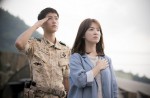
The first of a three-part special went air on Wednesday evening. It recreated the 16-episode series into hour-long section, mainly focusing on the love story between the protagonists Song Joong-ki and Song Hye-kyo.

The episode beat the competitors in the same time slot. MBC drama “Goodbye, Mr. Black” gained 8.1 per cent viewership while the first episode of SBS drama “Entertainer” kicked off with less-than-satisfactory 6.2 per cent.

The other two special episodes will air at 10 p.m. on Thursday and 9:35 p.m. on Friday, which will contain behind-the-scenes clips of the drama.

KBS2 drama “Descendants of the Sun,” which aired from February to April, successfully wrapped up last week, with the final episode reaching a record 38.8 per cent viewership.

Image: 
Category: 
Publication Date: 
Friday, April 22, 2016 – 15:07
Send to mobile app: 
Source: 


Story Type: 
Others

Source link

Commission hears diverse views on Elected Presidency in second public hearing

0

On the second day of public hearings on proposed changes to the Elected Presidency, the Constitutional Commission heard a few suggestions, such as de-politicising the campaigning process for the Presidential Election, and a “GRC-type” election to ensure sufficient minority representation.

Source link