He was once a cook – and a good one too, he says.
Then the 54-year-old, who wants to be known only as Mr Lee, suffered a heart attack and stroke six years ago.
He says he lost his job, his family and a roof over his…
Source link
Robin Hood of North Bridge Road
Mr Willie Yeo, 65, is wheelchair-bound and needs financial and medical help.
But his poor elderly neighbours are his priority.
“Whenever my friends, who remember me, take me out for a scrumptious meal at a grand…
Source link
Friday’s Singapore Stipendiary Stewards’ Report Highlights
RACE 1
BULLISH LUCK: Slow to begin; made contact.
SECRET MAN: Made contact; eased on two occasions.
GOLD LINE: Bumped.
KING OF THIEVES: Bumped; eased outwards; bumped again and unbalanced…
Source link
Mindef returning Sembawang Hot Spring land to the state: Ong Ye Kung
SINGAPORE – The Ministry of Defence (Mindef) has agreed to return back to the State the land that the Sembawang Hot Springs is on, said Senior Minister of State for Defence Ong Ye Kung on Saturday.
The hot spring, the only one on mainland Singapore, currently sits inside a military camp.
“The place is small, rustic and charming, but desperately lacking in amenities, such as a toilet. But it is really not Mindef’s mission to look after a hot spring,” said Mr Ong, who was speaking at a seminar where Malay youths discussed ideas to shape Singapore’s future. “So after some discussion, Mindef has agreed to give up the land, and return it to the State. From there, we hope a public agency such as NParks (National Park Board) can take over, improve the amenities, beautify and maintain it.”
He added that putting the place under a public agency means that the land will not be tendered out to the highest bidder and become commercialised. Instead, its rustic charm can be preserved while putting in small conveniences and more greenery.
At the event, Mr Ong, who is also Acting Minister for Education, also spoke about his expectations for Singapore in 2065.
Building Singapore’s history and its people’s memories and identity is the country’s collective national project for the decades and centuries to come, he said.
“I doubt it will be realistic to have a plan for the next 50 years. We can only evolve with the times and the circumstances surrounding us,” he said at the event held at Suntec City Convention Centre. “We adapt, and with each adaptation we become more distinctively Singaporean, yet more relevant to the world around us.”
In a 35-minute speech to 500 youths, he shared three characteristics he would like to see in Singaporeans: a strong sense of belonging; an emotional attachment to family, friends and fellow countrymen; and a national team spirit.
In building a sense of belonging, Singapore “cannot just bulldoze and build” when developing a place, said Mr Ong, who is also an MP in Sembawang GRC. “We need a piece of old Singapore infused with the new.”
He cited his constituency’s plans to develop the Sembawang Wellness Hub, which used to house rubber and pineapple plantations and the old Chong Pang market. Today, it is a forested hill where the Admiralty House, a gazetted national monument that used to be the home of the British Admiral that oversaw the Sembawang Naval Base, continues to sit atop. “We are working with various agencies to carefully develop the area. It will be a mistake to clear the entire hill and build it up – it will be utilitarian but characterless,” he said.
The National Park Board plans to preserve 600 of the 761 trees and plant another 1,000 using seeds of trees that were indigenous to Singapore but are no longer around. There will also be a new polyclinic, a swimming pool and a hawker centre that will serve healthier versions of the traditional street food served at the old Chong Pang market. And the forest will remain for residents to stroll, climb and visit the Admiralty House, Mr Ong added.
He also highlighted efforts to build emotional attachments among residents here, such as the recent Indian Cultural Festival that brought together the many Indian communities living here for a combined Indian New Year celebration.
In fostering national team spirit, he said: “When we grow our economy and create jobs, it has to be for everyone, or as many Singaporeans as possible. We do not grow the pie for only the 1 per cent or 5 per cent.”
He also addressed worries about technological disruption that will replace workers with robots and computers, noting that such concerns are nothing new. “The steamship, automobiles, airplanes, exploitation of oil and gas to power machines, computers, Internet, smart phones – these have been transforming our lives and economy for a long time,” he said.
Each time, old jobs were destroyed but new ones created.
He also pointed to bright spots such as the growth of Asia, the booming consumer markets in China and untapped markets in Singapore’s closest neighbours, Malaysia and Indonesia. “To ride on the growth… we need good companies and businesses,” he said, calling on the youths to work together.
The seminar was organised by the People’s Association Malay Activity Executive Committees Council.
mellinjm@sph.com.sg

This article was first published on April 23, 2016.
Get a copy of The Straits Times or go to straitstimes.com for more stories.

Prince film career tale of success and failure

Los Angeles – Three feature films, an Oscar – and several Razzies.
Prince’s film career blazed brightly but briefly compared to his 40-year reign in music, even if he left his mark on Hollywood with countless movie and television soundtracks.
Like many other music stars from Madonna to David Bowie and Michael Jackson, Prince’s time in front of and behind the camera left a very faint trace compared to his huge impact in the music studio and on stage.
From the success of “Purple Rain” in 1984 to the failures of “Under the Cherry Moon” (1986) and “Graffiti Bridge” (1990), Prince’s film career lasted a mere six years.
But he racked up an Oscar and a Golden Globe – as well as a handful of Razzie Awards, the satirical prizes handed out to the worst film performances.
Photogenic, flamboyant, adept at playing sexual and androgynous roles in videos and during his stage performances, Prince Rogers Nelson wanted to be in film very early in his career.
“Prince’s films and videos add up to one long, fascinating post-modern striptease, all knowing smiles and salacious glances at the camera, showing everything but revealing nothing,” The Hollywood Reporter wrote this week, shortly after his death at age 57.
Prince emerged on the Hollywood scene when the album that had established him as a major pop star, “Purple Rain,” was made into a semi-autobiographical film about a young musician – “The Kid,” after Prince’s nickname “the Kid from Minneapolis” – from a dysfunctional family trying to make his name.
Directed by Albert Magnoli, “Purple Rain” attracted an audience that extended far beyond the ranks of Prince’s music fans and earned him an Oscar for best movie soundtrack.
Made on a relatively paltry budget of US$7 million (S$9.48 million), “Purple Rain” generated more than US$68 million at the US box office.
Reuters, AFP





























Prince’s label Warner Bros. saw the film as “useful only to the extent to which it could augment Prince’s music career,” said Landon Palmer, a University of Indiana researcher who specializes in rock musicians in film.
“The fact that the film became a phenomenon on its own took the studio by surprise.” Buoyed by its success, Prince went behind the camera to direct the ambitious musical “Under the Cherry Moon,” filmed in back and white, in which he acts, sings and dances, playing a gigolo on the French Riviera attempting to seduce a wealthy heiress, played by Kristin Scott Thomas in her first major film role.
The soundtrack includes the hits “Kiss” and “Girls & Boys.” Critically panned, the film was a commercial failure.
“Graffiti Bridge,” fared even worse. A sequel to “Purple Rain,” it follows the Kid’s future life as a performer who battles for control of a club he co-owns. Savaged by critics, it earned only US$4.5 million in US theaters, and the soundtrack faded into obscurity.
Prince won Razzie Awards for Worst Director, Worst Actor and Worst Song in 1987, and was nominated for “Worst Actor of the Century” – which went to Sylvester Stallone.
Failure for “Graffiti Bridge” spelled the end of Prince’s big-screen dreams.
“While Prince’s career as a screen actor is certainly limited… his screen career is undeniably his own, successful or not,” Palmer said.
“Like so much of his career, Prince sought to exercise absolute creative control and autonomy over his often idiosyncratic vision, and ‘Under the Cherry Moon’ and ‘Graffiti Bridge’ are as much a part of his unique creative personality as the albums with which these films are associated.” Still, Prince continued to provide soundtracks for a vast number of movies and television shows – a total of 166, according to the authoritative website IMDb.com.
In 2007, his music for the animated film “Happy Feet” earned him a Golden Globe.
Among his most notable soundtracks, the music for Tim Burton’s “Batman” (1989), which sold millions of copies, bailed out the artist, who was struggling through the first gaps in his musical career amid tensions with Warner Bros.
Prince’s role reflected the penchant of film studios at the time, which were keen to cross-promote movies with hit pop soundtracks, Palmer said.
“The ‘Batman’ soundtrack better represents what Hollywood was trying to get out of rock stars during the 1980s than any of his onscreen appearances.”

Johor Crown Prince looking to buy Italian football club AC Milan

JOHOR BARU – His focus may be on growing Johor Darul Takzim (JDT) into a force to be reckoned with in the Asian football arena, especially with a new RM15 million (S$5.19 million) training facility and a new 40,000-seat stadium in the pipeline.
But JDT chairman Tunku Ismail Sultan Ibrahim, the Tunku Mahkota Johor (Crown Prince of Johor), is also casting his sights further afield.
In an exclusive interview with The Straits Times, Tunku Ismail said he is looking to buy Italian club AC Milan.
Speaking at at his residence, the Istana Bukit Pelangi, on Wednesday (April 20), Tunku Ismail said: “I’m planning to buy AC Milan but we’ll see how it goes. I love Milan and I have always loved Italian clubs since I was young… The (focus) is always JDT but if I can buy a club in Europe it’ll be AC Milan.”
He added that they are in the “research and discussion” stage now.
Milan are owned by former Italian Prime Minister Silvio Berlusconi, who has signalled his intention to sell the debt-laden club.
Berlusconi is currently considering an offer from a Chinese consortium, reported to be worth €700 million (S$1.06 billion). Thai businessman Bee Taechaubol was linked last year but talks have since stalled.
Tunku Ismail said both teams will work closely together if the deal goes through. He said: “Hopefully we (can) have the link with Milan and JDT in the future, who knows. And that will be direct collaboration, not just a very small collaboration. That will be very direct.”
The Star/ANN, Utusan Melayu Malaysia Berhad, Twitter
















While this deal will excite Johor fans, it remains to be seen if the deal represents value for money.
According to Forbes, the Rossoneri bled US$100 million last season. They also have the third-highest wage bill in the league despite not finishing in the top three since 2013.
That said, the 18-time Serie A winners are one of the most well-supported clubs in Italy, and are the Italian team with the most number of Champions League titles (seven).
The potential deal also means both Milan teams – the other being rivals Inter Milan – could be owned by South-east Asians. Indonesian businessman Erick Thohir is currently the president of Inter.
Besides Thohir at Inter Milan, Tunku Ismail will join a growing band of South-east Asians owning European football teams.
They include Spanish side Valencia, owned by the Tunku’s good friend Peter Lim, as well as British teams Leicester City, Queens Park Rangers and Cardiff City, owned by Thai Vichai Srivaddhanaprabha and Malaysians Tony Fernandes and Vincent Tan respectively.
But, Tunku Ismail said, JDT will always be at the centre of what he does, and, should he be burdened by other commitments, there will be able people running the club.
Tunku Ismail said: “I’ve set the policy, and policies can never be changed – I learnt that from Mr Lee (Kuan Yew), by the way. He told me that policies have to be very consistent, it shouldn’t change with different leaders. That’s exactly what I set up here.”
To that end, he has hired Alistair Edwards, the former Australian striker who played for Singapore and Johor two decades ago, as his sports director.
JDT also have working relationships with German club Borussia Dortmund, Valencia and the Football Association of Singapore, while an agreement with the Japan Football Association is expected to be inked on Monday (April 25).
These partnerships, said Tunku Ismail, allow exchange of expertise in several areas. For instance, Dortmund will work with JDT in areas such as coaching, tactics, as well as its youth development project.
The partnership with FAS could see JDT possibly fielding a team in a youth league here.
The club has already extended its reach into Johor’s 10 districts, improving the organisation of inter-school football tournaments and planting scouts state-wide to find the best young players.
The cream of the crop will be housed in the club’s academy where lodging, education and football coaching are provided.
Targeting the youth is a personal mission for Tunku Ismail, who said he sends players and officials to every district to give talks aimed at keeping youths off the streets.
“I want to see youth excel through sport and educate them as well. Whatever I do is never for me. It’s for the future,” he said, adding this is why he is considering channelling his focus on rugby and boxing as “it involves a lot of the youth”.
Edwards, who started work in January, said: “We have a vision that is driven by TMJ at the top, and that flows down to all aspects of the club.
“The aim is to start from the academies and push the players up to the senior team, national team, and if possible beyond Malaysia.”
siangyee@sph.com.sg
This article was first published on April 23, 2016.
Get a copy of The Straits Times or go to straitstimes.com for more stories.

Indonesia VP's comments on extradition 'misleading': Singapore
The Ministry of Foreign Affairs rebuts Jusuf Kalla’s comment that Singapore ‘never wants to sign’ an extradition agreement with Indonesia.
Source link
Football: Liverpool's Sakho faces UEFA probe over possible doping violation

London – Liverpool defender Mamadou Sakho is being investigated by UEFA over a possible anti-doping rule violation, the Premier League club revealed on Saturday.
Sakho has not been suspended over the potential violation, but Liverpool have decided to leave out the France international while the probe continues and he was absent from the squad for Saturday’s league fixture against Newcastle United at Anfield.
Reports in France claim Sakho tested positive for a fat burner after the Reds’ 1-1 draw against Manchester United in the Europa League on March 17, but Liverpool have not confirmed those suggestions.
“Yesterday, Friday 22nd April 2016, a formal communication was received from UEFA stating that they are investigating a possible anti-doping rule violation by Mamadou Sakho,” a statement on Liverpool’s website read.
“The player will respond to UEFA on the matter. The player is currently not subject to any playing suspension.
“However, the club, in consultation with the player, has decided that while this process is followed the player will not be available for selection for matches.” Sakho, who has 28 caps for France, is said to be ready to request his B sample be tested, with the deadline for that request set for Tuesday.
The 26-year-old centre-back is believed not to have known the composition of the weight-loss supplement and has informed the club he acted in good faith.
If Sakho is unable to prove his innocence it would be a significant blow to Liverpool manager Jurgen Klopp as the former Paris Saint-Germain player has formed a solid partnership alongside Dejan Lovren in recent weeks.
Sakho, who moved to Anfield for £18 million ($25 million) in 2013, is in danger of missing the finale to Liverpool’s Europa League challenge, with the team facing Villarreal in the semi-final first leg in Spain on Thursday.
He could also miss the Euro 2016 finals in France if he were found guilty and given a long ban.
Sakho started France’s last match, a 4-2 friendly win against Russia at the end of March.

Film review: Is The Jungle Book remake any good?

Jon Favreau’s update of the classic 1967 cartoon film is a technical marvel – but can it improve on it? Nicholas Barber isn’t convinced.
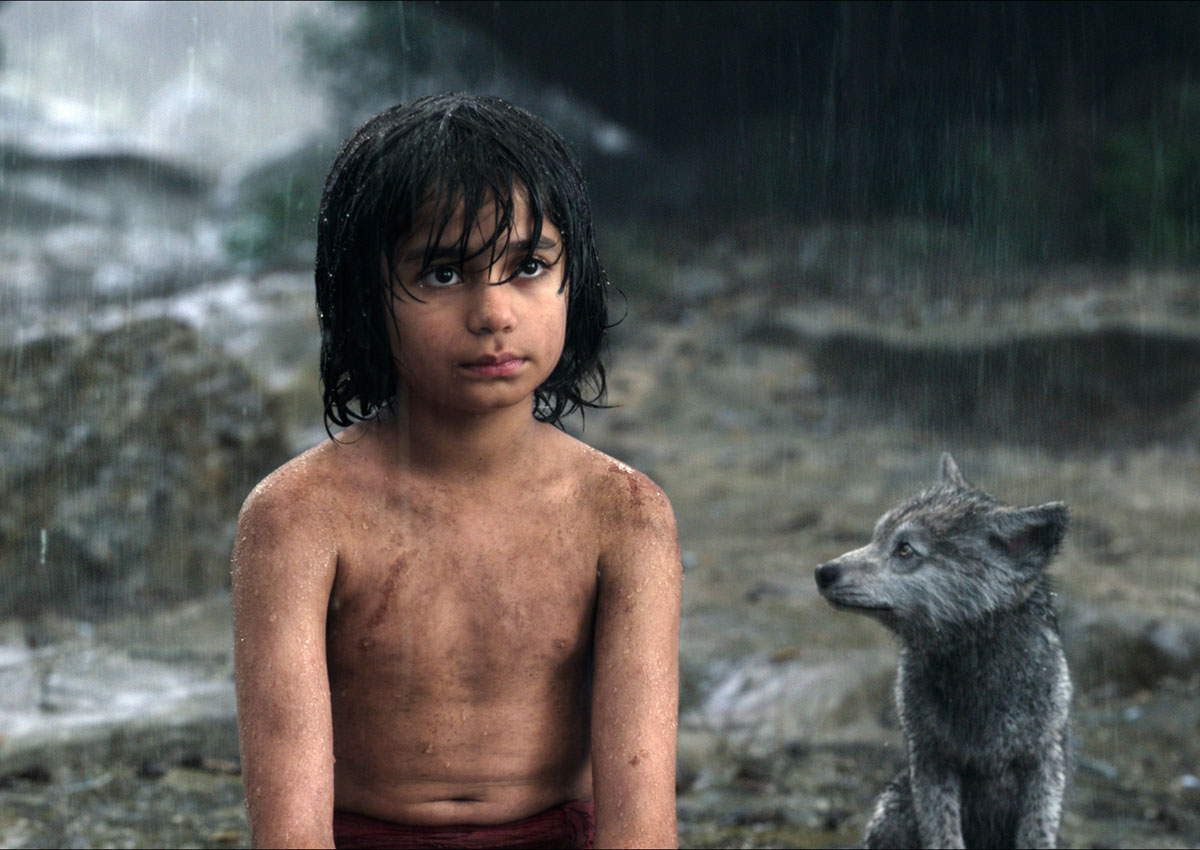
The recurring question in Disney’s The Jungle Book is whether Mowgli (Neel Sethi) belongs in a village with his fellow humans, or in the wild with the wolf (voiced by Lupita Nyong’o) who adopted him.
The film itself has a similar identity crisis.
Is it a musical or isn’t it? Is it aimed at children or adults? Is it a wacky live-action version of Disney’s classic 1967 cartoon, or is it a po-faced adaptation of Rudyard Kipling’s stories from 1894 and 1895?
Like Mowgli, Jon Favreau’s film can never quite decide.
One thing is clear, mind you, and that’s that The Jungle Book is a technical marvel.
A 21st-Century update of the Mary Poppins sequence that puts flesh-and-blood actors into an animated setting, the film has an on-screen actor as Mowgli, but the animals and the lush landscapes around him are computer-generated – not that you’d know.
So convincing are the digital creations, with their thick fur, roiling muscles, glinting eyes and twitching ears, that you could easily imagine that Favreau had broken all sorts of child endangerment laws by throwing a 12-year-old boy into a studio with a pack of wild animals.
Between The Jungle Book and The Revenant, it seems that if you want to see the photorealistic cutting-edge of digital imagery, then a bear has got to be involved.
‘A lot less fun’
The problems with The Jungle Book have to do with something more old-fashioned: the script, which meanders from episode to episode without ever picking up speed or accruing any of the thematic sophistication of Disney’s other current anthropomorphic animal extravaganza, Zootopia.
Read the full article here
Coding and robotics programme launched for Malay-Muslim community
The workshop is conducted in collaboration with Google, IDA Labs and the National Library Board.
Source link


