 SINGAPORE – The tourism sector will be getting a S$700 million boost over the next five years as the Government continues its efforts to drive innovation and growth in the sector.
The S$700 million is the third tranche for the Singapore Tourism Board’s (STB)…
Source link
Tourism sector gets S$700m boost
He's off to get help to help others
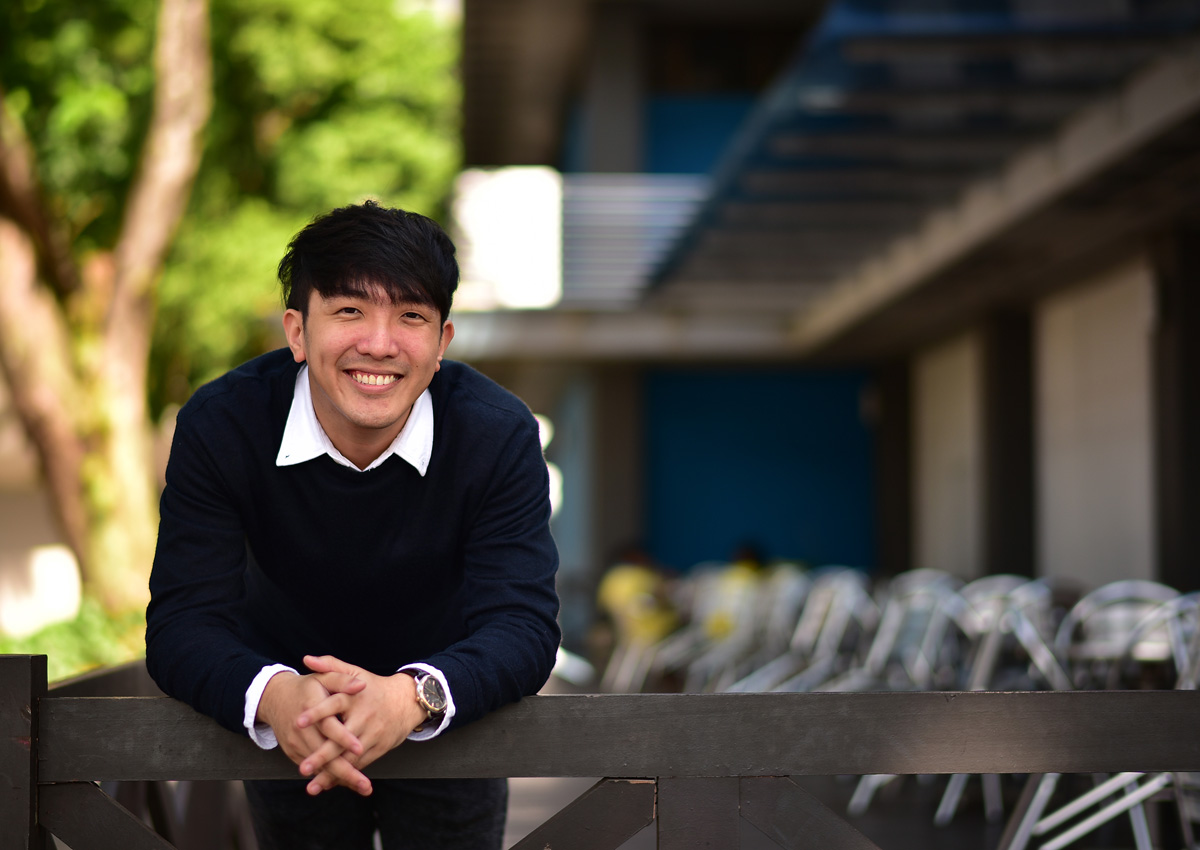
Today, 26-year-old Joshua Leong is flying off to the United States to join a prestigious programme for young leaders in South-east Asia.
The five-week experience – initiated by US President Barack Obama – is for young people active in fields such as civic engagement and managing non-governmental organisations.
Mr Leong is one of four Singaporeans in the spring 2016 batch of the Young Southeast Asian Leaders Initiative Professional Fellows Program. Yet it was by chance that he became involved in the social enterprise sector seven years ago.
When he applied to Ngee Ann Polytechnic after his O levels, he was confident of getting his top choice, mass communications.
“So, for my second choice, I thought, ‘anyhow put’,” he recalled with a laugh, using the colloquial term for making a random choice.
He chose – and got into – the new Business and Social Enterprise course, as part of its pioneer batch, and that made all the difference.
Through encountering non-profit organisations and social enterprises during the course, his interest in what they did was awakened.
“It triggered my social passion,” said Mr Leong, a project and marketing executive at Social Lab, which runs social enterprise Dialogue in the Dark Singapore at Ngee Ann Polytechnic.
The local franchise of an international movement, Dialogue in the Dark promotes inclusivity and raises awareness of the experience of being visually impaired.
Mr Leong helped to organise its official launch in 2009, then spent the first semester of his third year interning there.
Those six months were very different from listening to lectures: “That was the trigger. It gave me the empowerment to make decisions. To really go hands-on… It gave me a sense of responsibility, that I had to level myself up.”
After graduating in 2011 and doing his national service, he did a degree in business management at RMIT University – working with Dialogue in the Dark all the while.
With a mother who is an auditor and a father who works in the extended family’s equipment business, Mr Leong – the eldest of three sons – is sensitive to the demands of running a company.
“For social enterprises to be sustainable, business elements count for a very huge part of it,” he said.
These include human resource management and risk evaluation – and, crucially for social enterprises, how to balance profit margins with social impact, he added.
He hopes to gain such expertise over the next five weeks on the young leaders’ programme in the US. There, he will do a stint with multinational professional services firm Deloitte.
The programme is funded by the US Department of State and administered in ASEAN by American Councils for International Education.
Mr Leong is among nine Singaporeans who have been on the programme since it began last year.
There have been more than 3,000 applicants from ASEAN countries since then.
An American Councils spokesman said that, in selecting fellows, it looked for people who are “motivated, professionally driven, and who we believe would capitalise on the experience”.
Mr Leong thinks one factor which may have helped him was his vision for a social enterprise of his own – something he talked about in the final selection interview.
He is thinking of a training hub for marginalised groups such as those who are visually- or hearing-impaired.
“Right now, we are trying to find jobs that can cater to these people,” he said. “But to change the mindsets of Singaporeans, it would be better to equip them with skills to put them on a level playing field.”
Only then will people see them as “equally capable”, instead of workers who require special treatment, Mr Leong added.

This article was first published on April 25, 2016.
Get a copy of The Straits Times or go to straitstimes.com for more stories.
Image:
Publication Date:
Monday, April 25, 2016 – 17:10
Keywords:
Send to mobile app:
Source:
Story Type:
Others
Co-founder of TWG Tea loses case
A co-founder of luxury tea brand TWG Tea has lost his case against the chief of lifestyle company Osim International and others, with a judge calling one of his claims a storm in a tea cup.
TWG Tea co-founder Manoj Murjani had his claims against Osim International chief executive officer Ron Sim and five others dismissed by the High Court and failed to convince the court he was removed as chief executive of TWG Tea.
In judgment grounds released on Friday, Judicial Commissioner Chua Lee Ming also rejected his defamation suit against Osim and eight others as “nothing more than a very big storm in a tiny tea cup”.
The dispute goes back to 2011, when Osim, which sells healthy lifestyle products such as massage chairs, invested in TWG Tea.
The gourmet beverage firm was launched in Singapore in 2007 as a subsidiary of The Wellness Group (TWG) – a company founded by Mr Murjani – which invests in and promotes spas and health and wellness products.
Osim bought an initial 35 per cent stake in TWG Tea in April 2011.
“Unfortunately, disagreements soon started brewing between the two men at the helm of TWG Tea and Osim,” which “boiled over and spilled into this court”, said the judge.
A key issue was Osim’s subsequent share subscription in TWG Tea in January 2014, which increased its overall stake to 69.9 per cent of the shares in TWG Tea.
The lead plaintiff, The Wellness Group, had alleged that the share issue was an act of minority oppression and breached the terms of a shareholders’ agreement on March 18, 2011, between Osim, Paris Investment, itself and TWG Tea.
Lawyers Prakash Pillai and Koh Junxiang from Clasis Law, who represented both plaintiffs, The Wellness Group and Mr Murjani, had sought a court order to set aside the shares issued to Osim and its wholly-owned Paris Investment.
They argued that Osim and five other defendants had acted “oppressively” against The Wellness Group’s interests under the Companies Act.
The Wellness Group had accused them of conspiring to injure it and Mr Murjani, and breaching an implied term in the sale contract to maximise TWG Tea’s profit before tax for 2013.
Mr Murjani alleged that Osim and others had acted to damage TWG Tea’s profitability and acted wrongfully to enable Osim to take control of TWG Tea.
The Wellness Group alleged that they did this using several means, including acts by Mr Sim and Mr Taha Bouqdib, a director and chief executive of TWG Tea, to remove Mr Murjani as CEO of TWG Tea.
Drew & Napier Senior Counsel Davinder Singh and lawyer Jaikanth Shankar successfully countered the claims in defending Osim, Mr Sim and others.
They argued that the defendants acted properly and there was no intention to “dilute” Mr Murjani’s shares when the share subscription was raised for TWG Tea, among other things.
After an 18-day hearing over three months last year, the judge ruled that The Wellness Group had “failed to prove all of its allegations”.
The judge said while the appointment of directors Khor Peng Soon and Peter Lee to TWG Tea breached an implied term of the shareholders’ agreement, it did not amount to unfair conduct within the meaning of the Companies Act.
He said there could not have been any prejudice to The Wellness Group as Osim had control of the TWG Tea board before the duo were appointed.
He also found “no commercial unfairness” in the share subscription issue.
The judge also found that Mr Murjani resigned on his own accord as CEO of TWG Tea in 2012 and was not removed as he alleged.
He noted that Mr Murjani had said in an e-mail to Mr Sim a day after he announced his resignation, that he supported the steps necessary to professionalise the company.
Mr Murjani had also taken issue with a statement released by the Osim board in 2014 in accordance with SGX Mainboard Rules. It had described the allegations as “unmeritorious and groundless”.
But the judge said, to an ordinary, reasonable person, the words meant “nothing more than that the Osim board believed that the plaintiffs did not have a good case or that the plaintiff’s case was unfounded”.
Separately, he dismissed a counterclaim by Osim against The Wellness Group and Mr Murjani that two paragraphs in a February 2014 Straits Times report attributed to a press statement by TWG had defamed Osim and five others.
vijayan@sph.com.sg
This article was first published on April 25, 2016.
Get a copy of The Straits Times or go to straitstimes.com for more stories.
Image:

Blurb:
Claims against Osim, others dismissed; judge also calls defamation suit 'storm in a teacup'. -The Straits Times
Publication Date:
Monday, April 25, 2016 – 14:00
Send to mobile app:
Source:
Story Type:
Others
Going the 'last mile' to keep elderly in the loop
The Chinese Development Assistance Council (CDAC) intends to step up its efforts to keep the elderly abreast of current affairs and schemes that may benefit them.
This is to address the issue of how some of the elderly are illiterate or socially isolated and do not know of the government schemes that may help them live more comfortably in their golden years.
Reaching out to them is hard as they may not read newspapers or go to community events, say social workers and grassroots leaders.
In the past two years, CDAC – a Chinese self-help group – has been conducting information sessions on topics concerning the elderly, such as the Pioneer Generation Package, Lasting Power of Attorney and MediShield Life.
So far, 3,500 elderly residents from seven constituencies have attended the sessions.
By next year, CDAC hopes to cover eight more constituencies and introduce other topics to the seniors.
For example, it will work with the Central Provident Fund (CPF) Board to train its volunteers to explain to the elderly CPF schemes such as the Retirement Sum scheme and CPF Life.
It will also expand its one-hour news reading programme to three more CDAC centres by next year, up from four now.
The programme is run by volunteers who guide the seniors to use tablets to access news articles from social media platforms.
“I think the challenge (in reaching out to the elderly) is covering the last segment. For some reason, they are not contactable at home. The role of the CDAC is to go that last mile, using the languages or dialects that they are familiar with,” said Parliamentary Secretary for Culture, Community and Youth Baey Yam Keng, who chairs CDAC’s volunteers engagement and development committee.
Mr Baey, also an MP for Tampines GRC, spoke to The Straits Times at the launch of an elderly befriending project run jointly by the CDAC and Singapore Federation of Chinese Clan Associations (SFCCA) in Ang Mo Kio yesterday.
About 600 volunteers from the CDAC and SFCCA will make home visits to 540 socially-isolated elderly residents this year.
The group has been taking the elderly out to buy groceries or visit places of interest, but wanted to expose volunteers to other forms of interaction with the elderly.
Said Mr Baey: “The elderly have been our focus for the last three to four years and we are doing a review now to see how to do more.”
Noting that their strength is in Chinese language and culture, he added that they may further develop a pool of volunteers proficient in dialect to reach out to the elderly.
One elderly resident, Madam Ng Lan Hoon, 90, who lives with a son who has intellectual disability and another son in a one-room flat in Bedok, said: “I am happy when there are volunteers who come and talk to me and bring me things.”
This article was first published on April 25, 2016.
Get a copy of The Straits Times or go to straitstimes.com for more stories.
Image:

Publication Date:
Monday, April 25, 2016 – 17:05
Keywords:
Send to mobile app:
Source:
Story Type:
Others
Receding water levels at Linggiu Reservoir expose Singapore’s vulnerability
TODAY reports: Water consumption in Singapore inched higher in 2015 — is enough being done to prepare for the worst-case scenario?
Source link
Banana supply in Singapore 'stable' despite fungus fears
Supplies of bananas in Singapore are stable even amid growing fears over a disease that is affecting the global crop.
The outbreak is caused by the Tropical Race 4 strain of the Panama disease, a soil fungus that has already spread across Asia – including the Philippines and Indonesia – to parts of Australia, Africa and the Middle East.
The United Nations warned earlier this month that the disease threatens the US$36 billion (S$48.8 billion) banana industry, adding that the sector must intervene “to tackle one of the world’s most destructive banana diseases”, CNN reported.
In Singapore, however, the Agri-Food and Veterinary Authority (AVA) told The Straits Times that the supply of bananas is stable.
“Singapore imports bananas from various countries, including the Philippines, Malaysia, Ecuador, Vietnam and India. The import quantity has increased over the years,” said an AVA spokesman.
Last year, 54,000 tonnes of fresh and chilled bananas were imported into Singapore, up from 51,000 tonnes in 2014 and 48,000 tonnes in 2013.
The main banana type affected by the disease is the Cavendish banana, which makes up 47 per cent of bananas grown worldwide, according to the UN’s Food and Agriculture Organisation.
Singapore supermarket chains Sheng Siong and FairPrice said their supplies and prices of Cavendish bananas have not been affected.

Even so, FairPrice said supplies and prices do fluctuate owing to demand and supply factors, as well as weather conditions such as the El Nino phenomenon, which can lead to a decline in harvests.
Cavendish bananas make up slightly more than half of the bananas sold by Sheng Siong. The chain said the supply of Cavendish bananas is “forecast to be stable, and prices should not be fluctuating too greatly in the short term”.
Sheng Siong and FairPrice said they have diversified their sources for Cavendish bananas. For the longer term, Sheng Siong said it will continue to monitor the situation.
First discovered in Taiwan in the 1990s, the Tropical Race 4 strain rapidly ruined crops as it spread across South-east Asia. In the past three years, crops in the Middle East, Africa and the Australian state of Queensland have been infected by the strain, which is spread through soil, water and contaminated farm equipment.
In the 1950s, an earlier strain of the Panama disease, known as Tropical Race 1, nearly wiped out what was then the most popular banana variety, the Gros Michel. In response, producers shifted production to the Cavendish banana, which is resistant to the Tropical Race 1 strain but not Tropical Race 4.
Dr Tony Pattison, a Queensland government scientist, told the Financial Times that the fungus infects a banana plant through its roots, causing a wilting that spreads to the entire plant, destroying it. Once established, the fungus is hard to treat.
There are fears that the disease could now threaten crops in Latin America. The International Banana Congress, held last week, moved its venue at the last minute from Costa Rica to Miami owing to concerns that those attending could spread the disease through contaminated soil on their shoes, according to The Guardian.
The banana industry could face escalating prices and many smaller operators could lose their livelihoods should the disease spread to Latin America.
For now, scientists are placing their bets on a new banana variety known as the GCTCV-219, which was developed by the Taiwan Banana Research Institute, and is said to have a shape and taste similar to the Cavendish.
idayus@sph.com.sg
mellinjm@sph.com.sg
This article was first published on April 25, 2016.
Get a copy of The Straits Times or go to straitstimes.com for more stories.
Image:

Blurb:
Outbreak threatening global crop has spread across Asia to Australia, Africa and Mid-East. -The Straits Times
Publication Date:
Monday, April 25, 2016 – 14:00
Send to mobile app:
Source:
Story Type:
Others
Makeshift 'jungle brothels' found near Punggol park
Scenic Punggol Waterway Park is a favourite spot for young families, with many having picnics and flying kites there on weekends.
But after dark, another part of the park comes alive. In the forested area on a hill just a few hundred metres away from the park, a series of makeshift brothels pop up.
The Straits Times visited the area, located near the Safra Punggol club, in the evening on April 17 and found three clearings about 20m from the edge of the forested area overlooking the park, which is a haunt for foreign construction workers because of its proximity to their dormitories and worksites.
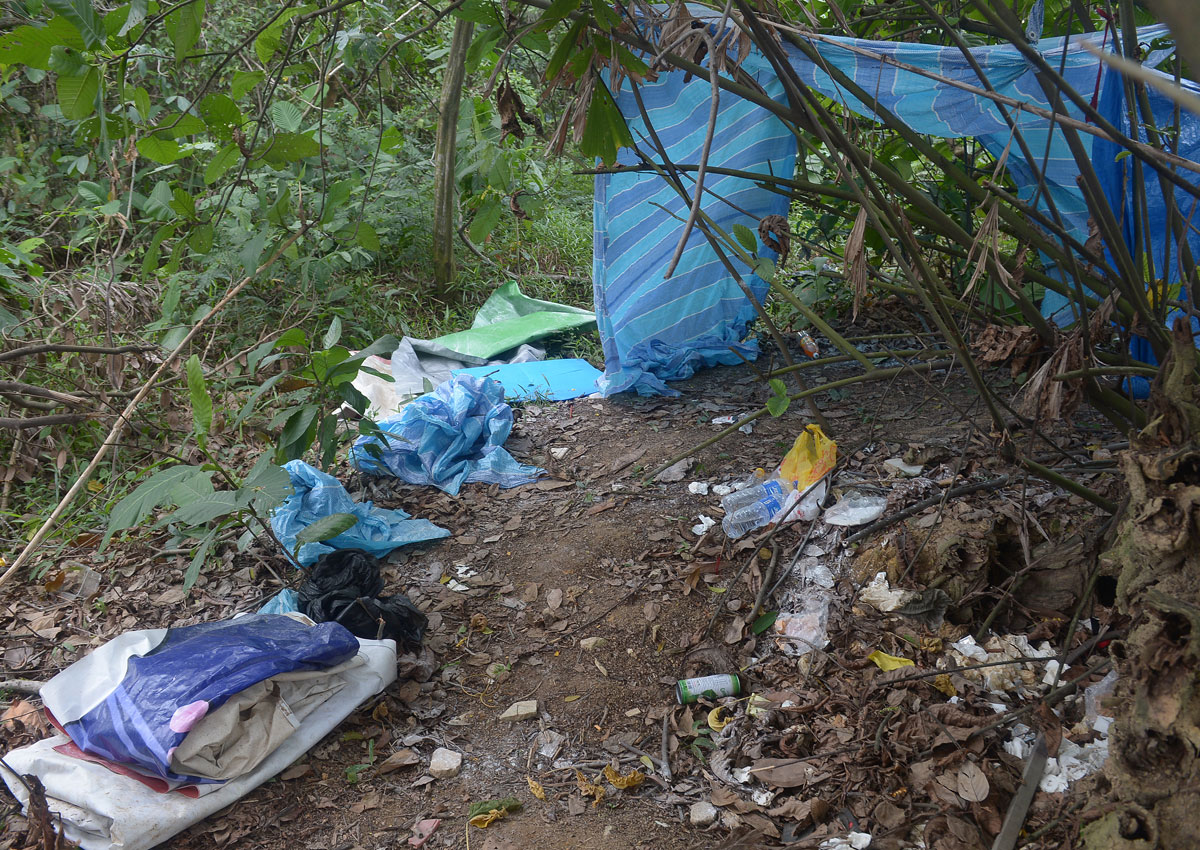
Each 5 sq m clearing, marked by joss sticks planted on the ground, had a blue tarpaulin sheet covering a mattress surrounded by condom wrappers, used tissues and empty water bottles. Used condoms, stained clothes and empty boxes of lubricant also littered the area.
Women dressed in black, believed to be prostitutes, could be seen climbing the slope into the clearings as night fell, even as park visitors continued cycling and jogging on the track below. Six men could be seen loitering in the area surrounding the clearings.
Workers in the area were aware of the makeshift brothels where 13 prostitutes, believed to be from Myanmar, are said to ply their trade almost every night, between 7pm and midnight, to about 20 workers of different nationalities. A worker, who wished to be known only as Sharif, said they charged $20 for each half-hour session.
Some said they believed locals also visited the prostitutes as they have seen people parking their cars nearby and walking up the slopes late at night.
Dr Goh Wei Leong, the director of HealthServe, which works with migrant workers, said that although jungle brothels are an ongoing issue, there are no figures on how many people visit such brothels.
Makeshift ‘jungle brothels’ found near Punggol park
Click on thumbnail to view photos. Source:
The Straits Times










The area had been cleared of tarpaulin sheets and mattresses when The Straits Times visited again last Friday morning, and a sign put up by the Singapore Police Force stated that eight people had been arrested for trespassing in the area, which is state land. Police confirmed the arrests but did not comment further.
In March 2014, 61 foreign nationals were arrested in the forested areas along Punggol for “illicit activities” such as vice and gambling.
However, the problem is believed to be a recurring one, as workers said the brothels have been raided several times in the past, only to be set up again shortly after.
Residents, many of whom have young children, said they were troubled by the presence of prostitution in the area.
Engineer Andy Herrera, 32, who is married with one child, said that although he did not mind workers congregating in the park, he was worried about the safety of his family.
Ms Nur Ali, who works in the mental health industry, said the brothel made her “nervous” as she sometimes had to work late.
“Knowing there’s risque business going on not too far from here is unsettling,” said the 31-year-old.
azhaki@sph.com.sg
This article was first published on April 25, 2016.
Get a copy of The Straits Times or go to straitstimes.com for more stories.
Image:
Blurb:
Prostitutes said to ply their trade at night in forested area, which has since been cleared. -The Straits Times
Publication Date:
Monday, April 25, 2016 – 14:00
Keywords:
Send to mobile app:
Source:
Story Type:
Others
Student care centres for all primary schools by end-2020
Student care centres will be set up in all of Singapore’s primary schools but it will take until the end of 2020 to happen, as the Ministry of Education (MOE) has told The Straits Times that it does not want to compromise on quality.
The in-house centres offer services such as meals, homework supervision, games and, in some cases, tuition for pupils after school.
Currently, nearly 70 per cent, or 130 out of 190, primary schools here have such a centre, up from fewer than 50 four years ago. Over the same period, enrolment in them has jumped from 3,000 to 15,000 pupils.
The MOE told The Straits Times that such arrangements offer “important after-school support for students, especially those who do not have a conducive and structured environment after school hours”.
Demand for after-school care services has grown over the years, with centres at some primary schools having to hold ballots for places. Each centre takes in 60 to more than 300 pupils.
Some oversubscribed centres even have waiting lists. “Where there is high demand, schools have been working with operators to expand the capacity of their centres,” the MOE said.
The centres are typically run by external parties such as voluntary welfare organisations or commercial operators.
Last year, four self-help groups came together to form a joint venture company which runs six care centres in schools.
The partnership allows schools to better support the development of pupils, especially those from disadvantaged backgrounds, by tapping on the resources of these groups. The self-help groups are on track to reach a targeted 30 centres by 2020.
Operators of existing in-school centres say the move to set up centres in all primary schools is a positive one that will benefit many households.
Nascans, one of the bigger student care players, has around 2,400 pupils attending its 17 school-based centres. Last year, it had 1,640.
Its chief operating officer Peh Yi Han said the popularity of in-school care services may be due to the centres’ close links with schools.
“Our centres are able to work closely with the school teachers to understand the learning challenges of different students.”
Other centres, such as one run by Neighbourhood Care Services in Xishan Primary, are operating at full capacity.
Ms Susan Thng, senior supervisor of the centre at Xishan Primary, said: “In many families, both parents are busy working to make a living. Such centres provide a safe place for their children to go to.”
Parents are glad that more in-school centres will open in the next few years.
Marketing manager Bernard Ong, 34, who intends to send his four-year-old son to a school-based centre when he starts Primary 1, said: “Parents don’t have to worry as their kids will be in a safe and familiar environment.”
Fees for most of these centres range from $260 to $290 monthly, before subsidies. Pupils from needy families pay as little as $5 per month after subsidy.
Jalan Besar GRC MP Denise Phua, who heads the Government Parliamentary Committee for Education, said the school-based centres provide pupils from disadvantaged backgrounds with a structured environment that they may not otherwise have access to. “If stitched well, these student care services are also opportunities to cultivate good work habits and discipline,” she added.
“These will form a stronger foundation for their teenage years. It will allow them to catch up or surpass those who already have some form of adult supervision at home.”
calyang@sph.com.sg
This article was first published on April 25, 2016.
Get a copy of The Straits Times or go to straitstimes.com for more stories.
Image:

Publication Date:
Monday, April 25, 2016 – 11:24
Keywords:
Send to mobile app:
Source:
Story Type:
Others
PM encourages Singaporeans to have more babies
Teck Ghee Community Club was abuzz with fun, games, and cries of dozens of babies yesterday, as families living in the constituency took part in a Healthy Baby contest.
In all, 145 babies took part in the contest – almost double the number of participants last year.
This cheered their MP, Prime Minister Lee Hsien Loong, who said: “I hope by the time we have another baby show next year, there will be new participants!”
He was glad to note, as he toured the various activity booths, that he saw some “akan datang – mothers who are already expecting”.
He hopes Singaporeans will have more babies as “it is part of being a family and having a full life”.
The Government, he added, had introduced several measures in this year’s Budget to support families with children. These include the First Step Grant, where parents will get $3,000 for their newborn’s Child Development Account (CDA).
The CDA is a special savings account where the Government matches parents’ deposits, up to a ceiling. It can be used for childcare fees and medical expenses.
There is also KidStart, a pilot programme for children from low-income families to get learning, development and health support.
Yesterday, the community club in Ang Mo Kio GRC also organised a carnival to let young children try out different activities. They built shapes using sand in a small pit, and played percussion instruments with their parents.
About six in 10 of the young tots in the contest yesterday were SG50 babies, born last year when Singapore celebrated its Golden Jubilee.
Their parents helped contribute to the nation’s record 33,793 Singapore citizen babies born last year, a 13-year high that exceeded even that of the 33,238 births in 2012, a Dragon Year which the Chinese consider auspicious for births.
“Last year, we had a bumper year,” Mr Lee said, as he urged parents to help bump this figure up even further.
“I hope you all work harder and make further progress!”
leepearl@sph.com.sg
This article was first published on Aprilm 25, 2016.
Get a copy of The Straits Times or go to straitstimes.com for more stories.
Image:

Publication Date:
Monday, April 25, 2016 – 11:18
Keywords:
Send to mobile app:
Source:
Story Type:
Others
Watsons Ultimate Two-Days Sale at All Stores from 26 – 27 Apr 2016 | SINGPromos.com

Watsons Ultimate Two-Days Sale at all stores – up to 70% off, 1-for-1 & more (26 – 27 Apr)
Watsons Ultimate Two-Days Sale at All Stores from 26 – 27 Apr 2016 | SINGPromos.com
Watsons will be having a 2-day sale from 26 April to 27 April 2016, 10am – 10pm at all stores islandwide.


