Home Blog Page 4113

Kitchen won't leave airlines high and dry

0

HEN an airplane is about to reach cruising altitude, a savoury smell wafts through the cabin.

In-flight meals add delight to air travel. A Yomiuri Shimbun reporter recently visited a facility at Kansai Airport, on an island in Osaka Bay, Japan, to learn how these meals are prepared.

UP TO 10,000 MEALS A DAY

Fried rice is tossed into the air from a huge frying pan while minced onions and carrots are poured into a large pot.

“One more passenger will be flying business class. We’ll have a total of 12 people in that class.” An announcement alerts staff that they will have to prepare additional dishes.

AAS Catering employs about 30 cooks and has contracts with 30 passenger airlines and four cargo plane carriers. It prepares about 10,000 meals a day at peak periods and is capable of providing up to 25,000 meals.

The dispatch room gives directions to the staff in the kitchen, which is about 350 sq m.

It takes orders around the clock from airline companies until the very last minute before a departure and relays the orders to the kitchen floor.

Operating on a precise schedule is a priority in the airline business. There are times when AAS staff raise their voices as they press each other to make sure they meet the deadline for last-minute orders.

Menus differ by airline.

For the same flight, AAS prepares two kinds of main dishes for economy class and three to four types for business class plus many more items for first class, where multi-course meals are served.

“Long flights need two meals as well as a snack,” said Taisei Tanaka, 57, the kitchen’s head chef.

Orders reflect the national backgrounds of airline companies, he added.

Some airlines from South-east Asian countries that prefer spicy food order AAS to use specific spice brands. European airlines are particular about the texture of baguettes.

AAS also prepares low-salt or low-calorie menus to order.

Meals for Muslims in particular must conform to strict rules.

The company has obtained halal certification, the first domestic in-flight meal provider in Japan to do so. The firm prepares special cookware and employs Muslim chefs.

“The flight destinations and passengers’ nationalities affect the type of orders too,” said Mr Tanaka.

SAFETY-CONSCIOUS CUISINE

I saw a cook put a long, thin probe into a meal.

He was checking the temperature at the centre of the food.

This is done to ensure that every meal is sufficiently heated to kill bacteria based on the Hazard Analysis and Critical Control Point, the global standard of food safety.

However, overheating will dry out the food so fan-assisted steam ovens are used to avoid this.

Taking into account the process of heating food aboard a plane is vital. Said Mr Tanaka: “The key is to cook the food so it reaches the desired succulence at the time it’s served.”

After the meals are cooked, they are immediately chilled in a refrigerator to reduce the risk of food poisoning. Disinfectant spray bottles are placed in every corner of the kitchen.

Since the disaster at the Fukushima No. 1 nuclear power plant in 2011, all foods undergo radiation inspections.

Meals are taken to aircraft by catering trucks.

“Once in the sky, it becomes difficult to deal with serious illness.

Airline meals, in that sense, are the ultimate in safety-conscious cuisine,” Mr Tanaka explained.

REDUCING WASTE

The introduction of low-cost carriers has sparked fierce competition in the business.

It has forced meal providers to pursue quality while trying to reduce costs.

The cost of burning kitchen waste is 80 yen (97 Singapore cents) per kg on the airport island.

AAS tries to reduce waste by purchasing ready-cut vegetables and dehydrating food waste for use as fertiliser.

As a result, it succeeded in slashing daily waste output by 90 per cent from the 1.5 tonnes it used to produce when the airport opened in 1994.

What’s more, you do not have to be on a flight to get a taste of airline meals at Kansai Airport.

Simply head to The Legend of Concorde restaurant on the third floor.

There, you can order a la carte and set course meals that are normally served to first class passengers at 10,300 yen per person, and 6,200 yen for business class meals.

There, you can also watch planes landing and taking off while you dine like a high flyer.

Image: 
Category: 
Publication Date: 
Tuesday, April 26, 2016 – 09:41
Send to mobile app: 
Source: 


Story Type: 
Others

Source link

Dengue cases in Singapore rose to 232 last week

0

There are now 54 active dengue clusters in Singapore, including 11 classified as high-risk.

Source link

A stellar showing by science and tech agency

0

The Agency for Science, Technology and Research (A*Star) said it has helped small and medium-sized enterprises (SMEs) stay competitive, and get start-ups off the ground.

Over the past five years, it lent its expertise in more than 8,900 industry projects, of which more than 3,000 were with SMEs.

It also seeded 71 start-ups, more than a threefold increase over the previous five-year period.

Giving a report card on A*Star’s research, innovation and enterprise efforts in the past five years, managing director Raj Thampuran yesterday said the agency had surpassed all targets.

These included the volume of technology licensed out to companies, industry funding received and industry projects.

The number of projects involving A*Star rose by nearly six times over the past five years, from 1,547 between 2006 and 2010 to 8,965 between 2011 and 2015. Some 4,000 were with local enterprises and 4,921 with MNCs.

The agency also seconded more than 300 researchers to some 160 companies.

The number of technology licences signed with companies also rose – from 221 between 2006 and 2010 to 1,030 between 2011 and 2015.

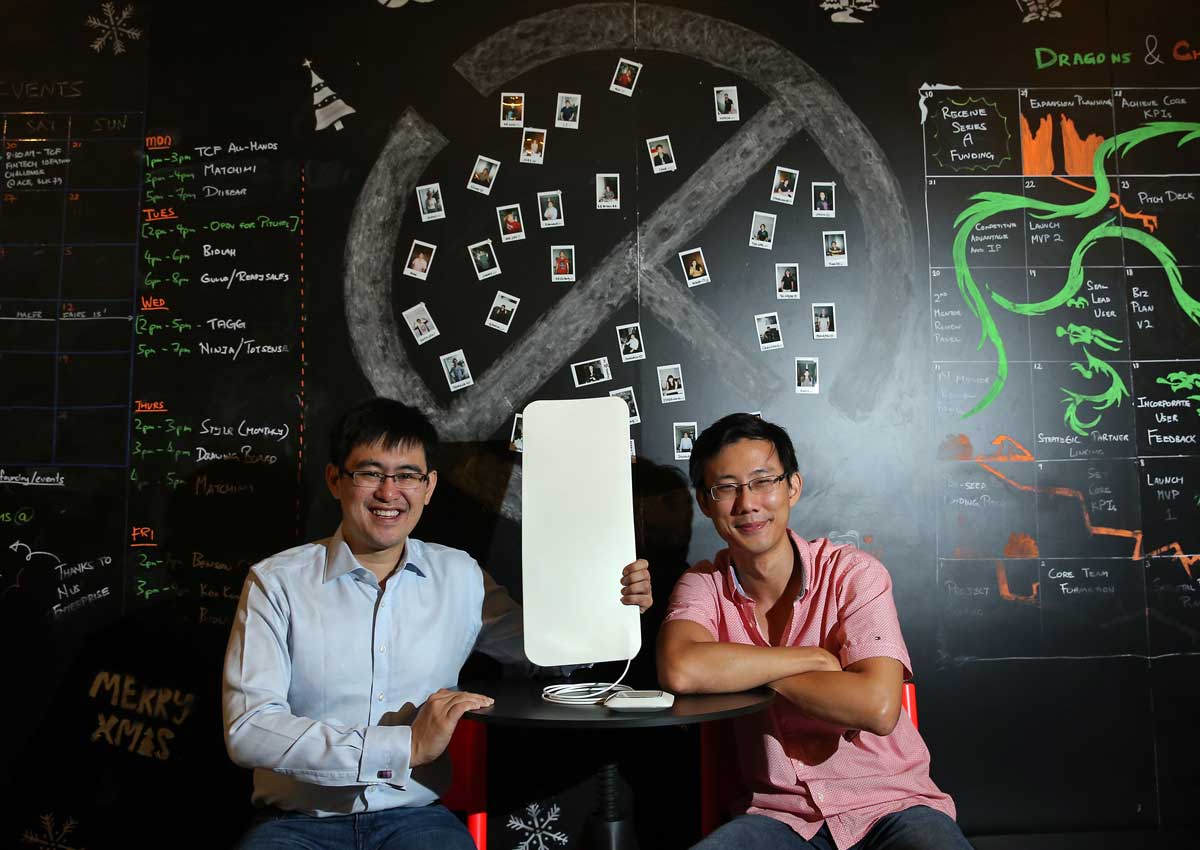
The agency helped in the development of 71 start-ups, which attracted more than $90 million in follow-up funding. One was Juvo Labs, which developed a sleep and vitals monitor which, when slipped under its user’s mattress, picks up and records things like heartbeat, breathing and movement patterns.

Using the data collected, the device can communicate with an air-conditioning system, for example, to increase or lower the temperature to help the user sleep better.

A*Star, together with Duke-NUS Medical School, also successfully developed the cancer drug ETC-159 – the first publicly-funded drug to enter clinical trials here.

“Collectively, these efforts have created value for Singapore, catalysing over $1.6 billion in industry R&D spending through collaborations with A*Star,” said agency chairman Lim Chuan Poh.

Mr Lim noted that local companies, including SMEs, are increasingly recognising the importance of research and innovation in helping them improve productivity and develop new products to be more competitive on the global stage.

Hence in the coming five years, the agency will broaden its engagements with large local enterprises and support SMEs to focus on innovation-led growth, he said.

Mr Lim also said countries are increasingly looking to research and innovation to remain competitive and that Singapore has created a conducive research, innovation and enterprise system by putting companies, global institutions and universities close to each other.

One example is one-north, which is home to 250 leading companies and global institutions, five institutes of higher learning and corporate universities, 41 incubators and 16 world-class public research institutes.

“But what will truly differentiate Singapore is not policies, strategies or frameworks,” he said.

“Above all, it is our ability to execute, to implement our strategies and deliver our commitments.”


This article was first published on April 26, 2016.
Get a copy of The Straits Times or go to straitstimes.com for more stories.

Image: 
Category: 
Publication Date: 
Tuesday, April 26, 2016 – 09:21
Keywords: 
Send to mobile app: 
Source: 


Story Type: 
Others

Source link

Task force set up to fight rat menace

0

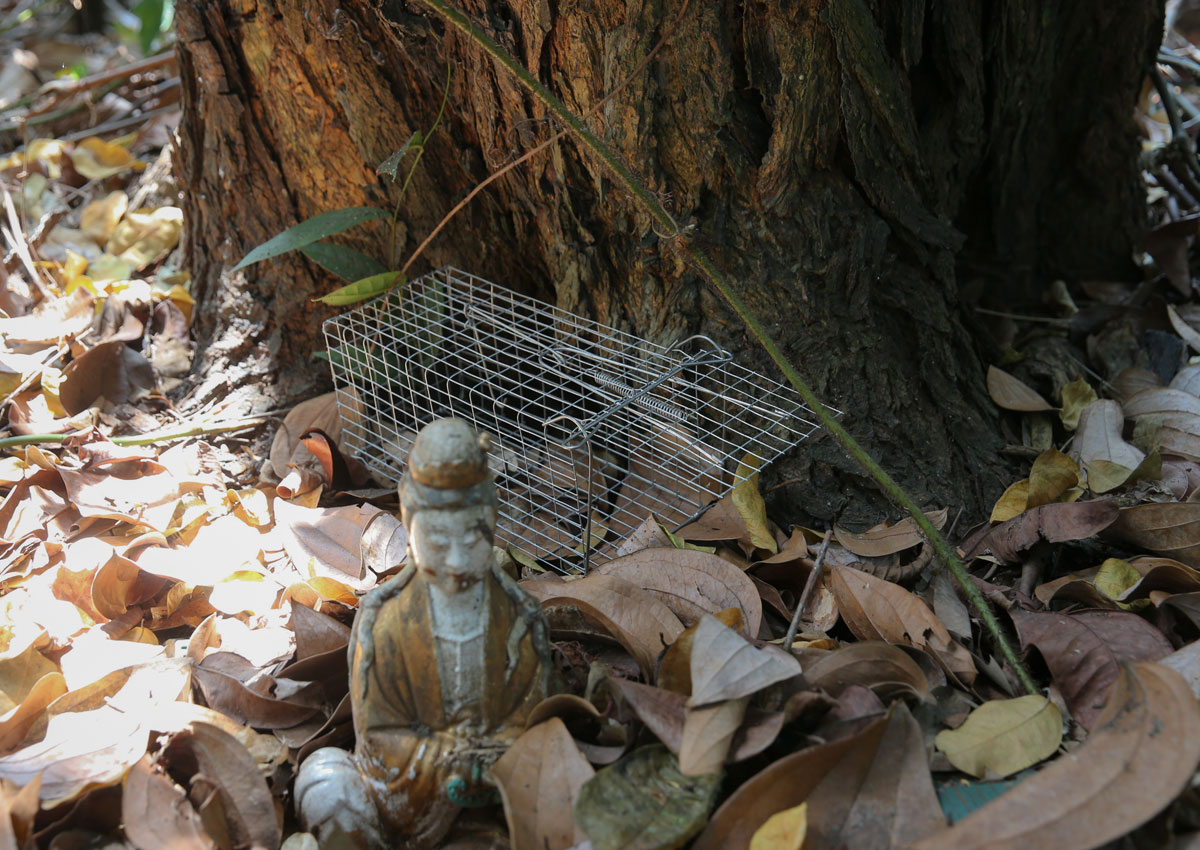
The authorities are trying out a new approach to tackling the problem of rat infestation, by setting up a task force of parties such as town councils and eatery or mall operators to coordinate rat control works.

Four areas – namely Redhill Close, Bedok Central, Clementi Avenue 3 and Bangkit Road in Bukit Panjang – were chosen for the pilot, as 40 to 130 burrows were found in each area, said the National Environment Agency (NEA).

In each place, the stakeholders will engage pest control operators and coordinate rat control plans to manage the overall situation.

The trial aims to “ensure that a holistic and coordinated effort is undertaken to deny rats food and harbourage”, said the agency.

It said early results have shown a 15 to 70 per cent reduction in the number of burrows in each area.

The rat menace has grown in recent years. About 43,000 rat burrows were found in public areas last year, up from about 42,000 in 2014, according to NEA figures.

Over the two years, an average of about 85 per cent of the burrows were found in housing estates managed by town councils. More than 80 per cent of these were found near bin chutes and bin centres.

Earlier this month, Senior Minister of State for the Environment and Water Resources, Dr Amy Khor, said in Parliament that breaches involving rat infestation in areas run by town councils will lead to stricter enforcement.

In response to Straits Times queries on how enforcement will be stepped up, NEA said town councils now face a $150 fine for a first offence for poor refuse management in their bin centres and central refuse chutes. From July, an additional fine of $200 will be issued – under the Control of Vectors and Pesticides Act – if signs of rat infestation are found in bin centres, central refuse chutes and bin chutes.

Depending on the severity of the problem, town councils may be ordered under the Act to take measures to deal with the rat infestation, on top of the fine, said the spokesman. They may face a fine not exceeding $20,000 if they fail to comply, said NEA.

The Straits Times understands that while these penalties are not new, there would be stricter enforcement. Town councils that ST spoke to welcomed the move.

Chairman of Marine Parade Town Council Lim Biow Chuan, also MP for Mountbatten, said it will “work hard” to clear places under its charge if there are rat infestations.

Mr Zaqy Mohamad, chairman of Chua Chu Kang Town Council, welcomed the move but raised concerns about how rat nests may be in areas not run by town councils. “Rats don’t recognise boundaries. They cross boundaries,” said Mr Zaqy, also an MP for Chua Chu Kang GRC.

A six-month pilot by the Holland- Bukit Panjang Town Council from last October to last month in Bangkit Road has seen results.

About 60 shop owners, four coffee shop owners and a Chinese temple in Bangkit Road took part.

Vegetable seller Low Mui Tong, 54, said he used to catch “a lot of rats” half a year ago. “But for the past few months, I haven’t seen any rats,” he said.

Likewise, the East Coast-Fengshan Town Council has seen results since its pilot started in January.

Public relations manager Danielle Theodora Loh said its weekly rodent treatment programme was intensified. She said there are now fewer rats in common areas such as bin chutes and carpark drains.


This article was first published on April 26, 2016.
Get a copy of The Straits Times or go to straitstimes.com for more stories.

Image: 
Category: 
Publication Date: 
Tuesday, April 26, 2016 – 09:13
Keywords: 
Send to mobile app: 
Source: 


Story Type: 
Others

Source link

Saiyidah qualifies after winning in rowing regatta

0

NATIONAL rower Saiyidah Aisyah has become the first Singaporean rower to qualify for the Olympic Games.

She finished first in the B final of the 2,000m women’s single sculls event at the 2016 Fisa Asia and Oceania Continental Olympic Qualification Regatta yesterday morning.

The 28-year-old clocked 7min 53.13sec at the Tangeum Lake in Chungju, South Korea to earn a coveted spot at the Rio Games in August.

Only the top seven rowers at the regatta qualify for the Summer Games.

These comprise all the six rowers in the A final – from Indonesia, Iran, Kazakhstan, South Korea, Taipei and Vietnam – as well as Saiyidah, winner of the B final.

The 2013 South-east Asia Games rowing champion and 2015 SEA Games double bronze medallist won her tightly contested race ahead of Thailand’s Phuttharaksa Neegree (7:54.22) and Qatar’s Tala Aladin Abujbara (7:55.66).

Geraldine Lee and Lim Heem Wei became Singapore’s first canoeist and gymnast respectively to qualify for the Olympics at the London Games in 2012.

aleysaj@sph.com.sg


Get MyPaper for more stories.

Image: 
Category: 
Publication Date: 
Tuesday, April 26, 2016 – 09:08
Send to mobile app: 
Source: 


Story Type: 
Others

Source link

NUH team to track 2,300 people for diabetes

0

FOR some people, it takes years for their high blood sugar levels to result in full-blown diabetes. For others, all it takes is a matter of months.

To find out why, a team of doctors from the National University Hospital (NUH) is embarking on a study that will chart the course to Type 2 diabetes in 2,300 people without the condition.

They will track these volunteers for three years to see if any of them develop diabetes, and study the factors that might have caused it.

The study will cover 800 people with normal blood sugar levels, and 1,500 pre-diabetics – those with blood sugar levels approaching the diabetic range.

“To our knowledge, this is one of the largest studies that go to this level of depth and breadth… to better understand the risk factors,” said Sue-Anne Toh, a senior consultant with NUH’s endocrinology division, who is heading the study.

She added that the study plans to identify lifestyle factors and biomarkers – such as certain proteins – that make someone more likely to develop the chronic condition.

The $20 million study is funded by the Ministry of Health and Janssen Pharmaceuticals. Those who are interested in joining the study can e-mail brite_spot@nuhs.edu.sg.

They can also call 9135-4495 or 9131-4490 during office hours.

Participants must be between 30 years old and 65 years old, and be generally healthy with no history of diabetes or other chronic conditions requiring long-term medication.

Both those with normal blood sugar levels and pre-diabetics can apply.


Get MyPaper for more stories.

Image: 
Category: 
Publication Date: 
Tuesday, April 26, 2016 – 09:00
Keywords: 
Send to mobile app: 
Source: 


Story Type: 
Others

Source link

Singapore tourism gets a $700m booster shot

0

CHINESE tourists in Singapore tend to make a detour to temples before visiting the integrated resorts.

While one can only hazard a guess at the reason, more of such insights, pieced together by the Singapore Tourism Board (STB), could help tourism players better understand the behaviour of travellers.

Yesterday, Minister for Trade and Industry S. Iswaran said the Government was giving the tourism industry a $700 million boost for the next five years until 2020.

Among its other uses, the fund will tap on big data to gain insights about visitors’ behaviour – like the Chinese tourists’ propensity to visit temples before casinos.

The money will also be used to attract and train industry professionals and grow the cruise industry, Mr Iswaran added.

Speaking at a tourism industry conference, he said the last two years have been challenging. Last year, visitor arrivals grew a modest 0.9 per cent to 15.2 million, while tourism receipts fell below expectations, dipping by 6.8 per cent to an estimated $22 billion.

While keeping an eye on long-term growth opportunities, the industry needs to be able to deal with short-term volatility, he said.

The STB will ramp up marketing efforts in secondary cities in China, Indonesia and India, and explore newer markets like Myanmar, said its chief executive Lionel Yeo.

It is also enhancing a fund aimed at attracting business travellers. The latter, on average, spend double that of a leisure traveller.

Also in the works is a central hub where businesses can give information about their offerings so travel agencies and aggregators can plan tour packages more efficiently.

STB’s chief technology officer Quek Choon Yang said the aim is to transform Singapore into a single, unified “mega-attraction”, enabled by a one-stop mobile application where visitors can get the information and services they need.

Ngee Ann Polytechnic’s senior tourism lecturer Michael Chiam, who attended the conference, said the challenge is getting industry players to share their data.

He added: “The mindset behind it is that we’re all interconnected… and if we can pool data together, it’ll be better off for all of us.”

mellinjm@sph.com.sg


Get MyPaper for more stories.

Image: 
Category: 
Publication Date: 
Tuesday, April 26, 2016 – 08:55
Send to mobile app: 
Source: 


Story Type: 
Others

Source link

Teamwork in 4 areas to fight rats pays off

0

TO TACKLE the growing problem of rat infestation, a task force involving multiple stakeholders – such as town councils and food-shop and mall operators – is being piloted in four areas islandwide.

The four sites are Redhill Close, Bedok Central, Clementi Avenue 3 and Bangkit Road in Bukit Panjang, which were chosen because 40 to 130 burrows were detected in each area before coordinated efforts began, said the National Environment Agency (NEA).

In each area, the stakeholders engage pest-control operators and coordinate their rat-control plans to manage the overall situation.

Early results have showed a 15 to 70 per cent reduction in the number of burrows in each area, said NEA.

In recent years, the problem of rat infestation has worsened. About 43,000 burrows were found in public areas last year, up from about 42,000 in 2014, according to NEA figures.

Over the two years, an average of about 85 per cent of the burrows were found in housing estates managed by town councils. More than 80 per cent of these were found near bin chutes and bin centres.

Earlier this month, Senior Minister of State for the Environment and Water Resources Amy Khor said in Parliament that breaches involving rat infestation in areas run by town councils will lead to stricter enforcement.

In response to queries on how enforcement will be stepped up, NEA said town councils now face a $150 fine for a first-time offence for poor refuse management in their bin centres and central refuse chutes.

From July, an additional fine of $200 will be issued – under the Control of Vectors and Pesticides Act – if signs of rat infestations are found in bin centres, central refuse chutes and bin chutes, said NEA.

Depending on the severity of the problem, town councils may be ordered under the Act to carry out measures to deal with the rat infestation, on top of the fine, added the spokesman. They may face a fine not exceeding $20,000 if they fail to comply, said NEA.

While these penalties are not new, an NEA spokesman added that they would be more strictly enforced.

Town councils interviewed welcomed the stricter enforcement as it is a matter of public hygiene.

Chairman of Marine Parade town council Lim Biow Chuan, also MP for Mountbatten, said it will “work hard” to clear places under its management if there are rat infestations.

Zaqy Mohamad, chairman of Chua Chu Kang town council, welcomed the harsher enforcement but raised concerns over how rat nests may originate from areas not run by town councils.

“Rat don’t recognise boundaries. They cross boundaries,” said Mr Zaqy, who is also an MP for Chua Chu Kang GRC.

Meanwhile, in Bangkit Road, a six-month pilot by the Holland-Bukit Panjang Town Council to tackle rat infestation has seen results.

A vegetable seller at Block 259 Bangkit Road, Low Mui Tong, said he used to catch “a lot of rats” half a year ago.

“But for the past few months, I haven’t seen any,” he added.

kchitra@sph.com.sg


Get MyPaper for more stories.

Image: 
Category: 
Publication Date: 
Tuesday, April 26, 2016 – 08:51
Keywords: 
Send to mobile app: 
Source: 


Story Type: 
Others

Source link

Johor can meet Singapore’s water needs despite dry spell: Official

0

SINGAPORE – Johor will still be able to meet Singapore’s water needs despite a drop in water levels at the Linggiu Reservoir, said Johor Public Works, Rural and Regional Develop­ment Committee chairman Hasni Mohammad.
Mr Hasni was quoted by The Star…

Source link

MRT service disrupted for 2nd time in 12 hours

0

SMRT has apologised and says it is “currently investigating the cause to determine if it is related to last night’s power fault”. 

Source link