Excluding biomedical manufacturing, output decreased 5.5 per cent from a year ago, the EDB says.
Source link
Singapore's manufacturing output declines 0.5 per cent in March
Uber can 'help cut car ownership and meet demand for last-mile travel'
Uber can help reduce private-car ownership in Singapore, and function as a viable alternative for last-mile connections for commuters, the ride-hailing app’s new general manager in Singapore Warren Tseng has said.
In an hour-long interview with reporters on Monday, he sought to portray Uber as a helpful stakeholder in Singapore’s public transport ecosystem, rather than as a disruptor, in that its bids for certificates of entitlement (COEs) can ultimately lower private-car ownership, and that it can provide commuters with last-mile connections.
Recent reports stated that the Uber-owned Lion City Rental had put in – and won – a large number of COE bids, thus helping to drive up COE premiums.
Singapore’s Land Transport Authority (LTA) said then that the growth of the private-hire car sector can help reduce the demand for private cars over time. It added that COE premiums should reflect market demand and supply.
Responding on Monday to questions about Uber’s COE bids, Mr Tseng said: “Getting more of these cars on the road means there are more ways for people to get around the city, and it complements public transport; ultimately, it’ll reduce private-car ownership.”
He said that Lion City Rental’s successful bids for COEs were a part of Uber’s “supply-growth initiative” which would enable Uber to grow its fleet, while providing more rental options for its drivers.
He added that the company was in touch with the LTA on some of its business plans, including those of Lion City Rental: “We work with LTA on some of these things, and they’re pretty comfortable with Lion City Rental as well.”
Mr Tseng noted that a quarter of all trips on Uber “start or end at an MRT station”, indicating that commuters “typically use Uber for the last mile of that journey”.
Public officials and experts have identified last-mile connectivity – the distance one has to travel to reach a transport system or one’s destination after a bus or train ride – as a hallmark of a good public-transportation system.
Efforts have been made by government agencies and even a public transport operator here in recent years to improve this leg of a commuter’s journey. Ideas include launching bicycle-sharing schemes, building more sheltered walkways, and even SMRT’s plans to use driverless pods to cover this stretch.
Yang Nan, assistant strategy and policy professor at the National University of Singapore Business School, was hesitant about lauding the benefits of Uber as a last-mile connectivity option in Singapore’s public-transportation system:
“If the Uber ride is a substitute for a ride that the commuter would have taken with mass public transit … it shows that we should step up the efforts to add more feeder buses or bike-sharing.”
However, he added: “If the added last-mile convenience encourages some commuters to leave their private cars athomeandride public transit, then Uber is doing good here.”

This article was first published on April 26, 2016.
Get The Business Times for more stories.
Image:

Publication Date:
Wednesday, April 27, 2016 – 06:30
Keywords:
Send to mobile app:
Source:
Story Type:
Others
Dealer who sold 27 cars at 2008 pasar malam hasn't sold a car in 9 days
Eight years ago, his pasar malam (night market) sales hit a peak of $1.5 million worth of cars in a week.
He sold 27 cars at a spot near Causeway Point, a shopping mall beside the Woodlands MRT station.
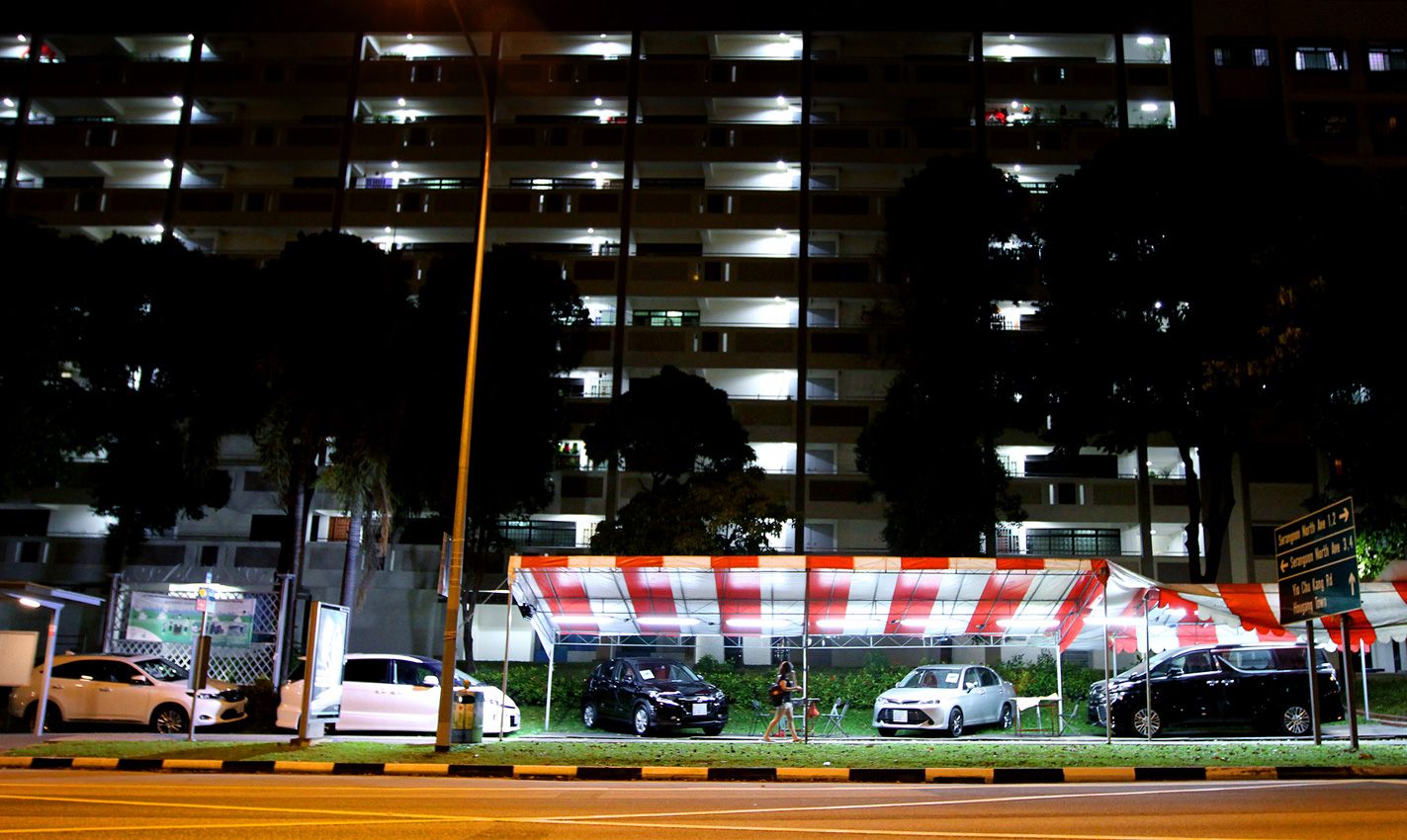
Yesterday, after nine days at a pasar malam at Serangoon North Ave 3, Mr John Ling, 53, who owns SJ Motor Enterprise, said he had yet to sell a single car.
The contrast in his fortunes reflects the changing face of the motor industry, as COE premium prices continue to rise in recent bids despite the release of more car COEs.
Mr Ling started selling cars at night markets in 2003, though his main revenue comes from showroom sales at his Bukit Timah main outlet.
He now owns three outlets in Bukit Timah Shopping Centre where he sells new and used cars and offers car servicing and repair services.
It was the desire to “be where the customers are” that led him to rent space to sell new and used cars at these night markets, he said.
Said Mr Ling: “Pasar malams are just another place for me to sell cars, and it’s an added bonus that it is usually quite crowded.”
But it was originally a tough sell for the car dealer, who got into the business after starting to fix cars when he was 11 years old.
It took him years to establish himself at the night markets because many people did not trust a car dealer who operated in such a cheap environment, he said.
Once he got going, however, he experienced his best week in 2008, when cars were at their most affordable.
ROARING TRADE
It was around the time when COEs hovered at around $3,000, and buyers were allowed to take 100 per cent loans.
One of his regular customers, Madam Shim Siew Tin May, 45, assistant manager at Princeston, a distributor of floor mats, bought three vehicles for her company.
She bought a Toyota Hi-Ace in 2012 when she first saw Mr Ling’s booth at a pasar malam in Toa Payoh.
She later bought two Nissan lorries from Mr Ling in 2014.
“I don’t mind the heat (of the pasar malam) since he is a very sincere man who quotes very reasonable prices,” said Madam May.
Recently, COE prices have hovered close to $50,000 in all car categories, while buyers can only take loans of up to 60 per cent, depending on the type of car, with a maximum loan period of five years.
Said Mr Ling: “Recently, it has become more difficult for people to get loans so it is inevitable that business does not do so well.”
He will take a loss for his latest night market foray at Serangoon North. Mr Ling’s operational costs at night markets range from $3,000 to $30,000.
A large portion of it is spent on rental of the space and the rest are for hiring manpower to distribute fliers and promote his cars.
Groomers are engaged to polish the cars. He even hires guards when he has a large fleet of 10 to 20 cars to take care of overnight.
The operating costs at the Serangoon night market for nine days is about $4,000 and he would have needed to sell at least two cars to offset it.
In previous years, 30 per cent of interested parties would buy a car but the number has dwindled down to about 10 per cent, he said.
Despite this, Mr Ling does not regret venturing into sales at night markets.
“To me, the most important thing is that I do an honest trade and I trust people will continue to buy their cars from me,” said Mr Ling.

This article was first published on April 26, 2016.
Get The New Paper for more stories.
Image:
Publication Date:
Wednesday, April 27, 2016 – 06:30
Keywords:
Send to mobile app:
Source:
Story Type:
Others
March factory output down 0.5%

SINGAPORE – The Republic’s manufacturing output fell in March, registering a mixed performance as three out of the six key clusters contracted.
Industrial production fell 0.5 per cent year-on-year last month, easing from the 3.8 per cent decline in February,…
Source link
Mission accomplished: Singapore rower books historic Olympic ticket
Many felt it was Mission Improbable when she made the switch from the lightweight to the openweight category eight months ago to pursue her Olympic dream.
Saiyidah Aisyah made the move because this year’s Olympics features only one women’s lightweight rowing event – the double sculls – and she didn’t have a partner.
History was also against her attempt to make the grade for August’s Rio Olympics as no Singapore rower had qualified for the Games.
But yesterday morning, the feisty 27-year-old made history when she won the 2,000m women’s single sculls B final at the Fisa Asia and Oceania Continental Olympic Qualification Regatta to secure the last of seven slots available at the meet.
At the Tangeum Lake in Chung-ju, South Korea, Saiyidah (above) clocked 7min 53.13sec to win, finishing ahead of five other competitors including runners-up Phuttharaksa Neegree of Thailand (7:54.22) and Qatar’s Tala Aladin Abujbara (7:55.66).
HURT
Speaking to The New Paper later, Saiyidah said: “When people tell you that it feels good to finish a race after giving your all, they are all lies!
“The moment I finished, all I could think about was that I was in so much pain. My legs hurt, my head hurt and everything was so bright.
“But when I realised that I had qualified for the Olympics, the feeling was unreal.
“It was an immense relief and it made every ounce of pain I felt so worth it.”
Saiyidah had come close in the semi-finals on Sunday.
She had needed to finish in the top three of her race to book her ticket to Rio, but came in fourth instead.
Instead of choking in the B final, the 2013 SEA Games champion and 2015 SEA Games double bronze medallist chalked up the biggest achievement of her rowing career.
“As the days passed, I managed to calm my nerves better,” she said.
“Yeah, it has been a crazy journey in South Korea this time but, with every chance I missed, I knew I had to fight even harder in the next one.
“I didn’t really think of the last race as the final chance for me to qualify because that would have definitely added more pressure.
“I actually went into the race thinking of it as another chance to qualify, another opportunity to fight and that made me excited, not nervous.”
Saiyidah plans to take her training from Sydney to Europe.
“From now on, it’s going to be train, train, train. I will possibly participate in some regattas in Europe because it will be winter in Sydney,” she said.
ADAPT
“Preparations so far have been pretty hard. I have had to work a lot on my strength because of the change from lightweight to openweight.
“I remember having those crazy trainings and telling my coach Alan Bennett that the pieces were hard and he said, ‘It’s the Olympics, it’s meant to be hard’.
“And the results are showing – I did a 7:44.12 in the heats which was a personal best for me.”
Based on results at the last Olympics in 2012, a time of under eight minutes was good enough to make the top 24 and the quarter-finals.
Saiyidah thanked those who helped finance her Olympics bid through crowdfunding, after she raised more than US$12,500 ($17,000) which helped defray training costs and living expenses in Sydney.
Her cause has also been helped by government-funded initiatives like the Race to Rio 2016 programme, which she was on from October to February, and the Sports Excellence Scholarship, which she has been on since March 1.
Under the spexScholarship, athletes receive stipends ranging from $1,200 to $8,400 a month in financial support, and also receive programmatic support to prepare themselves to excel at major Games.
This article was first published on April 26, 2016.
Get The New Paper for more stories.
Image:

Publication Date:
Wednesday, April 27, 2016 – 05:00
Keywords:
Send to mobile app:
Source:
Story Type:
Others
Inquiry into death of grandmother who fell off horse: Horse had not eaten before ride
The horse did not have its lunch and had already been taken out earlier in the day.
One ride later in the afternoon ended in tragedy when the horse reared twice during a dismount, causing its elderly woman rider to fall off.
Madam Lim Ah Boey, 73, was pinned under when the horse fell on her. She died of her injuries in Changi General Hospital that evening.
Yesterday’s coroner’s inquiry into Madam Lim’s death heard that on Nov 14 last year, she had gone to Punggol Ranch with her family as part of her grandson’s birthday celebrations.
Earlier that day, the horse, a nine-year-old male called Goku, was supposed to have its lunch from around 12.30pm to 2pm, but was taken out of the stables by a volunteer for an unknown period of time.
At around 3pm, Goku was led out of the stables by a handler to give rides to other patrons.
Madam Lim, wearing a hard-hat and helmet, mounted the horse at around 5.30pm.
A little later, Madam Lim fell off the horse and was pinned down by the 450kg animal. A horse handler, who had taken Goku back to the stable after the accident, found that the horse’s lunch had been left untouched.
State Coroner Marvin Bay asked police investigation officer (IO) Tan Soon Kwang if there was anything unusual about the horse not having its lunch, and if it indicated that the horse was unwell or temperamental.
The IO said investigations showed that Goku would normally have lunch before the afternoon rides.
A witness, an events manager at Punggol Ranch, Ms Wan Jasma Zuraini Wan Jalani, told the inquiry that Goku had been scheduled to work from 4pm to 6pm that day.
Ms Wan Jasma, who has been working for Gallop Stable for five years, had obtained a certificate in horse care and management from the British Horse Society on Nov 13 – a day before the incident.
LIGHT EXERCISE
She said horses usually work for two hours, and that if they do “hard work”, they will get to rest after an hour or so.
“If they work more than two hours, (I will) not say it’s dangerous, but it depends on the kind of work,” she added.
Ms Wan Jasma also said the ride was considered “light exercise”.
73-year-old woman crushed to death after 550kg horse falls on her
Click on thumbnail to view photos. Source:
Shin Min Daily News, Lianhe Wanbao, Lianhe Wanbao reader, Timothy Ng


But when lawyer Sunil Sudheesan, who is representing Madam Lim’s family, asked Ms Wan Jasma if she would recommend Goku to take patrons for rides at 5pm when it had not had lunch, she said she would not.
A vet who examined Goku the day after the incident found that the horse had multiple lacerations and abrasions on its body from the incident, but showed no signs of rest deprivation or abnormal mental state.
In the investigation report, the vet also concluded there was nothing in Goku’s medical history that suggested the horse was difficult to handle.
But the doctor highlighted a few reasons why the horse might have reared – it could have been frightened by sudden movement, it could have been forced into an enclosed space, or if it was attacked by people or other animals.
The inquiry has been adjourned to May 23.
There were four tries to get her off horse
They were celebrating her grandson’s 21st birthday, so Madam Lim Ah Boey, 73, and her family of 10 went to the Gallop Stable chalets for a staycation.
But the celebration ended in tragedy when Madam Lim fell from the horse she was riding after five minutes at Punggol Ranch.
The horse then fell on her.
Madam Lim lost consciousness and was rushed to Changi General Hospital, where she died of her injuries.
Police investigation officer (IO) Tan Soon Kwang told the inquiry yesterday that Madam Lim’s autopsy report showed that the multiple injuries she sustained were in pattern with one who had fallen off a horse and was then crushed by it.
Madam Lim was pinned under the horse for about 10 minutes before employees of the ranch managed to get the horse up. It walked off by itself.
The IO said no foul play was suspected in her death.
The inquiry also heard that the horse handler made four unsuccessful attempts to get Madam Lim to dismount, as a family member had said that the horse was too far away from the mounting platform for her to get off.
Following protocol, staff members then attempted to get Madam Lim to dismount using a portable mounting platform.
OPEN DRAIN
The horse reared twice. The second time it did so, Madam Lim fell off the horse into an open drain beside the mounting platform.
The horse then fell on its back on top of her with its legs in the air.
The IO also told the inquiry that Madam Lim was still alive.
One of Madam Lim’s relatives started performing cardiopulmonary resuscitation (CPR) before the Singapore Civil Defence Force arrived and took her to hospital.
During the inquiry, at least eight of the Madam Lim’s family members were present.
Four videos documenting what happened after she was pinned under the horse were shown and her family members seemed visibly affected.
Madam Lim’s granddaughter also questioned witness Wan Jasma Zuraini Wan Jalani, an events manager at Punggol Ranch, on why her 73-year-old grandmother was allowed to take the ride although there is an age limit of 55 years in the written protocol .
Ms Wan Jasma said that the age limit was only introduced after the accident, to which Coroner Marvin Bay instructed the IO to retrieve the original copy of the protocol used at the time of the incident.
Speaking to The New Paper after the hearing, Madam Lim’s granddaughter Low Qin Qing, 29, an administration executive, said: “We’re still very much affected after watching the incident (on the videos). But if it helps the case, we’ll watch it again.”
6 areas to look into
During yesterday’s inquiry, Coroner Marvin Bay told police investigation officer (IO) Tan Soon Kwang to look into six areas before next month’s closed chamber hearing:
1. If a change in direction when Madam Lim Ah Boey was trying to dismount could have confused the horse?
2. To find the mobile mounting platform and the checklist used by the employees before each ride.
The IO was also told to retrieve the original written protocol Punggol Ranch used during the time of the incident and to retrieve the indemnity forms regarding the case.
3. To find the regulatory body that ensures proper horse care and maintenance and oversees such facilities.
4. To find out if the design of the mounting platform is “usual” across other riding facilities and if it is considered safe.
Also, if the horse has sufficient “wriggle room” in such a mounting platform to break free after falling, without injuring the rider.
5. To investigate if there is an abnormality when a horse fails to have lunch and if the horse’s temperament could be affected as a result.
6. To get the pathologist to isolate the different injuries that resulted from Madam Lim’s falling off the horse and the horse falling on her.
tammei@sph.com.sg
This article was first published on April 26, 2016.
Get The New Paper for more stories.
Image:

Publication Date:
Tuesday, April 26, 2016 – 14:00
Keywords:
Send to mobile app:
Source:
Story Type:
Others
Singapore Embassy seeking legal advice for 'misleading' Duterte post
“We also request the immediate removal of the post, which is a clear misrepresentation,” wrote the Singapore embassy in Manila, referring to an “untrue” post that claimed PM Lee Hsien Loong endorsed Philippine presidential candidate Rodrigo Duterte.
Source link
S-League seeks to preserve X-factor

This year was billed as a pivotal season in the projected revival of the flagging S-League and after nine rounds of matches and a third of the campaign gone, improvements are noted but the local football community still wonders if the upturn can be sustained.
With the return of the LionsXII players and Tampines Rovers signing marquee name Jermaine Pennant, the target is to bring the fans to the terraces.
That has been achieved. As of April 16, the games have attracted an average match attendance of 2,048, a significant jump from that of last year (1,302) and in 2014 (1,299).
At the stadiums, queues formed behind the ticketing booths, some stands had standing room only and parking lots were quickly taken as the grounds filled.
On social media, the 20-year-old league is gaining more traction, with its Facebook page gaining 19 per cent more followers this year (32,187 likes). Its Twitter feed, which pumps out live updates of matches, has 4,600 followers.
S-League CEO Lim Chin said: “We have stepped up our social media efforts at both the S-League level and at club level to engage the fans.
“Moving forward, we hope the competition in general and the matches in particular will continue to excite the match-going fans. Already we may possibly have a “Leicester” in the making with (third-placed) Hougang United.”
But a bombshell was dropped last week when Tampines Rovers’ cash-flow problems emerged and the club requested an advance on subsidies. Football Association of Singapore president Zainudin Nordin said on Sunday the governing body will not grant the club any special treatment.
Nonetheless, some fans have praised the Stags’ effort to reinvigorate the S-League. Geylang International supporter Stanley Wong, 40, said: “It’s easy to criticise the (Tampines) chairman (Krishna Ramachandra), but we should look at the bigger picture – what he’s done for the league.
“It’s a two-sided thing. You can push the boundaries and be brave, but then money issues come in. But for sure it’s shown that the model is working to bring up the league.”
Other fans argue that while a big name like Pennant has attracted the crowds, Tampines’ current predicament showed it is a dicey move.
Full-time national serviceman Lim Thiam En, who has gone to watch all the Stags games so far, said: “For instance, I’m an Arsenal fan but I wouldn’t want the club to sign a big player like (Cristiano) Ronaldo if I know that recruiting him would lead to subsequent cash problems. Even if it is going to make fans excited, it’s not worth the risk.”
Christopher Parwani, 19, added: “It will let other clubs know that proper planning and structuring is crucial in order to build a (successful) football club.”
On the pitch, the players felt a positive change as the quality of football has improved with the higher-calibre LionsXII players and foreign signings.
Warriors FC midfielder Ridhuan Muhammad said: “Tampines are not running away with the title. Now, we are always playing against the best players of Singapore because everyone is playing in the same league. As players, we feel more motivated now because we know that the level is higher.”
But there is still a niggling doubt about continued improvement.
Home United fan Daniel Lau observed that while healthy crowd figures have been reported at big matches involving clubs like Home, Albirex or Tampines, the same could not be seen at other matches.
“At Bishan, it was great. But when I went to Toa Payoh stadium for a Balestier game, it was relatively empty and attendance was poor.
“It’s up to Pennant to justify the hype with his performance. It’ll interesting to see if the attendance can be sustained.”
This article was first published on April 26, 2016.
Get a copy of The Straits Times or go to straitstimes.com for more stories.
Image:

Publication Date:
Wednesday, April 27, 2016 – 05:00
Keywords:
Send to mobile app:
Source:
Story Type:
Others
Alleged attacks on madrasah girls: Man had psychiatric illness
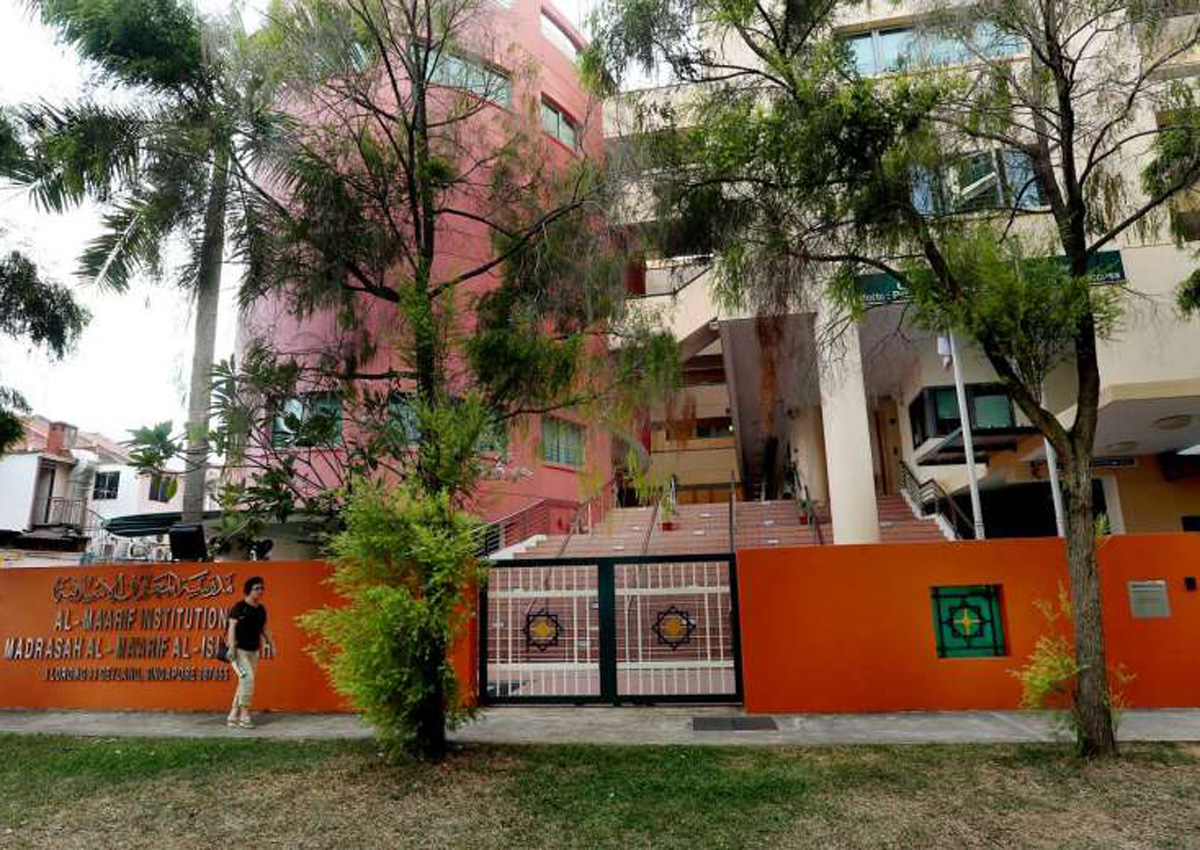
The security officer accused of hurting three madrasah students earlier this month was found to be suffering from a major psychiatric illness at the time of the alleged offences.
Koh Weng Onn, 48, who had been sent for psychiatric assessment, suffers from a delusional disorder with “delusions of persecution and reference”, said an Institute of Mental Health (IMH) doctor.
As the doctor found Koh to have a high risk of re-offending, the prosecution yesterday objected to bail for Koh, saying he would be a danger to the public. Quoting the IMH report, Deputy Public Prosecutor Goh Yi Ling said that if Koh is sent back to the community, it is strongly advisable that he be taken back to IMH for treatment under the Mental Health (Treatment and Care) Act.
She said the prosecution wants to find out the “specific nature” of his delusions. She also wants to know the course and length of treatment recommended, saying it is crucial in determining the prosecution’s next course of action. The prosecution asked for an adjournment, until it gets the clarifications from IMH.
Koh’s lawyer Sunil Sudheesan, hired by an anonymous Arab-Muslim entrepreneur from the Aljunied family, said he had no objection to the adjournment and that no bail be offered.
He suggested that Koh’s psychiatric report be given to the remand prison so he receives treatment during remand.
The second course, he said, is to allow bail on condition that the prosecution applies for Koh to be taken back to IMH immediately for treatment.
DPP Goh said she did not object to the psychiatric report being extended to the prison but the second proposal might be “too preliminary”.
Koh is accused of kicking a 16-year-old madrasah student on her right thigh, an attack which was “racially aggravated”, along Paya Lebar Road on April 1 at 7.22am.
On the same day, he also allegedly swung a plastic bag with a filled 1.5-litre water bottle at two other female madrasah students, both 14, in two separate incidents.
Koh’s case is fixed for a pre-trial conference on May 9.
This article was first published on April 26, 2016.
Get a copy of The Straits Times or go to straitstimes.com for more stories.
Image:
Publication Date:
Tuesday, April 26, 2016 – 14:00
Keywords:
Send to mobile app:
Source:
Story Type:
Others
Johor 'able to meet water obligation to Singapore'
JOHOR BARU – Johor will continue to meet its obligation to supply 250 million gallons of raw water to Singapore daily even though the state is in the grip of a dry spell leading to water rationing in some areas, a top state official has said.
Johor’s Public Works, Rural and Regional Development Committee chairman, Datuk Hasni Mohammad, told The Star daily that the state would still be able to meet Singapore’s water needs despite the drop in levels in several dams and reservoirs around Johor.
“We will still be able to meet Singapore’s needs despite the drop,” he was quoted as saying.
The Separation Agreement guarantees Singapore the right to draw 250 million imperial gallons a day (mgd) of raw water from the Johor River. This right expires in 2061.
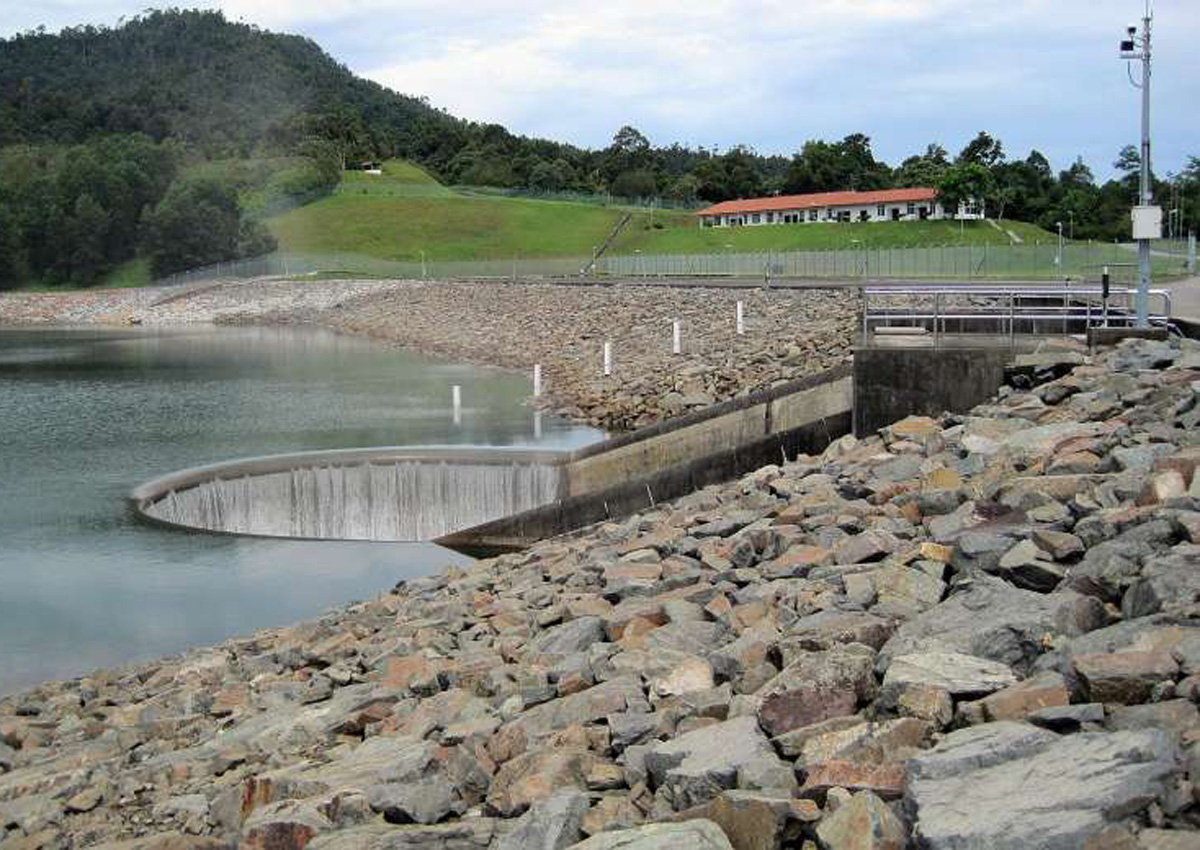
In an effort to ensure that this right was enforced in a sustainable way, the PUB had built and operates a large regulating reservoir – the Linggiu Reservoir – on the upper reaches of the Johor River.
The reservoir, which helps to meet half of Singapore’s water needs, collects and releases rainwater into the river. This pushes seawater back into the sea and ensures that the river water is not too salty to be treated by the Singapore-run water treatment plant there.
But water levels in the Linggiu Reservoir have fallen to a new historic low.
The reservoir is just over one-third full. Last October, water levels in the reservoir had already reached a low of 41 per cent, but they have fallen some more to 35 per cent.
These levels are far below the 80 per cent that the reservoir had at the start of last year.
Mr Hasni yesterday also outlined several measures in the pipeline to alleviate the water situation.
He said cloud seeding would be carried out around dams and a crackdown was imminent on those who drew water illegally from catchment areas.
“We will take stern action against those found drawing water illegally from the water catchment areas, including charging them with trespassing on state-owned land,” he told reporters. He said the military and police would be roped in for enforcement action.
He also disclosed that the state authorities had issued notices to large-scale vegetable farmers with property close to the water catchment areas to look at other water resources instead of using river water.
“We are also closely watching whether animal breeders and factories draw water illegally from the water catchment areas and rivers,” he said.
Mr Hasni also referred to the RM90 million (S$31 million) Johor River Barrage project to reduce salinity in the river.
“The barrage will be fully operational in the next few months,” he said, adding that this would allow for water extraction to be carried out in the river without the worry of saltwater intrusion into treatment plants.
Singapore and Malaysia have been working together on projects such as the barrage to increase water resources in Johor, according to Singapore’s Consulate-General in Johor Baru.
This article was first published on April 26, 2016.
Get a copy of The Straits Times or go to straitstimes.com for more stories.
Image:
Publication Date:
Tuesday, April 26, 2016 – 14:00
Send to mobile app:
Source:
Story Type:
Others


