Home Blog Page 4101

Walk on the wild side in China cross-dressing contest

0

In a bouffant blonde wig and outsize eyelashes, Yu Xiaoyang flamboyantly parades across a Shanghai stage, his fake breasts filling his skintight golden jumpsuit.

Yu was among 20 contestants taking part in a cross-dressing competition in China’s commercial hub.

“At work, I have to wear a poker face from Monday to Friday, just like a zombie,” said Yu, who works in the financial industry. “But Friday nights and the weekend, I can be my real self.” Conservative attitudes remain widespread in China, where the ruling Communist Party still dictates social norms.

The country only decriminalised homosexuality in 1997 and discrimination is common, although tolerance is greater in major cities, and the Shanghai Pride group mounts an annual series of events for the lesbian, gay, bisexual and transgender (LGBT) community and their supporters.

For its part the transvestite contest was sponsored by Twone Information Technology Co, which offers a dating app and event ticketing platform aimed at LGBT people.

“Cross-dressing plays a very important role in the pursuit of freedom and tolerance, and is a vital channel for people to see the LGBT community,” said Ding Shunfeng, one of Twone’s founders.

“I want them to come out and I want to unearth them and tell society that China has cross-dressing queens and their art is beautiful.” Contestant Yu – who finished third – used party balloons to fill out his chest and estimated he has spent tens of thousands of dollars on outfits, wigs, cosmetics and shoes.

His favourite look is a lady in white, who wears a flowing, pale chiffon gown, and he uses “Little White”, or “Xiao Bai” in Chinese, as his stage name.

“I think everyone has their own special pair of heels in their hearts and wants to dress up the way they want,” he said.

Some participants donned Chinese “qipao”, the high-necked dress slit far up the thigh, while others sported sequin-covered dresses and short shorts.

Besides men dressing as women, the contest included one woman and a transgender individual.

The contest organisers said authorities did not interfere with the event, despite the LGBT club venue drawing large crowds on the several Friday nights it took place.

“There has been no government interference, but there is pressure from society,” said Ding of Twone. “The social pressure is being labelled as an event held by sissies and perverts.”

Image: 
Category: 
Publication Date: 
Wednesday, April 27, 2016 – 11:44
Send to mobile app: 
Source: 


Story Type: 
Others

Source link

Hundreds turn up as nomination proceedings begin for Bukit Batok by-election

0

SINGAPORE – Hundreds of supporters clad in white and red turned up at Keming Primary on Wednesday (April 27) morning as Nomination Day proceedings for the Bukit Batok by-election got underway.
Mr Murali Pillai, the People’s Action Party’s (PAP) candidate,…

Source link

More jobless, less wage growth this year: MAS

0

SINGAPORE – Jobless numbers are expected to edge higher this year while wage growth moderates due to weak employment demand and less tightness in the city-state’s labour market, the Monetary Authority of Singapore (MAS) said in its twice-yearly Macroeconomic…

Source link

Slower economic growth to continue: MAS

0

SINGAPORE – The Republic is expected to continue to experience slower economic growth as the external environment deteriorates further and affects trade-related industries, the central bank said on Wednesday (April 27).
“The deterioration in the external…

Source link

Singapore's slow economic growth environment expected to continue: MAS

0

While the US is still expected to grow at a modest pace, Singapore may not be able to fully capitalise on it as most of US growth will be driven by domestic spending, said MAS.

Source link

PAP: SDP's claim that Murali's upgrading plans in breach of law 'absurd'

0

Sparks are flying even before the contest has officially begun.

The People’s Action Party (PAP) has slammed the Singapore Democratic Party’s (SDP’s) for suggesting that its Bukit Batok by-election candidate Murali Pillai might have breached the law when announcing new facilities and improvements under a $1.9 million neighbourhood plan if he were to be elected in the May 7 contest.

In a statement issued on Wednesday (April 27) morning, the PAP said that the SDP’s statements made by Dr Paul Tambyah was “misconceived” and speculation that Mr Murali may have made a statement in breach of the law was “absurd”.

On Sunday, lawyer Mr Murali, 48, first unveiled the plans, which included covered walkways, ramps, a jogging track and a park, for a precinct in Bukit Batok West Avenue 4.

The plan, which comes under the Neighbourhood Renewal Programme (NRP), is a project undertaken by the PAP’s Jurong-Clementi Town Council.

Speaking about the plans, Mr Murali said on Sunday: “So it’s really up to our residents. We will have the mandate to carry on only if we are returned at the by-election.

“If we don’t have the mandate, then we won’t have the ability to carry on because we will not form the town council. That’s the rule.”

In a statement posted on the party’s website on Tuesday, SDP Central Executive Committee member Dr Tambyah criticised Mr Murali’s statement, calling it “unethical”.

Dr Tambyah said: “To say that major improvements will come only if the PAP candidate is elected is unethical and could even be a contravention of the Parliamentary Elections Act (Section 59) which prohibits parties or persons from bringing undue influence on voters.”

Besides reassuring residents that government agencies were non-partisan and would work with whoever is elected as Member of Parliament for the single-member constituency, the SDP also accused the PAP of using a “high-handed top-down approach”.

In its statement, the PAP said: “If a candidate for election as Member of Parliament is not elected, his Party’s Town Council naturally cannot be responsible for the constituency, and cannot carry out its NRP plans for that constituency.”

It added: “This simple fact was what Mr Murali had stated in response to a query from the media on April 24. It will then be for the new Town Council that is formed to decide on its plans and what it should proceed with.

“The Government funds NRP projects for all Town Councils. The number of NRP projects approved for each Town Council takes into account characteristics such as the age profile of the HDB units governed by each Town Council. It is the Town Council that nominates the neighbourhoods which should be prioritised for NRP, when it applies for government funding.”

chenj@sph.com.sg

Category: 
Publication Date: 
Wednesday, April 27, 2016 – 11:55
Send to mobile app: 
Source: 


Story Type: 
Rewritten Story

Source link

EZ-Link New Hello Kitty Rock Star Cards from 27 Apr 2016 | SINGPromos.com

0

New Hello Kitty ezlink cards now available for sale online, while stocks last

EZ-Link New Hello Kitty Rock Star Cards from 27 Apr 2016 | SINGPromos.com

Good news! EZ-Link Online Shop is now offering a brand new series of Hello Kitty limited edition ez-link cards! With a total of 5 new designs, the Hello Kitty Rock Star Series is bound to wow you with electrifying colours and designs.

Source

Swee Say: With population ageing, S'pore must become a manpower-lean economy

0

Singapore – Manpower Minister Lim Swee Say says Singapore must become a manpower-lean economy due to its ageing population.

The government is trying to spread the mindset of lean enterprises, industry and services because there is no other way out for Singapore. This is the only way, Mr Lim said on Tuesday.

He was speaking at an event organised by the Infocomm Development Authority of Singapore (IDA), Singapore Workforce Development Agency (WDA) and Marina Bay Sands (MBS). The event was a Learning Journey for small and medium-sized enterprises (SMEs) in the cleaning sector.

As part of MOM’s Lean Enterprise Development (LED) scheme announced last September, Learning Journey is a series of events which showcase how SMEs can become early adopters of change, more productive, able to innovate, and manpower-lean.

The LED scheme is being piloted for two years and has three key features. One of them is to align efforts towards helping SMEs become more manpower-lean, with emphasis on a stronger Singaporean core and better-quality workers.

The other is transitional manpower support for early success in which MOM will exercise some temporary manpower policy adjustment during the period of transition for SMEs.

The third component is closer coordination and wider outreach to SMEs. This is being done by a cross-agency LED taskforce, led by Spring Singapore and WDA, that is helping to build on current efforts of the various agencies and integrate their existing assistance schemes to help SMEs in a more coordinated manner.

Mr Lim noted that SMEs must become manpower-lean because they employ two-thirds of the Singapore workforce. If they do not become manpower-lean, Singapore cannot become workforce-lean; so the SME sector is critical to success. “In the coming months, we will reach out to even more SMEs towards a manpower-lean economy,” he said.

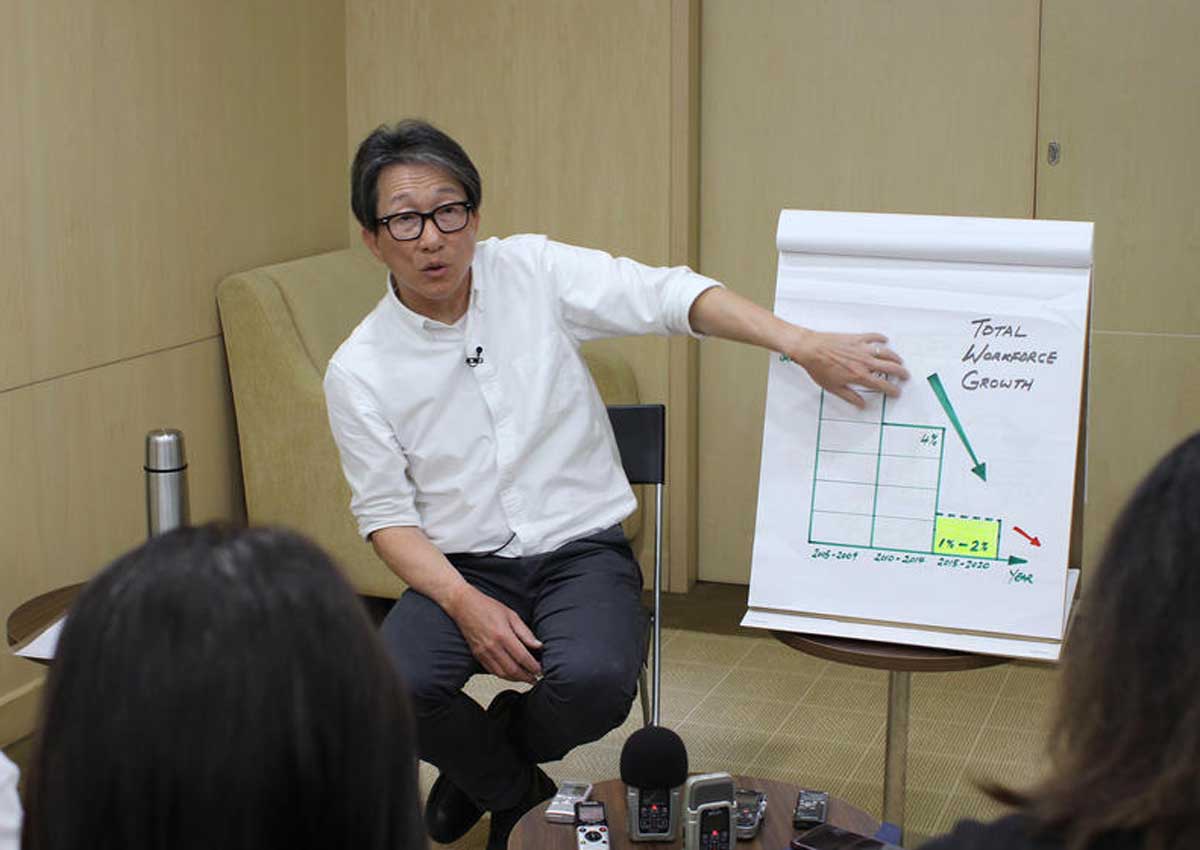
Providing some statistics, the minister said that over the past five years, Singapore added more than 550,000 new workers to the workforce. Of these, 250,000 – or almost half – were locals.

Mr Lim noted, however, that over the next five years, Singapore would not be able to add another 250,000 local workers on account of an ageing population. The figure is more likely to be 100,000 workers, he said.

“This sharp drop in the increase of local manpower is due to an ageing workforce. Over the next five, 10 and 15 years, the number of workers will continue to go down . . . and the implication is a very major one.”

The only solution is to become a manpower-lean economy where we can find ways to slow down workforce growth in terms of numbers and instead improve the quality of jobs, Mr Lim said. “We enhance the quality of jobs, and not quantity, to drive the growth of the economy.”

He added: “We must move towards a one-plus-two-equals-three approach – in which we have one per cent growth in manpower and 2 per cent increase in productivity, which will give us 3 per cent growth in GDP (gross domestic product).”

Mr Lim noted that the Singapore Institute of Technology (SIT), through the Enterprise & Innovation Hub, recently launched the Lean Transformation Innovation Centre (LTIC).

With the collaboration between SIT, WDA and Boston-based Lean Enterprise Institute (LEI), LTIC will be a focal point for SMEs to acquire relevant knowledge, provide manpower training and also co-develop technological solutions that will help them become more manpower-lean.

Minister of State for Manpower Teo Ser Luck said the lean enterprise projects have been progressing well, and more than 600 SMEs have been approved to be lean enterprise development companies.

“All their solutions are trending towards a more productive workforce, scaling down the number of people they need and also extracting the maximum value from each individual in their company,” Mr Teo said.

On its part, the government is increasing the number of consultants and also multipliers that would help transition a company into a lean company. “This meets the objective of industry transformation that was mentioned in the Budget,” Mr Teo said.

He added that a lot of innovation is happening and that there is a manpower-lean and efficiency movement in the business sector, especially in the SME sector.

He noted that there are an increasing number of applications now for help to transition to a lean manpower organisation.

“Some would require certain transitional manpower that MOM will support; many others do not need that. But, most importantly, they have now come to understand that with the manpower-lean economy, they are going to face a very tight manpower situation, and they have to go this way to be more automated and efficient with a manpower-lean workforce,” Mr Teo said.


This article was first published on April 27, 2016.
Get The Business Times for more stories.

Image: 
Publication Date: 
Wednesday, April 27, 2016 – 11:26
Send to mobile app: 
Source: 


Story Type: 
Others

Source link

SMEs 'must cooperate more with others to be competitive'

0

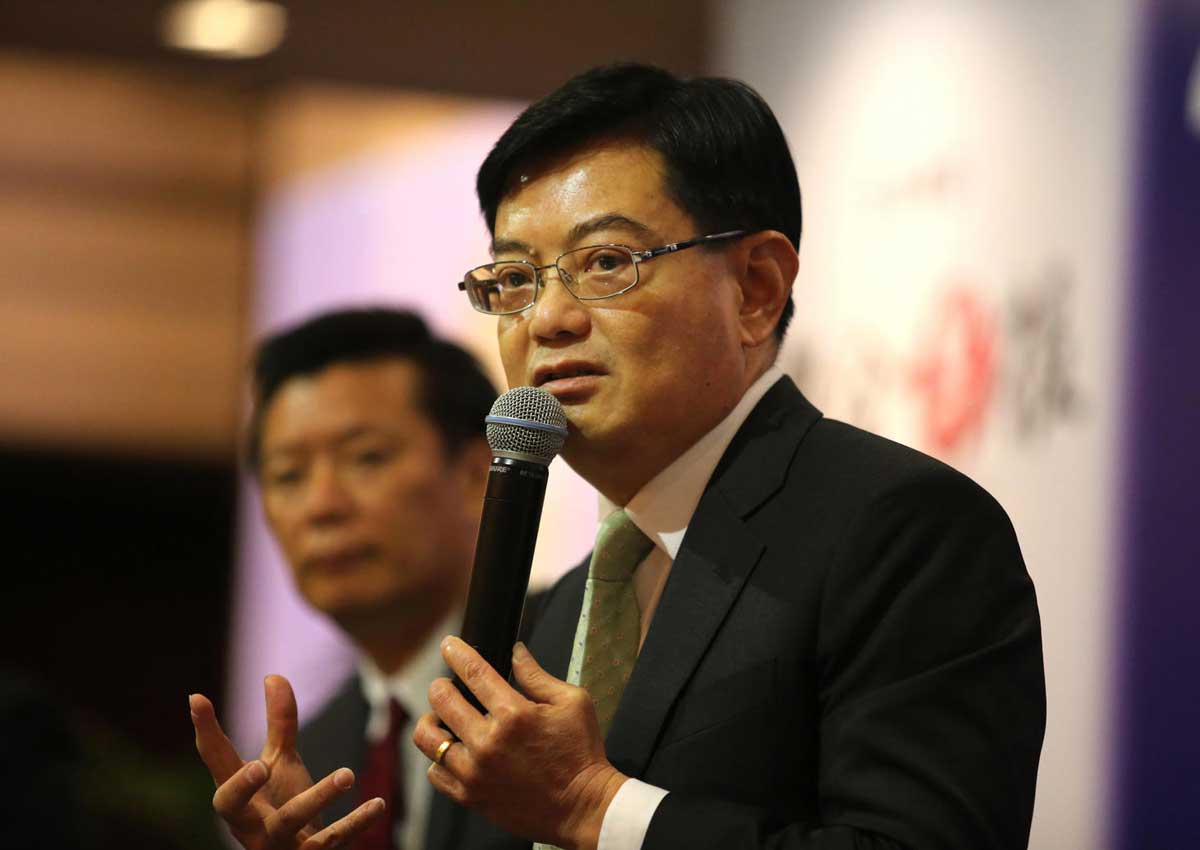
For small and medium enterprises to be more competitive, they must do more to co-operate with other enterprises, said Finance Minister Heng Swee Keat yesterday.

“Many enterprises in big countries are competitive because they are able to co-operate to venture into new territories,” he said at the Lianhe Zaobao Singapore Budget 2016 Business Forum.

Mr Heng, who spoke in Mandarin, cited his experience meeting Wenzhou businessmen who make fire-lighters. “I was very impressed and asked them how their ministry of trade had managed to bring them together.”

To his surprise, they told him that they had organised the expo in a huge conference hall on their own to make it more convenient for clients to see their products without having to visit them one by one.

“Similarly, I hope that our small and medium enterprises (SMEs) can come together and develop together,” Mr Heng said.

Cooperation through facility sharing could be a way to offset higher operating costs here and help homegrown firms be more competitive globally, he added.

As for domestically-oriented companies, Mr Heng urged them to improve productivity and innovate through technology or new business models.

To that end, he revealed that he had asked Senior Minister of State for Finance Sim Ann and president of the Singapore Chinese Chamber of Commerce and Industry Thomas Chua, to form a group under the Committee on the Future Economy to look into helping SMEs innovate.

Mr Heng emphasised that SMEs have different needs and that the group is looking at SME needs in different sectors.

He said that for instance, it might be beneficial for SMEs in some sectors to collaborate with bigger players. The Government is also looking at simplifying policies and processes for grant applications to help SMEs, he added.

Close to 300 participants attended the forum which included industry expert talks on how SMEs can navigate tough business conditions.

Many participants were pleased to hear of the Government’s focus on SMEs, but voiced concerns on rising labour costs, such as the foreign workers’ levy rates which are slated to rise on July 1.

Architect Chng Beng Guan said that while he understood the Government’s rationale for the levy to encourage automation, some smaller contractors taking on smaller projects are not able to make use of automation without the scale to do so.

Others like Mr Tan Nam Sing, who owns a business which conducts swimming lessons for children, said the firm was looking to internationalise, but that he had heard little from the Government on SMEs in the service industry.

“It would be good if the Government would explain how SMEs in services can tap on these government schemes,” he said.


This article was first published on April 27, 2016.
Get a copy of The Straits Times or go to straitstimes.com for more stories.

Image: 
Publication Date: 
Wednesday, April 27, 2016 – 11:18
Keywords: 
Send to mobile app: 
Source: 


Story Type: 
Others

Source link

New rule allowing better use of excess carpark space

0

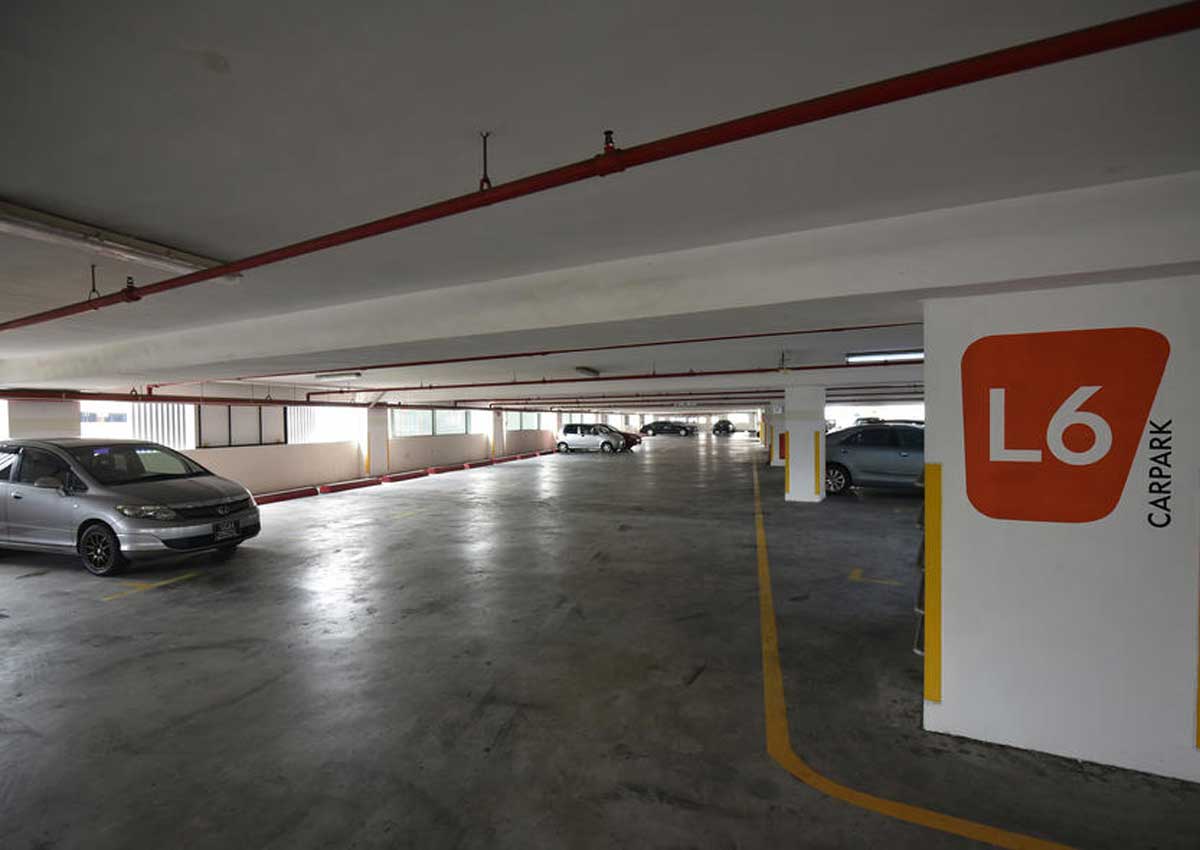
In line with a drive to make Singapore car-lite, building owners can now apply to permanently convert excess carpark space – any above the required level – to commercial or other uses in the central area.

The area includes Orchard, Bugis, City Hall, Chinatown, Raffles Place, Tanjong Pagar and Marina Bay. Details were sent out in a circular to real estate professionals on April 15, the date from which it took effect.

No official figures indicate how many buildings could benefit but experts said these may include Wilkie Edge, Peace Centre, Capital Square and Anson House.

Some are strata-titled but a spokesman for the manager of CapitaLand Commercial Trust, which owns Wilkie Edge, said any conversion opportunity must be evaluated in terms of an asset’s overall plan and financial feasibility. There is consistent demand for carpark space in the central area, she noted.

Previously, building owners could convert surplus carpark spaces to other uses only for up to 10 years, and so had to ensure the spaces could be restored.

The rule change comes after Transport Minister Khaw Boon Wan said recently there could be less space for parking as policies are adjusted to be in line with other global cities.

The Land Transport Authority (LTA) said with better public transport capacity and coverage, commuters are better connected between home and work and “there is less need to rely on private transport to get into the city”. It cited the Downtown Line Stage 2 completed last December, Stage 3 to be ready next year, and Thomson-East Coast Line from 2019. LTA and the Urban Redevelopment Authority (URA) will look into expanding this rule change to cover other areas, it added.

Commercial, mixed-use and hotel developments are eligible but any conversion still needs approval from URA and relevant agencies.

Drivers may lament parking is already hard to find in the area but LTA said its surveys indicate adequate overall supply. “However, it is likely some buildings are more popular than others, which may be why it is more difficult to find parking at these developments.”

Will parking costs go up further? LTA said charges are set by the market and could vary based on specific demand and availability.

But there may not be many developers rushing to convert excess carpark space, said Savills Singapore research head Alan Cheong. Apart from approval issues, carparks often have a lower ceiling than commercial space, which may make the converted space layout less than ideal.

JLL South-east Asia research head Chua Yang Liang said building owners could benefit through the additional leasable area but “in this current market condition, the cost far outweighs the gain”.

Still, a spokesman for Heritage Group, which bought Little India mall The Verge last year, welcomed the move. It may transform some carpark spaces into “public spaces like outdoor recreation areas”.

A spokesman for Suntec City also said it will review carpark needs in the light of the new guidelines.

But being car-lite is not so much about carparks as depending less on cars and using public transport, cycling, walking and jogging, said Surbana vice-president (landscape architecture) Maria Boey. “This allows people to have more freedom moving around the civic areas, to make it more useful for pedestrians and people using personal mobile devices.”


This article was first published on April 27, 2016.
Get a copy of The Straits Times or go to straitstimes.com for more stories.
Image: 
Category: 
Publication Date: 
Wednesday, April 27, 2016 – 11:04
Keywords: 
Send to mobile app: 
Source: 


Story Type: 
Others

Source link