Home Blog Page 4087

Philippines wants coordinated navy patrols to protect ships from attacks, kidnappings

0

The Philippines has been discussing coordinated naval patrols on its southern maritime borders with Indonesia and Malaysia to protect shipping after attacks and kidnappings by Islamist militants, its foreign minister said on Thursday (April 28).

Philippine Foreign Secretary Jose Rene Almendras said his country was only proposing separate but coordinated patrols to identify safe corridors where ships can travel.

Indonesia last week called for joint maritime patrols with the Philippines and Malaysia. Joint patrols would involve ships from the three navies patrolling together and crossing into each other’s territorial waters.

Officials from the three sides are due to meet in Jakarta on May 5 to discuss co-operation. “The issue is safety and security,” Mr Almendras told Reuters after signing an infrastructure loan agreement with South Korea.

“It’s called coordinated patrols, we’ll do our patrols and they will have their own patrols in their own territorial waters so there will be no more threats to the movement of ships, including the kidnapping of sailors.”

Indonesia is trying to free about 14 of its citizens seized from tugboats by Abu Sayyaf rebels from the southern Philippines and has called for joint patrols. Four Malaysian seamen are also being held.

The Islamist rebels, who are raking in tens of millions of dollars in ransom, decapitated a Canadian on Monday and are still holding 23 hostages. Citizens of the Netherlands, Japan, Norway and the Philippines are among them.

Two Indonesian coal ports have blocked ships from leaving to the Philippines and Malaysia’s eastern Sabah state due to security concerns.

The growing frequency of maritime attacks has affected coal trade between the South-east Asian neighbours Indonesia, the world’s largest thermal coal exporter, and the Philippines, which, relies on Jakarta for 70 per cent of its coal imports.

Abu Sayyaf, known for kidnappings, beheadings, bombings and extortion, is one of the most brutal militant groups in the Muslim south of the largely Christian Philippines.

Outgoing President Benigno Aquino has promised to devote his remaining days in office to crushing the militants. Fourteen rebels have been killed in bombing of the stronghold of Jolo island since Tuesday, a military spokesman said.

Since 2006, the United States has provided nearly US$200 million (S$268 million) in military aid to strengthen naval forces of the three South-east Asian countries to combat piracy and militancy.

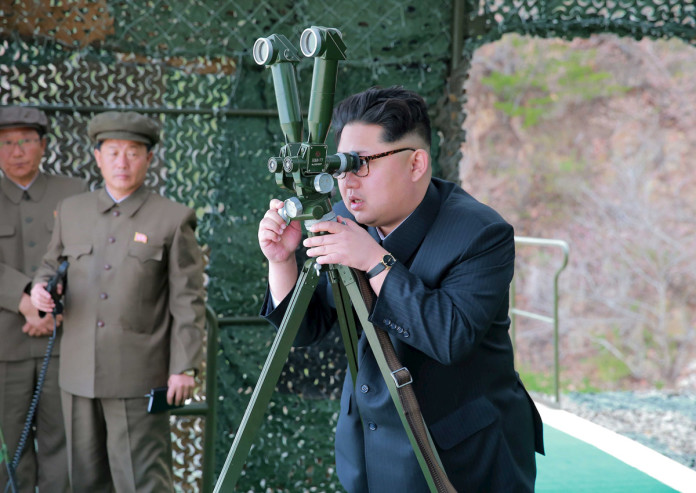
Image: 
Category: 
Publication Date: 
Thursday, April 28, 2016 – 16:49
Keywords: 
Send to mobile app: 
Source: 


Story Type: 
Others

Source link

Bukit Batok by-election: PAP, SDP to hold rallies on Friday

0

PAP will hold its rally at Bukit Gombak Stadium, while SDP will hold its rally at the field along Bukit Batok Industrial Park A, say police.

Source link

S Korea says North failed with second mid-range missile test

0

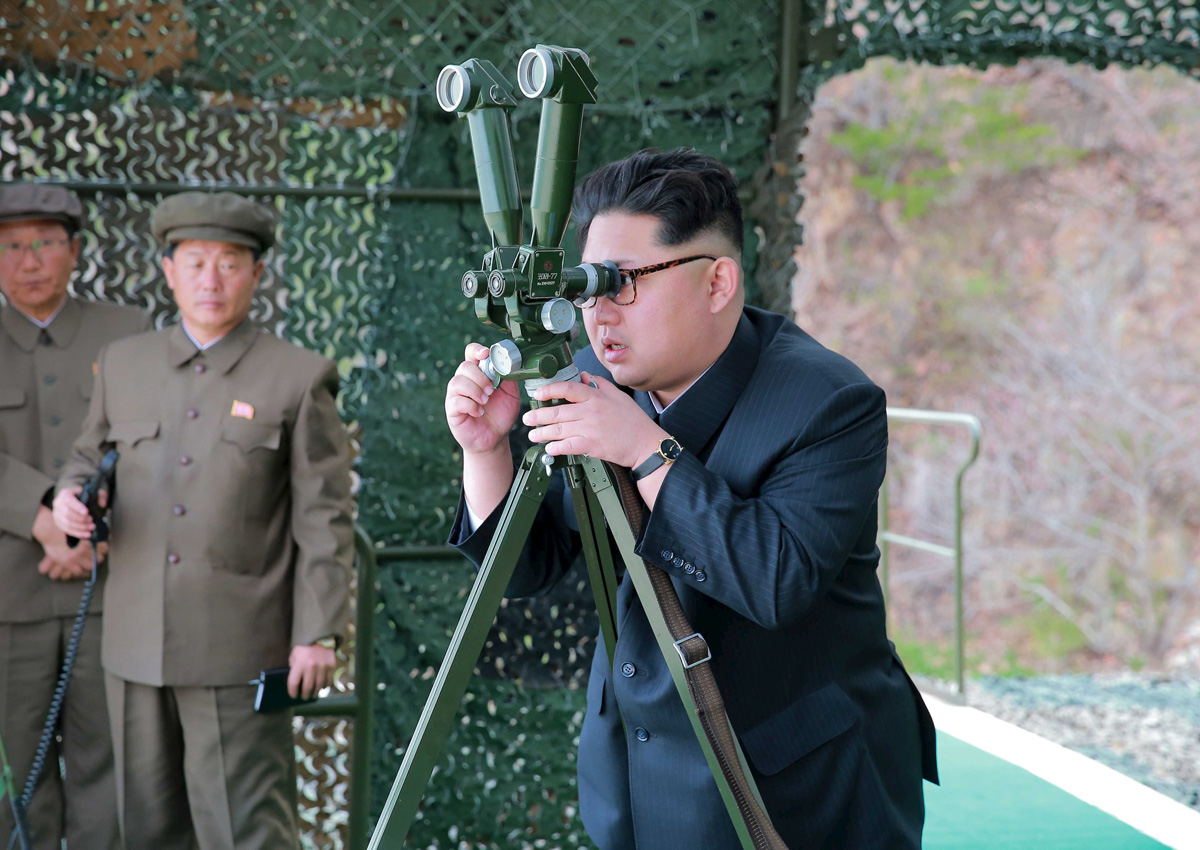
North Korea on Thursday tried and failed in what appeared to be its second attempt in two weeks to test a powerful, new medium-range ballistic missile, South Korea’s defence ministry said.

A ministry official said the North had fired what was believed to be a Musudan missile at around 6:40 am (2140 GMT Wednesday) from Wonsan on the east coast, but it plunged back to earth seconds after launch.

“It is believed to have failed,” the official told AFP.

There had been widespread intelligence reports in recent days that the North was preparing for another flight test of a Musudan, which is capable of striking US bases on the Pacific island of Guam.

North Korea initially launched a Musudan on April 15 – the birthday of founding leader Kim Il-Sung – but the exercise ended in what the Pentagon described as “fiery, catastrophic” failure, with the missile apparently exploding just after take-off.

The failed tests come as the country is gearing up for a rare and much-hyped ruling party congress next month, at which Kim Jong-Un is expected to take credit for pushing the country’s nuclear weapons programme to new heights.

There is growing concern that Pyongyang is preparing to conduct a fifth nuclear test in the run-up to the event which opens May 6.

In recent months the North has claimed a series of major technical breakthroughs in developing what it sees as the ultimate goal of its nuclear weapons programme – an intercontinental ballistic missile capable of delivering a nuclear warhead to targets across the continental United States.

The achievements trumpeted by Pyongyang have included miniaturising a nuclear warhead to fit on a missile, developing a warhead that can withstand atmospheric re-entry and building a solid-fuel missile engine.

Last Saturday, it successfully tested a submarine-launched ballistic missile (SLBM) and was promptly criticised by the UN Security Council.

Existing UN resolutions forbid North Korea from the use of any ballistic missile-related technology.

The Musudan is believed to have an estimated range of anywhere between 2,500 and 4,000 kilometres (1,550 to 2,500 miles). The lower range covers the whole of South Korea and Japan, while the upper range would include US military bases on Guam.

The missile has never been successfully flight-tested.

Two failures in swift succession will be seen as an embarrassment for the leadership, especially ahead of the party congress which is meant to celebrate the country’s achievements.

Speaking last weekend during a visit to Germany, US President Barack Obama warned that North Korea was making dangerous progress even when its efforts fell short of outright success.

“Although, more often than not, they fail in many of these tests, they gain knowledge each time,” Obama said.

“We take it very seriously, so do our allies and so does the entire world,” he added.

Anxiety has been high on the divided Korean peninsula since Pyongyang conducted its fourth nuclear test in January and a rocket launch a month later that was widely seen as a disguised ballistic missile test.

The UN Security Council responded with its toughest sanctions to date, angering the North, which has since made repeated threats of attacks targeting the South and the United States.

Image: 
Category: 
Publication Date: 
Thursday, April 28, 2016 – 16:40
Send to mobile app: 
Source: 


Story Type: 
Others

Source link

Venture Debt Programme to support SMEs could see broader participation: Iswaran

0

The Trade and Industry (Industry)  Minister said that if the scheme is well received then participation would be broadened and encouraged.

Source link

ICA warns of fake website phishing for user data

0

SINGAPORE – The Immigration & Checkpoints Authority (ICA) has issued a warning saying that there is a fake ICA website.

The website, which is phishing for visitors’ visa application numbers and passport numbers has the following url: www.immisg-mom.in.

In a statement released today (April 28), the ICA urged members of the public to “exercise caution” and to “not unwittingly fall prey to such fake websites”. 

It added that people who access its official website have not had their data compromised, and that attempts are being made to shut down the website.

Screengrab of the fake ICA website

Image: 
Category: 
Publication Date: 
Thursday, April 28, 2016 – 15:44
Send to mobile app: 
Source: 


Story Type: 
Others

Source link

Contracts awarded for construction of Amber, Bedok South MRT stations

0

The two contracts, worth a total of S$334 million, were awarded to Woh Hup and China Jingye Engineering, the Land Transport Authority says.

Source link

Train breakdown reasons: SMRT must be clearer and more transparent

0

It’s safe to say that it hasn’t been the best of weeks for SMRT Corporation. One must feel for its senior management and crisis communications team as they tackle one mishap after another.

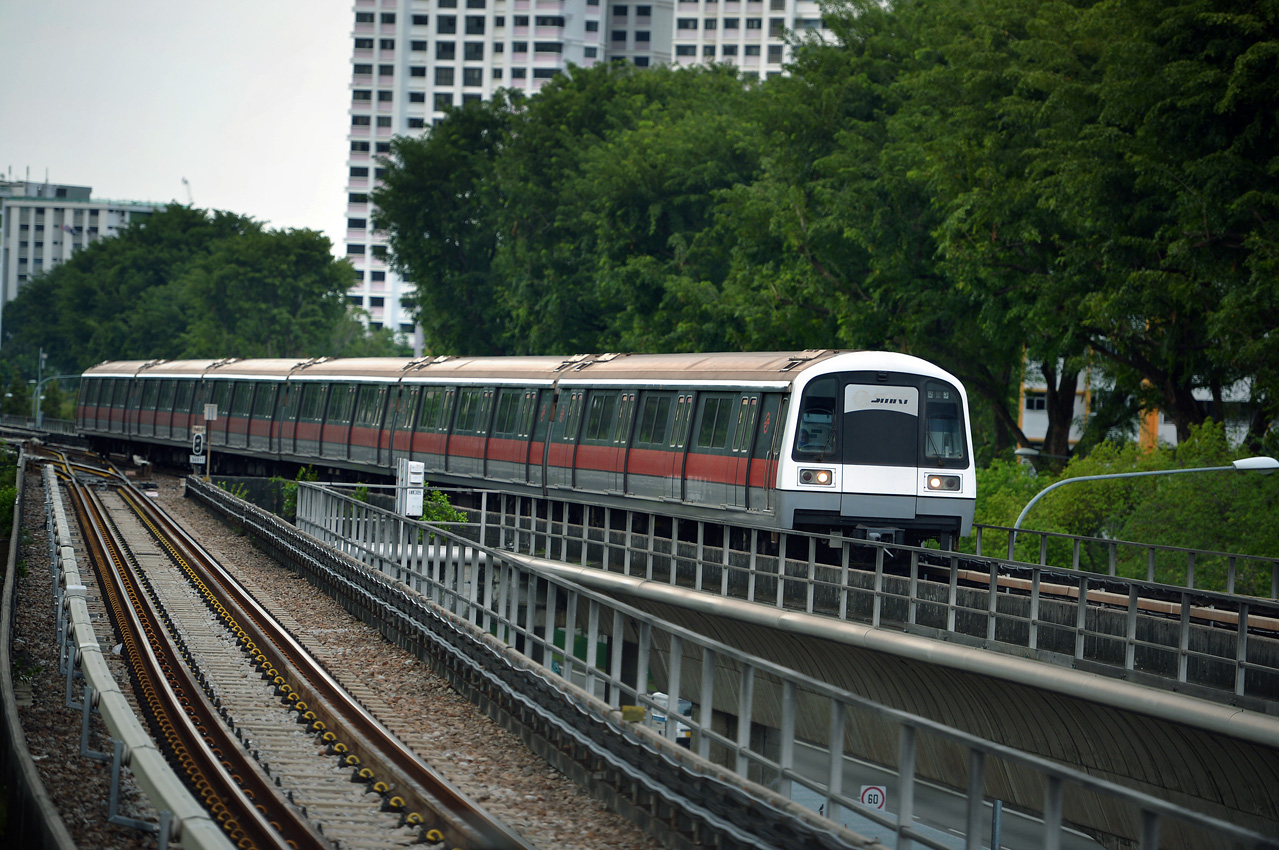
A power fault was the cause of a major breakdown of train services on three MRT lines and one LRT line on Monday evening. This was the first time so many lines were down at the same time, stranding thousands of commuters during one of the busiest travel times of the day. The trip caused blackouts and cut off the air-conditioning at the affected stations, which also lost power except for emergency lighting.

The North-South and East-West lines were disrupted for about half an hour, and the Circle Line for about an hour. It was worse for those wanting to ride the Bukit Panjang LRT, as trains started moving again only after a more than two-hour delay.

Things didn’t get much better on Tuesday morning, when a traction power fault halted train services between Kranji and Woodlands MRT stations on the North-South line. This was the line’s third stoppage in a week.

Monday’s disruptions occurred just hours after SMRT announced the findings of an investigation into the deaths of two of its staff last month. The operator said that a failure to follow proper safety measures before allowing the work team to get onto the train tracks had directly caused the tragedy. The safety lapses included not providing early warnings to the work team.

It’s worth noting that Singapore – with a vehicle population of one million and nearing its peak – is already taking baby steps towards becoming a car-lite society, and encouraging more people to take buses and trains as their main mode of getting around. As Transport Minister Khaw Boon Wan put it recently, a car-dominant model is unsustainable given Singapore’s land constraints, and he hopes Singaporeans will eventually cherish public transport as an indispensable part of their daily lives.

But for that to happen, there must be an excellent public transport system – dependable and convenient. So commuters are naturally aggrieved that the train network’s reliability has once again been called into question. There should be greater transparency and clarity when it comes to explaining the reasons behind a disruption, as well as the specific measures taken to rectify the identified faults.

Mr Khaw’s recent announcement in Parliament that the government will invest heavily in preventive maintenance as well as hardware replacement and upgrading is welcome; this week’s breakdowns only serve to heighten the sense of urgency.

There will invariably be some trade-offs that the public will have to accept along the way. Mr Khaw has called for commuters to allow operators to open some of the MRT lines slightly later in the morning (or to shut them earlier at night) in order to give engineers more time to perform necessary maintenance and upgrading.

Another crucial task at hand is to win back the public’s trust and confidence. Those affected by the breakdowns can get refunds within a 14-day period at any train station, but there have been calls for more compensation. For instance, some bemoaned the fact that they had no choice but to take a taxi during the peak period because of the disruptions – with fares costing many times more than a train trip. After a lengthy disruption, a move to offer free train rides to all (perhaps for a day or two) is a small investment that could pay big dividends for SMRT: the goodwill earned from commuters would go a long way towards repairing the corporation’s battered reputation.


This article was first published on April 28, 2016.
Get The Business Times for more stories.

Image: 
Publication Date: 
Thursday, April 28, 2016 – 14:55
Send to mobile app: 
Source: 


Story Type: 
Others

Source link

London overtakes Singapore as 2nd biggest offshore yuan clearing centre: SWIFT

0

Singapore overtook London in February 2014, but the trend started to reverse in January this year. 

Source link

Prices, rentals, occupancy rates for industrial space decline further in Q1 2016

0

A supply glut is likely to exert more downward pressure on occupancy rates, says JTC.

Source link

Olympics: S. Korea unveils mosquito-repellent Rio kit

0

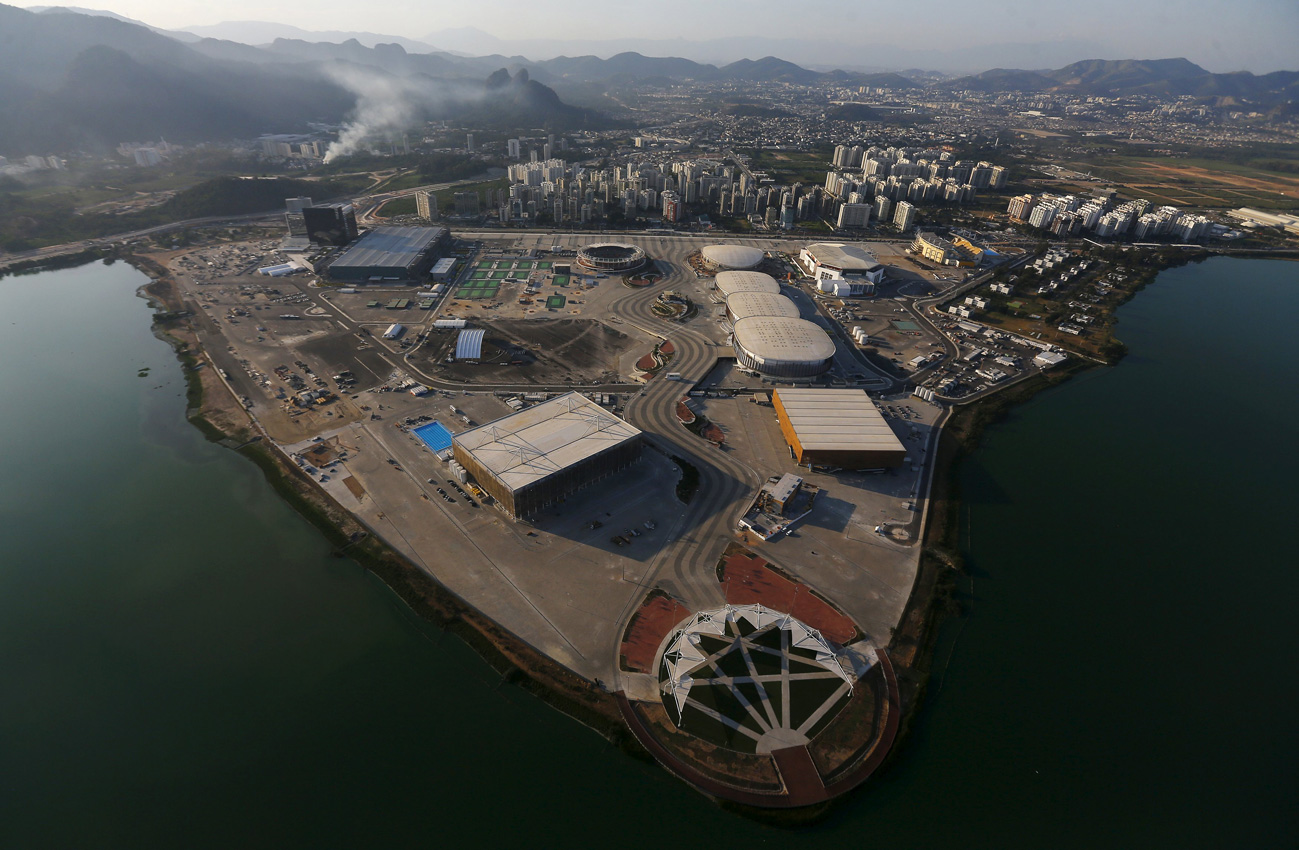
SEOUL – South Korean athletes at the Rio Olympics will wear long-sleeved training kit impregnated with mosquito repellant to protect them from the Zika virus, the national Olympic committee said Thursday.

Brazil – the epicentre of the mosquito-borne Zika virus outbreak – hosts the 2016 Games in Rio de Janeiro from August 5 to 21.

The virus is blamed for birth defects in babies born to women infected with the virus. Brazil has reported around 1.5 million Zika infections out of a global total of 2.0 million.

The South Korean training kit and uniforms for the opening and closing ceremonies will cover most of the body and be infused with repellant, a spokeswoman of the Korean Olympic Committee said, but competition kit could not be similarly treated, due to strict regulations.

“But we will distribute mosquito-repellant sprays to the athletes and will also vaccinate them against other diseases that can be spread by mosquitoes just in case,” the spokeswoman said.

The committee will also train athletes on ways to avoid mosquito bites.

There is no vaccine or cure for the Zika virus, which in most people causes only mild symptoms – a rash, joint pain or fever.

The South Korean team is seeking at least 10 golds in Rio to take a top-10 spot in the overall medals table.

Image: 
Category: 
Publication Date: 
Thursday, April 28, 2016 – 14:37
Send to mobile app: 
Source: 


Story Type: 
Others

Source link