Home Blog Page 4077

El Nino dries up Asia as its stormy sister La Nina looms

0

TEMERLOH, Malaysia – Withering drought and sizzling temperatures from El Nino have caused food and water shortages and ravaged farming across Asia, and experts warn of a double-whammy of possible flooding from its sibling, La Nina.

The current El Nino which began last year has been one of the strongest ever, leaving the Mekong River at its lowest level in decades, causing food-related unrest in the Philippines, and smothering vast regions in a months-long heat wave often topping 40 degrees Celsius (104 Fahrenheit).

Economic losses in Southeast Asia could top $10 billion, IHS Global Insight told AFP.

The regional fever is expected to break by mid-year but fears are growing that an equally forceful La Nina will follow.

That could bring heavy rain to an already flood-prone region, exacerbating agricultural damage and leaving crops vulnerable to disease and pests.

“The situation could become even worse if a La Nina event – which often follows an El Nino – strikes towards the end of this year,” Stephen O’Brien, UN under-secretary-general for humanitarian affairs and relief, said this week.

He said El Nino has already left 60 million people worldwide requiring “urgent assistance,” particularly in Africa.

Wilhemina Pelegrina, a Greenpeace campaigner on agriculture, said La Nina could be “devastating” for Asia, bringing possible “flooding and landslides which can impact on food production.” El Nino is triggered by periodic oceanic warming in the eastern Pacific Ocean which can trigger drought in some regions, heavy rain in others.

Much of Asia has been punished by a bone-dry heat wave marked by record-high temperatures, threatening the livelihoods of countless millions.

Vietnam, one of the world’s top rice exporters, has been particularly hard-hit by its worst drought in a century.

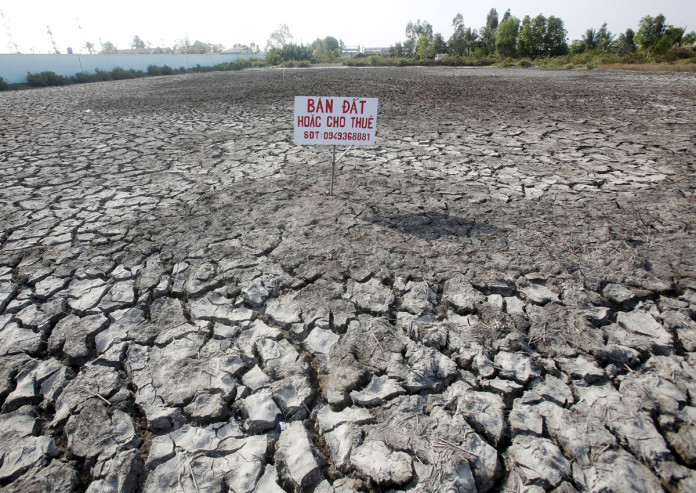
In the economically vital Mekong Delta bread basket, the mighty river’s vastly reduced flow has left up to 50 per cent of arable land affected by salt-water intrusion that harms crops and can damage farmland, said Le Anh Tuan, a professor of climate change at Can Tho University.

More than 500,000 people are short of drinking water, while hotels, schools and hospitals are struggling to maintain clean-water supplies.

Neighbouring Thailand and Cambodia also are suffering, with vast areas short of water and Thai rice output curbed.

In Malaysia, the extreme weather has shrunk reservoirs, dried up agricultural lands, forced water rationing in some areas, and caused repeated school closures as a health precaution.

Fisherman Abdul Rafar Matarrh said his daily catch in central Malaysia’s Pahang River has been decimated as the normally broad river has shrunk to a third its size, leaving dead fish to rot in the dry bed.

“Last year I could catch about 20 kilos (44 pounds) of fish a day. Now, to get one kilo is very hard,” said Abdul Rafar, 80, after netting just one small fish in an entire morning under an unforgiving sun.

In India, about 330 million people are at risk from water shortages and crop damage, the government said recently, and blazing temperatures have been blamed for scores of heat-stroke deaths and dead livestock.

Authorities in Palau warned recently the tiny Pacific island nation could completely dry up soon in a “total water outage”.

As a result, rice prices have risen this year but the UN’s Food and Agriculture Organisation and other experts say a major food crisis is not yet imminent as stocks remain ample.

But warning signs have already emerged – two people were killed in early April in the drought-ravaged southern Philippines when police reportedly clashed with thousands of farmers protesting over food shortages.

With La Nina looming, the situation has laid bare the region’s lack of preparedness for the extreme weather swings expected to result from climate change, said Rajiv Biswas, Asia-Pacific Chief Economist at IHS Global Insight.

“What tends to happen is that they (governments) talk about it in the immediate time there is a crisis and then one year later they forget about it and move on,” he said, adding that “things will get worse.” More investment is needed in agricultural infrastructure, irrigation and water storage systems, desalination technologies and insurance coverage for farmers, he said.

Calling the global situation “truly alarming”, the UN’s O’Brien said Tuesday this year’s El Nino spotlights the need for global co-operation to brace against the extreme weather.

“We must respond quickly to immediate, life-threatening needs, but we must also help people to become more self-reliant, and build individual and community capacity to respond to future shocks,” he said.
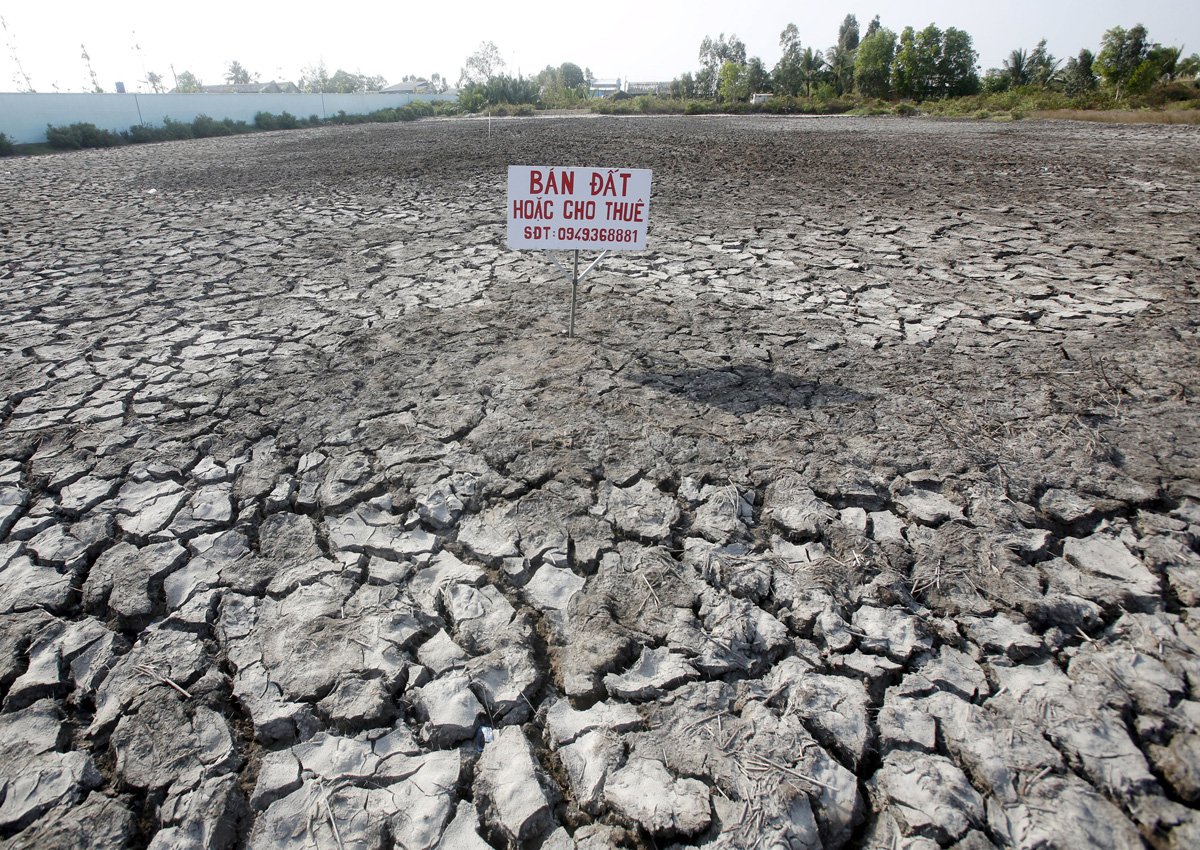

Image: 
Publication Date: 
Friday, April 29, 2016 – 15:35
Send to mobile app: 
Source: 


Story Type: 
Others

Source link

Worker dies while unloading wire mesh

0

A 24-year-old man who died in a workplace accident at 4, Tampines Industrial Street 62, on Tuesday was helping to unload wire meshes from a lorry loader when they fell, according to initial findings by the Ministry of Manpower (MOM).

Responding to queries yesterday, an MOM spokesman said the accident happened at the worksite of Sunway Concrete Products, which makes precast concrete products such as columns and lift shafts.

He said the worker suffered fatal injuries after being struck by the wire meshes. The man is understood to be a foreigner.

Another worker at the site, who declined to be named, told The Straits Times he saw the man’s throat pierced by the wire mesh.

MOM has instructed the firm to stop all lifting activities on the worksite, and said that investigations are ongoing. No stop-work order has been issued.

A spokesman for Sunway Concrete Products said yesterday the man was not one of its workers. The Straits Times understands that he was working for a company which supplies materials to Sunway.

Police said they received a call about the incident at 10.58am on Tuesday. The victim was pronounced dead by paramedics at the scene.

A post by Facebook user Mano Elangovan showed a picture of a man lying on the ground while other construction workers stood nearby.

Earlier this month, Manpower Minister Lim Swee Say stressed that existing safety efforts were “not good enough”.

His comments were in the wake of 26 workplace deaths in less than four months this year.

In a previous fatal accident on April 16, a 36-year-old truck driver from India died when his parked vehicle rolled into him, crushing him against a wall in Loyang Way.


This article was first published on April 29, 2016.
Get a copy of The Straits Times or go to straitstimes.com for more stories.

Image: 
Category: 
Blurb: 
24-year-old man suffered fatal injuries after being struck when materials fell from lorry. -The Straits Times
Publication Date: 
Friday, April 29, 2016 – 17:00
Send to mobile app: 
Source: 


Story Type: 
Others

Source link

China aims for manned moon landing by 2036

0

China wants to put astronauts on the moon by 2036, a senior space official said, the latest goal in China’s ambitious lunar exploration programme.

China in 2003 became the third country to put a man in space with its own rocket after the former Soviet Union and the United States. It has touted its plans for moon exploration and in late 2013 completed the first lunar “soft landing” since 1976 with the Chang’e-3 craft and its Jade Rabbit rover.

The country also plans to land the first probe ever on the dark side of the moon in 2018, another milestone.

China must “raise its abilities and use the next 15 to 20 years to realise manned lunar exploration goals, and take a firm step for the Chinese people in breaking ground in the utilisation of space”, Lieutenant General Zhang Yulin, deputy commander of the China Manned Space Program, said.

Zhang made the comments in statement posted to the programme’s website on Thursday (April 27).

The official China Daily newspaper said the announcement marked “the country’s first confirmation of a manned lunar exploration programme”.

The paper cited experts saying China needed first to develop a powerful enough rocket to lift a payload of at least 100 metric tons into low Earth orbit. It also needs more advanced technology, including new space suits, for a lunar mission.

Advancing China’s space programme is a priority for Beijing, with President Xi Jinping calling for the country to establish itself as a space power.

China insists its programme is for peaceful purposes, but the US Defence Department has highlighted China’s increasing space capabilities, saying it is pursuing activities aimed to prevent adversaries from using space-based assets in a crisis.

Apart from its civilian ambitions, Beijing has tested anti-satellite missiles, and the US Congress has banned NASA from engaging in co-operation with its Chinese counterpart due to security concerns.

China’s space budget is still only about one-tenth of the United States’ outlays, officials have said. According to Chinese state media, China spends about US$2 billion (S$2.7 billion) a year on its space programme, though details are vague.

China said this month that it would launch a “core module”for its first space station sometime around 2018, part of a plan to have a permanent manned space station in service around 2022.

China is also preparing to launch a Mars probe in 2020, which would reach the planet in 2021, the official Xinhua news agency has said.

Image: 
Category: 
Publication Date: 
Friday, April 29, 2016 – 15:35
Keywords: 
Send to mobile app: 
Source: 


Story Type: 
Others

Source link

SriLankan flight made to turn back after torch in luggage catches fire

0

Five pastry chefs who had been in Singapore for a cooking competition forced a plane to return to Changi Airport after a butane torch they checked in caught fire and injured a baggage handler.

SriLankan Airlines Flight UL309 to Colombo was advised to turn back soon after take-off on April 14 for “safety and security reasons”.

Police had been informed that a box had caught fire at the airport.

Although it was not loaded onto the plane, the 22-year-old handler who received it suffered minor injuries and received outpatient treatment.

The culinary butane torch belonged to five Sri Lankan men who are believed to have been here for the Asian Pastry Cup, which was held at the Singapore Expo. Such torches are classified as dangerous goods under aviation laws.

Police revealed details of the security incident yesterday.

A spokesman said: “The flight subsequently resumed its outbound journey to Sri Lanka later that night.”

Flight UL309 eventually arrived in the Sri Lankan capital Colombo past midnight on April 15, after being delayed for three hours.

The five passengers, along with all their baggage, were offloaded from the flight.

Following investigations, three of them were given a stern warning. No further action was taken against the remaining two.

Airport police asked for all check-in baggage to be screened again after the flight returned to Singapore and interviewed several passengers.

Police and the Civil Aviation Authority of Singapore (CAAS) reminded travellers that articles or substances capable of posing “significant risk to health, safety or property when transported by air” are classified as dangerous goods.

Items such as fireworks, flares and camping gas, are not allowed to be carried by passengers either in the aircraft cabin or their baggage.

Travellers can refer to the CAAS website for more details.

byseow@sph.com.sg


This article was first published on April 29, 2016.
Get a copy of The Straits Times or go to straitstimes.com for more stories.

Image: 
Category: 
Publication Date: 
Friday, April 29, 2016 – 17:00
Send to mobile app: 
Source: 


Story Type: 
Others

Source link

Phase 1 of Tuas Terminal construction begins

0

When completed, the mega-port terminal will be able to handle about 20 million standard-sized container units yearly and will have a total capacity of 65 million units.

Source link

Kerala-born hockey star Burdett Matthew Coutts was S'pore's best

0

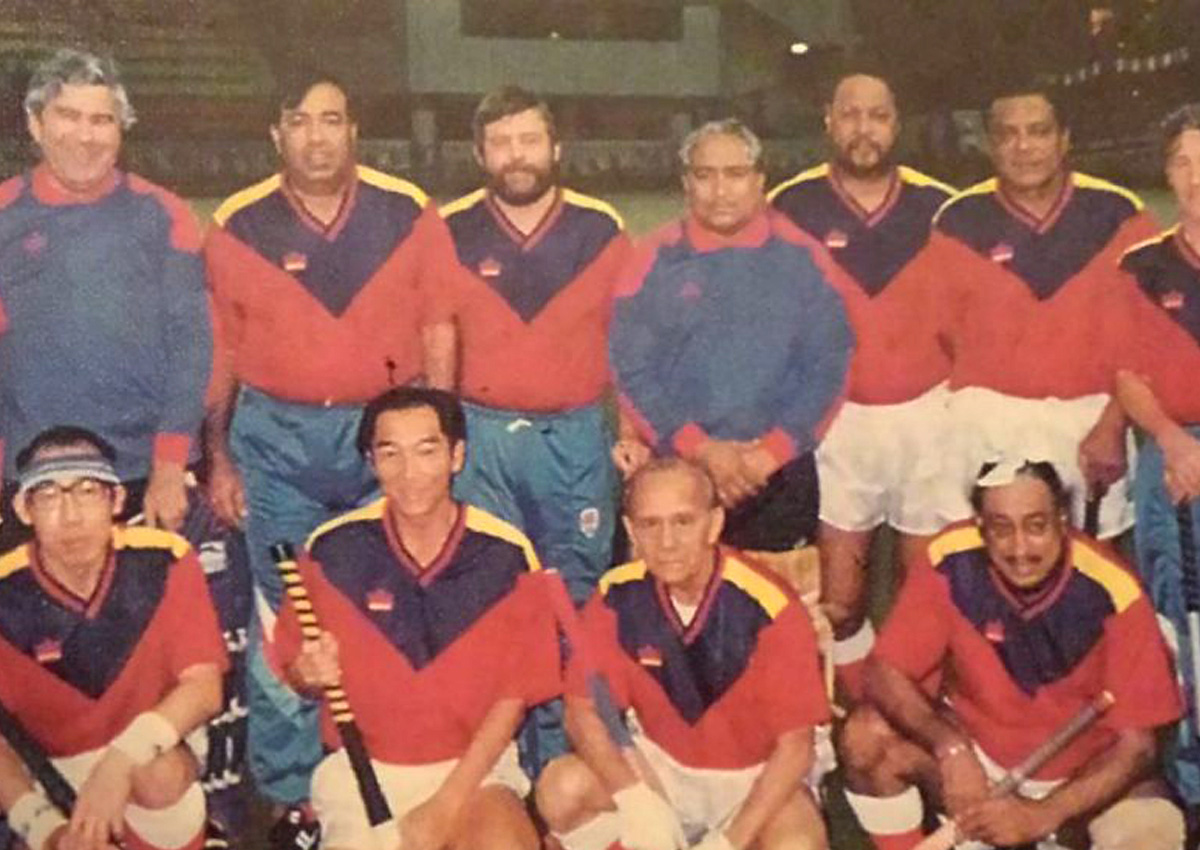
In his heyday, there was hardly anyone who could match him on the hockey field. Kerala-born Burdett Matthew Coutts was Singapore’s oldest and best hockey striker at the 1956 Melbourne Olympics. And he was 37 years old then.

In the eyes of his contemporaries, the Anglo-Indian was “the very best striker to play in Singapore”.

The Singapore Olympians book, commissioned by the Singapore National Olympic Council (SNOC), commended his “dazzling display of skills” during the only time Singapore took part in the Olympics 60 years ago, and Coutts was nicknamed “The Magician” for his “truly skilful attacking play”.

He died on March 17 in Clacton-on-Sea, a seaside resort town in Essex, England, where he had migrated to in 1965. Fulfilling his wish, on April 22, he was buried beside his wife in New Malden, a suburb in south-west London.

“We couldn’t get a closer burial day in New Malden, which is a four-hour road drive from Clacton-on-Sea, and had to wait close to four weeks to do the final rites,” his son, Ashley, who now lives in Germany, told tabla!

Speak to any hockey stalwart in Singapore from the ’50s and ’60s and they will instantly hail Coutts as the modern-day hockey version of Diego Maradona. He single-handedly electrified the sport in Singapore with his Indian style of hockey.

His oldest granddaughter Tracy, who delivered the eulogy, traced the roots of her grandfather. He was born in Cochin, Kerala, on Sept 19, 1919.

She said: “Grandpa was the youngest of 10 children and had to survive on scraps, which may well have accounted for his small size. When he moved to England in 1965, most of his clothes were in fact bought from the boys’ department of Harrods.”

Academically brilliant She recounted how he boarded at St Patrick’s High School, Madras, when he was eight. At 16, he was ranked No. 1 out of 108 in his final school-leaving examination. But, despite his excellent academic grades, he was also branded a rebel of sorts.

He reportedly sneaked out of school to watch the first “talking” movie. He was caught and the punishment was a fully-shaved head!

At St Patrick’s, he was outstanding in hockey as a striker and a track champion in athletics. After school, he worked as a clerk for Burma Shell from 1936 until 1943, when he was accepted into the Army Royal Ordnance Corps, Bombay. As a Warrant Officer he was sent to the Burma front and then to Singapore, where his regiment gathered after the Japanese Surrender in 1945.

In Singapore, the granddaughter added, the hockey star met his wife Doris, marrying her in 1946. He was then 27. He worked as an accounts clerk and auditor for Michelin Tyres. He later became the sales administration manager before applying to relocate to England in 1965. Doris died in 1998, leaving Coutts a very broken man, according to family members.

Retired teacher Tony D’Cruz, a Malayalee, said Coutts reckoned that he had “mastered the finer points of the stick-and-ball sport, having been exposed to the toughest challenges in India”. After the war, he played for the Domiciled Europeans and Anglo-Indians Sports Club in Bombay.

In Singapore, he immediately looked for the chance to play top-flight hockey. But on arrival here, he was critical of the standard of the sport. His own assessment of the top individual players was almost restricted to the names of Ronnie Barth, Chai Hon Yam and Edwin Doraisamy.

Best striker Coutts was considered by Gian Singh, the Malaysian coach, to be the best forward for Singapore in 1955 but age was not on his side. However, Coutts put to rest the fear of officials who might have suggested that he was too old for the Olympic Games, with a dazzling display for the Singapore Civilians against the Joint Services in the annual Poppy Day match in November 1955.

He was 37 when Singapore was invited among 12 countries to play in the Melbourne Olympics. But he was determined to have a shot at the world’s highest peak of amateur hockey. Sadly, with his gung-ho style of attacking play, running for every ball, he became susceptible to injury.

The Straits Times reported that rather tragically for Coutts and the team, he seriously injured his knee during the third match at the Olympics – against India, his motherland which he never dreamt he would play against on the international stage. For the record, India won the hockey gold medal for the sixth successive Games, not conceding a single goal in the entire tournament.

Coutts was the key player of the Singapore team and was sorely missed for the rest of the tournament. Different attacking combinations could not compensate for the loss of the “magician” at inside right.

Tracy said that after the Olympics her grandfather was seen quite regularly as an umpire. But, off and on, he was very competitive and delighted in showing younger players that he had retained his speed and skill, even after the age of 40.

Between 1960 and 1965, he coached the Singapore national team, which played at the Asian Games in Jakarta in 1962, before he left to join his family in England. Singapore finished fifth out of nine countries at the Jakarta Asiad.

Last hockey match at 82 In her elaborate eulogy, Tracy said that in England, Coutts played for Raynes Park Hockey Club, winning the Truman South League with them in 1972, at 53. In his 70s, he even played in the Pacific Rim Masters Tournaments for the Singapore Hockey Veterans (over 50s) between 1991 and 1996, in Hong Kong, Singapore, Canada, New Zealand and Australia.

His last hockey match was on Sept 23, 2001, in Leverkusen, Germany, two days after his 82nd birthday, where he played with his son Ashley and youngest grandson Dustin.

“We remember him for being a family man and a hockey ace, but also for being the life and soul of the party. Some might say the original party animal!

“He truly loved his singing and the songs and singers of his era – the likes of the Rat Pack, Glenn Miller, Harry Belafonte and Elvis among others and Tina Turner, Kylie and Lady Gaga in more recent years. He loved the ladies and, given any opportunity, enjoyed dancing with them, jiving (rock and roll), rumba and samba,” said Tracy.

She added that in his final years, closer to the 90 mark, he “might have had a reduced appetite for food, he certainly made up for it with a healthy appetite for beer and the odd whisky (or three)!”


Get a copy of tabla! for more stories.

Image: 
Category: 
Publication Date: 
Friday, April 29, 2016 – 15:01
Keywords: 
Send to mobile app: 
Source: 


Story Type: 
Others

Source link

Hong Kong's working poor choose streets over dismal housing

0

HONG KONG – A plastic sheet, a blanket, a sleeping bag: a makeshift bed laid out in the shadow of towering apartment blocks by a man who would rather be homeless than cooped up in Hong Kong’s cramped and overpriced housing units.

Bright-eyed, neatly turned out but painfully thin, 54-year-old Ah-po works in a warehouse by day.

By night he sleeps in the stands of a neighbourhood football pitch in an urban public park, and has done for three years.

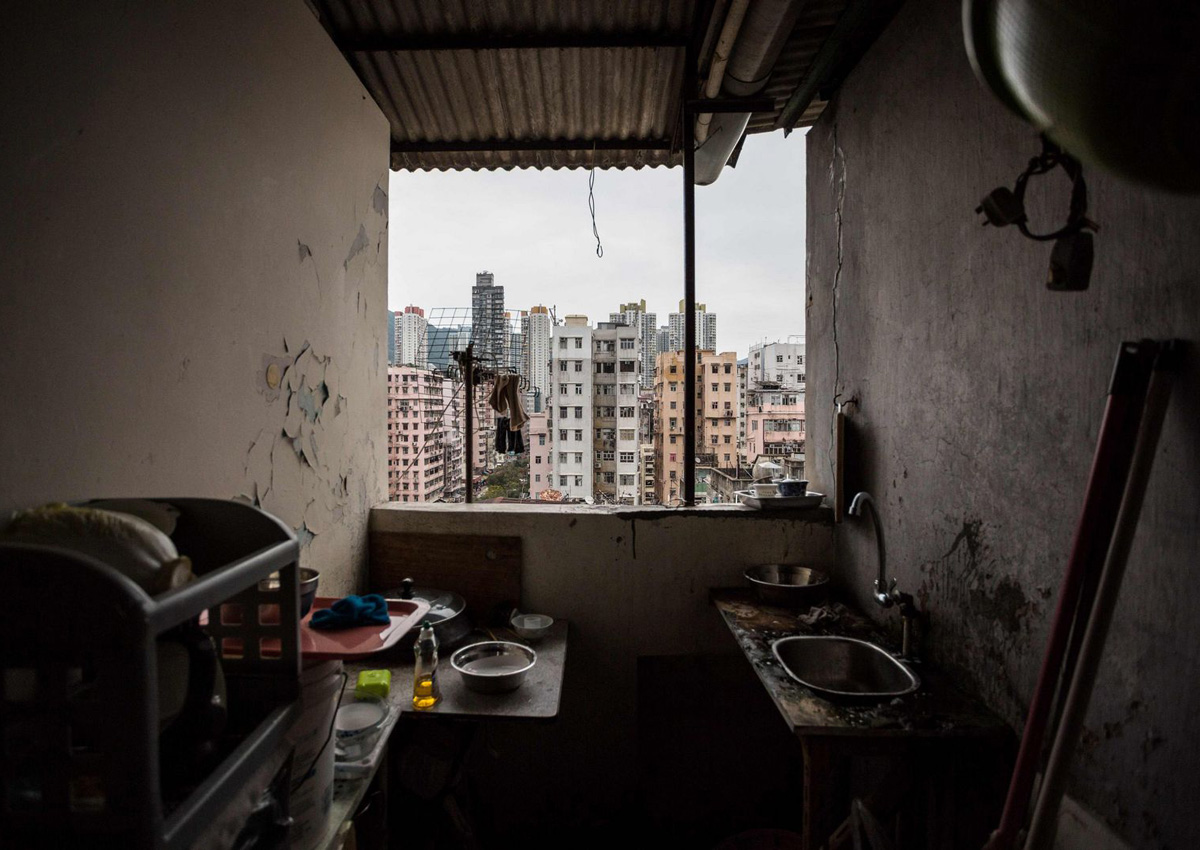
In a city where the wealth gap is becoming an unbridgeable gulf, Ah-po is among an increasing number of low earners opting to sleep outside rather than in minuscule units known as “cubicle” or “subdivided” flats, apartments carved into tiny living spaces by landlords capitalising on demand as public housing remains in short supply.

“I work so hard in the day time – I just hope to live comfortably and well in the evening,” Ah-po told AFP.

“But nowadays the rent is so high.” He says he can make up to HK$12,000 ($1,500) a month when his health permits – he suffers from arthritis – and has been in and out of lower-rent accommodation since his business failed eight years ago.

However, with property prices rocketing in the past decade, even a unit measuring less than 100 square feet (9 sqm) can cost several thousand Hong Kong dollars per month.

There is no legal stipulation for landlords over minimum apartment size or provision of basic amenities.

Cubicle flats seen by AFP measured as little as 28 square feet, just enough room to squeeze in a bed. A grimy toilet and kitchen are often shared by multiple tenants. Even these units can cost around HK$2,000.

For Ah-po, the park is a more pleasant environment and removes financial pressure – he fears his arthritis may stop him working, leaving him unable to pay the bills.

“I’ve got familiar with people who come here for morning exercise and we will greet each other,” he says.

“I have a sense of belonging.” Research by Hong Kong universities and NGOs shows the number of homeless rose to more than 1,600 in 2015, up 14 per cent since their last survey in 2013.

More than a third have jobs.

“If they pay rent, (the accommodation) is small, it’s hot, it’s humid, there are many insects…If they go into the park or under the flyover it’s noisy, but they can sleep,” says Professor Wong Hung at the Chinese University of Hong Kong’s department of social work.

The problem has got worse in the last two to three years as salaries have not kept up with rent hikes, Wong adds.

There are long waiting lists for public housing and temporary accommodation is often on the outskirts of the city, meaning extra cost to travel to work, Wong says.

Now the average age of the homeless is rising as they now tend to stay on the streets long-term.

The government says it is trying to “reintegrate” the homeless, with a range of services from emergency shelters to social security payments.

But campaigners argue it is not enough.

Authorities should focus on building low-cost dorms in urban areas where homeless people could settle for two or three years, says Ng Wai-tung, of the Society For Community Organisation (SOCO), a Hong Kong NGO helping the poor.

“It’s very sad that people can’t afford to rent a place even though they have work,” says Ng.

In a sign of increasing desperation, some of the city’s poor are now turning to 24-hour fast-food restaurants for shelter.

The plight of these “McRefugees” was highlighted when a homeless woman was discovered slumped dead over a table in a McDonald’s restaurant last year.

One former McDonald’s sleeper, Angelina Sun, 56, says she stayed there overnight for several weeks when she split from her husband, jobless and afraid of being a burden on friends and family.

She now earns around HK$8,000 each month in a factory and is in temporary accommodation in a Christian-run female dormitory.

“The rental outside the dormitory is very high, even for a small studio,” says Angelina.

She is resigned to paying half her salary for a tiny unit when her dormitory place expires.

“There will be no money left for entertainment, clothes, but I can make ends meet. I can survive,” she said.

For others, McDonald’s has become home – retired factory worker Ko Wing-kam, 62, regularly sleeps there to avoid the bedsit he shares with nine strangers.

“I’m not happy with the situation, but there’s nothing I can do,” he says.

At the football stands, Ah-po is laying out his bed.

He has not told his family he is homeless. It is only after dark that he contemplates his fate.

“When I work, I’m ok. But when I come back after dinner, I will think about my ex-wife, daughter and family members,” he says, staring across the dimly lit park.

Image: 
Category: 
Publication Date: 
Friday, April 29, 2016 – 14:46
Send to mobile app: 
Source: 


Story Type: 
Others

Source link

More than 100 suspected drug offenders arrested in islandwide raid

0

About 200g of heroin, 150g of cannabis and 120g of Ice was also seized, says the Central Narcotics Bureau. 

Source link

Cricket: It's all about team culture

0

Among the things that fascinates me the most about the IPL, it was true in IPL-1 that I saw from close quarters and is true eight years later, is how teams assimilate players from all over and try to form a cohesive unit. It is not easy and that is why, in football leagues and in the IPL, leadership is so important.

Teams are full of superstars and bit players, sometimes overpaid underperforming stars playing along with overperforming underpaid bit players. Sometimes, auction dynamics mean players performing similar roles can have half a million dollar differences in their incomes. You might have major stars having to miss out because you can only play four overseas players in a team. There might be insecure players and over-confident players and keeping everyone happy and optimistic is a gigantic task. One year M.S. Dhoni said he was happiest at the fact that some top players weren’t getting games but the dressing room was still happy. That is an achievement.

That is why I was so interested in reading Francois Pienaar’s views on South African cricket. Pienaar was the iconic rugby leader in 1995, a role made even more dramatic post the film Invictus. But he didn’t only win with a cohesive, emotion- charged South African rugby side. He won almost everywhere, he understood winning and what it took and so, was asked to be part of the committee reviewing South African cricket.

The first thing he said he would do was to look at the team culture. Notice he didn’t say he would study how much talent resided in the team, or whether they were using the right strategy on big days. No. He said he would look at culture because “culture trumps strategy for breakfast”. When the culture is right, when everyone is playing for each other, when the mood is optimistic, performances keep popping up. Culture makes talent flower.

True, you can’t win without talent but in a highly-competitive environment, talent is everywhere. There is scarcely an IPL team that can say it doesn’t possess the talent to win the tournament. But sometimes, for all the talent that resides within, teams can get negative, can have key players competing with each other rather than for each other. Teams sometimes allow themselves to believe the world is against them, can set off major alarms over minor matters, get into a siege mentality and exhaust themselves with such emotions before they take the field. It has happened before and it will always happen.

And so the job of the team leadership is to create the culture that allows talent to flower. Good teams, even at the IPL, dare I say especially at the IPL, spend a lot of time getting to know each other well, understanding each other, occasionally rallying around each other. It is something that comes through in Alex Ferguson’s books as well. Insecure, testosterone-fuelled athletes can be like vehicles out of control.

One of my favourite IPL sights is when KKR won a couple of years ago. Ryan ten Doeshcate, a good cricketer and a lovely man, didn’t have a big role to play, wasn’t in the team, wasn’t even in the dug-out where places are limited. He was in the change room but when KKR won, he sprinted down and onto the ground like he had played a match-winning innings. I saw that and I thought, “Yes, winning creates its own exhilaration but this team seems happy.”

Very often, this glue to the team comes from the captain or the coach because playing for inspirational people can be motivation in itself. But sometimes, this can come from little-known back room people who work their backsides off to ensure everyone is happy. They don’t score a run or take a wicket but they contribute to the culture of the team.

Pienaar’s line, “culture trumps strategy for breakfast”, originally articulated by the sage Peter Drucker, is a good line to debate.


Get a copy of tabla! for more stories.

Image: 
Category: 
Publication Date: 
Friday, April 29, 2016 – 14:53
Send to mobile app: 
Source: 


Story Type: 
Others

Source link

It's time for gold

0

Akshaya Tritiya is widely known as the day to buy gold, whatever the amount, as it is believed to bring prosperity and success.

And what better time now, given the price of gold. According to a Bloomberg report, gold is one of this year’s best performing assets, and has room to extend its advance, according to top-ranked forecasters.

“The gold price has been quite resilient, which means that investors have definitely changed their attitude towards gold,” said economist Simona Gambarini at Capital Economics in London.

The report added that bullion had its best quarter in almost three decades through March after the metal regained its haven status amid volatile financial markets and the spread of negative interest rates.

This is good news for Indians who have a fascination for the yellow metal. Indians often associate gold with Akshaya Tritiya as they believe that buying gold on this day brings them good luck. Akshaya Tritiya became popular only in recent years and many are still unaware of what makes this a special day.

There are many theories behind the day, which falls on May 9 this year.

Also known as Akha Teej, Akshaya Tritiya is celebrated on the third day of Vaishakh, the first month on the Hindu calendar. Thus the title of Tritiya, which means third day, while Akshaya means never diminishing. It is one of the most important days for the Hindu community as it is the day of the birth of the Lord Parasurama, the sixth incarnation of Lord Vishnu. The Hindus consider this day lucky and believe that any initiative made on that day or anything bought on that day will bring good fortune.

According to science, both the sun and moon shine the brightest on this day, a natural phenomenon that occurs only once a year.

There are also many legends attributed to Akshaya Tritiya. A famous one is from the Sanskrit epic Mahabharata which narrates how the exiled Pandavas were presented with a bowl named Akshaya Pathram by Lord Krishna on this day. The bowl was never empty and provided a limitless amount of food. Thus, Hindus believe that anything bought or received on this day will be replenished.

Apart from celebrating weddings and starting new business ventures on this day, Indians also believe that gold and gold jewellery bought and worn on this day signifies never diminishing good fortune.

Singaporean housewife Dalbir Kaur is looking forward to buying herself some gold this Akshaya Tritiya. The 53-year-old, who frequents Little India for grocery shopping, said she has passed by jewellery outlets in the area and seen some attractive advertisements on promotions for Akshaya Tritiya.

“I know the significance of the day and I look forward to it every year. I always try to buy something small in gold on the day,” she said. This year, she intends to buy a lightweight gold anklet.

Mrs Sasikala Rathakrishna, 36, a financial consultant, who has been buying gold for the past seven years on Akshaya Tritiya, said: “Shops are very crowded on the day and I won’t be able to see the selections properly. But to mark the occasion, I will buy something small like a ring or earrings.”

Indeed, shops are already gearing up for the rush, with Malabar Gold & Diamonds having started its campaign The Great Gold Rush on April 22. To meet the demand of customers, Malabar Gold & Diamonds – which has four outlets in Singapore – is offering an advance booking facility, where customers can book their jewellery in advance by paying 10 per cent of the total cost first.

With every purchase of gold jewellery worth $1,000, customers get a chance to enter raffle draws to win up to 250 gold coins. In addition, those who buy diamond jewellery will get a free gift of pearl jewellery.

The shop has also unveiled its latest collection of jewellery specially designed for the festive season in gold and diamonds to suit the tastes of their customers of all races. They can trade in their old jewellery for the new collection offered by Malabar without any loss.

Any 22-carat old gold ornament can also be exchanged with Malabar by paying only workmanship charges. This ensures that customers do not lose any value on the rate of gold. All these offers will be valid at their outlets here until May 15.

The exclusive brands available at Malabar Gold & Diamonds include Ethnix – Handcrafted Designer Jewellery, Era – Uncut Diamond Jewellery, Mine – Diamonds Unlimited, Divine – Indian Heritage Jewellery, Precia – Precious Gem Jewellery, Solitaire One – an exclusive solitaire brand, NV – Trendy 18K Gold Jewellery, Ago Bay – Pearl Jewellery and Starlet – Kids Jewellery.

Over at Joyalukkas – whose showroom is located opposite the Perumal Temple in Little India – customers will be spoilt for choice in diamond, polki and pearl jewellery specially created for Akshaya Tritiya.

Said executive director of Joyalukkas Group John Paul Alukkas: “I am very pleased to launch the new limited edition Akshaya Tritiya collection which embodies everything that makes this occasion extra special for all of us.”

The Joyalukkas showroom saw about 1,000 customers on Akshaya Tritiya last year. It is anticipating more this year not only because gold prices are lower but also because it has introduced more varieties in its jewellery selection and has lined up some attractive offers for its customers.

Patrons will receive a free diamond ring when they purchase diamond, polki and pearl jewellery, as well as a free limited edition silver pendant set when they buy gold jewellery from May 7 to 9. There will also be no workmanship charges on 8g 22K gold coins.

In addition, Joyalukkas is offering a gold rate protection guarantee to its customers. They can get the day’s gold rate even when they opt for advance booking and pay just 10 per cent of the cost first. If the gold rate is higher on Akshaya Tritiya, customers who booked their jewellery in advance will still receive the lower gold rate that they booked under.

If you pop by Great United Goldsmith & Jewellery on Buffalo Road, you can expect to choose from new designs and collections such as jewellery sets meant for office wear, bracelets with charms and the latest necklace designs.

The firm’s director William Loh Choy Choo told tabla!: “Times have changed. Previously, people go for our bestseller items which are heavier in weight but now they prefer lightweight jewellery.”

Apart from buying an anklet for herself, Ms Kaur – who is also planning to buy a lightweight necklace for her daughter – said: “Lightweight jewellery is not only cheaper but looks more trendy. Heavier ones are usually worn during grand occasions such as a relative’s wedding. But for everyday use or for casual outings, lightweight jewellery feels more comfortable and appropriate.”

Great United Goldsmith & Jewellery, which started its advance booking in early March, will have a priest in its outlet for customers to get their jewellery blessed. Said Mr Loh: “On this holy day, we will set up an altar in front of our shop to perform the rituals and proceedings in a meticulous manner. We will have a priest on standby at the altar to bless customers’ jewellery for free after the purchases are made at our shop.”

Merlin Goldsmith & Jewellery, which has its outlet on Serangoon Road, has brought in a new necklace range for this auspicious occasion like peacock Kolkata designs. Its collection of bangles are exclusively selected from Dubai, Kolkata and Mumbai. These items are available from $600 onwards.

The shop’s director Ko Siong said: “People are always looking for new, creative and innovative designs in gold jewellery from earrings to necklaces of all kinds. We look forward to welcoming men and women of all ages at our store on that day. They can expect to choose from a good range of necklaces, bangles and especially bracelet and bangle charms brought in on this auspicious occasion.”

The shop is giving away free leather charm bracelets for gold charm purchases of $300 and above, while stocks last. Customers will also be given a mystery free gift if they book their jewellery in advance and collect it on the day of Akshaya Tritiya.

To complement the spirit of the festival Jewel Palace, located on Buffalo Road, will offer its customers the lowest price in the market for 916 gold. Its director S. Mohamed Najumudeen said: “Our price will be even lower than the market price for gold. We will also offer our customers the lowest making charge.”

Jewel Palace, which started its advance booking on April 15, has brought in a new collection of rings, bangles, earrings and necklace sets and other items from India and Dubai.

With an extensive range of gold and diamond jewellery on offer, customers are definitely spoilt for choice this Akshaya Tritiya.


Get a copy of tabla! for more stories.

Image: 
Category: 
Publication Date: 
Friday, April 29, 2016 – 14:38
Keywords: 
Send to mobile app: 
Source: 


Story Type: 
Others

Source link