Image:
Publication Date:
Tuesday, May 3, 2016 – 14:00
External URL:
Send to mobile app:
Source:
Story Type:
Others
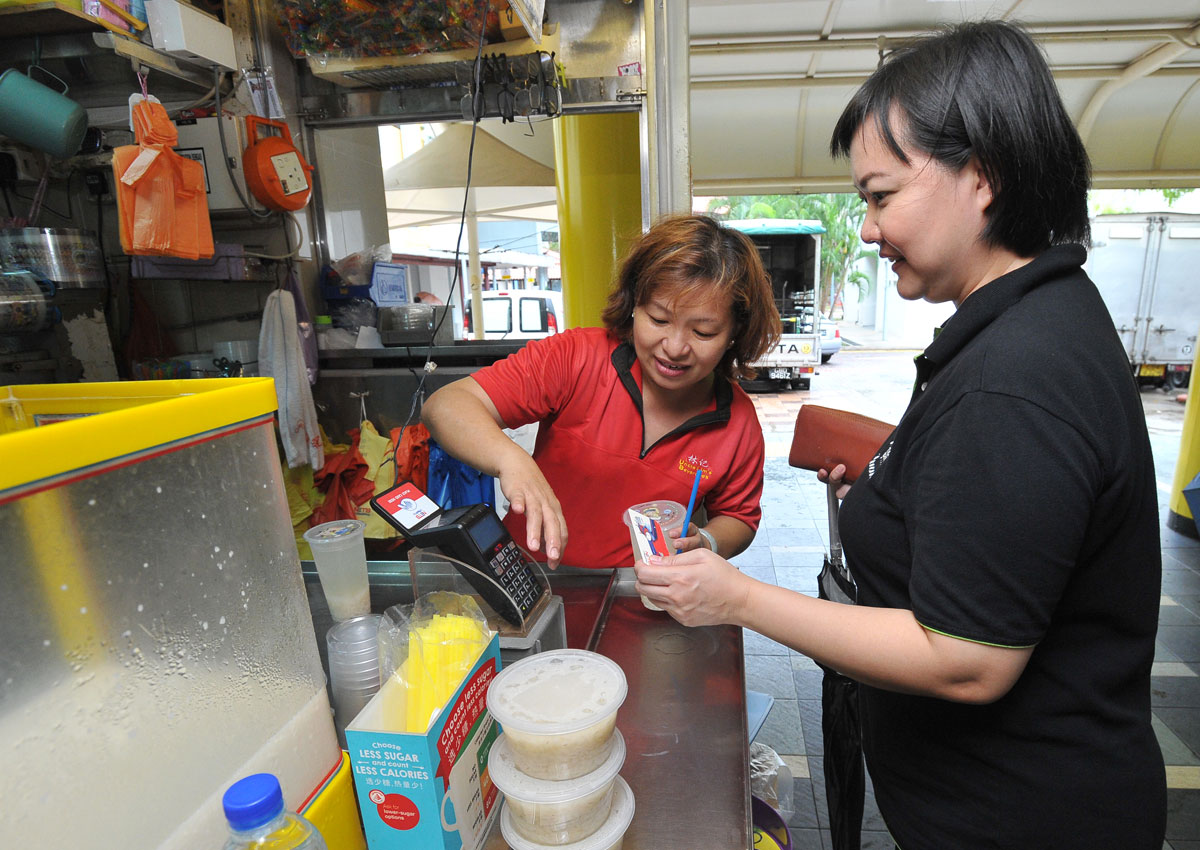
More hawker centres islandwide now offer the option of cashless payment for food and drinks, but hawkers say this has yet to catch on with consumers.
Diners can now go cashless at 12 hawker centres, up from just three centres in January last year. Bedok Interchange Hawker Centre, Beo Crescent Market & Food Centre and Clementi 448 Market & Food Centre were the first three centres to have the Nets FlashPay service.
To pay without cash, consumers have to buy a FlashPay card at major convenience stores or get a Nets FlashPay-enabled card from local banks. They can then pay for their purchases by tapping the card at payment terminals at hawker stalls. The money goes into the hawker’s bank account the next working day. Hawkers pay $28 a month to rent the terminals.
It costs Nets about $10,000 to set up the system in a typical hawker centre of 30 stalls.
A Nets spokesman told The Straits Times it “has made good progress since the introduction of this new service and expects to continue with this momentum”.
But many hawkers told ST they find the service inconvenient.
Mr Tony Lee, 54, who runs a coffee stall at the Bedok Interchange centre, finds it “troublesome” to key amounts into the machine. “It is a hassle during peak hours.”
A pair of sisters who run Xiang Cheng kueh stall at the Bedok Interchange centre said technology can get in the way of business. One sister, who declined to be named, said: “It holds up my queue when the machine is jammed.”
Hawkers added that customers’ response to the cashless system has been lukewarm in general.
Mr Harry Tan, 70, who sells nonya kueh at Tiong Bahru Market & Food Centre, said: “I pay $28 for nothing. Nobody wants to use it.”
He has been renting the terminal for half a year and plans to return it.
Real estate agent C.Y. Tan, 44, said her habit is to pay for hawker centre meals using cash.
“I know hawkers would appreciate cash over card. I reserve this service for use at supermarkets and department stores,” said Ms Tan.
When asked, Nets said it is “mindful that implementing payments infrastructure on-site can be challenging and we will help them (hawkers) overcome their challenges”. It added that it also has “ongoing educational campaigns to encourage consumers to go cashless”.
But some hawkers find the system useful.
Madam Alison Koh, 53, co-owner of Uncle Lim’s Beverages at the Beo Crescent centre, said: “I don’t have to prepare change. But I just have to be extra careful. I have to make sure I key in the correct amount.”
Madam Koh, who has been using the device for close to two years, said about 20 per cent of her customers use the service daily. On weekends, up to 25 per cent of her sales are through the service. She gets $8 off the rental fee if there are 200 contactless transactions a month.
Mr Benson Low, 53, who sells laksa and prawn mee at Tanjong Pagar Plaza Market & Food Centre, also finds the service convenient but said customers may find it a hassle.
“When my customer opens her wallet, she has 10 cards but no Nets FlashPay. Or, they have the card but ran out of value,” said Mr Low, also the chairman of the Tanjong Pagar Plaza centre.
Top-ups of the FlashPay card can be done at any ATM.
To make it more convenient, the authorities plan to install self-service top-up machines – one of which is already available at the Bedok Interchange Hawker Centre – at Holland Village Market & Food Centre and the Beo Crescent and Tiong Bahru centres.
Where it’s available
kchitra@sph.com.sg

This article was first published on May 1, 2016.
Get a copy of The Straits Times or go to straitstimes.com for more stories.
Visitors to three popular beauty spots have recently complained about a spate of littering – and they believe they know who the culprits are.
The trash, usually found in spots near military training grounds, is suspected by hikers to have been left by those who were in the vicinity for military exercises.
Empty food ration packets, mess tins and transparencies bearing map markings have been found around Upper Peirce and Seletar reservoirs, as well as a beach near Pasir Ris.
Ms Debbie Fordyce, a rights activist, has been walking at the reservoirs for more than a decade and picks up litter when she sees it.
On April 10, she collected 64 empty ration packets, 23 clear plastic bags used to hold these rations and other items such as water bottles wrapped in green socks. “The trash filled seven full plastic bags,” she said. Two weeks later, when she visited the same clearing, she and her nephew – together with this reporter – collected four bags of litter.
A biker, who wanted to be known only as Mr Koh, said he sees the trash on his route towards Seletar Reservoir every Sunday. The 43-year-old bank manager said: “The trash is usually scattered… and looks to be the work of irresponsible individuals, not an organisation.
“The sight is an eyesore, because the forest is a reserve meant for people who want to get away from the city. We don’t need reminders of inconsiderate and uncivil behaviour.”
As training grounds are out of bounds to civilians, the trash that the public found may be part of a larger litter problem.
A clean-up operation by the Public Hygiene Council on April 23 at a beach near Pasir Ris yielded at least 100 empty food ration packets.
Council chairman Edward D’Silva said: “Unfortunately, military trash found in public spaces is not something new.”


































Wildlife consultant Subaraj Rajathurai urged the public not to quickly point fingers at the Ministry of Defence as the items could also be left behind by the public. He noted that trekkers may “want a realistic experience, and they buy military rations from the army market”.
The empty ration packets on the beach, he added, could have been washed ashore by contractors who did not dispose of the trash properly.
“More investigation is needed,” he said.
Colonel Andrew Lim, assistant chief of the general staff (training), said the Singapore Armed Forces (SAF) “does not condone littering, whether in camps or in the training area”. Servicemen are educated and consistently briefed on the need to keep the training areas clean and to dispose of waste appropriately, he said, noting that administrative areas are cleared of waste before units depart the training area.
Col Lim added: “We do our best to keep them litter-free. However, from time to time, we do receive public feedback of SAF litter in training areas.
“When that happens, the SAF will conduct clean-up operations. At the same time, servicemen caught littering will be disciplined accordingly.”
Member of Parliament Lee Bee Wah, who is also chairman of the Government Parliamentary Committee for the Environment and Water Resources, said there is “no magical answer” to the littering problem.
Ms Lee, a vocal advocate against littering, said: “We just need to go on emphasising to the public the need to be responsible citizens.
“Hopefully, in time, we win (litterbugs) over… We have set the ball rolling and we just have to keep at it.”
This article was first published on May 3, 2016.
Get a copy of The Straits Times or go to straitstimes.com for more stories.
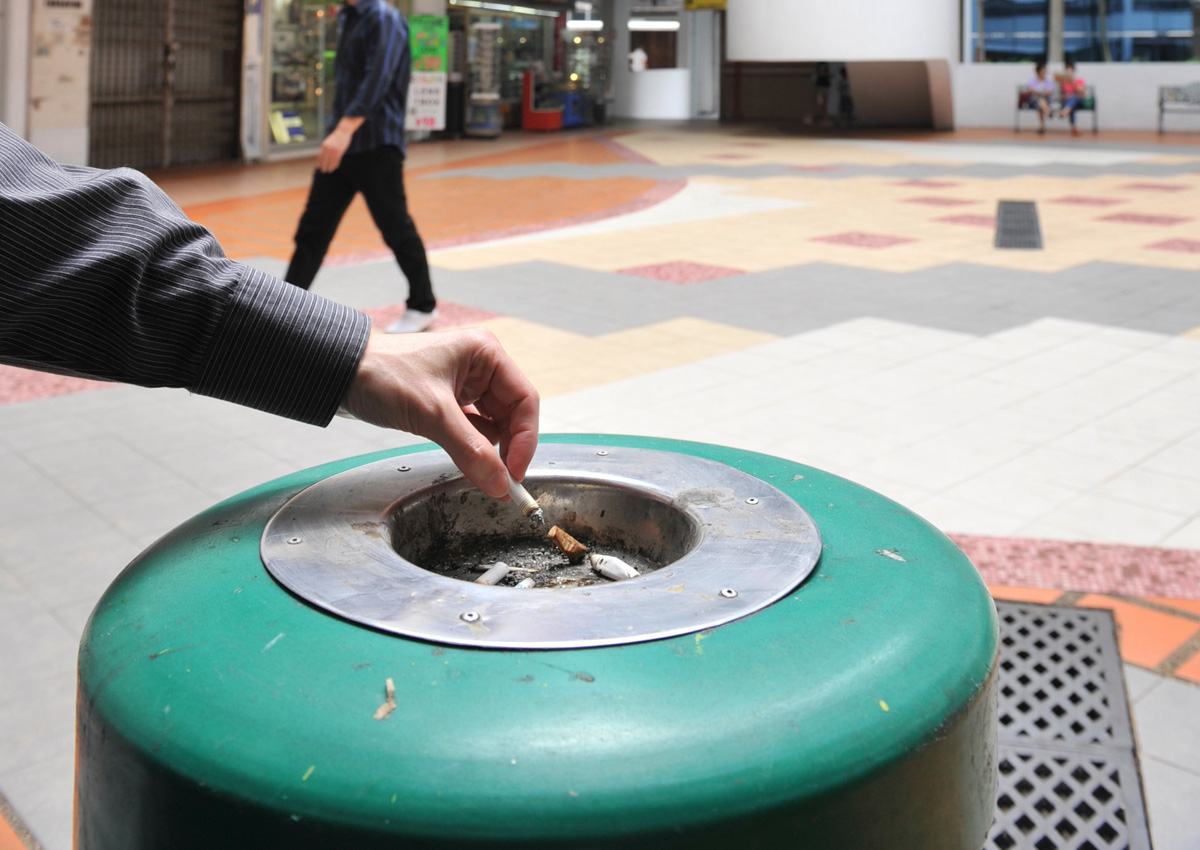
Parents here are finding it difficult to speak to their teenage children about the birds and the bees, but family experts stress that fathers and mothers are in the best position to impart correct sex knowledge to their children.
This comes even as more teenage boys are paying for sex, according to a Straits Times report on April 10. The findings have raised questions on whether more should be done to educate teenagers on sex education.
Contributors to The Straits Times Forum page last month warned of the psychological and physical damage that could be caused by casual sex among teens, and called for parents to consider the importance of discussing sex with adolescents.
Parents who The Straits Times spoke to said they felt responsible in educating their children about sex, but said they were often hindered by the awkwardness of the topic.
Business owner Wayne Tan, 46, who has two children aged six and 13, said: “I know I shouldn’t wait too long to broach the topic, but I am unsure how to go about doing it such that it doesn’t become uncomfortable for both of us.”
But the Reverend Yap Kim Hao, a former Methodist bishop, said it may not be realistic to be over- reliant on parents for sex education as many may not be adequately equipped, having not been through sex education themselves.
He called for “comprehensive sexuality education” to be introduced in schools, as he felt that what is available now does not adequately address the issue of sexually transmitted infections among teens, “which will get worse if proper education is not provided”.
Mrs Hershey Regaya, the programme manager for education and outreach at Family Life Society, said Singapore does not lack sex education programmes.
Even so, she said many teenagers have trouble dealing with their sexuality, leading to problems like addiction to pornography and teenage pregnancies. This could cause further problems like strife between the affected teens and their families.
In response to queries about sex education programmes in schools, the Ministry of Education (MOE) said sex education is available from the primary school to junior college level.
At the primary school level, sex education topics taught include managing changes when growing up and building healthy relationships. At the secondary school level and beyond, issues on sexual health and behaviour are taught, along with prevention of sexually transmitted diseases and decision-making, among others.
Said MOE: “Abstinence is presented as the best protection for teenagers against pregnancies and sexually transmitted infections or HIV.”
The ministry’s stance is that sex education should begin at home with parents, continue in schools with teachers, and be supplemented by community efforts.
Social workers and religious groups also emphasised the role of parents in strengthening their children’s sex education.
“We believe that schools are doing as much as they can, (but) the component of sexuality education that touches on values is always best done by parents or adults who the family trusts,” said youth specialist Aaron Ng, from Focus on the Family Singapore.
But how might parents do this?
“Parents should be unafraid to avail themselves as the first go-to person for their children when they have questions. They may set boundaries that they expect their children to observe, and these should be undergirded by family values,” said Mr Ng.
Mrs Regaya recommended that parents make a deliberate effort to attend talks and workshops, as well as research on and read about sex education. “Research shows that talking to children about sex leads to lower frequency of sex in adolescence and less involvement in risky sexual behaviours,” she added.
Dr Firdaus Yahya, the manager of Darul Huffaz Learning Centre, an Islamic centre, said parents should initiate discussions on sex with their children at the right time, such as using a film to start a conversation.
“Approaching the issue matter-of-factly will remove the embarrassment,” he said.
kenggene@sph.com.sg
calyang@sph.com.sg
This article was first published on May 2, 2016.
Get a copy of The Straits Times or go to straitstimes.com for more stories.
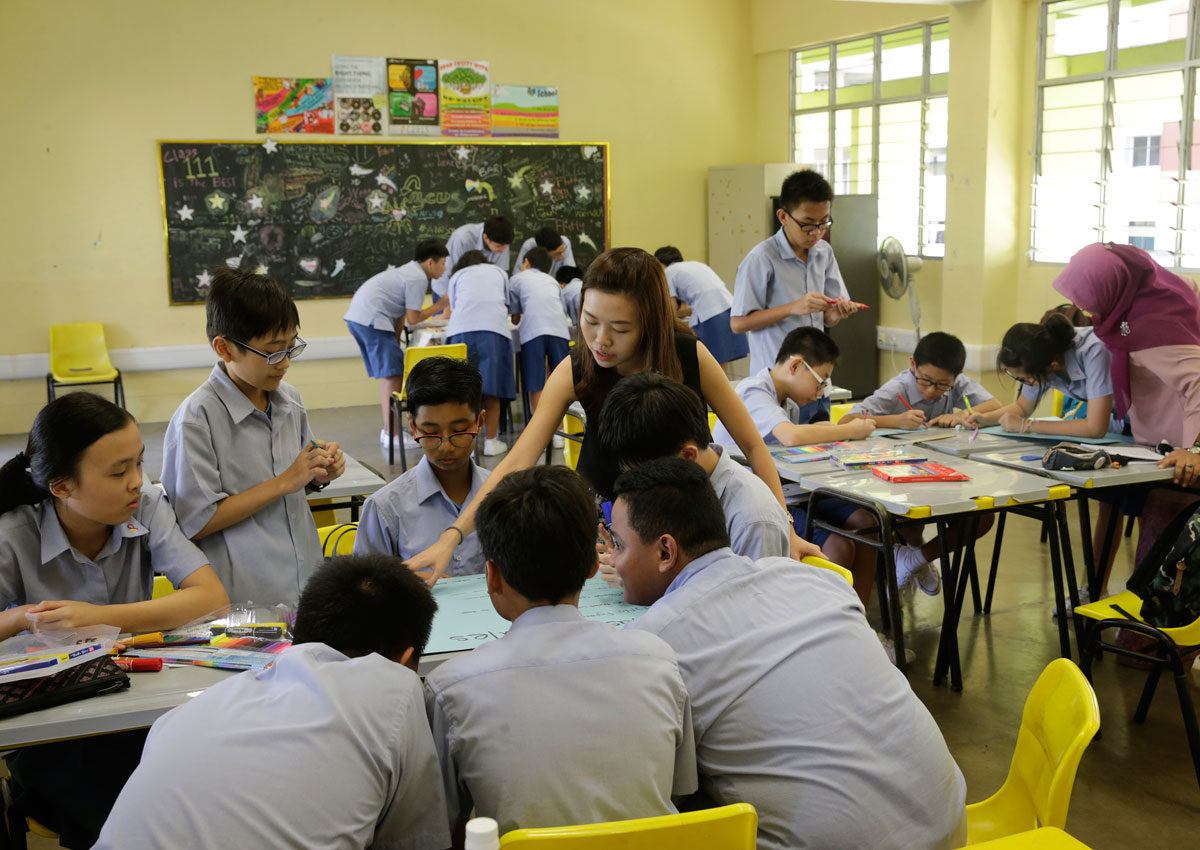
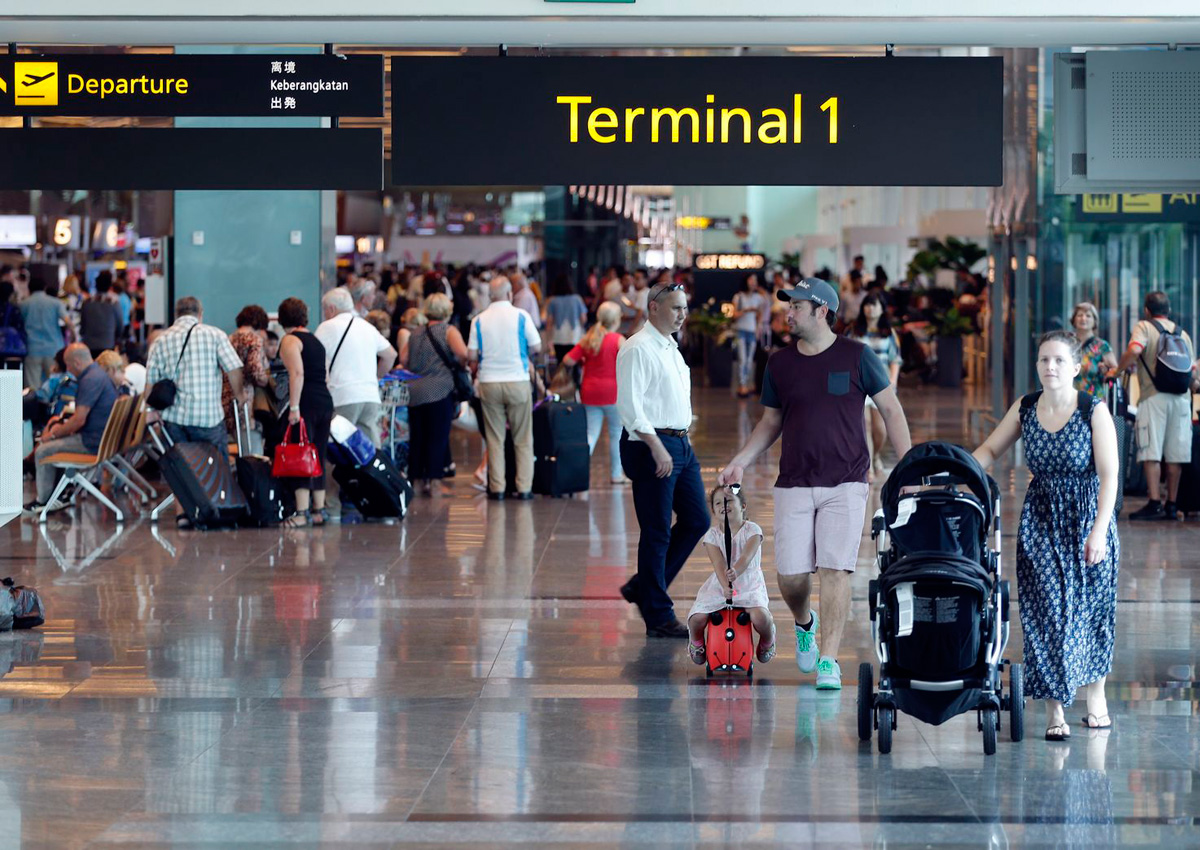
Changi Airport’s inter-terminal Skytrain system will be expanded by 2019, with additional train cars and upgraded infrastructure.
A contract was awarded in March to Mitsubishi Corporation and Mitsubishi Heavy Industries to upgrade the driverless transit system, The Straits Times has learnt.
Six new train cars will be added to the system to cope with the “expected increase in ridership” as passenger traffic grows, said a spokesman for Changi Airport Group (CAG).
The Skytrain from Terminal 3 to Terminal 2 – which serves both public and transit areas – will be upgraded from a two-cabin train to a three-cabin one, CAG added.
Also, the current single-cabin Skytrain serving transit passengers at Terminal 3’s “A” boarding gates will get an additional cabin, CAG said.
The project also involves “upgrades and additions to signalling and communication systems and related station facilities” for the 6.4km system, Mitsubishi said in a press statement.
While CAG did not reveal the cost of the project, Japanese newspapers said it is “some billions of yen”.
Since it opened in 1990 to connect Terminals 1 and 2, the Skytrain has gone through a series of upgrades, including a refurbishment from 2002 to support the opening of Terminal 3 in 2007.
The current Skytrain uses Mitsubishi’s Crystal Mover train system – which is also employed at airports in Dubai and Hong Kong. The new train cars purchased by CAG will be similar to those in its current fleet.
The upgrades will expand the Skytrain’s capacity to cope with an expected increase in passenger traffic after Jewel Changi Airport is completed in 2018, Mitsubishi said.
Jewel Changi Airport is a mixed-use complex with retail outlets and airport services, in front of Terminal 1.
Changi handled a record 55.4 million passengers last year, a 2.5 per cent increase from 2014.
The free transit system is not only used by travellers, but has also become popular with families.
Mr Abraham A., 33, an insurance executive who has a daughter, four, and son, two, said: “It can get quite crowded on the weekends. My kids don’t usually take the MRT, so getting on the Skytrain is a real treat.
“Having more train carriages will be good.”



This article was first published on May 3, 2016.
Get a copy of The Straits Times or go to straitstimes.com for more stories.

Singapore Airlines: Book up to 90 days in advance & save on over 55 destinations
Singapore Airlines fr $158 Promo Fares to over 55 Destinations from 6 Apr – 30 Sep 2016 |…
Book early with Singapore Airlines at up to 90 days before travel and save on over 55 destinations. Kuala Lumpur S$158, Ho Chi Minh City S$188, Jakarta S$198, Surabaya S$208 and many more
It started when his schoolbag went missing.
Six months later, Eddy (not his real name) was sprayed with soya sauce, called names and kicked several times.
Eddy, 10, is a Primary 5 pupil at a school in the west.
He told The New Paper that his ordeal began when his schoolbag went missing from his classroom between lessons last September.
The bullying got worse in March this year when a Primary 6 boy called him names before repeatedly kicking him.
The attack left a large bruise on his left upper arm.
According to the Singapore Children’s Society’s Bully-Free website, one in five primary school pupils has been a victim of bullying. (See report, above.)
Speaking to TNP in his flat, Eddy said he had gone for his mother tongue class in another room when his bag disappeared.
He said: “I was worried as the bag and its contents cost about $150 in all. I looked for it everywhere, but it was nowhere to be found.”
When his mother, who wanted to be known only as Madam Ann, 47, found out about the missing bag, she alerted one of his teachers.
The housewife decided to let the matter rest when two prefects found the bag at an open-air balcony on the fourth storey of the school the next day.
Eddy said: “I was relieved, but my bag was wet as it had rained the night before. Nothing was missing or damaged as my bag was closed. Until now, I still don’t know who had taken it.”
In March this year, while walking home at around 3.30pm. Eddy stopped to chat with two Primary 5 boys at a traffic light junction.
He said a Primary 6 boy who was with them suddenly threatened to squirt him with his “pepper spray”.
Eddy said: “I jokingly stuck out my tongue at him. He took out a small bottle and sprayed some liquid on my face. I tasted it and found that it was soya sauce.
“The boy was laughing when he did that so I thought he was just joking.”
But matters took a serious turn when he encountered the boy and another Primary 6 pupil on March 29.
The boy called him names, and refused to stop despite Eddy’s protests.
Eddy said: “He also threatened to call his friends down to beat me up if I made him angry.”
FOLLOWED
Eddy ignored him and left for a nearby 7-Eleven store but noticed the two boys following him.
When he entered the store, he held onto the doors to prevent them from entering but failed.
As he was making payment, the bully suddenly kicked him on his right thigh.
He said he did not retaliate and walked to a nearby bus stop.
The bully followed him and continued kicking his thighs. Unable to take the abuse, Eddy cried.
While he was at the bus stop, the boy ran towards him and kicked him hard on his left upper arm.
Two schoolmates nearby tried to stop them, but the bully and his friend also punched them, Eddy said.
When his bus showed up a minute later, Eddy got in and wept all the way home.
Madam Ann was furious to find out about the bullying and called the school to speak to a teacher.
Eddy made a police report the next day. The police confirmed the report.
Madam Ann said they reported the matter to the police because she was worried that Eddy would be assaulted again.
Eddy was given two days’ medical leave by KK Women’s and Children’s Hospital.
Responding to TNP’s queries, the school principal said: “We are aware of the incident and have spoken to the parents and students involved. The school will continue to monitor and follow up with the students involved.”
On Sunday, Madam Ann told TNP that a teacher had assured Eddy that he will be safe, both in school and outside.
She added: “My son told me that the bully has apologised to him. His teachers have assured me that my son can approach them if he is bullied again, and I’m glad.”
Eddy, who does not want to transfer to another school, said: “I have lots of friends here. I also know my mother and teachers are looking out for me.”
How to deal with a bully
Tips for victims
– Ignore the bully and walk away.
– Avoid the bully.
– Stick to your friends. Bullies hardly pick on those who are surrounded by friends.
– Tell an adult, parent, teacher, counsellor or the principal.
– Ask a witness to report the bullying to an adult.
What bullies can do to stop their bad behaviour:
– Put yourself in the shoes of your victims.
– If you usually hang out with people who bully others, get away from them and find new friends.
– Ask people whom you trust to help you, such as your parents, teachers or school counsellors.
– Try to make amends or at least be pleasant to those you used to bully.
Source: bullyfree.sg
Psychologist: Bullying could start from home
Parents and other adults can play an important role in curbing bullying among children, experts told The New Paper.
Mr Ian Poulier, associate consultant at counselling service SEL Network, said victims must immediately inform adults they trust, such as their parents and teachers.
The former school counsellor of 12 years added: “Victims shouldn’t fight back. They may end up badly hurting their bullies, and end up in trouble themselves.”
Dr Carol Balhetchet, senior director of youth services at the Singapore Children’s Society, said parents should also remain calm when they find that their children have been bullied.
The clinical psychologist said they should inform the school authorities, who can investigate the matter by listening to both sides.
Counsellors can also be called in to help the bully and victim.
GAIN ATTENTION
So why do some children bully others? Dr Balhetchet said that some do so to feel empowered and gain attention from their peers.
“There are instances where the child feels bullied at home by siblings or parents,” she said.
“What they can’t do at home, they may take it out on their peers. But not every bully is bullied at home.”
She also stressed that parents need to be good role models so that their children do not become bullies.
Mr Poulier said parents of bullies need to take a step back and reflect on why their children target others.
He said: “If the parents think they are verbally abusive to their kids, they may need to stop that.
“They should talk to their kids to find out why their children act that way. Parents of bullies can also go for counselling to know more about parenting techniques.”
Bullies kick, throw chair at Malaysian teen
A Form Two Malaysian student fractured his right elbow after he was allegedly kicked by his classmates at a school in Pokok Sena, Kedah.
The 14-year-old claimed that he was frequently bullied by his classmates and was traumatised by the latest incident, which took place last Monday.
“One of them kicked me in the back of the class. I fell and my right hand hit a table.
“While I was grimacing in pain, another twisted my right hand. I screamed and ran to the teachers’ room for help,” he said.
A teacher sent him to the Pokok Sena Health Clinic before he was referred to the Kuala Nerang Hospital, reported The Star.
“The doctors confirmed that I had fractured my right elbow,” he said at his home on Sunday.
The teenager claimed that prior to the incident, his right leg was injured when his classmates threw a chair at him.
CANED
“I complained to a teacher and they were caned. However, they continued to bully me,” he said.
He said the bullying started about two months ago when he reported his classmates skipping their science lessons to a teacher.
His father said the bullying has left his son traumatised.
“I will transfer him to another school. I also plan to take legal action against the school over the incident,” he said.
Kota Setar district police chief, Assistant Commissioner Mohd Rozi Jidin, said a 14-year-old boy had been detained.
State Education Department director Datuk Azuyah Hassan said the case is under investigation.
HELPLINES
Tinkle Friend Helpline (for primary school pupils only): 1800-274-4788
ComCare: 1800-222-0000

This article was first published on May 3, 2016.
Get The New Paper for more stories.

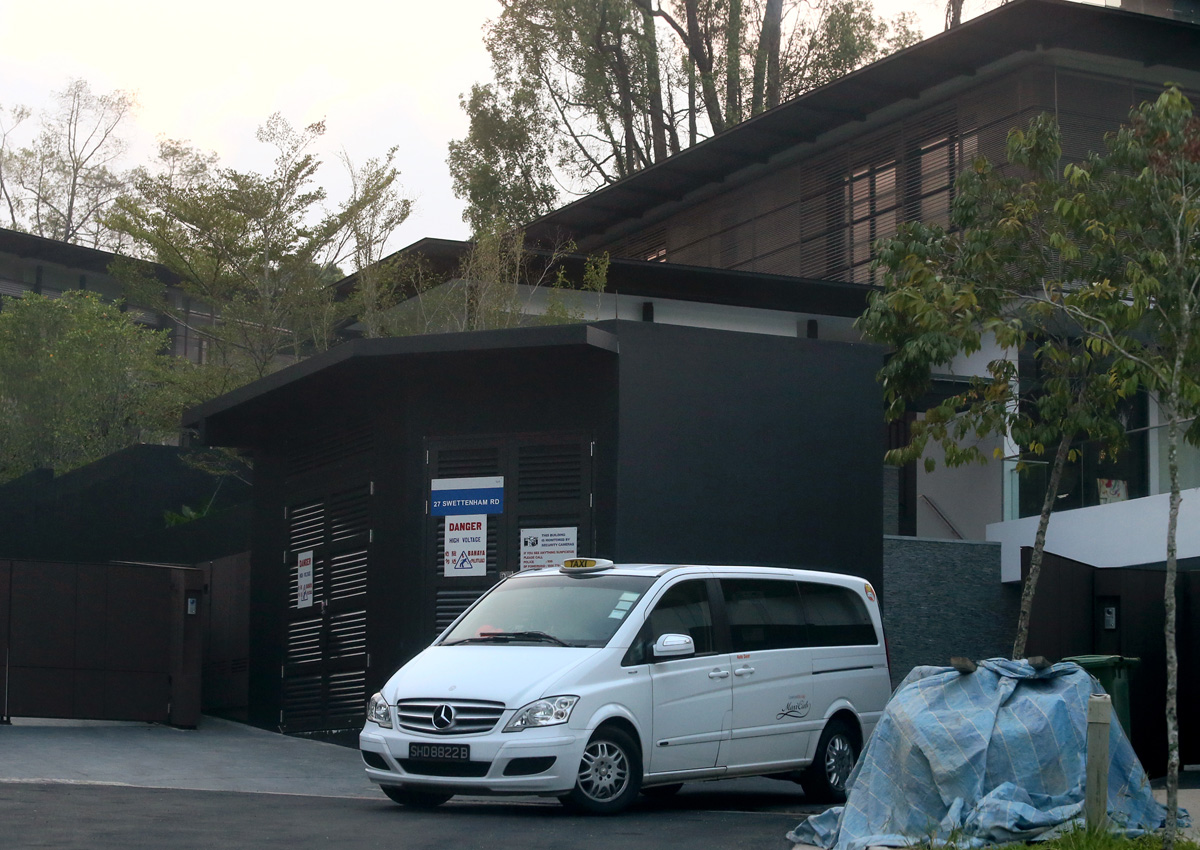
SINGAPORE – ComfortDelGro-owned MaxiCabs will be implementing a surcharge for rides with more than four passengers.
The $3 surcharge, which will come into effect on May 9, will affect each passenger when more than four of them board the cab.
So imagine sharing a MaxiCab with four or more friends. Each of you will have to pay $3 more on top of the total cab fare.
ComfortDelGro did not state a reason for this measure, but said that the surcharge “is not applicable for flat rate transfer services”.
According to TODAY, the “boarding fare for MaxiCabs in $3.90, with a 30-cent fare jump for every 400m or less, after the first kilometre up to 10km and every 350m thereafter or less, as well as for every 45 seconds of waiting or less”.
The report also added that the current booking fee is $10.
prabukm@sph.com.sg
HONG KONG – A man has reported the loss of HK$2 million (S$346,000) worth of foreign currency and valuables on board a Hong Kong-bound plane, in what is believed to be the biggest in-flight theft in the city.
The passenger, a 39-year-old expatriate travelling on an Emirates flight from Dubai yesterday, realised his loss only after he had stepped off the plane at Hong Kong International Airport, the South China Morning Post reported.
The money and valuables were in the man’s bag, which was stowed in an overhead cabin during the flight, the Post said.
The man sought help from airline staff, who called the police at about 6am. “Initial investigation showed two watches and over US$200,000 (S$268,000) were stolen from his bag and the total value was about HK$2 million,” a source with knowledge of the investigation was quoted by the daily as saying.
The police are treating the case as theft and are investigating. So far, no one has been arrested.
The source said it could be the costliest case of in-flight theft in recent years as most reported losses in the past were valued at hundreds of thousands of Hong Kong dollars, not millions.
An Emirates staff member surnamed Kwok who answered the airline’s hotline yesterday declined to tell the Post whether it was the carrier’s first reported in-flight theft for a Hong Kong-bound flight.
The Hong Kong authorities have seen an increase in in-flight thefts, the Post said.
In the first 10 months of last year, there were 67 reports of thefts on flights bound for Hong Kong, with the loss of a combined HK$4.83 million, the report said.
At least one-third of the cases were discovered by flight attendants. That compared with 48 cases and HK$2.61 million in losses for the whole of 2014, according to the report.
Another source was cited as saying the criminals often posed as well-dressed travellers and preferred aisle seats.
“They scouted their prey before boarding and placed their own bags in the same overhead bins their targets used.”
This article was first published on May 3, 2016.
Get a copy of The Straits Times or go to straitstimes.com for more stories.


SINGAPORE – From July, property developers will have to submit a walking and cycling plan so that the needs of pedestrians and cyclists are considered upfront in development plans.
According to a joint news release from the Land Transport Authority and the…
Source link


