 CANBERRA – Australia and Singapore will jointly develop military training areas and facilities in Australia as part of a deal that expands defence cooperation between the two countries and improves economic ties.
Singapore will spend up to A$2.25 billion…
Source link
S’pore, Australia to jointly develop military training areas
Accident involving 5 vehicles causes hours-long congestion on CTE during rush hour

SINGAPORE – An accident involving a car and four motorcycles caused an hours-long jam on the Central Expressway (CTE) on Friday morning (May 6).
Police were first alerted to the accident near the Braddell Road exit, heading towards the Ayer Rajah Expressway…
Source link
Jetstar fr $36 all-in Promo Fares till 11pm on 6 May 2016 | SINGPromos.com

TILL 11PM TONIGHT: Fly to Penang $36, Taipei $118, Surabaya $58, Medan $44, Hong Kong $78 & more (all-in)
Jetstar fr $36 all-in Promo Fares till 11pm on 6 May 2016 | SINGPromos.com
Have you booked your mid-year vacation? Check out Jetstar frenzy fares from $36: Penang $36, Taipei $118, Surabaya $58, Medan $44, Hong Kong $78, Siem Reap $88, Pekanbaru $38, Palembang $42, Bali $52
Dos and don'ts on Cooling-off Day and Polling Day
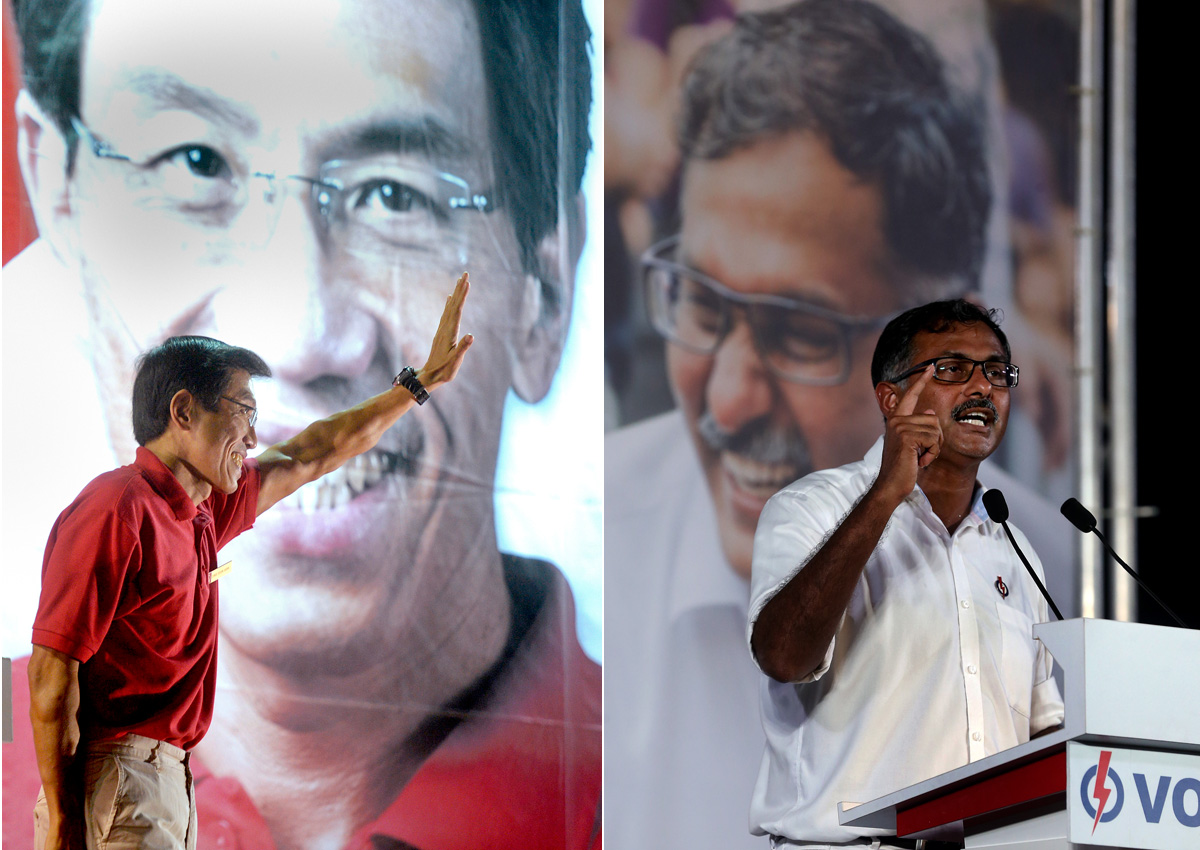
SINGAPORE – The Elections Department (ELD) has spelled out the dos and don’ts for candidates and their supporters on Polling Day (May 7) and Cooling-off Day for the Bukit Batok by-election.
Cooling-off Day on Friday (May 6), the traditional day of campaign silence introduced in 2011, is meant to give voters a chance to reflect rationally on various issues raised at the by-election before going to the polls.
No one is allowed to canvass or visit the homes of voters on both days, while holding election meetings is also prohibited.
The wearing, using, carrying or displaying of any political propaganda – which include badges, symbols, flags, advertisements and posters – by people or on vehicles is also banned. The public should refrain from wearing any apparel affiliated to a candidate, ELD added.
Also on the prohibited list: publishing or displaying any election advertising in Bukit Batok.
In addition, the publication of election surveys and exit polls before the close of all polling stations is not allowed.
There are, however, exceptions to the rules that prohibit election advertising. These include reports in the newspapers or on radio and television, approved posters and banners lawfully displayed before the start of Cooling-off Day, the transmission of personal political views by individuals to other individuals on a non-commercial basis and the wearing by candidates of a badge indicating affiliation with their political party.
Bukit Batok by-election rally May 3
Click on thumbnail to view photos. Source:
AsiaOne, YouTube screengrabs














ELD also said that candidates and their supporters are expected to abide fully by all relevant laws, and refrain from conduct that “goes against the spirit behind the prohibition against campaigning on Cooling-off Day and Polling Day”.
Candidates should as far as possible avoid visiting voters or attending public events in the constituency, where they are likely to attract public attention and may be perceived as canvassing for support.
They can attend religious ceremonies for private prayer or worship, or attend functions in the course of their work.
As for voters, polling stations will be open from 8am to 8pm on Polling Day.
They are reminded to bring their NRIC or passport to the polling stations to cast their vote, and may wish to avoid going to the stations during the morning peak period when waiting times tend to be longer.
Bringing any camera, video or photographic equipment into the polling station is not allowed. For more guidance, visit the ELD website.
Bukit Batok by-election: Nomination day
Click on thumbnail to view photos. Source:
AsiaOne, The Straits Times






















This article was first published on May 6, 2016.
Get a copy of The Straits Times or go to straitstimes.com for more stories.
Image:
Publication Date:
Friday, May 6, 2016 – 14:10
Keywords:
Send to mobile app:
Source:
Story Type:
Others
CAAS, Airways New Zealand agree on enhanced cooperation
The Memorandum of Understanding (MoU) will pave the way for greater cooperation in air traffic management (ATM) and air navigation services (ANS), such as the exchange of information and expertise, professional development and collaboration on research.
Source link
Singapore-JB cabbies call for brakes on touts
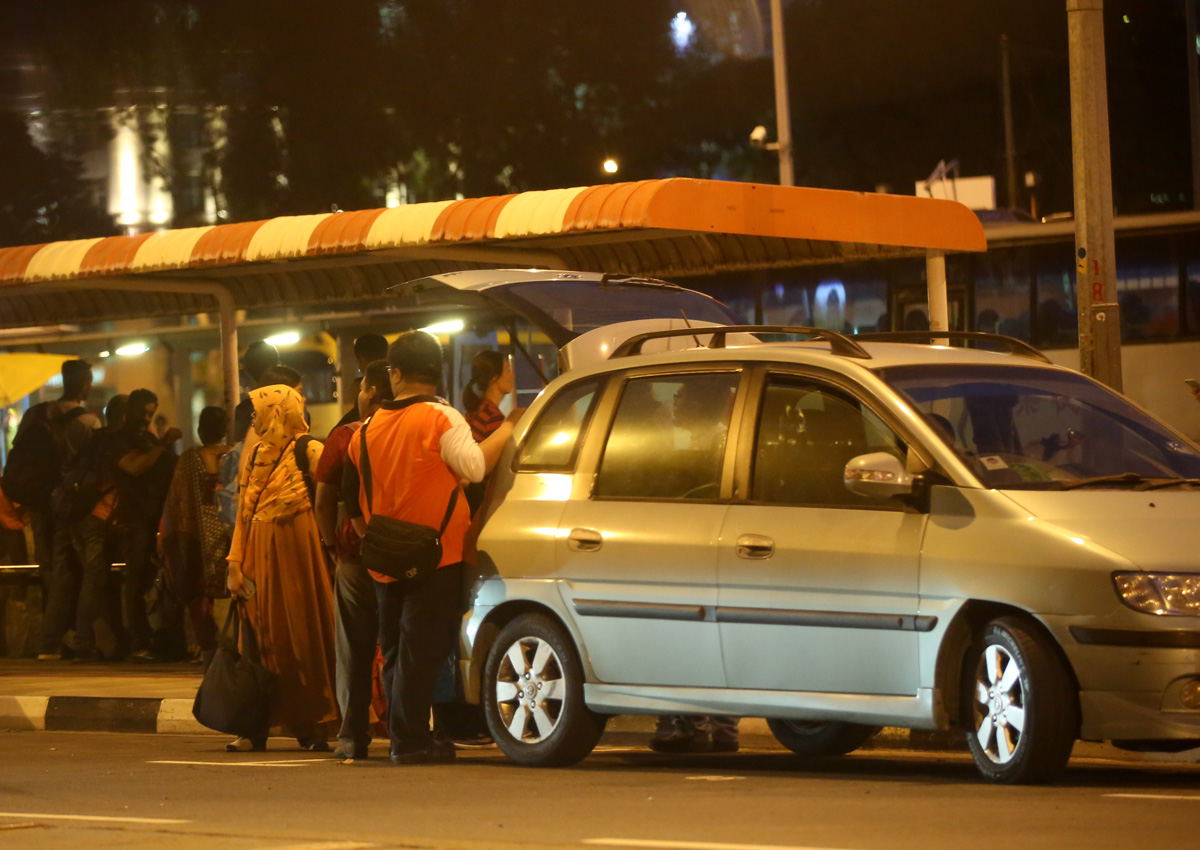
Whether you are at City Square mall in Johor Baru (JB) or the Ban San Street terminal near Bugis on any evening, you might find yourself accosted by touts hawking taxi services to “Singapore? Singapore?” or “JB, JB?”.
After agreeing on a fee which can range from $10 to $30 per person, passengers are ushered into a car or multi-purpose vehicle (MPV), joining others to make the trip across the Causeway.
These informal – and illegal – cross-border taxis have been around for more than a decade but have proliferated in recent years, aided by technology and the spread of social media platforms.
A Straits Times check found at least 20 making use of apps like Facebook or WeChat to advertise and organise services. Mostly Malaysia-registered vehicles, some even provide on-call, door-to-door rides that pick up groups of 10 to 12 in Singapore and take them to tourist attractions in Johor like Legoland Malaysia.
The convenience of the unsanctioned services speaks volumes. Some have more than 10,000 page likes and receive a steady stream of inquiries.
Their growth has made licensed cross-border taxi drivers cry foul, even with rules being relaxed in 2012 to allow them to pick up and drop off passengers anywhere in their own countries.
Currently, there are 173 and 187 taxis from Singapore and Malaysia respectively that are licensed to ferry passengers across the border, according to the Land Transport Authority (LTA), with a total of 400 permits available. They charge fixed fares, with a trip from the Ban San Street terminal to JB’s Larkin bus terminal costing $48 per taxi, or RM80 (S$27) in the opposite direction.
A spokesman for the Singapore-Johore Taxi Operators’ Association, which represents Singapore taxis, said that profits for taxi drivers have plunged by 50 per cent from 2014 mostly because of the intense competition from illegal services.
“It is unfair because some of these drivers do not have to meet safety or insurance requirements. We’re losing our business to them because we can only drive our passengers to designated spots in the other country, while they go door-to-door,” said the spokesman, who asked for enforcement to be stepped up and for some relief to be provided in the form of financial subsidies.
The LTA said it issued warnings to four offenders for operating illegal taxi services from Ban San Street terminal in 2014, and prosecuted four last year for the same offence.
At the JB Sentral train station, JB City Square mall and the Ban San Street terminal last week, touts were active despite the signs warning against them.
The night before the Labour Day long weekend found at least five at the Ban San Street terminal within a two-hour window. They parked their Malaysia-registered vehicles along the intersection between Arab Street and Queen Street, and were seen driving passengers away after negotiating fares.
A Singaporean cross-border taxi driver, who wanted to be known only as Mr Tay, said it was difficult for the authorities to nab these operators. “The officers show up in uniform and the touts will disappear immediately when they see them,” said the 70-year-old.
He added that more illegal taxi operators now use minivans that can take seven to 10 passengers. “They say they are a credible business.”
An illegal Malaysian operator who wanted to be known only as Andrew, said he started offering taxi services in November 2014 when he noticed there was “good demand”.
Together with two partners, he operates two 10-seater Hyundai Starex MPVs and a Hyundai Elantra car between Singapore and Malaysia daily.
He admitted he was worried about getting caught. But the former insurance specialist, 29, continues to make about 20 trips a week, earning about RM$20,000 a month. Most of his customers are large families with young children and elderly members.
“It is more convenient for them as they don’t have to get off a bus and queue at immigration,” said Andrew.
Qigong therapist Eileen Chan, 58, agreed and said the unlicensed taxis are far more convenient, even if they are more expensive than a bus or sharing a licensed taxi. She paid $25 for a ride from JB to her home in Yishun in March when she was approached by a tout, and would consider using such a service again.
“It was getting late and taking the car through the checkpoint is much faster than if I take a bus,” she said. “Hopefully they can be regulated so that passengers can be given more options.”
The LTA said that any person caught using a foreign-registered motor vehicle as an unlicensed public service vehicle to convey passengers for hire and reward can be fined up to $3,000 and jailed up to six months. Vehicles used in the commission of such offences may also be forfeited.
This article was first published on May 6, 2016.
Get a copy of The Straits Times or go to straitstimes.com for more stories.
Image:
Publication Date:
Friday, May 6, 2016 – 14:05
Send to mobile app:
Source:
Story Type:
Others
SBS buses go high-tech to look out for road users
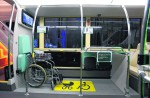
SBS Transit’s bus drivers will soon get an extra set of special eyes to help them look out for vehicles, pedestrians and cyclists on the roads.
The intelligent camera sensor, called Mobileye, will be mounted at the front of the bus and alert drivers through a dashboard display unit when they are too close to the vehicle in front, and if a pedestrian or cyclist comes into their path.
SBS, the country’s biggest bus operator, plans to install the Israeli-designed advanced driver assistance system (Adas) on more than 3,000 buses by the end of 2018, The Straits Times has learnt.
Last month, the company awarded a $1.3 million contract to local distributor Chuan-Fa Auto to install the system on a first batch of 750 buses by the end of this year.
SBS chief executive Gan Juay Kiat said: “Mobileye is a system that aids our bus captains by serving as an extra pair of eyes to alert them to potential risks that may come into their paths. This reduces the incidence of accidents.”
SBS is believed to be the first operator in Singapore to have an Adas installed across its entire fleet.
The Mobileye system is also able to detect lane markings, and will alert drivers when they stray out of their lanes without using their turn signals.
Warnings are given to the driver in the form of visual and audio alerts through a small dashboard unit.
For example, if the “headway” or the following distance between the bus and the vehicle in front is two seconds or lower – a parameter customised by SBS – an alarm will sound and an icon of a car will light up on the display unit.
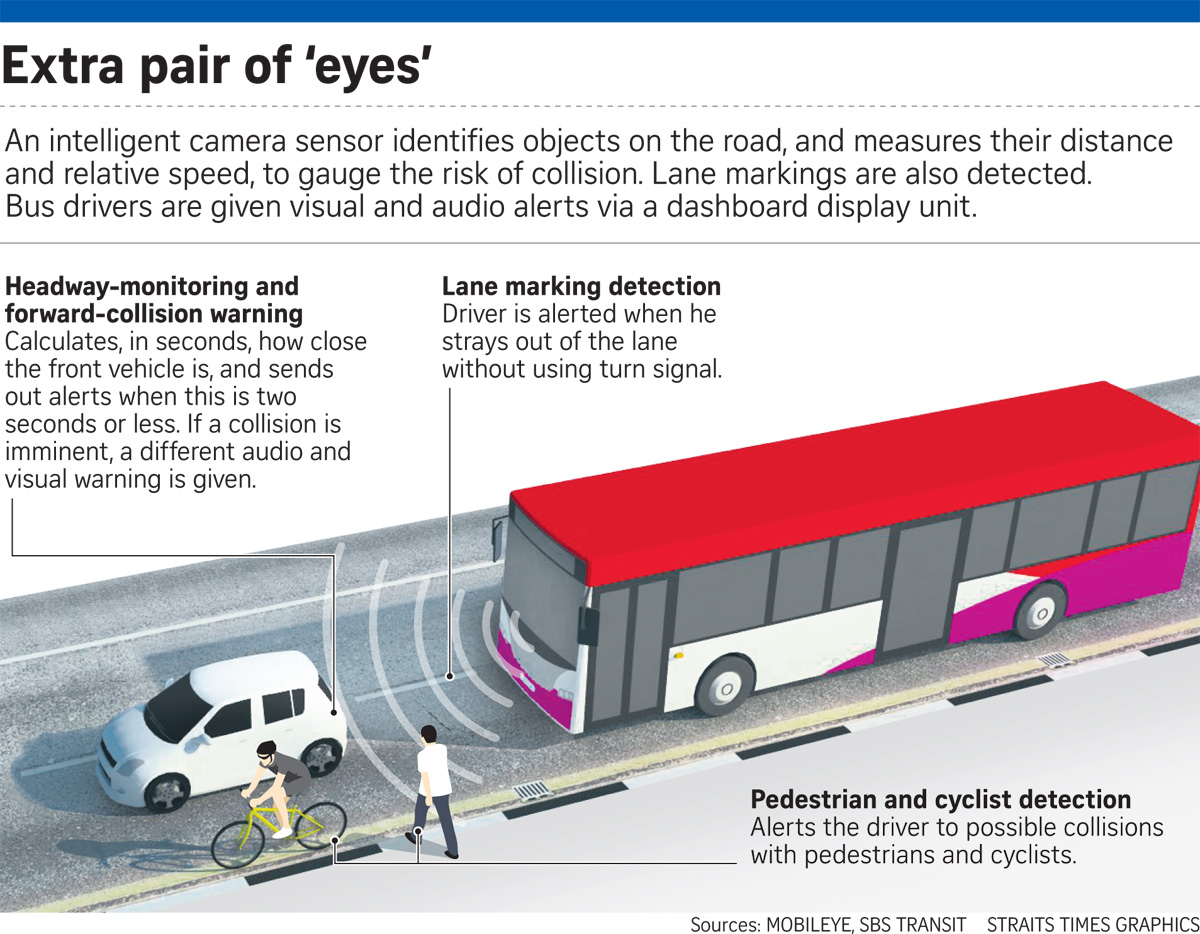
The Mobileye sensor is able to continuously monitor the distance and relative speed of objects on the road, and provide early warnings to drivers to make the necessary corrections.
SBS has finished testing Mobileye on 30 buses being used for passenger service in a trial that began in November 2014.
It involved a “blind phase” in the first few months, during which the Mobileye system was installed and turned on, but the dashboard display unit for bus drivers was not activated.
This gave SBS the opportunity to measure the bus drivers’ driving behaviour and to log down the number of warnings which were triggered by the system.
Mr Ng Chin Sheu, senior manager for bus safety at SBS, said: “After Mobileye was switched on for the bus captains, and with coaching from instructors on how they drove, we found there was a marked improvement in their driving behaviour, with fewer triggers logged.”
SBS bus driver Kang Yen Yen, 39, who was involved in the pilot, said in Mandarin: “Once, a small car suddenly cut into my lane, and with the Mobileye warning, I managed to slow down and avoid a collision.”
“While on the road, we are always mindful of safety, so we are not totally reliant on Mobileye. Still, it’s an extra help,” she said.
It’s a Lush Green makeover for new bus fleet
Click on thumbnail to view photos. Source:
The Straits Times














This article was first published on May 6, 2016.
Get a copy of The Straits Times or go to straitstimes.com for more stories.
Image:

Publication Date:
Friday, May 6, 2016 – 13:10
Send to mobile app:
Source:
Story Type:
Others
Two Rio golds beckon Yip
Singapore para swimmer Yip Pin Xiu established herself as the firm favourite for two golds at the Rio Paralympics when she lowered two world records on Wednesday (Thursday morning, Singapore time).
In Funchal, Portugal, scene of the International Paralympic Committee (IPC) Swimming European Open Championships, Yip smashed the 100m backstroke (S2) world record with her winning time of 2min 9.79sec.
It was more than six seconds faster than the previous mark of 2:16.31, set by Ukraine’s Ganna Ielisavetska in 2014, and saw Yip clinch her first gold of the meet.
The same event also saw her lower her own 50m backstroke (S2) world record of 1:01.61, set at last December’s ASEAN Para Games. Yip was 1:01.39 after the first turn on Wednesday.
Sounding her usual bubbly self as she spoke to The Straits Times over the phone at breakfast yesterday, Yip said: “I was quite surprised. I was eyeing the record but I was expecting a 2:11.
“Now I feel more confident (of my abilities) and I am looking to improve and do an even better time.”
Yip, who has a 50m backstroke gold (S3) from the 2008 Beijing Paralympics, acknowledged there will be more pressure on her slender shoulders to deliver in Rio.
After all, looking at times clocked from January last year by her rivals, her closest competitor in the 100m back is Ukraine’s Iryna Sotska, who timed 2:17.13 last July.
China’s Feng Yazhu leads the chasing pack in the 50m backstroke with a time of 1:02.47 registered last September.
But Yip said she is confident of coping with the heightened expectations.
“There will be more pressure, but I can choose to look at it in different ways. We’ll have to work with psychologists on how to handle the extra pressure,” said Yip, who still has the 50m freestyle (S2) and 50m back (S2) coming up in Portugal.
“But I’m really just focusing on myself. Somebody new might come by, someone might improve a lot. As long as I clock a good timing a medal is possible and that’s what I’m working towards.”
Yip also bettered two Asian records when she finished fifth in the 100m free (S3) with a time of 2:15.68.
It was under Feng’s 2:17.15 set last year, and her first 50m time of 1:03.82 was also faster than the Chinese swimmer’s 50m free mark of 1:05.47.
Team-mate Theresa Goh also enjoyed a good day out, setting a new Asian record in the 100m breaststroke (SB4) with a time of 1:59.90. It was under her previous mark of 2:00.86 set in 2008.
Coach Mick Massey said it is important not to let the good showing at the meet, which ends on Saturday, distract swimmers from the ultimate goal – success in Rio.
Emphasising that consistent work is the key, he said: “It is also good to remember to keep your athletes’ feet on the ground. In truth the only races that really matter will be in Rio.
“Everything else we do is just part of the process.”
siangyee@sph.com.sg
This article was first published on May 6, 2016.
Get a copy of The Straits Times or go to straitstimes.com for more stories.
Image:

Blurb:
Two world backstroke records in Portugal a reminder of looming pressure at Paralympics. -ST
Publication Date:
Friday, May 6, 2016 – 16:00
Keywords:
Send to mobile app:
Source:
Story Type:
Others
No Rio team event for men paddlers
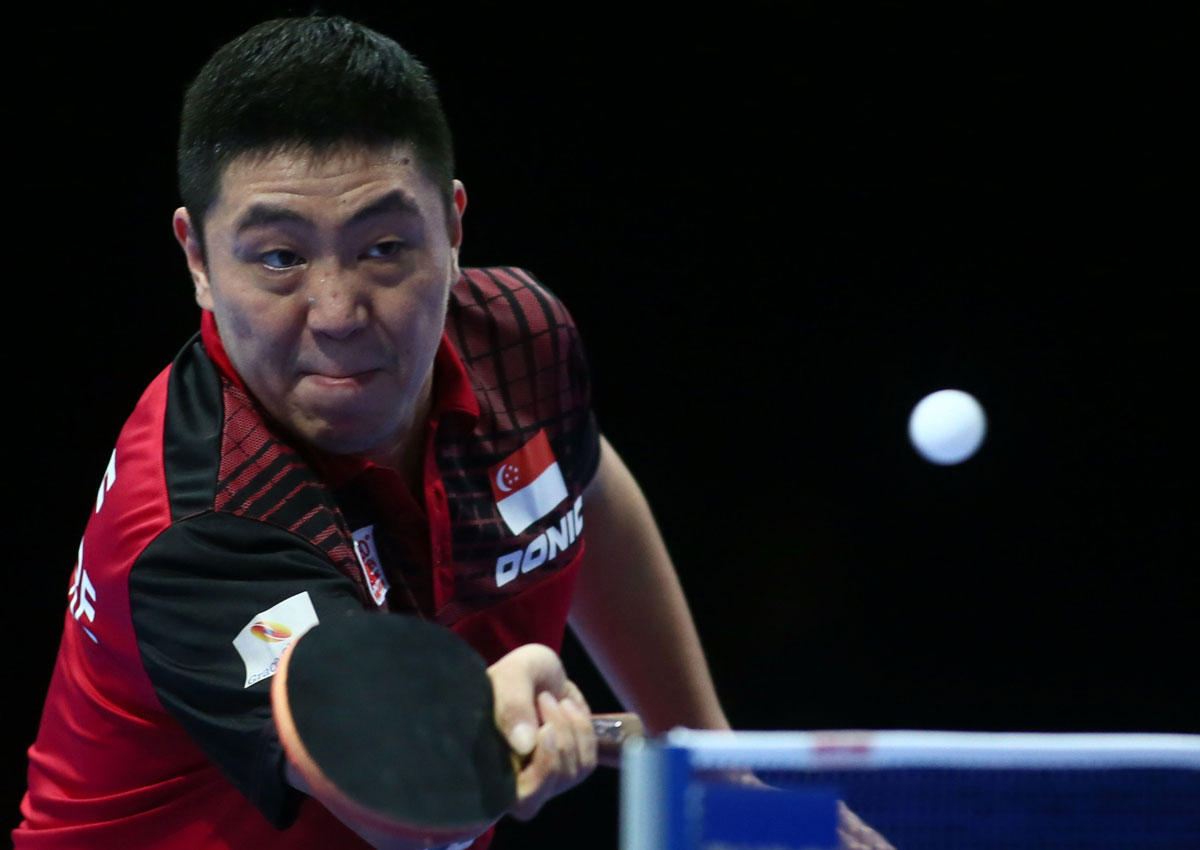
Rather than get the boost they were hoping for, the national men’s table tennis team’s Olympic ranking slid further yesterday, a drop that meant Singapore’s men will contest just the singles in Rio de Janeiro.
Ranked No. 13 by the International Table Tennis Federation (ITTF) last month and one spot away from clinching qualification, the men’s team slipped two rungs in the latest rankings to miss the cut-off.
The May rankings are used to allocate quota places for paddlers at August’s Olympics.
This is the first time since the team event became part of the table tennis competition in 2008 that the Republic’s men have failed to make the cut. A total of 16 slots were up for grabs, with at least one given to each of the six continents.
To earn one of the remaining berths – world No. 1 China and No. 2 Germany will fill the Asia and Europe quotas – Singapore needed to be ranked among the top 12.
The Olympic team rankings are based on the rating points of the three highest eligible players of each side. In Singapore’s case, the trio were Gao Ning (No. 33), Li Hu (No. 54) and Chen Feng (No. 115).
The Singapore Table Tennis Association (STTA) had banked on Gao’s semi-final run at the Asian Cup and Chen’s showing at last month’s Asian qualifier to provide the boost needed. While Chen’s ranking rose from No. 149, Gao’s took a tumble from No. 27. Both are pencilled in for the singles event.
Li was No. 51 last month.
When contacted yesterday, the STTA management withheld comment, stating that it would release a statement only after it has received confirmation from the ITTF. STTA president Ellen Lee could not be reached.
But given that the men’s team were quarter-finalists at the last Olympics, the team’s absence this time is expected to be viewed as a disappointment. Especially so, given that it was the women’s team that went through a major shake-up after the 2012 Games.
Wang Yuegu and Li Jiawei, part of the side that won medals at two Olympics and the 2010 world title, retired following the London Games. Apart from the retirement of Zhan Jian due to injury last August, the make-up of the men’s team has largely remained unchanged.
Even without Zhan, who is ineligible for world title events due to ITTF regulations for naturalised citizens, the men’s team still posted top-eight finishes at the 2012 and 2014 world championships. They were among the top 24 this year.
Feng Tianwei will lead a women’s side aiming to win a third straight medal in the team event.
Yu Mengyu, 26, is set to make her Olympic debut after making the cut for the singles event. Her inclusion allows Singapore to earn an additional athlete quota place to contest the women’s team event.
maychen@sph.com
This article was first published on May 6, 2016.
Get a copy of The Straits Times or go to straitstimes.com for more stories.
Image:
Publication Date:
Friday, May 6, 2016 – 16:00
Send to mobile app:
Source:
Story Type:
Others
Easier travel, more study options for Singaporeans heading to Australia
As part of the Comprehensive Strategic Partnership agreement, Australia and Singapore have agreed, in principle, on a tailored multi-year visa agreement for Singaporeans who have been pre-vetted by the Singapore Government.
Source link


