Home Blog Page 4010

Robot to sit China's national college entrance exam in 2017

A robot is being designed to compete with 12th graders during the college entrance examination in 2017 and get a score qualifying it to enter first-class universities in China, according to Huaxi Metropolis Daily.

The robot will sit three exams, namely math, Chinese and a comprehensive test of liberal arts, which includes history, politics and geography, said Lin Hui, CEO of an artificial intelligence company in Chengdu. The company won the bid for the artificial intelligence programme on the robot’s math test from the Ministry of Science and Technology in 2015.

Like the other examinees, the robot will have to finish the exams during designated periods. Unlike the usual scene that sees 30 students sit in an exam room, the robot will take its exams in a closed room without anyone else present, except for proctors and a notary.

According to Lin, the robot will be linked to a printer before every exam, and the electronic examination paper will be put into the robot’s programme when the examination begins. The robot will be totally disconnected from the internet and will solve the problems with its artificial intelligence programme. Finally the answers will be outputted through the printer.

It’s believed that Chinese and a comprehensive test of liberal arts, rather than maths, will pose challenges to the robot, since questions in maths are objective with specific answers, while in the other test subjects, there are some subjective questions, such as the reading comprehension and essay-writing.

Lin said that the robot writing technique nowadays has been increasingly mature. With key information words, a robot can write an economic news report following the widely-accepted writing mode in Silicon Valley, while nobody could tell it was written by a robot, Li said.

From this point of view, the robot can analyse the topic of the writing session and complete writing. Though the essay may turn out to be an emotionless piece, that slightly affects the grade.

The robot is actually a touchstone for artificial intelligence development and the key technology of the robot lies in understanding language and reasoning, according to Fu Hongguang, who is in charge of the research and development of the artificial intelligence programme required in the math test.

The robot is reportedly trying to qualify for admission to Peking University and Tsinghua University in 2020, and its counterpart in Japan is eyeing Tokyo University in 2020.

The robot is just one example of the boom in artificial intelligence after Google’s AlphaGo beat a world-class player in the ancient board game Go in March.


Image: 
Publication Date: 
Saturday, May 7, 2016 – 12:26
Send to mobile app: 
Source: 


Story Type: 
Others

Source link

Xi promises Shanghai Disneyland to be 'safe, pleasing service of high quality'

Shanghai Disneyland will strive to ensure “safe and pleasing service of high quality” to its guests in China, the CEO of Walt Disney Co promised President Xi Jinping on Thursday.

Robert Iger made the remark while meeting with Xi in Beijing, just before the start of the park’s trial operation on Saturday.

“It’s good to see the fruits of efforts over the years,” Xi said. He congratulated Iger for the upcoming official opening of the park on June 16.

The project, the first Disney park on the Chinese mainland, was approved when Xi was working as Shanghai’s Party chief in 2007. It is a joint investment by Walt Disney Co and Shanghai Shendi Group Co, and revenue will be shared.

“By working together, our two countries can accomplish some big tasks,” Xi said.

He said that as China-US co-operation has a solid foundation, “it is important for both sides to expand new areas of co-operation and carry on co-operation in greater depth”.

“The Chinese government is totally open to such efforts” and will provide support, Xi added.

He also expressed his wish to see a bilateral investment treaty with the United States signed at an early date.

“What the Walt Disney Co has achieved in China I think is a perfect example of co-operation, but it also came after years of understanding, years of building up deep respect for one another and appreciation for each other’s interests,” said Iger, also deputy chief of the US-China Business Council.

“I support many efforts to strengthen US-based companies’ co-operation in China. I am particularly a supporter of the bilateral investment treaty.”

Jia Xiudong, a research fellow with the China Institute of International Studies, said the park is an example of win-win co-operation between the two nations.

“It earns money, provides convenience to Chinese tourists and promotes cultural exchanges,” Jia said, adding there are more such cases emerging in China-US co-operation.

Image: 
Category: 
Publication Date: 
Saturday, May 7, 2016 – 12:15
Send to mobile app: 
Source: 


Story Type: 
Others

Source link

'Kill them' Duterte leads at end of Philippine presidential campaign

MANILA – Mass murder advocate Rodrigo Duterte heads into Saturday’s final rallies of an extraordinary Philippine presidential campaign as the shock favourite, but with rivals still having a chance to counter his profanity-laced populist tirades.

Duterte, a pugnacious 71-year-old, has rocked the political establishment with cuss-filled vows to kill tens of thousands of criminals, threats to establish one-man rule if lawmakers disobey him, and promises to embrace communist rebels.

He has also caused disgust in international diplomatic circles with a joke that he wanted to rape a “beautiful” Australian missionary who was killed in a 1989 Philippine prison riot, and boasted repeatedly on the campaign trail about his Viagra-fuelled affairs.

President Benigno Aquino, whose mother led the democracy movement that ousted dictator Ferdinand Marcos a generation ago, has warned the nation is at risk of succumbing to another dictatorship.

But Duterte’s anti-establishment rhetoric and promises of quick fixes to deep-rooted problems have proved hypnotic for millions of Filipinos, and he heads into Monday’s election with an 11-percentage-point lead over his rivals, according to the latest survey.

Senator Grace Poe, the adopted daughter of a late movie star, and establishment bedrock Mar Roxas, are tied in second place. Vice President Jejomar Binay, the early favourite, has fallen to fourth place under the weight of a barrage of corruption allegations.

While Duterte, the long-time mayor of the southern city of Davao, is undeniably the favourite, he lacks the sophisticated political machinery of some of his rivals and is not guaranteed victory, according to Manila-based political analyst Earl Parreno.

Roxas, a US-educated investment banker who served as interior and transport secretaries in Aquino’s administration, is in the strongest position to challenge, Parreno, from the Institute of Political and Electoral Reforms, told AFP.

Roxas can expect a boost of about five percentage points from the machinery of the Liberal Party, which can use its money and influence to get people into voting booths, according to Parreno.

“We also still have the undecided. It’s going to be a very, very close fight, a neck and neck fight, between Duterte and Roxas,” Parreno said.

The presidential candidates will make their final pitches to voters on Saturday with rallies in Manila that are expected to attract tens of thousands of people. Politicians are not allowed to campaign on the final day before elections.

In a sign of the nervousness that Duterte will win, Aquino – who is limited by the constitution to a single term of six years – made an extraordinary plea on Friday night for the other candidates to unite against the frontrunner.

Under the proposed anti-Duterte alliance, one or more of the other candidates would withdraw from the race to back the person with the best chance of winning.

Roxas said he was willing to discuss the proposal with Poe. However Poe immediately rejected any suggestion that she should withdraw, and there were no signs late on Friday night that an 11th-hour partnership would be forced.

In a similar manner to US Republican presidential candidate Donald Trump, Duterte’s blistering campaign has upended conventional political wisdom, with controversies that pundits said would doom him instead only fuelling his popularity.

However Trump’s trash-talk has been tame in comparison.

Duterte has promised to end crime nationally within the first six months of his presidency, with the seemingly impossible task to be achieved by ordering security forces to bypass an inefficient judicial system and go on an unprecedented killing spree.

He said tens of thousands of suspected criminals would die in the crackdown.

In a speech last week to the nation’s most prominent business club, Duterte acknowledged his tactics could amount to mass murder but that he would pardon himself at the end of his term if he was found guilty of such crimes.

“Pardon given to Rodrigo Duterte for the crime of multiple murder, signed Rodrigo Duterte,” he said, describing the document he would write for himself.

Human rights groups have warned his comments are not merely rhetoric.

They accuse him of running vigilante squads in Davao that have killed more than 1,000 suspected criminals. At times he has boasted about his involvement, and said 1,700 people were killed, but on other occasions denied any links to the vigilantes.

Image: 
Category: 
Publication Date: 
Saturday, May 7, 2016 – 11:53
Send to mobile app: 
Source: 


Story Type: 
Others

Source link

Singapore para-swimmer Yip Pin Xiu sets 2nd world record at European games

She beat her own previous world record of 1min 1.61s in the women’s 50m (S2) backstroke by nearly 5 seconds with a time of 1min 0.64s. 

Source link

FairPrice 1-Day Special Offers (Coca-Cola, Kinder Bueno & More) on 7 May 2016 | SINGPromos.com

TODAY ONLY: Fairprice Coca-Cola, Kinder Bueno, Brand’s & other one-day only deals (7 May)

FairPrice 1-Day Special Offers (Coca-Cola, Kinder Bueno & More) on 7 May 2016 | SINGPromos.com

Stretch your dollar and save with NTUC Fairprice’s one-day offers valid only on 7 May 2016 featuring Kinder Bueno 10-pack at $8.95, Coca-Cola 12’s 330ml at $4.90 and more.

Source

Equipping citizens against terror attacks

SCDF re-gears community programmes so people are better prepared to react to terrorist threats

Community programmes that once trained volunteers in lifesaving skills will be re-geared to focus on terrorist threats so that Singaporeans can better look out for one another.

These programmes will train individuals as “Community First Responders” who can react to emergencies before police and civil defence forces arrive. The hope is to have citizens trained at a basic level at least so they know how to help themselves and their families get out of harm’s way.

The Singapore Civil Defence Force (SCDF) revealed this shift in its Community Emergency Preparedness Programme (CEPP) and Emergency Preparedness (EP) Day schemes at its annual workplan seminar held at ITE College East.

Home Affairs Minister K. Shanmugam said the changes, which kick in later this year, would help save lives. He told SCDF officers at the closed-door seminar: “From SCDF’s perspective, to have many well-trained volunteers around the neighbourhood will significantly reduce fatalities, increase the chances of survival and reduce the pressure on response times from emergency vehicles.”

He added: “We will equip… participants with life-saving skills and emergency preparedness procedures, and they will be given advisories on what to do in the event of a terrorist attack and how to keep themselves and others safe.”

Community volunteers will be taught skills including first aid and fire-fighting, and be classified into three tiers, according to their skill level. At the lowest tier are “emergency prepared citizens” who, after a 45-minute online course, are expected to know how to help keep themselves and their families safe.

The top two levels are “bystander responders” and “volunteer life-savers”. They will have to go through training of 21/2 and 4 hours respectively at the five SCDF Division Headquarters around the island.

These volunteers will learn basic first aid, CPR and fire-fighting skills, before moving on to more advanced techniques such as infant CPR. They will also learn how to react in various scenarios, such as during a bomb threat.

Explaining how the SCDF was recalibrating its approach, Commissioner Eric Yap said: “From building awareness on emergency preparedness, we will now level up the core competencies of the community to be first responders during emergencies.”

All of SCDF’s 20,000 full-time national servicemen and operationally ready national servicemen will also be part of the group of first responders, when they are not on duty or serving their in-camp training.

A group of 1,000 NSmen will be part of SCDF’s new Public Shelter and Resilience Unit. While they will be equipped with fire extinguishers and first aid kits, they will also go door to door to spread the SG Secure message and information on fire safety and emergency preparedness. SG Secure is a national movement that aims to build community resilience against the terror threat.

Mr Shanmugam said getting this message across to people was half the battle, adding that they would come forward to become volunteers if they believed in the cause.

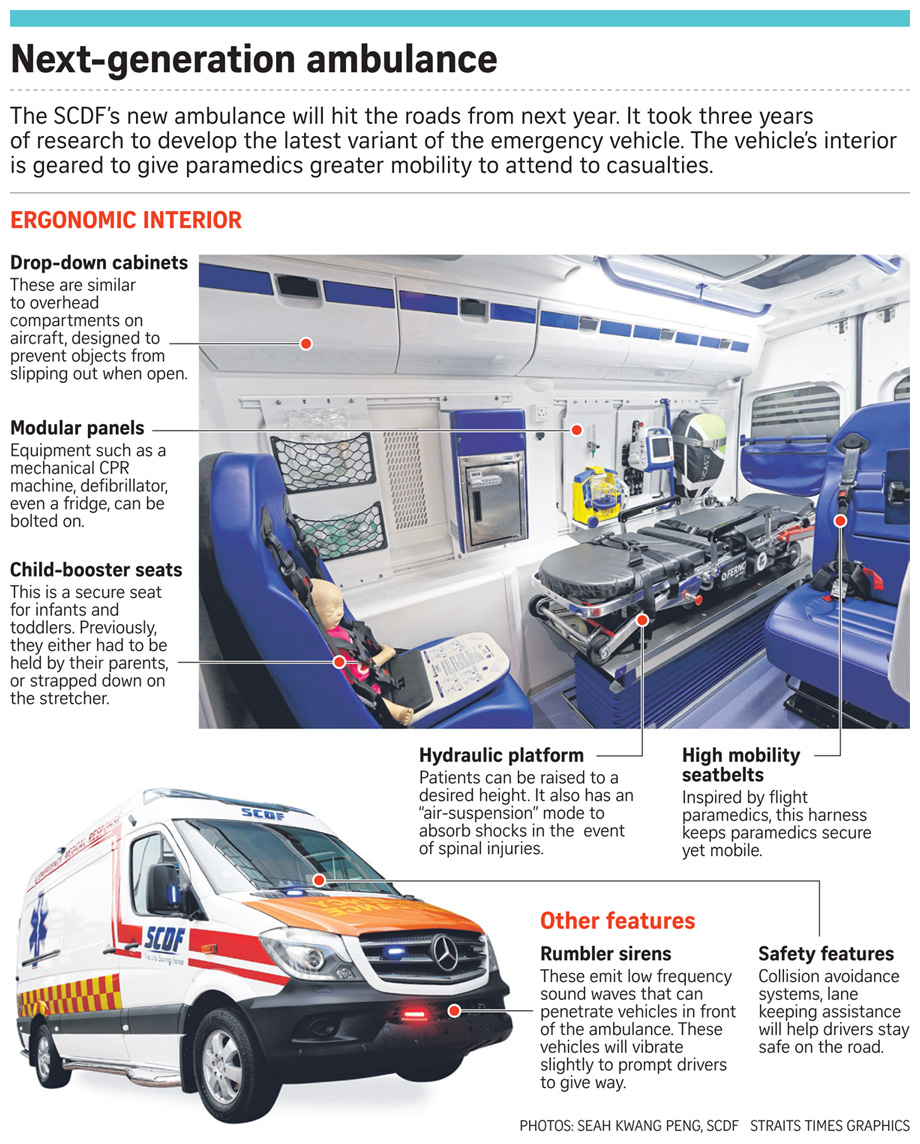
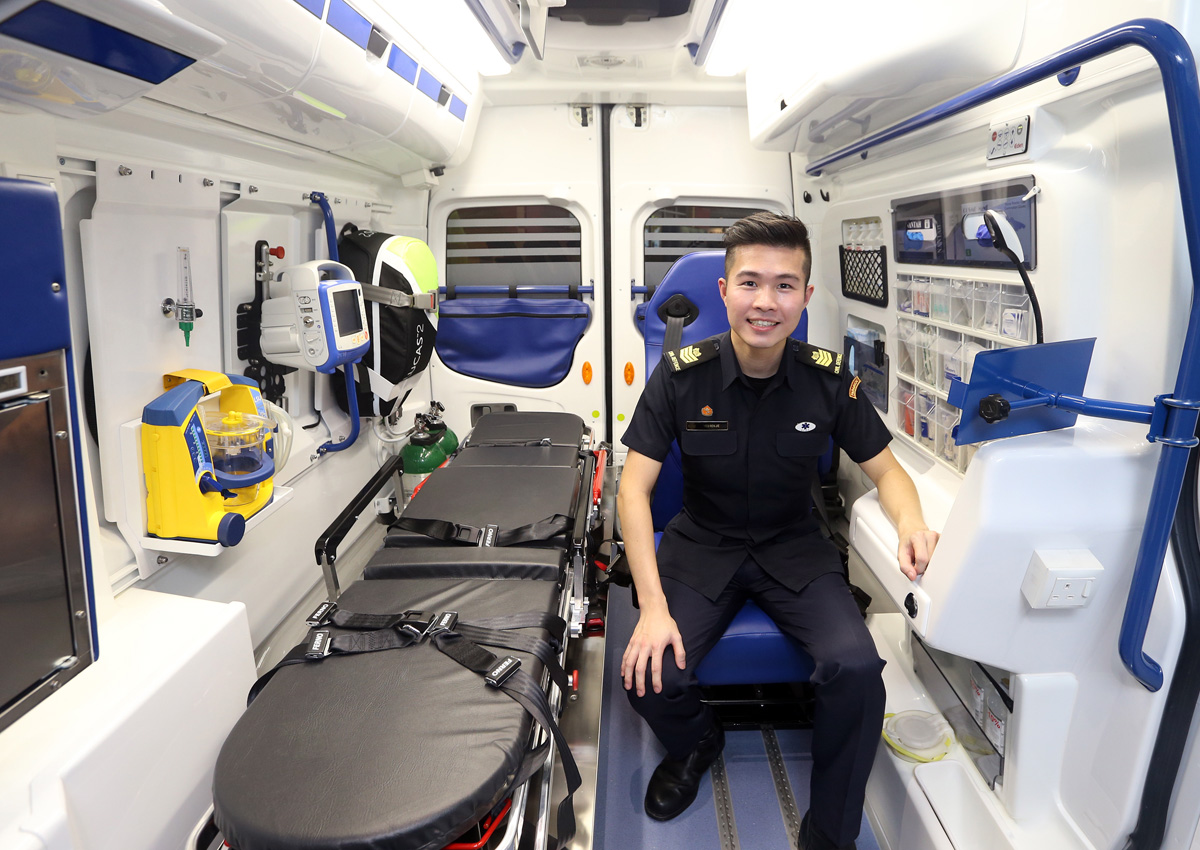
Also unveiled at the seminar were new technologies SCDF plans to incorporate. These include a more advanced ambulance (see graphic), and a prototype exoskeleton suit, which will allow firefighters to carry casualties or heavier loads for a longer time.

Two upcoming support vehicles – the mass decontamination vehicle (MDV) and the Fire and Rescue Operations Support Tender (Frost) vehicle were also revealed.

The MDV has eight shower cubicles inside the vehicle and two other decontamination lanes outside, that can allow up to 140 casualties to be decontaminated each hour.

Meanwhile, the Frost vehicle carries both breathing apparatus and ventilation equipment used for damage control – combining support functions that used to be fulfilled by two different vehicles.

dansonc@sph.com.sg


This article was first published on May 7, 2016.
Get a copy of The Straits Times or go to straitstimes.com for more stories.

Image: 
Category: 
Publication Date: 
Saturday, May 7, 2016 – 11:33
Keywords: 
Send to mobile app: 
Source: 


Story Type: 
Others

Source link

New portal to sign up for infocomm technology courses

Choose from 380 programmes that provide training in core and specific domain skills

Fresh graduates and professionals can now sign up for infomation and communications technology (ICT) training programmes via a new portal launched by the Infocomm Development Authority (IDA) and the Singapore Workforce Development Agency (WDA).

They can choose from a directory of 380 training courses and certifications, which are part of the TechSkills Accelerator (TeSA).

TeSA was announced by Finance Minister Heng Swee Keat in this year’s Budget.

It is one of the initiatives to mitigate the manpower shortage in the ICT sector to help in Singapore’s push to become a Smart Nation, in which technology is used to improve people’s lives.

TeSA programmes will cover two main areas:

  • training in core ICT skills such as cyber security and software development which can be applied across all businesses, known as TeSA Core, and
  • training in specific domain skills such as finance and healthcare for existing ICT professionals, known as TeSA Sector.

Minister for Communications and Information Yaacob Ibrahim gave these details in a speech yesterday at the Nanyang Polytechnic School of Information Technology graduation ceremony.

“We know that the demand for ICT skills is getting more specialised. For example, banks are not just looking for ICT professionals with strong foundations in data analytics, but also professionals who understand the financial industry, and who can apply their skills to complex financial transactions and analyses,” he said.

Adding that job placement will be a priority of TeSA, he said: “Our objective is not just to train more ICT professionals, but to help them get better jobs and advance in their careers.”

The courses on offer at the new portal (www.infocommtalent.sg) are based on the National Infocomm Competency Framework and include some covered by a funding scheme for Singaporeans called the Critical Infocomm Technology Resource Programme Plus.

Thirty-four organisations, including the National University of Singapore Institute of System Science, Singapore Management University and NTUC Learning Hub are providing training.

Singtel has also committed to train 130 professionals for cybersecurity job roles under a new Cyber Security Associates and Technologists programme.

The agency has set up a programme office. It will oversee the formation of a governing council and sector committees comprising employers. More details will be given in the next few weeks, IDA said.

joseow@sph.com.sg


This article was first published on May 7, 2016.
Get a copy of The Straits Times or go to straitstimes.com for more stories.

Image: 
Publication Date: 
Saturday, May 7, 2016 – 11:24
Send to mobile app: 
Source: 


Story Type: 
Others

Source link

Singapore, Australia ink pact taking ties to new heights

Landmark agreement will deepen economic links, military co-operation and cultural ties

Singapore and Australia have inked a “landmark” agreement to raise bilateral co-operation to “unprecedented levels” in security, trade and the arts and culture.

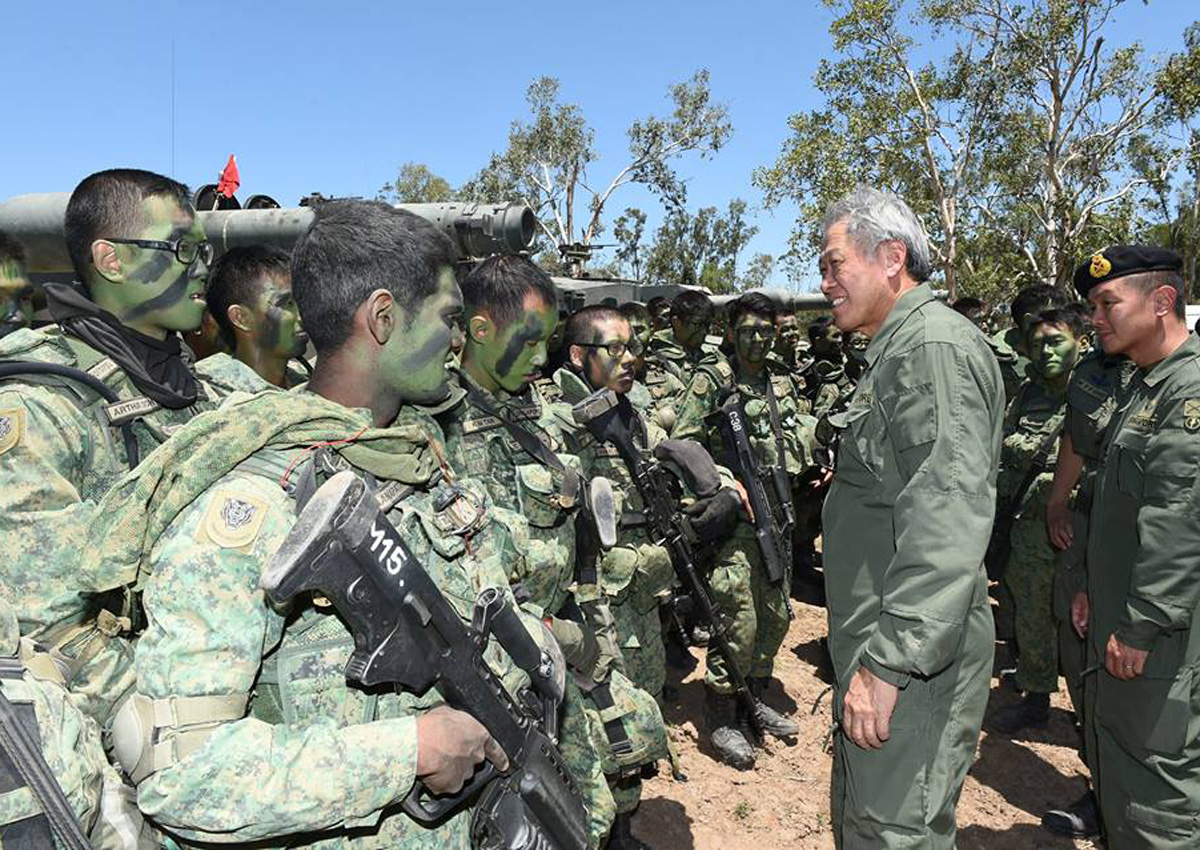
A key area is a defence co-operation deal that will give Singapore troops, who have been training in Australia since 1990, access to more military areas for 25 years.

Under the deal, which both governments announced yesterday, Singapore will reportedly spend up to A$2.25 billion (S$2.25 billion) to expand the military facilities in Shoalwater Bay and Townsville in Queensland.

Both sides also reviewed their 2003 free trade agreement to hammer out a deal to deepen integration of their economies and strengthen Singapore’s position as the go-to hub for Australian businesses and service providers to tap growing opportunities in Asia.

This includes easing trade restrictions to allow more trade flows between both sides; making it easier for businesses to bid for government contracts; and increasing the limits on acquisition by Singapore investors in Australia.

Singapore was Australia’s fifth- largest trading partner last year, with bilateral trade amounting to S$20.2 billion. Australian investments in Singapore were worth A$50.7 billion in 2014.

There is also good news for Singaporean visitors, whose Australian visas are valid for only 12 months. Under the pact, Australia will issue multi-year visas, a move that will benefit the 400,000 Singaporeans who visit Australia every year.

The agreement comes a year after Prime Minister Lee Hsien Loong and Australia’s then Prime Minister Tony Abbott signed the Comprehensive Strategic Partnership (CSP) agreement. Other initiatives in the new agreement include:

  • More mutual recognition of professional qualifications, with priority for engineers and accountants.
  • Australian start-ups will get greater access to Asia to showcase their products and services with the help of Singapore as an innovation “landing pad”.
  • Up to 500 young Singaporeans will be able to work or study in Australia for up to 12 months under a new “Work and Holiday Maker Programme”.
  • Singaporean artists, art groups and performers can tap into a S$5 million fund over five years to stage their works in Australia.

Yesterday, the leaders of both countries welcomed the “landmark” pact.

In Canberra, Prime Minister Malcolm Turnbull likened his country’s new level of relationship with Singapore to that with its neighbour and closest ally, New Zealand.

PM Lee called it a “win-win deal” that will benefit both sides and pledged to move quickly to implement the various measures. He said in a statement that the two countries are “politically like-minded, strategically aligned and economically complementary”.

“We have much to gain by working closely together. The CSP will draw our two countries closer, economically, politically and at the people-to-people level,” he added.

Mr Lee was scheduled to visit Australia at the end of the month but the trip has been postponed as Mr Turnbull is expected to call an election, likely on July 2.

Foreign Minister Vivian Balakrishnan said that even if there were a change of government after the July elections, he was confident that a new government would be committed to honouring the pact.

“We know that the Australians are good for their word. They have always complied with agreements that they’ve signed,” he said.

jermync@sph.com.sg

See also: More SAF troops to train in Australia after expansion of facilities

This article was first published on May 7, 2016.
Get a copy of The Straits Times or go to straitstimes.com for more stories.

Image: 
Category: 
Publication Date: 
Saturday, May 7, 2016 – 11:11
Send to mobile app: 
Source: 


Story Type: 
Others

Source link

Kumamoto Earthquake: Temporary housing running late, short

KUMAMOTO – Three weeks after deadly earthquakes battered Kumamoto Prefecture and other parts of Kyushu, demand for temporary housing looks likely to outstrip supply. Recent surveys have revealed that the tremors destroyed or badly damaged about four times more homes than initially estimated. Furthermore, delays in constructing temporary homes are compounding the problem and prolonging the time thousands of evacuees will have to stay in shelters.

On Wednesday, the prefectural government announced 31,025 homes had been totally wrecked or badly damaged by the earthquakes. At the end of April, the prefectural government unveiled a plan to provide 4,200 temporary housing units, a figure based on an estimate that 8,000 homes had been destroyed or badly damaged. With the high likelihood that the figure will now be insufficient, the prefectural government is carefully examining how many units are needed and will consider constructing more.

One week after the April 14 “foreshock,” the prefectural government had confirmed that about 10,000 homes were damaged, of which an estimated 8,000 had been destroyed or badly damaged. Its estimate for the number of necessary housing units was based on the example of Iwate Prefecture following the Great East Japan Earthquake in March 2011. Referring to the Iwate Prefecture case, Kumamoto Prefecture determined it needed housing units for 35 per cent of families whose homes had been destroyed or badly damaged by the disaster.

As a result, Kumamoto Prefecture calculated it should construct 2,100 prefabricated housing units. It believed it could secure another 2,100 units of what is known as “minashi kasetsu,” or quasi-temporary housing, including privately rented housing such as apartments. At the end of April, it allocated ¥14.3 billion (S$0.20 billion) for these projects.

However, further surveys have revealed that the extent of quake damage is significantly larger than originally thought.

Plans in place as of Wednesday would supply enough temporary housing units to cover only 13.5 per cent of all destroyed and badly damaged homes. This is lower than the 19.4 per cent for the 1995 Great Hanshin Earthquake and the 21.4 per cent for the 2004 Niigata Prefecture Chuetsu Earthquake.

Construction itself has also been slow. Work finally began in the town of Kosa and the village of Nishihara on April 29, 15 days after the foreshock.

“Strong aftershocks continued for days and it took some time until we could confirm the damage caused in each place,” a Kumamoto prefectural government official said. “Some local government buildings also were damaged, and this affected their administrative functions. This is a major reason for the delay, but we want to get construction moving as quickly as we can.”

Construction will be welcomed by the many residents still living in evacuation shelters and sleeping in cars.

“I want to leave this shelter and quickly move into a temporary home,” said a 71-year-old farmer from the hard-hit village of Minami-Aso, Kumamoto Prefecture. The farmer’s house was destroyed by the earthquakes, and he is staying at a shelter with his 88-year-old mother and one other family member. Minami-Aso officials began surveying residents about whether they wanted to move into temporary accommodation on Tuesday. Until then, the officials reportedly were inundated with other work due to the sheer devastation triggered by the quakes, which killed 49 people and injured 1,641. One person remains missing.

Local governments, swamped with helping evacuees and repairing essential utilities, could not spare enough personnel to survey the damage. Frequent aftershocks also made conducting surveys difficult.

As a result, the commencement of temporary housing construction in Kumamoto Prefecture took more than a week longer than such operations did following the Great Hanshin, Niigata Prefecture Chuetsu and Great East Japan earthquakes.

Delays in building these units will prolong the time evacuees have to stay in shelters. After the Great Hanshin Earthquake, it took half a month before people could start moving into temporary housing. After the Chuetsu earthquake and the Great East Japan Earthquake, about one month was needed. However, the first unit in Kumamoto Prefecture is scheduled to be completed in mid-June at the earliest, meaning evacuees likely will start moving in about two months after the quakes struck.

Suitable sites lacking

About 5,000 people are still staying in shelters in the town of Mashiki, where two earthquakes registered a maximum 7 on the Japanese seismic intensity scale. “Saving people’s lives was the top priority immediately after the earthquakes,” Mashiki Mayor Hironori Nishimura told The Yomiuri Shimbun. “But now we will do everything we can to construct temporary housing units so people can get back to their normal lives.”

Mashiki has set a goal of building 500 units, but the details have been finalized for only 140. Finding suitable sites has not progressed smoothly; some public land earmarked for temporary housing can no longer be used because it is subsiding.

The quakes caused multiple landslides in Minami-Aso. The town has dropped plans to build housing units in its Tateno district, which has been cut off from the central part of Minami-Aso due to the collapse of the Aso Ohashi bridge. It is considering constructing the units in a neighbouring town.

Kumamoto Prefecture currently plans to build 2,100 temporary housing units. The Yomiuri Shimbun surveyed 15 cities, towns and villages in the prefecture that have called for such units, about how many they need. Figures provided by 11 municipalities totaled more than 1,900 units. Four municipalities still did not know exactly how many they need, so the number of 1,900 is likely to rise. The prefectural and local governments will need to coordinate to speed up the construction process.

Image: 
Category: 
Publication Date: 
Saturday, May 7, 2016 – 10:56
Send to mobile app: 
Source: 


Story Type: 
Others

Source link

Voting begins for Bukit Batok by-election

SINGAPORE – Voting for the Bukit Batok by-election is now underway. Some 25,727 eligible voters in the ‪Bukit Batok‬ single member ward will pick a new Member of Parliament to replace Mr David Ong, who resigned abruptly in March. 
This by-election is a…

Source link