Home Blog Page 4008

Power to the people: Electric bikes take off in North Korea

PYONGYANG – Wheels have long been a sign of economic status for both individuals and nations, and on the lightly trafficked streets of Pyongyang, capital of impoverished and isolated North Korea, electric bicycles are the hottest new ride on the road.

Almost unseen two years ago, the Chinese-made two-wheelers are a common site this week in the city, which hosts the first congress of the country’s ruling Workers’ Party in 36 years.

Kim Jong Un, whose family has run the country for nearly 70 years, is expected to consolidate his leadership at the congress.

While pedal-powered bikes still predominate on Pyongyang’s wide avenues, the electric bike trend began in the last year, locals and foreign residents of the North Korean capital said.

On Saturday, a Reuters journalist covering the congress saw six of the bikes in the space of 10 minutes.

“You can carry luggage,” said Kim Chol Jin, a computer science student at Kim Chaek University of Technology, who was riding his electric bike along Mirae Scientists Street.

“My wife bought me this to help shorten my commute,” he told Reuters journalists, who were accompanied by a government guide.

The proliferation of electric bicycles follows another recent local consumer trend: a surge in residential usage of LED light bulbs and solar panels, to get around the country’s chronic electricity shortage.

A bike made by a Chinese company called Anqi was for sale this week in Pyongyang’s Kwangbok Department Store for 2.62 million won – around US$330 (S$449) at the unofficial exchange rate of 8,000 won to the dollar.

While that is well beyond the reach of the average North Korean, an expanding grey market economy has given rise to a growing consumer class known as “donju”, or”masters of money”.

Most residents still commute by foot or on the city’s crowded buses.

Ou Xiongfei, sales manager at another company, Benling Cycle Tech Limited Co in Dongguan, China, said its electric bikes and motorbikes are exported via trading companies to countries including Argentina, Iran and North Korea.

“Lots of our e-bikes and e-motorcycles are exported to North Korea,” she told Reuters by phone.

Traffic is getting busier in Pyongyang, which last year began laying out its first dedicated bicycle lanes.

To ease congestion, authorities have even introduced a system to alternate the days vehicles are allowed on the once all-but empty roads.

Traffic is still far from gridlock, but electric bikes have now joined the taxis, a growing fleet of private cars, and the Soviet-era trolleybuses that have plied the capital for decades.

The trolleys are hooked up to the electricity grid, making them vulnerable to outages, so electric bikes are an increasingly popular alternative when power doesn’t flow to the people.

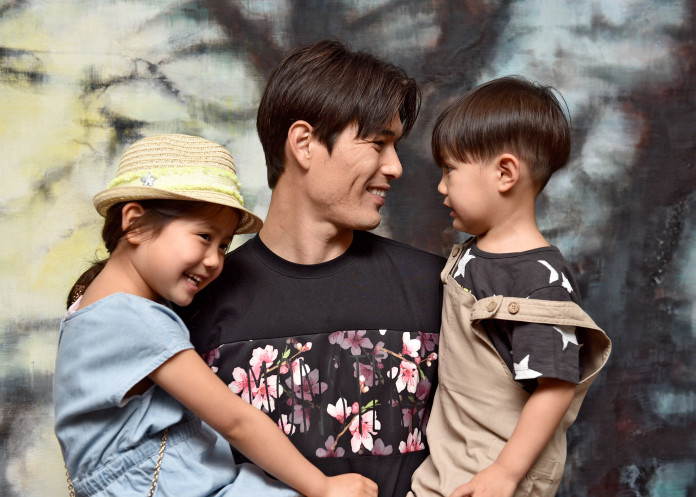
Image: 
Category: 
Publication Date: 
Saturday, May 7, 2016 – 17:43
Keywords: 
Send to mobile app: 
Source: 


Rotator Headline: 
Electric bikes the 'hottest new ride' in North Korea
Story Type: 
Others

Source link

The New Paper New Face returns

The New Paper’s annual modelling competition, New Face, is back for its 24th year.

Hundreds of…

Source link

Korean star Ricky Kim explains 'career suicide'

Is starring in reality TV shows really a fast-track route to fame and fortune?

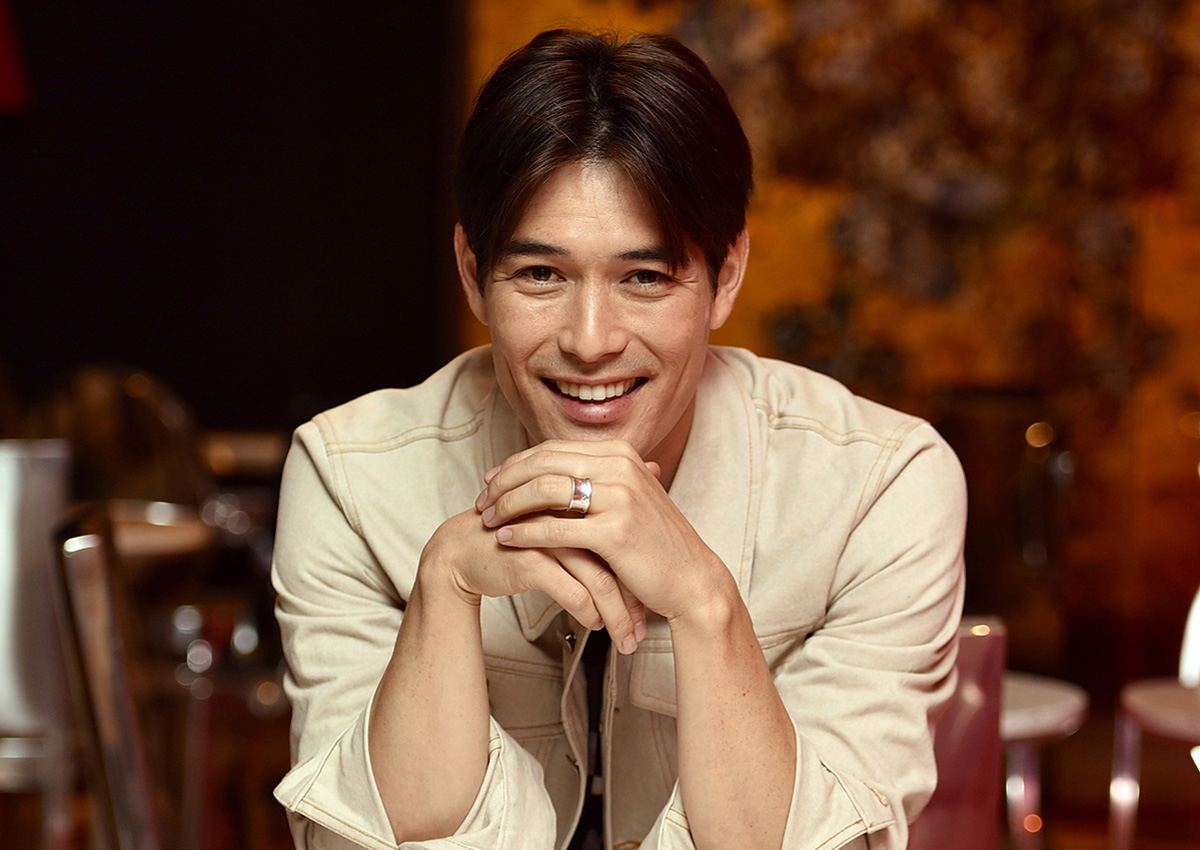
Not for Korean-American actor Ricky Kim, a regular cast member of hit Korean reality programmes Let’s Go! Dream Team, Law Of The Jungle and parenting-themed series Oh! My Baby.

He told The New Paper in an interview on Thursday: “Reality television is a very useful tool for gaining popularity, awareness and letting people know who you are… but it has not sped up my career at all.

“However, I’m comfortable with that.”

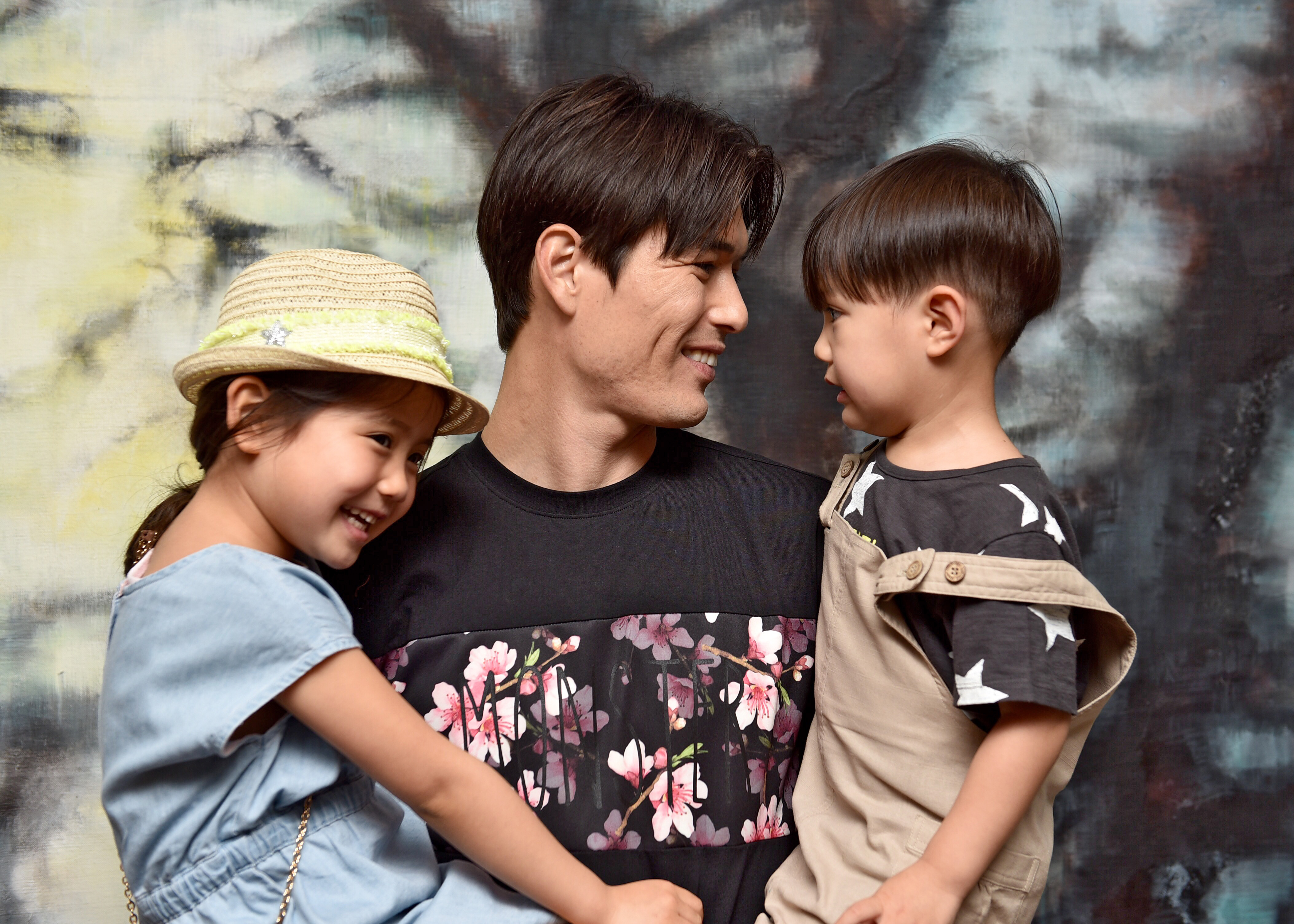
The suave 34-year-old father of three was in town with his theatre actress-wife Ryu Seung Joo, 38, and two of their children, daughter Tae-rin, five, and son Tae-oh, three, to promote Oh! My Baby.

It airs on Thursdays at 11pm on ONE (StarHub TV Ch 124, 820 and 823; Singtel TV Ch 513 & 604).

Fans of Kim, Tae-rin and Tae-oh can catch the trio at a meet-and-greet session tonight at Waterway Point.

Kim did not bring his youngest daughter, eight-month-old Tae-ra, on this trip.

He said: “My golden rule as an entertainer is to be as transparent as I can be.

“I would never want to create a false image of myself, or be packaged into something I’m not, just so I can be more famous.

“I got married at 28, which is career suicide for most celebrities. But I didn’t care, I love my wife.

“We had our first baby a year later. Career suicide No. 2.

“Guess what I did after that? I had another baby. And then one more.”

With a laugh, he added: “In 2010, I opened up my life on reality TV by first announcing my marriage on national TV and next, by inviting my then-pregnant wife onto Let’s Go! Dream Team.

“Everyone thought I was crazy. What I did ran contrary to what most Korean entertainers would do.”

He explained that most celebrities in Korea tend to hide the fact that they have wives and children.

“I can probably name 10 people in showbiz right now whom you think are single. No, they’re not. But you’d never know, because that’s their golden rule,” he said.

‘COUNTRY BOY’

“It’s not mine, though. Mine would be to always be real and touchable. I grew up in Kansas (in the US) and I’m a country boy.

“I love hugs and I’m down-to-earth, not some fake upper echelon guy who is so elite and ‘Louis Vuitton’.”

It’s the same simple principle he applies to Oh! My Baby, which he, Ryu, Tae-rin and Tae-oh appear in.

“When we have a family event and there are no cameras around, we behave in exactly the same way as we are on the show,” said Kim.

“For us, nothing is off-limits (for) TV. In fact, when I first mentioned that to the directors, they were taken aback because most of the other families had boundaries which they didn’t want the show to step across. So you saw a lot of perfect kids.

“We were the first imperfect, non-scripted family who showed everything.

“The only condition I had for the directors: Do not interfere in the way I raise my children.”

Are the little ones aware that they are TV stars now?

“My children have been around cameras since they were born – even before the show started – as both my wife and I are in showbiz,” said Kim.

“Doing photo shoots, putting on make-up and getting my hair done have always been part of my lifestyle and they’re used to that.

“At their age, they don’t know what fame is. It’s a topic I don’t broach… In the meantime, they’re just happy kids enjoying themselves.”


This article was first published on May 7, 2016.
Get The New Paper for more stories.

Image: 
Category: 
Publication Date: 
Sunday, May 8, 2016 – 01:00
Send to mobile app: 
Source: 


Story Type: 
Others

Source link

Sold for $400, yet her love for family is priceless

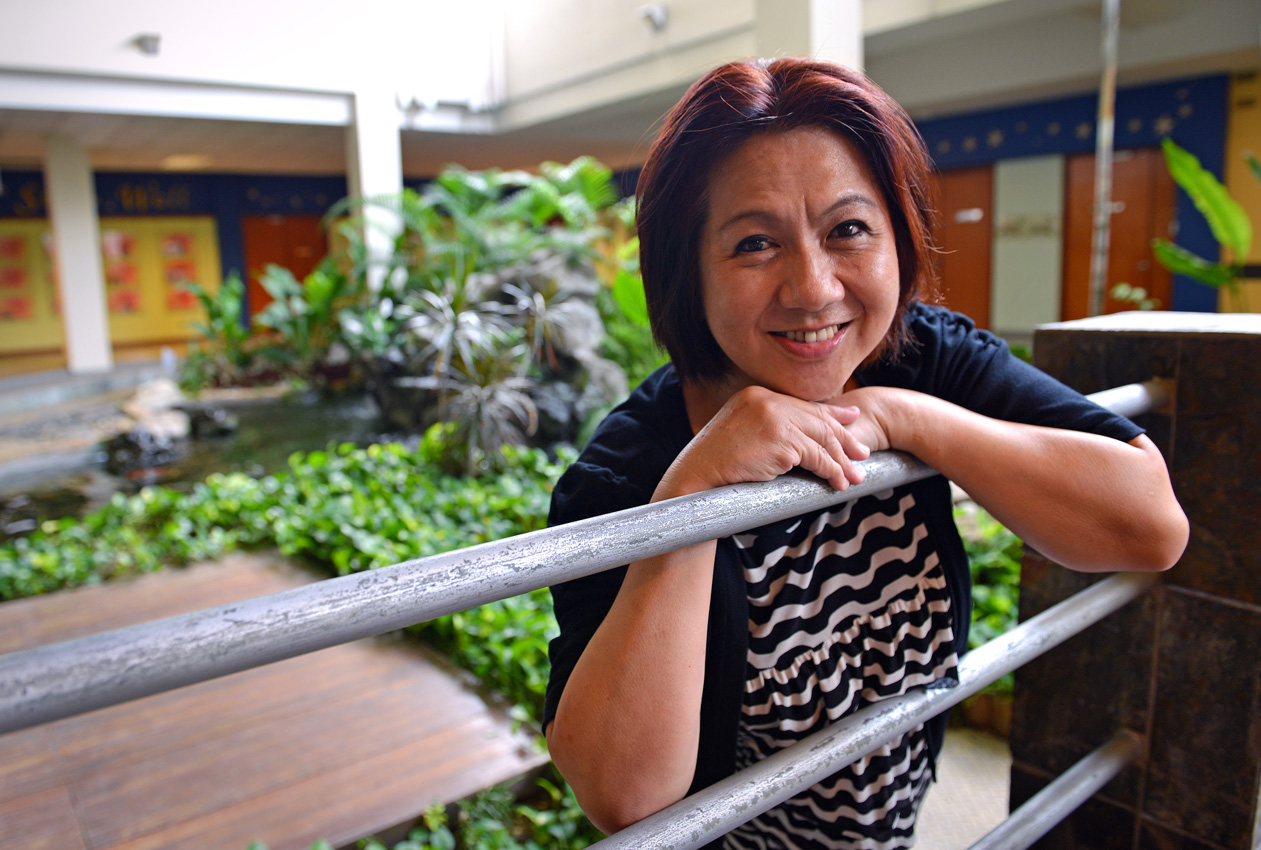
She was only 13 when she stormed into her biological parents’ home to “give them a piece of my mind”.

She had found out that when she was barely one, they had sold her for $400.

“They sold me but kept my brother, who was 11 months younger. I was so angry,” she told The New Paper.

Madam Lim Xiang Lin, now 58, said she suspected her adoptive mother’s friend was the go-between in the sale and confronted her.

That was when she was given her biological family’s address.

And what she saw when she went to their home that day broke her heart: Her mother had suffered a stroke and was bedridden, and her father, a theatre performer, was out earning a living.

“I relented that very moment when I saw her. I felt sorry so I stayed,” she said.

Madam Lim said that she spoke to her adoptive father about her decision.

She said: “My late adoptive father understood why. He was upset and teared because he loved me and would miss me. I promised to visit regularly and I did.”

Over the next three years, Madam Lim became her mother’s sole caregiver, taking care of her needs until she died.

“I had never washed clothes, let alone taken care of a sick person before. Yet, I had to wash her soiled clothes and help clean her. I thought to myself then that if I didn’t do it, then who would?” she said.

Madam Lim also took care of her brother and sister, “who was only four when I first returned home”.

After her mother died, Madam Lim, who had left school early, joined her father’s theatre troupe.

“My father and younger siblings needed me, so I never returned to my adoptive parents’ home. It was not easy,” she said.

DANCER

At 19, Madam Lim became a dancer at the Neptune Theatre Restaurant in Collyer Quay. Neptune was Singapore’s first revue with its own dance troupe, the Neptune Dancers.

Madam Lim quit the revue when she got married. She was then 32.

It was only after her divorce in 2011 that she found solace in taking care of others.

“I met a woman who volunteers at the IMH (Institute of Mental Health).

“She said people are afraid to volunteer there and asked if I would like to join her.

“Having taken care of my mother’s every need for three years before she died, I said I would,” she said.

Madam Lim, who has two grown-up sons, visits IMH once a month to sing and dance for the patients. She also helps to cut their hair.

She even started Yuan Services, an organisation that recruits and trains volunteers. They go to IMH once every two months to give 500 long-stay patients their much-needed haircuts.

Madam Lim is a recipient of the Healthcare Humanity Award this year.

Ms Catherine Chua, volunteer manager at IMH, who nominated Madam Lim for the award, said: “Xiang Lin has done a lot for our patients and her dedication is admirable.

“I saw how she grew her volunteer group from a few like-minded individuals to a whopping 700-strong organisation in a matter of years.

“She has become a great friend to the patients and a good friend of mine.”

Madam Lim’s younger son Benedict Seetoh, 17, said he felt proud of his mother’s “will to serve others, despite the challenges that continue to test her resolve till today”.

He said: “Her joy comes from the fact that her work is actually making someone’s day better…

“It’s almost as if volunteering for her is like a relaxing therapy or a vacation, it returns her to a simpler and happier environment.”


This article was first published on May 7, 2016.
Get The New Paper for more stories.

Image: 
Category: 
Publication Date: 
Sunday, May 8, 2016 – 02:30
Send to mobile app: 
Source: 


Story Type: 
Others

Source link

Thai activist's mother arrested for not condemning royal insult

Bangkok – Thai police have arrested a leading activist’s mother for failing to condemn Facebook messages that criticised the monarchy, her legal team said Saturday, in a move a rights group described as an “outrageous twist” of the kingdom’s royal insult law.

The arrest comes amid a heightened crackdown on dissent by the junta ahead of an August 7 referendum on a new constitution it scripted and is determined to see pass.

Prosecutions under Thailand’s royal defamation law – known as lese majeste – have surged since the generals seized power two years ago.

The boundaries for what counts as an insult have also expanded dramatically, with authorities making arrests over even vague references to the royal family.

But human rights lawyers said police took a step further Friday night by charging Patnaree Chankij, 40, for simply receiving messages that criticised the monarchy in a private Facebook chat.

“She just received the messages. She didn’t say anything in her own words about the royal family,” Poonsuk Poonsukcharoen, one of the human rights attorneys representing Patnaree, told AFP.

Police denied a request for bail citing the seriousness of the crime, which carries up to 15 years in prison for each offence.

She is scheduled to appear before a military tribunal on May 8, the court told AFP.

Patnaree is the mother of prominent student activist Sirawith Seritiwat who has been at the fore of small but persistent anti-junta demonstrations.

She herself has not participated in the protests, which are banned by the junta and often end in arrests.

Human Rights Watch said the charge against her was a “new low”.

“Prosecuting someone for her vague response to a Facebook message is just the junta’s latest outrageous twist of the lese majeste law,” said Brad Adams, the group’s Asia director.

At least nine people have been detained in jail in the past two weeks for online criticism of the junta or monarchy – including an activist who allegedly sent the messages to Patnaree.

The military government says it is seeking to end the political turmoil that has dogged the kingdom for the past decade.

But critics say the generals are more concerned with enshrining their influence and weakening the political bloc led by ex-premier Thaksin Shinawatra.

Thaksin was ousted in a 2006 coup and is hated by Bangkok’s military-backed elite.

But his parties have continued to dominate elections with broad support from people in the country’s rural north.

Image: 
Category: 
Publication Date: 
Saturday, May 7, 2016 – 16:01
Keywords: 
Send to mobile app: 
Source: 


Rotator Headline: 
Thai activist's mum arrested for not reporting Facebook messages on royal family
Story Type: 
Others

Source link

More Aussie degrees and qualifications to be recognised in Singapore

Singapore has agreed to recognise postgraduate medical degrees from the University of Queensland and the Australian National University.

This is in addition to recognising 15 more allied health qualifications in occupational therapy, physiotherapy and speech therapy from a number of Australian universities.

The Republic will also recognise the Juris Doctor (JD) degrees awarded by 10 Australian universities, including the universities of Western Australia and Sydney, whose law degrees are already approved. There were an estimated 10 to 20 Singaporeans pursuing JD degrees in those universities last year, according to the Ministry of Law.

Under a new agreement – announced by the Ministry of Foreign Affairs in a statement yesterday – to strengthen the ties between the two countries, Australia will reciprocate. It will recognise the law and JD degrees of Singapore universities, subject to applicable conditions in the Singapore-Australia Free Trade Agreement. The JD programme is a postgraduate course for students who have a bachelor’s degree in another discipline.

The agreement, which will allow both countries to co-operate more closely in other areas such as security and trade, also includes a pilot programme that aims to give 100 Singaporeans studying in Australia more opportunities to work with leading Australian companies.

A new “Work and Holiday Maker Programme” will allow up to 500 young people on each side to work and study for up to 12 months.

The initiative is meant to promote cultural exchange by allowing young people to experience each other’s country and take on short-term work to fund their stay.

Ms Christabel Tan, 22, a childcare teacher, said of the scheme: “It’s important to see the world, be exposed to what other people are like and also grow connections.”

Nanyang Technological University business student Jesmine Tan, 23, who went on a six-week volunteer trip to Brazil last year, said: “I helped out with marketing for an NGO and worked and lived like a local… It broke stereotypes I had of the country. I think it will be quite a cost-effective way to travel while gaining some work experience.”

Dr K. Thomas Abraham, chief executive of Sata CommHealth, said that Singapore’s recognition of more overseas allied health qualifications will address the acute shortage of staff in the field.

“We really need to recruit more allied health professionals, especially as Singapore is expanding its healthcare sector.”

Both countries will also deepen co-operation among their universities that have overseas campuses.

In addition, based on its prevailing policy, Singapore will allow Queensland-based James Cook University to refer to its Singapore campus as “the Singapore Campus of James Cook University” by July.

Ms Belinda Robinson, chief executive of Universities Australia, which represents the university sector there, welcomed the growth in the number of Australian qualifications recognised by Singapore.

“We look forward to continuing to expand this list, in recognition of the depth and breadth of excellence in all Australia’s universities.”


This article was first published on May 7, 2016.
Get a copy of The Straits Times or go to straitstimes.com for more stories.

Image: 
Category: 
Publication Date: 
Saturday, May 7, 2016 – 17:00
Send to mobile app: 
Source: 


Story Type: 
Others

Source link

Give way to this ambulance or your vehicle will shake

For three years, Singapore Civil Defence Force (SCDF) paramedic Yeo Ren Jie visited ambulance trade shows around the world to find out how these vehicles were designed by other emergency services.

The 27-year-old staff sergeant (SSG) – who visited them while on holiday in the United States, Germany and Australia – took the best ideas and put them into SCDF’s next-generation ambulance, which was unveiled yesterday at the SCDF work- plan seminar at ITE College East.

Also unveiled at the workplan seminar were other new SCDF vehicles, as well as a restructured community preparation programme to combat the terror threat.

The ambulance has a suite of new features, including a hydraulic platform with air suspension to cushion shocks for patients with spinal injuries, and a seamless interior that can be quickly decontaminated.

It is also equipped with a rumbler siren. This emits low frequency sound waves that can penetrate vehicles in front of the ambulance and cause them to vibrate slightly.

The SCDF hopes this will prompt drivers to give way.

According to the Traffic Police, there were seven cases last year in which motorists failed to give way to emergency vehicles. In 2014, the number was 10.

The idea for the rumbler siren came from US highway patrol cars, said SSG Yeo, adding that it will prove useful as cars become increasingly insulated and soundproof.

Ideas for other features, such as high mobility seat belts which keep paramedics secure even while they attend to a casualty, came from flight paramedics.

“Some of these ideas I got while overseas or from reading journals; some were my wild ideas,” said SSG Yeo, who was part of a team of five that designed the ambulance.

The former industrial design student at Temasek Polytechnic (TP) was roped into the design team because of his experience.

He is currently in his second year at the National University of Singapore, pursuing industrial design on a Ministry of Home Affairs sponsorship. His interest in emergency vehicles was sparked at TP when he joined the volunteer Civil Defence Auxiliary Unit.

He loved lifesaving work so much that he signed on with the SCDF after graduating. Working on SCDF’s new ambulance has allowed him to marry his passions for design and saving lives.

“In design school, your work stops when you get your grade. When you design an ambulance and you see the final product shipped here, it really gives you a sense of fulfilment,” he said.

The SCDF maintains a fleet of 55 ambulances, including private ones, and the new ones will be phased in gradually from next year.

Motorists seem unfazed by the rumbler sirens of the new ambulances.

“This is something new,” said cabby Raja Manikam, 66. “As long as the sirens don’t affect vehicle handling, I think there will be no problem.”


This article was first published on May 7, 2016.
Get a copy of The Straits Times or go to straitstimes.com for more stories.

Image: 
Category: 
Publication Date: 
Saturday, May 7, 2016 – 17:00
Keywords: 
Send to mobile app: 
Source: 


Story Type: 
Others

Source link

Guangzhou probes autistic boy's death

BEIJING – The Guangzhou authorities have launched a probe into the death of a three-year-old autistic boy who died while receiving treatment at a private rehabilitation centre in the southern Chinese city.

Jia Jia’s death on April 27 came to light after a social media post went viral online.

The boy’s mother, Ms Zhang Wei, said that on the day he died, he had been made to walk long distances in heavy winter clothes.

The grieving mother said she decided to go public with her loss in the hope that others would not make the same choices she did.

Autism affects five million to nine million children in China.

In the lengthy post shared over WeChat, Ms Zhang said her son was forced to walk 10km in the morning and a further 9km in the afternoon as part of the treatment for autism.

Such forms of military-like training are the cornerstone of treatment at the Tiandao Zhengqi rehabilitation centre in Guangdong province, said the Shanghaiist website. It is operated by self-taught practitioner Xia Dejun who believes autism is a chronic disease associated with spoilt, rich, lazy children. He claims his treatment is based on theories of traditional Chinese medicine.

Ms Zhang said when she saw Jia Jia’s body in the morgue, she could barely recognise him. “He was darker, thinner, with scratches all over his body,” she told reporters. “He looked like a porcelain doll.”

At the centre, which was founded in 2013, the young children are not allowed to have snacks. Dinner is a frugal meal, including small quantities of fruit, and children are told to drink a lot of water, reported South China Morning Post.

An autopsy report released on Wednesday shows no unnatural cause of death. The boy died of bleeding from the lungs and an inflammation of the brain, reported the Hong Kong-based newspaper.

Ms Zhang said her son was running a high fever on the night of April 27, and his heart was beating unnaturally fast. He was rushed to the hospital, where he died.

“I’ve been going through a lot of pain,” she told the news website Sixth Tone. “So much that I almost can’t feel any more.”

The family from Dandong in north-eastern China’s Liaoning province paid more than 30,000 yuan (S$6,300) for the three- month treatment involving physical exercise and diet to help children “recover” from autism.

Ms Zhang first came into contact with Mr Xia online via his book Note On Rehabilitation For Children With Autism, which describes cases of children overcoming autism after undergoing his treatment.

Jia Jia’s death again highlights the prevalence of dubious medical cures in China, according to Sixth Tone. Recently, a cancer patient, college student Wei Zexi, died after undergoing a controversial treatment he found via search engine Baidu, sparking an outcry in the country.

When contacted by Sixth Tone, Mr Xia said: “The child died at a hospital from an illness. It has nothing to do with my rehab centre.”

He defended the methods used at his centre, saying: “Ask other parents. They will say my training works.”

The remaining 10 children at the centre have since returned home.

Professor Wang Yi, vice-president of the Children’s Hospital of Fudan University, said the number of institutions in China that deal with autism is “not sufficient” to cope with the problem.

“We have found some autistic children strapped to chairs because parents cannot control them,” she said.


This article was first published on May 7, 2016.
Get a copy of The Straits Times or go to straitstimes.com for more stories.

Category: 
Publication Date: 
Saturday, May 7, 2016 – 17:00
Send to mobile app: 
Source: 


Story Type: 
Others

Source link

Reviewing elected presidency: 'Restore former system'

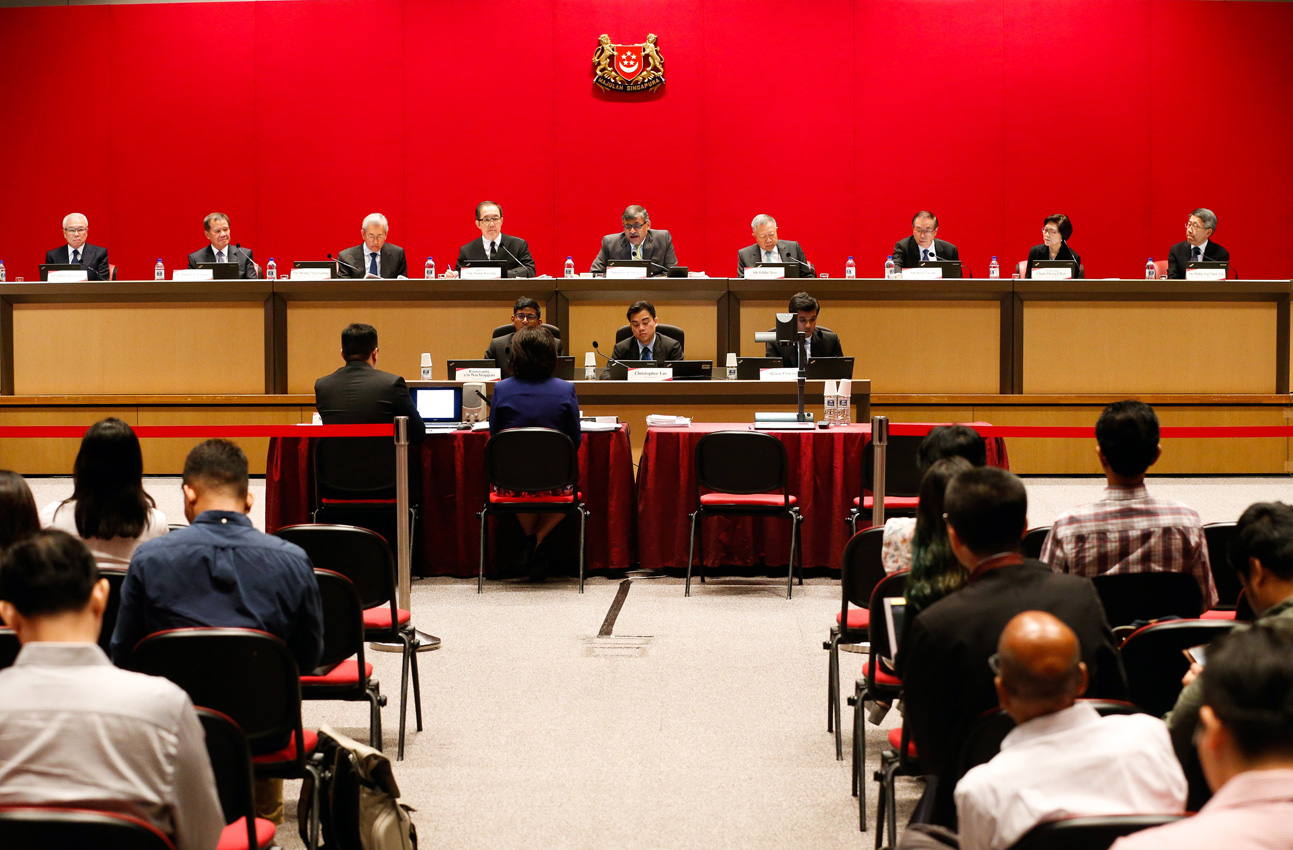
The best way to balance the responsibilities of the elected presidency with the need to ensure that Singapore has a minority president from time to time, is to return to the old system of appointing the president, said a law don and a business leader yesterday.

Constitutional expert Kevin Tan and Raffles Medical Group executive chairman Loo Choon Yong advocated a return to Singapore’s pre-1991 system of having Parliament decide who should take up the highest office in the land.

The duo were speaking on the last day of public hearings held by the Constitutional Commission reviewing the elected presidency.

Dr Tan said the decision to turn the presidency into an elected office has made it “extremely difficult” to have an ethnic minority president.

Before that, Parliament could take into account the need for minority representation when selecting appropriate candidates.

It was “no accident” that Singapore’s first president was Mr Yusof Ishak, a Malay; followed by a Eurasian president, Dr Benjamin Sheares; then an Indian president, Mr C.V. Devan Nair, he noted.

“Only after that” was there a Chinese president, Mr Wee Kim Wee.

This important symbolic aspect of the presidency “can never be guaranteed under elections”, he said. At the same time, the idea of designating electoral cycles for only minority candidates is “odious to public sensibilities” and may run counter to the Constitution.

Dr Tan also argued that the role of the president is largely one of “binary judgments”, like whether to draw on past reserves.

Thus, it is more important to raise the criteria for the Council of Presidential Advisers (CPA) than for the presidency itself.

A lowering of the criteria for the presidency will also alleviate the problem of not having enough minority candidates, he added.

Chief Justice Sundaresh Menon, who chairs the commission, asked if it could be problematic for Parliament to appoint a president that has to act as a check on itself.

Lowering the criteria for the elected presidency while raising the bar for his advisers also “shifts the centre of gravity somewhat”, said CJ Menon, who asked if such a move would make it harder for the president to “stand up to the CPA”.

Dr Tan replied that the “important ingredient” is independence, and that “just because someone is nominated and not elected does not deprive him of his independence”.

This is similar to how judges are appointed, but can still serve as a check on the executive, he added.

To this, CJ Menon said judges have a slightly different role as they serve as a check through judicial reviews.

Dr Tan agreed, but said that once appointed president, a person would take on the role of the office and act accordingly.

Dr Loo argued that returning to an appointed presidency is the solution to the tension between two key elements of the office: to be a symbolic head of state and unifier of society, while acting as a check on the Government, particularly on the national reserves and integrity of the public service.

“You want this guy to be the nice guy, unifier, and then you want him to have what it takes to tell a roguish PM, hey, leave our assets alone,” said Dr Loo. “I think these (requirements) call for different chemistries.”

Making the presidency an elected office has also confused the public, which often thinks the role is to provide checks and balances on all matters of government.

Dr Loo, who made his submission with his brother Choon Chiaw, a lawyer, said a return to an appointed presidency is “returning to the system that has served us well – the Westminster system of government, with all its years of conventions and constitutional norms”.

But commission members such as former Speaker of Parliament Abdullah Tarmugi and Professor Chan Heng Chee asked if Singaporeans today can accept a return to an appointed presidency.

“We are in the world of participation now: Individuals want to participate and they want to have a say,” said Prof Chan, chairman of the Lee Kuan Yew Centre for Innovative Cities at the Singapore University of Technology and Design.

While it is a reasonable argument that authority can be derived from Parliament instead of through an election, “politics does not deal only with reason – optics matter,” she said, referring to public perception of the office.

Commission member Peter Seah, chairman of DBS Group Holdings, pointed to the importance of an election, saying an elected president “holds moral authority… because he is elected by the nation”.


This article was first published on May 7, 2016.
Get a copy of The Straits Times or go to straitstimes.com for more stories.

Image: 
Category: 
Publication Date: 
Saturday, May 7, 2016 – 17:00
Send to mobile app: 
Source: 


Story Type: 
Others

Source link

Global sleep crisis sees S'pore leading in least amount of sleep

WASHINGTON – Social pressures are forcing people to cut back on their sleep, contributing to a “global sleep crisis,” according to a new study based on research collected through a smartphone app.
It enabled scientists from the University of Michigan to…

Source link