The new Ci Yuan Sports Park has facilities that include fitness equipment and an IPPT training corner.
Source link
PM Lee opens new fitness park in Hougang
'We'll be back': After by-election, SDP's Chee thanks Bukit Batok residents
After day after losing the Bukit Batok by-election to the People’s Action Party’s Murali Pillai, the Singapore Democratic Party’s Chee Soon Juan said the party “will be back again”.
Source link
N Korea leader says will only use nuclear weapons if attacked
_0.jpg "20160506_northkoreacongressgallery1_0.jpg")
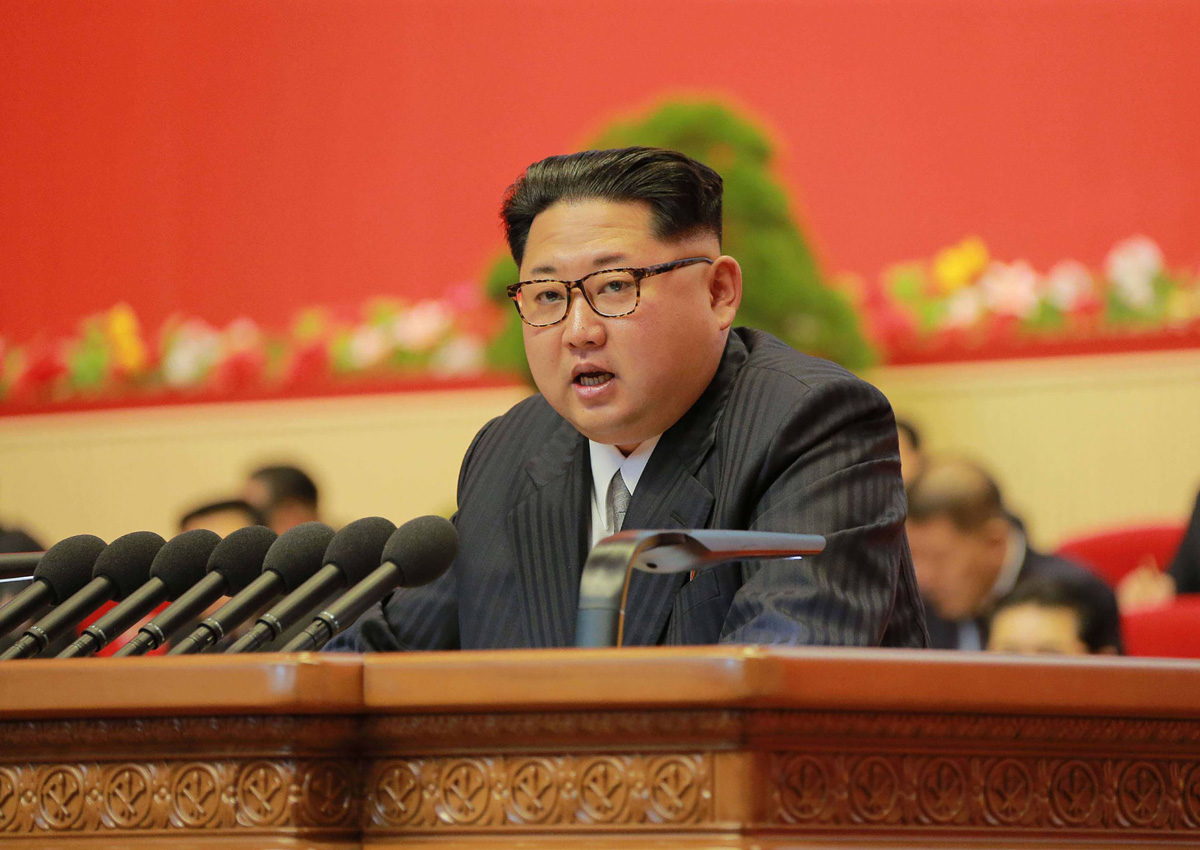
PYONGYANG – Leader Kim Jong-Un told a rare ruling party congress that North Korea would only use nuclear weapons if attacked by a nuclear power, and said he wanted improved relations with previously “hostile” nations.
Speaking on Saturday to thousands of delegates gathered for the first Workers’ Party congress in more than 35 years, Kim also promised that the North would pursue a policy of non-proliferation and push for global denuclearisation.
His remarks, published by state media on Sunday, came amid growing concerns that the North might be on the verge of conducting a fifth nuclear test.
Kim had opened the congress with a defiant defence of the North’s nuclear weapons programme, praising the “magnificent… and thrilling” test of what Pyongyang claimed was a powerful hydrogen bomb on January 6.
But his report to the conclave on Saturday stressed that North Korea’s status was that of a “responsible” nuclear weapons state.
Click on thumbnail to view photos. Source:
Reuters

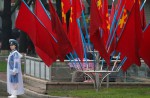


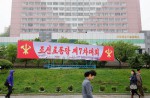

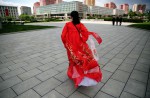

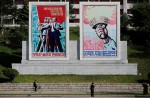
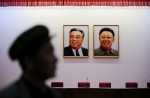
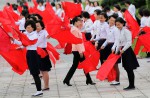
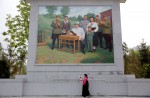
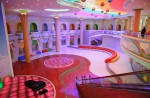



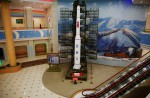


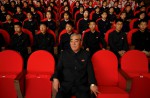



“Our republic will not use a nuclear weapon unless its sovereignty is encroached upon by any aggressive hostile forces with nukes,” he said.
The Korean-language version of his address made it clear that the scenario involved an actual nuclear attack on the North.
He also vowed that Pyongyang would “faithfully fulfil” its non-proliferation obligations and push for global denuclearisation, the North’s official KCNA news agency said.
North Korea withdrew from the global Non-proliferation Treaty (NPT) in 2003 – the first signatory country to do so.
Pyongyang’s nuclear weapons use policy has always appeared quite fluid.
At the time of the first nuclear test in 2006, North Korea stated it would “never use nuclear weapons first”, but has since made repeated threats of pre-emptive nuclear strikes against South Korea and the United States.
A look at North Korea’s Kim Jong Un
Click on thumbnail to view photos. Source:
AFP, Reuters




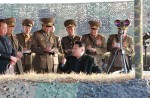




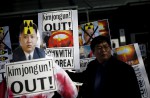

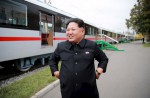

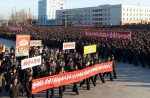




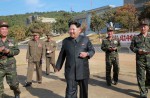


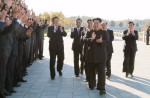
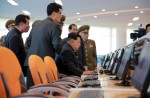


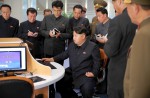
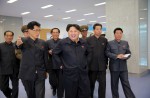

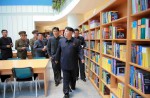

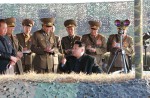
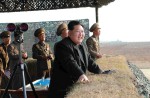




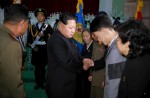
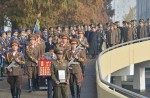



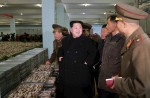
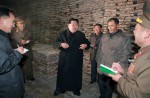

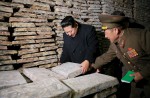

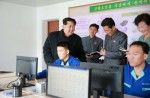
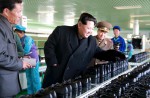
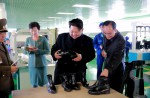
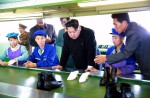
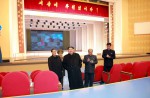
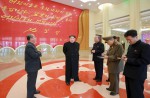
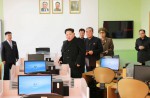

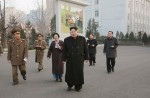
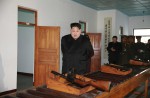

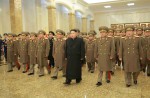


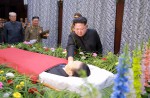

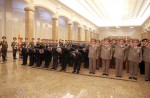







In recent years, North Korea has put a focus on the development of tactical nuclear weapons, with numerous – and increasingly successful – tests of a submarine-launched ballistic missile system.
In his address, Kim also waved what might be taken as a potential olive branch, stating that North Korea would seek to improve and normalise relations with friendly countries, “(even) though they had been hostile in the past.” There has been speculation that, in the wake of the party congress, Pyongyang might renew its push for talks with Washington.
US and North Korean officials have held a number of informal discussions in neutral venues in recent years, but they are understood to have stalled over the basis for beginning any substantive dialogue.
Pyongyang wants a permanent peace treaty to be the focus of any dialogue with Washington, while the United States, backed by South Korea, insists the North must first take tangible steps towards denuclearisation.
The 1950-53 Korean War ended with an armistice that has never been formalised by a peace treaty, meaning that the two Koreas technically remain at war.
The party congress has offered no sign whatsoever that Pyongyang would consider offering up its nuclear arsenal for negotiation, with Kim underlining the importance of a credible nuclear deterrent to the country’s national security.
Two of the North’s four nuclear tests have been conducted since Kim came to power following the death of his father, late leader Kim Jong-Il, in late 2011.
Speculation that the North might be readying a fifth test, in defiance of toughened UN sanctions, was fuelled Saturday by recent satellite imagery of the Punggye-ri nuclear test site in the northeast of the country.
Analysts at the US-Korea Institute at Johns Hopkins University said the presence of vehicles at the complex’s test command centre signalled the possibility of a test “in the near future”.
The party congress is widely seen as Kim’s formal “coronation” and recognition of his status as the legitimate inheritor of the Kim family’s dynastic rule which spans almost seven decades.
Image:
Publication Date:
Sunday, May 8, 2016 – 10:43
Keywords:
Send to mobile app:
Source:
Hermes ID:
2 274 782
Hermes ID String:
SP_NKWEAPONS
Story Type:
Others
More stepping up to be foster parents
“She was sobbing and trembling when she first came to me,” recalled Madam Sarimah Amat, 49, on meeting her foster daughter Leela four years ago.
“We hugged and she hung on to me, maybe because she felt like I was there to rescue her. It was then that I knew I was doing the right thing.”
With three children of her own – Mr Alfi Muswaadi Appathi, 25, Ms Syira Nurul-Ain, 23, and Mr Alif Mulyaadi Appathi, 20 – Madam Sarimah found room in her heart to care for more.
Before becoming a full-time housewife, Madam Sarimah was a childcare teacher by day and a silat instructor by night. A knee injury sustained in a bad fall forced her to stop working in 2010.
“It was too quiet at home as the kids had all grown up,” she said. When she heard about the Ministry of Social and Family Development (MSF) fostering scheme from her relative, she applied for it with her husband’s support.
“Children are innocent and they should be loved and provided for. If we can’t go to them, we will bring them to us,” said Madam Sarimah on her decision to foster.
Over the past four years, she has fostered three children. Leela was her first and is still living with her.
The other two, Fazly and Ahmad, were under her care for half a year each. All her foster children are Malay/Muslim, but their names have been changed as their identities are protected by law.
Children who are placed on the fostering scheme lack alternative kinship care arrangements for various reasons. Their parents could have a physical or mental illness, or they could be victims of neglect and abuse.
More foster parents have been stepping forward in recent years. The number of foster parents registered under the MSF fostering scheme grew from 254 in 2014 to 370 this year, a step closer to the government target of 500.
The increase could be attributed to greater awareness of how vulnerable children can be helped.
A survey conducted by MSF among 246 foster parents last year showed that almost half of the respondents found out about the fostering scheme through newspapers, television or other forms of media.
More than 5,000 children have benefited from the scheme since its inception in 1956. The ministry matches the race and religion of the child to those of the foster family as closely as possible.
Now eight, Leela has grown in confidence. A bright and cheeky Primary 2 pupil, she looks forward to silat class every Thursday and enjoys playing sports with her foster siblings.
“Leela has brightened up our household and every day is like Hari Raya. All of us sayang (Malay for ‘love’) her the most as she is the youngest in the family,” said Madam Sarimah.
Leela is closest to Ms Syira, with whom she shares a room. Snuggled up close to Ms Syira in a one-seater sofa, Leela said she loves drawing and baking with her foster sister.
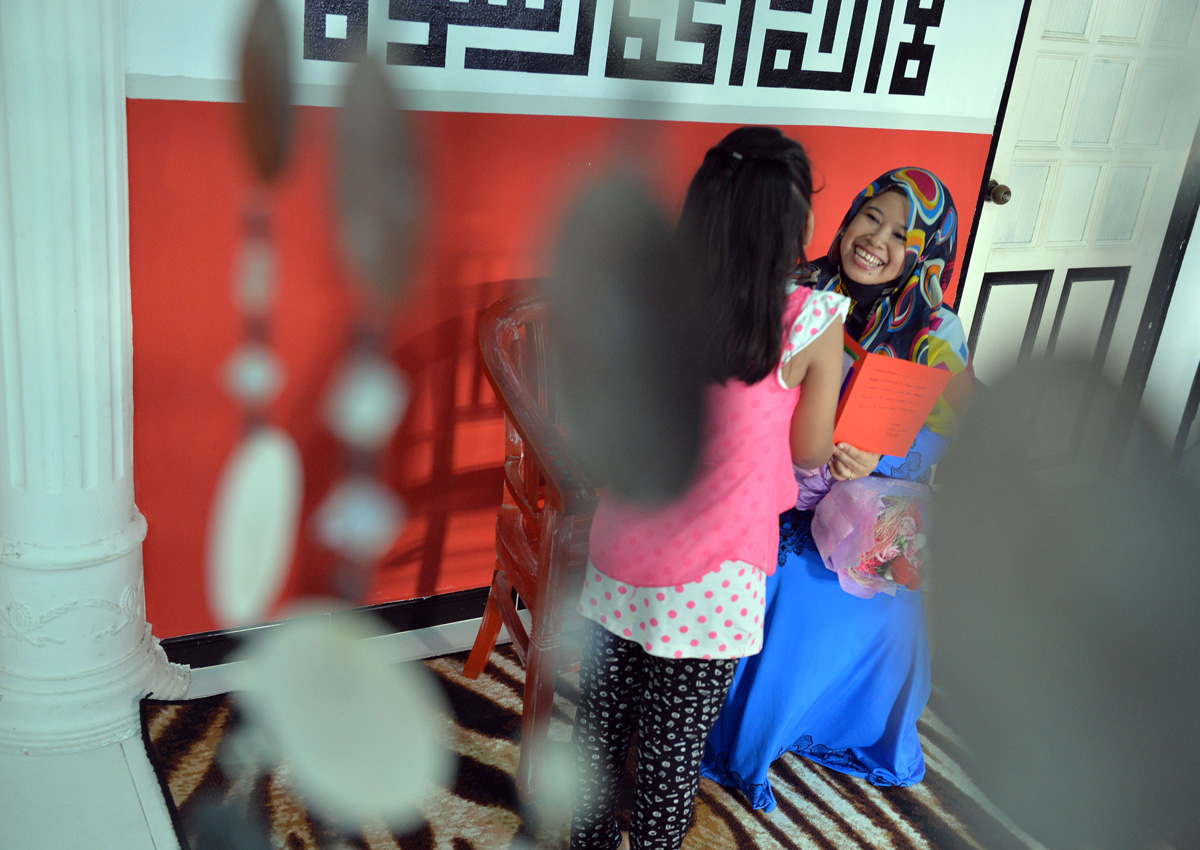
To show her appreciation for her foster mother this Mother’s Day, Leela made a card with a drawing of her and Madam Sarimah. It read: “Happy Mother’s Day mama. I wish mama to be happy always. I love you very much and I love you forever.”
With Ms Syira’s help, she also baked chocolate cupcakes, knowing her foster mother’s love for sweets.
“I was very touched by her efforts. Moments like when she first started calling me ‘mama’ and including me in her prayers moved me greatly,” said Madam Sarimah.
Though it is inevitable that Leela will return to her natural family one day, Madam Sarimah said that it will be very hard for her family to see her leave when the time comes.
“We have grown very close. She tells me everything that happens in school when we walk home, like when she scored full marks for her Malay test or when a boy disturbed her,” she said wistfully.
“I am very proud of how far she has come. We really treasure the moments we spend with her as a family, even if it’s as simple as having dinner together.”
Letters, cards and drawings that children have done for their foster parents will be on display during a fostering roadshow themed “What my family means to me” at Nex mall from tomorrow to May 15.
To find out more about fostering, call 6354-8799 or go to www.msf.gov.sg/fostering

This article was first published on May 8, 2016.
Get a copy of The Straits Times or go to straitstimes.com for more stories.
Image:
Publication Date:
Sunday, May 8, 2016 – 09:41
Keywords:
Send to mobile app:
Source:
Story Type:
Others
First mega childcare centre opens doors
With 500 places on offer, the new E-Bridge Pre-School in Edgedale Plains in Punggol is five times larger than the average childcare centre in a Housing Board block, and it is already fully subscribed.
The centre, run by EtonHouse International, formally opened its doors yesterday – the first of five mega childcare centres being built by anchor operators to do so.
These operators, which include NTUC My First Skool and PAP Community Foundation, get government grants and priority in securing sites in HDB estates, and are part of efforts to meet the high demand for childcare places. But they cannot charge more than $720 a month for full-day childcare, among other conditions.
Acting Education Minister (Schools) Ng Chee Meng, who was at yesterday’s ceremony, joked about wishing to be four again after touring the facilities.
He also stressed the importance of making available good-quality, affordable childcare under the Anchor Operator scheme. “The early childhood years set the foundations for life,” said Mr Ng, who is also an MP for Pasir Ris-Punggol GRC.
“The experiences our children have in early childhood shape their capacity to learn and respond to future challenges.”
The new centre is equipped with a specially developed sanitation system and temperature scanners similar to those used at airports. This will help to reduce the transmission of infectious diseases, such as hand, foot and mouth disease (HFMD), which is spread via bodily fluids and is common in pre-schools.
Previously, some parents had raised concerns that such large centres would allow HFMD to spread more easily. Last week, the Health Ministry also sent out a statement saying that it is working with partner agencies to step up HFMD prevention. As of April 28, it said, 36 childcare centres and kindergartens had clusters of prolonged HFMD transmission this year.
Special disinfectant canisters in the new centre’s classrooms will keep the air free of contaminants. It is also designed such that various sections can be easily closed off in the event of a disease outbreak.
The new E-Bridge campus, which sits on 5,000 sq m of land, takes in children between two months and six years of age. It currently has around 80 teachers.
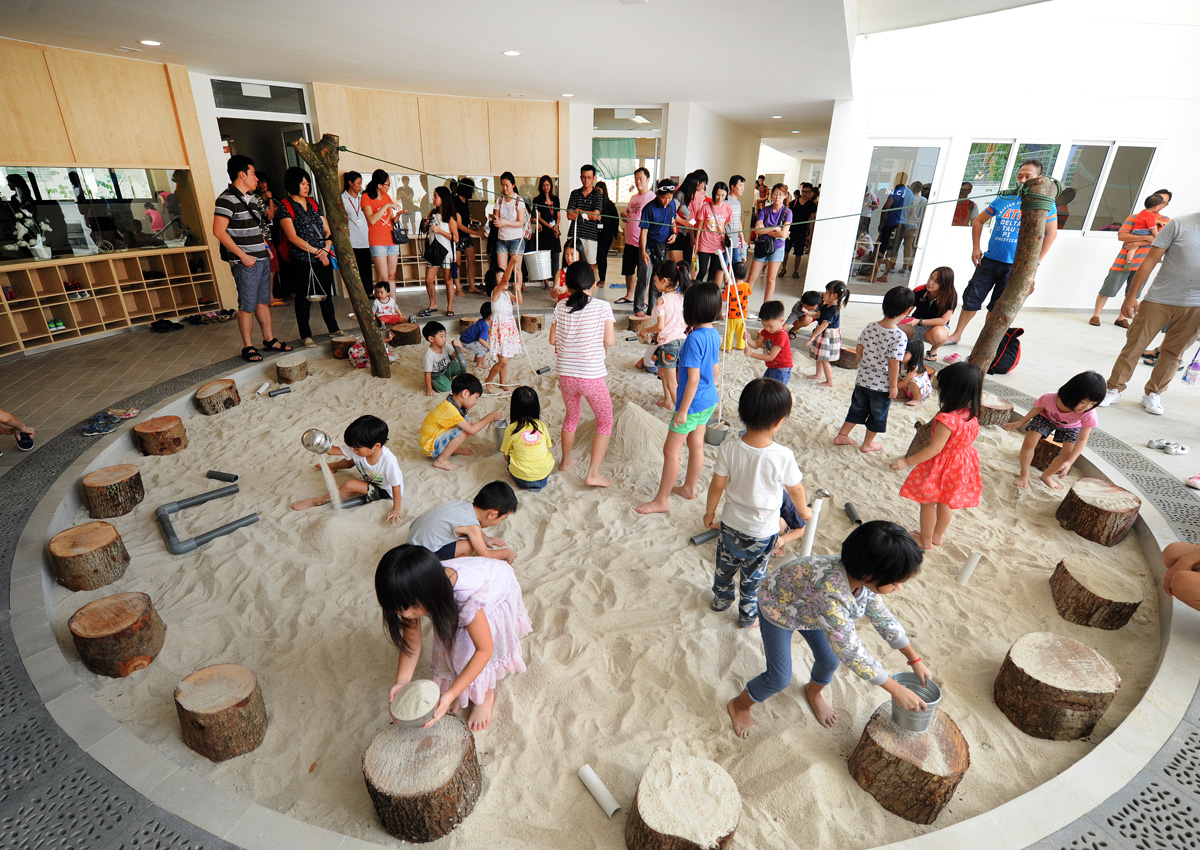
The building is divided into five sections, or “pods”, which roughly correspond to five different elements – water, earth, fire, wood and metal. For instance, there is a water-play area equipped with taps, buckets and funnels, a sand pit representing “earth”, and a mock cooking area associated with “fire”.
The corridors between these sections, meanwhile, appeal to the five senses. One is lined with windchimes, while another is stocked with jars of dried spices.
There is also a hedge maze on the rooftop and a herb garden behind the school that is stocked with plants like mint, lemongrass and pandan.
“Older children will be able to grind and touch the spices, for example, while the younger ones can smell them,” said Ms Leanne Sunarya, executive director of pedagogy. “We believe that children learn best through play, and all the areas are designed to help them develop a wondering curiosity about the world.”
The other centres, located in Yishun, Woodlands, Jurong West and Sengkang, are expected to be ready by the end of this year.
This article was first published on May 8, 2016.
Get a copy of The Straits Times or go to straitstimes.com for more stories.
Image:
Publication Date:
Sunday, May 8, 2016 – 09:38
Keywords:
Send to mobile app:
Source:
Story Type:
Others
Building ties at briyani charity cookout
Racial and religious harmony are fundamental building blocks for Singapore’s future, a point stressed by President Tony Tan Keng Yam yesterday at an event where different segments of society came together to do their bit for the less well-off.
As part of The President’s Challenge Charity Briyani, all the 69 mosques here sold a total of nearly 5,000 packets of the saffron-coloured rice dish.
Each pack cost $10, and organisers aim to raise $100,000 in total, including donations from corporate sponsors and a Friday collection in mosques on May 27.
The briyani – made with 900kg of rice – was prepared by Mr Alla’udin Mohamed, 63, chairman of Khalid Mosque in Joo Chiat, along with almost 80 volunteers, including six Bangladeshi workers.
The food was then sent to other mosques for collection.
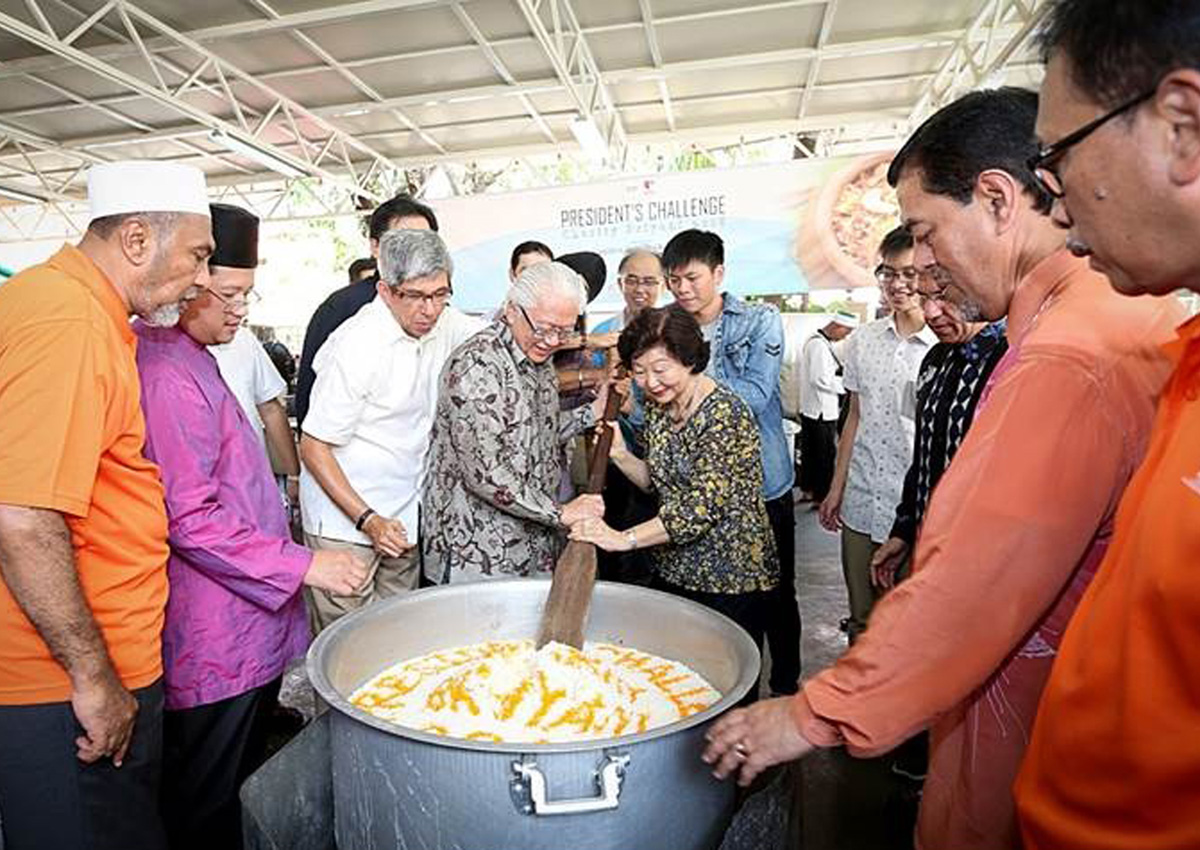
At the event, Dr Tan and his wife, Mrs Mary Tan, added finishing touches of rose water and cashew nuts, among other ingredients, to a pot of briyani, and helped to stir another pot of the fragrant dish.
He said: “I think (an event like this) strengthens our Singapore society and builds a network of trust, which is so important today, if you see the events going on around the world.”
The President’s Challenge is an annual campaign with events that raise funds for charity.
Minister-in-charge of Muslim Affairs Yaacob Ibrahim, who was also at the event organised in collaboration with the Islamic Religious Council of Singapore (Muis), added: “The fact that we have people from different backgrounds, different races, different nationalities coming together shows the significance of the event.”
In the light of recent experiences, “we have to show the rest of the world that Singapore can stand tall together, with people of other backgrounds and other races, to do something that is good for everyone”, he added.
Last week, the Ministry of Home Affairs said eight Bangladeshi workers who were planning to stage terror attacks back home had been detained under the Internal Security Act (ISA) last month.
This marked the first ISA detentions involving a terror cell of foreign workers.
Also present at yesterday’s event were beneficiaries, both Muslim and non-Muslim, from the Ren Ci Nursing Home and Ain Society.
The Charity Briyani is now in its 16th year.
Mr Alla’udin, who has cooked in each edition, first learnt to prepare briyani at Khalid Mosque when he was in his 20s, watching as it was being prepared.
This year, the food preparations started on Friday afternoon.
Said Mr Alla’udin of the event, which has seen more corporate partners joining over the years: “We are very lucky.
“We have non-Muslim partners to come together with us and celebrate our cause for the nation.
“We are breaking all walls, rebuilding bridges.”
This article was first published on May 8, 2016.
Get a copy of The Straits Times or go to straitstimes.com for more stories.
Image:
Publication Date:
Sunday, May 8, 2016 – 09:29
Keywords:
Send to mobile app:
Source:
Story Type:
Others
'PAP's victory a significant achievement'
After over a week of campaigning, the People’s Action Party (PAP) has held on to the Bukit Batok SMC.
PAP candidate Murali Pillai, 48, won 61.21 per cent of the votes.
His opponent, Singapore Democratic Party (SDP)…
Source link
A force of nature
Guess correctly the identity of any of the players featured and stand a chance of winning a Samsung DVD Player (DVDE350) worth $49 and a $200 COURTS TV voucher.
E-mail the name of any of the six players featured with your …
Source link
Her daughter is her hero
The feeling of holding your baby’s tiny hands in yours – it is a bonding moment that an expectant mother looks forward to.
Miss Christabel Koh, 28, was no different. Sadly, she was robbed of that experience.
Her…
Source link
Why Seth Rogen thinks Singaporeans hate him
Did you read the big news on Wednesday?
No, not the by-election thing.
No, not the eight Bangladeshis detained under the Internal Security Act.
No, not Leicester City becoming English Premier League champs….
Source link


