Home Blog Page 3978

Developers to get incentives to provide cycling facilities

Developers will be given incentives to provide facilities such as bicycle parking, showers and locker rooms in their new buildings, as part of a new government plan to encourage people to cycle.

They may not have to pay for the floor area occupied by these facilities, as the Urban Redevelopment Authority (URA) has said it is prepared to grant gross floor area (GFA) exemptions for such facilities.

A URA spokesman told The Straits Times such exemptions will complement the Walking and Cycling Plan, adding that “the details are still being studied”.

Under the plan announced last week, cycling and walking facilities will be incorporated when buildings are designed from the get-go, starting from July.

This is part of an overall effort to make cycling more attractive for the first and last mile of trips.

On Monday, the Ministry of Transport said in Parliament that it will soon require developers to follow standards for bicycle parking, similar to existing requirements for minimum car parking spaces.

While developers have welcomed the moves as a step towards a “car-lite” Singapore, they have also asked for concessions.

Evia Real Estate managing director Vincent Ong said that the Walking and Cycling Plan could impose difficulties on developers, who already deal with tight space constraints.

For instance, under URA rules, up to 40 per cent of a development’s site area would have to be reserved for greenery, leaving little space for anything else, said Mr Ong.

“The construction costs might not be significant, but what costs money are supporting services (such as ramps and staircases) and how you fit all these facilities into the development,” said Mr Ong.

Mr Terence Seah, divisional director of architecture firm Benoy, points out that many of these facilities – such as bicycle parking – would be built on the ground level, so developers could lose “highly profitable space”.

“If the Government gives some form of incentivisation, if these extra facilities could be GFA-exempt, it would be a more equitable way to encourage developers to take this on board,” said Mr Seah.

For a start, the Walking and Cycling Plan will apply to commercial developments, such as shopping complexes, offices, business parks and schools, but ST understands that it will eventually apply to residential developments too.

Concerns about costs aside, experts feel that the plan could trigger a “proliferation of cycling” in the city and inspire new architecture.

The streetscape would change gradually, with more ramps and dedicated paths for cyclists and other mobility devices, said Mr Charles Barguirdjian, studio director of architecture firm Atkins Global.

National University of Singapore associate professor Cheah Kok Ming feels that there could be an increase in kiosks or counters within buildings, where cyclists could do simple repairs or pump their tyres.

But Prof Cheah, who is from the department of architecture, also said that developments have to be well-connected to a developed cycling or walking network, if the Government’s plan to encourage these modes of transport is to bear fruit. “A building could have bicycle parking and all the facilities, but there is no way a cyclist can get into the building safely if its surrounding is not well-designed,” he said.

dansonc@sph.com.sg

xueqiang@sph.com.sg


This article was first published on May 11, 2016.
Get a copy of The Straits Times or go to straitstimes.com for more stories.
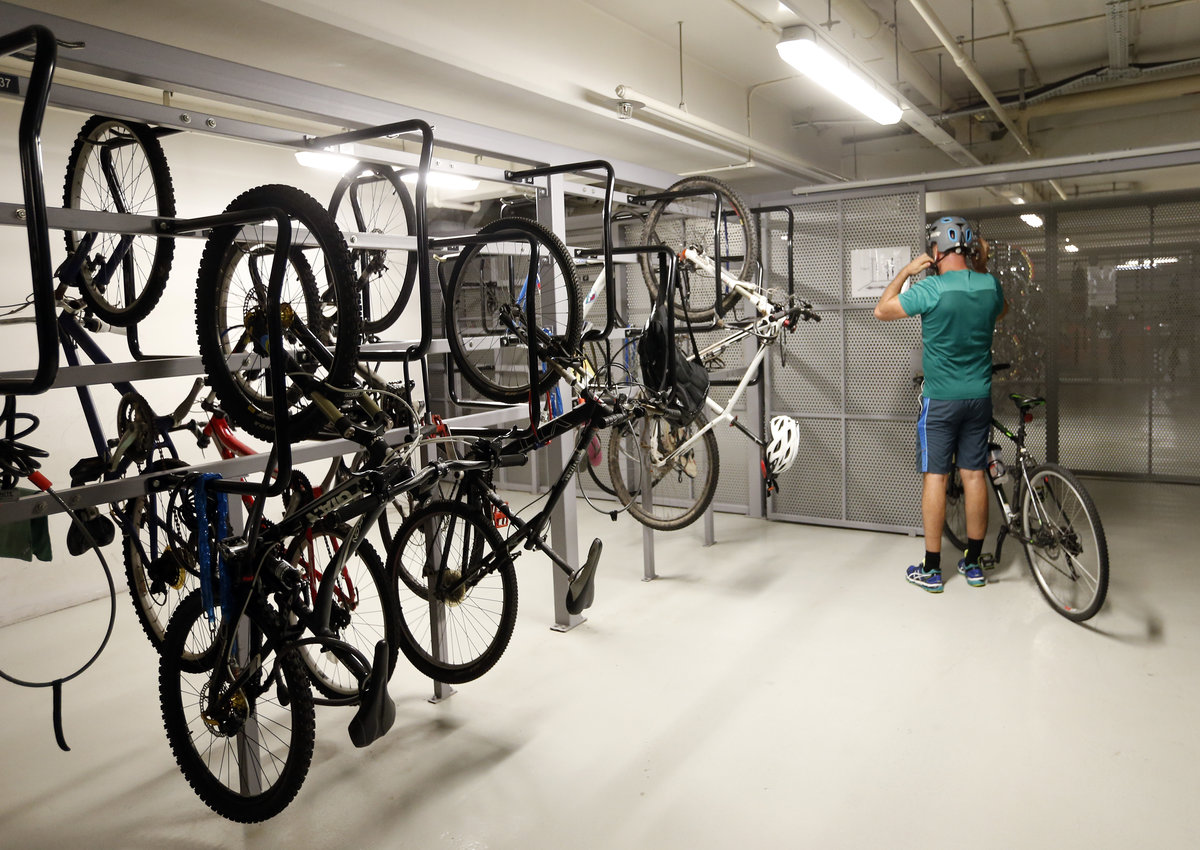
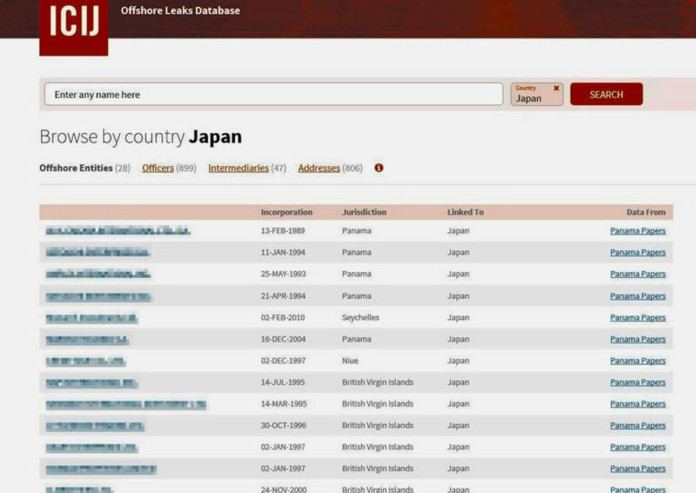
Image: 
Category: 
Publication Date: 
Wednesday, May 11, 2016 – 09:23
Send to mobile app: 
Source: 


Story Type: 
Others

Source link

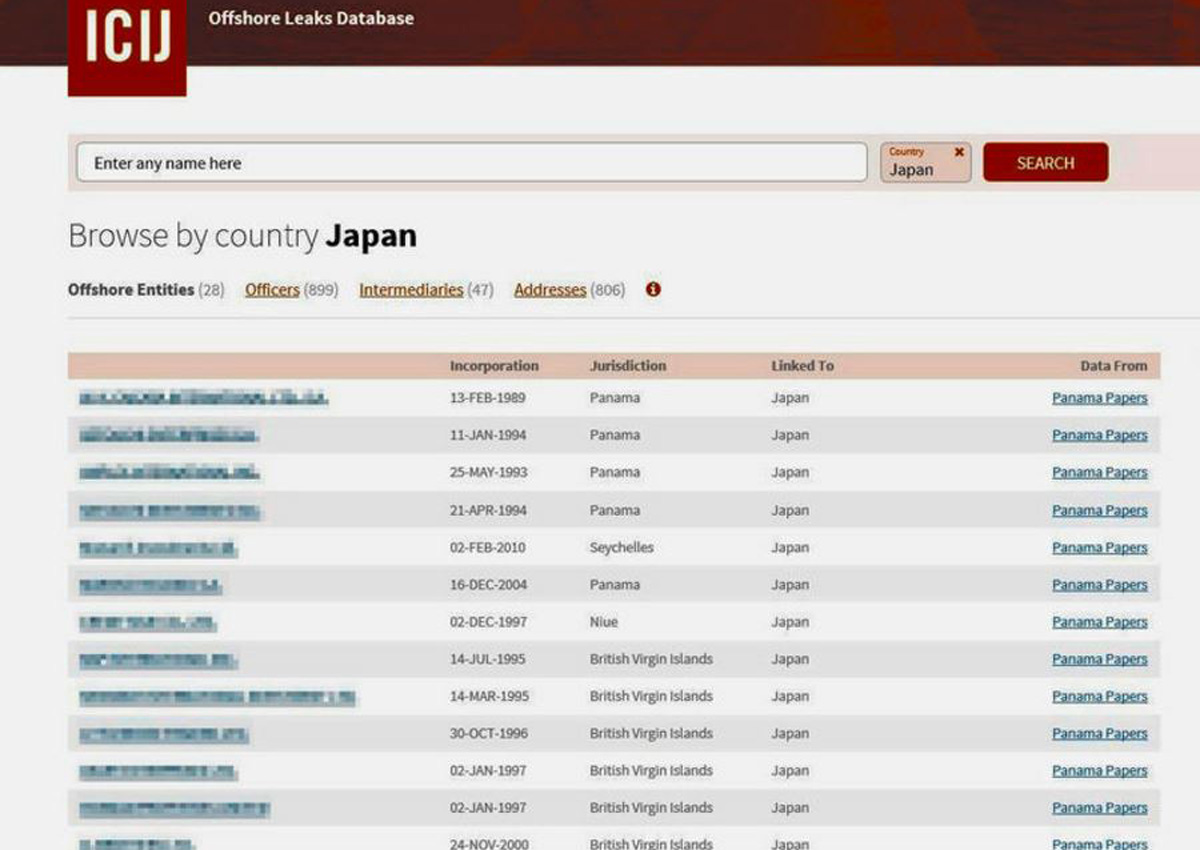
400 cases in Panama leaks tied to Japan

The Panama Papers database that was made available on the website of the International Consortium of Investigative Journalists on Tuesday Japan time contains about 400 cases categorized as relating to Japan. The database lists about 230 individual names believed to be Japanese and about 20 Japanese companies.

Members of notable Japanese companies interviewed by The Yomiuri Shimbun uniformly expressed confusion, saying things such as, “We have no idea why our names were made public, because we didn’t evade tax.”

However, cases of tax evasion and asset concealment through the misuse of tax havens have been reported in the past.

Experts are calling for the latest cases to be thoroughly clarified by tax authorities.

‘Surprising’ announcement

“We use tax havens so we can facilitate procedures for establishing companies and speed up transactions.

The use [of tax havens] isn’t aimed at tax evasion or reduction,” said a spokesperson of a leading trading company based in Minato Ward, Tokyo.

The company, which founded affiliates in the British Virgin Islands, alleges that it makes tax payments appropriately based on legislation against tax havens and discloses in its financial reports that it takes such actions.

“We could lose social credibility if we’re deemed dishonest simply for being listed in the Panama Papers. It’s extremely upsetting,” the spokesperson said.

Another leading trading firm based in Chiyoda Ward, Tokyo, invested in companies founded overseas, including in Hong Kong.

“We aren’t benefiting from low tax rates. Doing such suspicious things would bring a greater risk if it was found out later and then became problematic,” the firm’s spokesperson said.

The company received a flood of inquiries, mainly from clients, after its name was disclosed in the papers.

“We have the problem of being mentioned in online message boards where there are assumptions that we’re avoiding tax payments,” the spokesperson said.

Money lost

The names of business entrepreneurs are also listed in the papers as stockholders of companies that exist in tax havens.

In 1996, a manager of a leading online shopping company invested ¥800,000(S$10,031) in a company in the Virgin Islands after being approached by a foreigner that an acquaintance introduced to him.

His company’s spokesperson told The Yomiuri Shimbun: “Our manager seems to remember only making a loss.”

About four years ago, a male professor at a private dental university in the Hokuriku region jointly established a company in the Virgin Islands with a Chinese financier who invested money for developing anticancer drugs.

Right after the company was established, however, the professor lost contact with the Chinese financier.

The company was since neglected and has conducted no transactions.

“I have no intention at all of making money [from using tax havens]. All I wanted was to do my research,” the professor said.

Tip of the iceberg?

“It’s unlikely that all the transactions conducted through the use of tax havens are clean,” said Go Kawada, a certified tax accountant and former Sendai Regional Taxation Bureau chief who is an expert on international taxation.

Wrongdoing via tax havens remains rife in Japan. One such case is the massive cover-up of losses by Olympus Corp. that was exposed in 2011.

Three former securities firm employees who helped Olympus hide its losses were found to have kept about ¥2.2 billion in remuneration from Olympus in the bank accounts of paper companies established in tax havens including Liechtenstein.

“Tax havens can be misused not only for out-and-out crimes, but also for tax evasion by exploiting gaps in tax rates, and for asset concealment using the nature of confidentiality of personal information,” Kawada stressed.

Aside from the law firm that became the source of the recent Panama Papers leak, Kawada said there are many brokers who arrange transactions using tax havens.

“The latest disclosure is just the tip of the iceberg,” he said.

Tax authorities in Japan are paying attention to the Panama Papers. The National Tax Agency announced Tuesday that it will try to gather information at every possible opportunity and conduct tax inspections whenever problematic transactions are confirmed, with the aim of realizing adequate and fair taxation.

Japan’s tax authorities are expected to exchange information about the companies and individuals listed in the Panama Papers with their overseas counterparts, according to sources.

They will collate information from the Panama Papers and information declared to them, and conduct inspections if there are problems.

Image: 
Category: 
Publication Date: 
Wednesday, May 11, 2016 – 09:12
Send to mobile app: 
Source: 


Story Type: 
Others

Source link

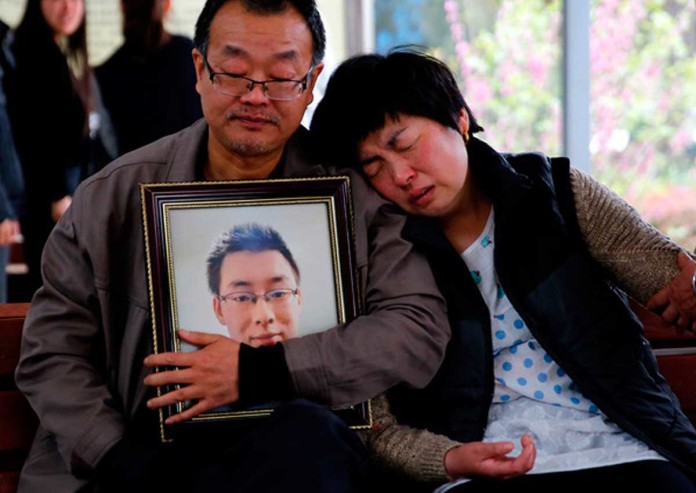
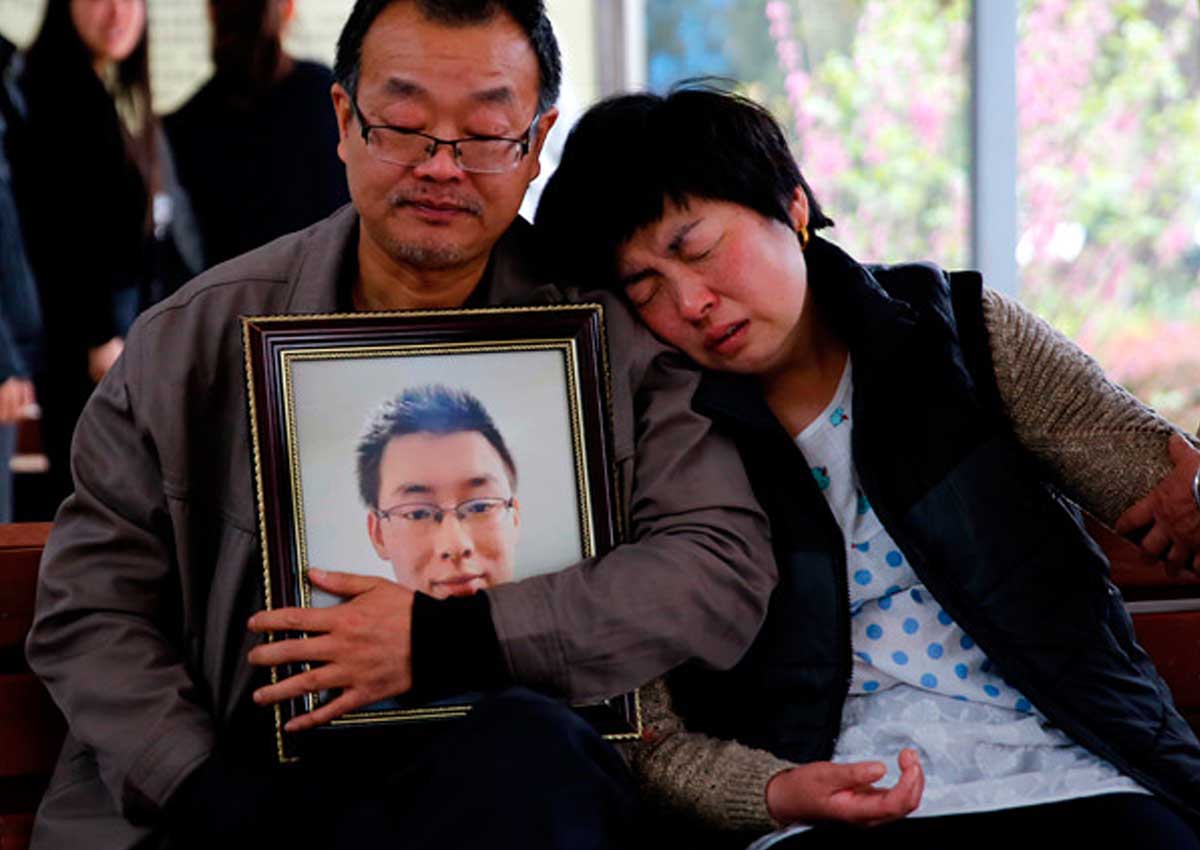
10 hospital staff punished over experimental cancer therapy offered on Baidu

Ten military staff members, including two in charge of the hospital that offered an experimental cancer therapy to a young man who died last month, have been punished.

The punishments were handed out after an investigation confirmed the hospital’s malpractice in business collaboration and the posting of misleading medical advertisements.

Two leaders from the Second Hospital of the Beijing Armed Police Corps were dismissed and six others received demerits.

Two other officials from higher military authorities who oversaw the hospital were given warnings for inadequate supervision, a statement from the Beijing Armed Police Corps said on Tuesday.

Two other individuals who collaborated with the hospital have been transferred to judicial organs on suspicion of having committed crimes, the statement said, without disclosing their identity.

Wei Zexi, a 21-year-old student from Shaanxi province, died on April 12 from synovial sarcoma, a rare cancer, after taking a type of immunotherapy at the hospital’s biomedical centre outsourced to private entities. In an online posting before his death, Wei said he was recommended the hospital while searching for the disease on Baidu, China’s equivalent of Google.

No direct link has been established between Wei’s death and the treatment he received.

The case has attracted widespread public attention, however, as it exposed the controversial paid listing business that Baidu relied on – which ranks search results based on the price advertisers pay – and the poor supervision of some military hospitals.

Military hospitals are not under the jurisdiction of government health authorities. Instead, health bureaus of the Central Military Commission and the national Armed Police Force oversee military-affiliated medical institutes. This creates management loopholes for some hospitals as military rules are not as transparent as government regulations.

Patients who received similar therapy at the hospital said they were not satisfied with the investigation results, and demanded more details and refunds.

A 33-year-old housewife from Shanxi province said the statement failed to mention whether patients involved in such therapy can get refunds.

She received a course of immunotherapy at the hospital last month and paid 28,000 yuan (S$5,900) after being diagnosed with human papillomavirus infection, a sexually transmitted disease. Her condition worsened after the therapy, and she later quit the reatment.

She said she is considering joining other patients to petition higher authorities.

A man surnamed Chen said his mother had received similar treatment for cervical cancer. “I think it (the statement) did not respond to our major concerns,” he said.

The hospital stopped receiving patients on Wednesday.

Liu Yuanli, dean of the School of Public Health at Beijing Union Medical College, urged the government or academic groups in China to set up independent Internet search services particularly for medical and healthcare-related information.

Image: 
Category: 
Publication Date: 
Wednesday, May 11, 2016 – 09:14
Send to mobile app: 
Source: 


Story Type: 
Others

Source link

No 'imminent' signs of N. Korea nuclear test: US think tank

SEOUL – Recent satellite images show no imminent signs of a fifth North Korean nuclear test, following the conclusion of a party congress that many thought Pyongyang would mark with an atomic detonation, a US think tank said Wednesday.

The pictures, dated May 8, show low-level activity at the underground test site at Punggye-ri in the country’s northeast, and vehicles previously observed at the site’s command centre were “no longer present”, according to an analysis by the US-Korea Institute at Johns Hopkins University.

Earlier satellite images had shown closely parked vehicles at the command centre – usually only seen during final test preparations.

North Korea wrapped up its first ruling party congress in 36 years on Monday.

South Korean officials and North Korea watchers elsewhere had warned of a high possibility that Pyongyang might – as a show of strength – carry out a test in the run-up to the conclave, or even during the event itself.

“That gathering is now ended and there are no apparent signs that a detonation will occur in the near future,” said the analysis.

But the low-level activity across the complex suggests it “remains capable of supporting additional tests once a decision to move forward is made in Pyongyang”, it said.

North Korea has conducted four nuclear tests. The most recent was on January 6, with Pyongyang claiming it marked the country’s first successful test of a powerful hydrogen bomb.

The UN Security Council responded by imposing its strongest sanctions to date over the North’s nuclear weapons programme.

At the ruling party congress, North Korean leader Kim Jong-Un praised the “magnificent and exhilarating sound” of the January test, and delegates adopted Kim’s report calling for an improved and expanded nuclear arsenal.

Image: 
Category: 
Publication Date: 
Wednesday, May 11, 2016 – 09:11
Send to mobile app: 
Source: 


Story Type: 
Others

Source link

Man carried by British baroness says he is 22, not 46

PETALING JAYA: The “46-year old married man” carried by Michelle Mone, Baroness of Mayfair in Vietnam is actually a 22-year-old real estate agent.

This was reported by The Daily Mail, which added that the woman who yelled from the front row of a conference for entrepreneurs for Nguyễn Tấn Phát to be put down is in fact not his wife.

The article carried a translation of a Facebook post by Nguyễn, who is also known as Robert, who refuted a comment made by the baroness that he had yellow teeth that were possibly caused by smoking.

“I don’t have a wife or lover and I’ve never smoked,” said Nguyễn, who had approached the 44-year old baroness after she finished a talk in Ho Chi Minh City where she addressed an audience of 3,000 at the National Achievers Congress.

Nguyễn also said that he was only 22 years old and not 46 as reported, and posted a photo of an identification card as proof of his age.

The baroness, who is the founder of British lingerie brand Ultimo Brands International, was approached by Nguyễn who presented flowers to her when she was on stage.

She accepted the flowers and then picked him up to pose for a photo together, thinking he was a child.

British news site The Mirror had reported that the man’s wife immediately asked the lingerie tycoon to put her husband down.

Baroness Mone also told The Daily Mail that “the guy was fine with it and the whole room was screaming with laughter”.

Image: 
Category: 
Publication Date: 
Wednesday, May 11, 2016 – 09:02
Keywords: 
Send to mobile app: 
Source: 


Story Type: 
Others

Source link

I'm so used to being slammed, says director of Singapore's first Hollywood horror film

CRITICISM does not bother him, as his skin is “pretty thick”.

Singapore film-maker Kelvin Tong remains nonchalant when it comes to scathing reviews of his latest movie, The Faith Of Anna Waters, which opened in the United States on Friday under the title The Offering.

US newspaper Los Angeles Times and Fangoria, a popular US website that specialises in horror entertainment, have criticised the 43-year-old’s film, calling it unoriginal and befuddled.

“I’m so used to being slammed so negative reviews don’t affect me any more,” Mr Tong said.

“It’s all right as I believe film criticism is a necessary part of the entire film process.”

He added that being a former film critic himself – he was a film reviewer for The Straits Times in the mid-1990s – he knows that one can learn from reviews, especially those written by good film critics.

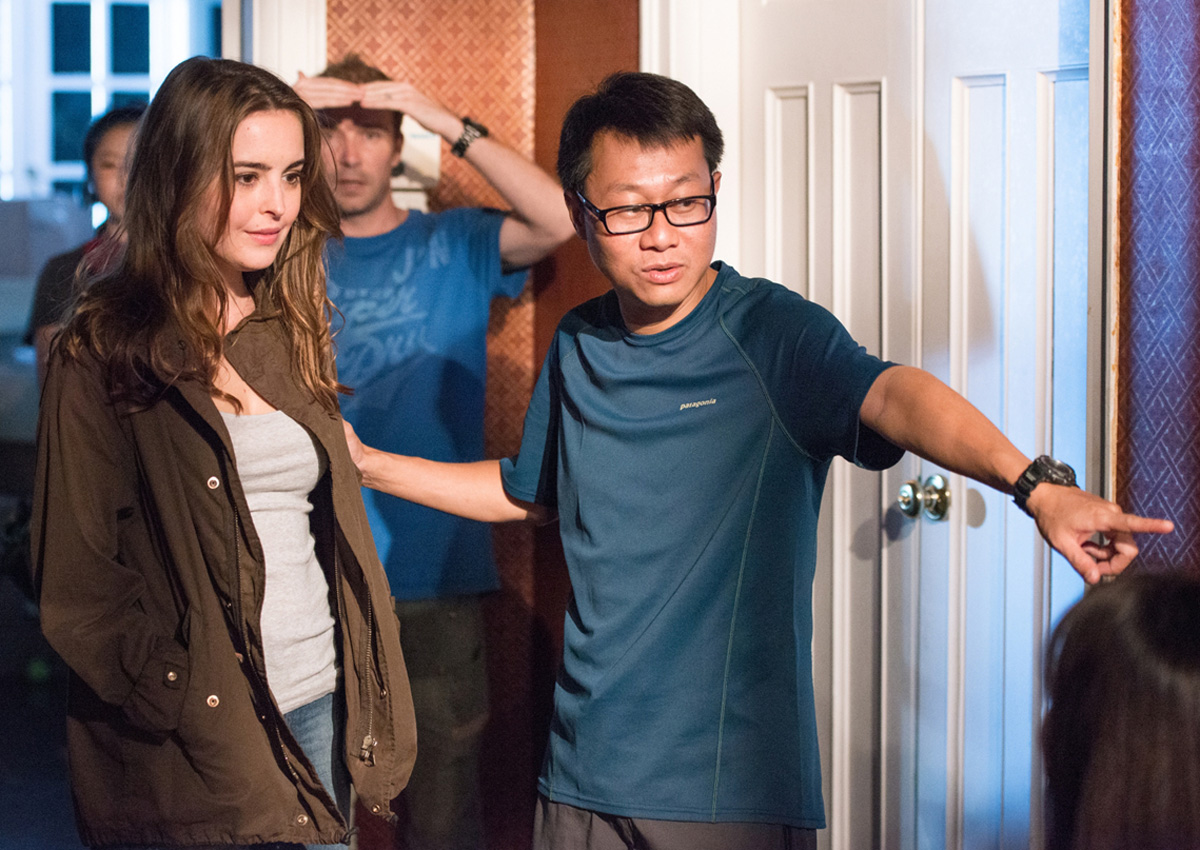
The Faith Of Anna Waters, which opens here on Thursday, is billed as Singapore’s first Hollywood horror film. It stars US actors Elizabeth Rice and Matthew Settle and local actors Adrian Pang, Jaymee Ong and Pamelyn Chee.

The story follows US reporter Jamie Waters (Rice), who flies to Singapore to investigate her suspicion that her sister Anna’s death was not a suicide, but linked to multiple deaths.

Jamie and Anna’s ex-husband, Sam (Settle), have to defeat a demonic entity that has possessed Anna’s daughter Katie (played by Australian actress Adina Herz).

Mr Tong, whose earlier films include The Maid (2005) and It’s A Great, Great World (2011), calls his latest work an “experimental film”.

“I’ve never done an English film before and this started out purely as a writing exercise,” said Mr Tong, who relocated to Hong Kong four years ago.

After writing a horror story set in the US, he showed it to a producer friend, who passed it on to US film production and distribution company Highland Film Group (HFG). To his surprise, Mr Tong quickly received funding to shoot the film and an offer to do it in Los Angeles.

“I didn’t write the story with the intention to shoot it.”

He had a budget that was “extremely high” by Singapore standards – a total of US$6 million (S$8.2 million) to make the joint production between HFG and Mr Tong’s Boku Films.

“In the US, it’s considered a low-budget indie flick. But here, I can make six films with that kind of money,” he said.

He opted to shoot the movie in Singapore because he “knew how to stretch the money further” here, compared with a foreign country.

“I’m at the point of my career where I don’t need to break box-office records,” said Mr Tong, adding that sales of The Faith Of Anna Waters “should be healthy” as it has been bought for distribution in places such as France, Germany, Spain, Hong Kong, Taiwan, Thailand and the Philippines.

“My only so-called Hollywood dream is to be able to work with a Hollywood budget.”

That dream, he said, could come true as HFG has offered him the opportunity to make another horror film.

“Maybe this time I may shoot the film somewhere else,” he said.


This article was first published on May 10, 2016.
Get The New Paper for more stories.

Image: 
Category: 
Publication Date: 
Wednesday, May 11, 2016 – 08:52
Send to mobile app: 
Source: 


Story Type: 
Others

Source link

JCU status upgraded to branch campus in Singapore

LAST YEAR, James Cook University (JCU) Singapore won the Edutrust Star, the highest quality mark awarded to private education institutions here.

In July this year, it will become the first Australian institution here to gain branch campus status as part of a wide-ranging agreement signed last week between Australia and Singapore.

JCU vice-chancellor Sandra Harding said gaining branch campus status in Singapore is the realisation of a long-held dream for the university.

“We wanted to be seen as an Australian university with a campus in Singapore, and now we have that recognition and that capacity to refer to our presence in that way.

“James Cook University’s campus in Singapore is wholly owned by the university. The announcement adds legitimacy and clarity to our position and our ambition to be one of the great universities of the tropics.”

Instead of being classified as a private education institution, this status would allow the Singapore campus to call itself a university.

Students from institutes of higher learning, including universities, enjoy privileges such as being able to work part-time.

The university, which started here with just 50 students in 2003, has grown its student population to 3,500 and is currently housed in a central campus in Sims Drive.

The 23 degree courses it offers, ranging from business to psychology, are the same as those run at the JCU’s two home campuses in Queensland and its students here sit the same examinations.

Its psychology degree, for instance, is accredited by the relevant professional bodies here and in Australia, which means JCU graduates can practise in both countries.

Dale Anderson, deputy vice-chancellor who heads the campus in Singapore, said the university is looking at increasing its degree offerings and boosting its student population to 5,000 in two years.

Among the new offerings that it is seeking approval from the Council of Private Education are degrees in banking and finance, allied health and marine aquaculture, which the university is known for.

Dr Anderson said the university is also looking at launching shorter certificate courses in allied health fields such as diabetes management and dementia management.

“There is a need for people trained in these areas because of the rapidly ageing population in Singapore,” he noted.

Research undertaken by the faculty here is also focused on creating new knowledge relevant to Singapore and the region. For example, a study on the effectiveness of telephone-based counselling for people looking to kick the gambling habit was started in the light of the opening of the integrated resorts here.

sandra@sph.com.sg

Image: 
Publication Date: 
Wednesday, May 11, 2016 – 08:50
Keywords: 
Send to mobile app: 
Source: 


Story Type: 
Others

Source link

Carrots for developers to go extra mile for cyclists

DEVELOPERS will be given incentives to provide facilities such as bicycle parking, showers and locker rooms in their new buildings, as part of a new government plan to encourage people to cycle.

They might not have to pay for the floor area occupied by these facilities, as the Urban Redevelopment Authority (URA) has said that it is prepared to grant gross floor area (GFA) exemptions for such facilities.

A URA spokesman told The Straits Times such exemptions would complement the Walking and Cycling Plan (WCP), adding that “the details are still being studied”.

Under the plan announced last week, cycling and walking facilities will be incorporated when buildings are designed from the get-go, starting from July.

This is part of an overall effort to make cycling more attractive for the first- and last-mile of trips.

On Monday, the Ministry of Transport said in Parliament that developers would have to build a minimum amount of bicycle parking, similar to existing requirements on minimum car parking spaces.

While developers have welcomed the moves as a step towards a car-lite Singapore, they have also asked for concessions.

Managing director of Evia Real Estate Vincent Ong said the WCP could impose difficulties on developers, who already deal with tight space constraints.

For instance, under URA rules, up to 40 per cent of a development’s site area would have to be reserved for greenery, leaving little space for anything else, he added.

“The construction costs might not be significant but what costs money are supporting services (such as ramps and staircases) and how you fit all these facilities into the development,” said Mr Ong.

Terence Seah, divisional director of architecture firm Benoy, points out that much of these facilities – such as bicycle parking – would be built on the ground level so developers could lose “highly profitable space”.

“If the Government gives some form of incentivisation, if these extra facilities could be GFA-exempt it would be a more equitable way to encourage developers to take this on board,” he said.

For a start, the new WCP will apply to commercial developments, such as shopping complexes, offices, business parks and schools, but ST understands it would later apply to residential developments too.

Concerns about costs aside, experts feel that the WCP could trigger a “proliferation of cycling” in the city and inspire new architecture.

The streetscape will change gradually, with more ramps and dedicated paths for cyclists and other mobility devices, said Charles Barguirdjian, studio director of architecture firm Atkins Global.

National University of Singapore associate professor Cheah Kok Ming said developments have to be well-connected to a developed cycling or walking network.

Said Prof Cheah who is from the department of architecture: “Otherwise, the building could have bicycle parking and all the facilities, but there is no way a cyclist can get into the building safely, if its surrounding is not well-designed.”

dansonc@sph.com.sg

xueqiang@sph.com.sg

Image: 
Category: 
Publication Date: 
Wednesday, May 11, 2016 – 08:43
Send to mobile app: 
Source: 


Story Type: 
Others

Source link

Red carpet unfurls as stars roll in for high-security Cannes

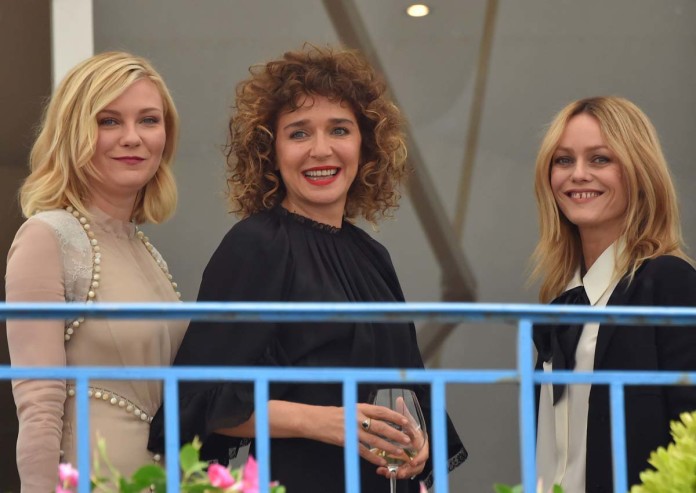
Cannes, France – Cannes began rolling out the red carpet Tuesday as stars including Kristen Stewart and Blake Lively swept into town for the world’s top film festival whose dazzle is being tested by stiff security measures.

On foot, horseback and motorbikes, police patrolled the Croisette, a strip of beach lined with ultra-luxury stores and headed by the Palais des Festivals, the main venue for the cinema extravaganza which gets under way on Wednesday night.

A small army of workers carefully unrolled strips of the 60-metre red carpet that will host stars such as Julia Roberts, Jodie Foster, Sean Penn, Robert De Niro, Kirsten Dunst, Charlize Theron and George Clooney over the 12-day festival.

The first of the big Hollywood films, Foster’s drama about a Wall Street tipster “Money Monster” starring Clooney and Roberts screens Thursday. And Steven Spielberg will roll out his blockbuster version of Roald Dahl’s “The BFG” at the weekend, although neither are competing for the main Palme d’Or prize.

But already some of the main competition films are stirring controversy, with Juliette Binoche starring in a period horror “Slack Bay” about Victorian tourists eaten by the locals in northern France.

Another, “The Neon Demon”, also features cannibalism, this time among supermodels in Los Angeles according to the film’s Danish director Nicolas Winding Refn, who is notorious for depicting extreme violence.

The population of Cannes is set to nearly triple to some 200,000 people as film producers, industry workers and actors roll in to soak up the glamour, sell films, network and party.

The festival has also created a security headache worthy of a movie script for French authorities six months after a series of attacks left 130 people dead in Paris.

“We must keep in mind as we prepare to open this festival, that we are… faced with an enemy determined to strike us at any moment,” Interior Minister Bernard Cazeneuve said on a visit to Cannes Monday.

As a result an “extraordinary mobilisation” of security forces has been put in place, with 400 private security agents guarding the Palais des Festivals alone, where the main films are shown.

on Facebook

H-24 : nous sommes prêts ! Et vous?

H-24 : we are ready ! Are you ?
#Cannes2016

Musique :Steven O’ Brien Adventurous theme

Posted by Festival de Cannes – Page Officielle on Tuesday, 10 May 2016

Cazeneuve said bomb experts would carry out daily sweeps of the venue.

Hundreds more police officers and specialist units will be on duty in the city, whose lure for the rich and famous makes it equally attractive to jewellery thieves – with several multi-million dollar heists in recent years.

Cannes has 500 CCTV cameras, making it the most closely monitored town in France, said mayor David Lisnard.

He dismissed concerns that the tight security will throw a wet blanket over the parties, glitter and glamour of the event.

“Do you think an attack brings merriment? We have succeeded in preserving the festival atmosphere. The public will be at the foot of the (red-carpeted) steps. All the parties will be authorised but security must be taken care of,” he told AFP.

Last month elite police forces staged a simulated terror attack at the Palais des Festivals.

Air and sea exclusion zones have also been declared, as well as a ban on drones, and Lisnard has said random searches will be conducted in the streets of Cannes.

Hollywood stars Blake Lively and Kristen Stewart were snapped arriving in town, according to Vogue magazine’s Twitter feed.

The pair star in Woody Allen’s “Cafe Society” which will open the event on Wednesday on what is forecast to be a rain-drenched evening.

The movie, about a young couple who fall in love in 1930s Hollywood, is being screened out of competition.

Nearly 90 feature films will be shown in this year’s official selection, 21 of which are in the running for the Palme d’Or.

But hundreds more are showing in the film market and in the Director’s Fortnight and Critics’ Week sections.

With the clock ticking down, hectic last-minute preparations were still going on, with cranes lining the Croisette.

In Cannes port, crew members scrubbed the sleek yachts where many of the festival’s parties take place.

Several billionaires have parked their superyachts along the Riviera for the festival: Microsoft co-founder Paul Allen’s “Octopus” was in Nice and Spielberg’s “Seven Seas” in Antibes, according to Forbes.com.

Image: 
Category: 
Publication Date: 
Wednesday, May 11, 2016 – 08:32
Send to mobile app: 
Source: 


Story Type: 
Others

Source link

The Singapore 'Cannes'-do spirit

Film-makers Boo Junfeng and K Rajagopal will be representing Singapore at the 2016 Cannes Film Festival.

Source link