The woman lodged a police report claiming that she was robbed by an unknown man at Lorong 4 Toa Payoh.
Source link
24-year-old woman under investigation for making false police report
Singapore fund likes Hong Kong property as curbs to stay at home

SINGAPORE – SC Capital Partners, a Singapore private equity real estate firm with US$1.2 billion (S$1.6 billion) in assets, said recent price declines make investing in Hong Kong property attractive.
Founder Suchad Chiaranussati said he expects the Singapore…
Source link
Critics demand improvements at Indonesia's 'zoo of death'
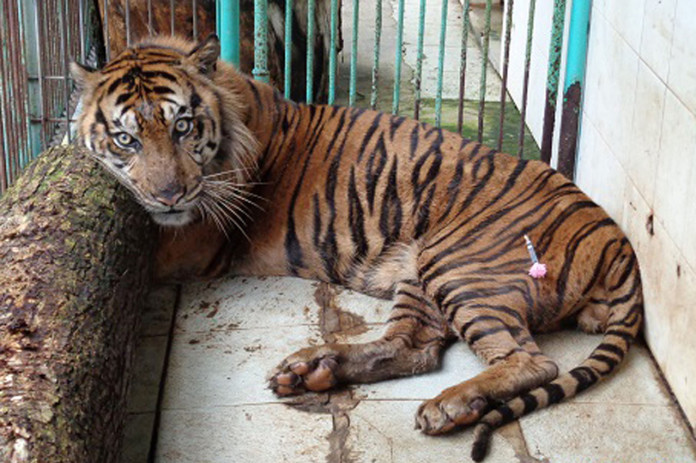
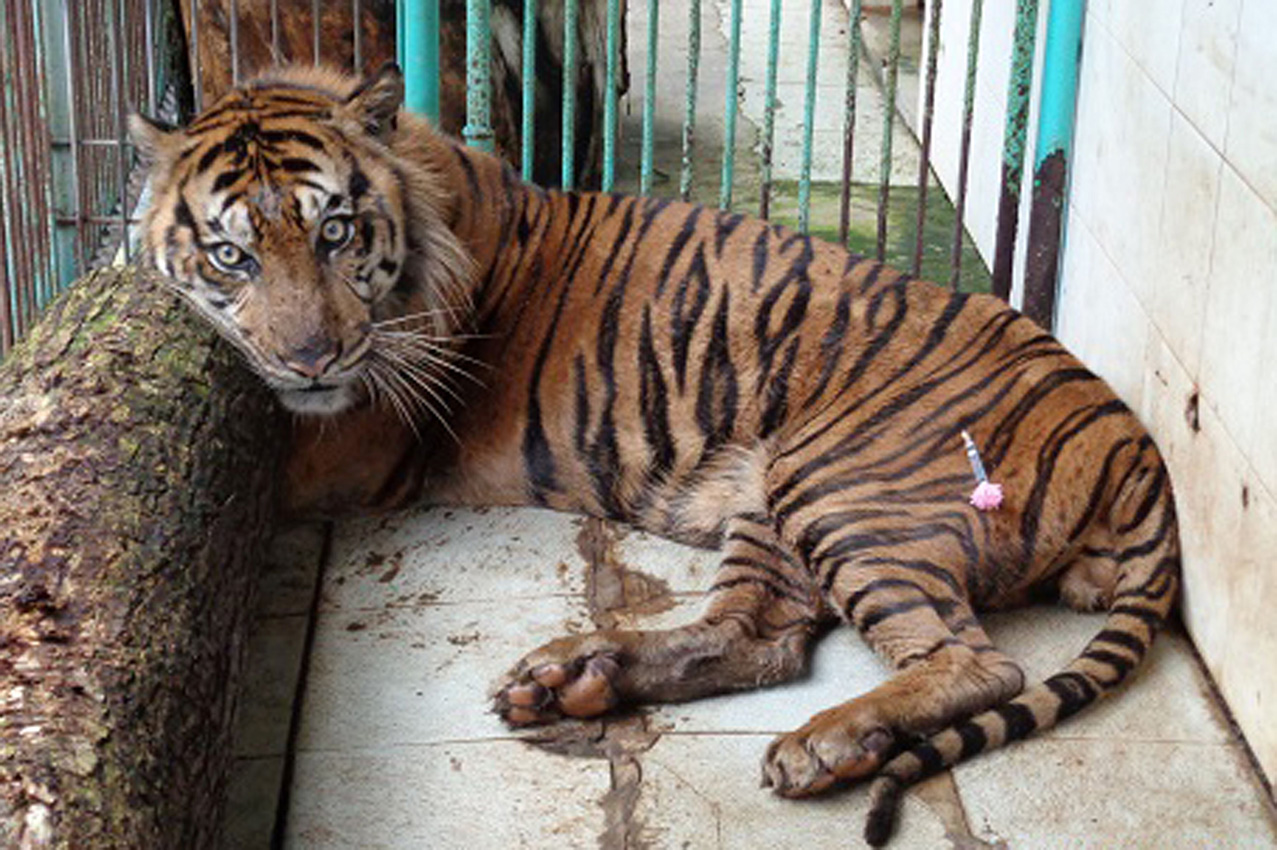
SURABAYA, Indonesia – So many animals have perished at Indonesia’s biggest zoo that wildlife activists call it the “zoo of death” and are demanding an overhaul of its management.
Activists say many of the more than 2,200 animals at the zoo in the city of Surabaya are crowded into cages and enclosures far too small for them, and they also face a shortage of proper feed.
One of the latest losses was a rare Sumatran tiger that died unexpectedly last month. “They need to make an effort to ease the overpopulation of animals,” Petrus Riski of the Indonesia Wildlife Communication Forum said at the zoo as keepers carried a crate of fish into a congested pen of pelicans. “It can be done by sending them to other conservation institutes.” Zoo keepers attribute most of the deaths to natural causes, and said the tiger’s death was still unexplained. But activists point to a string of unusual incidents that undermine their confidence in the zoo, which was founded in 1916.
An 18-month African lion was found hanging dead in its cage in 2014 and a dead giraffe was found with about 18 kg (40 lb) of plastic in its stomach – rubbish thrown into its cage by visitors.
About 45 Komodo dragons, a large species of lizards only found in eastern Indonesia, died in battles they fought against each other in their overcrowded cage.
The zoo’s director blamed bureaucratic hurdles hampering efforts to improve conditions. “We’ve been trying to resolve these issues one by one,” said director Aschta Boestani Tajudin. “I hope in three to four months from now we can finally solve the problem.” But critics are not convinced. They say poor staff training and outdated facilities are to blame for the zoo’s woeful record. “They need more support and funds to really fix things,”said Tony Sumampau, secretary general of the Indonesian zoo and aquarium association.
Image:
Publication Date:
Thursday, May 12, 2016 – 14:55
Send to mobile app:
Source:
Story Type:
Others
Limited-edition Hello Kitty plushies go on sale online just hours after launch
By about 1.30pm, there were at least seven people selling the toy for S$75 to S$200, marked up from its retail price of S$49.90, on online marketplace Carousell.
Source link
Lock & Lock 30% Off Fair at Fairprice from 12 – 25 May 2016 | SINGPromos.com

Lock & Lock 30% off fair at Fairprice till 25 May
Lock & Lock 30% Off Fair at Fairprice from 12 – 25 May 2016 | SINGPromos.com
Enjoy 30% off LOCK & LOCK products at NTUC Fairprice till 25 May 2016
Riding high on one wheel
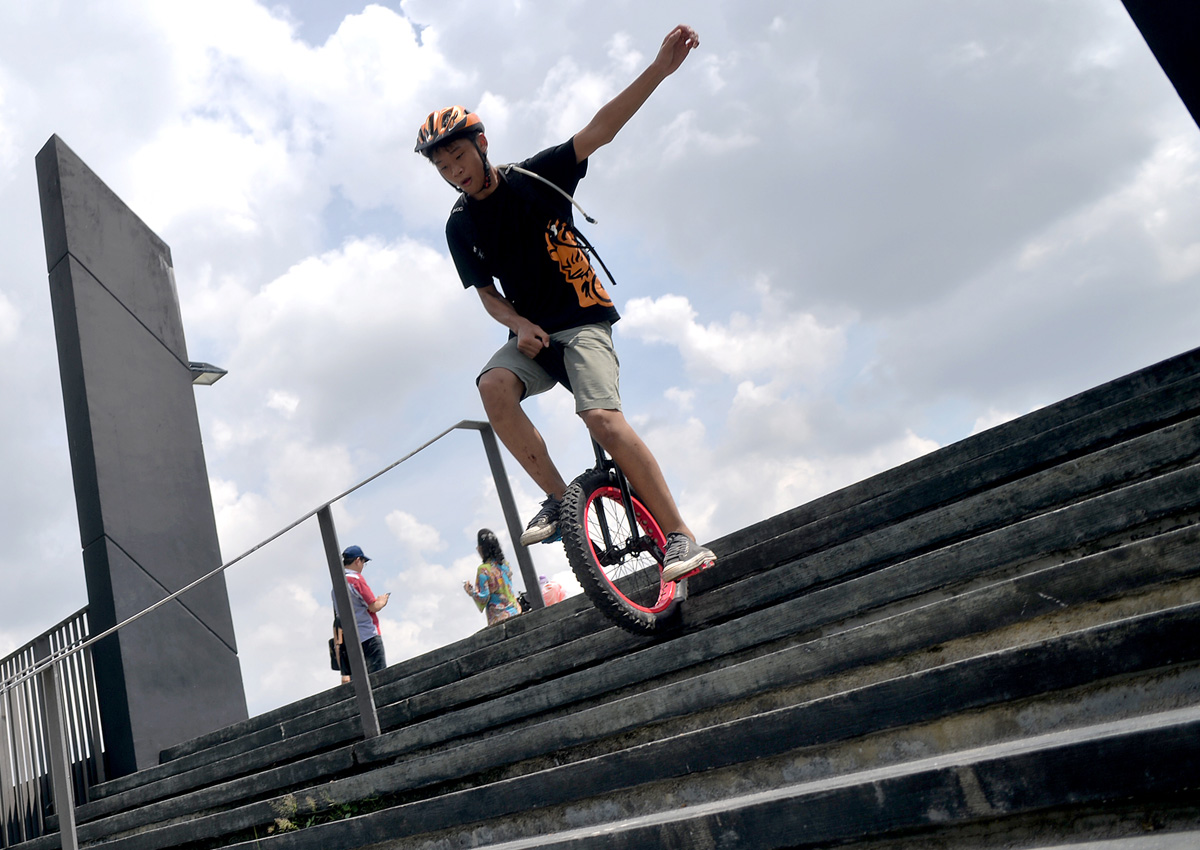
When Mr Chua Kai Lun stepped into the world of unicycles out of curiosity more than a decade ago, little did he know that one-wheelers would become his passion in life.
In 2002, the technical services engineer saw street performers on unicycles and wondered how to ride one.
He did an online search and found a local shop that sold unicycles for $100 and he bought one.
The 34-year-old is considered one of the pioneers in local unicycle group Singapore Unicyclists, a registered interest group in Bedok Community Club.
Mr Chua said there are about 80 unicyclists in Singapore; but an active group of 30 meet regularly to ride together.
These advanced riders, who have at least two years of experience on a unicycle, meet on Thursdays to play hockey – while on their unicycles.
They form two groups and go head-to-head in a multi-purpose court in Bedok.
For a more hardcore experience, they go to Pulau Ubin or Coney Island on the weekends.
The youngest mountain unicyclist in the group, Eugene Sia, 15, loves the thrill of navigating different landscapes.
Riding high on one wheel
Click on thumbnail to view photos. Source:
The Straits Times








He said: “Mountain unicycling is challenging and yet very satisfying when you can clear different obstacles, unlike flat, boring pavements.”
He picked up unicycling at 13, when he borrowed a unicycle from his cousin.
He got the hang of riding it after five days, “riding pillar to pillar” at void decks.
Mr Chua said there is no age barrier to being a unicyclist. However, a rider must be least 1.4m tall and able to reach the pedals.
The Singapore Unicyclists’ youngest rider is 10 and the oldest is almost 70, and members come from all walks of life.
Mr Chua said: “With the increase in the popularity of personal mobility devices such as the electric unicycle, we see an increase in people coming to try the sport.
“However, with the steep learning curve, it will probably remain as a low-profile sport in Singapore.”
Currently, those who are interested in picking up unicycling can go to the Kallang or Bedok community club for free lessons.
Mr Chua said it takes about 20 hours of practice to be able to ride a unicycle.
He added: “Unicycling is a completely safe sport, and the learning phase is actually the safest phase.”
The most common injury is a “pedal bite”, when the pedal hits the rider’s leg, so newbies are encouraged to use shin guards to prevent such accidents.
As cool as it looks, riding a unicycle is not about “the attention you get or being unique”, said Mr Chua.
“It is the feeling of being in control of something that your instinct tells you is impossible to master. That feeling is very addictive.”
jamiekoh@sph.com.sg

This article was first published on May 12, 2016.
Get a copy of The Straits Times or go to straitstimes.com for more stories.
Image:
Publication Date:
Thursday, May 12, 2016 – 17:00
Keywords:
Send to mobile app:
Source:
Story Type:
Others
SUTD taking in record 467 students
The Singapore University of Technology and Design (SUTD) will take in 467 students this year, a record high for the institution.
The figure, a 20 per cent increase from last year’s intake of 386, is close to its intake capacity of 500.
Previously, its intakes had ranged from 280 to 340, raising questions about whether it was being too selective.
SUTD, which took in its first batch of students in 2012, said then that it was going for “quality, not quantity” because of its rigorous curriculum, developed with the Massachusetts Institute of Technology (MIT) in the United States.
It received 3,055 applications this year, an 18.4 per cent increase from last year. About 40 per cent of its intake this year are females.
Besides having good grades, applicants must write a 500-word essay about themselves.
They are also invited to submit portfolios, videos and personal blogs to support their applications.
Shortlisted applicants then face a panel interview.
SUTD president, Professor Thomas Magnanti, said: “This is our fifth batch and I am very heartened by the record number.
“We look forward to nurturing them over the next 3½ years into becoming holistic engineers and architects who identify and solve society’s problems not just from a technological aspect but also with an eye for design, relevance and usability.”
In response to queries, an SUTD spokesman said that it looks for “bright and well-rounded students with a passion for technology and design”.
She said the rise in the number of applications could also be due to its outreach efforts, ranging from school visits and workshops to its open house.
Other factors include its expanded overseas programmes and the positive employment outcomes of its pioneer graduates last year.
SUTD, Singapore’s fourth university which partners MIT and China’s Zhejiang University, offers specialisation in four areas: architecture and sustainable design; engineering product development; engineering systems and design; and information systems technology and design.
Some new undergraduates said they were attracted by its broad- based approach, which requires students of all disciplines to take common subjects such as physics and humanities.
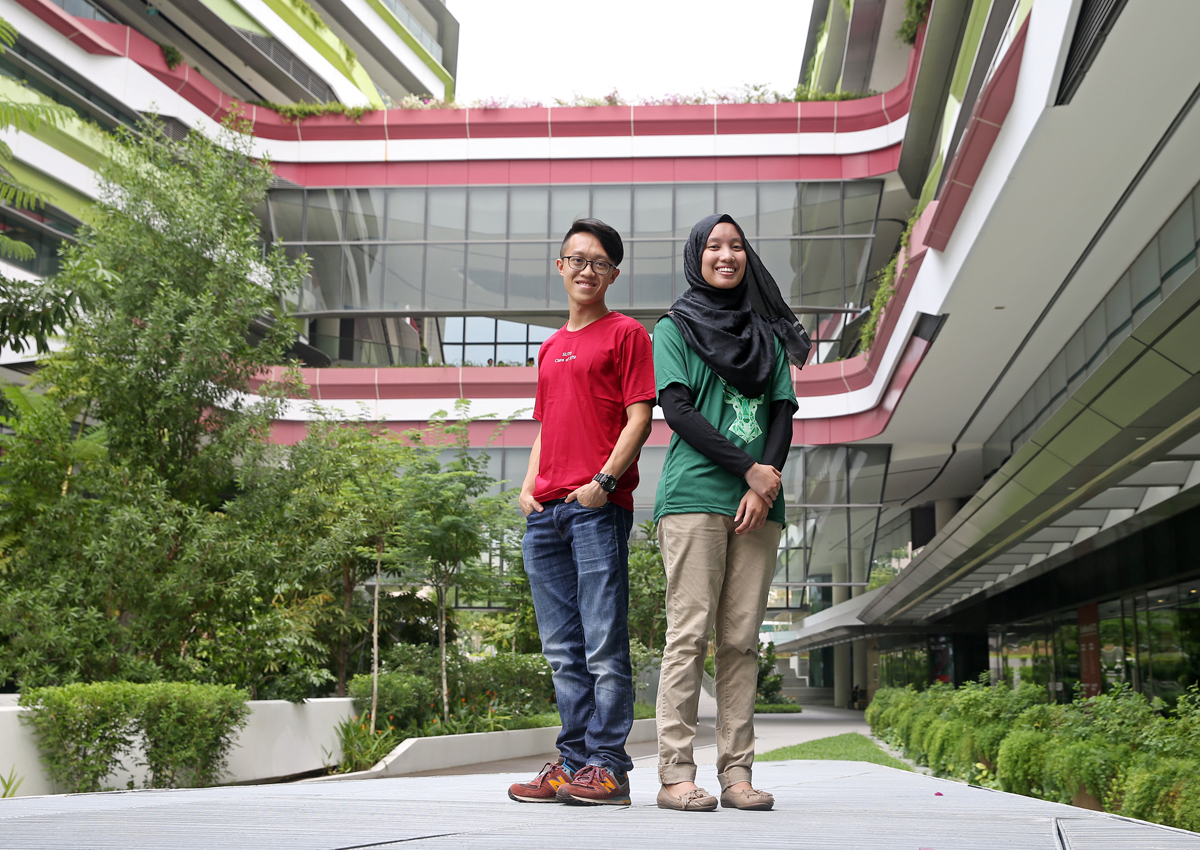
Mr Leong Hei Kern, 22, who graduated from Singapore Polytechnic in 2013 with a grade point average of 3.99 out of 4, said the common curriculum helps students to understand each other’s specialisations.
“Your classmate could be an architect or engineer in the future,” said the Public Service Commission scholar, who added that working together across specialisations can help to create products that are both user-friendly and functional.
Former Raffles Institution student Afiffah Ab Ghapar said: “I like that architecture is taught in a technologically-driven way.”
The 18-year-old, who scored six As in her A levels, spent a week in January attached to architecture students at SUTD as part of a job shadowing programme organised by the Building and Construction Authority.
“Design is not just about aesthetics; there could be other aspects that require skills like coding and software programming,” she said.
“It’s challenging, but it made me think that if I had that knowledge it would make me stand out.”
This article was first published on May 12, 2016.
Get a copy of The Straits Times or go to straitstimes.com for more stories.
Image:
Publication Date:
Thursday, May 12, 2016 – 15:00
Keywords:
Send to mobile app:
Source:
Story Type:
Others
To improve lives of security guards, a mindset change needed: Zainal Sapari
It is time for both service buyers and providers in the security sector to explore new possibilities together, said NTUC Assistant Secretary-General Zainal Sapari.
Source link
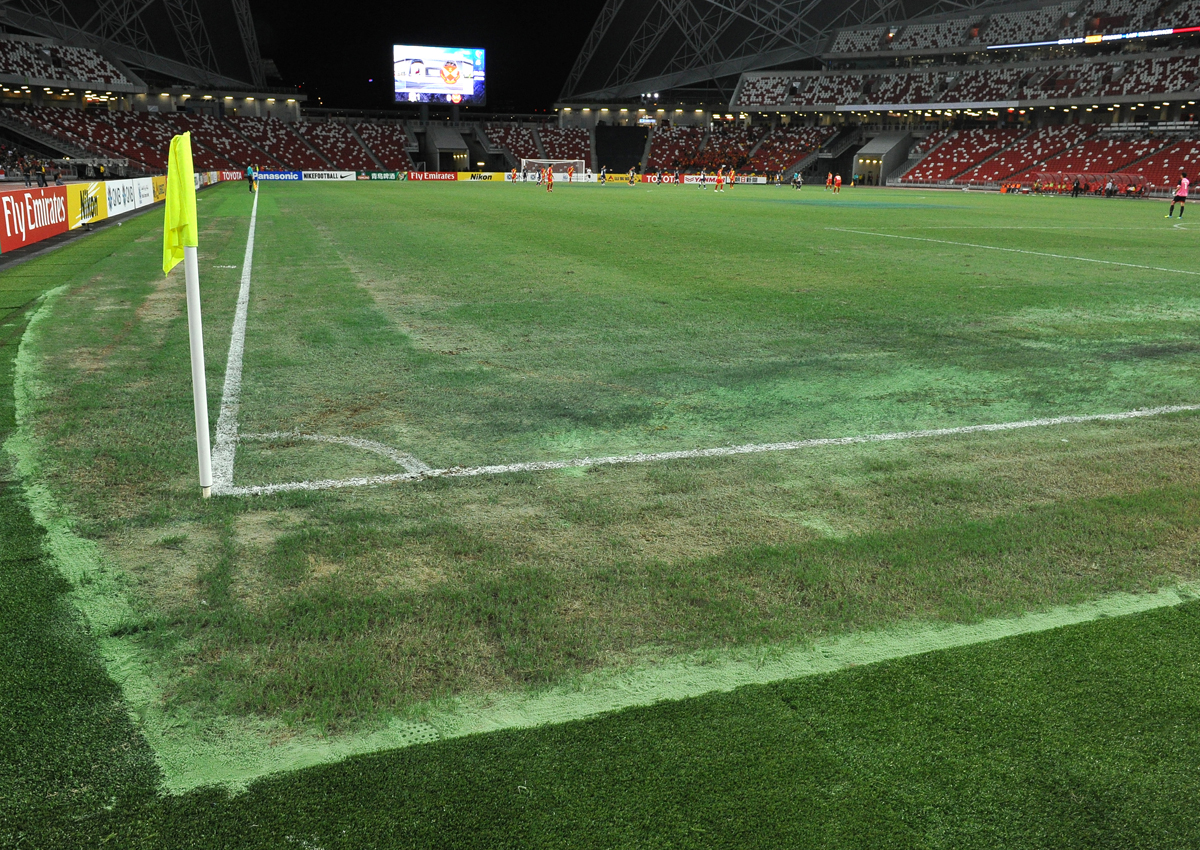
Sports Hub confident of solving pitch concerns
The Singapore Sports Hub is confident the National Stadium pitch will be ready in time for Saturday’s Super Rugby match between the Sunwolves and Stormers.
The state of the “lay-and-play” field attracted criticism following Tuesday’s Asian Football Confederation (AFC) Cup game between Tampines Rovers and Selangor.
It appeared sandy and uneven in patches. Players including Jermaine Pennant and Fahrudin Mustafic complained about the pitch conditions, saying that it was “slippery and bumpy” and lamenting that “we had to take an extra touch to bring the ball under control”.
Yesterday, a concerned Rugby Singapore chairman Low Teo Ping chimed in, saying: “The pitch is terrible.
“I may not necessarily be the expert in this area of management, but I think they had ample time to do something about it. And I don’t think they did much about it.”
Referring to events that were held at the Kallang venue over the past month that left visible worn markings on the pitch, he added: “Looking at it positively, those are the scars of success.”
He was referring to the 55,000-seat venue hosting the April 16-17 HSBC World Rugby Singapore Sevens and last week’s Asia Masters Athletics Championships, which concluded on Sunday.
While noting the short turnaround time between the events, Low said that there are no excuses.
He said: “If you’ve got to work at it (through) the night, so be it.”
When the National Stadium reopened two years ago, the grass in its $800,000 Desso GrassMaster pitch was unable to grow properly because the stadium’s dome design did not allow sufficient sunlight in.
The Sports Hub then invested more than $2 million in growth lights and a “lay-and-play” surface with warm-weather grass, only for the problems to resurface.
But a spokesman for the Sports Hub said yesterday that “we have confidence in our pitch maintenance regime and will be conducting necessary tests to secure the required approvals and clearances ahead of Saturday’s rugby games”.
She pointed out that the field had been certified fit to stage the Tampines-Selangor game, noting: “For Tuesday’s match, our pitch met the required standards and passed inspection by the AFC match commissioner ahead of the game.”
She also gave the assurance that “the integrity and playability of the pitch” and the safety of athletes remain a priority.
To that end, the field is assessed regularly under an internationally recognised process approved by world football body Fifa and World Rugby. Tests are conducted before and after major events.
“The process includes measuring surface safety and playability for players,” the spokesman explained.
“These include evaluation for, for example, shock absorption, vertical deformation (a measure of the stability of the surface as it is impacted when a player runs across it) as well as rotational resistance (a measure of the traction provided by the playing surface).”
The national women’s rugby team are hoping that their Test match against Hong Kong, a curtain-raiser for the Super Rugby game, will not fall victim to pitch issues.
Singapore coach Wang Shao Ing said: “My only concern now is whether they will call off the curtain-raiser to preserve the pitch (for Super Rugby).
“Let’s hope that we won’t have to do that.”
This article was first published on May 12, 2016.
Get a copy of The Straits Times or go to straitstimes.com for more stories.
Image:
Publication Date:
Thursday, May 12, 2016 – 15:00
Keywords:
Send to mobile app:
Source:
Story Type:
Others
Picking up the pieces and making a comeback
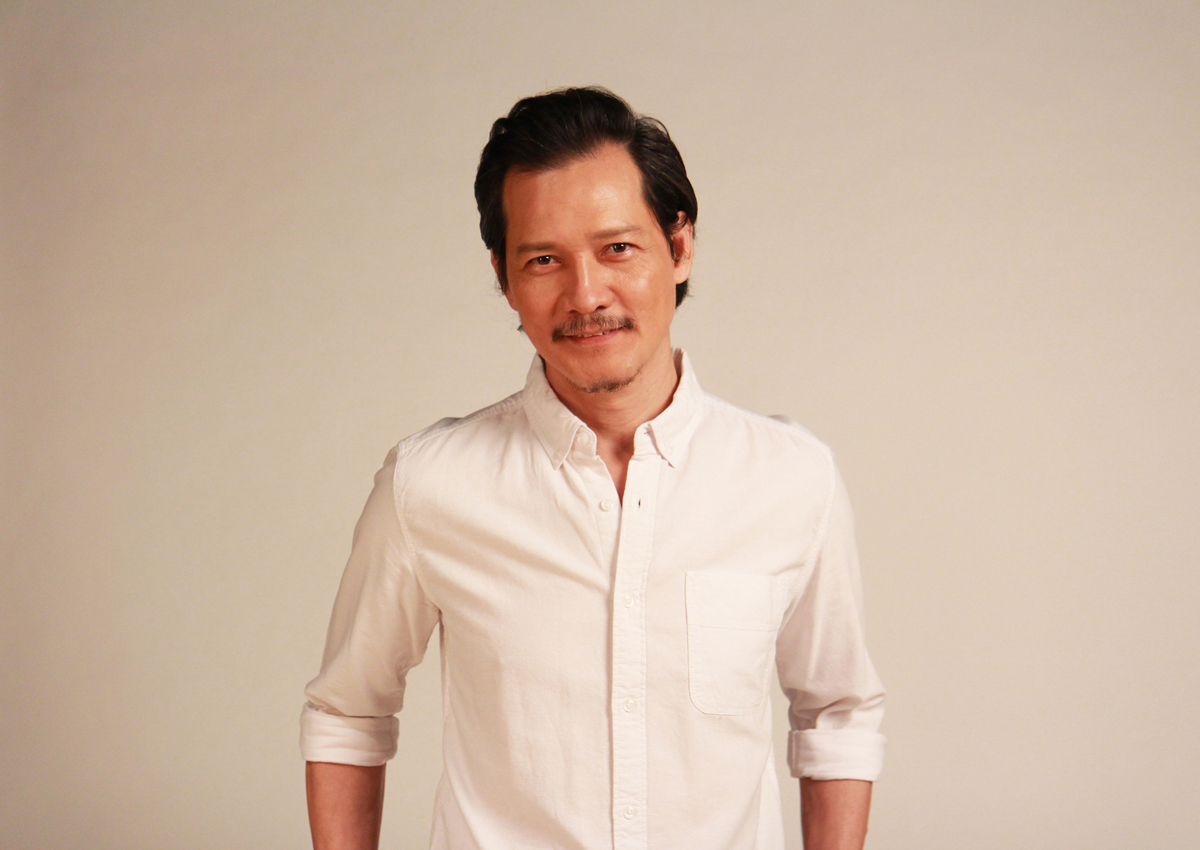
After disappearing from television screens for more than a decade, former Channel 8 actor Peter Yu is making a comeback in a drama series that airs in November.
Currently working full-time as a taxi driver, the 48-year-old will probably find the return to acting quite easy when he begins filming for the Channel 8 drama Hero later this month – he will be playing a character modelled on himself.
He says: “The role is a man who was once a popular actor, but who got into a lot of trouble and whose life fell apart after he got divorced.
“The show will have him pick up the pieces of his life and start over as a new guy,” he tells The Straits Times over the telephone in a mix of Mandarin and English.
Anyone familiar with Yu’s story will know that the description sounds almost exactly like what he has experienced.
A finalist in the local TV station’s talent hunt Star Search in 1990, he won a Top 10 Most Popular Artiste Award in 1997 at the height of his fame. The next year, he married fellow artist and host Quan Yi Fong, whom he met on the comedy- drama Happy Travel Agency (1998).
In 2008, he divorced her, fell into depression and became hooked on gambling. By 2011, he had reportedly run up debts of more than $100,000 after overspending on credit cards.
He got his act back together. A born-again Christian, he has been paying off his debts in regular instalments: “I will hopefully be completely debt-free by next year,” he says.
Yu, who has a 16-year-old daughter with Quan named Eleanor, also has a new family. He married a sales merchandiser in 2011 and the couple have a son aged four, with their second child due in August.
Hero’s executive producer Jasmine Woo approached him to return to TV acting after thinking about it for a year.
She watched him perform in the musical The Search For True Love last July, one of the handful of stage roles he accepted in the past two years, and believes that there is still room for him in TV.
“So I met him and talked about him making a TV comeback. As we talked, we saw that we could write a whole character based on his life,” she says of Yu’s role, which features prominently in the script of the upcoming drama.
“And I always believe in second chances. Everyone goes through some bad times in his life, but we should give him a helping hand if we can. I feel that his life story is very inspirational and that it would be great for TV.”
While details of the character have been exaggerated or modified from real life, Yu says he is “okay with that”.
“As long as this role can inspire viewers to live their lives to the fullest and know that they can pick themselves up no matter what kind of troubles they have, that’s all that matters to me.”
Does his involvement in Hero – which will also star Shaun Chen, Chen Hanwei and Jesseca Liu – signal a possible return to full-time acting on TV?
“I’m open to the idea. I don’t know what will happen – it’s all part of God’s plan and I’ll just see. I just know that I feel happy with my life now and that I’ll be back at the TV station as a changed person.”
This article was first published on May 12, 2016.
Get a copy of The Straits Times or go to straitstimes.com for more stories.
Image:
Publication Date:
Thursday, May 12, 2016 – 15:00
Send to mobile app:
Source:
Story Type:
Others


