Home Blog Page 3906

Female workers at Orchard Towers harass men to go inside beauty parlours

In order to lure male customers, some women working at beauty parlours in Orchard Towers have taken to pulling them inside their shops for business.

According to Shin Min Daily News, these women would approach men passing by and physically lure them into the parlours.

One woman, known only as Ms Tan, told the Chinese newspaper that her male friends were approached by the women after they were seen alone.

Ms Tan was with her boyfriend and five other friends at Orchard Towers for dinner last week. She said that the girls separated from the guys as they went to the restroom while the guys went ahead to get seats at the restaurant.

The 29-year-old said: “When the guys passed by a beauty parlour, one of the women held on to my friends’ hands and asked if they wanted a massage.

“My boyfriend and two male friends let go of her hand and the woman stopped pestering them after they saw my girl friends and I approaching,” she added.

Ms Tan described the woman as scantily clad in a low-cut top and short skirt and was wearing heavy make-up. She told Shin Min Daily News that the woman looked to be in her 20s.

After observing the women for a while, Ms Tan and her friends noticed that it wasn’t just one parlour which had women pestering potential male clients but other parlours also had women doing the same.

She said: “The women would go up to men who were passing by and pull their hands or hold them by their waists before bringing them into the shops.”

And it’s not just Ms Tan who is bothered by this scene. Men working in Orchard Towers also feel uncomfortable when they get harassed by the women.

One reader of Shin Min Daily News said that some of the men have lodged police reports against these scantily clad women, who may even wear bikinis sometimes to attract men.

He said that the women are quick to react upon knowing that the police are coming to conduct checks and would quickly go inside the shops to hide and turn off the lights.


Image: 
Category: 
Publication Date: 
Wednesday, May 18, 2016 – 21:35
Keywords: 
Send to mobile app: 
Source: 


Story Type: 
Rewritten Story

Source link

Alleged sampan thief arrested

The Police Coast Guard intercepted a sampan headed towards Malaysia at the sea off Lim Chu Kang on Tuesday night (May 17). 

Source link

Film about homeless 'black devil' shows other side of Singapore

CANNES – Robert De Niro famously gained 27 kilos (60 pounds) to play the boxer Jake LaMotta in “Raging Bull” while Leonardo DiCaprio slept in an animal carcass and ate raw bison liver in “The Revenant”.

But few actors have gone as far as to live on the streets to research their role.

That is what Singaporean director K. Rajagopal asked of the star of “A Yellow Bird”, his film which touches on some of the wealthy city-state’s most sensitive issues of race, migration and sex.

Rising television star Sivakumar Palakrishnan spent his weekends living rough on the streets of Singapore’s “Little India”, exploring a rarely seen side of one of Asia’s most ordered societies.

The delicately drawn arthouse movie, which premieres Wednesday at the Cannes film festival, follows an ethnic Indian man – or a “black devil” as one of the film’s Chinese characters calls him – trying to rebuild his life and family after a spell in prison.

“I made him go out and live and sleep in the streets because he doesn’t come from that side of the tracks,” director Rajagopal said.

“It was quite tough for him but he did it. I wanted a fresh response, for him to feel what it was really like to be homeless. That is why I like him so much as an actor, he’s very open and intense.”

The film, which is showing in the Critics’ Week section of the world’s top film festival, also touches on the “simmering tensions beneath the skin” of Singapore’s supposedly harmonious multiracial melting pot.

The struggling ex-con Siva has to sleep on the kitchen floor with his mother because she has rented out the bedroom of her tiny apartment to mainland Chinese migrants.

“This is not unusual,” the director said. “People rent rooms to foreigners to make money to pay the rent.

“It is very, very common, particularly among poor Indians. One of the great things about Singapore is that we are given a government-subsidised home, but 90 percent of us live in flats that are like pigeon-holes.”

It also touches on another taboo subject – interracial relationships – throwing Siva together with a young migrant Chinese mother (Huang Lu) who is forced into prostitution.

“It’s really unnatural to see an Indian and a Chinese person together like this in Singapore, especially with someone from China, especially because he is so dark-skinned. It doesn’t really happen.”

Rajagopal admitted that many may be shocked by his portrayal of his homeland.

“I was going for the underbelly, the marginal, because Singapore has a reputation for being modern and ordered. But there is this other side. It is a reality too.”

But perhaps the most sensitive subject the film deals with is the place of the country’s Indian minority of which Rajagopal is a part.

“I am seen as a foreigner in my own country. When I get into a tax office they ask me, ‘Where are you from?’ I was born here. But any Indian is not supposed to be Singaporean but foreign,” he said.

“It affects your whole personal emotional space. Both Indians and Chinese are of migrant stock, and yet we are not very accepting of the new influx. We say these new Chinese are not like the Singaporean Chinese. I wanted to reflect that, which is also now a global issue with migration.”

Rajagopal, 51, who has had a long career as actor and documentary maker, said “many people in Singapore will not agree with me on the whole racism thing. They will say it is not there. Even the minorities shy away” from the subject.

He said all Singaporeans take an oath at school to defend its multiethnic make-up. “We stand by racial harmony, it is a pledge we all take.”

But despite that there is racism, the director insisted. “It is not in your face, it is simmering under the skin.”

Image: 
Category: 
Publication Date: 
Wednesday, May 18, 2016 – 20:17
Send to mobile app: 
Source: 


Hermes ID: 
2 302 024
Hermes ID String: 
SP_BLACKDEVIL
Hermes Author: 
SPANAECH
Story Type: 
Others

Source link

Police took care to be sensitive to teen, coroner's inquiry hears

SINGAPORE – Be it in school or at the police station, the police had gone to great lengths to be sensitive to Benjamin Lim, making sure to be out of earshot whenever they discussed his case and using code words around him.
Despite these efforts, they…

Source link

Man arrested after allegedly stealing sampan to leave Singapore illegally

SINGAPORE – A 32-year-old man was caught on Tuesday (May 17) at the sea off Lim Chu Kang while attempting to leave Singapore unlawfully on a motorised sampan, police said.
At about 10.33pm on Tuesday, the Police Coast Guard (PCG) detected a sampan heading…

Source link

Use Singapore as gateway to Asia, PM Lee tells companies from Eurasia

SINGAPORE – Prime Minister Lee Hsien Loong invited companies from Eurasia to use Singapore as a gateway to Asia, as both sides established a platform for regular and broad-based exchanges.
Witnessing the signing of a Memorandum of Understanding (MOU) between…

Source link

Aerial displays, aircraft rides at RSAF Open House 2016

SINGAPORE – Visitors to this year’s Republic of Singapore Air Force (RSAF) Open House can watch aerial displays, hop on aircraft rides, and get up close and personal with the Air Force’s latest aircraft and weapon systems.
Held at Paya Lebar Air Base (PLAB)…

Source link

Suzuki denies cheating on fuel, emissions testing

TOKYO – Suzuki on Wednesday admitted to finding “discrepancies” in its fuel-economy and emissions testing, but the firm denied deliberately manipulating data to make cars seem more efficient.

The remarks from the Japanese small-car maker came in the wake of rival Mitsubishi Motors’ shock admission last month that it had cheated on fuel-efficiency tests for decades.

On Wednesday, Mitsubishi said its president Tetsuro Aikawa would resign over the scandal, which has left the company’s reputation in tatters.

Japan’s transport ministry has ordered all domestic automakers to probe their own compliance with government testing methods following Mitsubishi’s revelations that it manipulated fuel-economy data.

Major players Nissan, Toyota, Honda and Mazda have already denied any wrongdoing.

Suzuki joined that list Wednesday, although it admitted that it was not using testing methods required by the government.

“Any wrongdoing, such as manipulation of fuel efficiency data, were not found,” it said.

“Some discrepancies were found in the automobile emission and fuel-efficiency testing process” between procedures required by the government and what Suzuki did, the company statement added.

In a curious revelation, Suzuki admitted that windy conditions at its seaside proving ground forced it to perform some tests inside a lab instead of outdoors as the government requires, which may have skewed results.

Sixteen models and about two million cars were affected, but the problem did not extend to cars sold outside Japan, according to Suzuki, which has a major presence in India.

Suzuki said it has been using the improper testing since 2010.

The firm’s shares dived as investors took it as the latest bad news for a global auto industry shaken by scandals over deadly defects and emissions cheating.

Suzuki stock plunged as much as 15 percent in afternoon trading. It closed 9.4 percent lower at 2,613 yen (US$24).

The Suzuki news comes amid the Mitsubishi revelations and as Germany’s Volkswagen struggles to drive past a worldwide emissions cheating scandal.

Tokyo-based auto parts giant Takata has also been hit by lawsuits and regulatory probes over claims it hid deadly airbag flaws linked to at least 13 deaths and scores of injuries globally.

Suzuki’s 86-year-old chairman Osamu Suzuki, a descendant of the company’s founding family, visited the transport ministry Wednesday to discuss the issue and later apologised at a press briefing.

In a separate case, Seoul said this week it will fine Nissan for allegedly manipulating emissions data on a popular diesel sports utility vehicle sold in South Korea.

The news came as an embarrassment for Japan’s number two carmaker, but the company has so far not come under fire for emissions cheating in Japan or anywhere else.

The Suzuki admission did not appear as serious as Mitsubishi’s revelations.

“But even so, using a different testing method than the one ordered by the government is a problem,” Koji Endo, managing director at Advanced Research Japan, said earlier Wednesday.

Last week, Nissan threw an unexpected lifeline to Mitsubishi by offering to buy 34 percent of its shares, in a deal that would give Nissan effective control over the smaller firm.

The scandal – reported to cover almost every model sold in Japan since the early 1990s – also includes mini-cars produced by Mitsubishi for Nissan as part of a joint venture.

It was Nissan that first uncovered problems with the fuel economy data, but Mitsubishi has said Nissan had no part in the cheating.

Nissan’s top executive warned last week that he would kill the US$2.2 billion offer if the Mitsubishi scandal spreads beyond Japan.

Image: 
Category: 
Publication Date: 
Wednesday, May 18, 2016 – 19:21
Keywords: 
Send to mobile app: 
Source: 


Hermes ID: 
2 301 893
Hermes ID String: 
SP-SUZUKI
Hermes Author: 
SPANAECH
Story Type: 
Others

Source link

Indian Muslims angry over Yoga Day 'Om' chant proposal

NEW DELHI – Muslim groups on Wednesday slammed a directive from India’s Hindu nationalist government for participants in International Yoga Day to chant “Om”, citing religious bias.

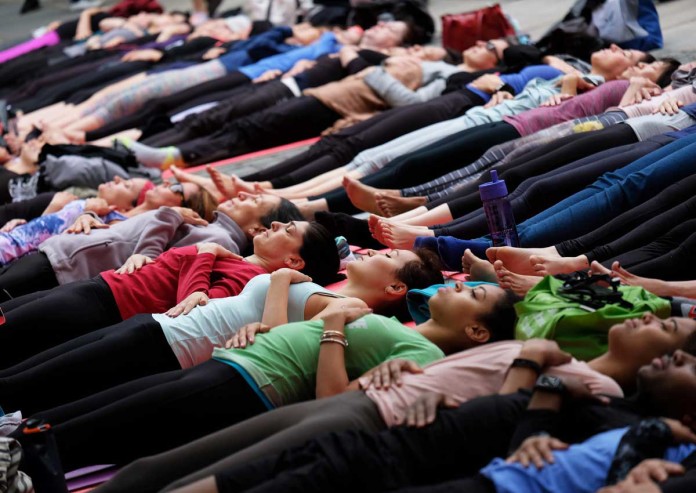
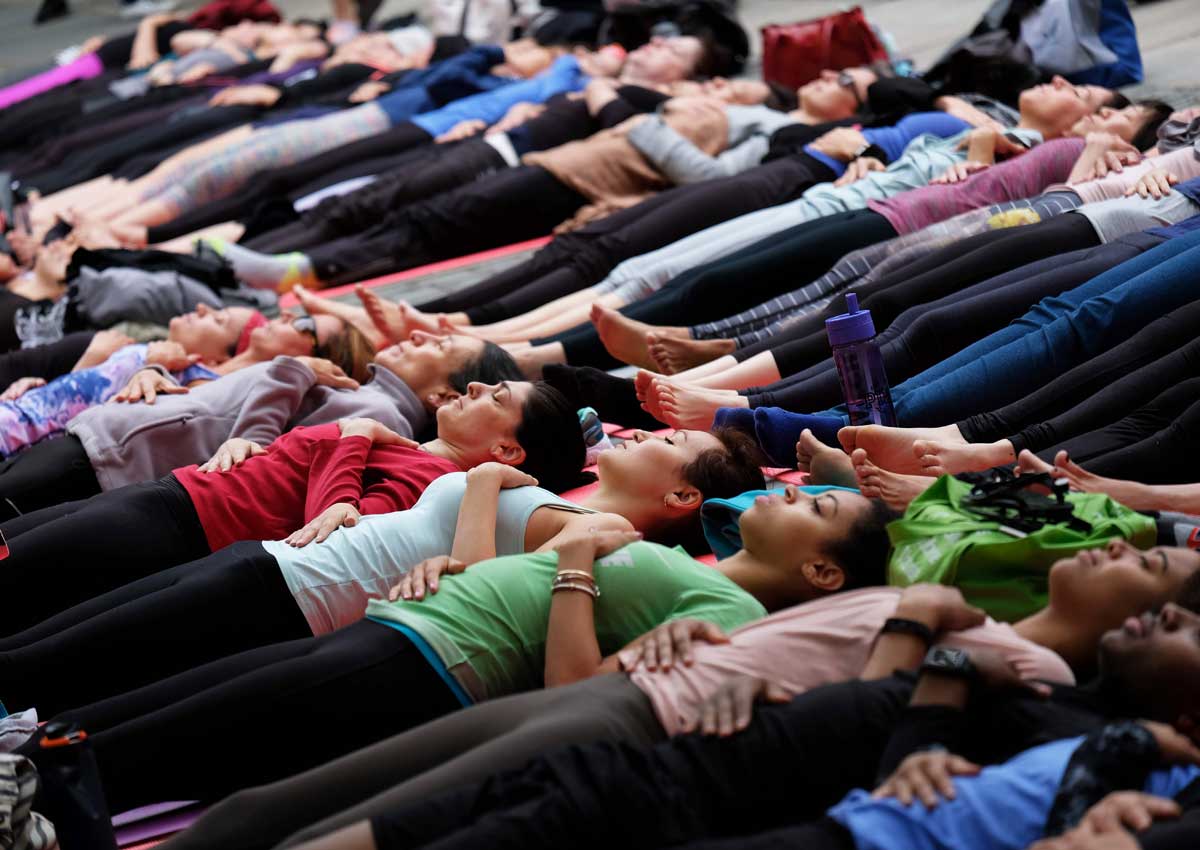
The mass outdoor yoga session, to be held in June for its second year, is an initiative spearheaded by Prime Minister Narendra Modi, who is seeking to reclaim the practice as an historic part of Indian culture.

“Yogic practise shall start with a prayer or prayerful mood to enhance benefits of the practise,” read a note issued by Ayush ministry, which works for the promotion of yoga, as shown by television networks.

The ministry said participants should chant the sacred sound “Om” and Hindu vedic hymns at the start and end of the 45-minute event on June 21.

Muslim groups reacted with anger, saying such chants were against their faith and accusing the ruling Bharatiya Janata Party of seeking to impose a hardline Hindu agenda.

“We are not against yoga but India is a secular country and the state has no religion,” Zafaryab Jilani, a member of the All India Muslim Personal Law Board told AFP.

“If they are imposing a Hindu religious practice on the rest of us, it is unconstitutional.” The government waded into a similar controversy last year after it made the surya namaskar pose (sun salutation) part of the event.

Muslim groups say certain yoga poses and chants have clear Hindu overtones and are against Islam.

“They are again and again trying to impose a Hindutva (“Hinduness”) agenda. This order should be cancelled immediately,” Khalid Rashid Firangi Mahali, a top Muslim cleric said.

The opposition also weighed in, accusing the government of seeking to impose a narrow vision on the ancient tradition, which commands huge global popularity.

“Yoga has achieved the status of an international art form and by imposing such conditions the government is killing its essence,” Manish Tewari, a leader of the main opposition Congress party said.

“People from different religions do it and the practitioner should decide what to chant.” Following the outcry, the Ayush ministry issued a clarification saying the directive was not compulsory.

Indian scholars believe yoga dates back 5,000 years, based on archaeological evidence of poses found inscribed on stones and references to Yogic teachings in the ancient Hindu scriptures of the Vedas.

In 2014 the United Nations accepted India’s proposal to declare June 21 as International Yoga Day, highlighting its health benefits.

Thousands gathered in dozens of cities around the world to celebrate the inaugural event last year, with UN Secretary-General Ban Ki-moon performing yoga at Times Square in New York.

Image: 
Category: 
Publication Date: 
Wednesday, May 18, 2016 – 19:20
Keywords: 
Send to mobile app: 
Source: 


Hermes ID: 
2 301 884
Hermes ID String: 
SP-OMTRAVERSY
Hermes Author: 
SPANAECH
Story Type: 
Others

Source link

Thailand shuts down overcrowded beach paradise Koh Tachai to save its beauty

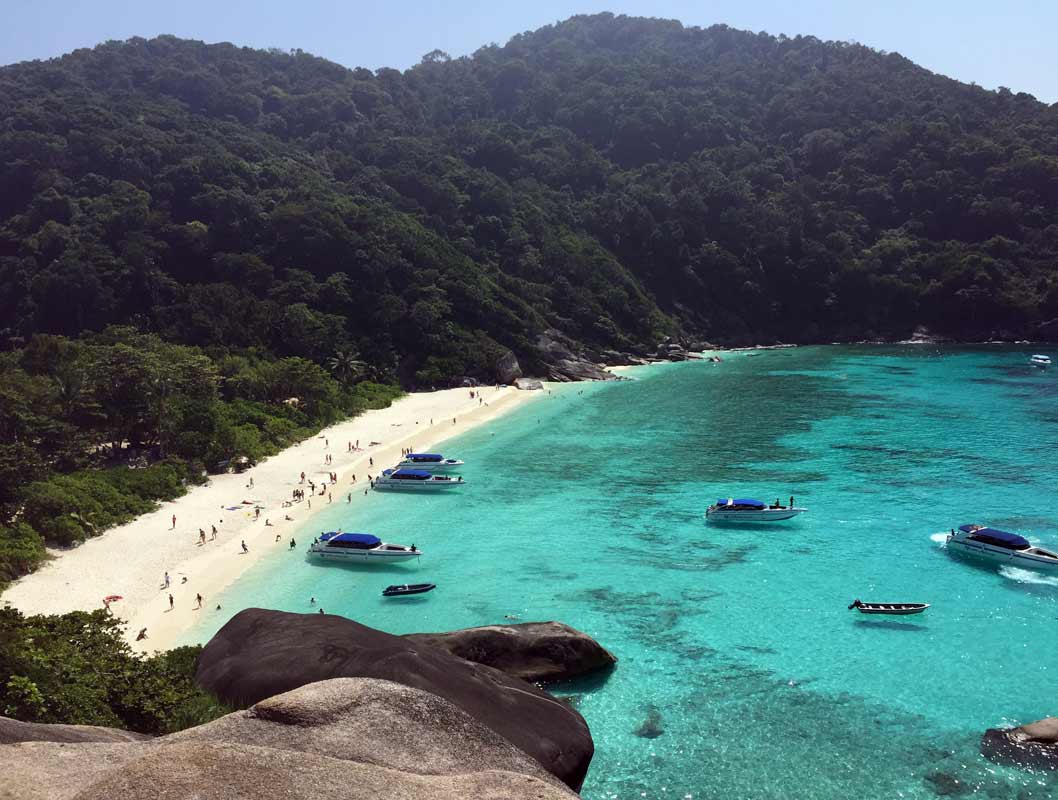
Once a secret beach paradise attracting only few privileged tropical seekers in the know, Koh Tachai island has become too popular for its own good.

The southern Thailand island, the main gem in the world-renowned Similan group of islands, will be closed to visitors indefinitely from this week.

Alarmed by the damage to the natural beauty of the island wrought by marauding hordes of tourists over the years, park authorities have ordered a shutdown to prevent a further environmental degradation, officials told the media.

“We have to close it to allow the rehabilitation of the environment both on the island and in the sea without being disturbed by tourism activities before the damage is beyond repair,” official Tunya Netithammakul told The Bangkok Post.

The island’s shoreline, beaches and coral reefs around it will be off-limits to all visitors.

Related: Thai committee wants 32 dive sites closed because of coral bleaching

More than 1,000 people on the beach

Almost all marine national parks in the kingdom will close to tourists from mid-May to mid-October because of the monsoon season. But Tachai will not reopen till the authorities are satisfied with its recovery.

In TripAdvisor travel booking website, the island is touted as the No.1 attraction in the Similan marine park. After its closure, two deep dive sites nearby will still remain open to visitors.

On the overcrowding on Tachai, Asst Prof Thon Thamrongnawasawat, deputy dean of the Faculty of Fisheries of Kasetsart University, who spoke at a recent fair organised by the Tourism Authority of Thailand, said: “In fact, Koh Tachai is preserved as a primitive zone, not a tourist site. A beach on the island can hold up to 70 people. But sometimes the number of tourists was well over 1,000 on the beach.”

Looks like it’s Tachai’s turn for a much needed R & R.

chenj@sph.com.sg

Image: 
Category: 
Publication Date: 
Wednesday, May 18, 2016 – 18:50
Send to mobile app: 
Source: 


Rotator Headline: 
Victim of tourism damage: Thailand shuts down beach paradise Koh Tachai to save its natural beauty
Rotator Image: 
Story Type: 
Rewritten Story

Source link