Home Blog Page 3866

Villages in ashes after deadly Indonesia volcano eruption

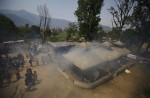
KARO, Indonesia – Indonesian rescuers searched for survivors in scorched villages and devastated farmlands Monday after a volcano erupted in clouds of searing ash and gas, killing seven and leaving others fighting life-threatening burns.

Witnesses have described sheer panic as waves of gas and fine rock were unleashed from Mount Sinabung on Sumatra island Saturday, consuming farmers trying to flee the slopes of the highly active volcano.

The fast-moving flows – reaching temperatures of up to 700 degrees Celsius (1,300 Fahrenheit) – incinerated homes and left livestock blackened and peeling.

Agustatius Sitepu, the head of the local military in Karo district where the volcano is situated, arrived to scenes of chaos as rescue crews raced to reach those left alive.

“The villagers who managed to survive were running around in panic, trying to save themselves,” he told AFP on Monday.

“There were only a few dozen. They were terrified. They were covered in ash.” The eruptions were so violent that townships as far away as 12 kilometres (seven miles) were covered in thick layers of ash, he added.

Villagers are trying to recover from Saturday’s eruption.

Abdi Putera, an orange farmer, was busy getting rid of the volcanic ash which covers his oranges, despite the government warning the area is still dangerous.

“If I don’t blow off the ashes, it will get thicker and thicker and will eventually damage my oranges. If that happens, I wouldn’t be able to sell my crops and make a living for my family,” Putera explained.

Those worst affected were all farming within the “red zone” – an area four kilometres from Sinabung declared off limits by authorities – when the volcano erupted.

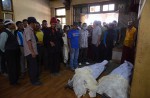
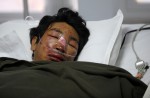
Six bodies were recovered Sunday, with three others rushed to hospital suffering horrific burns.

One of the victims succumbed to their wounds by nightfall, taking the official toll to seven, local disaster mitigation agency chief Nata Nail told AFP on Monday.

“Two more remain in the intensive care unit, suffering burns to 90 per cent of their body,” he said.

Footage showed their clothes blackened and hanging off charred limbs as rescue teams brought them by stretcher to hospital.

Nail said rescue teams were still finding survivors on Sunday during sweeps of homes and farms in Gamber village.

The Sinabung mountain has shown less activity on Monday, but officials from the Indonesian meteorology, climatology and geophysics agency known as the BMKG are continously monitoring the mountain’s activity.

“The Pyroclastic is very dangerous. Not only because of its flow and steam, but it also brings secondary dangers such as cold lava flow and flash floods,” said Arif, an officer with the BMKG.

Residents were ordered to evacuate Gamber in late 2014 due to the unacceptable risk from lava flows, dense ash and falling volcanic rock.

But some villagers grew tired of living in temporary shelters and began returning to their farms for economic reasons, despite repeated government warnings.

“We hope because of this disaster, those living near Sinabung, and tourists, will realise that Sinabung is still very dangerous,” Nail said.

Sinabung roared back to life in 2010 for the first time in 400 years. After another period of inactivity it erupted once more in 2013, and has remained highly active since.

Sixteen people died during a particularly fierce eruption in 2014, and Sinabung remains at the highest alert level.

Image: 
Category: 
Publication Date: 
Monday, May 23, 2016 – 21:19
Send to mobile app: 
Source: 


Story Type: 
Others

Source link

Motorcyclist who lost lower right leg in accident awarded about S$450,000 in damages

SINGAPORE – A High Court judge has ordered a taxi driver to pay damages amounting to about S$450,000 to a motorcyclist who lost part of his right leg in an accident in 2011.
Mr Kenneth Quek Yen Fei’s right foot was severely mangled and his right leg had to be…

Source link

Indian climber dies on Everest, 2 others missing

KATHMANDU – An Indian mountaineer has died on Mount Everest and two of his teammates are missing, expedition organisers said Monday, as the death toll from the Himalayan climbing season rose to five.

Subhash Pal reached the 8,848-metre (29,029-foot) summit on Saturday but collapsed while descending the Hillary Step ice wall and died the following day.

He was the third to die on Everest in recent days, after an Australian and a Dutch climber succumbed to altitude sickness. Another two climbers have died on other peaks.

“He died while the guides were bringing him down,” said Loben Sherpa of Trekking Camp Nepal, which organised the Indian team’s expedition to Mount Everest.

Expedition officials made contact with Pal and teammate Sunita Hazra on Sunday and helped them descend to Camp 3, but the whereabouts of the remaining two climbers are still unknown.

“Sunita has been rescued and brought to a hospital in Kathmandu for treatment. We still don’t have any update on the missing two,” said Sherpa.

Another Indian climber died after falling ill while descending from Mount Dhaulagiri in the Himalayas.

On Thursday a Nepali guide was killed when he slipped and fell 2,000 metres down Mount Lhotse, the world’s fourth-highest peak.

The number of deaths brings the dangers into focus but is not unusual – according to the authoritative Himalayan Database, 34 people died on Everest in the five years to 2013.

As climbers ascend above 8,000 metres, they enter the “death zone” – notorious for its difficult terrain and thin air – where oxygen supplies fall to dangerously low levels and make mountaineers susceptible to altitude sickness.

“There are mixed feelings with the recent deaths, frostbite and rescues as it brings into focus the danger of climbing Everest,” said veteran mountaineer and blogger Alan Arnette.

“However there is a sense of relief that in many ways, it was a ‘normal’ season.” A tourism official said more than 30 climbers had been rescued this season after suffering altitude sickness or frostbite.

More than 350 climbers including 140 foreigners have successfully scaled Everest this season after two consecutive years of deadly disasters that led to almost all attempts being abandoned.

Since the first summit of the world’s highest peak in 1953 more than 300 people have died on Everest and Lhotse, which share the same route until Camp 3 at 7,200 metres.

The last year in which no deaths were recorded on the mountain was 1977.

Despite the risks and recent disasters, Everest’s allure remains undimmed, with Nepal issuing 289 permits to foreigners for this year’s spring climbing season.

Hundreds of climbers fled Everest last year after an earthquake-triggered avalanche at base camp killed 18 people.

Only one climber reached the top in 2014 after an avalanche killed 16 Nepali guides that year.

Mountaineering is a major revenue-earner for impoverished Nepal. But last year’s earthquake, which killed almost 9,000 people nationwide, threatened the future of the Himalayan nation’s climbing and trekking industry.


Image: 
Category: 
Publication Date: 
Monday, May 23, 2016 – 20:47
Keywords: 
Send to mobile app: 
Source: 


Story Type: 
Others

Source link

Indian pilots grounded for mistaking road for runway

MUMBAI – An Indian airline has grounded two pilots for attempting to land their plane on a road which they mistook for a runway, the airline and reports said Monday.

The IndiGo flight from Ahmedabad in Gujarat state to Jaipur in Rajasthan was close to touching down until the pilots were alerted by a “too low terrain” warning in the cockpit, IndiGo said in a statement.

“The captain in command immediately took a precautionary measure and carried a go-around. The aircraft landed safely on subsequent approach,” added the statement.

The incident, the latest to highlight safety concerns in India’s rapidly expanding aviation sector, happened on February 27 but has only just come to light in Indian media.

The Hindustan Times quoted an aviation official as saying the plane was at an altitude of around 900 feet and 90 seconds away from landing on a road running parallel to the runway.

IndiGo said the pilots were made aware of their mistake by an enhanced ground proximity warning system, which alerts the cockpit if the plane is in danger of flying into the ground or hitting something.

“At no time was safety compromised. Both pilots have been taken off flight duty with immediate effect, pending investigation,” said the statement.

“The matter was duly reported to the (aviation regulator) Directorate General of Civil Aviation by IndiGo flight safety department,” IndiGo added.

IndiGo, famed for its no-frills approach and fixation with punctuality, commands almost 40 per cent of its home market, the biggest share of any airline. It is the country’s only consistently profitable airline.

The government wants to make air travel affordable for millions of its citizens but a number of safety incidents have led to concerns over the speed of growth.

Earlier this year an Air India plane with 160 passengers was forced to return to New Delhi almost 30 minutes into a Milan-bound flight after smoke was detected in the cabin.

In December a London-bound Air India flight with over 200 passengers returned to Mumbai after three hours in the air over a suspected rat sighting in the cabin.

That same month a technician working for Air India died after being sucked into a jet engine as the plane pushed back for take-off at Mumbai airport.

Image: 
Category: 
Publication Date: 
Monday, May 23, 2016 – 20:17
Keywords: 
Send to mobile app: 
Source: 


Story Type: 
Others

Source link

Taiwan indicts man over child's beheading

TAIPEI – Taiwanese prosecutors indicted a man Monday for murder over the public decapitation of a four year old girl, saying they would seek the death penalty for the “extremely cold-blooded” attack.

Wang Ching-yu, 33, is accused of overpowering the mother of the child near a metro station in central Taipei, and beheading the young girl with a kitchen knife.

The mother and a number of bystanders tried to intervene but were pushed away and unable to save the child, who police have identified only by the surname Liu.

Prosecutors at the Shihlin District Court in Taipei said that it was an “extremely cold-blooded” crime which had deeply shocked the generally peaceful island.

“It has caused indelible pain to her mother, who witnessed the cruelty,” prosecutors said in a statement at the close of their investigation, which took less than two months.

“The suspect has never repented… so we suggest the court sentence him to death,” they said, adding that capital punishment in this instance was important to maintain society’s faith in law and justice.

Taiwan resumed capital punishment in 2010 after a five-year hiatus. Executions are reserved for serious crimes such as aggravated murder.

Some politicians and rights groups have called for its abolition, but various opinion surveys show majority support for the death penalty.

After the March 28 decapitation, hundreds of Taiwanese, many dressed in black and wearing stickers reading “Death penalty is necessary”, called for Wang to be executed.

Wang was arrested at the scene of the crime and was subsequently taken into custody.

Prosecutors say that blood test show Wang was not under the influence of drugs at the time of the crime, nor had he displayed any signs of mental illness after the attack.

Police said the 33-year-old had previously been arrested for drug-related crimes. He was attacked by an angry mob while in custody.

Taiwan’s Apple Daily has reported that he was unemployed and living with his parents, and had previously been hospitalised with mental health issues.

The killing came less than a year after the throat of an eight-year-old girl was slit in her school restroom in Taipei. It sparked widespread public anger and fresh debate about capital punishment.

Image: 
Category: 
Publication Date: 
Monday, May 23, 2016 – 19:53
Send to mobile app: 
Source: 


Story Type: 
Others

Source link

Cost of tertiary education in Singapore predicted to surge by 2030 – study

STUDENTS interested in pursuing tertiary education in Singapore should be prepared to pay higher fees over the next few years, said a study by the Economist Intelligence Unit (EIU).

According to the study, which was released on Sunday, a four-year degree in the Southeast Asian city-state is projected to cost 70.2 percent of an individual’s average yearly income by 2030.

Getting a degree there already costs a pretty penny, as last year it was estimated to cost 53.1 percent of an average annual salary.

A local undergraduate starting their degree this academic year at the National University of Singapore’s (NUS) faculty of arts and social sciences will have to pay SG$8,050 (US$5,834) per year – an increase from SG$7,950 (US$5,762) last year, reported the Straits Times.

In 2015, Singapore was ranked 11th out of 25 countries in terms of education affordability.

Singapore’s public education expenditure is also expected to decline, mainly due to low birth rates and an aging population.

The study forecasted that Singapore’s labor force will see more science, technology, engineering and mathematics (STEM) graduates joining it, with a slight increase to 0.4 percent in 2030 from last year’s 0.3 percent.

The report’s editor, Chris Clague, said the rise in STEM graduates could be worrying, as it might lead to a skills mismatch.

However, he clarified that it would depend on the country’s priorities at the time and if its job market required those with STEM skills, adding that the knowledge and skills gained from studying in STEM fields are used in more occupations than originally thought, including finance, and sales and marketing.

The study, entitled “Yidan Prize Forecast: Education to 2030”, was commissioned by the Yidan Prize Foundation, a global education foundation set up by Chinese internet entrepreneur Charles Chen Yidan.

The study, which was carried out from January to March, analyzed future trends in education across 25 economies, including Hong Kong, the United States, Germany, and Japan.

It focused on five indicators: public expenditure on education; youth unemployment rates; affordability of education; number of graduates in the STEM fields; and Internet access in schools.

Out of the 25 countries surveyed, Singapore ranked in the lower half for government investment in education (24th) and the number of STEM graduates it produces (20th), while in terms of tertiary education affordability, it ranked 13th. The country is expected to have low youth unemployment rates (6th) and have among the best internet access for schools (4th).

Main image via Flickr

The post Cost of tertiary education in Singapore predicted to surge by 2030 – study appeared first on Asian Correspondent.

Source link

Football: Van Gaal, lawyer seen at Man U training ground as reports of sacking gather strength

Louis van Gaal has been sacked as manager of Manchester United, several British media outlets reported on Monday, amid speculation he will be replaced by Jose Mourinho.

Both van Gaal and leading employment lawyer Paul Gilroy were seen entering United’s Carrington training ground on Monday.

Gilroy’s clients have included David Moyes, whose sacking as United manager paved the way for van Gaal’s appointment.

There has been no official confirmation from United, 20-times English champions, about the position of van Gaal, who still has a season remaining on his three-year contract.

But James Ducker, the northern football correspondent of Britain’s Daily Telegraph newspaper, tweeted: “Paul Gilroy QC finalising Van Gaal’s severance package now… £5m (S$9.9 million) pay off. Expect an announcement lunchtime.”

British media have been awash with reports of van Gaal’s demise, after a leak from an unknown source spread as Manchester United lifted the FA Cup on Saturday.

The Dutchman cryptically commented, “It’s over” as he left the squad’s Cup final hotel on Sunday, but it was not clear whether he was referring to his tenure or United’s season.

Image: 
Category: 
Publication Date: 
Monday, May 23, 2016 – 19:27
Send to mobile app: 
Source: 


Story Type: 
Others

Source link

Koh Tao murders: Lawyers appeal against death sentences

BANGKOK – Lawyers filed an appeal on Monday against the conviction of two Myanmar migrant workers sentenced to death in Thailand for the 2014 murder of two British backpackers on a holiday island, another twist in a case mired in controversy and dispute.

The bodies of backpackers Hannah Witheridge and David Miller were found on a beach on Koh Tao island in September 2014. Police said Witheridge, 23, had been raped and bludgeoned to death and Miller, 24, had suffered blows to his head.

A court sentenced Myanmar migrant workers Zaw Lin and Win Zaw Htun to death after convicting them of the crime on Dec. 24 last year.

The 198-page appeal says that DNA evidence used in the case was inadmissible and had not been collected, tested, analysed or reported in accordance with internationally accepted standards, representatives of the two men said in a statement on Monday.

The appeal also states that the questioning and charging of the migrant workers was unlawful because it was done without lawyers or trusted persons present, according to the statement. Confessions, which the two later retracted, were extracted through torture or abuse, it said.

The Thai police have denied mishandling the evidence or that confessions were extracted under duress.

The mothers of the two Myanmar men accompanied the lawyers to court on Monday after visiting their sons on death row in a prison near Bangkok at the weekend, the statement said.

“We have submitted this to the appeal court so they can understand more, so they can see the importance on how death sentence decision needs to be perfectly clear,” Nakhon Chompuchat, the defence team’s head lawyer, told Reuters.

“We don’t have new evidence, we are basing this on evidence that was presented earlier,” he said.

The court would likely rule on the appeal in 2017, he said.

Thai police drew widespread domestic and international criticism for their handling of the case and the evidence. Protests erupted in neighbouring Myanmar after the verdict, with many people there believing the two workers were scapegoats.

Image: 
Category: 
Publication Date: 
Monday, May 23, 2016 – 19:08
Keywords: 
Send to mobile app: 
Source: 


Story Type: 
Others

Source link

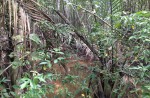
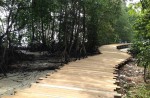
Rare animals and plants in Pulau Ubin you won't get to see in Singapore

The next time you visit Pulau Ubin, take a closer peek at your surroundings, as it might reveal treasures of nature that are more unique and interesting than a cursory glance of the coastal and old kampong charms of the island.

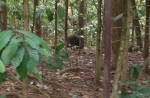
You might have spotted wild boars foraging for food near bicycles parked by visitors, aquatic flowers blooming in ponds and big spiders trapping their victims in gossamer webs.

But do you know that the island off the Changi coast is is home to more than 720 native plant species and over 300 species of animals? What makes Pulau Ubin more special is that some of these species are found only on the island and not on mainland Singapore.

If you’re thinking of taking a boat trip to the island again, do look out for these fascinating animals, insects and plants that have been clinging on for survival on the most endangered list. Bring along a pair of binoculars and marvel at close range.

Ashy Roundleaf Bat (Hipposideros cineraceus)
Two colonies of this critically endangered bats have been made abandoned buildings in Pulau Ubin their homes. Although found in South Asia and Southeast Asia, it has never been spotted on the mainland.

Lesser False Vampire (Megaderma spasma)
In Singapore, this bat is found only on Pulau Ubin and Pulau Tekong. Recently, Ubin has become popular with this species as several colonies have been found occupying disused structures. It feeds primarily on insects. No, it does not go after your blood.

Oriental Small-clawed Otter (Aonyx cinerea)
Nine sightings of this otter on Pulau Ubin have been recorded over the past 16 years. No recent sightings on the mainland.

Dwarf Crow (Euploea tulliolus ledereri)
Believed to be extinct in Singapore but rediscovered on Pulau Ubin in 2002, this butterfly flutters quite lazily, usually drawn to the hairy Indian Heliotrope plant (Heliotropium indicum).

Common Jay (Graphium doson evemonides)
Last spotted on the mainland in 2006, it was found again on Pulau Ubin in 2005. It is constantly on the move, flitting from one flower to another to feed on nectar.

Greater mouse-deer (Tragulus napu)
Thought to be extinct on the mainland, there is a sizable population on Ubin. It inhabits forested areas, and emerges at night to forage for fallen fruits, leaves, grasses and aquatic plants.

Rare trees and orchids

Collared fig (Ficus crassiramea)
This critically endangered tree can be found in Pulau Tekong and Pulau Ubin only. There are a few specimens of this ‘killer’ tree on Ubin, including one acknowledged officially as a Heritage Tree near Ketam Mountain Bike Park. The ‘strangling fig’ grows from a seed left by animals like birds at the top of a tree. From here, it fans out its roots downwards till it encircles the host tree’s trunk. In many cases, the host tree is finally “strangled” to death after many years.

Eye of the Crocodile (Bruguiera hainesii)
Critically endangered, it is one of the rarest mangrove species in the world with only about 200 mature trees left. Eleven including two on Ubin are found in Singapore. One tree was found in the southern coast of Ubin, while another was discovered on Noordin Beach in 2005. National Parks (NParks) has started a programme to collect and plant young seedlings to increase the population.

Ficus stricta
Another rare species of the strangling fig, it was listed as native to Singapore only in 2012, after the first specimen was discovered in Changi. It is only known to thrive in Changi and Pulau Ubin. In the 19th century, British engineer and artist John Turnbull Thomson produced a drawing of a tree in 1850, which is thought to be the same one found near the mouth of Sungei Pulau Ubin, in 2002. Listed as a Heritage Tree, it is believed to be more than 160 years old. It bears fruit only after intervals of more than six years. Oriental Pied Hornbills and Green Imperial Pigeons have been spotted feeding on the figs.

Hybrid stilt mangrove-happy face (Rhizophora X lamarckii)
In 2011, an NParks staff chanced upon this naturally-occurring mangrove hybrid of of the Rhizophora apiculata and Rhizophora stylosa, creating a new record here. So far, five trees have been found at the Sungei Jelutong and Jalan Noordin mangrove.

Marsh Pulai (Alstonia pnuematophora)
It stands out from other Pulai trees because of its ‘breathing’ roots. Found mainly in the central forests on the mainland, a few trees flourish on Pulau Ubin.

Jamba (Neuwiedia veratrifolia)
Found in lowland forests, this critically endangered orchid produces long clusters of yellow flowers. Grown on soil, the Jamba will see its population multiply as plantlets at one site have been transplanted to two other areas on Ubin.

Pterospermum diversifolium
This tree species was first collected by Henry Ridley, former director of the Singapore Botanic Gardens. It was thought to be extinct, but was found in Pulau Ubin in 2013. Currently, fewer than 50 mature trees are seen in Singapore.

Sheath-covered Spathe Robiquetia (Robiquetia spathulata)
This critically endangered orchid was recorded only once in Singapore by Henry Ridley, who collected it near the Botanic Gardens. It was only in 2006 that a single plant was rediscovered in Pulau Ubin. Through tissue culture, the species has been successfully propagated and reintroduced to other parts of Pulau Ubin, as well as mainland Singapore.

Thrixspermum amplexicaule
You would be lucky to catch a glimpse of this rare pale lilac orchid as its blooms last for only a day. The semi-aquatic orchid was found at one site on Ubin, but it has been successfully propagated and reintroduced to other sites on the island since 2010. Still regarded as critically endangered.

Utania nervosa
Discovered at Ubin’s Chek Jawa in 1997, this small tree was named as a new species called Utania racemosa in 2014. A common tree on Pulau Ubin and Pulau Tekong, it is also found in south-east Johor.

It has large, leathery leaves shading clusters of white flowers with very short stalks.

chenj@sph.com.sg

Image: 
Publication Date: 
Monday, May 23, 2016 – 18:59
Send to mobile app: 
Source: 


Rotator Image: 
Story Type: 
Others

Source link

Football: Manchester United to make statement on Van Gaal

LONDON – Manchester United will make an announcement about the future of manager Louis van Gaal at 1200 GMT (8pm Singapore time) on Monday amid British media reports that the Dutchman has been sacked.

Speculation had been rife since United’s victory in the FA Cup final on Saturday that Van Gaal would be fired by the Premier League club and replaced by Portuguese Jose Mourinho.

Image: 
Category: 
Publication Date: 
Monday, May 23, 2016 – 18:37
Send to mobile app: 
Source: 


Story Type: 
Others

Source link