Home Blog Page 3823

'There have been near-misses' at Australian accident site of car crash involving Singaporeans: Journalist

Five Singaporeans travelling in a grey Nissan Qashqai were involved in a car accident on Tuesday in the Australian town of Laharum, Victoria.

The crash left two of them critically injured.

The town, which is about 300km from Melbourne, is close to the Grampians National Park, a popular tourist destination.

The sport utility vehicle (SUV) was travelling near the intersection of Wonwondah-Dadswell Bridge Road and Northern Grampians Road around 4.20pm (2.20pm Singapore time) when it collided with another car, a Victoria Police spokesman told The New Paper yesterday.

Three women in the back seat of the SUV, all aged 23, were injured, an Ambulance Victoria spokesman told the Australian media.

Two were critically injured – one had head and leg injuries, while the other had head, chest and spinal injuries, and had to have a blood transfusion on the way to the hospital.

Both women were flown by air ambulance to different hospitals in Melbourne.

The third woman had neck and back injuries and was taken to a local hospital in stable condition.

The 24-year-old male driver and the 23-year-old woman in the front passenger seat had minor injuries.The driver of the other car, a 24-year-old Australian woman, was not injured.

The Singaporean driver was charged with two counts of dangerous driving causing serious injury and two counts of negligent driving causing serious injury.

SERIOUS CONDITION

The Victoria Police spokesman said that each set of the different charges were for each of the two women who were critically injured.

Yesterday, both women were still in serious condition.

The driver is expected to appear at the Horsham Magistrates’ Court on Aug 24 and is out on bail.

The Ministry of Foreign Affairs said it was aware of the accident, and was in contact with the Singaporeans and their families.

The Singapore High Commission in Canberra also sent officers to Melbourne to provide consular assistance.

Ms Carly Werner, 28, senior journalist at The Wimmera Mail-Times, which covers the Laharum area, told TNP yesterday that residents in the area said the intersection was dangerous and had wanted the authorities to install more stop signs or rumble strips.

“Most said that they had many near-misses at the intersection because some vehicles were travelling too fast,” she said.

Four of the five Singaporeans are believed to be undergrads from the National University of Singapore (NUS) and were members of NUS’ Climbing Club.

A friend of one of the critically injured women told TNP she had graduated from NUS this year.

The woman’s Facebook account showed a photo posted on Monday of her and three other people at a lookout point in Grampians National Park.

She also posted a video of herself scaling a rock wall in the park.

The friend said the woman had gone for two operations since the accident – one on Wednesday and another yesterday.

After Wednesday’s operation, she was in stable condition but was still unconscious and in the intensive care unit, the friend added.


This article was first published on May 28, 2016.
Get The New Paper for more stories.

Image: 
Category: 
Publication Date: 
Saturday, May 28, 2016 – 21:00
Send to mobile app: 
Source: 


Rotator Headline: 
Australian car crash site that left 2 Singaporeans critically injured was dangerous
Rotator Image: 
Story Type: 
Others

Source link

Plans by certain groups to claim Sabah a 'non-issue', says Malaysian PM Najib

LAHAD DATU – Purported plans by certain groups to reclaim Sabah through the defunct Sulu Sultanate are a non-issue as the state is recognised internationally as part of Malaysia, said Malaysian Prime Minister Najib Razak on Saturday (May 28).

“It is a non-issue,” Datuk Seri Najib said when asked about the statement by Philippines president elect Rodrigo Durterte of his plans to pursue the Sabah claim for the heirs of the sultanate, The Star reported.

Mr Najib said Sabah’s independence through Malaysia came as a result of the Cobbold Commission’s findings and the state has been internationally recognised as a part of the country by the United Nations since 1963.

“As such no groups can make any claim on Sabah. We will defend every inch of Sabah’s sovereignty,” he said after a groundbreaking ceremony for the new Forward Helicopter Base at the Lahad Datu airport here on Saturday.

He added that Chief Minister Datuk Musa Aman has made the state’s stand clear on the issue.

On Friday, Musa said that Sabah was with Malaysia and had chosen to be with it.

“We will continue to be part of this sovereign nation,” Mr Musa said, adding that Sabah had never recognised any claims over it by the Philippines or any quarters within the state.

Image: 
Category: 
Publication Date: 
Saturday, May 28, 2016 – 15:07
Keywords: 
Send to mobile app: 
Source: 


Story Type: 
Others

Source link

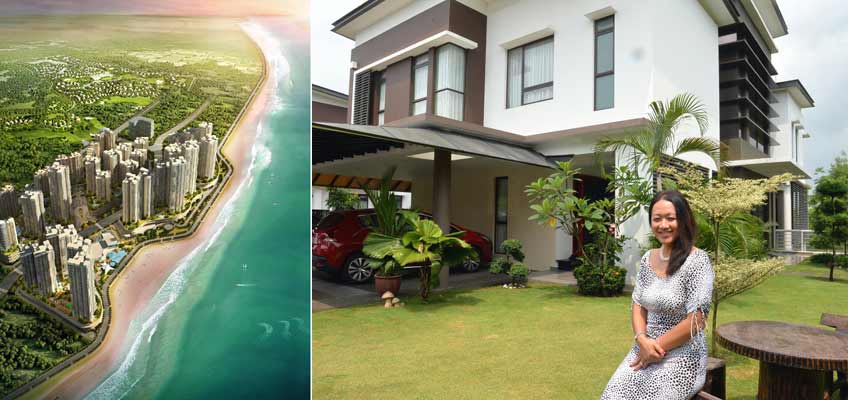
About 5,000 Singaporean families have set up home in Johor

According to a 2014 estimate by the Johor-Singapore Community Care Association, about 5,000 Singaporean families have set up home across the Causeway.

Some are retirees, such as 68-year-old Amy Tan, who moved in 2014 after her husband retired. Others, such as Mr Ang Khartono Jamil Hanmin, 35, who works in events project management, still work in Singapore, but have chosen to live in Johor Baru and commute between the two cities daily. 

Mr Ang says one could buy a terrace house in Johor Baru for the price of a three-room HDB flat in Singapore.

Cost of living was also the main reason behind Ms Noraini Mokhtar’s move. The 47-year-old decided to become a stay-home mum five years ago. Bringing up six children on one income, she and her husband decided that living in Johor Baru would be more viable.

Cheaper cars are another draw. A BMW 320i Sedan Sport retails at $193,800 (after $5,000 CEVS rebate) in Singapore. Its equivalent costs RM231,800 (S$78,270) in Malaysia – about 60 per cent cheaper.

A 2.4-litre Honda Odyssey EXV costs $158,999 in Singapore and RM248,288 in Malaysia – almost half the price. 

Singaporeans who take up the Malaysia My Second Home (MM2H) Programme are allowed to import one car into Malaysia or buy a locally made car with duty and sales tax exemptions. 

In addition to the already substantial differences in car prices, these tax exemptions mean even bigger savings.

Moreover, when one buys a car in Malaysia, one can keep it for as long as one wishes, unlike in Singapore, where the car’s certificate of entitlement (COE) has to be renewed every 10 years.

Cars are cheaper to maintain as well. The road tax in Johor Baru is RM200 a year for a 1.8-litre car, compared to S$929 in Singapore. Insurance premium for the same car is less than RM2,000 a year – before no-claim discount.

The pump price for 97-octane petrol is RM2.05 a litre, which works out to be about S$0.70 – less than half the price of the lowest- grade fuel in Singapore.

Read also: Johor Sultan: S’poreans will live in Johor and work in S’pore

But there is a big catch. While cars are cheaper in Malaysia, Singaporeans are not allowed to use or keep any foreign-registered vehicle in Singapore. This is a measure by the Land Transport Authority to control the car population in Singapore.

It also plugs the loophole for anyone attempting to bypass Singapore’s COE and other vehicular taxes by buying and registering a car in Malaysia and using it in Singapore.

For those who live in Johor Baru and need to return to Singapore frequently, this is a big consideration. 

But Mrs Tan says a Land Transport Authority (LTA) officer told her over the telephone that Singaporeans living or working in Johor Baru can apply for a limited exemption to this rule. This means they can drive Malaysian-registered vehicles to Singapore for an unspecified number of days a year. The LTA would not comment on this when asked.

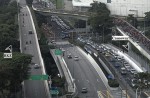
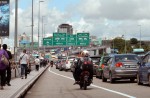
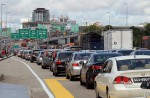
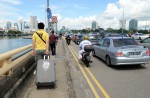
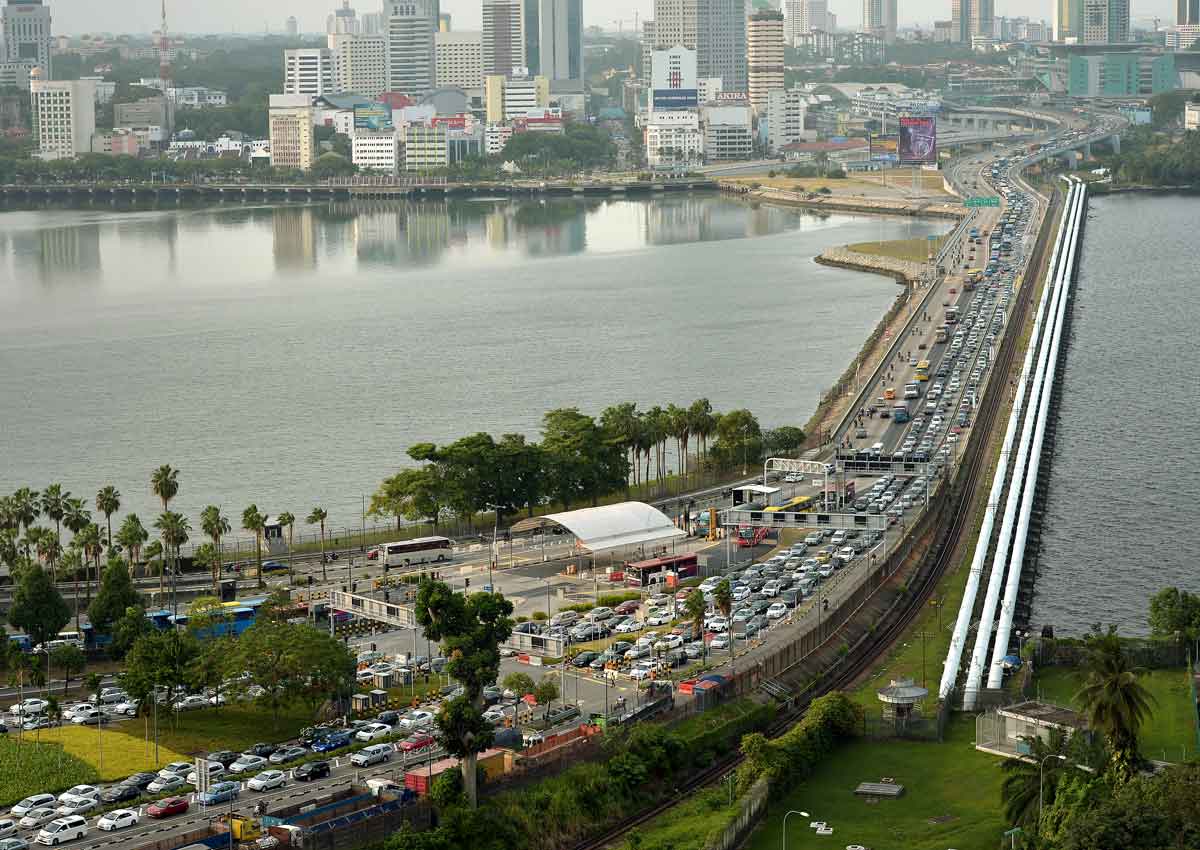
Whether it is with a Malaysian or a Singapore-registered car, commuting between the two cities may well be the most challenging aspect of living in Johor Baru.

Mrs Tan and her husband used to shuttle between the two cities a few times a week, but started cutting back on unnecessary trips after the vehicle entry permit rates were raised in August 2014.

About a year ago, the couple traded their Singapore-registered car for a Malaysia-registered vehicle under the MM2H scheme. They now take the train across the Causeway about once a week.

Previously, they would leave home at about 6am. Their drive to Singapore took about an hour on average.

It is the same for Ms Noraini. Her children attend school in Singapore and she does the school run on most days. When she first moved to Johor Baru, she would leave home at about 6am and reach her daughter’s school at 7am.

But she has observed that the Johor Baru-Singapore traffic volume has increased in recent months.

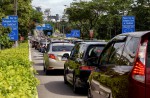
“Since early last year, I have had to leave home earlier, at about 4.45am, to beat the jam. On Mondays when the traffic is heavier, I must reach the Checkpoint before 5.30am to avoid being stuck in a two-hour jam,” she says.

She adds that once, she set off at 4.45am, but reached her destination at 8am – a one-way commute of more than three hours.

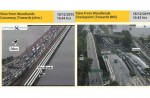
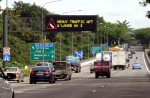
She relies on transport apps and webcams from sites such as onemotoring.com, causewayjam.com and jalanow.com to monitor the traffic situation to help her decide what time to leave home and whether to take the Causeway or the Second Link.

After taking her children to school, she runs errands, visits friends or goes to the library before picking them up to drive home at about 3pm. The trip back to Johor Baru is relatively smooth and she is home in about 30 minutes.

Race driver Denis Lian, 44, moved to Johor Baru in 2008 and drove to work in Singapore until 2013.

“I would leave home at 8.45am and be at the office by 9.30am. It was a very convenient arrangement,” he recalls. “You only had to be aware of public holidays or school holidays, then you would plan to leave at least an hour earlier.”

After work, he would get to the Second Link by about 5pm. It usually took him 20 minutes to clear immigration and customs. He stayed back to have dinner with friends on Fridays, when the jam is usually bad. During school holidays or public holidays, the journey to Johor Baru can take two hours or more. 

Read also: Wise to buy Malaysian property now?

Like Ms Noraini, he has also noticed that the traffic seems to have slowed considerably over the years.

Mr Ang commutes daily between Johor Baru and Singapore via the Second Link. He typically spends between 30 minutes and an hour waiting in the immigration queue. He drops his wife off at the office and his one-year-old daughter at her caregiver’s place before going to work. 

He and his family drive back to Johor Baru after 8pm. The return trip at that time usually takes about an hour.

Going by these examples, it would seem that Singaporeans living in Johor Baru have to put up with commutes of more than two hours regularly if not daily. The return trip takes about an hour on average. So they can end up spending three hours on the road a day.

Those who have chosen to live in Johor say it is par for the course, though.

Mr Ang says with a shrug: “If I were in, say, Australia and I lived in the suburbs and worked in the city, my daily commute would probably take at least an hour too.”

Mrs Tan adds: “The travelling time is something that Singaporeans have to accept as part of living in Johor Baru.”

Read also: S’porean students drawn to Johor’s EduCity

•The writer contributes to Torque, a motoring monthly published by SPH Magazines.


This article was first published on May 28, 2016.
Get a copy of The Straits Times or go to straitstimes.com for more stories.
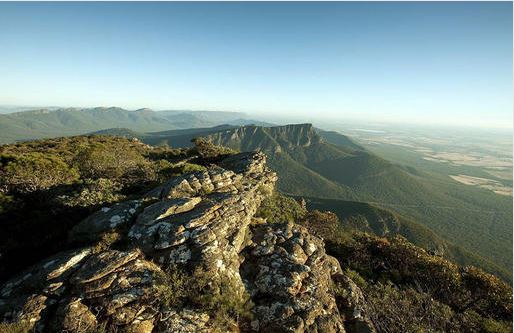

Image: 
Publication Date: 
Saturday, May 28, 2016 – 19:45
Keywords: 
Send to mobile app: 
Source: 


Rotator Headline: 
About 5,000 Singaporean families have set up home in Johor to enjoy lower cost of living
Rotator Image: 
Story Type: 
Others

Source link

A bridge too far

According to a 2014 estimate by the Johor-Singapore Community Care Association, about 5,000 Singaporean families have set up home across the Causeway.

Some are retirees, such as 68-year-old Amy Tan, who moved in 2014 after her husband retired. Others, such as Mr Ang Khartono Jamil Hanmin, 35, who works in events project management, still work in Singapore, but have chosen to live in Johor Baru and commute between the two cities daily. 

Mr Ang says one could buy a terrace house in Johor Baru for the price of a three-room HDB flat in Singapore.

Cost of living was also the main reason behind Ms Noraini Mokhtar’s move. The 47-year-old decided to become a stay-home mum five years ago. Bringing up six children on one income, she and her husband decided that living in Johor Baru would be more viable.

Cheaper cars are another draw. A BMW 320i Sedan Sport retails at $193,800 (after $5,000 CEVS rebate) in Singapore. Its equivalent costs RM231,800 (S$78,270) in Malaysia – about 60 per cent cheaper.

A 2.4-litre Honda Odyssey EXV costs $158,999 in Singapore and RM248,288 in Malaysia – almost half the price. 

Singaporeans who take up the Malaysia My Second Home (MM2H) Programme are allowed to import one car into Malaysia or buy a locally made car with duty and sales tax exemptions. 

In addition to the already substantial differences in car prices, these tax exemptions mean even bigger savings.

Moreover, when one buys a car in Malaysia, one can keep it for as long as one wishes, unlike in Singapore, where the car’s certificate of entitlement (COE) has to be renewed every 10 years.

Cars are cheaper to maintain as well. The road tax in Johor Baru is RM200 a year for a 1.8-litre car, compared to S$929 in Singapore. Insurance premium for the same car is less than RM2,000 a year – before no-claim discount.

The pump price for 97-octane petrol is RM2.05 a litre, which works out to be about S$0.70 – less than half the price of the lowest- grade fuel in Singapore.

But there is a big catch. While cars are cheaper in Malaysia, Singaporeans are not allowed to use or keep any foreign-registered vehicle in Singapore. This is a measure by the Land Transport Authority to control the car population in Singapore.

It also plugs the loophole for anyone attempting to bypass Singapore’s COE and other vehicular taxes by buying and registering a car in Malaysia and using it in Singapore.

For those who live in Johor Baru and need to return to Singapore frequently, this is a big consideration. 

But Mrs Tan says a Land Transport Authority (LTA) officer told her over the telephone that Singaporeans living or working in Johor Baru can apply for a limited exemption to this rule. This means they can drive Malaysian-registered vehicles to Singapore for an unspecified number of days a year. The LTA would not comment on this when asked.

Whether it is with a Malaysian or a Singapore-registered car, commuting between the two cities may well be the most challenging aspect of living in Johor Baru.

Mrs Tan and her husband used to shuttle between the two cities a few times a week, but started cutting back on unnecessary trips after the vehicle entry permit rates were raised in August 2014.

About a year ago, the couple traded their Singapore-registered car for a Malaysia-registered vehicle under the MM2H scheme. They now take the train across the Causeway about once a week.

Previously, they would leave home at about 6am. Their drive to Singapore took about an hour on average.

It is the same for Ms Noraini. Her children attend school in Singapore and she does the school run on most days. When she first moved to Johor Baru, she would leave home at about 6am and reach her daughter’s school at 7am.

But she has observed that the Johor Baru-Singapore traffic volume has increased in recent months.

“Since early last year, I have had to leave home earlier, at about 4.45am, to beat the jam. On Mondays when the traffic is heavier, I must reach the Checkpoint before 5.30am to avoid being stuck in a two-hour jam,” she says.

She adds that once, she set off at 4.45am, but reached her destination at 8am – a one-way commute of more than three hours.

She relies on transport apps and webcams from sites such as onemotoring.com, causewayjam.com and jalanow.com to monitor the traffic situation to help her decide what time to leave home and whether to take the Causeway or the Second Link. After taking her children to school, she runs errands, visits friends or goes to the library before picking them up to drive home at about 3pm. The trip back to Johor Baru is relatively smooth and she is home in about 30 minutes.

Race driver Denis Lian, 44, moved to Johor Baru in 2008 and drove to work in Singapore until 2013.

“I would leave home at 8.45am and be at the office by 9.30am. It was a very convenient arrangement,” he recalls. “You only had to be aware of public holidays or school holidays, then you would plan to leave at least an hour earlier.”

After work, he would get to the Second Link by about 5pm. It usually took him 20 minutes to clear immigration and customs. He stayed back to have dinner with friends on Fridays, when the jam is usually bad. During school holidays or public holidays, the journey to Johor Baru can take two hours or more. 

Like Ms Noraini, he has also noticed that the traffic seems to have slowed considerably over the years.

Mr Ang commutes daily between Johor Baru and Singapore via the Second Link. He typically spends between 30 minutes and an hour waiting in the immigration queue. He drops his wife off at the office and his one-year-old daughter at her caregiver’s place before going to work. 

He and his family drive back to Johor Baru after 8pm. The return trip at that time usually takes about an hour.

Going by these examples, it would seem that Singaporeans living in Johor Baru have to put up with commutes of more than two hours regularly if not daily. The return trip takes about an hour on average. So they can end up spending three hours on the road a day.

Those who have chosen to live in Johor say it is par for the course, though.

Mr Ang says with a shrug: “If I were in, say, Australia and I lived in the suburbs and worked in the city, my daily commute would probably take at least an hour too.”

Mrs Tan adds: “The travelling time is something that Singaporeans have to accept as part of living in Johor Baru.”

•The writer contributes to Torque, a motoring monthly published by SPH Magazines.


This article was first published on May 28, 2016.
Get a copy of The Straits Times or go to straitstimes.com for more stories.
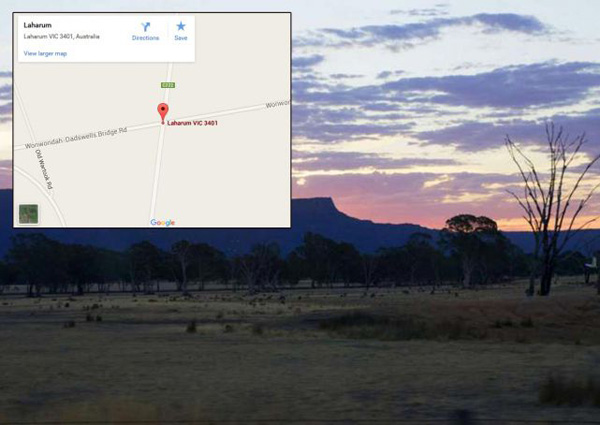
Image: 
Publication Date: 
Saturday, May 28, 2016 – 15:00
Keywords: 
Send to mobile app: 
Source: 


Story Type: 
Others

Source link

UberTaxi gets LTA nod to continue operating here

Uber’s cab booking service UberTaxi was given the green light to continue operating in Singapore by the Land Transport Authority (LTA) on Thursday.

It joins other third-party cab booking services that have successfully registered under a regulatory framework that took effect in September last year. Both GrabTaxi and Hailo were approved in December, while MoobiTaxi and Karhoo were approved in February.

Asked why Uber’s approval took longer, Uber Singapore general manager Warren Tseng said “paperwork and bureaucracy” required time. He said Uber had been working with LTA to meet the accreditation requirements.

“Data sharing is something we typically don’t do with anyone, including governments, so that was the compromise we made to be regulated,” he told The Straits Times.

The Third-Party Taxi Booking Service Providers framework was created with the aim of safeguarding commuters’ interests, with cab booking via mobile apps becoming more prevalent in recent years.

Such apps allow commuters to book taxis that are nearest to them, regardless of the operator.

Under the regulations, these apps must dispatch only licensed taxis, and specify all fares upfront.

Bidding and pre-tipping for taxis, such as previously available on the GrabTaxi app – and later removed – are also not allowed under the guidelines.

Taxi apps that were active in Singapore before September last year, such as UberTaxi, were allowed to continue operating, provided they sent in an application before Dec 1 last year.

Service providers that are found by LTA to have fallen short of the requirements would not be allowed to operate in Singapore. They also risk being fined or jailed if they are found operating without a certificate, which is valid for three years.


This article was first published on May 28, 2016.
Get a copy of The Straits Times or go to straitstimes.com for more stories.
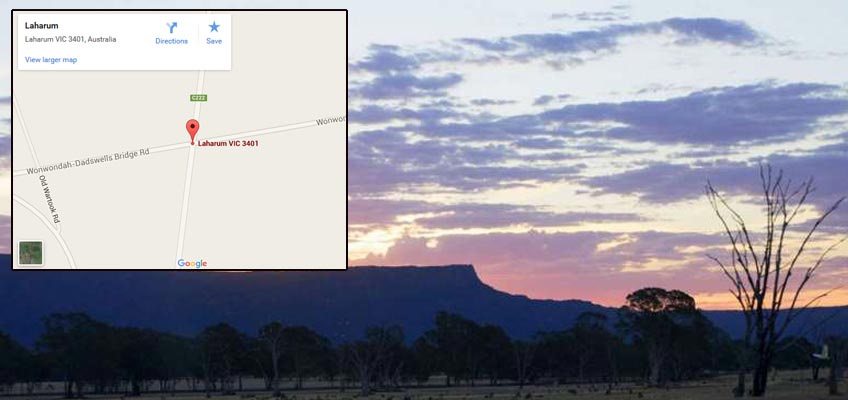
Image: 
Category: 
Blurb: 
Publication Date: 
Saturday, May 28, 2016 – 15:00
Keywords: 
Send to mobile app: 
Source: 


Story Type: 
Others

Source link

MOM, agencies to boost workplace safety following spate of construction deaths

Three construction workers died in workplace accidents between May 19 and 24, bringing the total number of deaths in the construction sector to 15, up from eight in the same period last year.

Source link

Thai man on mend after toilet encounter with penis-biting python

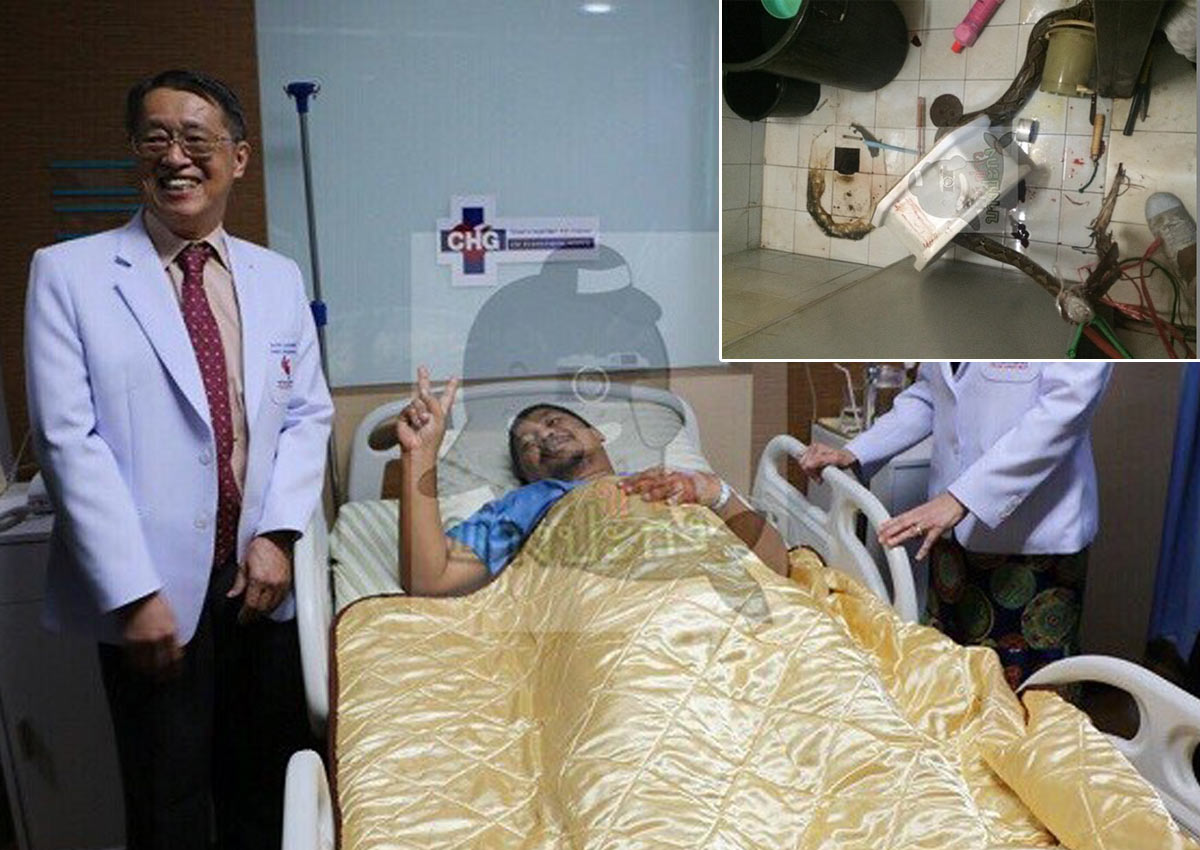
Bangkok – A Thai man who fought off a three-metre (10-foot) python that bit his penis while he was squatting on the toilet is recovering, hospital staff said Saturday.

Atthaporn Boonmakchuay was admitted after surviving the nightmare encounter with a snake hiding in the toilet plumbing at his home in Chachoengsao province east of Bangkok.

“He can urinate as normal and his pain from the wound has reduced,” Rungnapa Sehawong, a supervisor at the local Chularat 11 hospital, told AFP.

The 38-year-old was being treated with antibiotics and would likely be released in a few days, she added.

In an interview from his hospital bedside after the incident Wednesday, a smiling Atthaporn told local TV channels the toilet appeared empty when he peaked in before taking a squat.

“But after a while (the snake) rose from the toilet bowl and bit me,” he said, explaining how he grabbed the serpent’s neck to prevent it from taking him down.

“At first I thought my penis was gone and already torn apart, because it was really very strong,” he added.

But he managed to pry open the python’s jaws, after which his wife and neighbour rushed to the blood-splattered scene to cover the snake’s head with a plastic bag.

A rescue team later took a hammer to the toilet to free the serpent and release it into the wild, local media reported.

While the toilet was damaged in the process, it gave Atthaporn’s wife reason to make a new purchase: a shiny modern flush toilet.

Image: 
Category: 
Publication Date: 
Saturday, May 28, 2016 – 13:41
Keywords: 
Send to mobile app: 
Source: 


Rotator Image: 
Story Type: 
Others

Source link

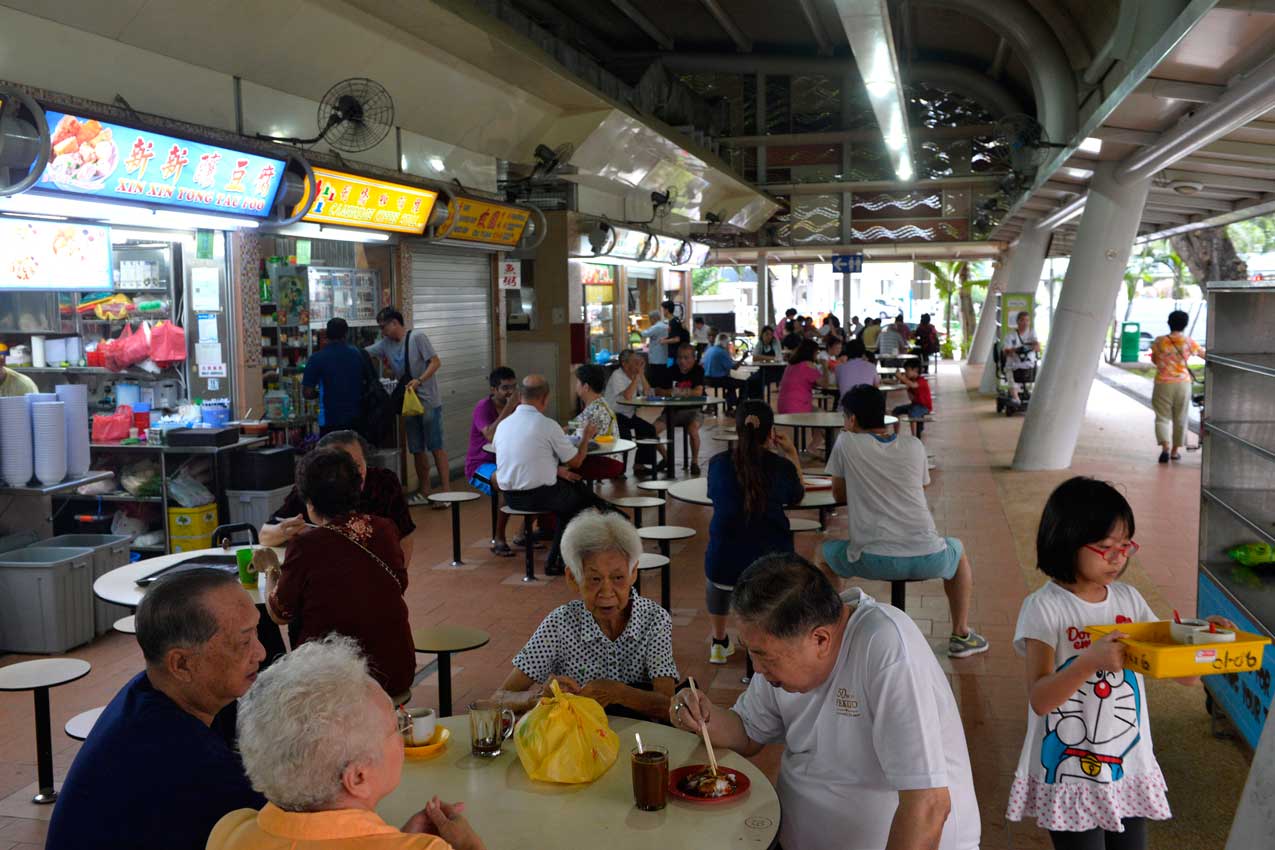
Pek Kio food centre open again but business slow

Business was not back to usual at Pek Kio Market and Food Centre when it reopened yesterday morning, following a two-day closure prompted by an outbreak of gastric flu in the area.

Hawkers said business was much slower, but hoped it will recover in the next two weeks.

Mr Wu Kim See, 63, who runs an economic rice stall, said he served fewer than 10 customers in the four hours after opening at 5am, a drop from the usual 30 to 40.

While business picked up a little during lunchtime, he said he still made 50 per cent less than usual.

Mr Lee Gim Koon, 56, who sells carrot cake, pointed to the empty tables and said: “It’s very quiet, you can see. But I think the residents nearby will come back. The rest might think twice.”

The centre was closed for two days for thorough cleaning and disinfection by the authorities as a precautionary measure after a spate of more than 180 cases of the viral illness in the Owen Road area.

In a joint statement yesterday, the National Environment Agency (NEA), Ministry of Health (MOH), Agri-Food and Veterinary Authority and PUB said pigeons and rats are unlikely to be the source of the outbreak, although they are “nonetheless unwelcome pests”.

Tanjong Pagar Town Council, they added, will get its pest control operator to step up pest control measures and conduct weekly treatments on rat burrows.

To date, 144 cases were verified as linked to the outbreak. Of these, 17 patients have been admitted to hospital. Seven have been discharged and the rest are in stable condition.

But customers told The Straits Times they were not worried about eating at the centre as it had been cleaned thoroughly.

Said 44-year-old relationship manager Rickie Teo: “I think it’s a one-off incident.”

Ms Yvonne Chan, 35, a senior customer service officer, said: “Actually, it’s not the food stalls that should be blamed. People should also practise good hygiene.”

The Tanjong Pagar Town Council has stepped up pest control, MP for the area Melvin Yong said.

He visited the centre yesterday to see if the crowd was back, and to gather feedback from residents and stallholders. They told him business had suffered.

“I hope I can reinforce the message that the closure of the market is, really, a precautionary measure. The findings by NEA and investigation by MOH have not indicated any stall as the source of the gastric flu,” he said.

Dr Angela Cheong, who runs a clinic at Block 45, Owen Road, had alerted the Health Ministry after she started seeing about 30 patients a day for the infection from May 16, up from five to 10 usually.

Up till Tuesday, she had treated 155 patients for the infection, she said. The number she had seen tapered to 18 from Wednesday till noon yesterday, she said.

Investigations into the source of the outbreak are ongoing.


This article was first published on May 28, 2016.
Get a copy of The Straits Times or go to straitstimes.com for more stories.
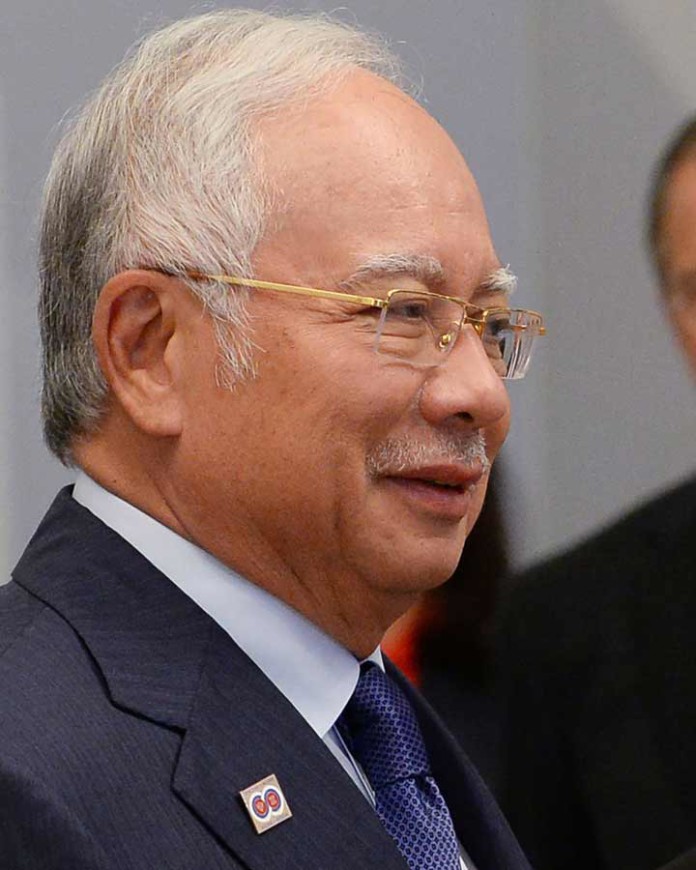
Image: 
Category: 
Blurb: 
Publication Date: 
Saturday, May 28, 2016 – 14:00
Keywords: 
Send to mobile app: 
Source: 


Story Type: 
Others

Source link

Police reports filed over by-election ad breaches

An Elections Department (ELD) officer filed police reports yesterday against a socio-political site and two individuals for violating a ban on election advertising on Cooling-off Day and Polling Day for the Bukit Batok by-election.

The reports were made against online news site The Independent Singapore (TISG), former political detainee Teo Soh Lung, who turns 67 this year, and blogger Roy Ngerng, 35, ELD said in a statement.

All three published articles online or made Facebook posts on May 6, which was Cooling-off Day.

TISG also published an article on May 7, Polling Day.

Election advertising is prohibited on Cooling-off Day and Polling Day.

The ban is to give voters time to reflect rationally on the issues raised by candidates before they vote, ELD said.

Election advertising is defined as any material posted on any platform that is intended to enhance the standing of, or promote electoral success for, an identifiable party or candidate.

In filing the police reports, the assistant returning officer considered the nature of the posts and their potential impact, said ELD.

“Socio-political sites such as TISG that regularly promote, propagate and discuss political issues should be accountable and responsible for what they publish,” it added.

TISG, in particular, continued to publish articles even after being told by the assistant returning officer not to post any election advertising during Cooling-off Day and Polling Day.

As for Ms Teo and Mr Ngerng, ELD noted that they “regularly engage in the propagation, promotion and discussion of political issues”.

Ms Teo, who contested in Yuhua in the 2011 General Election on a Singapore Democratic Party (SDP) ticket, published four posts on her Facebook page from 2.16am to 7.45am on Cooling-off Day.

These included an SDP photo calling for support for Dr Chee Soon Juan, the SDP’s secretary-general and candidate in the by-election.

Dr Chee lost to the People’s Action Party’s Mr Murali Pillai, who was elected Bukit Batok MP with 61.2 per cent of the vote.

Mr Ngerng called for submissions of photographs for a campaign titled “I believe in Chee Soon Juan” in a blog post at 2.08pm on Cooling-Off Day.

Posting election advertising on Cooling-off Day and Polling Day is an offence under the Parliamentary Elections Act.

A person convicted of the offence may be fined up to $1,000, jailed for up to 12 months, or both.

The police confirmed they have received the reports and are looking into the matter.

Posts, articles on Cooling-off Day, Polling Day

The Independent Singapore

The Independent Singapore (TISG) published online two articles on Cooling-off Day.

The first featured highlights of Deputy Prime Minister Tharman Shanmugaratnam’s speech at the People’s Action Party’s (PAP) final rally on May 5, while the second compiled what Workers’ Party members had said about the Bukit Batok by-election.

On Polling Day, TISG also published an article on a statement former PAP MP and presidential candidate Tan Cheng Bock made on May 5, in which he said he had not and would not express an opinion on the by-election.

Ms Teo Soh Lung

Ms Teo made the following four posts on her Facebook page on the morning of Cooling-off Day: (a) A note that the PAP and Singapore Democratic Party (SDP) had not been given equal airtime and coverage on Channel NewsAsia on May 5, posted at 2.16am; (b) An SDP photo calling for support for its chief Chee Soon Juan, posted at 7.22am; (c) A picture with quotes from unnamed individuals stating why they would vote for Dr Chee, posted at 7.32am; and (d) A link to a transcript of SDP member Paul Tambyah’s rally speech on May 5, posted at 7.45am.

Dr Chee lost to the PAP’s candidate, Mr Murali Pillai.

Mr Roy Ngerng

On Cooling-off Day, Mr Ngerng posted a Facebook note at 2.08pm calling for people to submit photographs to a campaign titled “I believe in Chee Soon Juan”.

On the same day, he published an article on the “I believe in Chee Soon Juan” campaign on his blog.


This article was first published on May 28, 2016.
Get a copy of The Straits Times or go to straitstimes.com for more stories.

Image: 
Category: 
Publication Date: 
Saturday, May 28, 2016 – 14:00
Send to mobile app: 
Source: 


Story Type: 
Others

Source link

Petition to drop derogatory Singlish term from OED

Freelance writer and translator Goh Beng Choo has launched an online petition to have the term “Chinese helicopter” removed from the Oxford English Dictionary (OED).

She and the 185 other like-minded Singaporeans who had signed the petition as of 10pm yesterday say that the term – used in the 1970s and 1980s to describe a Chinese-educated person who spoke and pronounced English poorly – is degrading and insulting.

“Chinese helicopter” was among 19 new Singapore words added to the OED in its quarterly update in March. Others included shiok, teh tarik, char siu, sabo, blur and sotong.

The dictionary itself defined “Chinese helicopter” as being a derogatory term for a Singaporean whose schooling was conducted in Mandarin Chinese and who has limited knowledge of English.

The petition by Madam Goh, 64, a former Straits Times bilingual journalist, was first posted on Monday on the petition website Change.Org

Madam Goh, the wife of Cultural Medallion writer and novelist Yeng Puay Ngon, told The Straits Times yesterday that the term was an insult to the Chinese-educated here. “With it in the dictionary now, it will give the impression that it is an acceptable term, when actually it is insensitive and highly derogatory.”

Among those who supported the petition was Singaporean Michelle Tan, who said in a comment: “Very ignorant and arrogant of those who have coined and spread the use of this word.”

The term appears to have been derived from a mispronunciation of “Chinese-educated”.

Madam Goh and those who signed the petition are not the only ones upset. Former civil servant and National Institute of Education lecturer Tan Teng Lang e-mailed OED’s world English editor Danica Salazar asking for the term’s removal.

In her e-mail on Friday, seen by The Straits Times, Ms Tan, who now lives in Canada, said the term “had long degenerated into a label that equated Chinese-educated Singaporeans with inferior quality and low status in society. It was blatantly intended to belittle, humiliate and demean someone on the basis of his less fluent command of English”.

She added: ” ‘Chinese helicopter’ is unequivocally a painful reminder of their long and difficult struggle to find their rightful place and dignity in the Singapore society. Fortunately, by the 1980s, this highly derisive term had mostly lapsed into disuse with the closure of Chinese schools. Not many younger generation Singaporeans have heard of ‘Chinese helicopter’, much less understand its meaning. My friends and I are therefore shocked and saddened that an almost forgotten Singlish term now resurfaces in the OED, rubbing salt into an old wound that never healed.”

Dr Salazar, 32, who was in Hong Kong yesterday, said when contacted that she was aware of the petition but could not comment on it.

But in comments carried in The Sunday Times of May 22, she said the process of including new words is “very exacting and rigorous”.

Yesterday, Madam Goh said she would write to and present the petition to the dictionary’s editorial board some time after the number of supporters passes a minimum 200 mark.


This article was first published on May 28, 2016.
Get a copy of The Straits Times or go to straitstimes.com for more stories.

Image: 
Category: 
Publication Date: 
Saturday, May 28, 2016 – 14:00
Send to mobile app: 
Source: 


Rotator Headline: 
Singaporeans petition to remove derogatory Singlish term 'Chinese helicopter' from Oxford Dictionary
Story Type: 
Others

Source link