SEOUL: One of North Korea’s highest-profile officials, career diplomat Ri Su Yong, will visit China on Tuesday, Japan’s Kyodo news agency said.
Ri was the country’s foreign minister until he was named a member of the politburo during the recent congress of the ruling Workers’ Party.
Kyodo said his departure from Pyongyang’s international airport was confirmed.
Ri is known as a powerful and close family confidant of the isolated state’s leader Kim Jong Un.
If true, the French-speaking Ri, who acted as Kim’s surrogate father when he was at a Swiss school, is touring China when North Korea’s main ally has been growing increasingly frustrated with it over its nuclear ambitions.
China disapproves of Pyongyang’s nuclear ambitions.
South Korea separately said the rival North attempted to fire a missile from its east coast early on Tuesday morning, but the launch appears to have failed.
A look at North Korea’s Kim Jong Un
Click on thumbnail to view photos. Source:
AFP, Reuters
(Reporting by Ju-min Park; Editing by Michael Perry)
Each year, 90 to 100 new cases of childhood cancer are detected in children under 15 years old in Singapore.
While some of them might be too young to fully understand what cancer is, the physical trials children with cancer go through requires no explanation.
Through TrekInvicta, a social initiative dedicated to Singapore and the Children’s Cancer Foundation, Prasatt Arumugam hopes to challenge himself and inspire youths to action.
Prasatt, 25, started volunteering with Children’s Cancer Foundation as part of the organisation’s play personnel after going through the experience of losing his aunt to a cancer relapse.
Several times each month, Prasatt engages in distraction play for kids visiting the hospital for tests, treatments and consultations.
Distraction play, which comes in the form of LEGO workshops or even simply playing the child’s favourite game, prevents them from associating the hospital with pain and discomfort by giving them something fun to look forward to.
Credit: Christopher Parwani
Prasatt has also put his career on hold in order to commit himself to completing the Pacific Crest Trail (PCT).
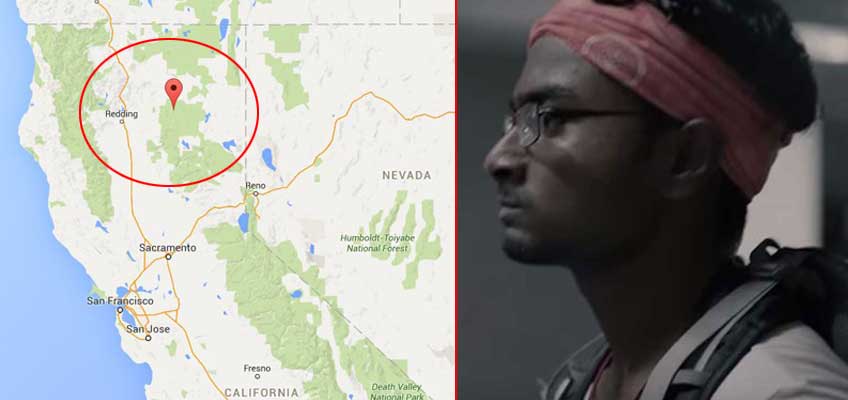
The Pacific Crest Trail (PCT) that Prasatt will be embarking on for TrekInvicta is a 4,280 km-long trail spanning from Canada to Mexico.
This will be Prasatt’s bid to be the first Singaporean to complete the PCT, a trail with more than a 50 per cent abandon rate.
As an avid hiker himself, Prasatt has completed high-altitude treks in Nepal, USA and Tibet, but nothing as monumental as the PCT.
This hike is Prasatt’s way of leading by example and expressing his solidarity with people suffering from cancer.
The glowing testimonials from Prasatt’s supporting advisors speak of his infectious passion and his hope to inspire youths to give back to the community using their own talents and abilities.
Credit: TrekInvicta
TrekInvicta’s efforts to make itself heard are also worth mentioning as their website and promotional video are incredibly well-made and interesting.
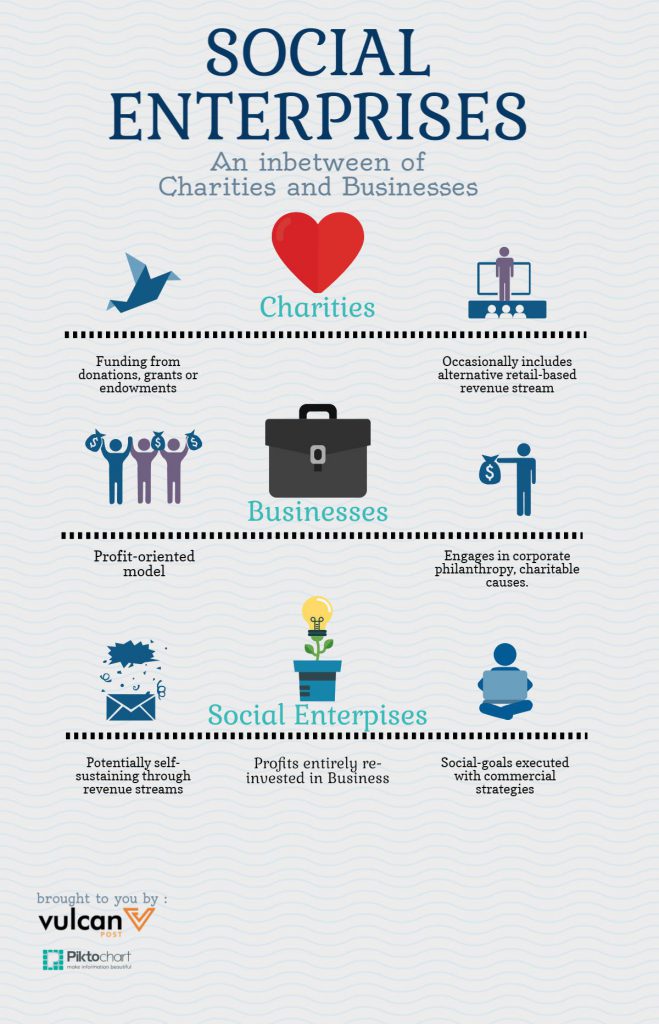
Their infographic for the PCT trail makes the trail easy to understand, and makes the initiative much more relatable overall.
Their word-of-mouth promotion (friends and family sharing) has resulted in 1,000 people talking about TrekInvicta, and has already raised S$18,166 out of its S$26,660 goal, S$10 for every mile in the PCT.
Credit: Chen “Freakofnatur” Yiji/Piktochart/NUS Business
Social initiatives are a great way to grant visibility to problems in society but do not provide a long-term solution for them.
Social enterprises, businesses that are set up to fulfil a social goal by utilizing business practices and strategies, offer a sustainable solution.
One prominent social enterprise is Eighteen Chefs, which is aimed at giving former convicts employment and a second chance by teaching skills to them.
Singapore’s Center for Social Enterprise, or “raiSE”, oversees a slew of initiatives for social enterprises for ranging from startup grants to financial help for expansion.
One springboard which allows entrepreneurs to emulate Prasatt’s spirit is raiSE’s VentureforGood grant.
With a focus on new and existing social enterprises addressing social gaps or needs, the grant is open for applications from now till 6th June 2016.
Vulcan Post is all about living life with a digital edge, up and coming startups, and people who inspire conversations. Visit Vulcan Post for more stories.
SINGAPORE – Former tour guide Yang Yin, who has been embroiled in a long-standing tussle over an elderly widow’s assets, pleaded guilty to a slew of criminal charges on Tuesday (May 31), including those for falsifying receipts amounting to $186,900 of his…
A FORMER tour guide from China is expected to plead guilty to 347 out of the 349 charges brought against him for duping a wealthy Singaporean widow, including allegedly falsifying receipts amounting to more than US$326,484 (SG$450,000).
Yang Yin, 42, was arrested in 2014 and has spent 19 months in Changi prison, having been denied bail at the time of arrest. He has also been accused of plotting to steal about US$29million (SG$40million) in cash and assets from Madam Chung Khin Chun, 89, a widow for whom Yang was a private tour guide during a visit to China.
Additionally, Yang has been accused of fooling the Singapore government into granting him an employment pass and permanent residency, according to the Straits Times. All in all, he faced 349 charges with the most serious being a criminal breach of trust in targeting a vulnerable widow.
He made his first public appearance since his arrest during a trial on Monday, the first of two he must stand due to the huge number of charges he faces. Channel News Asia reports Yang became aggressive towards Madam Chung and her niece Madam Hedy Mok, who filed the charges against him.
Police had to restrain and lead him to the dock after he made a move towards the two women and shouted at them in Mandarin.
Deputy Presiding Judge Jennifer Marie has fixed a hearing for Yang on Tuesday with his lawyer Wee Pan Lee.
Mr Wee said Yang is “still on track” to enter his guilty plea, although he will be disputing a single sentence in the prosecution’s statement.
While the case against Yang began in 2014, his dealings with Madam Chung go back as far as 2006, when he first met her and her late husband, Dr Chou Sip Kung. In 2008, after her husband’s death, Madam Chung and a friend went to China, where they hired Yang as their private tour guide.
Yang reportedly claimed that Madam Chung wanted him to be her “grandson” and moved in with her in her Singapore bungalow in 2009. In the following years, he set up a company, obtained an employment pass and permanent residency in the country.
In 2012, unbeknownst to her niece, Madam Mok, Yang was granted Lasting Power of Attorney (LPA) by Madam Chung, giving him complete control over her welfare and assets.
The widow was diagnosed with dementia in 2014, when the case came to light after Madam Mok applied to be her aunt’s legal guardian and took Yang to court, where she was able to get the LPA revoked, and Yang arrested and charged with various criminal offenses.
SINGAPORE – Four Bangladeshi men who were part of a clandestine terror cell formed here to bring their home country under the Islamic State’s self-declared caliphate pleaded guilty to terrorism financing on Tuesday (May 31). Ringleader Rahman Mizanur, 31,…
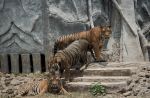
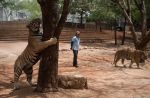
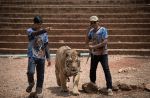
Thai officials armed with a court order on Monday resumed the removal of tigers from a controversial temple which attracts tourists as a petting zoo, but stands accused of selling off the big cats for slaughter.
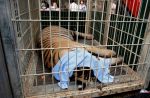
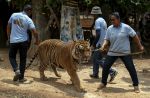
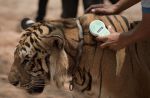
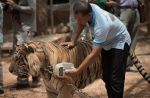
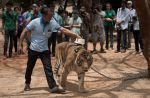
On Monday afternoon one tiger was tranquilised and carried away on a stretcher, while another was lured into a cage to be relocated from the Wat Pha Luang Ta Bua temple, according to an AFP photographer at the scene.
Several others were due to be moved later to a nearby reserve, according to officials.
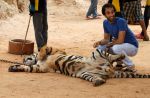
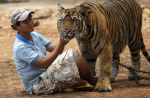
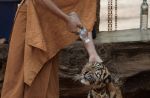
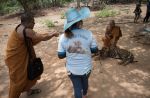
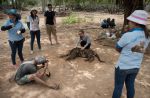
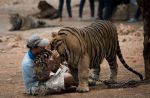
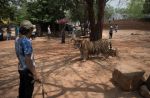
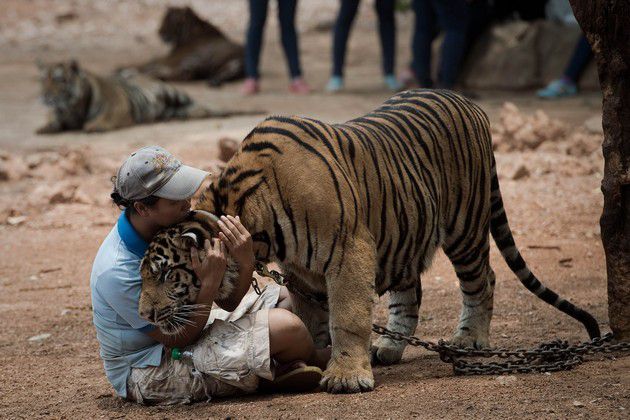
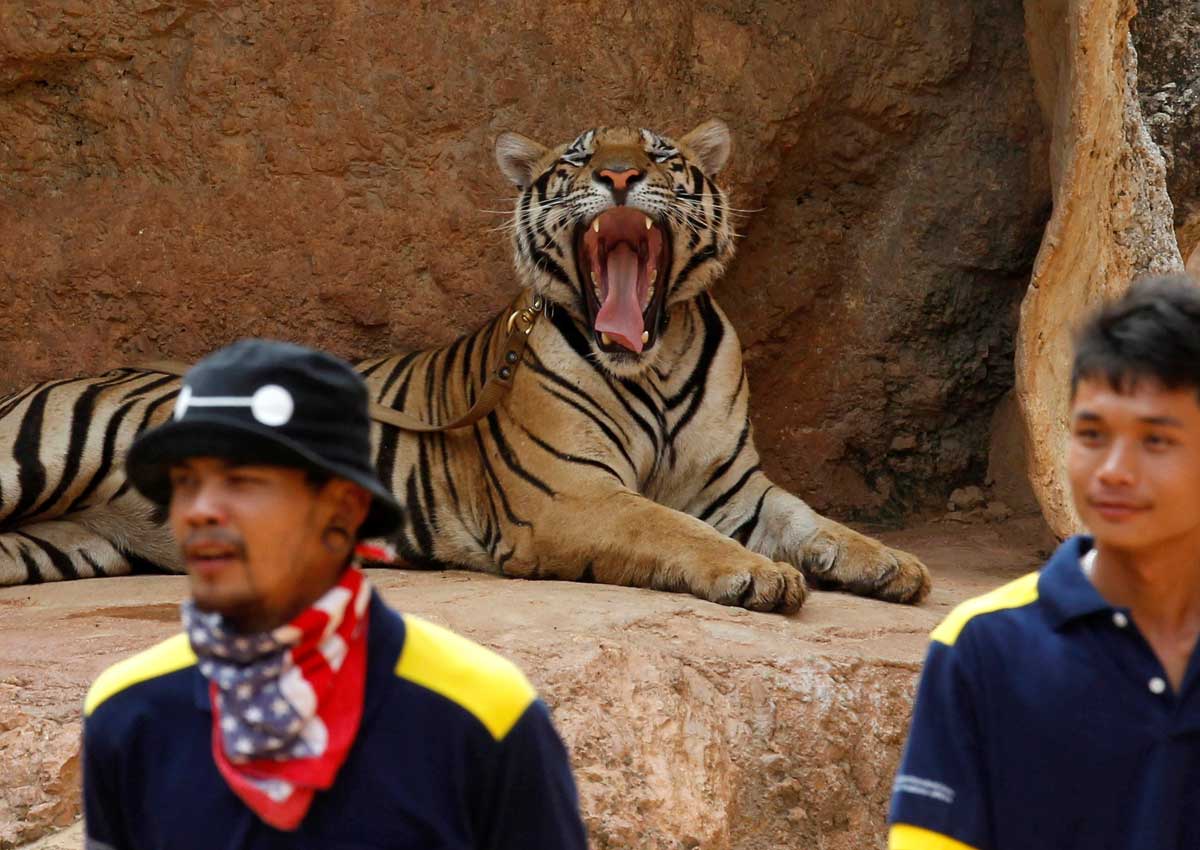
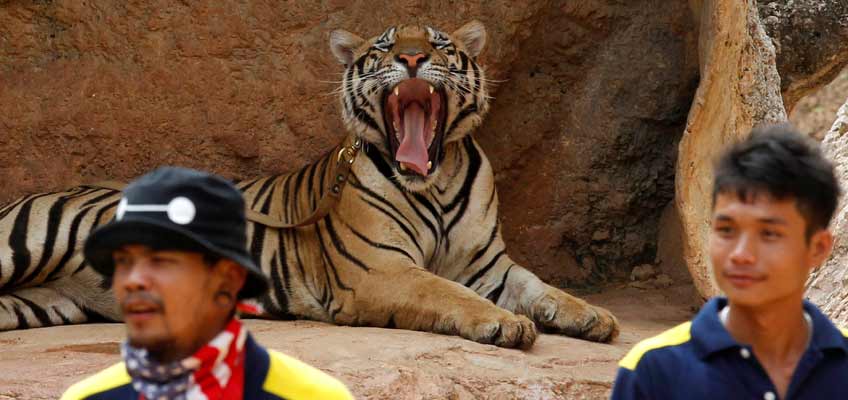
The temple in Kanchanaburi province has long proved a hit among visitors who flock there to visit the monks and be photographed — for a fee — next to the scores of exotic feline pets.
Animals rights groups accuse the temple of complicity in the black-market animal trade, making tens of thousands of dollars by selling off older cats for use in Chinese medicine in a hugely lucrative trade.
However last year one of the temple vets turned whistleblower, handing the authorities three microchips he said were inside a trio of tigers who had disappeared. It has never been fully established what happened to those tigers.
Monday’s complex operation was hampered by the monks who run the temple.
“The temple allowed tourists to come in… and they are feeding tigers while performing shows, which means the veterinarians cannot put them to sleep before relocation,” an officer from the National Park, Wildlife and Plant Conservation told AFP, requesting anonymity.
Moves to confront the monks and confiscate the tigers have been staggered over recent months.
In early January there were thought to be at least 147 tigers inside the temple.
Ten tigers were retrieved in January and February, but the seizures then stopped as the legal wrangle deepened.
In February 2015 wildlife officials also conducted a raid and discovered dozens of hornbills, jackals and Asian bears that were being kept at the sanctuary without the correct permits.
The temple has been banned from charging tourists admission fees or money to take photos with the tigers but it goes ahead regardless.
For years the government has been seemingly powerless to resolve the issue, partly for fear of being seen to confront the clergy and also because officials readily admit they have nowhere else to put such a large number of tigers.
Thai officials armed with a court order on Monday resumed the removal of tigers from a controversial temple which attracts tourists as a petting zoo, but stands accused of selling off the big cats for slaughter.
On Monday afternoon one tiger was tranquilised and carried away on a stretcher, while another was lured into a cage to be relocated from the Wat Pha Luang Ta Bua temple, according to an AFP photographer at the scene.
Several others were due to be moved later to a nearby reserve, according to officials.
The temple in Kanchanaburi province has long proved a hit among visitors who flock there to visit the monks and be photographed — for a fee — next to the scores of exotic feline pets.
Animals rights groups accuse the temple of complicity in the black-market animal trade, making tens of thousands of dollars by selling off older cats for use in Chinese medicine in a hugely lucrative trade.
The temple has always denied those allegations.
Thai officials continues removal of tigers from controversial temple
Click on thumbnail to view photos. Source:
AFP, Reuters
However last year one of the temple vets turned whistleblower, handing the authorities three microchips he said were inside a trio of tigers who had disappeared. It has never been fully established what happened to those tigers.
Monday’s complex operation was hampered by the monks who run the temple.
“The temple allowed tourists to come in… and they are feeding tigers while performing shows, which means the veterinarians cannot put them to sleep before relocation,” an officer from the National Park, Wildlife and Plant Conservation told AFP, requesting anonymity.
Moves to confront the monks and confiscate the tigers have been staggered over recent months.
In early January there were thought to be at least 147 tigers inside the temple.
Ten tigers were retrieved in January and February, but the seizures then stopped as the legal wrangle deepened.
In February 2015 wildlife officials also conducted a raid and discovered dozens of hornbills, jackals and Asian bears that were being kept at the sanctuary without the correct permits.
The temple has been banned from charging tourists admission fees or money to take photos with the tigers but it goes ahead regardless.
For years the government has been seemingly powerless to resolve the issue, partly for fear of being seen to confront the clergy and also because officials readily admit they have nowhere else to put such a large number of tigers.