Home Blog Page 3761

Smoking ban in parks catches some by surprise

A ban on smoking in parks at public housing estates that came into force on Wednesday was still news to some smokers yesterday.

Three of the four people seen smoking at the Toa Payoh Sensory Park yesterday said they did not know about the new law.

A 58-year-old worker in a fruit stall said he had lost track of where he could smoke. “It’s very confusing, we can’t smoke here and we can’t smoke there,” he said in Mandarin. “I can’t say the law is good or bad, but people should be given a place to smoke.”

His refrain was echoed by others, that they had fewer places to smoke now under the new ban, which also covered reservoirs and parks in private housing estates.

But many smokers also said they did not smoke in parks anyway.

“We go to the park to exercise, not smoke,” said Mr Ng Kim Chuan, a 46-year-old store supervisor.

The four were the only smokers among at least 80 people seen at the Toa Payoh park over a few hours in the afternoon and at the Bishan Active Park and Bishan North Neighbourhood Park at dusk.

From Wednesday, reservoirs and more than 400 parks, including those in private and public housing estates, were added to the list of smoke-free areas. The move comes three years after the smoking ban was extended to common areas such as void decks, sheltered walkways and linkways, and any area within a 5m radius of a bus stop.

Senior Minister of State for the Environment and Water Resources Amy Khor told Parliament in April that the Government’s long-term goal is to snuff out smoking in all public areas, to protect non-smokers from second-hand smoke.

To give smokers time to adjust to the new rules, those caught lighting up in reservoirs and parks in the first three months will be let off with a warning. But the National Environment Agency (NEA) said smokers who repeatedly flout the law can be fined. Last year, about 17,000 fines were handed out.

Retiree Tan Seng Kiat, 61, told The Straits Times he was aware of the ban and supports it, but may still smoke in the park at secluded spots. He suggested smokers be given a designated point to smoke.

Non-smokers welcomed the move. Ms Jenny Xie, 30, who takes her one-year-old son to a park near Toa Payoh Lorong 2 every day, said it would create a healthier environment for everyone.


This article was first published on June 4, 2016.
Get a copy of The Straits Times or go to straitstimes.com for more stories.

Image: 
Category: 
Publication Date: 
Saturday, June 4, 2016 – 15:00
Keywords: 
Send to mobile app: 
Source: 


Story Type: 
Others

Source link

Getting to Mandai attractions tough without car or cab

Big plans to transform the Mandai area into a 126ha nature precinct by 2023 would have to include better ways to get there as transport options are now very limited.

Only two daily bus services, 138 from the Ang Mo Kio bus interchange and 927 from the Choa Chu Kang bus interchange, currently serve the Singapore Zoo and the surrounding Mandai area.

They take about one hour to arrive at the zoo.

Another service, 926, from the Marsiling and Woodlands MRT stations, the closest to the zoo, operates only on weekends.

An express bus service operated by Bus-Plus Services, a wholly owned subsidiary of SMRT, began a four-month trial run last Saturday and facilitates access from Bedok, Tampines and Sengkang, but it operates only on weekends and selected public holidays.

Basically, there is no convenient way of getting to the zoo without driving or taking a taxi, said Ms Zaitoon Bivee, who has taken her two-year-old son there by car four times.

“There should be express buses from different areas or free shuttle buses every 15 minutes from the nearest MRT station,” said the 42-year-old adjunct lecturer.

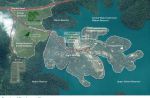
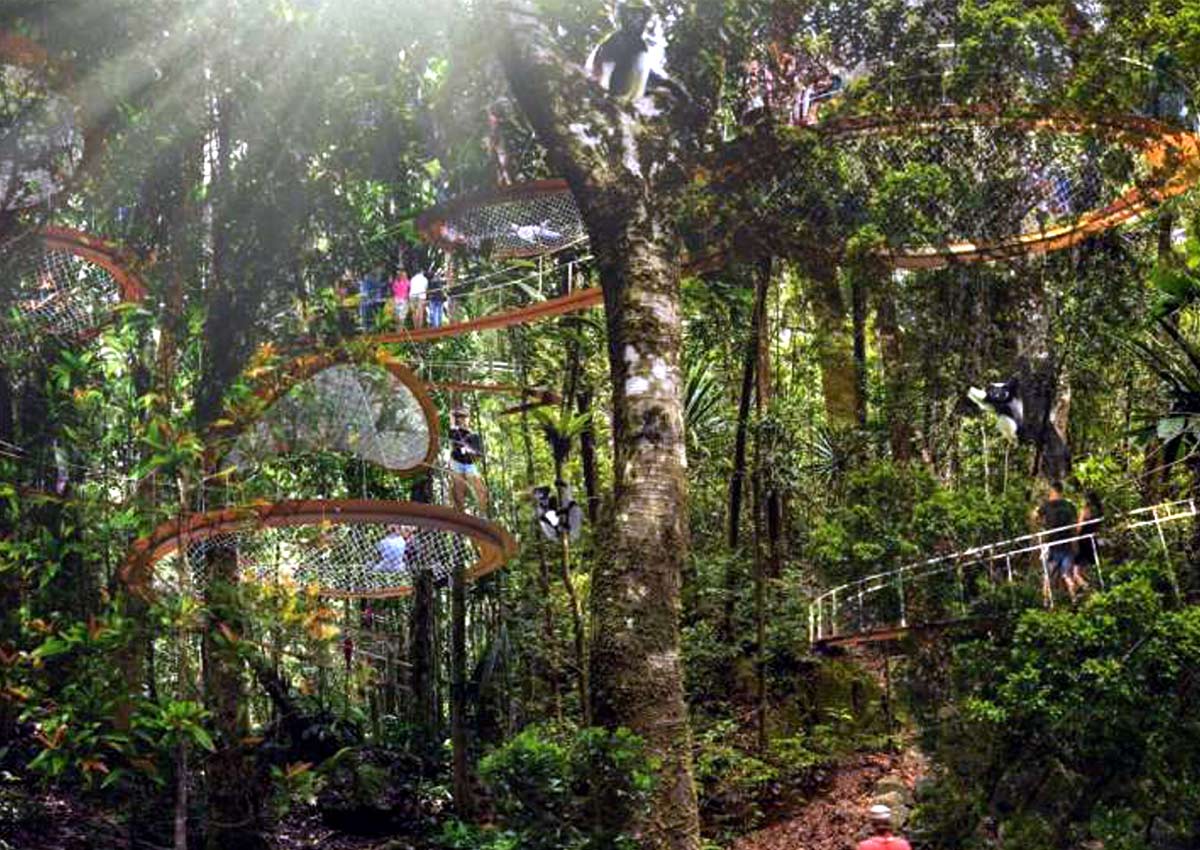
Announced on Wednesday, the Mandai nature precinct will comprise the Singapore Zoo, Night Safari, River Safari as well as the Bird Park, to be relocated from Jurong, and a new Rainforest Park, where visitors can walk along aerial walkways that stretch from the forest floor to treetop canopies.

Conceptualised for eco-tourism, it will have eco-lodges where people can spend the night, as well as free nature trails, boardwalks, outdoor seating and playgrounds.

First announced by Prime Minister Lee Hsien Loong in 2014, the redevelopment of the area is being overseen by Mandai Safari Park Holdings, a wholly owned unit of Temasek Holdings which is chaired by former Temasek chairman and Cabinet minister S. Dhanabalan.

The first phase of development, which is expected to begin later this year, will cost $1 billion.

Last year, the zoo hosted 1.7 million visitors, and the two safaris had about a million visitors each.

National University of Singapore transport researcher Lee Der Horng agreed that public transport to the zoo is currently “extremely poor”.

He contrasted it with the Taipei Zoo which, although located about 10km away from the city, is easily accessible by a metro station directly outside the zoo.

Dr Lee said a “branch line” of the MRT could be built specifically to serve the eco-precinct, adding that autonomous vehicles could be used to ferry visitors within the nature precinct.

Ngee Ann Polytechnic senior tourism lecturer Michael Chiam said extending the MRT line may not be feasible. “Since it is not a residential area, the authorities would need to study whether it is financially viable to extend the MRT line to Mandai,” he said.

He suggested that the eco-precinct be connected to the Park Connector Network to facilitate cycling into the area and that the authorities could study demand for buses, increasing the number and frequency of services as necessary.

The group chief executive of Mandai Safari Park Holdings, Mr Mike Barclay, said it is taking suggestions from the public on the rejuvenation of the Mandai area and exploring a “range of options” with the authorities to improve accessibility to the area.

“These include introducing shuttle buses from the upcoming Springleaf MRT station and direct bus services from key regions that are otherwise not well connected to Mandai,” he said.

Located along Upper Thomson Road about 8km away, the Springleaf station on the upcoming Thomson-East Coast Line is slated to be completed in 2020.

Also under consideration are shuttle buses and trams to move people between the east node, where the existing attractions are located, and the west node where the new Rainforest Park and the relocated Bird Park will be situated.


This article was first published on June 4, 2016.
Get a copy of The Straits Times or go to straitstimes.com for more stories.

Image: 
Category: 
Publication Date: 
Saturday, June 4, 2016 – 14:00
Keywords: 
Send to mobile app: 
Source: 


Story Type: 
Others

Source link

Swimming: Schooling says it "felt great" to get first win over Phelps

Los Angeles – Michael Phelps won one and lost one Friday in a tuneup meet in Austin, Texas, where he was competing with an eye on this month’s US Olympic trials and a berth at the Rio Games.

Joseph Schooling, a 20-year-old from Singapore who swims for the University of Texas in Austin, clocked 51.58sec to edge 18-time Olympic gold medallist Phelps (51.65) in the 100m butterfly – an event in which Phelps holds the world record.

Schooling admitted it “felt great” to get his first win over Phelps – but he noted that the US great was still in hard training before the US trials and not in peak racing form as he will be in Omaha this month and Rio de Janeiro in August.

“I’ve got to be even better in two months,” Schooling said.

Phelps was swimming in his second final of the night, having won the 100m freestyle in 49.49sec, one one-hundredth of a second in front of Jack Conger.

The Austin meeting was one of three this week giving US and overseas swimmers a chance to hone their skills before Rio.

China’s Sun Yang swam the year’s fastest 200 freestyle time at 1:44.82 to triumph at the Pro Swim meeting in Santa Clara, California.

American Conor Dwyer was second in 1:45.41, third-fastest in the world this year, behind the 1:45.19 of James Guy.

Dwyer, who will be looking to secure his berth for Rio at the US trials in Omaha, Nebraska, said the “good battle” with Sun was perfect preparation.

“Obviously, it’s not fun to lose and go the third-fastest time in the world,” Dwyer said. “But it was a good preview for racing in Rio. I know he’ll be a good contender, and I am glad he came, so we can kind of go battle it out and get me ready for trials and hopefully the big show.” Australian Emma McKeon won the women’s 200m free in Santa Clara in 1:56.36.

At the Indianapolis Pro Swim, American Leah Smith posted a pair of career bests en route to victory in the women’s 200m freestyle, winning the final in 1:56.64 after clocking 1:56.66 in the heats.

Compatriot Jay Litherland opened the Indy meeting with two victories, capturing the 200m free 1:48.41 and the 400m individual medley in 4:13.93.

Image: 
Category: 
Publication Date: 
Saturday, June 4, 2016 – 13:55
Send to mobile app: 
Source: 


Rotator Image: 
Hermes ID: 
2 343 404
Hermes ID String: 
SY_SCHOOLINGPHELPS_0604
Hermes Author: 
SEANYAP
Story Type: 
Others

Source link

NTU retracts NIE academic papers after malpractice investigations

Nanyang Technological University (NTU) has retracted 11 academic papers authored by researchers from the National Institute of Education (NIE), following investigations into research malpractice.

One particular researcher had a hand in all 11 papers.

Eight of the papers cite the lead author as Dr Noel Chia, a well-known local expert in the area of special-education needs such as autism, dyslexia and dyscalculia. He was listed as co-author of the three other papers.

Dr Chia, who had taught at NIE since 2006 and was promoted to associate professor two years ago, resigned in April.

Nine out of the 11 papers that came under investigation were published in the Journal of the American Academy of Special Education Professionals (JAASEP).

NTU said it had carried out the investigation following allegations of research malpractice.

It found that primary data was not available to authenticate Dr Chia’s research. It also said that it had doubts over “ethical approvals for the collection of the data”.

Hence the move to retract all the papers which used the data.

The university’s research integrity officer, Mr Tony Mayer, said Dr Chia had told the university that he had collected the data prior to joining NIE in 2006, through a Kuala Lumpur-based consortium called Pusat Pembelajaran Cacat (PPC).

One of his co-authors, Malaysian resident Esther Yap, was the intermediary between him and PPC. However, Dr Chia claimed that he had been unable to contact Ms Yap or other PPC officials.

NIE even hired an agency to track down Ms Yap and the Malaysian consortium, but even this drew a blank.

Dr Chia, despite declaring initially that he had returned all the primary data to PPC, late last year presented some data sample sheets that he said were used in his research.

But Mr Mayer said the investigation panel was still “unable to authenticate the research data”.

He did not elaborate on what NTU meant by “doubts over ethical approvals”, but he had told JAASEP that there may be “problems over the signatures of the parental consents”.

“(NTU has) zero tolerance towards any form of research malpractice and will not hesitate to take action against anyone found to be lacking in research integrity,” Mr Mayer stressed.

Meanwhile, the journal publishers in Washington D.C. have retracted not just the nine papers in question, but also the other papers that Dr Chia had previously published with them. The journal’s editor, Dr George Giuliani, referred to a statement published earlier which stated that because of the uncertainty surrounding the prior research done by Dr Chia, it had made the professional decision to retract all of Dr Chia’s articles published in the journal, in order to protect the integrity of the journal.

Educational therapists told The Straits Times that it is important for those conducting research on children with special educational needs to be rigorous and follow ethical standards.

Said one of them, who has over 10 years of experience in the field: “It is important for all researchers to be thorough and adhere to ethical norms, but more so for those conducting research in areas such as special education.

“Many parents of children with special needs follow the research closely and pin their hopes on some of these findings.”

Among the research conducted by Dr Chia was the effectiveness of dimethylglycine, a dietary supplement, in treating children with autism spectrum disorders and severe speech delay.

Another paper looked at the effect of hypnosis on the academic performance of students with learning disabilities in school examinations.

The Straits Times was unable to reach Dr Chia for his comments.


This article was first published on June 4, 2016.
Get a copy of The Straits Times or go to straitstimes.com for more stories.

Image: 
Category: 
Publication Date: 
Saturday, June 4, 2016 – 14:00
Send to mobile app: 
Source: 


Story Type: 
Others

Source link

Duterte warns media, no apologies

DAVAO CITY, Philippines – “If you hit me, I will hit right back.”

President-elect Rodrigo Duterte served that warning on “paid hacks” and “lowlifes” in the media as he slammed the industry for employing crooked journalists.

In a 20-minute “rant” before taking questions from reporters on Thursday night, the foul-mouthed mayor of Davao City distinguished between the “crusaders” and the “extortionists” in the media, telling the journalists that he could do as much damage to them as they might do to him.

“I can spend the next six years of my presidency exposing you and attacking you. This is not a one-sided affair,” he said.

“There are politicians who would accept and swallow [your attacks]. Not me,” he added.

Duterte spoke after drawing condemnation from local and international media groups for saying on Tuesday that corrupt journalists were legitimate targets of assassination. The international journalists’ group Reporters Without Borders called for a boycott of Duterte’s press conferences.

About 175 journalists have been killed in the Philippines since 1986, making the country the second deadliest in the world for the press. “No apologies, no nothing,” Duterte said on Thursday. “I’m just telling you the terrain. No apologies. Bulls**t.”

“I am not getting back at you. I am challenging you,” Duterte said. “I can have my own website and attack you. All that I have to do is to research your life and the life of your children and I will just put it there. That’s how it is.”

Duterte said he was “willing to throw my last card” and “even lose the privilege before the inauguration” just to expose rogues in the media. “That’s why I said I can lose the presidency anytime. I can lose my life and honour anytime. That’s what I said. I will not die if I do not become President. So don’t f**k with me,” he said.

“If worst comes to worst, we will just expose each other. Go ahead, I’ll give you the names of journalists to whom I’ve given money. Do you want that?” he said.

Asked whether politicians like him who give in to demands of payoff were not part of the problem, Duterte made a distinction between legitimate “PR” (public relations) work and extortionist journalism.

Claiming he had long known how reporters worked throughout his public life, Duterte said there were three kinds of journalists in the Philippines: the crusaders who expose the truth and do not accept bribes, the publicists who work as “mouthpieces” of vested interests, and “the lowlifes” whose greed is unlimited.

Of the third kind, Duterte said “they abound.”

Vultures

“The vultures, pretending to be journalists… The problem here is, every son of a b**** who claims to be a journalist makes money out of it, extorting money, and he is killed and glorified because he is a journalist,” Duterte said.

“There’s always a paid hack. It’s not only in other professions. Do not ever think that you are in a field of purity,” he said.

Duterte decried the criticism he had drawn for calling on Tuesday Davao City journalist Jun Pala a “son of a b****” who deserved to die.

He described Pala, who was shot dead in 2003 by still unidentified assailants as a gun-toting “criminal through and through.”

Duterte said Pala once barged into a meeting of the broadcast regulatory body Kapisanan ng mga Brodkaster ng Pilipinas about calls to censure him “with an [M-16] and a group of goons and threatening to kill people.”

“And you say he’s a hero?” he said.

Duterte scoffed at Reporters Without Borders’ call for a boycott of his press conferences, even telling Manila reporters not to cover him. “I do not want publicity, you know that. It would be good if you just disappear,” he said.

He said, however, that he could not stop journalists from covering him. “If you want to stay, fine. I did not say you should leave or never come back. If you want to come back here to do a story, this is a free country,” he said.

Duterte also vented his ire on television stations, saying they were mostly after money, based on a personal experience with someone from the industry who had told him, “This is business.”

He also called certain news reports about him “garbage,” including stories about his alleged undeclared wealth made public by defeated vice presidential candidate Antonio Trillanes IV during the campaign.

“You see the garbage both in the networks and the newspapers. See the garbage that Trillanes was . . . around everybody? Well, of course it’s money,” Duterte said, without naming the media outfits.

The mayor slammed the media for employing people who had no respect for the ethics of journalism.

“You accept into your field people who do not even write straight sentences. They go to publishers, write anything, the proofreader will correct it, and he goes around asking for money,” he said.

He said he was just “telling the truth.”

“Do not ever think that I am here to beautify journalists. That’s not my business,” he said.

Wolf whistle

Duterte also defended himself from criticism for wolf-whistling at television reporter Mariz Umali in his press briefing on Tuesday night, invoking freedom of expression.

“You can’t stop me. That’s my freedom of expression,” Duterte said. “I was exasperated by the question. Whistling is not a sexual thing,” he said, wolf-whistling again.

Duterte said it was an innocent whistle. He explained when a wolf whistle should be taken as an offence.

“If I whistle in public and you’re speculating whether you’re the one… [unless there’s] cajoling like (he whistles again) ‘Oh, you’re beautiful.’ There has to be some kind of an inviting, sexual undertone. But if it’s just a whistle, that kind of thing is not intruding into constitutional grounds. Freedom of expression,” he said.

Duterte said he was simply “expressing something,” but that the media “overextended” the dimensions of his gesture.

Davao women’s code

Davao City’s own Women Development Code classifies catcalling as sexual harassment, barring the act along with a list of explicit advances considered offensive to women.

Section 8 of the Davao City Ordinance No. 5004 holds as sexual harassment “cursing, whistling or calling a woman in public with words having dirty connotations or implications [that] tend to ridicule, humiliate or embarrass the woman such as “whore,” “boring,” “pest.” Duterte, a known womanizer, cited the Women’s Code at a presidential debate during the campaign when Sen. Grace Poe confronted him with the question, “What will happen to women under your administration?”

Confronted with the same question on Thursday night, Duterte said: “Women? What seems to be the problem with women?”

He repeated the justification when told that the query was premised on his recorded incidents flirting with women.

Asked to comment, former Gabriela Rep. Liza Maza said Duterte’s act was “inappropriate.” She said she hoped the President-elect would listen to public opinion about his controversial actions.

“I think definitely it was inappropriate. It’s not something a government official should exhibit, in public or otherwise. You’re already in a position of power and has the responsibility to be a model for respect in women,” Maza said by phone.

During the campaign, Duterte got into trouble after his controversial remarks about the gang-rape and murder of an Australian missionary in a 1989 prison riot in Davao City, joking that he “should have been first.”

He never apologised for his remarks and had repeatedly said he was merely “relating an event.”

The Commission on Human Rights (CHR) said Duterte violated the Magna Carta of Women for the joke, but the mayor retorted by calling CHR Chair Chito Gascon “an idiot,” and the CHR “too naive and too simplistic.”


Image: 
Category: 
Publication Date: 
Saturday, June 4, 2016 – 13:17
Keywords: 
Send to mobile app: 
Source: 


Story Type: 
Others

Source link

Thailand: Junta leader Prayuth defends crackdown on social media

THAILAND’S junta leader has defended his government’s increasing crackdown on social media dissidents, while promising to restore democracy in the country.

Speaking at a security conference in Singapore, Prime Minister Prayuth Chan-ocha said Friday that Thailand is in a transition toward “a strong and sustainable democracy.”

There has been an “abuse (of) social media to engage in libel and a distortion of facts,” so it is “necessary for the military to take control for a while,” Prayuth said.

In May, authorities arrested eight people on charges of sedition and violation of the Computer Crime Act for material posted on Facebook that mocked Prayuth.

Military rule has also seen a significant increase in arrests for social media posts criticizing the country’s revered monarchy, an offence that attracts lengthy prison sentences under draconian lese majeste laws.

Prayuth, who seized power in a military coup in May 2014, has promised to hold elections next year and wants to hold a referendum on the draft of a new constitution on Aug. 7. But his government has banned most public discussion of the charter.

“Anything that cannot be completed during this administration will be handed over to the next,” Prayuth said.

Meanwhile, U.S. Defense Secretary Ash Carter offered closer U.S. cooperation with China to help build what he envisions as a regional security network.

In a speech at the Singapore conference, Carter repeated frequent U.S. complaints about China unnerving its neighbors with expansive moves to build up reefs, islets and other features in disputed areas of the South China Sea. But the Pentagon chief also emphasized positive possibilities for cooperating with China, while stating that the U.S. will remain the pre-eminent power.

Carter says he intends to visit Beijing later this year.

He calls for “principled security networks” of Asian countries whose militaries would train together and eventually operate in a coordinated way.

Additional reporting from Associated Press

The post Thailand: Junta leader Prayuth defends crackdown on social media appeared first on Asian Correspondent.

Source link

Young girl kidnapped in front of mother in Indonesia

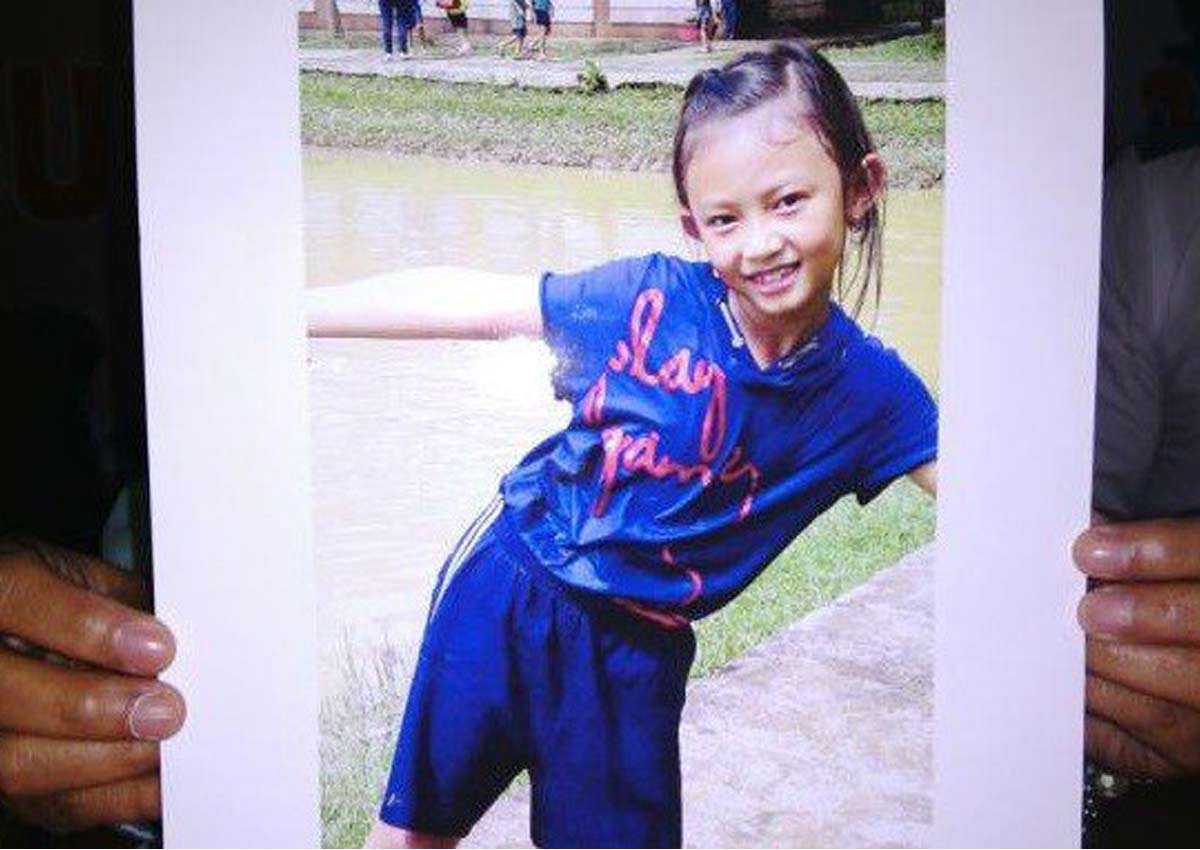
A second grade elementary school student, Evelyn Tiandy, was kidnapped by a group of three unidentified men in front of the victim’s mother, Rita Tjoa, 37, next to a minimart in Bundaran Tiga, Cikupa, Tangerang.

Rita said the incident took place on May 17 when Rita and her daughter stepped out from the minimart.

“We were at the parking lot. All of a sudden a man came and grabbed Evelyn away,” Rita said at the office of the National Commission for Child Protection in Pasar Rebo, East Jakarta, on Friday.

According to Rita, as the man carried Evelyn away, two other men blocked Rita’s way.

“They pushed me down,” she said. Rita suffered an injury to her right leg.

Rita said no-one came to help her even though some people were around the scene.

The kidnappers fled the scene using a black van.

“I didn’t see the plate number,” she said as quoted by kompas.com.

Rita reported the incident to the Tangerang Police. However, until now, the police have failed to locate Evelyn.

Didik Siswanto, Rita’s lawyer, said Rita split up with her husband a year ago, but there was no indication to suggest that Rita’s former husband may be responsible.

“We worry that this is child trafficking because the process of the execution [of the kidnapping] appeared to be very professional,” Didik said.

Image: 
Category: 
Publication Date: 
Saturday, June 4, 2016 – 13:13
Send to mobile app: 
Source: 


Story Type: 
Others

Source link

Giant pandas still endangered, expert says

It’s still too risky to downgrade giant pandas from endangered to vulnerable on the International Union for Conservation of Nature’s Red List of Threatened Species, said an expert from a major breeding centre for the species in Sichuan province.

The IUCN completed an appraisal of the number of pandas and their habitats a year ago. A well-informed source recently told the South China Morning Post that the organisation is considering downgrading the giant panda’s status.

The IUCN would only say that an appraisal is underway and the results have not been released yet.

Zhang Hemin, chief of the China Conservation and Research Center for the Giant Panda in Wenchuan county, Sichuan, said such a downgrading would be detrimental to panda conservation.

Pandas survive solely along the eastern edge of the Qinghai-Tibet Plateau in six mountain ranges, five of which are in Sichuan. Their habitat, which totals about 23,050 square kilometers, is very vulnerable, since Sichuan is prone to earthquakes.

“In the Wenchuan earthquake in 2008, 6 per cent of the panda habitat in Sichuan was lost,” said Zhang, a panda expert who has been devoted to panda research and conservation for 33 years.

The number of giant pandas in the wild and in captivity has increased over the past decade.

China’s fourth panda census, the results of which were released last year by the State Forestry Administration, tallied 1,864 wild pandas and 375 captive pandas worldwide at the end of 2013. That compares with 1,596 wild pandas and 164 captive pandas worldwide in the third census, which was carried out in 2000 to 2002.

Despite the population increase, 24 of the 33 groups of wild pandas found in the fourth census are believed to be endangered, with some groups having fewer than 30 pandas, Zhang said. Eighteen groups have fewer than 10 pandas each and are in severe danger of extinction, he added.

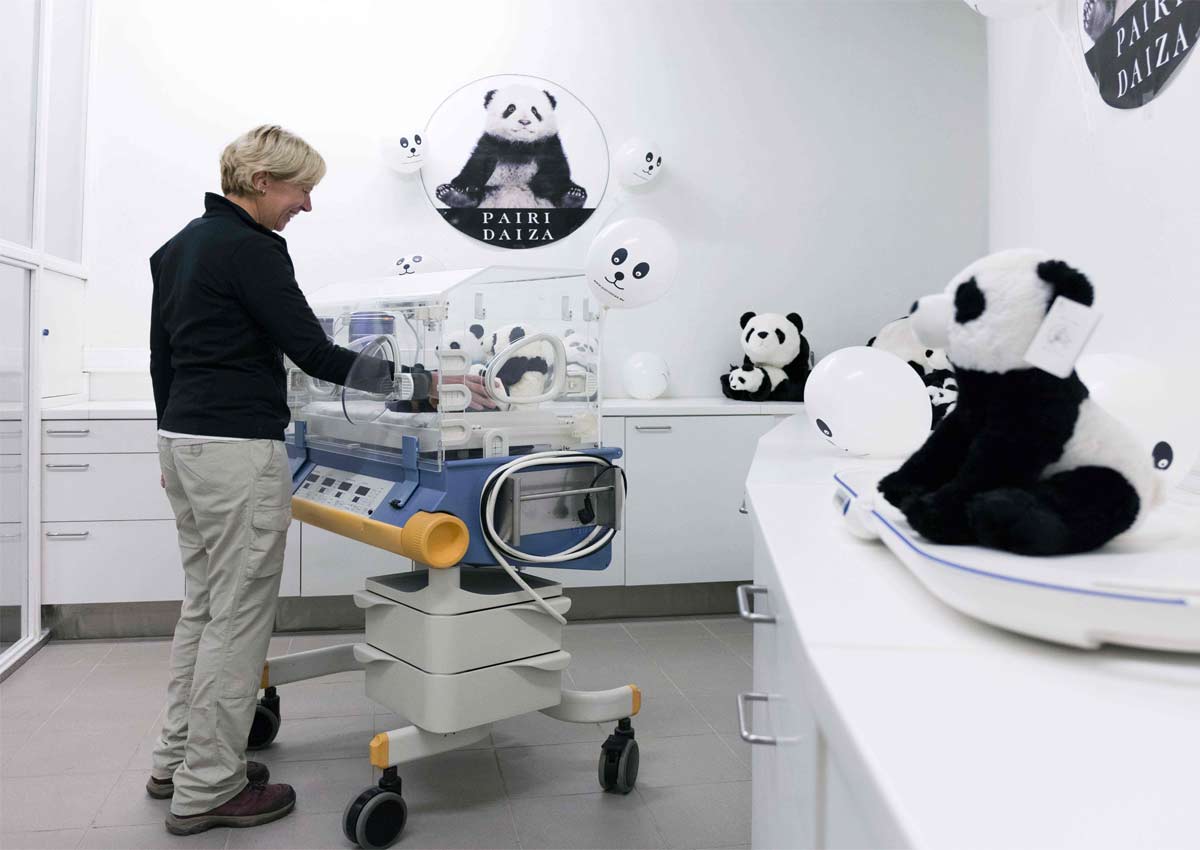
Meanwhile, Belgium’s Pairi Daiza zoo announced on Thursday the birth of a panda, just three months after Chinese experts tried to artificially inseminate the mother, Hao Hao.

Su Zhou contributed to this story.

Image: 
Publication Date: 
Saturday, June 4, 2016 – 12:46
Keywords: 
Send to mobile app: 
Source: 


Story Type: 
Others

Source link

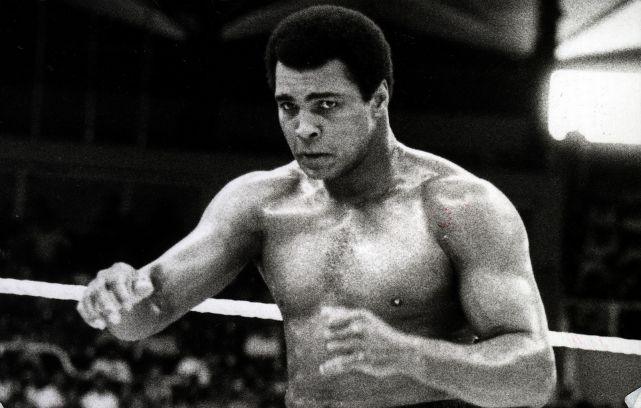
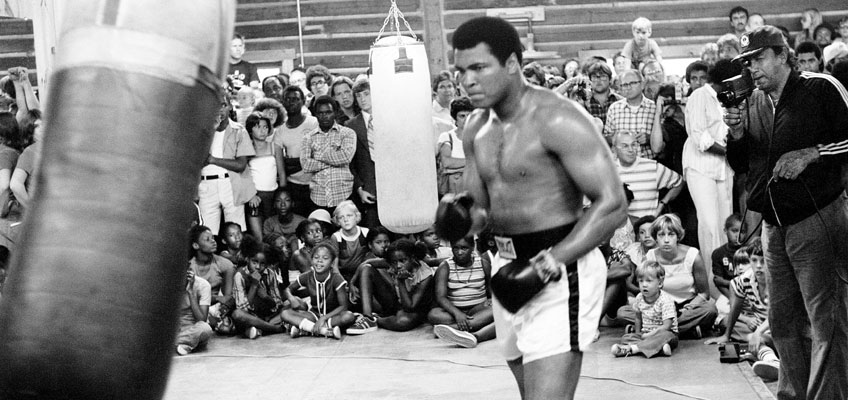
Boxing legend Muhammad Ali dies at 74

Los Angeles – Boxing icon Muhammad Ali died on Friday, a family spokesman said in a statement.

“After a 32-year battle with Parkinson’s disease, Muhammad Ali has passed away at the age of 74,” spokesman Bob Gunnell said.

Ali, whose fame transcended sport during a remarkable heavyweight boxing career that spanned three decades, had been hospitalized in the Phoenix, Arizona, area with a respiratory ailment this week.

Concern for the three-time heavyweight world champion had grown throughout Friday amid reports that his respiratory trouble was complicated by the Parkinson’s that had left the fighter called “The Greatest” increasingly frail.

Known globally not only for his storied ring career but also for his civil rights activism, Ali had been hospitalized multiple times in recent years.

He spent time in hospital in 2014 after suffering a mild case of pneumonia and again in 2015 for a urinary tract infection.

His Parkinson’s, thought to be linked to the thousands of punches he took during a brutal career studded by bruising battles inside the ropes, had limited his public speaking for years.

But he continued to make appearances and offer opinions through his family members and spokespeople.

In April, he attended a Celebrity Fight Night Dinner in Phoenix that raised funds for treatment of Parkinson’s.

In December, he issued a statement rebuking US presidential hopeful Donald Trump’s call for a ban on Muslims entering the United States.

“Muhammad Ali transformed this country and impacted the world with his spirit,” said longtime boxing promoter Bob Arum.

“His legacy will be part of our history for all time.”

Image: 
Category: 
Publication Date: 
Saturday, June 4, 2016 – 13:02
Send to mobile app: 
Source: 


Rotator Image: 
Hermes ID: 
2 343 372
Hermes ID String: 
04062016_MUH
Hermes Author: 
STEPHLUO
Story Type: 
Others

Source link

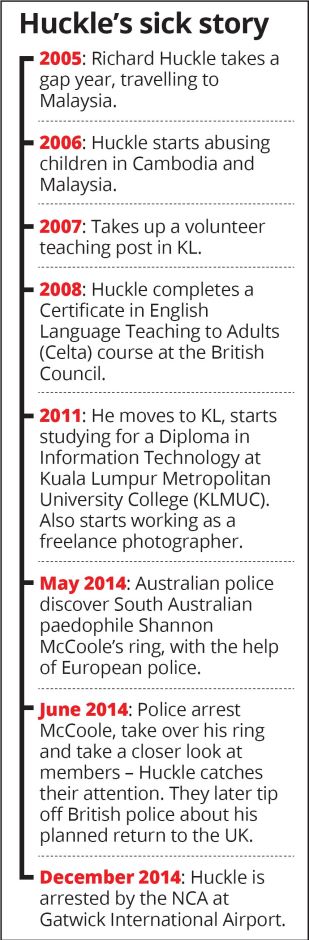
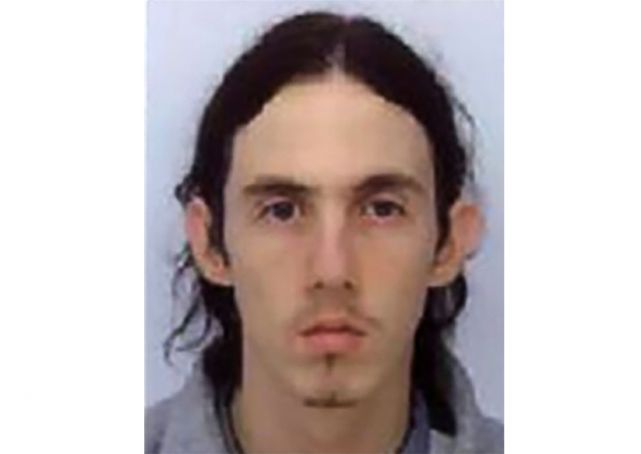
UK paedophile Huckle targeted orphanage in Bangalore

PETALING JAYA: A pastor in India revealed how serial paedophile Richard Huckle targeted his orphanage in Bangalore when he received an email volunteering his services.

George Fernandes, 37, told The Daily Mail that Huckle enquired whether he could volunteer at the New Hope for Children Orphanage as he would be travelling to India.

Fernandes said he had accepted Huckle’s offer but at that time was unaware of the crimes that he was capable of.

He said he later realised that Huckle just wanted access to the children and was shocked to read what he had done.

In the email dated in June 2013, Huckle said he “is originally from UK but am studying an IT degree in Malaysia.”

He said he would be in India from July 19 to Aug 6 that year and he found Pastor George’s orphanage on Facebook.

Huckle, 30, explained that he visited India in January and met a pastor in Hubli where he made a short documentary for him.

He said it would “be a great experience for me to visit your orphanage, meet and help the children,” adding that he would be happy to use his photography and video editing skills to help the pastor.

Huckle had asked the pastor if he knew of a place to stay, “either with a local family or at a cheap hotel.” He was offered a room at the pastor’s house.

Fernandes said Huckle was never left alone and believed none of the children at the orphanage were abused during Huckle’s two-day stay.

He said “he seemed nice on email and we were excited to host him as we thought he was keen to serve the orphan children.”

Fernandes said he noticed that Huckle was unusually quiet, not speaking much or telling anything about his past.

He said Huckle was very different from other western volunteers in the past.

Huckle, however, had very good knowledge of photography and taught the orphanage many new things but he seemed disoriented and “won’t look straight into our eyes ever during his short stay,” said Fernandes.

Fernandes said Huckle wrote to him after he left saying he was keen on returning and spend more time with them. He never did nor did he maintain any contact.

Huckle was caught at London’s Gatwick Airport in December 2014 while returning home for Christmas.

He has pleaded guilty to 71 counts of child sex offences, including raping babies and infants, in a London criminal court, while he was in Malaysia supposed working as an English teacher and photographer since 2009.

He was caught with more than 20,000 images of horrific child sex abuse and confessed to sexual attacks on an estimated 200 children, some of them toddlers.

Image: 
Category: 
Publication Date: 
Saturday, June 4, 2016 – 12:51
Keywords: 
Send to mobile app: 
Source: 


Story Type: 
Others

Source link