Home Blog Page 3721

Woman dies after being hit by speeding car

On Tuesday night, a 21-year-old woman was crossing the road to a Ramadan bazaar in Jurong West when a speeding car struck her and flung her 3m away.

Ms Siti Nurfadariiyah Rosdi was later pronounced dead from multiple injuries, and police have arrested a 41-year-old male driver in relation to the case.

It was the second day of Ramadan, and Ms Siti was on her way to help her boyfriend’s family at their Ramly burger stall.

Eyewitnesses said the accident took place around 8.30pm.

They alleged that the driver of the car had been speeding and tried to beat the red light at the traffic junction between Jurong West Avenue 1 and Jurong West Street 41.

He had swerved to avoid people who were still crossing the road and lost control.

The Mercedes-Benz car struck Ms Siti, who had stepped on to the central road divider to avoid being hit when she saw it coming towards her. The impact flung her to the other side of the road, where she landed head first, said eyewitnesses.

“My sister and I were about to close our hair products stall at the bazaar when we suddenly heard a loud bang,” said airport emergency officer Afyque Salleh, 25. “Some stall owners rushed to help her and called the ambulance. She was lying in a pool of blood,”

The police said they were alerted to the accident at 9.07pm, and that investigations are ongoing.

At the accident scene, two people who identified themselves as senior staff nurses stepped forward and tried to revive Ms Siti by doing chest compression after they found that she had lost her pulse, said Mr Afyque.

The Singapore Civil Defence Force later snet an ambulance to the junction and it took Ms Siti to Ng Teng Fong General Hospital.

Speaking to The Straits Times last night, her brother, Mr Muhammad Fadiq Rosdi, 27, said she was pronounced dead at about 10.50pm after sustaining multiple injuries.

The family of seven live close to the bazaar in Jurong West Street 41, and Ms Siti had gone home for a quick change of clothes.

The student at a private college had been helping her boyfriend’s family at the bazaar every year, said Mr Muhammad Fadiq, a container handling specialist.

“She was often at home and looked after my mother. My mother is very sad about the news, and couldn’t bring herself to go to the hospital,” he said, appealing for witnesses to step forward.

Mr Afyque said he will be organising a charity drive for the victim’s family this Sunday at the bazaar.


This article was first published on Jun 09, 2016.
Get a copy of The Straits Times or go to straitstimes.com for more stories.


Image: 
Category: 
Blurb: 
Publication Date: 
Thursday, June 9, 2016 – 14:00
Send to mobile app: 
Source: 


Story Type: 
Others

Source link

Southeast Asia’s palm oil problem needs cross-border solutions

SOUTHEAST ASIA’S palm oil industry — mostly centered in Indonesia and Malaysia — is an environmental and human health menace. Choking pollution from forest fires due to land clearing for palm, pulp and paper plantations is now an annual event in the region. As native forests vanish, so do endangered species like the orangutan and Sumatran tiger.

Additionally, declining carbon sinks like peat swamps and rainforests coupled with rising greenhouse gas emissions connected to different aspects of palm/pulp/paper cultivation are a long-term threat to regional stability.

‘Transboundary haze’: How the smog illuminates

Malaysian academic and author of the book The Haze Problem in Southeast Asia: Palm Oil and Patronage, Helena Varkkey, argues that the regional and thereby global concern regarding the problems related to the palm oil industry is linked to the fact that the smog from Indonesia’s forest fires affects six Southeast Asian countries.

From Inside Indonesia:

After decades of haze, the media attention, civil society activism and academic research on haze has increasingly made the totality of the issues related to the fires and haze clearer to the regional community.

—Dr Helena Varkkey

It must also be noted that while the largest amount of palm, pulp and paper-related pollution may stem from Indonesian territory, many of the companies operating, trading and investing in the Indonesian industries are in fact based in Malaysia and Singapore.

The case of Singapore

As an example, let’s take Singapore. Small, wealthy and highly developed, it is particularly vulnerable to both fires in neighboring Indonesia and Malaysia as well as global climate change. When the forest fires erupt, the resultant haze blankets the city-state. An inconvenience and a health risk, this raises the ire of many Singaporeans. But there is another looming danger — less immediate, but potentially much more catastrophic.

A recent article in China Dialogue examines Singapore’s unique position in the region: stable and rich, yet vulnerable to events in much larger neighboring countries. Singapore is also using its monetary and technical advantages to come up with concrete plans and infrastructure that will deal with the challenges of a changing climate.

Some climate-related difficulties a future Singapore may face:

  • Already, nowhere else in the world is hotter and wetter. How will it cope if and when these factors increase?
  • As a wealthy city, Singapore will be a popular destination for regional climate refugees who will flock there from much poorer places.
  • Though a major threat may be at least a couple hundred years away, the low-lying city-state is especially vulnerable to rising sea levels.
  • Though secure in terms of water, Singapore imports 90 percent of its food. A climate-related food crisis in the region may be the most serious challenge it could face.

Efforts and possible solutions to the palm, pulp and paper problem

In essence, there are three categories of actors coming up with solutions and measures to resolve the environmental and health crisis: the governments of the participating countries; the palm, paper and pulp companies themselves; and activist groups/NGOs.

  • Concrete examples in the first category include the government of Singapore offering aircraft, satellite imagery and fire-fighting help to Indonesia during the dry season. This is a helpful and necessary action, but is only combating a symptom, not the cause.
  • The palm oil companies — eager to continue producing their product, but naturally wary of the bad publicity large amounts of smog or photos of orphaned orangutans cause — have initiated programs such as the Fire Free Village Programme, started by Indonesia’s second largest pulp and paper company, the APRIL Group. The program has reportedly been very successful.
  • A recent example from the activist community is Greenpeace Indonesia’s “near real-time” map of Indonesian forest fires, allowing the public to track fires and deforestation caused by industry in the country. Greenpeace announced that the map is to support Indonesian President Joko Widodo’s “plans to restore and protect damaged and at-risk areas”.
  • Finally, there is the RSPO, the Roundtable on Sustainable Palm Oil, which brings together representatives of all levels of the industry, NGOs, governments and consumers in order to work towards a sustainable solution. Reactions from activist communities towards the RSPO have been mixed.

The post Southeast Asia’s palm oil problem needs cross-border solutions appeared first on Asian Correspondent.

Source link

Singaporeans urged to be vigilant when travelling to Thailand: MFA

The Ministry of Foreign Affairs (MFA) travel notice advises Singaporeans travelling to or residing in Thailand to take the necessary precautions to ensure their safety.

Source link

HDB resale prices inch up 0.2% in May: Property index

A total of 1,826 resale flats were sold in May, similar to the 1,828 units transacted in April. However, compared to a year ago, resale volume was up 15.9 per cent.

Source link

Les Misérables Singapore

Les Misérables has opened to standing ovations and rave reviews at The Esplanade Theatre. Final tickets just released! Grab your seats before they sell-out! bit.ly/LesMisSG

Les Misérables Singapore

Les Misérables has opened to standing ovations and rave reviews at The Esplanade Theatre. Final tickets just released! Grab your seats before they sell-out! bit.ly/LesMisSG

Source

Thais celebrate 70 year of king's reign, but anxious about his health

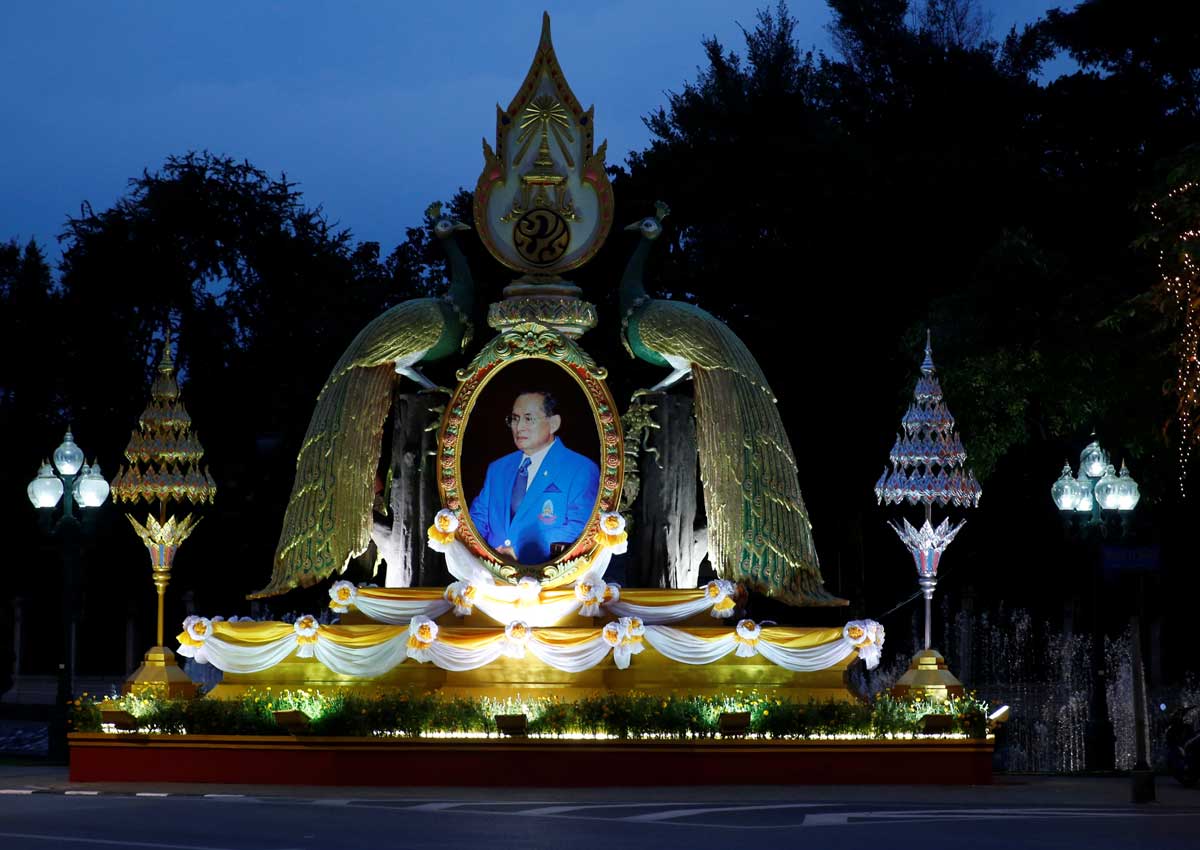
BANGKOK – The bespectacled image of King Bhumibol Adulyadej dominates public space in Thailand, from billboards on high-rises to portraits that flank leafy boulevards.

After seven decades on the throne, King Bhumibol is seen by many Thais as a pillar of stability, and accorded semi-divine status. But the kingdom marks his platinum jubilee on Thursday amid anxiety over his health and at a critical political juncture.

Celebrations will include a morning religious ceremony presided over by 770 Buddhist monks, a figure seen as auspicious.

The festivities will serve as a reminder to Thais of their relationship to a king who is regarded as integral to Thailand’s identity and a father-figure to the nation.

It may also jangle nerves about the succession, as most Thais have known no other monarch.

The king received heart treatment on Tuesday and has been in hospital for more than a year.

Crown Prince Vajiralongkorn, the king’s 63-year-old son, is the heir apparent. He has not achieved the same level of devotion that his father enjoys.

“The relationship between Thais and the king is deep, more than one can actually begin to explain,” Colonel Winthai Suvaree, a spokesman for the royalist junta, told Reuters.

“He is a father to the land.”

The monarchy has not always been held so highly in Thailand.

In 1946, at the age of 18, King Bhumibol inherited a throne that had barely survived the upheaval of the end of absolute monarchy in 1932.

That marked what an official biography of the king described as a nadir for the monarchy.

Over the following decades, the king earned the adoration of millions through work in public health and rural development, and with the help of a formidable public relations machine that returned the monarchy to prominence in a country where politics, was, and still is, largely dominated by the military.

The military has staged 19 coups or attempted coups since the end of absolute monarchy, often evoking its loyalty to the crown and defence of the monarchy in explaining its actions.

‘FIXED OUR PROBLEMS’

Crowds gather whenever the king’s convoy travels, and many people sport the colours of royal family members on their birthdays.

For some, the reverence reflects conformity in a country known for adherence to age old customs and its love of uniforms.

Others point to stringent royal insult laws that prevent criticism of the king, and which have been enforced with record jail terms under a junta that seized power in 2014.

For most, there is genuine affection.

“He travelled up and down the country and met the people and he heard and fixed our problems and that is why we love him,” said Yaovapha Thaitae, a noodle vendor working near the Bangkok hospital where the king is being treated.

The king’s jubilee comes amid a junta crackdown on dissent ahead of an August referendum on a constitution that critics say would extend the military’s influence at the expense of populist political forces that emerged to challenge the establishment as Thailand’s economy boomed in recent decades.

If voters reject the draft charter, a general election slated for 2017 could be delayed, likely prolonging tension between the military-dominated establishment and its rivals seeking a quick return to electoral politics.

Educational reforms under the junta have emphasised loyalty and love of the monarchy. King Bhumibol’s image is at the centre of every classroom in schools where education is largely by rote learning.

The national anthem is played in public places every morning and evening and people are expected to stand at attention.

Old footage of the king’s visits to rural communities is shown when his anthem is played in cinemas before every movie.

Many national holidays revolve around the royals. The king’s birthday is Father’s Day and Queen Sirikit’s is Mother’s Day.

“Holidays throughout the year praise Thailand’s king,” said Paul Chambers, director of research at the Institute of Southeast Asian Affairs in the city of Chiang Mai.

“Education and state emblems, virtues, slogans, also place the king at the centre of the nation.”

Such is the cult of personality surrounding the king that some analysts have made comparisons with North Korea.

“The Thai king’s image is ubiquitous,” said Chambers. “That is also true of leaders in Brunei and North Korea. Perhaps Thailand differs from those cases because the cult of personality leader in those countries rules directly.”

(Additional reporting by Aukkarapon Niyomyat; Editing by Simon Webb and Robert Birsel)

Image: 
Category: 
Publication Date: 
Thursday, June 9, 2016 – 09:26
Keywords: 
Send to mobile app: 
Source: 


Story Type: 
Others

Source link

China uses Swat teams to crack down on college exam cheats

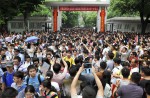
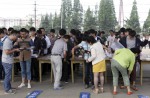
From sending Swat teams into exam centres to arresting rule-breakers, China’s public security authorities have been cracking down hard on college entrance examination cheaters who could face jail if caught.

This week’s university entrance exam, whose origins date back to imperial China, determines which university students will attend and what major they’re able to select – and as a result, much of their future.

This year, 9.4 million high school students have been taking the exam, known in China as the “gaokao”, competing for few places in universities, state media reported.

Students caught cheating risk for the first time going to prison, the official Xinhua news agency said, possibly for as long as seven years.

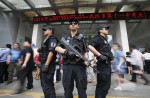
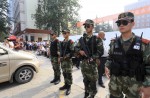
Exam test papers were delivered by a police Swat team in Beijing for the first time this year and at least eight police officers guarded each test centre, state media reported.

Authorities are cracking down on wireless devices and substitute exam sitters in particular, according to Xinhua.Police in the central province of Henan nabbed 9 people for selling fake exams, according to a local media report this week.

Dozens of others had been caught elsewhere in the country, state media said.Most university hopefuls sit the two-day test simultaneously across the country. Chinese, maths and a foreign language are required.

For students from rural homes, the exam has been praised as a leveller of the playing field and a catalyst for social mobility.

Xiong Bingqi, an expert at China’s 21st Century Education Research Institute, told Reuters by phone that China would continue to hit back hard against cheaters and the scams that aid them.

“There’s absolutely no doubt,” he said. “Cheating on the gaokao exam diminishes the exam’s authoritativeness, and could even impact the credibility of the government.”

“The government will take a whole series of measures to prevent that.”

Image: 
Publication Date: 
Thursday, June 9, 2016 – 08:50
Send to mobile app: 
Source: 


Story Type: 
Others

Source link

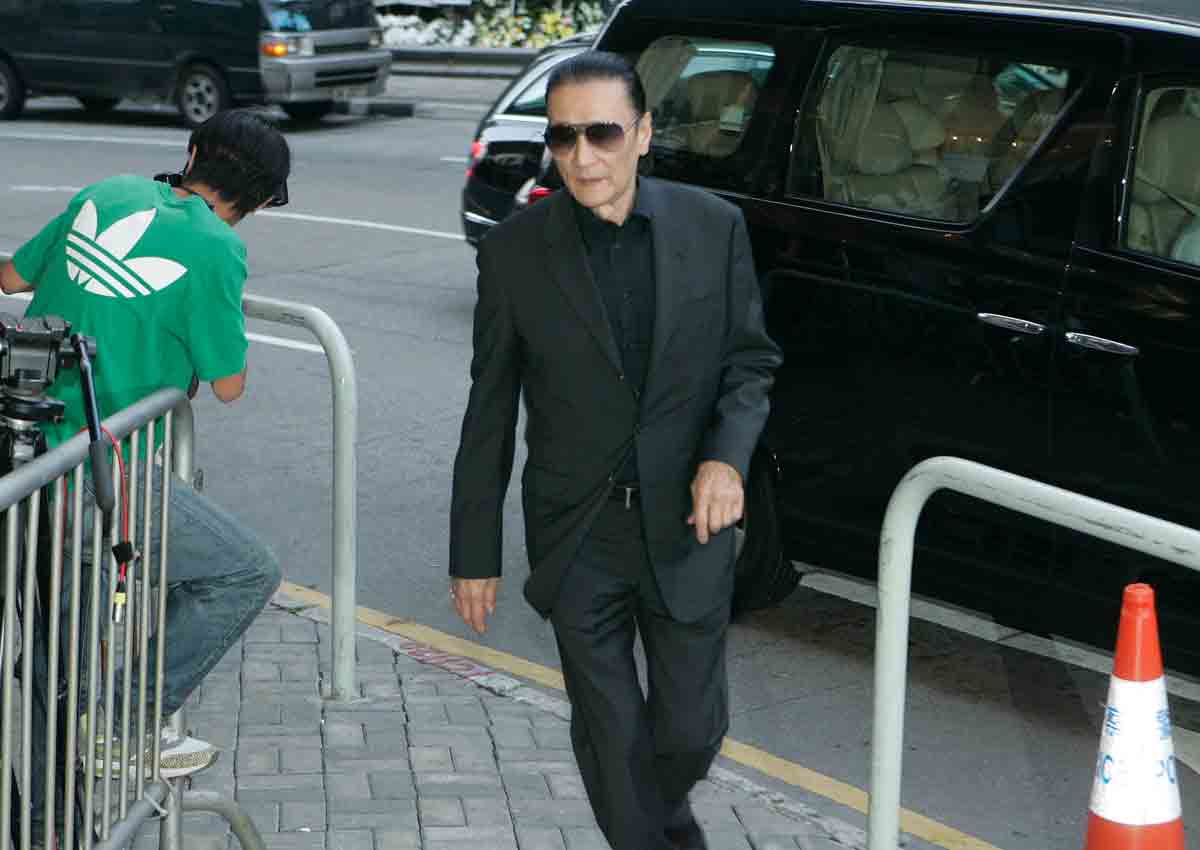
Actor Patrick Tse, 79, fractures rib in four-vehicle crash in Shenzhen

Actor Patrick Tse, 79, fractured a rib in a four-vehicle crash on a recent rainy day in Shenzhen and is taking a few days off from a TVB production, said reports on Wednesday (June 8).

Tse, who has returned to Hong Kong for treatment, said he was on his way to the set when a truck cut in on the car he was in.

He told Apple Daily: “My driver was anxious to avoid it. Three cars behind couldn’t stop in time, hit us and it became a four-vehicle collision. Mainlanders really drive any old how.”

He was sleeping and not wearing a seat belt at the time of the crash and fell off the seat, he said.

However, “I thought I was fine. Went into the studio, started working, shot two scenes, but my ribs began to hurt”, he added.

Afterwards, he went to hospital to have an X-ray but the doctor insisted he was okay, because “they photographed only my right ribs, not the left side, and it was a rib on the left that had cracked”.

He has since seen his usual doctor in Hong Kong, and is resting, he said.

Tse is reuniting with writer-director Wong Jing to star in a reboot of his 1980s TVB series The Shell Game. The remake also stars actress Charmaine Sheh, actors Nat Chan, Kenneth Ma and Lau Siu Ming.


This article was first published on June 8, 2016.
Get a copy of The Straits Times or go to straitstimes.com for more stories.

Image: 
Category: 
Publication Date: 
Thursday, June 9, 2016 – 08:41
Send to mobile app: 
Source: 


Story Type: 
Others

Source link

Can Singapore's military fatigues be worn as casual wear?

Reader Tan Pin Ho wrote to askST, noting that in Singapore, “it is illegal to use our National Flag for any other purpose other than to represent the country or during a national celebration. People from many other countries print patterns of their national flags on their T-shirts, shorts, even their underwear.

“However, I am not so sure about our army fatigues. Can we use them for casual wear?

“Most of the people I asked said we are not allowed to wear any form of army fatigues unless we are on active military duty; but many were unsure.”

Defence correspondent Jermyn Chow has the answer.

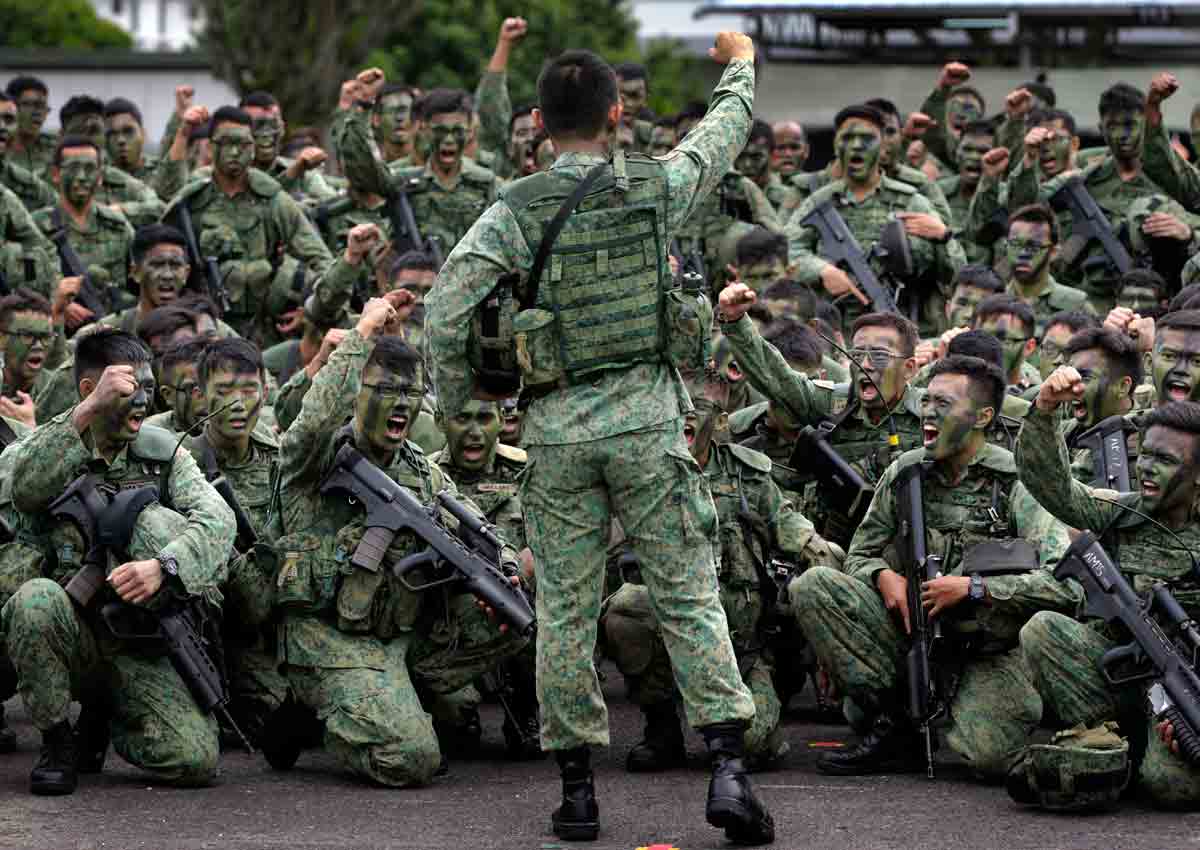
The SAF uniform should be worn only for military parades, training exercises, SAF operations and SAF-approved events or functions.

Under the Decorations and Uniforms Act, anyone who is caught for the unauthorised use of any part of the naval, military, air or police forces uniform, including badges and medals, can be convicted in the Magistrate’s Court. If found guilty, you can be fined up to $400 or jailed up to three months.

But such convictions are almost unheard of.

In 2013, the Singapore Army came out to publicly denounce the use of its fatigues in a publicity stunt organised by The National Geographic Channel.

Aimed at promoting the second season of a documentary on National Service here, called Every Singaporean Son 2: The Making Of An Officer, actors dressed as soldiers marched and took commands from passers-by at Raffles Place.

The campaign caused a public furore. People found the stunt inappropriate and demeaning to Singaporean soldiers.

The Singapore Army said on Facebook at the time that it was “very disappointed” with the stunt, because it was “disrespectful of our soldiers, and undermines the dedication and commitment of all our soldiers who have served dutifully in the defence of our country”.

It added that the army was not informed of the stunt or the use of its uniforms.


This article was first published on June 8, 2016.
Get a copy of The Straits Times or go to straitstimes.com for more stories.
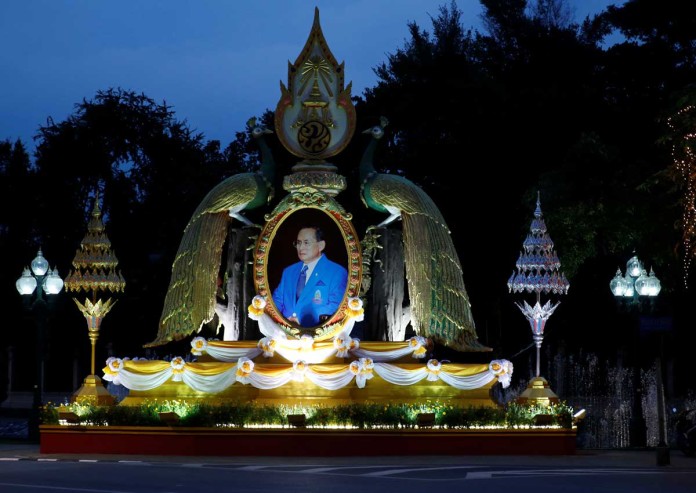
Image: 
Publication Date: 
Thursday, June 9, 2016 – 09:00
Send to mobile app: 
Source: 


Story Type: 
Others

Source link

Movie Review: Te3en

Bollywood legend Amitabh

Bachchan’s sincerity in his latest performance will tug at your heartstrings.

A remake of the 2013 Korean movie Montage, Te3n revolves around a grandfather’s (Amitabh) quest to get justice for…

Source link