 SINGAPORE – Despite being disbarred four years ago for professional misconduct, a former lawyer continued to provide legal advice to Chinese nationals involved in vice, and even taught one of them to delete incriminating information from his phone to avoid…
Source link
Disbarred lawyer convicted of acting as advocate and solicitor
Alibaba's Jack Ma: Fake goods often better than originals

BEIJING – China’s unbranded goods are often better than the branded originals they imitate, founder of e-commerce giant Alibaba Jack Ma has said, posing an additional challenge to the battle against sales of counterfeits.
“The problem is that the fake products today, they make better quality, better price than the real product, than the real names,” he said in a speech at Alibaba’s investor’s day in the southern city of Hangzhou Tuesday.
“They’re the exact factories, the exact raw materials, but they do not use that name,” he added.
20 funny Chinese copycat brands
Click on thumbnail to view photos. Source:
Internet screengrabs





















China’s factories have traditionally churned out products for branded companies at low cost, but with the rise of e-commerce platforms such as Alibaba, they are increasingly finding opportunities to market their own goods online directly to consumers.
More than IP problems or fake products, it was this shift to a new business model that was “destroying” traditional brands and “revolutionizing the whole world”, Ma said, noting: “The way of doing business has changed.” Alibaba has come under fire in recent years for the ease at which knock-off goods are available to consumers on its online Taobao marketplace.
Taobao is estimated to hold more than 90 percent of the domestic consumer-to-consumer market, while the company’s Tmall platform is believed to have over half of China’s business-to-consumer transactions.
As the leading force in China’s e-commerce industry, Ma said Alibaba could handle the problem of counterfeits “better than any government, any organization, any people in the world”, but that a continued market for cheap knock-offs was unavoidable.
Copycat world sculptures appear around China
Click on thumbnail to view photos. Source:
internet
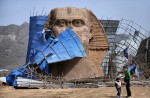












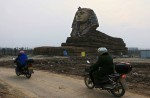






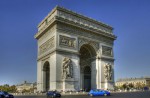




























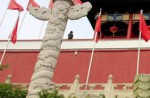




“We cannot solve the problem 100 percent, because it’s fighting against human instinct,” he said.
Yet the company’s efforts to date have been the subject of increasing scrutiny.
“It’s inappropriate for a person of Jack Ma’s status to say something like this,” Cao Lei, director of the China E-Commerce Research Center in Hangzhou, told Bloomberg News.
“For some individual cases what he’s saying might be true, but it’s wrong to generalise the phenomenon.”
Uncle Martian sports brand looks like rip-off of Under Armour
Click on thumbnail to view photos. Source:
Sina Weibo







Image:

Publication Date:
Wednesday, June 15, 2016 – 21:17
Keywords:
Send to mobile app:
Source:
Hermes ID:
2 371 515
Hermes ID String:
PKJACKMA15
Story Type:
Others
Part of Upper Changi Road East closed following 'road surface depression'
According to the Land Transport Authority, the road surface depression appeared at about 9.15am on Wednesday, where advance work for the Thomson-East Coast MRT line was being carried out.
Source link
S’pore’s transboundary haze laws should be welcomed by Indonesia: MEWR

SINGAPORE – Indonesia should welcome Singapore’s transboundary haze laws as an additional tool to curtail irresponsible acts that have caused the haze which has plagued both Indonesians and others in the region for decades, Singapore’s Ministry of the…
Source link
Car dealer jailed 7 years for scam involving S$3.2m
Poh Chee Tiong, 61, cheated 89 victims in a “systematic and elaborate” scam involving his second-hand car dealership.
Source link
Singapore named best seaport in Asia for 28th time
At the 2016 Asian Freight, Logistics and Supply Chain Awards on Tuesday (Jun 14), home-grown global container group PSA also received the “Best Global Container Terminal Operating Company” and “Best Container Terminal – Asia (Over 4 million TEUs)” awards.
Source link
Transboundary Haze Pollution Act not about national sovereignty: MEWR
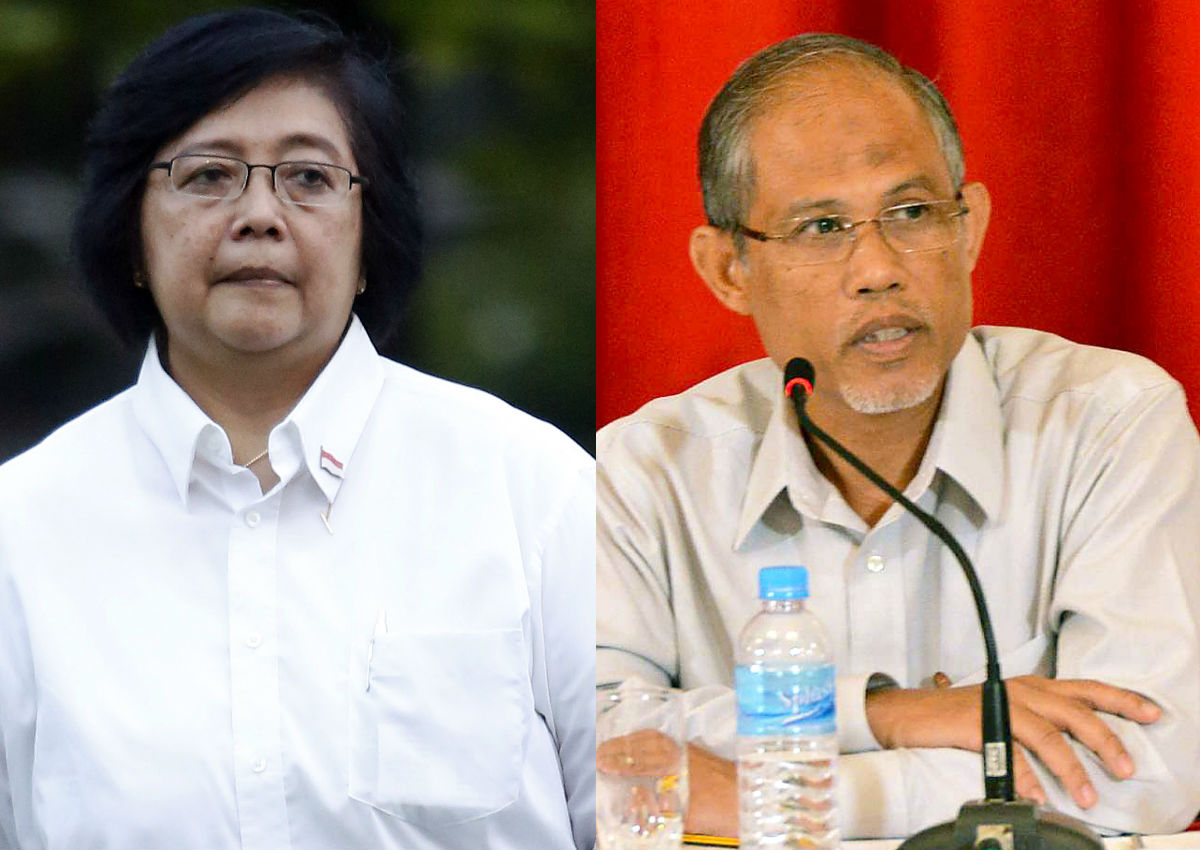
The Ministry was responding to comments by Indonesia’s Environment and Forestry Minister Siti Nurbaya Bakar on Singapore’s attempts to act against Indonesian companies responsible for haze-causing forest fires.
Source link
Tweak annual town council report to incorporate residents’ role in estate cleanliness: MPs
Some say there is merit in publishing details that allow residents to see where town council workers have fallen short, and instances in which residents may be at fault for lapses in cleanliness.
Source link
Singapore rebukes Indonesia's remark on legal intervention on haze act
SINGAPORE – The Transboundary Haze Pollution Act (THPA) has nothing to do with sovereignty or national dignity, the Ministry of the Environment and Water Resources (MEWR) emphasised in a sharply-worded rebuke to Indonesian Environment and Forestry Minister Dr Ir Siti Nurbaya Bakar.
Dr Nurbaya had said earlier on Monday (June 13) that Singapore could not “tread on the realm of law that was under Indonesia”, and that Singapore’s actions showed that it “did not respect Indonesia”.
Reiterating that the THPA is targeted at commercial entities responsible for transboundary haze pollution in Singapore, an MEWR spokesperson said: “The THPA was drafted with advice from experts in international law and complies with international law. It is not directed at any individual nor company based on nationality.”
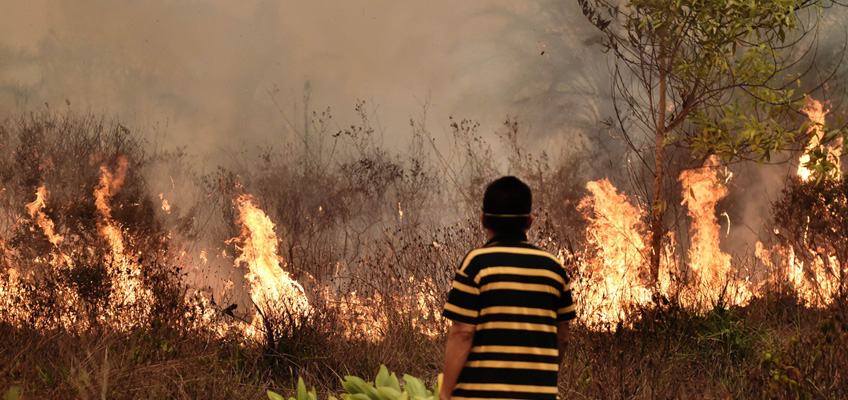
“Indonesia should welcome this additional tool to curtail irresponsible activities that have affected the health, social and economic well-being of Indonesians and people in the region.
“If anything, the companies will hide behind any opacity if they can, to avoid being held accountable and further perpetuate the haze problem that has plagued the region for decades.”
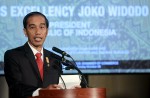
Indonesia president Joko Widodo cuts short US trip due to haze
Click on thumbnail to view photos. Source:
AFP, Reuters
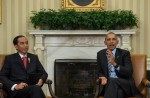
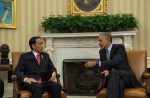

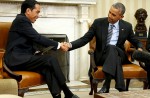

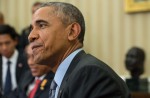

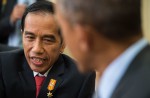
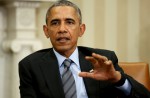
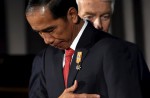
On May 11, Singapore’s National Environment Agency (NEA) had obtained a court warrant against an Indonesian company director after he failed to turn up for an interview despite being served a legal notice.
The Indonesian was summoned to explain measures his company has taken to mitigate fires on its concession land.
The Indonesian government then issued a series of conflicting statements, starting with its Foreign Ministry spokesperson Arrmanatha Nasir, who claimed that Indonesia had lodged a “strong protest” against NEA’s actions.
A spokesperson from Singapore’s Ministry of Foreign Affairs (MFA) clarified one day later on May 13 that it did not receive any presentations from the Indonesians.
“Mr Arrmanatha’s remarks are puzzling,” the MFA spokesperson said.
On Sunday (June 12), Indonesian Vice-President Jusuf Kalla said that Jakarata would not allow its citizen to be “processed” under Singapore’s law, The Straits Times reported.
“If there is an offence, Singapore can take action, but (the offence) occurred in Indonesia, that is the concern,” he said in the same report.
Commenting on Dr Nurbaya’s comments, veteran Singaporean diplomat Mr Bilahari Kausikan said on his Facebook page on Tuesday (June 14) that Singapore is enforcing its own laws.
“The only reason we are “entering into their legal domain” is because they have been singularly ineffective in enforcing their own laws,’ he wrote.
The straight-talking ambassador-at-large added: “What they are claiming is we cannot enforce our own laws against an Indonesian national which is tantamount to claiming extraterritorial immunity for Indonesians.
“This is not merely arrogant but patently absurd, or at least absurd if one did not have reason to suspect that the individual in question was not connected to senior Indonesian figures who may be complicit in the environmental crimes we want to question him about.
“From that perspective the Indonesian position is entirely logical.”
grongloh@sph.com.sg
Image:
Publication Date:
Wednesday, June 15, 2016 – 19:32
Keywords:
Send to mobile app:
Source:
Rotator Image:
Story Type:
Rewritten Story
4 Indonesians jailed over IS-linked terror plot

JAKARTA – An Indonesian bombmaker inspired by an Islamic State extremist was sentenced Wednesday to five years in prison for plotting to blow up a Buddhist temple on Java island.
The court heard that Ibad, who like many Indonesians goes by one name, received funding and guidance for the attack from Bahrum Naim, a radical Islamist linked to the January suicide attacks in Jakarta that left eight people dead.
Three others – Sugiyanto, Saifudian and Yus Karman – were also found guilty of terrorist offences in a Jakarta court and sentenced to four years and eight months over their role in the failed bomb plot.
ISIS activities in Southeast Asia
Click on thumbnail to view photos. Source:
BHM, The Star/ANN, Royal Malaysian Police, Utusan Malaysia, AFP, Reuters, YouTube screengrabs





















Ibad’s lawyer said his client had been lured by Naim through social media to carry out an attack. The two had known each other for many years before Naim travelled to Syria and rose to notoriety among Indonesian extremists fighting for the so-called Islamic State group.
“Ibad is Bahrun Naim’s childhood friend,” the lawyer Kamsi told AFP outside the East Jakarta courtroom.
“Naim lured Ibad to join him by saying it was easy to get a job in Syria, and told him to detonate a bomb in Solo.” Naim sent cash via an Indonesian bank to fund the operation, the court was told. Ibad handled the cash and recruited the others to find a suitable target in Solo, a midsize city on the main island of Java.
The group assembled a bomb but were arrested by police just days before launching their attack.
A sustained crackdown in Indonesia, the world’s most populous Muslim-majority country, weakened many of the most dangerous extremist networks responsible for a string of deadly homegrown attacks during the 2000s.
But the attack in downtown Jakarta earlier this year, the first claimed by IS in Southeast Asia, sparked fears of a resurgence in militancy.
Police alleged Naim masterminded the attack from Syria, where his exact whereabouts remain unknown. Four militants and four civilians died in the coordinated suicide bomb and gun attacks carried out in broad daylight in the Indonesian capital.
Police believe hundreds of Indonesians have travelled to Syria to fight with militant groups including IS.
Publication Date:
Wednesday, June 15, 2016 – 18:59
Keywords:
Send to mobile app:
Source:
Hermes ID:
2 371 149
Hermes ID String:
PKCRIME15A
Story Type:
Others


