Home Blog Page 3648

New online streaming site FilmDoo to offer Southeast Asian indie movies

0

Streaming video is the future for independent films from Thailand and other Southeast Asian countries, with new online platforms popping up to offer hard-to-find movies online, among them FilmDoo, a UK-based video-on-demand (VOD) startup that was launched at the Cannes Film Festival.

While most of FilmDoo’s “bespoke” content is available only for viewing in the UK and Ireland, FilmDoo recently made a move to attract customers in Thailand and elsewhere with a worldwide slate of titles that include “The Last Executioner”, “Mindfulness and Murder” and “Boundary”.

And it turns out, FilmDoo was co-founded by a Thai, Weerada Sucharitkul, who got into movies after university in Thailand and then studying management on scholarship at Cambridge. It was a stint as a management consultant that gave Weerada “first hand exposure to digital innovation and IT strategy”.

That was coupled with a desire to see the 2012 South Korean palace-intrigue drama “Masquerade”, which was a smash hit all over the world but for various reasons could not be seen anywhere in the UK.

“We looked at the world outside of Hollywood and realised that there are thousands of films being produced around the world every year, many of which never get seen or are heard of. That became the ethos behind FilmDoo – to bring people together through films,” says Weerada, who co-founded FilmDoo with William Page. “Ultimately, FilmDoo is also an extension of who I am. As a child of a Thai diplomat, I had the opportunity to grow up and live in 10 countries and five continents. FilmDoo unites my three passions in life – films, technology and connecting people through all things international. I am very proud and excited at the opportunity that FilmDoo is now able to play its part in helping to showcase many brilliant films from Thailand and Southeast Asia to the global community, many for the first time to be shown internationally.”

Tom Waller, the producer and director behind many of FilmDoo’s offerings, including “Last Executioner” and “Mindfulness and Murder”, has greeted the new venture with open arms.

“I welcome any streaming service that can give me films to watch legally, which I wouldn’t have otherwise be able to see,” he says.

Waller’s Bangkok-based De Warrenne Pictures has made most of its catalogue available, including the Cannes-selected art-house oddball “Soi Cowboy” and the under-rated horror “Ghost of Mae Nak”.

“With FilmDoo, I decided to offer all of the titles we have distribution rights for, since this will be the first time that some titles are being distributed online in Thailand, legally that is,” says Tom. “Now you can watch all the films we produced in Thailand. Some of the titles are available worldwide for the first time with English subtitles, such as ‘Mindfulness and Murder’ and ‘The Last Executioner’, and older titles like ‘Butterfly Man’ and ‘The Elephant King’, which people may have missed, can hopefully enjoy a renaissance online.”

Weerada reckons VOD platforms like FilmDoo will become important parts of the revenue stream for indie filmmakers, citing a huge growth in what’s called “over the top” (OTT) revenue from customers who are cancelling their cable-TV subscriptions and signing up with other services, which range from the big players like Netflix and Amazon to the Thai start-up iFlix.

FilmDoo aims to be different by concentrating its offerings on smaller, independent films. Other Thai offerings include the documentary “Boundary” and Laos chips in with “At the Horizon” and “Vientiane in Love”.

“The key to making online streaming a sustainable platform will be for independent film makers to work together with the platforms and to view the latter as an integrated distribution and marketing platform that will not only deliver their content but will help market their content to the right audiences,” she says. “This is especially important for independent films, whose type of films are lost in a sea of Hollywood content on the major platforms. For example, at FilmDoo, we don’t just put a film on the platform – we will always work with the filmmakers to help market and promote the film to our networks, social media, newsletter, press release and create marketing assets such as promotional videos and banners.”

Tom, who has put his company’s films “Patong Girl”, “Soi Cowboy” and “The Elephant King” on FilmDoo exclusively for Thailand, says it’s a good deal so far.

“For us, the key is to try and drive as much traffic to FilmDoo to encourage audiences to try out the service. The cost of watching a movie is not expensive, and more than half of the money will actually come back to us,” he says. “We dealt with FilmDoo directly, so we’re not going through any third party distribution companies who usually will take their cut. But we still need mass volume before it becomes a profit-turning exercise. Films are expensive to make, and they don’t always make their money back!”

For now, FilmDoo works best on a personal computer, or a PC connected to a TV. Support for other devices is in the works.


Image: 
Category: 
Publication Date: 
Friday, June 17, 2016 – 12:20
Send to mobile app: 
Source: 


Story Type: 
Others

Source link

Chilling video shows daredevil climbing skyscraper pole in Shanghai barehanded

0

If you’re not a thrill seeker, you would probably not understand why this climber decided to scale a steep, narrow skyscraper pole in Shanghai – with nothing but his bare hands.

Known as “Chernobro” to his followers on Instagram, the daredevil posted a video of his adventure on his account last month, and it has since been shared on other platforms like YouTube.

In the video, Chernobro is seen climbing the steep pole before sitting at the top of the pole to pose for the camera. 

The entire video was shot using a drone with the help of Alex Kerkis, a fellow Instagrammer and drone photographer, reported Shanghaiist

The video was also shared on YouTube by OSH group – the people who commissioned the video. 

Comments that surfaced online expressed a mix of excitement and fear as netizens wrote about how watching the video made them feel. 

These were some of their comments:

However, this isn’t the first time we’ve seen someone attempt something crazy like this. Daredevil acts like this have become somewhat of a trend among youths and young adults on social media.

For example, remember the youth that was lucky to be alive after his cliff jump went wrong? What about the “rooftoppers” in Singapore who took photos of themselves doing risky stunts on skyscrapers?

Well now we can add Chernobro to the growing list of thrill seekers in the world. 

And if there’s a daredevil in you, you might also be interested in the eight scariest bridges in the world

mldas@sph.com.sg

Image: 
Category: 
Publication Date: 
Friday, June 17, 2016 – 14:12
Send to mobile app: 
Source: 


Rotator Image: 
video embed code: 
<iframe width="100%" height="315" src="https://www.youtube.com/embed/Xx1_K7RED4o" frameborder="0" allowfullscreen></iframe>
Video Media: 
Other Video Media
Story Type: 
Rewritten Story

Source link

The cleanest village in Asia

0

In a country known for its lack of sanitation – an issue Prime Minister Shri Narendra Modi has formed a national programme to address – this humble village is a model of cleanliness.

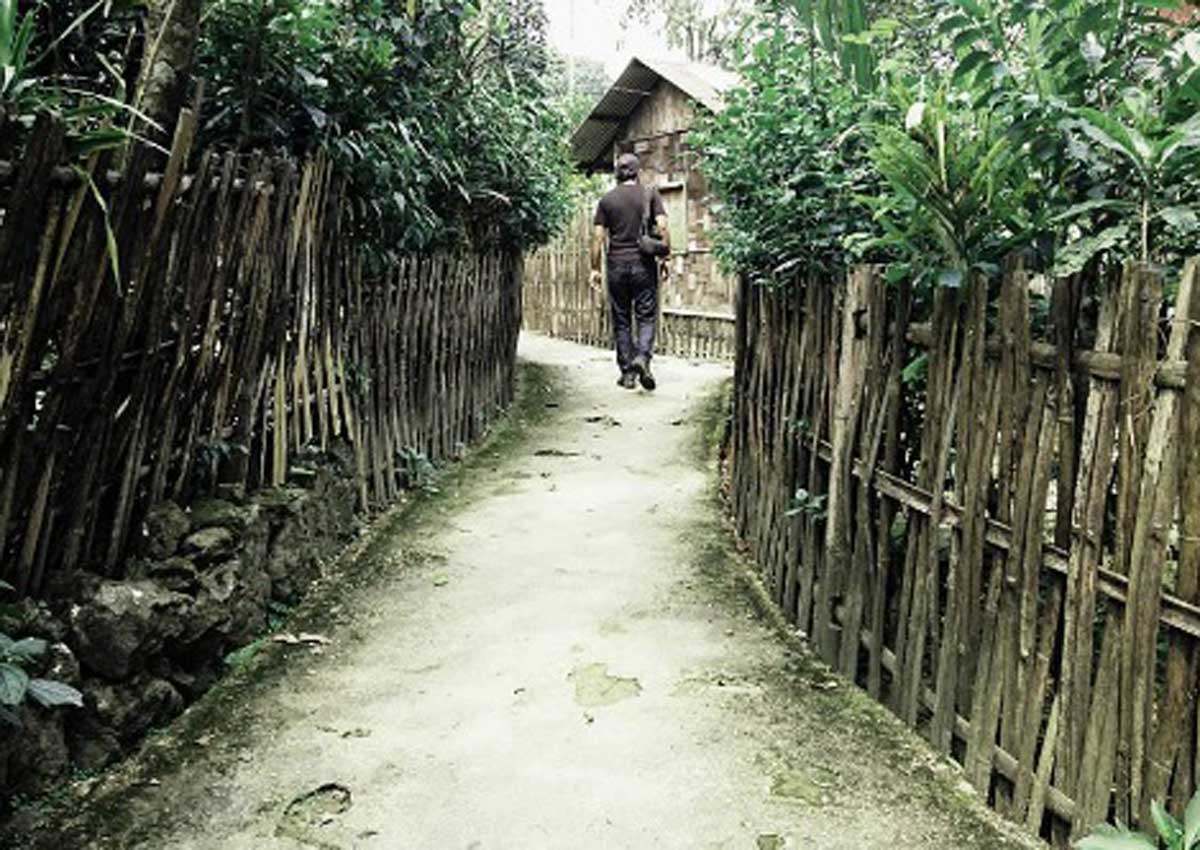
In eastern India’s Mawlynnong village, tidying up is a ritual that everyone – from tiny toddlers to toothless grannies – takes very seriously. This small, 600-odd person town in the Meghalaya region is renowned as the cleanest village in India.

And for India, that’s really saying something. Discarded bottles and crumpled food wrappers mixed with cow dung – and worse – are simply part of the topography in most of the country.

So much so that prime minister Shri Narendra Modi launched the ambitious “Clean India Mission” (Swachh Bharat Abhiyan) in October 2014 with a goal of drastically sprucing up the country’s major cities by Mahatma Gandhi’s 150 birthday in 2019.

Mawlynnong is already way ahead of the curve, though. It was declared the cleanest village in Asia in 2003 and the cleanest in India in 2005 by Discover India magazine.

More recently, Modi acknowledged Mawlynnong as the cleanest village in Meghalaya and a model for the rest of the county in a 2015 radio address.

In May 2016 he highlighted it as “Asia’s cleanest village” in a celebration of the government’s successes (including the Clean India programme).

This claim to fame stuck, and the village has become a regional legend and source of pride. Walk in, and all the typical rubbish is mysteriously, miraculously absent.

So how do you get a community to become a model of cleanliness and sanitation in a country where this has long been a problem? The answer, it seems, is to start them young.

Eleven-year-old Deity Bakordor starts her day around 6:30 am. Her chore, shared with all the village kids, is the beautification of the town.

Teasel brooms in hand, the children storm the streets, sweeping up dead leaves and garbage before school.

Read the full article here

Image: 
Category: 
Publication Date: 
Friday, June 17, 2016 – 12:08
Keywords: 
Send to mobile app: 
Source: 


Story Type: 
Others

Source link

Awfully Chocolate Free $10 Dine-In Voucher from 17 Jun 2016

0

Awfully Chocolate free $10 dine-in voucher when you fill a short survey. Voucher valid for use at their new Holland Village outlet

Awfully Chocolate Free $10 Dine-In Voucher from 17 Jun 2016

Awfully Chocolate is taking over the space at Everything with Fries in Holland Village! Receive a free $10 dine-in voucher when you fill up a short survey

Source

Sheltered walkway collapses at Bukit Batok West

0

No one was injured in the incident, although a stationary car was crushed by the collapsed shelter.

Source link

31-year-old suspect arrested over obscene acts in Yishun

0

Preliminary investigations revealed that the suspect is believed to be involved in at least four cases of obscene acts in Yishun, say police.

Source link

Pedestrian shelter collapses on car at Bukit Batok HDB carpark

0

SINGAPORE – At least one car was severely damaged after a pedestrian shelter collapsed across the car park at Bukit Batok West Ave 6, Block 116 on Friday morning (June 17).
There were no injuries reported, said the Singapore Civil Defence Force (SCDF) in a…

Source link

Xinjiang bets on cockfighting to woo tourists

0

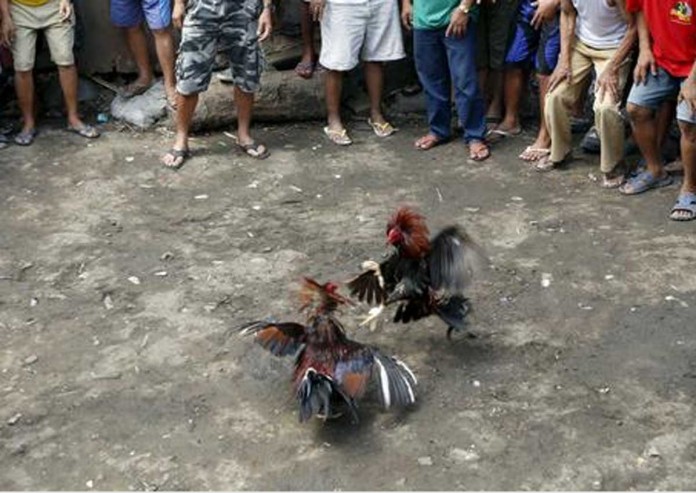
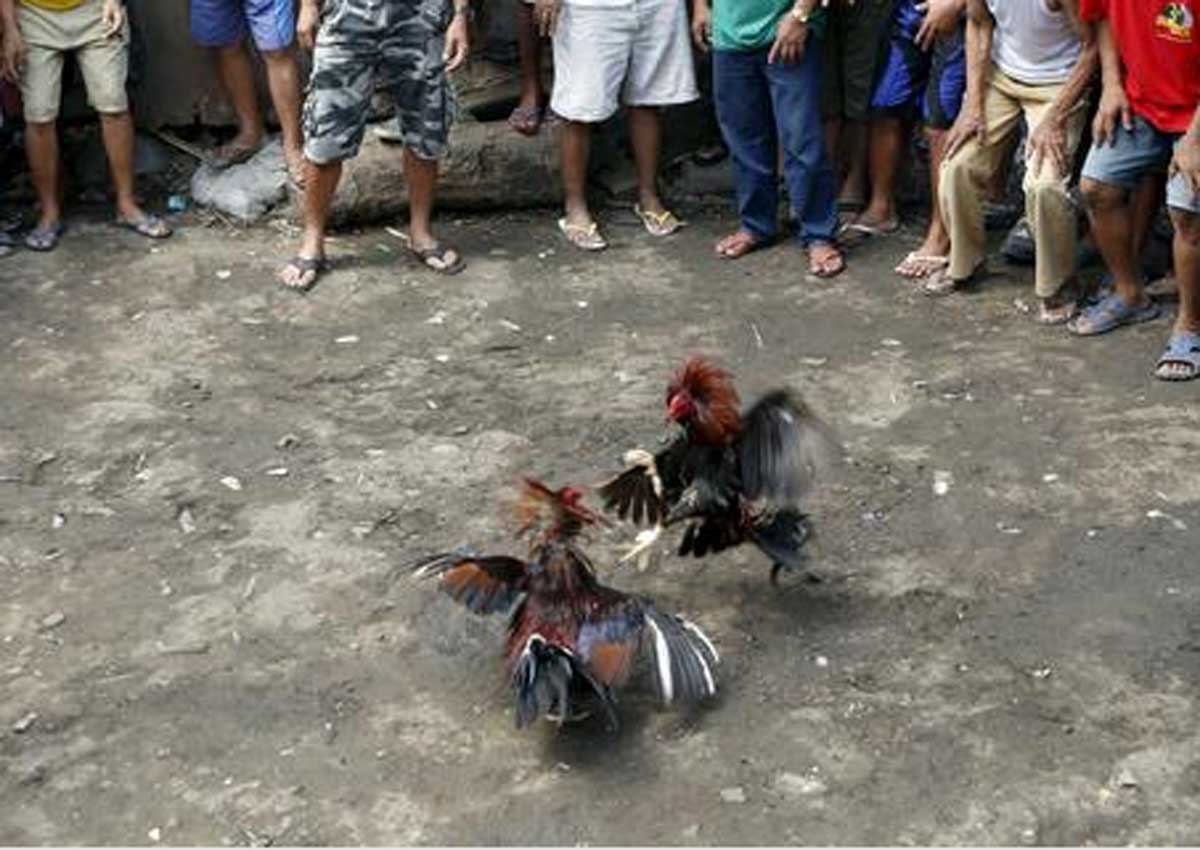
After a fierce fight, silver-haired Ismail Iblahim took out his medicated liquor and prepared to give the champion a massage.

“This helps him relax,” said the 60-year-old, while soothing his big black rooster.

The man and his bird live in Turpan in Northwest China’s Xinjiang Uygur autonomous region.

The city, less than 200 km from the regional capital Urumqi, is one of four in China with a long cockfighting tradition.

Turpan’s famed Flaming Mountains, which appeared in the Chinese classic A Journey to the West, and its ancient ruins, Buddhist grottoes and other archaeological sites, drew 5.12 million tourists last year, up more than 10 per cent from the year before.

The city and its occupants are hoping cockfighting will help them grab a chunk of the region’s growing tourism revenue, which reached 5.1 billion yuan (S$1.04 billion) in 2015, a yearly increase of more than 15 per cent.

Nearly 100,000 people, or about one-sixth of the city’s population, are involved in the game-fowl trade, said Perhat Kadir, a government official who wants cockfighting to become a major industry and tourist draw for the city, which is famous for its vineyards and hot, dry climate.

“Just like Spain is famous for bullfighting, we hope that cockfighting can become a hallmark of Turpan,” he said.

Cockfighting has been a pastime in Turpan for more than 280 years and a worldwide sport for much longer, though it has been banned in many Western countries and is controversial, even in China.

Unlike chickens raised for food, which mainly eat grain, game fowl are raised on sorghum, beef, walnuts, eggs and tomatoes.

Fighting roosters are big and belligerent, with strong legs and cherry-colored cockscombs.

Following in the footsteps of his father and grandfather, Ismail Iblahim has been raising fighting cocks for 40 years.

Before each contest, he takes his roosters out to sunbathe.

After the match, he washes the exhausted birds in water infused with Chinese herbal medicine.

Called the “Cockfighting Czar”, Ismail Iblahim is well-known in fighting circles.

His roosters have won many gold and silver medals regionally.

In contests held in early April, three of his roosters won their matches, two lost and five ended in a draw.

“In a match, I can tell which rooster is going to win after only a glimpse at them,” he said proudly.

He now works for Bari Hupur, known as “Cockfighting Bari”, who has been organizing cockfighting contests for 10 years.

Bari Hupur has a big courtyard for hosting matches, charges spectators an admission fee and sells refreshments.

Ismail Iblahim earns about 5,000 yuan a month from raising and training the birds, a handsome paycheck in the city, and his roosters are worth 10,000 to 30,000 yuan each.

Perhat Kadir, who heads a development team for the city’s cockfighting industry, said a cockfighting association will be established by the end of the year to promote the sport and draw tourists from across China.

“We are going to set up arenas in markets and bazaars to boost people’s interest in the sport,” he said.

He also noted that the industry will be strictly regulated.

“We will bring it into the daylight from the underground so that illegal gambling is eliminated,” he said.

Not everyone is enthusiastic about the city’s new tourism strategy.

Many consider cockfighting a form of animal cruelty, and the practice is not without controversy in China.

“The culture of a nation should progress along with its economic growth. Isn’t it crooked to seek pleasure from two creatures fighting, even watching them die, in front of you?” asked He Yong, country director with the International Fund for Animal Welfare in China.

Ismail Iblahim said it was hard to watch his roosters get hurt, adding that he does take them to a vet for care when they are injured.

In a recent match, his rooster “Black Chap” died after fighting for four hours.

An official from the Turpan Bureau of Culture, Broadcasting, Sports and Film, who identified himself only as Alim, said it never occurred to him the sport would be controversial.

“I just hope that the traditional game can help locals improve their lives,” he said.

Image: 
Category: 
Publication Date: 
Friday, June 17, 2016 – 11:42
Keywords: 
Send to mobile app: 
Source: 


Story Type: 
Others

Source link

The man who had his clothes torn off

0

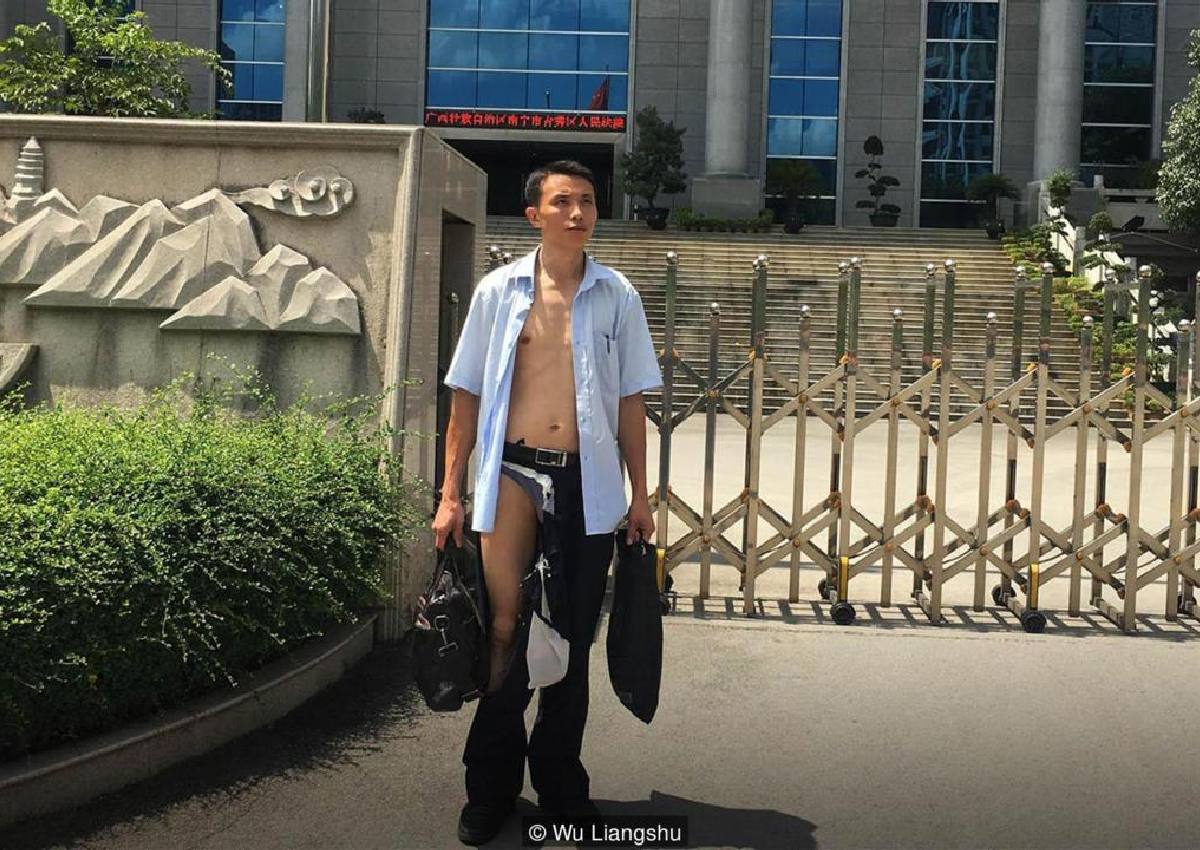
Photos of a Chinese lawyer who was allegedly attacked by policemen in court went viral this week. Kelly Grovier explores the history of violent disrobement.

It is an archetypal scene, rehearsed countless times on the cracked surfaces of ancient altar panels and on the stretched-linen canvases of art history: a sacrificial figure, humiliatingly stripped of his clothes by brutish authorities, stands before a court of justice.

But in this instance, the image does not date back to medieval or Renaissance Christian iconography and it is not to be found on the walls of a Western museum, church, or cathedral.

Rather, the digitised pixels that comprise the photo of a bedraggled Chinese lawyer, who was allegedly assaulted by policemen this week before a panel of judges in a district court in China, have pulsed through the optic fibres of online news platforms and social media, leaving readers across the globe aghast at the sight of such apparent judicial thuggery.

The photo was captured in Nanning, Guangxi, shortly after the lawyer, Wu Liangshu, was informed that his request to file a case had been denied.

Accused of illegally recording court proceedings, Wu was ordered to hand over his mobile phone for inspection. When he refused, he claims that court officials violently attacked him and nearly ripped his clothes entirely off his body.

Aware that his tattered appearance would resonate more powerfully as a statement against state brutality than anything he could say or write, Wu strode from the courthouse and stood in the crosshairs of the camera lenses waiting outside.

The result is an astonishing image that, through the aperture of Western aesthetics, seems to echo the choreography of many depictions of the soon-to-be-crucified Christ, arrested, man-handled, and frog-marched to judgment before the high priest.

Read the full article here

Image: 
Category: 
Publication Date: 
Friday, June 17, 2016 – 11:40
Send to mobile app: 
Source: 


Story Type: 
Others

Source link

Dozens of whales stranded on East Java coast, 15 likely dead

0

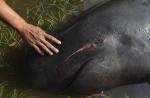
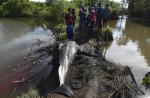
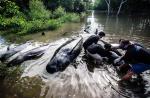
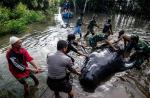
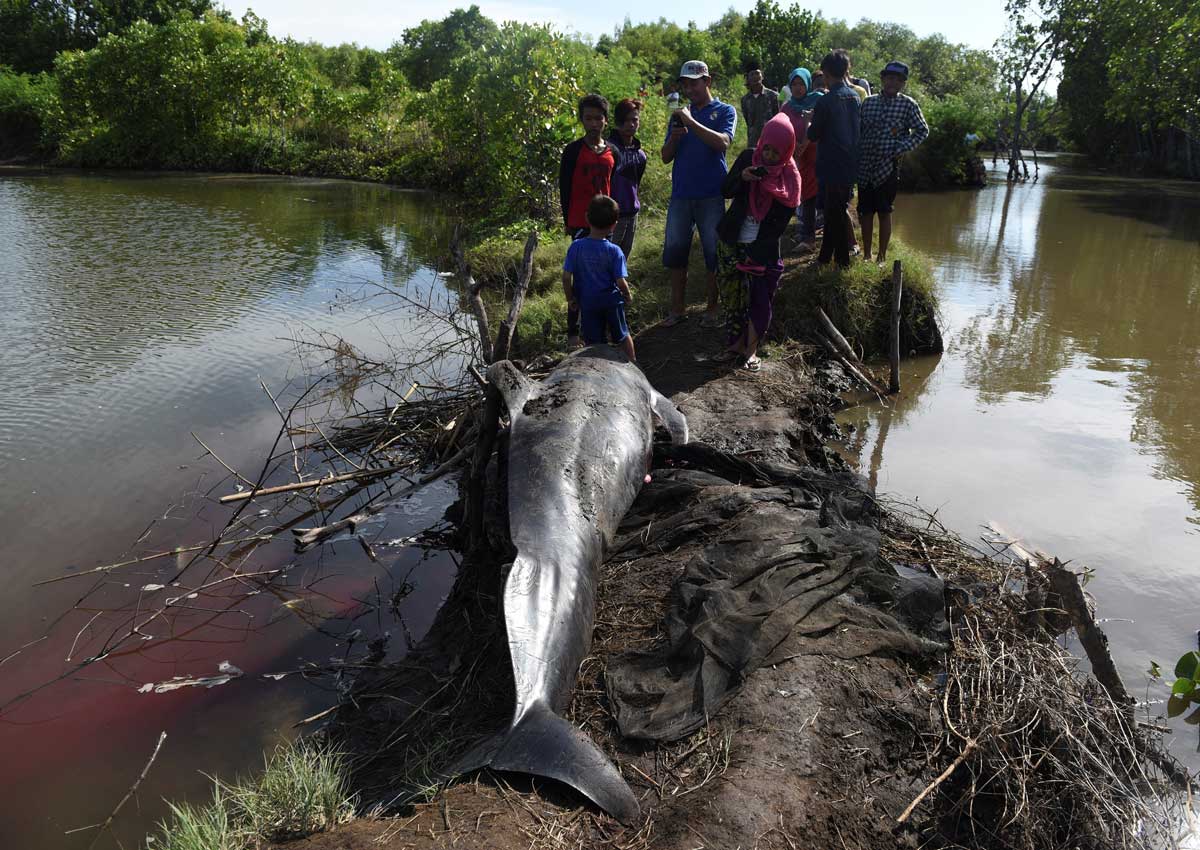
Dozens of pilot whales have beached on the coast of East Java, discovered on Wednesday by residents in Probolinggo, East Java.

The giant marine mammals are thought to have become stranded due to changes in the sea temperature.

The short-finned pilot whales were seen around the shore on Wednesday afternoon.

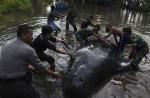
Most managed to return to the sea but returned to shore as one had become stuck, leaving them all trapped by the sudden low tide.

Wahid, the Maritime Resources Management Office head, said at least 32 pilot whales had been found stranded.

Seven of them were less than two meters in length and the local fishermen had tied them to prevent them getting washed further ashore.

“Approximately 25 whales came ashore around the estuary, 15 of these whales are not moving and are likely dead […] the colony may have been searching for cooler waters but got stranded,” he said as quoted by kompas.com in Jakarta on Wednesday night.

The local residents have taken the deceased whales to land, through the creek, for burial.

According to local tradition, the residents must hold a burial for dead whales as they believe that whales purposely come ashore to end their journey.

“What do you expect us to do? If they are still alive, we will surely help them return to deep sea. The dead ones, we must bury them,” said the Pesisir village chief Sanemo. 

Image: 
Category: 
Publication Date: 
Friday, June 17, 2016 – 11:26
Send to mobile app: 
Source: 


Story Type: 
Others

Source link