Home Blog Page 359

Singapore faces deeper-than-forecast recession as virus clouds global outlook: MAS

0

[ad_1]

A recession in Singapore’s trade-reliant economy could be deeper than forecast as the protracted nature of the Covid-19 pandemic is likely to hamper a decisive rebound in global activity, the city-state’s central bank said on Tuesday.

“There remains significant uncertainty over the severity of the downturn, as well as the eventual recovery,” the Monetary Authority of Singapore (MAS) said in its semi-annual macroeconomic review.

“The materialisation of downside risks … could tip the growth outcome in Singapore below the forecast range.”

[ad_2]

Source link

Man posts support for health heroes… while showing off social gatherings on Instagram

0

[ad_1]

The internet never forgets — especially if you post your support for frontline workers and appear to flout circuit breaker measures in the same breath.

One man has been called out in a now-viral Facebook post on April 26 for allegedly showing off home visits from his friends, all while peppering his posts with #stayhome and taking part in Sing Together Singapore!, a mass singalong session in honour of frontliners and migrant workers.

[ad_2]

Source link

Grid Mobile launches 20GB no-contract mobile plan at $17.90 per month

0

[ad_1]

Grid Mobile launched another no-contract mobile data plan, effective today. For $17.90 a month, users are entitled to:

  • 20GB of local mobile data
  • 120 minutes of outgoing calls
  • 50 SMSes
  • Free unlimited incoming calls
  • Free Caller ID
PHOTO: Grid Mobile

This new plan is not limited to new subscribers only. Grid Mobile said that their new $17.90 per month plan is available to users with numbers porting in from another service, users with brand new Grid Mobile numbers, and users with existing numbers on Grid Mobile.

The other no-contract plan at Grid Mobile is a $24.90 per month package that offers 40GB of data, 200 minutes of outgoing calls, 200 SMSes, free incoming calls and Caller ID, as well as free 1GB roaming data in Malaysia that’s applicable to new sign-ups only.

This plan has evolved over time, as it originally started out at just 20GB per month.  

[ad_2]

Source link

Audio retailer TC Acoustic to continue paying freelance staff despite shuttered stores

0

[ad_1]

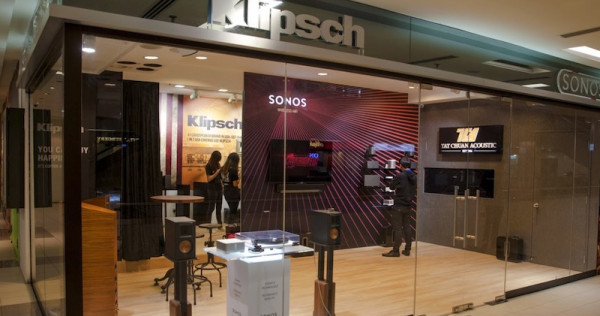
Homegrown audio tech store TC Acoustic have long been known to be a trusted haven for Singapore’s audiophiles, but apparently, it’s a sanctuary for its employees as well. 

While other local businesses might be considering (or have even carried out) pay cuts and layoffs amidst the economic instability during the global pandemic, the husband-and-wife owners of TC Acoustic have decided to do just the opposite with an initiative they’ve dubbed #TCcares. 

Since the circuit breaker measures kicked in, the company’s freelance promoters have been out of the job — the TC Acoustic showroom and the many other retail outlets where its contract staff have been stationed at (like Harvey Norman and Challenger) had to shutter to abide by the imposed rules.  

It affected close to 70 individuals, according to TC Acoustic, some of whom are even dependent on their stream of income from their freelance jobs. A portion of the promoters are under the age of 21 as well, and that meant that they did not qualify for the $600 solidarity payout granted to all adult Singaporeans earlier this month. 

[ad_2]

Source link

GrabFood deliveryman 'speechless' after kind customer orders meal for him and colleagues

0

[ad_1]

While the Covid-19 outbreak has not been easy on anyone, little acts of kindness here and there have helped to brighten the days of those who are struggling.

Stomp contributor Derrick, who is currently working as a GrabFood deliveryman, was left shocked and speechless by a customer’s heartwarming gesture on Friday (Apr 24).

He said: “I’m a Grab car driver who is doing GrabFood delivery for the time being.

“During this situation, I believe everyone is not having a good time. Most of us are struggling to put food on the table, but there is always a kind person out there making someone’s day.

“I received an order from Crave at White Sands shopping mall from a lady known as Ms CYN at around 6.30pm on Friday.

“It was a normal order to me, and as I was in the midst of fetching and delivering the previous order, I did not really take a good look at the message that she had sent.

“When I finished my pervious order, I was shocked when I saw the message telling me that the food was actually ordered just for me and my fellow colleagues.

“At the same time, the customer called me to check whether had I received the message.

[ad_2]

Source link

Singapore ramping up testing capacity for foreign workers: Gan

0

[ad_1]

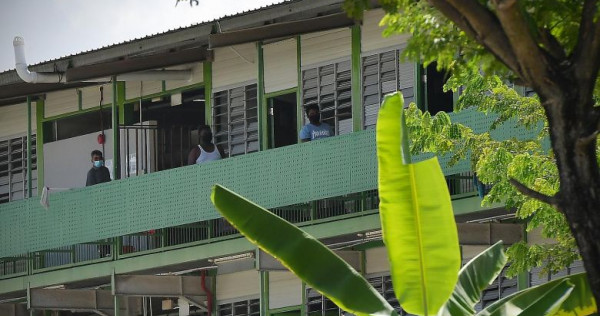
Singapore has been increasing its capacity to test foreign workers for Covid-19, instead of slowing down the rate of testing, said Minister for Health Gan Kim Yong.

“There have been some comments that we have reduced the testing of migrant workers, leading to a drop in the number of Covid-19 confirmed cases, ” he said at a multi-ministry press conference yesterday.

“Let me say that this is not true. Our testing capacity for migrant workers is about 3,000 a day.

“We have not reduced it. Instead, we have been increasing the capacity of testing of our migrant workers. The rate of testing has not slowed down.”

Mr Gan’s comments came after some experts cautioned that the recent dip in Covid-19 numbers among migrant workers may be due to reduced testing at some dormitories.

In an interview with CNA on Saturday, infectious diseases expert Professor Dale Fisher, chair of infection control at the National University Hospital, said that at some dorms, the infection rate or positivity rate of the tests is so high that “you get to the point where you don’t need to test any more”.

[ad_2]

Source link

Commentary: Cash assistance is often shunned but enhances the safety net for low-income families

0

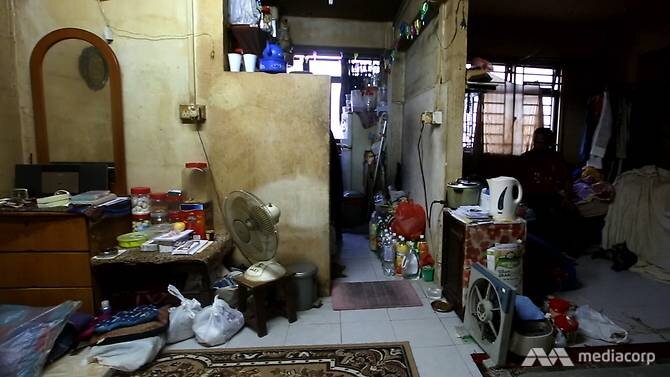
A one-room rental flat of a low-income family in Singapore. (Photo: TODAY / Ooi Boon Keong)

SINGAPORE: Looking at the measures in the unprecedented Unity, Resilience and Solidarity Budgets, it is heartening that the most vulnerable groups in this pandemic – low-wage workers, low-income families and the elderly – will receive direct assistance.

The cash-in-hand or vouchers disbursed, through the Solidarity Payment, Care and Support Package and Workfare Special Payment, provides help that is timely and most appropriate for such unprecedented times where there is wide scale job and income disruption.

How does cash assistance work alongside established support measures? While we are in unprecedented times, the current situation could give us some clues.

PREFERENCE FOR SELF-SUSTENANCE

The Singapore Government has traditionally avoided direct assistance, out of a deep concern that regular payments or assistance would deviate from the culture of self-reliance that it aims to foster, and contradict the ultimate aim of securing employment and economic stability for low-income families.

That is why it has preferred directing social spending on subsidies for utilities, housing, education and healthcare, with lower-income groups receiving more.

“I’ve seen the experiences of the Western countries where the more you give, the more one asks and I think that’s really the start of the erosion of the work ethic that Singaporeans have,” said Senior Minister of State for Law and Health Edwin Tong said in a 2018 interview.

READ: Commentary: Philippines’ COVID-19 fight depends on the exploitation of healthcare workers

Hence support for wages and businesses still remain the mainstay of government expenditure, even as the three Budgets this year have a direct cash component.

There is some evidence that suggests direct cash assistance might blunt the desire to work.

For example, US reformed a large federal welfare programme in 1996, replacing direct payments to single mothers with a programme that limited payments and made recipients work.

The share of never-married mothers with just a high school diploma working in the formal sector jumped from 64 per cent in 1996 to 76 per cent in 2000, according to figures from the Center on Budget and Public Priorities.

There are also concerns that direct cash assistance could be abused by opportunists. Law and Home Affairs Minister K Shanmugam told reporters on Apr 13 that there were some who were abusing the Temporary Relief Fund’s simplified process to make fraudulent claims.

A REGULAR CASH FLOW

These beliefs and concerns shape most assistance schemes in Singapore targeted at the low-income, where helping people stay employed and preserving the work ethic remain the top-line objectives.

While this emphasis on getting the poor to be self-reliant is laudable, it alone doesn’t help low-income families with their daily cash needs.

READ: Commentary: If we can share or hitch rides, why not food delivery?

The Workfare Income Supplement (WIS), for instance, tops up the salaries of low-wage Singaporean workers.

Every month, workers receive about 28 per cent of their monthly wage. Even though there is a cash component, workers however take home only 40 per cent of the sum in cash.

The remaining 60 per cent goes directly to their Central Provident Fund (CPF) accounts.

For example, take a 65-year-old worker who earns S$1,200 a month. In 2020, he would receive S$333 monthly through Workfare: S$199 goes to his CPF and S$134 is in cash.

However, a substantial proportion of income for low-income families is usually from casual, contract or part-time work.

Part of this can be attributed to the multiple challenges faced by low-income families – a combination of little or no educational qualifications, chronic illnesses, and care-giving responsibilities for elderly parents or children with special needs.

Many take up work offered by the gig economy, as delivery app riders, or gigs they can do at-home, such as catering and baking services. The wages they receive can be low, even uncertain, with the consequences of a loss in income potentially dire.

This was the case even before COVID-19. For example, our research with the clients of crowdfunding charity Ray of Hope shows that a fall in household cash sets off a chain reaction of events that worsen family situations, despite the clients’ best efforts, due to the multiple issues they juggle.

In one instance, a client of Ray of Hope was recovering from an illness while holding down a job. When her ComCare Long-Term Assistance (ComCare) ended, her cash flow fell and her family situation quickly deteriorated.

Heng Swee Keat COVID-19 Resilience Budget

Her bills and daily expenses for her children and parents accumulated faster than she could pay for them, causing her far more stress and anxiety. This slowed her recovery, which led to her employer downgrading her from a full-time to a part-time position.

COVID-19 MAKES IT TOUGHER

With COVID-19, the challenges for low-income families become much worse as their incomes are disrupted.

A survey by Beyond Social Services of 200 low-income families in March shows that many are more stressed and anxious, and more worried about their ability to pay for household and school-related expenses.

That is why government cash assistance in the three Budgets through the Temporary Relief Fund, the COVID-19 Support Grant and the Self-Employed Person Income Relief Scheme specifically for people whose incomes have been disrupted, is much welcomed.

In the first two weeks alone, since the scheme opened on Apr 1, the Ministry of Social and Family Development had reportedly received more than 300,000 applications for the Temporary Relief Fund.

The Unity, Resilience and Solidarity Budgets also include measures such as the Enhanced Workfare Special Payment, the expansion of the Silver Support Scheme to cover more needy elderly, and the S$300 in grocery vouchers going to Singaporeans in 1-room and 2-room HDB flats this year.

In light of COVID-19, the authorities will also be exercising more flexibility in deciding ComCare amounts and duration.

READ: Commentary: In Singapore, laws are necessary for trickle-down policies to work

Additionally, the government is also making the cash assistance available quickly and with minimal paperwork.

OPPORTUNITY TO STUDY ENHANCEMENTS

These measures are extraordinary and unprecedented. But whether some of these enhancements – particularly putting more cash in the hands of low-income households – will continue after the pandemic remains to be seen.

Yet this exercise offers us a rare opportunity to study the effects of direct cash assistance. In particular, whether enhancing the safety nets for low-income families can help them thrive.

Will direct cash assistance help low-income families achieve economic stability? Are more able to get back into the workforce with cash assistance after getting laid off? How does cash assistance affect their future prospects? Does more generous ComCare in the first instance prevent families from having to apply again?

The Enhanced Workfare Special Payment, for instance, gives large boosts to take-home cash for low-income workers.

Recall the example of the 65-year old worker who would take home S$133 a month in cash from Workfare?

Well, under the Enhanced Workfare Special Payment he would get an additional S$3,000 this year – double his annual cash from Workfare. It would be worthwhile studying how that improves his family’s welfare.

READ: Commentary: Singapore has a New Deal. We call it the Resilience Budget

The upcoming Emerging Stronger task force on economic resilience, chaired by Minister for Social and Family Development Desmond Lee and Group Chief Executive of PSA International, Tan Chong Meng, is a positive step and could explore these issues in greater detail.

Helping the most vulnerable in our society, and making social progress part of the conversation for economic resilience will ensure Singapore emerges from this pandemic stronger for everyone.

Martin Tan is the Executive Director of The Majurity Trust, a philanthropic organisation in Singapore.

Source link

Daily roundup: Pitch-black Penang river now jade green thanks to MCO – and other top stories today

0

[ad_1]

Stay in the know with a recap of our top stories today.

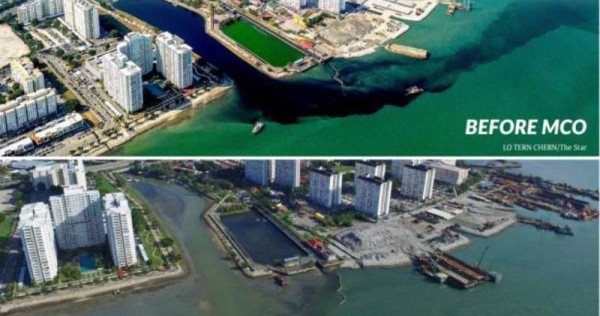
1. Once pitch-black, polluted Penang river now jade green thanks to MCO

Photographs captured from a drone of Sungai Pinang in the heart of the city, taken seven weeks apart, revealed that after the MCO started, the 3.5km river is healing… » READ MORE

2. $7,000 a month as a food delivery rider?

[ad_2]

Source link

Uncle fined $300 for refusing to wear a mask and dining at North Bridge Road

0

[ad_1]

Another day, another week, another person spotted flouting circuit breaker rules.

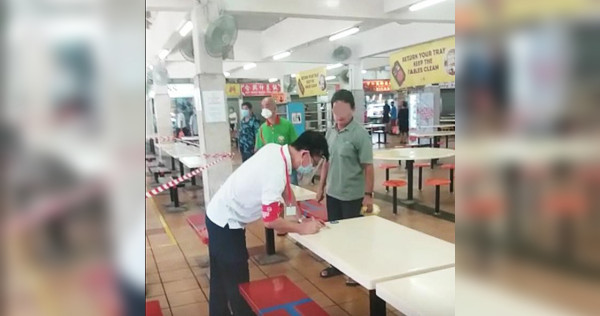
A man caught dining at North Bridge Road Market & Food Centre on Saturday evening (April 25) was involved in a short altercation in a clip shared on social media, reported Shin Min Daily News.

In the minute-long clip, an enforcement officer was seen writing a fine for a man in green for flouting circuit breaker measures.

[ad_2]

Source link

The last giant joss stick makers of Singapore are burning to the end

0

[ad_1]

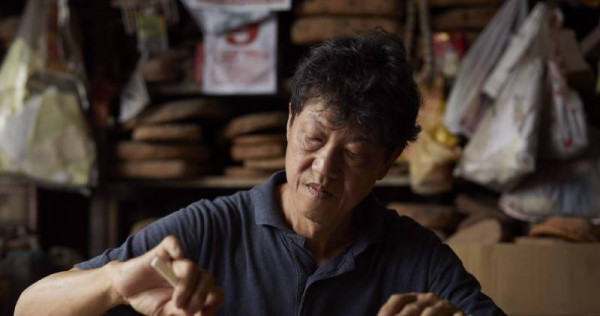
Bent over a wooden table, Albert Tay, 61, picks up a plastic knife – the kind that comes with a McDonald’s takeaway order – and gets to work.

His hands run down a winding log of reddish-brown clay that is shaped like a dragon without features. Using the knife, he deftly carves out small, protruding scales, one after another, until they eventually form a dense pattern across the dragon’s body, which dresses up a 2-metre-long joss stick.

With more twists and flicks of the wrist, he works on the dragon’s head, sculpting its eyes, nose and beard. The dragon comes to life, almost.

Tay is in the business of making giant joss sticks by hand – one that has been passed down from his grandfather, who moved from Guangdong, China, to Singapore in the 1930s, to his father, and now him and his brothers.

But in a modern city, it is a vanishing trade. Tay believes that his shop, Tay Guan Heng, could well be the last of its kind in Singapore. A competitor shut down in January.

[ad_2]

Source link