Home Blog Page 3508

He unearths new info from old tombs

His is not an ordinary passion.

Mr Raymond Goh clears and examines tombstones to piece together information about the historical context of the deceased’s lives.

Then, he tries to connect the deceased’s descendants to their ancestors’ burial sites.

Mr Goh, 52, tells The New Paper on Sunday: “I help to uncover Singapore’s lost history in our own backyard. Some of our cemeteries are heritage gems that are almost like living museums.”

The “tomb whisperer” has been shortlisted as an Outlook Inspiration by the British Broadcasting Corporation (BBC).

He made it to the top 15 from an initial list of 50 inspiring people from around the globe. (See report at right.)

Three people will be picked as the ultimate Outlook Inspirations and results will be announced tomorrow.

Mr Goh, a pharmacist at a multinational company, was nominated for the part that he has played in discovering lost aspects of Singapore’s heritage with his finds during his weekly tomb-clearing expeditions.

He looks at details such as names of the deceased, names of descendants, dates and decorative flourishes.

And one graveyard site that he has returned to, week after week, is Bukit Brown.

He says: “Of all the graveyards I’ve been to, the ones in Bukit Brown complex have the most variety and history.

“The tombstones can tell (Singapore’s) story all the way from its founding to modern times.”

Mr Goh has unearthed fascinating fragments of Singapore’s past that would otherwise have remained hidden indefinitely in overgrown, abandoned cemeteries.

COMPLEX

The oldest tomb he has found in the Bukit Brown complex of cemeteries, where he focuses his work, dates all the way back to 1826, which he pointed out is “just seven years after Singapore was founded by Sir Stamford Raffles”.

Two years ago, Mr Goh stumbled across the final resting places of the late Mr Lee Kuan Yew’s maternal great-grandfather, grandfather and grandmother. Before his discovery, he had read a recent “article about Mr Lee that mentioned his ancestors’ names”, and he remembered them when he read the inscriptions on their tombstones.

He and his brother, Charles, 48, have inspired a community called All Things Bukit Brown – also affectionately called Brownies – whose members are all equally passionate about Bukit Brown.

There are now “over 30 Brownies conducting guided walks”, estimates Mr Goh.

More than 17,000 people have gone on such conducted walks through the Bukit Brown cemetery complex since the programme began in 2012.

Ms Claire Leow, 49, who co-founded All Things Bukit Brown to preserve Bukit Brown, expresses the community’s pride in Mr Goh.

She says: “We are proud of the Goh brothers, and Raymond in particular, for shining a light on our heritage and showing a way for others to… contribute to promoting our history and heritage.”

Mr Goh has developed unusual methods of gleaning information from the often dilapidated tombstones.

He demonstrates how he fills the gaps made by inscriptions with flour, which sticks in place and makes it easier to read the engraved letters or characters.

But before he can examine the tombstones, he must first find them, he says, with a chuckle.

That means climbing through the branches and thick foliage in the less-maintained areas.

It also means suffering spider and wasp bites.

He says: “I sometimes get stung by insects, ants, spiders and wasps… These bites are painful (and cause) swelling and itching… and some of my tombkeeper friends have been stung by scorpions.”

But this doesn’t deter him from the task at hand.

And with the increased publicity he received when the Government announced plans to build an eight-lane road through the cemetery in 2011, Mr Goh found a surge in the number of requests from people wishing to find their ancestors’ tombs before they were exhumed.

He says: “Some people have asked me to help with locating their ancestors’ graves. Helping them is one of the most satisfying aspects of what I do.”

In the wake of his BBC Outlook Inspiration nomination, Mr Goh has found people he hasn’t spoken to in years congratulating him, including classmates from school and university.

He even took some of his Secondary 4 classmates from Gan Eng Seng school – where they graduated 37 years ago – to visit their school founder’s tomb in Bukit Brown.

He says: “We sat around the tombstone and sang the school song, which we hadn’t sung for so many years, and I felt a lump in my throat. It was a very heartwarming moment.”


This article was first published on July 03, 2016.
Get The New Paper for more stories.
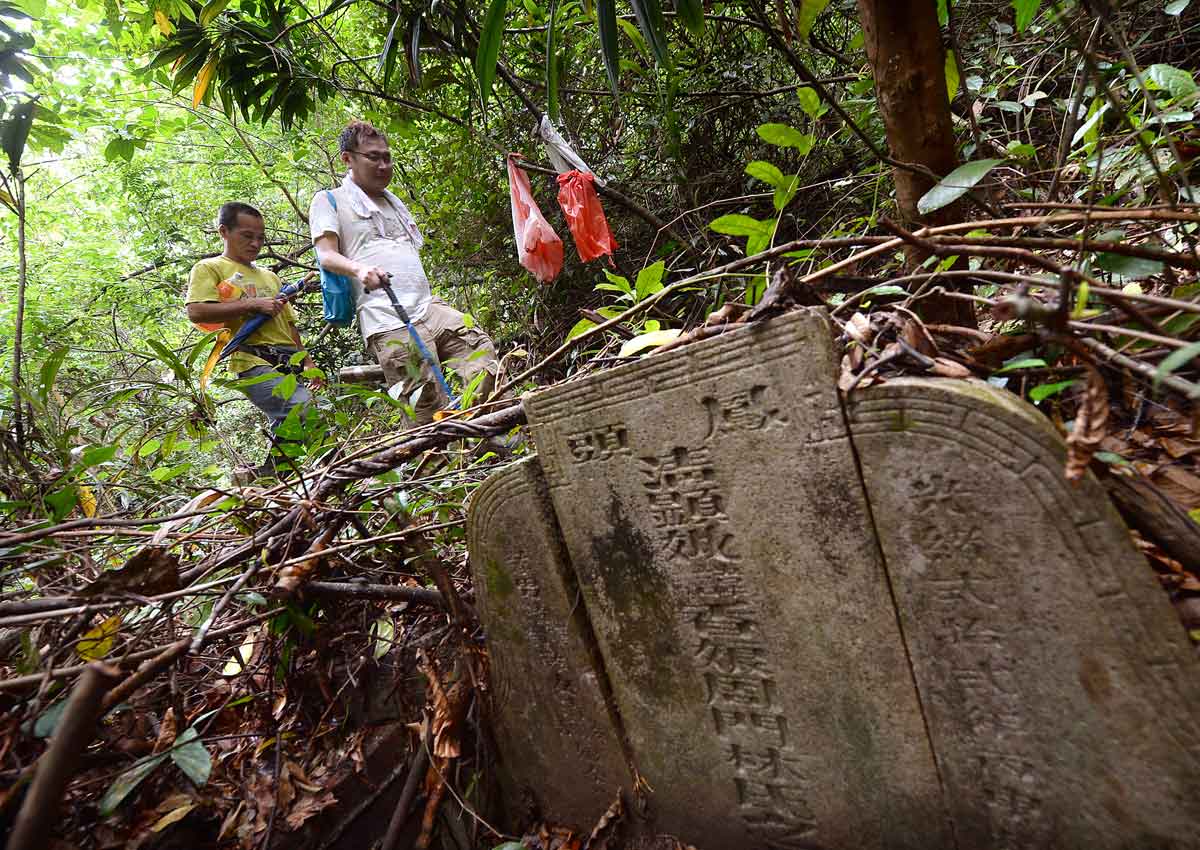
Image: 
Category: 
Publication Date: 
Monday, July 4, 2016 – 06:00
Keywords: 
Send to mobile app: 
Source: 


Story Type: 
Others

Source link

Father of the bride – 472 times

Mr Mahesh Savani, who has two sons, would have adopted a daughter had he not been stopped by relatives who called the move “unwise”.

So, naturally, Mr Savani never imagined he would ever play a major role in a young woman’s wedding.

Then, in 2008, a distant relative died, leaving his 20-year-old daughter, who was getting married in a week, in the lurch. Mr Savani stepped into the breach to help his deceased relative fulfil a father’s duty. He not only completed the wedding arrangements but also paid for them. The wedding went off splendidly and the bride expressed her deep gratitude to him.

Said Mr Savani: “That’s when I began to wonder about other girls, particularly those from a poor background, who had lost their father before they got married. I could imagine the fear and anxiety of the mother and daughter, wondering if they would ever find a bridegroom and pay for the wedding.”

So Mr Savani, a 47-year-old property dealer based in Surat, Gujarat, decided his mission would be to pay for the wedding of any fatherless girl who came to him for help.

In the past eight years, he has helped a total of 472 fatherless young women – spending 400,000 rupees (about S$8,000) each time. The sum covers the cost of the venue, catering, gold jewellery and outfits for the bride, and also household items.

To ascertain the authenticity of a woman’s claim, all that Mr Savani asks for is the death certificate.

“Once that is done, I treat them like my daughters. I make no distinction of caste or religion. Hindu, Muslim or Christian, high caste or low caste – anyone,” said Mr Savani, who is a Hindu.

The first 47 weddings were held individually. But when the arrangements and organisation became too much for Mr Savani, who runs a real estate business and the P. P. Savani International School, he switched to holding mass weddings every December in the school grounds.

Last year’s event saw 80,000 people, including the couples, their family members, relatives and friends.

“I ask all the earlier brides and their husbands to help out with the arrangements for the wedding, otherwise there is too much for me to do. So the earlier brides help shop for jewellery and clothes, and so on,” said Mr Savani.

Ms Asha Roy, 27, has already started shopping for the next mass wedding, to be held on Dec 25 for 216 brides. She is one of Mr Savani’s 472 “daughters” who got married in Surat in 2013, together with her younger sister.

Her father died of a brain haemorrhage when she was only three years old, according to Ms Roy.

“My mother managed to get my two elder sisters married but there was no money left for me or my younger sister,” she said.

“Then we heard of Mahesh Papa and he helped us. For us, it was a fairy tale. I’ve never possessed any gold or worn any outfit that wasn’t a hand-me-down. And yet I had the most beautiful wedding.”

In India, not marrying is an option only for the very rich. For ordinary women like Ms Roy, marriage is their ineluctable destiny. Those unable to find a husband are deemed to have bad luck and looked upon as profoundly unfortunate. This is why widows and divorcees have no social status.

Even if a young fatherless woman has relatives willing to help arrange her marriage, they will struggle to find a suitable boy unless they have a hefty dowry. Having invested their hard-earned money on their sons’ education, most Indian parents are loath to let their sons marry a woman without a dowry because it “negates” their investment.

Which is why what Mr Savani has been doing is a godsend for his “daughters”. And he makes sure he does not disappear from their lives after they are married. He turns up at special occasions, festivals or births, bearing sweets and gifts.

“Mahesh Papa always keeps in touch by text and by phone. When my elder sister – whose marriage he also arranged – had some problems with her pregnancy, he was at the hospital in case she needed anything,” said Ms Puja Prashant, 27, who got married in 2011.

She was 19 when her father died of a heart attack, just four days before her elder sister’s wedding.

This was in 2008 when Mr Savani had just started on his mission. After hearing through relatives that Ms Prashant’s mother had three daughters to marry off, he went to their home to reassure her that he would take care of the weddings.

“I saw the relief on my mother’s face. It was like a huge burden being lifted from her and thrown away. She was so relieved she cried,” recalled Ms Prashant. “Since then he has been like a big tree, sheltering my entire family and protecting us.”

Mr Savani makes sure he finds time away from his business and school to keep in touch with his “daughters” and prepare for the Christmas Day mass wedding.

His wife, Bhavna, and two sons, now in their early 20s, support what he is doing.

“My relatives and I sometimes have a good laugh.

“Long ago, they advised me not to adopt a daughter and now I have 472 of them,” said Mr Savani with a chuckle.


This article was first published on July 03, 2016.
Get a copy of The Straits Times or go to straitstimes.com for more stories.

Image: 
Category: 
Publication Date: 
Sunday, July 3, 2016 – 17:00
Keywords: 
Send to mobile app: 
Source: 


Story Type: 
Others

Source link

Thumbs up for elder-friendly road zones

Good feedback has led the Land Transport Authority (LTA) to ramp up its Silver Zone scheme, which comprises road safety features for the elderly.

Fifty zones are planned by 2023, up from the previous target of 35 zones by 2020.

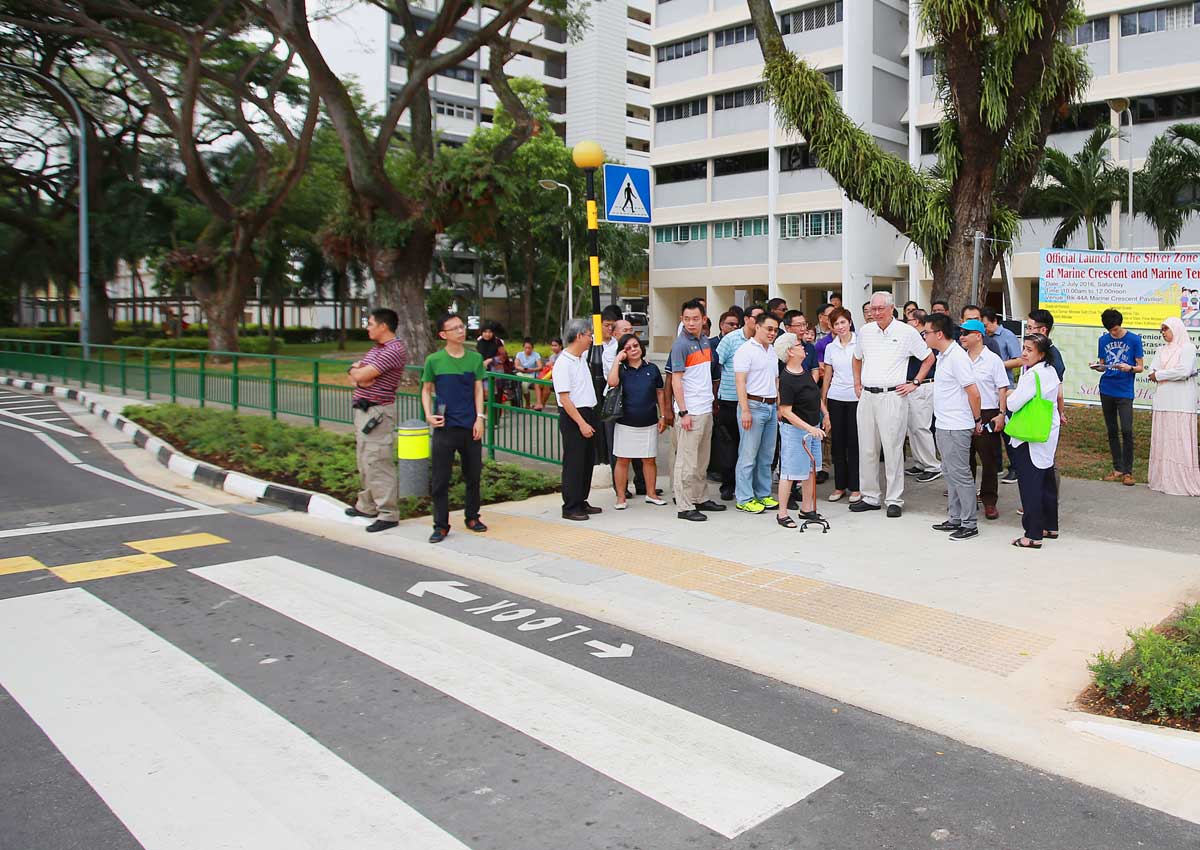
Emeritus Senior Minister Goh Chok Tong announced this at the launch of the eighth and latest Silver Zone, at Marine Crescent and Marine Terrace, yesterday morning.

“When Marine Parade was built in 1973, 1974, our planners were young, Singapore was young, and the people in Marine Parade were young,” he quipped.

But as the decades passed , “we realised that we must do something to make the estate elder-friendly”.

He noted that the Silver Zone scheme, announced in 2014, is part of the Government’s efforts to make Singapore “a city for all ages”.

The completed Silver Zone was unveiled by Mr Goh and Senior Minister of State for Transport Josephine Teo.

Like other such zones around Singapore, it has features to slow traffic down to make it safer for elderly pedestrians. For instance, a mini roundabout has replaced a T-junction along Marine Terrace to regulate turning traffic.

There are “pinch points” where the road narrows to make drivers slow down. At these points, the LTA has put in place courtesy crossings. These informal crossings are barrier-free and come with ramps to make it easier for seniors and wheelchair-users to cross.

The success of these measures depends ultimately on how considerate both drivers and pedestrians are to each other, added Mr Goh.

Resident Francis Teo, 79, welcomed the new measures, noting that senior citizens like himself are not the only ones who will benefit. “It will also be safer for the children going to (the nearby) Tao Nan School,” he said.

A 77-year-old resident who wanted to be known only as Madam Ivy said: “The ramps are a good idea, they make it easy to cross.”

The expansion of the scheme builds upon the success of the seven Silver Zones completed before the one in Marine Parade.

“We have received very, very good feedback so far… about how road access and movement of the elderly has improved,” LTA chief executive officer Chew Men Leong told reporters at the event.

The number of road accidents has also fallen in Silver Zone locations, he added.

The LTA is in the process of identifying the additional 15 Silver Zones to be built.

In general, areas chosen for the scheme are those with a high population of senior residents, relatively higher accident rates involving seniors, and amenities which seniors frequent, such as wet markets.


This article was first published on Jul 03, 2016.
Get a copy of The Straits Times or go to straitstimes.com for more stories.

Image: 
Category: 
Publication Date: 
Sunday, July 3, 2016 – 17:00
Send to mobile app: 
Source: 


Story Type: 
Others

Source link

Smart, but scammed

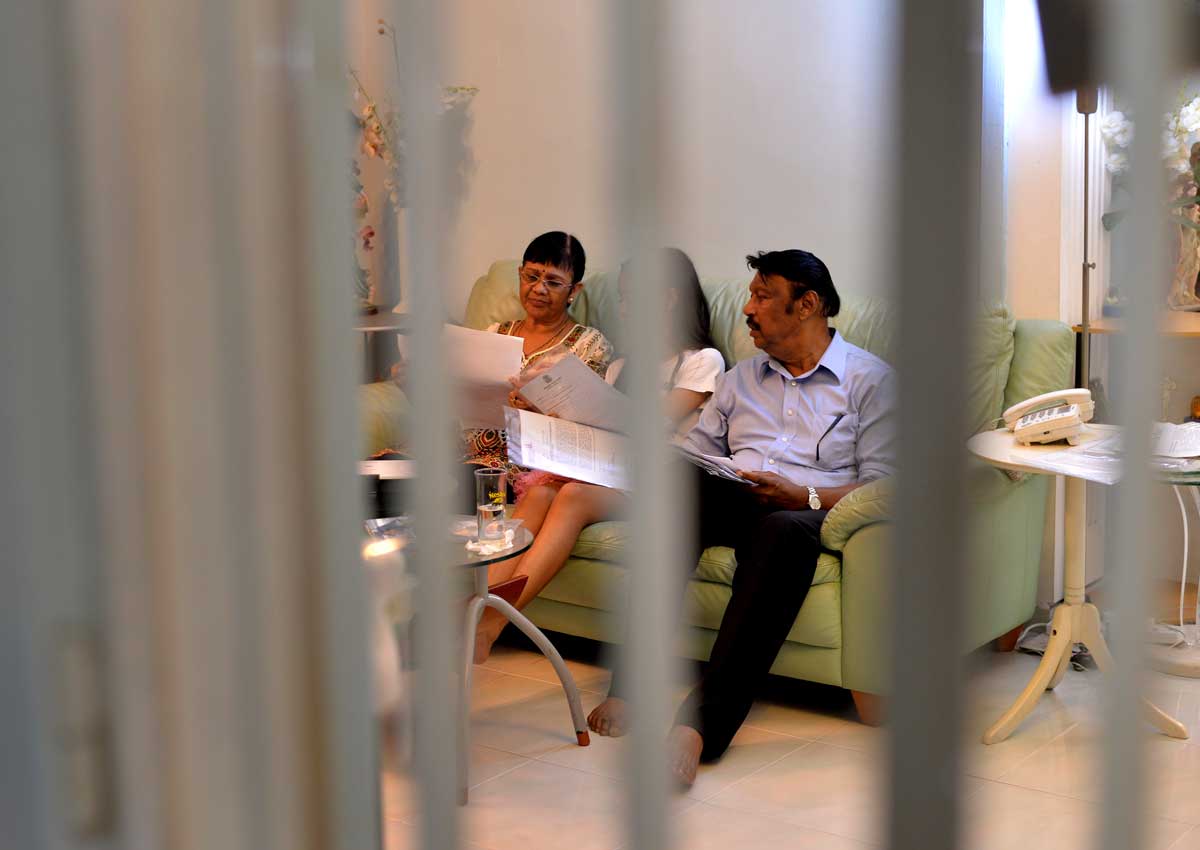
An elderly woman was recently cheated of $2.3 million, according to a report lodged with the Singapore Police Force. It is the largest single amount scammed this year out of 61 similar cases.

The victim received a telephone call purportedly from a China official who claimed she was suspected of being involved in illegal activity.

She was asked to transfer money to the alleged official to assist in investigations to clear her name. The money was remitted in five transactions. Investigations are ongoing.

A Singapore Police Force spokesman says: “The police has seen an increase in the number of reports of persons falling victim to scams.”

There were about 198 cases of Internet love scams in 2014, but 244 similar cases have already been reported from January to May this year.

While the $2.3-million scam victim was a senior, this demographic group, aged 65 and older, sometimes stereotyped as being easy targets for con artists, are not the only victims.

Younger people between 20 and 49 years old comprised 67 per cent of victims in similar phone scams involving the impersonation of China officials, according to police figures.

Perpetrators of other hoaxes have also snared men and women across demographics, including professionals and tech-savvy consumers, in part because diverse scams are tailored to prey on a wide range of vulnerabilities.

Scam victims can come from “all walks of life”, says Dr Lim Boon Leng, a psychiatrist at Gleneagles Hospital Singapore.

Intelligence is not necessarily a safeguard against scams, he says. In fact, intelligent people who are confident of themselves may sometimes be “more at risk”.

Dr Lim says: “Once a scammer persuades them, they may be less likely to question their own judgment.”

He adds: “Certain hoaxes appeal to certain people, but the principle is the same, such as playing on a person’s anxiety, which can be increased by the pressure of time, where the perpetrator does not give the victim time to verify things.”

Such misjudgments have a scientific explanation.

Dr Yu Rongjun from the National University of Singapore’s Department of Psychology says: “Some scammers try to put people in a panic situation involving punishment or threat.”

This in turn disrupts the brain’s processing in the prefrontal cortex, associated with reasoning and calculation. It inhibits the person’s capacity to think rationally, says Dr Yu, a trained psychologist who specialises in research on decision-making.

Another factor in how a scam achieves its aim is what Dr Lim describes as “herd mentality”. He says: “We may deny it, but we tend to do what other people do or trust what other people trust, for example, a friend of a friend.”

John (not his real name), a retired lawyer in his 70s, signed a cheque for a loan of $30,000 a few years ago to a man whom a good friend vouched for. The man told John he would repay the original amount, with interest, after his business problems were resolved.

Although the man initially repaid him a few thousand dollars, he later gave him post-dated cheques and subsequently cancelled them. After about a year, he dropped out of contact entirely, ignoring John’s repeated calls for repayment.

He says: “I was very angry with myself. A lawyer, caught like that. I trusted him on the strength of my friend’s words.”

His friend, who apparently believed the con man in good faith, was suffering from cancer and died within a year of the incident.

Security experts and psychiatrists say there are different forms of trust and, perhaps unexpectedly, scams sometimes succeed because of a wider trust in authority figures.

Mr Gerald Singham, vice- chairman of the National Crime Prevention Council, whose initiatives include a nation-wide anti- scam campaign, says: “There is a lot of trust in public institutions. Law enforcement has been very effective in Singapore and that sometimes lulls people into a very trusting state of mind. So when calls come in from people claiming to be from official agencies, they let their guard down.”

This seems to be the case for David (not his real name), an engineer in his 30s, who was cheated by scammers impersonating China police with a focus on international crime.

He received a call last month claiming to be from a courier company, which said that Shanghai customs officials had intercepted a parcel in his name containing 16 credit cards.

He was transferred to someone who claimed to be a police officer and was “convinced” by the phone number that showed on his caller ID, which appeared to be a number linked to the police. A check on Google confirmed his initial impression that the number was legitimate, although he did not know technology exists to mask the actual phone number and display a different one.

He was frightened when told he was suspected of criminal activity and that his bank account would be frozen until he was investigated and proven innocent.

“I was tired and stressed and couldn’t think in a logical way. They made it seem like they were doing me a favour,” recalls David.

He was instructed to download a smartphone app and save his Internet banking account number in his contacts list. Soon after he did that, he found that $7,000 had been withdrawn from his account.

Mr Singham says the kind of scam David fell prey to – where victims download apps containing malicious software which captures information stored in smartphones – is the latest development in a rapidly evolving scam genre that arrived in Singapore only this year.

While the cliched e-mail-based scams, said to originate from Nigeria, still exist, social media is contributing more to the scam landscape.

Mr Fadli Sidek, a cyber threat intelligence analyst and consultant at Control Risks, a global risk consultancy, says these include Internet love scams targeting lonely women using Facebook; cyber sex scams on apps such as WeChat targeting men; and scams on e- commerce sites that promise great bargains but instead link to “promotions” that are information-stealing malicious software.

According to the police, Internet love scams, the current top-grossing scam in Singapore, have seen victims cheated of $8.9 million so far. One of these cases reported last month involved a $1.2-million remittance to a scammer posing as a boyfriend.

The police spokesman says: “With more people using their smartphones and the Internet for daily activities including shopping, phone and Internet scams have become a global phenomenon.

“The police has been actively engaging staff of service points such as remittance agencies, banks and convenience shops. There have been cases where the staff interceded and managed to stop the victims from transferring any money.”

The fact that people in Singapore have helped one another thwart scam attempts is a silver lining.

Amid ongoing national and community anti-scam efforts, an increase in the number of scams reported to the police also indicates an increase in scam awareness among the population, says the spokesman.

Education is part of the fight, says Mr Singham. “If others are also defrauded, people may be less embarrassed to report such scams.”

Top scams

Here are the top five scams, based on the approximate amounts cheated from victims, between January and May this year:

1. Internet love scams – $8.9 million Perpetrators, who usually claim to be foreigners, target victims looking for love or friendship online.

2. China officials impersonation scams – $4.9 million Victims are told their identities were used to send parcels containing items such as fake passports or weapons.

They are referred to another caller claiming to be an official from China and asked to provide personal details or to remit money to the authorities to avoid further investigation.

3. Credit-for-sex scams – $646,900 Scammers convince victims to buy cards or online shopping credits in exchange for sexual or escort services.

4. Online purchase scams – $623,500 Scammers post online advertisements for tablets, smartphones or other gadgets at attractive prices. Victims are asked to pay in advance, but the items are not delivered.

5. Lottery scams– $396,200 In lottery scams such as Scratch and Win schemes, victims, who might be shopping in Johor Baru, scratch cards and “win” expensive prizes, for which they are asked to pay administration charges or taxes before collection.

Source: Singapore Police Force

Protect yourself

  • Do not add strangers to your social media networks. If someone claiming to be a friend of a Facebook friend contacts you, check with your Facebook friend first regarding the would-be friend’s identity.
  • Do not interact with strangers online, especially when they ask for financial assistance or seek companionship. If someone you know is using multiple accounts to add you as a friend, verify this with him directly.
  • Do not post or provide sensitive information such as personal particulars, bank details as well as photos of credit cards, identity cards, passports, boarding passes or club membership cards.
  • Do not click on suspicious or overly enticing links to news items (for example, news that flight MH370, which disappeared in 2014, has been found safe) or too-good-to-be-true promotional offers in apps and social media. Clicking on them could compromise your social media systems if the links contain malware.
  • In a telephone call or Internet query posed to you, ask probing questions rather than passively answering queries. Ask who they are, where they are from, and say you want to verify their agency. Push back against their line of questioning and scammers are more likely to cease.
  • End the call if you suspect it is a scam and make a police report. You may end up unwittingly revealing more information about yourself if you remain on the line. Speed is crucial: The police can act once the report is filed.

Sources: Mr Fadli Sidek, a consultant at global risk consultancy Control Risks; and Mr Gerald Singham, vice-chairman at the National Crime Prevention Council.


This article was first published on Jul 03, 2016.
Get a copy of The Straits Times or go to straitstimes.com for more stories.

Image: 
Category: 
Publication Date: 
Sunday, July 3, 2016 – 15:00
Keywords: 
Send to mobile app: 
Source: 


Story Type: 
Others

Source link

Sembawang sports and community hub to be partially ready by 2019

SINGAPORE – Sembawang residents will have to wait a little longer for new amenities such as a swimming complex and a hawker centre in their town, after the opening of the new sports and community hub was pushed back by a year to 2019.
Speaking to reporters…

Source link

When children suffer for adults' actions

The angry banging and loud voices at the door would go on for hours.

“Open the door! Owe money pay money!” the men would shout, calling for her mother or father.

For 11-year-old Eileen (not her real name), the confrontations between the debt collectors and her family have turned her life upside down.

Close to tears, she tells The New Paper on Sunday: “I thought my life was going okay.

“I thought my family was doing okay until all this happened.”

Licensed debt collectors had been going to the home from January to March this year to collect on a debt which the family is disputing.

They would go to the family’s four-room Housing Board flat in the western part of Singapore.

Sometimes Eileen is alone, other times she is with her 67-year-old grandmother, who suffers from an anxiety disorder.

Cases like Eileen’s are not new here. The Singapore Children’s Society says it has noticed that more children are being affected by their parents’ financial woes recently. (See report on facing page.)

Eileen, a Primary 5 pupil, says: “I am very scared because they shout very loud. Even though I know they can’t come in, I am still scared.

“I find a place to hide, usually behind grandma. I hold her hand. She is very frightened too.”

They often appear in the evening when she is doing her homework or resting after school. They stay for hours each time.

CONFRONT

In one incident on March 29, her frustrated father, 44, opened the door and confronted the debt collectors, resulting in a vulgarity-laden shouting match.

Eileen used a mobile phone to record the incident. She broke down into loud sobs as she eventually ran away from the commotion.

She watched her grandfather, who is 69 and has a history of heart problems and stroke, kneel and beg the debt collectors to leave.

The debt collectors have since stopped going to the home after the family got a temporary court order against them over their use of vulgarities.

But the damage has been done.

In early April, Eileen was admitted to KK Women’s and Children’s Hospital for “traumatic stress reactions following harassment by debt collectors”. She now has to see a school counsellor.

“I have to tell the counsellor all about my fears. I feel very sad because I love my family a lot. I try to forget all these things but I cannot,” she says.

A schoolmate who lives above her flat asked her why there were debt collectors at her home.

She says: “I didn’t know what to say. I couldn’t deny it because (the debt collectors) were shouting my unit number.”

Her performance in school has slipped, triggering a letter from her form teacher.

The teacher wrote that Eileen was a pleasant class monitor and added: “Recently, she seems withdrawn and easily distracted during lessons.

“Some of her teachers even noticed her being depressed…

“As for her CCA, she did not attend one of the tests although she was well prepared for it.”

Eileen does not understand the difference between loan sharks and the licensed debt collectors who have been visiting her flat.

Her father, a chicken rice seller and a former general contractor, says the debt collectors were hired to collect about $38,000 from his wife, 34, for contracts he claims are invalid.

He could go to court but was advised that the legal fees would exceed the claimed amount.

When asked if he was willing to bite the bullet and pay off the debt collectors to stop them from further affecting his family, especially his daughter, he says no.

He insists they do not deserve the money.

Says Eileen’s father: “They speak so aggressively to us. Why would I let them speak to my wife?”

The director of the debt collecting firm blames the father for involving his daughter and family.

He says: “His wife’s name is on the contract, and we could have talked outside the home amicably as we have done in many other cases.

“But he does not co-operate and chose to involve his entire family.”

AUTHENTIC

The director says his firm has researched the contracts and is satisfied by their authenticity.

“If he thinks he can dispute the claims, he can always take us to court.”

But no one can deny the detrimental effect the situation has had on Eileen.

Says her father: “We have been trying to find a new place for my daughter but it hasn’t worked out.”

Her grandfather adds: “I am worried that this will impact my granddaughter for a lifetime.

“It took me 20 years to build this home – our sanctuary and haven. The debt collectors have converted this into a living hell.”


This article was first published on July 03, 2016.
Get The New Paper for more stories.

Image: 
Category: 
Publication Date: 
Sunday, July 3, 2016 – 14:08
Keywords: 
Send to mobile app: 
Source: 


Story Type: 
Others

Source link

World-class lessons

For Yuan Kelly, a beach is her classroom. And so is Bosnia. And Costa Rica. And Italy.

Unlike most students, Yuan did not just attend one campus. She attended 12 of them – across different countries.

As a graduating student from Think Global School (TGS), the 18-year-old had classes in exotic places around the globe. 

During her first semester, she travelled to Ecuador to study on the Galapagos Islands.

She also bathed elephants in Thailand, tracked the Northern Lights in Sweden and practised archery in Bhutan – all in the name of getting a well-rounded education.

Yuan and her adoptive mother have been living in Singapore for five years. They moved here from China, where Yuan was born.

The Canadian national tells The New Paper on Sunday: “(On the Galapagos), we had classes on the beach and wrote Chinese characters in the sand.

“There were sleeping sea lions right next to us, and some of them would waddle up and brush against us.

“I don’t really know anyone else who has been to the Galapagos.”

Students and teachers from TGS travel to three countries each year as part of the curriculum, partnering with local schools to conduct their lessons both in and out of the classroom.

Each year, the school takes in only 14 students, who are awarded the International Baccalaureate (IB) diploma at the end of four years.

Besides the academic syllabus, they also learn about the country’s culture and experience what it has to offer.

“We study hard for IB, but we went beyond the classroom to learn about the cultural aspects of the country,” says Yuan.

Her favourite experience?

Yuan pauses before saying: “We’ve done so much, I think it is difficult to choose just one experience.”

The experiences are not cheap.

A year at TGS costs US$79,000 (S$107,000), more than double the cost of a business degree from the National University of Singapore.

Fortunately for Yuan, she secured a TGS scholarship that shaved off the bulk of her school fees. She paid only US$8,000 for the last two of her four years of studies.

Although her scholarship does not cover her airfare to the different countries, it pays for her accommodation.

Yuan is the only Singapore-based student to attend TGS.

Is hers the perfect school life?

It is not ideal, says Yuan, though her school offers an education like no other.

Being constantly on the move from country to country can be “stressful”.

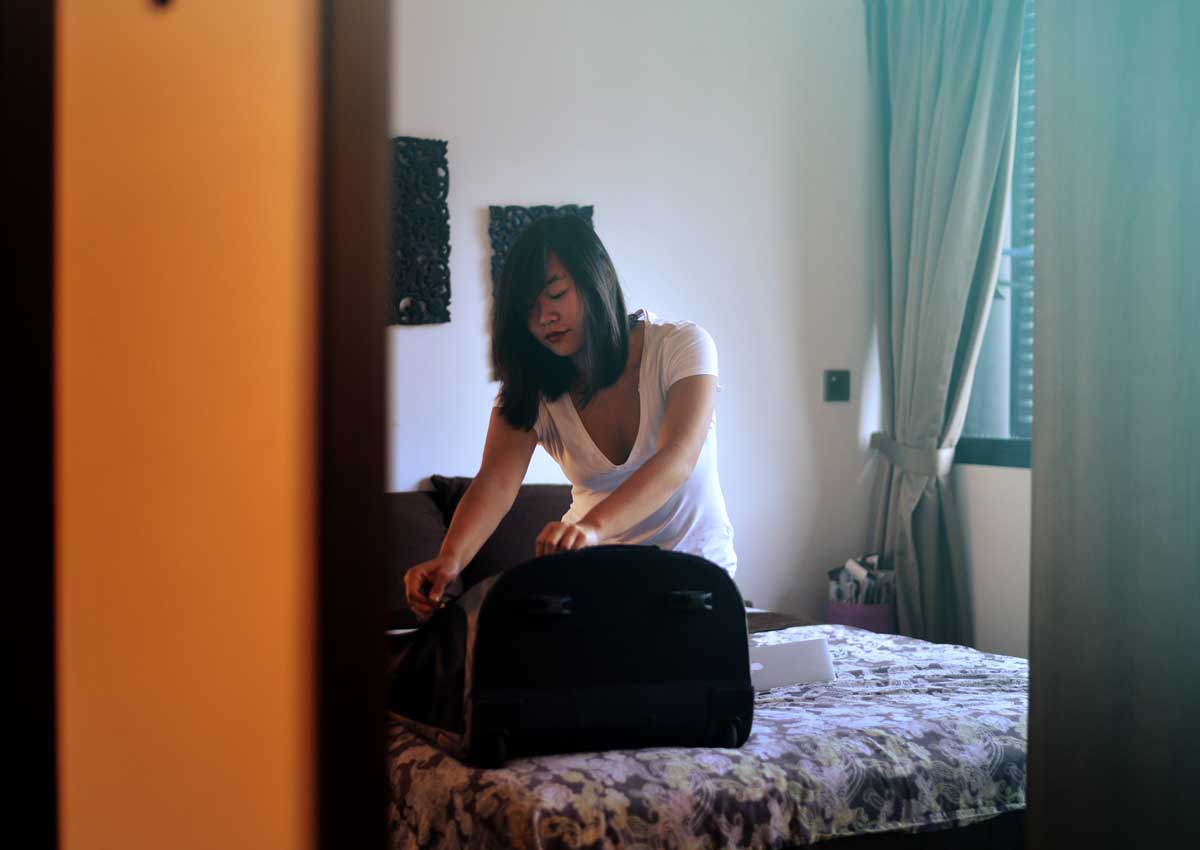
She laments how living out of a suitcase meant that she had to learn how to be independent at a young age, like doing her own laundry and cooking her own food.

She says: “Yes, we do amazing things, but it is not all sunshine and rainbows; we don’t just visit places and eat different foods.

“It is difficult to adjust to something completely different. You have to worry about language, transport routes and where to get money from.”

Her mother, Ms Kristy Kelly, says she would sometimes receive calls in the middle of the night because her daughter’s bank cards would not work at the banks in certain countries.

“There were so many nights I woke up to her calling me, panicking about having no money. It used to happen quite a lot,” says the 52-year-old teacher at the Canadian International School (CIS) with a laugh.

In her third year, Yuan took a break from all the travelling and continued her high school education at CIS.

But after a few months, she was back on a plane with TGS.

“I did well in the school here, but everyone already had their own friends and it was a completely new environment for me, so I did not fit in.

“As intensive as it is, there is no other place that I have felt more at home than at TGS,” she says.

The students and staff are always together, so Yuan says they have all become a “family” – one that she will miss when she starts studying international development at McGill University in Canada in September.

“After TGS, it will be a bit weird to spend the next four years in one place,” says Yuan.

But, wistfully, she adds: “It will be a different change. I am excited for it to happen.”

Only 14 students accepted each year

At Think Global School (TGS), students and staff travel to three countries each year for lessons.

TGS, which is based in New York City, follows the American high school system. Students graduate after four years with an International Baccalaureate diploma.

Each year, only about 14 students are accepted into the school.

Mr Lee Carlton, IT analyst for TGS, tells The New Paper on Sunday: “The small student size is due to the logistics associated with travelling the world.”

Students and staff typically live close to one another, usually in dormitories or hostels. TGS partners with local schools to use their facilities to carry out academic lessons.

“But there are also classes that take students outside of the classroom. The school visits places of interest and organises cultural experiences for the students.

“TGS challenges its students to set aside preconceived notions about the places they visit, encouraging them to instead gain an appreciation and sense of empathy for the cultural differences between themselves and the locals.”

But travelling the world comes with a hefty price tag – a year at TGS will set you back US$79,000 (S$107,000).

But this has not stopped people from applying. According to Mr Carlton, the number of applicants has been rising, and about 1,000 applications were received last year from all over the world.

On its website, the school says its students should have a strong academic record, an adventurous spirit and a sense of independence in unfamiliar situations.

To remain inclusive to students from all walks of life, Mr Carlton says TGS has a “sliding-scale” tuition scheme, which takes each family’s financial situation into account.

The school then adjusts its fees according to what is “fair”.

“We really strive for diversity, so having a variety of students from different socioeconomic backgrounds is integral to our school’s mission,” says Mr Carlton.

GRANT

The remainder of the amount is paid by a grant that the school receives from travel photographer Joann McPike, who founded the school.

TGS is selective in accepting students. Through an online application, applicants have to turn in essays and a media project, as well as submit recommendations from their previous schools.

The school also does Skype interviews with applicants and their parents.

On its website, TGS tells its potential students: “The intensive process is as much for you as it is for us.

“We want you to be fully informed and confident in your decision to leave family, friends and home behind for months at a time to pursue a life of authentic education and passionate place-based learning.”

Three questions for Yuan

After spending four years with the world as her classroom, Yuan considers herself a “global citizen”. But does global mean worldly-wise? We put her to the test with these questions:

What do you think are the benefits of globalisation?

I think because goods, money and people are crossing borders all the time, globalisation is inevitable.

This intersection across these borders is also the intersection of ideas.

The more you travel, the more empathy you will feel for people from different places. No longer are those from different places completely unrelatable. It could be someone you know, could even be a friend.

Like if something happens in Ecuador or Argentina, it would mean a lot to me, because I have been there and I have friends there.

You come from a middle-class background. What opportunities did travelling and TGS give you?

It broadened my horizons. I think there were lots of opportunities that TGS gave me, not only in the classroom but also outside of it.

Through the connections that (my classmates and I have) made, from people in local communities to really successful entrepreneurs, not only were we getting the education of someone from a higher socioeconomic class, we were also given the opportunity to speak to so many kinds of people and get involved in all sorts of projects.

What do you make of Brexit and its consequences?

I am very pro-Remain. I was shocked at the news, and I am really worried because they were essentially asking misinformed masses of people to decide on something that they do not understand.

There was a lot of misinformation, and we can compare what is happening in Brexit with what is happening in the US.

There is so much behind both, and it kind of legitimises anti-immigration ideas. All over the news, you can see that people are telling other people to go back to where they came from.

Brexit legitimises racist and intolerant ideals and, to me, that is dangerous.


This article was first published on July 03, 2016.
Get The New Paper for more stories.

Image: 
Category: 
Publication Date: 
Sunday, July 3, 2016 – 13:56
Keywords: 
Send to mobile app: 
Source: 


Story Type: 
Others

Source link

Singapore to pursue firms over forest fires, despite Indonesian ire

JAKARTA – Singapore is refusing to back down in its pursuit of those responsible for haze-belching forest fires in Southeast Asia last year, despite struggling to bring the perpetrators before the courts and drawing a sharp rebuke from neighbouring…


Source link

Udders Free Ice Cream Giveaway at 5 Outlets from 3 – 4 Jul 2016

Udders free 1,000 scoops of ice cream giveaway at 5 outlets till 4 July

Udders Free Ice Cream Giveaway at 5 Outlets from 3 – 4 Jul 2016

Udders celebrates Youth Day with 1,000 free ice cream scoops giveaway compliments of the National Youth Council from 3 July to 4 July

Source

Singapore to pursue firms over fires, despite Indonesian ire

JAKARTA – Singapore is refusing to back down in its pursuit of those responsible for haze-belching forest fires in Southeast Asia last year, despite struggling to bring the perpetrators before the courts and drawing a sharp rebuke from neighbouring Indonesia.

Forest fires are part of an annual dry-season problem in Indonesia, started illegally to quickly and cheaply clear land for cultivation – particularly for palm oil and pulpwood.

But last year’s haze outbreak was among the worst in memory, shrouding Malaysia, Singapore, and parts of Thailand in acrid smoke and forcing school closures as pollution reached hazardous levels and thousands fell sick across the region.

Singapore has served notice to six Indonesian companies it believes may have cleared land by burning but could target others as investigations continue, according to Singapore’s ambassador to Indonesia Anil Kumar Nayar.

“We are going after, to put it starkly, the bad guys that are causing this problem,” he told AFP in an interview last week.

However, the city-state’s efforts to punish Indonesian companies under its own anti-haze law have become a flashpoint with Jakarta.

Singapore argues that international rules allow states to take action – even if harm is being caused by activities outside its jurisdiction – but Jakarta has questioned how Singapore could pursue Indonesian citizens for prosecution, especially in the absence of a ratified extradition treaty between the neighbours.

The latest sabre-rattling came after Singapore issued a court warrant in May to detain a director of an Indonesian company linked to the haze while he was in the city-state.

Afterwards, Indonesia’s Environment Minister Siti Nurbaya Bakar said that she would be reviewing her ministry’s co-operation with Singapore on environmental issues.

“Singapore cannot step further into Indonesia’s legal domain,” Bakar told reporters in June. Her spokesman declined to comment further on the matter when contacted.

Nayar reiterated that Singapore wasn’t crossing any line pursuing these companies and was within its rights to enforce its law.

“We are not doing something that is extraordinary. It is not targeting any country, or anybody’s sovereignty,” he said.

The law threatens local and foreign firms with fines of up to $100,000 Singaporean dollars (US$74,000) for every day Singapore endures unhealthy haze pollution.

So far just two of the companies have responded to the court order, Nayar said, without naming specific firms.

Singapore has repeatedly asked Indonesia for details about companies – such as maps showing who owns what concessions – but says Jakarta has not provided any information.

Singapore would “continue to press”, Nayar said, but added the evidence needed to prosecute these companies could be found by other means.

“We could go that way as well, but at the end of the day this is part of a legal process. We want to be working with the Indonesian government,” he said.

One of Indonesia’s main arguments is that a regional approach to solving the haze crisis would be more effective than individual action.

“They (Singapore) know our view on this, on how we can best address this issue of haze through the ASEAN mechanism,” ministry spokesman Arrmanatha Nasir told AFP.

The Association of Southeast Asian Nations has an agreement to create a haze-free region by 2020, though it took 14 years to be fully ratified.

Nayar says regional progress on curbing haze has been slow.

Fellow ASEAN member Malaysia, which also suffers during the haze outbreaks, has expressed interest in adopting its own law similar to Singapore’s to pursue errant companies.

Jakarta has promised tougher action in the wake of last year’s haze disaster, which turned skies yellow in Indonesia’s part of Borneo island and dealt the economy a US$16 billion (S$21.5 billion) blow.

The government announced in May it would no longer grant new land for palm oil plantations, and established a new agency to restore millions of hectares of carbon-rich peatlands susceptible to fires.

For weather updates from AsiaOne, click here:

Image: 
Category: 
Publication Date: 
Sunday, July 3, 2016 – 13:34
Keywords: 
Send to mobile app: 
Source: 


Story Type: 
Others

Source link