Mark Tan Peng Liat, 30, is on trial for allegedly causing the death of his 67-year-old father Tan Kok Keng on Feb 10 last year.
Source link
Man on trial for killing father by holding him in headlock and chokehold
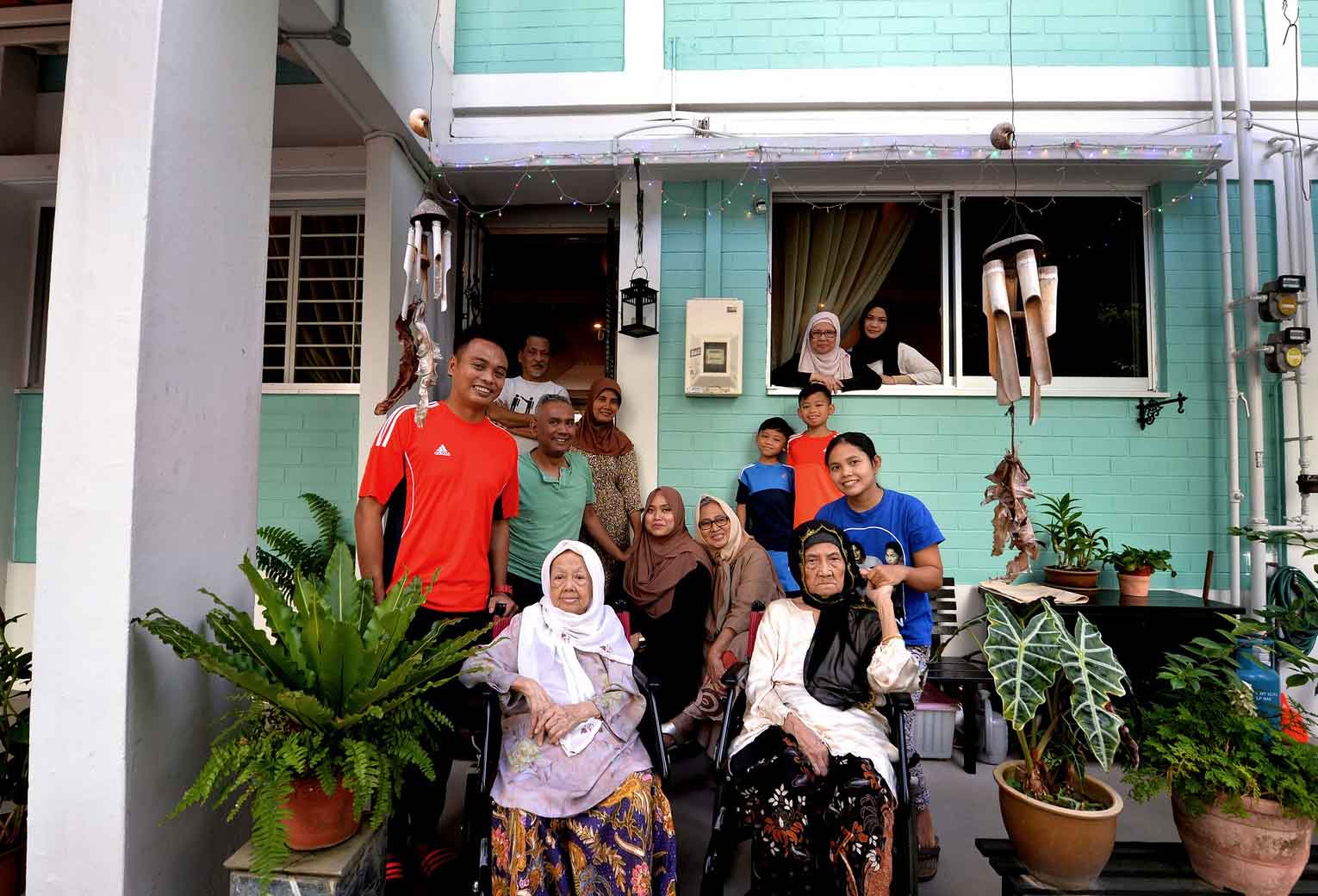
Welcome to Hari Raya HQ: 22 family members fast together
When The New Paper first asked Madam Rozana Anuar, 65, about the crowd she was expecting at her home yesterday, the cleaning coordinator warned: “You may not be able to enter the flat.”
And that was exactly what happened at her first-storey maisonette at Pasir Ris on Hari Raya Puasa, as relatives started streaming in from about 5pm.
People came and went, but the crowd never thinned for the next few hours.
There were about 50 people in the evening and more were expected to show up.
“Every year, we have to act as valet drivers for our relatives. Many of them come and somehow, we manage (to find parking lots for them),” said Madam Rozana’s son Rizal Rais.
For close to a decade now, Madam Rozana’s home has been the “headquarters” for relatives to visit during Hari Raya.
It is also where her extended family of 22 break fast almost every day during Ramadan.
The four families, who span four generations, live just a stone’s throw from each other. Madam Rozana lives with her husband, her mother, her daughter Masyita and her helper.
Two doors down from Madam Rozana is her sister-in-law’s family. Another sister-in-law lives a block away with her family.
Mr Rizal, 39, lives in a fourth-storey flat in an adjacent block that faces her maisonette.
Madam Rozana said: “You know a flying fox? Maybe (my son’s family) can attach that (to our flat) and they can zoom down.”
Mr Rizal, a football coach, joked: “How about a fireman’s pole?”
Welcome to Hari Raya HQ
Click on thumbnail to view photos. Source:
The New Paper













So Close
They live so close by that sometimes they just shout for each other through the windows.
Mr Rizal’s wife Nazrah Hanani, 37, added: “When my boys are playing (at my mother-in-law’s place), I can hear them from my room.”
Mr Rizal said: “Sometimes I will hear my son shout, ‘Daddy, can you please throw a ball down?'”
It was a conscious decision that the extended family made to live in the same neighbourhood.
Madam Rozana’s family moved into the maisonette first, in 2002, followed by her sister-in-law’s family a few months later.
In 2006, her other sister-in-law’s family moved in.
Mr Rizal moved into a nearby block in 2007, but 2½ years later, he moved to his current flat to be closer to his parents.
Part of his decision to join this “kampung” in Pasir Ris – he used to live in Bedok and Tampines – stemmed from his own childhood experience.
“I spent a few years of my childhood in a kampung in Kaki Bukit. I was there till about six or seven years old. Old enough to know how it felt like back then,” he told TNP.
Adding that it would be a heathy environment for his children, two sons aged eight and 10, to grow up in, Mr Rizal said: “I think kids nowadays can be in a bubble of sorts. Most of their interactions are through social media or YouTube on their iPads.”
Another perk of living close together is not having to plan family events.
“We can have spontaneous sleepovers or movie nights with our cousins,” said Ms Masyita, 33, who is a teacher.
Madam Rozana’s cooking skills are a bonus that everyone in the extended family appreciates.
“My neighbours are used to seeing me carry plates of food in the lift,” Mr Rizal said with a grin.
Madam Nazrah, a primary school teacher, said she asks her mother-in-law for help whenever she has to cater food for school events.
“My excuse for not learning to cook is that she is too good at cooking,” she added.
This family does not deny that they have had their share of squabbles, but Madam Rozana said it is much like any other family.
The more important thing is that nobody takes this closeness for granted.
“Even though we live so close to each other, we don’t take it for granted. Each time we meet, we can talk and talk,” she said.
Mr Rizal said: “Having meals together every day may seem like a small thing to others, but to us, it’s very special.”
He added: “They say familiarity breeds contempt. But I think for us, it’s really the opposite.”
Muslims worldwide celebrate Eid Al-Fitr marred by deadly attacks in 2016
Click on thumbnail to view photos. Source:
AFP, Reuters












































This article was first published on July 07, 2016.
Get The New Paper for more stories.
Image:
Publication Date:
Thursday, July 7, 2016 – 14:00
Keywords:
Send to mobile app:
Source:
Story Type:
Others
Failed to settle fines at night courts? Expect to pay more at day courts
A judge made it clear that defaulting motorists who fail to settle fines at the night courts must expect heavier sums when the case is referred to the day courts.
Noting that night courts set fines between $400 and $600, she slapped a $600 fine per charge – the lower end of the range imposed in day courts – on a motorist who pleaded guilty to 26 parking offences.
“When his 26 charges were escalated to the day court, Court 14, the principle of calibration must surely dictate that the accused can no longer avail himself of the lower range of fines accorded by a (timely) plea of guilt,” said District Judge Sarah Tan Yin Tze in judgment grounds released on Tuesday.
Chng Eng Pin, a bankrupt labourer, had pleaded guilty to the parking offences over 21 months at various places, including one offence of not supplying the particulars of the offending driver of the car which Chng owned.
Chng did not take up the offer to compound the 2010-2012 offences earlier under the regulatory framework and neither did he enter a plea at the night court or pay via electronic machines under an existing automated traffic offence management system.
Night courts, set up in 1992, are meant to deal with the high volume of traffic and regulatory offences heard at the State Courts. They operate from 6pm onwards, four days a week.
“One must naturally expect a higher range of fines in (the day court), usually between $600 and $800 per charge,” said Judge Tan.
She warned that the fines cannot be discounted just because of the sheer number of charges Chng faced as this would mean “incentivising offenders to delay and accumulate more charges”.
Chng, who defended himself, cited his financial difficulties, among other things, in mitigation but the judge found his circumstances neither exceptional nor extreme enough to make a difference.
She pointed out that his claims had to be seen against the persistent offence pattern.
The judge also rejected his grown-up son’s bid to pay $4,000 first and the balance a month later.
The judge was not convinced by his reason that he needed his father to handle family problems.
Judge Tan said instalment payments are very rarely granted and to allow this would be to “assail the calibrated composition and court fine structure in place”.
The judge added that if offenders had the easy way out by being able to pay court fines in instalments, they may be lulled into complacency and procrastination and lose the focus and incentive to attend to their summonses and compound their cases early (the “why pay now when you can pay later” mentality).
The judge ordered that Chng serve 26 days in jail should he default in payment.
“The (fines and default jail terms) imposed are not unreasonable or excessive, much less manifestly excessive,” the judge added.
Chng, who is appealing the sentence, is currently on bail.

This article was first published on July 7, 2016.
Get a copy of The Straits Times or go to straitstimes.com for more stories.
Image:

Publication Date:
Thursday, July 7, 2016 – 17:20
Keywords:
Send to mobile app:
Source:
Story Type:
Others
Rules in the works for S'pore carriers on flight data recovery and distress tracking
Singapore-based airlines will have to comply with two new safety requirements that are expected to be in place in less than five years. Both rules aim to avoid a recurrence of what happened to Malaysian Airlines Flight 370 more than two years ago.
The first is that local carriers have to implement means to “recover flight recorder data in a timely manner”, a Civil Aviation Authority of Singapore (CAAS) spokeswoman said in a response to BT queries.
The second requires them to equip planes with a “distress tracking system to autonomously transmit position information at least once every minute when in distress”.
CAAS is working towards implementing them by Jan 1, 2021 “or earlier”, said the spokeswoman.
A third requirement – CAAS’s normal flight tracking requirement, where air traffic controllers receive data on a plane’s location every 15 minutes – kicked in on July 1.
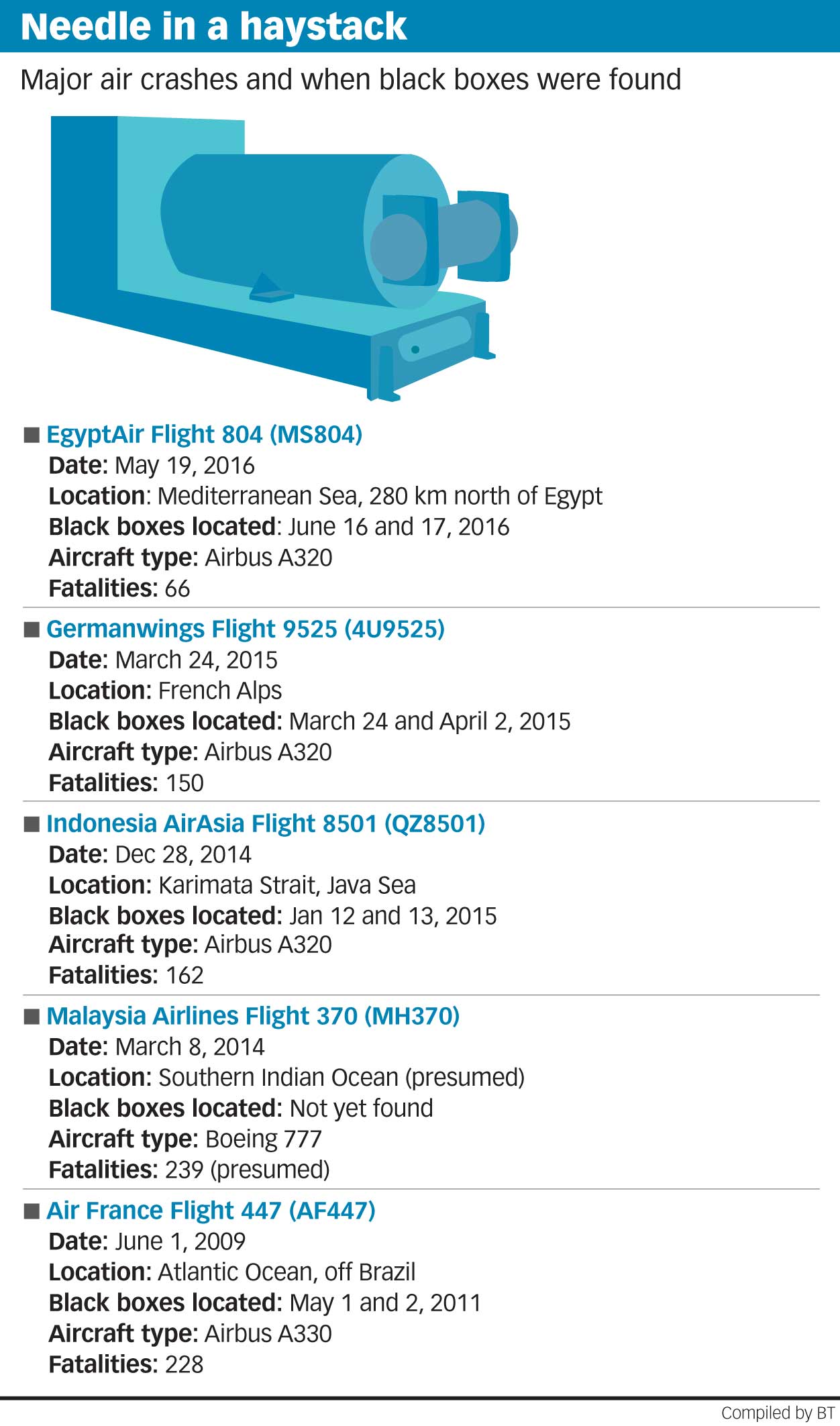
All three are part of a global regulatory push aimed at avoiding a repeat of the MH370 tragedy. The aircraft disappeared more than two years ago and has yet to be found. Search operations for the missing plane are expected to end next month.
CAAS’s moves are in line with those first put forth by the United Nations’ International Civil Aviation Organisation (ICAO) in 2015, when it unveiled a blueprint called Global Aeronautical Distress and Safety System (GADSS) to strengthen agencies’ responses during emergencies.
It fleshed out ideas for normal and distress tracking of planes, especially when they travel over oceans.
Distress tracking is when air traffic controllers receive information of a plane’s location at an interval of at least once a minute versus once every 15 minutes for normal tracking.
Such initiatives are viewed by the industry as crucial in preventing delays in search-and-rescue operations when flight mishaps occur.
Flight MH370’s final moments and the aircraft’s exact whereabouts are still unknown – more than two years after the plane vanished on March 8, 2014. Search operations are expected to end in August, throwing investigations into one of modern aviation’s biggest mysteries into limbo.
The problem is that locating and retrieving flight data recorders from an ocean crash can be a difficult and lengthy affair. For example, those from Air France Flight 447, which crashed into the Atlantic Ocean on June 1, 2009 were retrieved only two years later.
“Very accurate information must be provided in a timely manner and to the right people to support search and rescue, recovery, and accident investigation activities,” said satellite communications firm Blue Sky Network in a report on the GADSS initiative.
There is thus a need to ensure that the global aviation industry can get up to speed with the pace of change, said Mary McMillan, vice-president of aviation safety and operational services at Inmarsat, in an interview with BT. The satellite communications company helped narrow down the search area for MH370 and is in talks with ICAO to determine requirements for distress tracking and flight data streaming, said Captain McMillan.
“Technology has improved greatly since MH370, or even since AF447. We need regulators to push for this so that we can put more and more airplanes into the skies safely,” she said.
Local regulators thus play a crucial role in ensuring that the industry is kept up to speed, as airlines are often preoccupied with day-to-day problems, said Con Korfiatis, partner in Heidrick & Struggles, whose expertise is in the aviation industry.
“ICAO can’t drive local policing and dictate what each carrier does. So local regulators have an important role to play to roll out these initiatives,” he said.
While all local air operators satisfied the 15-minute normal tracking requirement for their ground capabilities by July 1, just under 3 per cent of Singapore-registered aircraft are still not equipped with such systems, said the CAAS spokeswoman.
“CAAS is working with the air operators to ensure that the remaining aircraft are scheduled for upgrading as soon as possible. In the interim, continued operations of these aircraft have been allowed as mitigation measures have been put in place,” she said.
Low-cost carriers are understood to have had to make significant investments to comply with this regulation. This is because they have more single-aisle planes, which might not have the necessary equipment and technology.
Jetstar Asia and Tigerair have told BT that they have aircraft tracking systems in place, with Jetstar Asia’s spokesman saying it is “being progressively rolled out to each of our A320 aircraft”.
National carrier Singapore Airlines is already making investments in this area, and also in others to meet ICAO’s requirements.
A spokesman told BT that it is in the midst of upgrading the battery life of underwater locator beacons from 30 days to 90 days.
As for distress tracking, it is awaiting further details from ICAO before making investments in this area.
“Singapore Airlines is supportive of the efforts to improve flight-tracking capabilities as they will improve overall flight safety and security,” said the spokesman.

This article was first published on July 07, 2016.
Get The Business Times for more stories.
Image:

Publication Date:
Thursday, July 7, 2016 – 14:00
Keywords:
Send to mobile app:
Source:
Story Type:
Others
VW to fix 20 affected diesel vehicles first
Volkswagen Singapore is ready to fix the first batch of vehicles affected by the global diesel scandal.
The 18 Tiguan crossovers and two Caddy commercial vans will have their engines reprogrammed so that they meet Euro 5 emission standards at all times – and not just when they are being tested.
Volkswagen Group Singapore (VGS) managing director Ricky Tay said the firm is awaiting approval from the National Environment Agency (NEA) and Land Transport Authority (LTA) before proceeding further.
He said 956 vehicles in Singapore are affected, including 300 unsold Touran MPVs which have been mothballed since the Government ordered the sale of affected models to be halted when the scandal broke last October. “We will probably have to sell these at a discount or ship them out,” Mr Tay said of the unsold cars. “The new model Touran is already here.”
The 956 vehicles here are part of about 11 million VWs affected worldwide by the saga, which involved the use of “cheating” software that makes vehicles meet emission standards when they are tested. They revert to a far dirtier mode when driven normally on the road.
As well as the 300 unsold Tourans, the affected cars here include 314 Caddys, 304 Tourans, three Golfs, nine Passats, one Scirocco, seven Sharans and 18 Tiguans.
In a joint statement, the NEA and LTA said: “The National Environment Agency is verifying emissions reports provided by the German Transport Authority and Volkswagen Group Singapore before authorising VGS to proceed with the technical fixes for the affected vehicles.
“NEA will then work with LTA to closely monitor the rectification of all affected vehicles by VGS to the emission standards stipulated in the Environmental Protection and Management (Vehicular Emissions) Regulations.”
Mr Tay said most of the affected vehicles will be fixed by engine reprogramming, but a small number will require new air restrictors to be fitted to meet the Euro 5 emission standard. “It will take less than 30 minutes per car,” he said. “But we can’t guarantee that owners will come in when they are informed.”
Volkswagen is setting up a website for customers to check if their cars are affected. Progress on the recall will be posted there as well.
Volkswagen hopes to finish fixing all the affected cars by end of the year. Mr Tay admitted: “We need to regain customers’ trust.”
Meanwhile, businessman Sanjay Samnani, 44, the first Volkswagen customer here to sue the German manufacturer and demand that it take back a Touran he bought last April, has lost his case. Mr Samnani said he is filing an appeal.
This article was first published on July 7, 2016.
Get a copy of The Straits Times or go to straitstimes.com for more stories.
Image:

Publication Date:
Thursday, July 7, 2016 – 17:05
Keywords:
Send to mobile app:
Source:
Story Type:
Others
Man charged with killing father by holding him in headlock and chokehold
Mark Tan Peng Liat, 30, is on trial for allegedly causing the death of his 67-year-old father Tan Kok Keng on Feb 10 last year.
Source link
Diner was so traumatised by rat, she never returned
The rat that was trapped in a rat trap and fell from the ceiling of a Marina Bay Financial Centre (MBFC) foodcourt last Friday was not the only rodent spotted there, it has emerged.
About a year ago, a live rat was seen in the same NTUC Foodfare on level two of MBFC Tower 3.
Ms Gregorina Chew, 30, contacted The New Paper after reading our report, “Rat falls from foodcourt ceiling”, last Saturday.
The clerk, who works in MBFC, said she was with a colleague at the foodcourt on July 22 last year at around 8.30am.
They were about to buy breakfast when they saw a rat scurrying across the floor, below a row of stalls.
“I was very traumatised and did not buy food from the food court that morning,” she told TNP.
“I used to patronise this food court twice a week. After seeing a live rat inside, I never went back.”
Afterwards, Ms Chew sent a video of the incident to NTUC Foodfare’s management to lodge a complaint. She received a reply from them by e-mail noting that the management had caught and eradicated the rat.
Rat has bread feast at Hougang NTUC FairPrice
Click on thumbnail to view photos. Source:










NTUC Foodfare confirmed the incident.
Its spokesman said: “We were alerted to the rodent sighting last year and had taken swift action along with our pest control agency to eradicate the rodent. No breeding ground was found. We have sustained an aggressive pest control regime since then to keep the situation well under control.”
With regards to the July 1 sighting, the spokesman said it could be due to “constructions happening around the Marina Bay area.”
Still, not everybody is as affected by the sightings.
Mr Yuen Wei Jie, 26, a regional projects executive who works at MBFC, witnessed the rat trap with the live rat inside falling from the ceiling last Friday. But he was not bothered and just continued eating.
Said Mr Yuen: “I don’t think it is a big deal. Many eating places are not ultra hygienic to begin with.”
A spokesman for Raffles Quay Asset Management, which manages MBFC and Marina Bay Link Mall, said: “The management has an ongoing pest control programme in which we work closely with our tenants on their preventive measures.”
Read also:
Rat falls in front of man eating lunch at food court
Rat has feast at Hougang FairPrice, but supervisor ‘can’t be bothered’
Diner claims rat disrupted meal at new Punggol mall
This article was first published on July 07, 2016.
Get The New Paper for more stories.
Image:

Publication Date:
Thursday, July 7, 2016 – 14:00
Send to mobile app:
Source:
Story Type:
Others
Manhattan Fish Market 1-for-1 Honey Soy Dory ‘n Chips on Weekdays from 5 – 29 Jul 2016

Manhattan Fish Market 1-for-1 Honey Soy Dory ‘n Chips on weekdays till 29 July
Manhattan Fish Market 1-for-1 Honey Soy Dory ‘n Chips on Weekdays from 5 – 29 Jul 2016
Satisfy your melodrama kravings with crispy breaded dory fillets complemented with a Korean sauce that is both sweet and savory all at once, just like Oppa’s first love with Manhattan Fish Market’s Honey Soy Dory ‘n Chips.
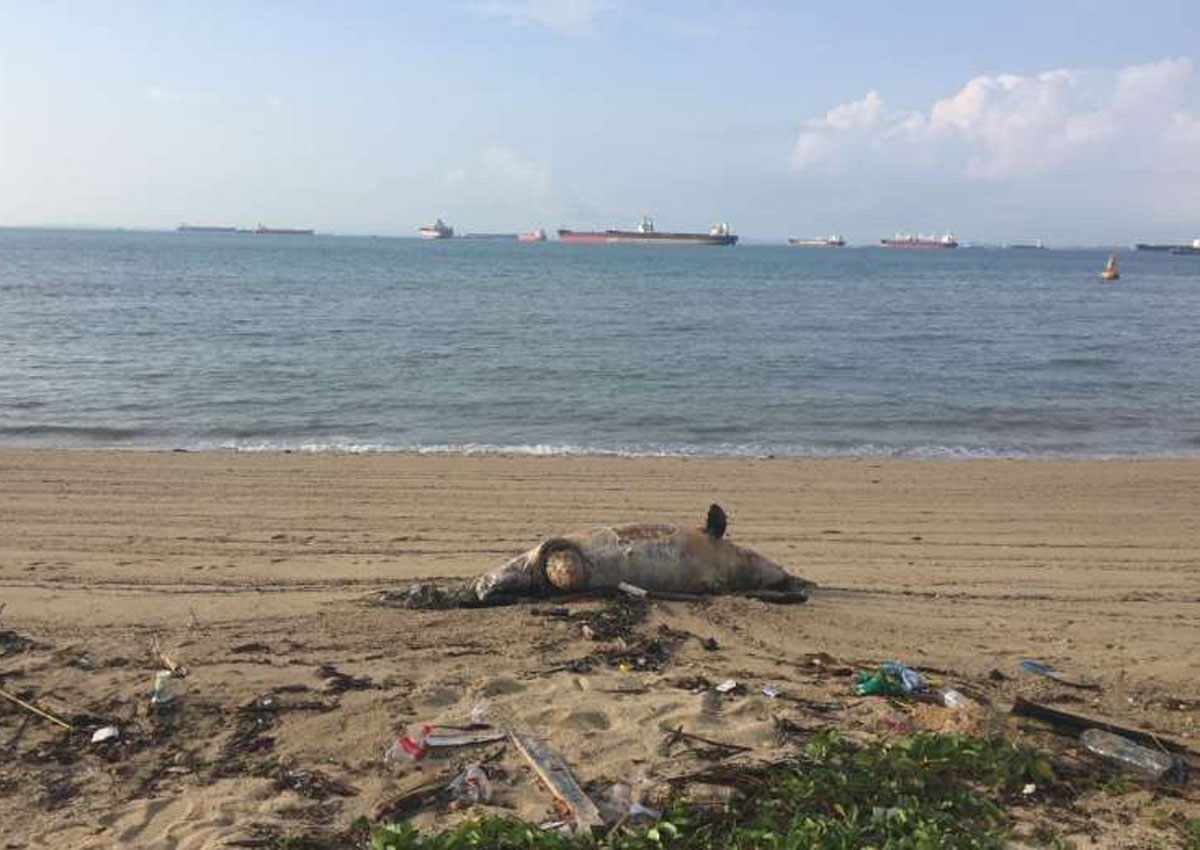
Dolphin carcass washes up on East Coast beach
SINGAPORE – Dolphin sightings in the Singapore Strait are quite rare, and it was even more unusual to see a dolphin carcass washed up on the beach at East Coast Park on Wednesday.
By Thursday morning, a three-member team from the National Parks Board (NParks) had erected a cordon around the 2m-long carcass located near Big Splash, The Straits Times reported.
The dolphin was later taken away on a lorry after an assessment by staff from the Lee Kong Chian Natural History Museum and NParks.
Read also: Acres launches dolphin research
Dolphin carcass washes up on East Coast Park beach
Click on thumbnail to view photos. Source:
The Straits Times







In 2015, a dead sperm whale washed up on Jurong Island. $1.3 million was later raised for scientific and education efforts related to the sperm whale. Its skeleton was preserved at the Lee Kong Chian Natural History Museum, which is part of the National University of Singapore (NUS).
A dead dolphin was also sighted at East Coast Park in 2014.
Between 2009 and 2011, at least 169 dolphins were sighted in Singapore, according to the National University of Singapore’s Tropical Marine Science Institute, which has been conducting sporadic studies on the mammal over the past 20 years.
These marine animals are usually spotted near the Southern Islands, which is also home to Singapore’s first marine park.
Read also: Dead sperm whale found off Jurong Island
Dead sperm whale found off Jurong Island
Click on thumbnail to view photos. Source:
The Straits Times, The New Paper






























In 2015, a pod of six Indo-Pacific bottlenose dolphins were spotted by bird watchers in the Singapore Strait while they were doing their pelagic bird survey.
In the same year, the Animal Concerns Research and Education Society (Acres) launched a two-year study on wild dolphins in Singapore.
Acres will also explore the possibility of conducting wild dolphin-watching tours in Singapore.
According to Acres, Indo-Pacific bottlenose dolphins and Indo-Pacific humpback dolphins are the two most commonly seen dolphin species in Singapore
grongloh@sph.com.sg
Read also: Dead dolphin washes up in East Coast Park
Click on thumbnail to view photos. Source:
YouTube screengrabs














Image:
Publication Date:
Thursday, July 7, 2016 – 12:20
Keywords:
Send to mobile app:
Source:
Story Type:
Rewritten Story
Wives of China's detained lawyers fight on

BEIJING – Monitored, scared, and made to feel like criminals, the women’s only offence is to be married to lawyers and activists detained by China’s Communist authorities. But a year after their husbands disappeared, they are defiant.
The men represented some of China’s most vulnerable people until they were held in a crackdown last year that swept up more than 200 attorneys and rights campaigners.
Around a dozen are still being held in near total isolation and accused of subverting state power, which carries a maximum sentence of life in prison, while their spouses are subject to constant surveillance.
This week five of them donned dresses emblazoned with their husbands’ names and marched to a national prosecutors’ office in Beijing – surrounded by dozens of police.
They clutched handwritten letters of complaint, accusing authorities in Tianjin – where all but one of the men are being held – of a litany of procedural errors.
The women emerged disappointed, still holding their letters, after officials refused to even read them.
Authorities “limit our freedom by stalking us”, said Wang Qiaoling, whose husband Li Heping is among those held.
“We have to creep around like criminals.” A group of diplomats looked on, a sign of the concerns that the crackdown has sparked internationally. The EU and the US have called for the lawyers’ release.
Under President Xi Jinping, China has tightened controls on civil society, and the 709 crackdown – named after the date of the first disappearance on July 9 – represents its largest-scale operation in years.
The UN High Commissioner for Human Rights described the detentions as “worrying”, but Beijing routinely dismisses such complaints as interference in its internal affairs.
China’s ruling Communist party has repeatedly pledged to implement the “rule of law”, but analysts say the crackdown shows the limits of that promise.
The country’s courts are tightly controlled by the ruling party, with forced confessions often used as evidence and guilty verdicts delivered in more than 99.9 per cent of criminal cases.
Over the past decade a few hundred lawyers, sometimes with official encouragement, used the courts to seek redress – sometimes successfully – for what they considered egregious rights violations.
They include victims of forced demolitions, illegal “black jails”, dissidents jailed for their writing, and others detained for practising religion.
Beijing law firm Fengrui, which has defended victims of sexual abuse, members of banned religious groups and dissident scholars, was at the centre of the 709 crackdown, with five of its staff still held.
The detainees have been denied access to their families or independent defence lawyers.
Li Wenzu, wife of Fengrui lawyer Wang Quanzhang, said she had a security camera installed outside her front door and volunteers on constant watch outside.
“We are scared that if we plan to do anything together, they will detain us at home, so we leave home days in advance. We stay at hotels,” she said.
Officials from China’s secretive ministry of state security two months ago attempted to persuade her to record a video imploring her husband to admit guilt.
She declined the offer.
State broadcaster CCTV said last year the detained lawyers tricked clients and “created a nuisance” in court by arguing with officials, making recordings and taking photographs.
State media branded Fengrui a “criminal organisation” whose staff had “staged open defiance inside the courtroom and on the internet”.
Chen Guiqiu said she had been banned from leaving mainland China since her husband Xie Yang was held.
“It’s the same for all of us. I was told it’s because of a threat to state security. I don’t understand how I can be a threat to state security,” she said.
The 709 detainees also include activists who organised protests outside courthouses.
Li Ermin, whose 55-year-old husband Zhai Yanmin was held, said Beijing police beat her after she travelled to nearby Tianjin to try to locate him.
Fan Lili said her cash savings and bank cards had been confiscated after her activist husband Gou Hongguo was detained, and police pressured her landlord to force her and her newborn baby to move out of their flat.
Police in Beijing and Tianjin did not respond to requests for comment from AFP.
Prosecutors are still considering whether to formally indict the men, their wives said. If they go ahead, the detainees are almost certain to be convicted and sentenced to lengthy prison terms.
“Now I’m always on the road,” Fan said, boarding a clattering subway train that took her towards her next, secret destination. “I never thought things could be this scary.”
Image:

Publication Date:
Thursday, July 7, 2016 – 12:12
Keywords:
Send to mobile app:
Source:
Story Type:
Others


