Home Blog Page 3450

House with skeletal remains: Estate of reclusive sisters now open to claims

0

The single-storey terrace house at 17 Jalan Batai, in which the skeletons of two elderly women were discovered – nearly a decade apart – may soon lie empty no more.

In an unprecedented move, the Public Trustee’s Office (PTO) is asking interested parties to submit their claims on the estate of the sisters – Pearl and Ruby Tan – which includes the house owned by Pearl, by July 31, a PTO spokesman said.

While there is now one claim on the estate by a cousin on the maternal side, a Sunday Times report on the Tan sisters in May that quoted a cousin on the paternal side “brought up the possibility that there could be more surviving cousins, so this motivated us to reach out to The Straits Times”, the PTO spokesman said.

“We thought that it would be better for anyone that has a claim to come forward so that we can assess them all together.”

Two nephews and a niece on the paternal side have also expressed interest in claiming the estate following recent media coverage, said the spokesman, though none have done so officially.

Pearl and Ruby Tan would have been 81 and 68 in 2006, when a skeleton was found in the toilet of the house they lived in by National Environment Agency officers.

Last September, a worker clearing rubble from the guest room found a skull and a thigh bone.

An open verdict on the latter set of remains was entered in May, echoing the decision reached in the earlier case. Foul play was ruled out in both cases, and neither set of remains could be identified.

Neighbours and relatives told The Sunday Times in May that the sisters had not been seen in over a decade.

The High Court issued an order last June that both sisters be presumed dead; as they left no known will and have no legal beneficiaries, their assets go to the State under the Intestate Succession Act.

However, under the Civil Law Act, any person can make a “moral or equitable claim” on a bona vacantia – ownerless estate – by demonstrating their link to the deceased.

The PTO, under the Ministry of Law, administers such claims.

Considerations for bona vacantia claims include the length and nature of the relationship between the deceased and claimant, any legal or moral obligations which the deceased had towards the claimant and any contribution made by the claimant to the welfare of the deceased while alive. If the Law Minister is satisfied with the claim made, he can disclaim and release either part or all of the Government’s right to the estate to the claimant.

As part of the verification process for the Tan sisters’ case, PTO deputy director Tan Yu-Wen spent three weeks searching the National Library Board’s digital newspaper archives, and pieced together a family tree that includes Pearl and Ruby’s parents, grandparents, aunts and uncles on both sides.

She said: “We don’t usually do family trees – this case is unique, as typically the claimants in such cases are foster children who have not been legally adopted by the deceased, so it is quite straightforward.”

The PTO could not disclose the value of the Tan sisters’ estate or other assets belonging to them, though the spokesman said that typical assets forming an estate include cash and shares.

SLP International Property Consultants’ executive director, Mr Nicholas Mak, said that it is hard to estimate the value of 17 Jalan Batai without knowing its land area.

But he noted that a three-storey house on the same street had sold for $3.75 million last month.

While there may be more claims to come, Madam Phyllis Tan, a paternal cousin who was once close to Pearl, will not be one of them.

Said the 84-year-old: “I’m not interested. I just want to keep the memories of Pearl and Ruby.”


This article was first published on July 10, 2016.
Get a copy of The Straits Times or go to straitstimes.com for more stories.

Image: 
Category: 
Publication Date: 
Sunday, July 10, 2016 – 15:00
Send to mobile app: 
Source: 


Story Type: 
Others

Source link

Only three Singapore swimmers in Rio Olympics

0

Singapore will field its smallest swimming squad at the Olympic Games in more than three decades, with just three to feature in the pool at Rio de Janeiro next month.

Joseph Schooling, Quah Zheng Wen – both of whom previously qualified on ‘A’ times – and Quah Ting Wen were the only swimmers to be named on the final contingent list at yesterday’s Olympic flag presentation ceremony.

The last time Singapore sent two or fewer swimmers to the quadrennial event was at the 1980 Moscow Games, when the Republic did not field any athletes in the sport.

There had been hope that a handful would make the cut for the Aug 5-21 Games on ‘B’ qualifying times, the same way four of the five swimmers who did not clock an ‘A’ qualifying time for the 2012 Olympics earned their tickets to London.

Instead, none among Singapore’s 11 swimmers received the call up from world governing body Fina this time based on their ‘B’ times.

However, rather than suggesting a decline in Singapore swimming, the result is more an indication of the rise in global competitiveness.

With a cap of 900 swimmers allowed for the Rio Games, not many slots were left for ‘B’ qualifiers after taking into consideration those who clocked ‘A’ times, the relay squads and universality places to ensure representation from countries who could not qualify.

Ting Wen was awarded the lone universality place given to Singapore since no woman swimmer from Singapore qualified.

It is believed that only about 30 places were left for ‘B’ qualifiers across all events, which likely meant no more than two of the best ‘B’ qualifiers in each event were extended an invitation by Fina.

National head coach Sergio Lopez, who is in Paraguay with the Quah siblings for a training camp, told The Sunday Times: “It really shows how the whole world is really pushing high performance.”

The competitiveness of qualifying times now can be seen in the quality of the ‘A’ times, many of them comparable with the semi-final times at the 2012 Olympics.

Added national assistant coach Gary Tan, a two-time Olympian: “The scope of things has really changed. Previously it was almost a straight qualification for the ‘B’ times, but now you either get an ‘A’ cut or you might not make it.”

Even with just two ‘A’ qualifiers, Singapore – traditional swimming kingpins in South-east Asia – is still likely to have fared better than its regional rivals. It is believed that Vietnam and Malaysia each have one swimmer who met the ‘A’ cut.

Four-time SEA Games 50m freestyle champion Amanda Lim, who just returned home after a training camp in Florida with the team, rued another miss after failing to qualify for the 2012 London Games.

She said: “It’s a bit sad, but what can you do? You can’t control what you can’t control.

“It’s really a different era now. The ‘A’ times should always be our aim. You don’t want to make the ‘B’ times and hope – you want to know you will go for sure, and train for it.”

Lopez urged the Olympic hopefuls to keep the faith. He said: “You have to be willing to train and push yourself past your limits and, at the same time, be willing to sacrifice small things (in) your personal life.

“The world is getting smaller and, more and more, every one is able to get access to high performance training. (What’s) most important is to never give up on your dreams.”


This article was first published on July 10, 2016.
Get a copy of The Straits Times or go to straitstimes.com for more stories.

Image: 
Category: 
Publication Date: 
Sunday, July 10, 2016 – 15:00
Send to mobile app: 
Source: 


Story Type: 
Others

Source link

Thai film festival draws flak for dropping four movies

0

Last-minute changes in the line-up of a state-sponsored film festival this weekend have triggered criticism amid a campaign to brighten the kingdom’s appeal to moviemakers.

Organisers behind the Thailand International Film Destination Festival – held to promote the country as a location for foreign productions – dropped four movies from the original line-up of 14 for reasons not officially made clear. Observers and film enthusiasts point out that most of the films dropped contained raunchy or violent scenes that put the country in a bad light.

The most controversial chop, however, involves a production called Twilight Over Burma, which is based on the real life story of an Austrian woman who married a Shan prince from then Burma in the 1950s.

Prince Sao Kya Seng was arrested after the 1962 military coup and never seen again. Scenes like one showing soldiers raping Shan women are believed to have been the reason it was pulled from a human rights film festival in Yangon last month, ostensibly for damaging “national unity”.

A Chiang Mai-based independent scholar, Mr Akkanut Wantanasombut, said he was told by the Thai festival’s organisers that “the film would affect the relationship between Thailand and Myanmar”.

“It’s strange, because we have a lot of films about conflicts between Thailand and Burma, like (King) Naresuan,” he told The Sunday Times, referring to the series of Thai films depicting the ancient Siamese king who was held hostage by the Burmese as a child and eventually defeated Burmese troops.

When contacted, the public relations officer overseeing the Thai film festival, Ms Kaew Chaviwan, said the films were dropped not just for their content. “There are many reasons. We have to consider the time slots available, for example. There are only seven days (for the films to be screened),” she said, without elaborating.

Of the remaining 10 films in the schedule, which began last Wednesday, four will be screened twice.

Thailand unveiled generous incentives at the Cannes Film Festival in May last year to reel in foreign filmmakers. From next year, the government will give a 15 per cent cash rebate on all production spending within the country for expenditures over US$1.5 million (S$2 million). This will be topped up by another 3 per cent if the project uses a Thai national in the lead role, or if Thais are used as key production staff. Another 2 per cent rebate will be given if the movies promote Thai tourism.

According to the Thailand Film Office, there were 724 foreign productions in Thailand last year, an increase of 15 per cent from the year before. These productions – which included 63 feature films – generated 3.16 billion baht (S$120 million) in revenue. So far this year, the number of foreign productions has already crossed the 400 mark.

With the growth in ASEAN’s second-largest economy constrained by high household debt and slow exports, officials see growing potential in the film industry. “It not only generates income for Thailand, but it is also a good way of promoting beautiful places in Thailand for the rest of the world to see,” the Department of Tourism’s director-general, Ms Wannasiri Morakul, said in a statement last month.

Yet some of the depictions have not been so pretty. According to an article by Matichon media group, one of the films dropped from the festival, a raunchy French production called Pattaya, featured a sex scene filmed inside an ancient monastic hall typically out of bounds to the public.

Also dropped is a Swedish film called Happy Hour In Paradise, which centres on a boozing priest in Phuket – a reminder of some of Thailand’s more notorious destinations where foreign tourists congregate for alcohol and sex.

“Nothing is impossible in Thailand,” the protagonist tells his companion in one scene. “You’ll see.”


This article was first published on July 10, 2016.
Get a copy of The Straits Times or go to straitstimes.com for more stories.

Image: 
Category: 
Publication Date: 
Sunday, July 10, 2016 – 15:00
Keywords: 
Send to mobile app: 
Source: 


Story Type: 
Others

Source link

Japan votes in upper house election

0

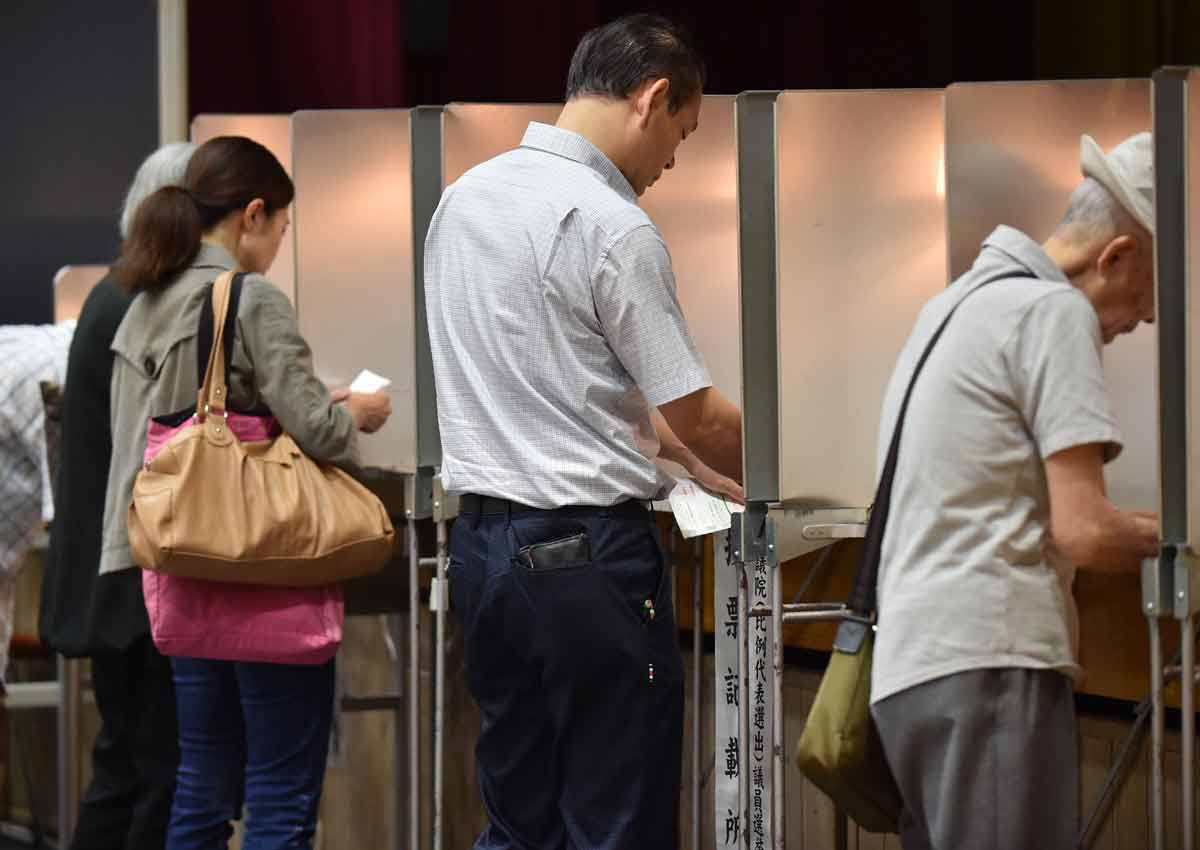
Japanese voters headed to the polls Sunday to cast their ballot in a parliamentary election with Prime Minister Shinzo Abe’s ruling party expected to cruise to victory despite lukewarm support.

Abe, in power since late 2012, has yet to achieve a strong recovery in the world’s third-largest economy nor his cherished goal of removing a war-renouncing clause from Japan’s US-imposed constitution.

But voters, despite misgivings, appear willing to boost his party and its conservative allies, due mostly to a lack of faith in the opposition.

“No matter who is elected, nothing will change,” Taeko Abe, a 85-year-old pensioner, said after voting. “I don’t expect much from the elections.” Aoi Sakuta, a 23-year-old graduate school student, said: “I hope politicians will work harder to narrow the rich-poor gap especially among young generations.”

Sunday’s vote is for half the seats in the House of Councillors – the less powerful upper house of parliament – and polling stations across the country opened at 7:00 am (2200 GMT Saturday).

The vote outcome is expected to become clear shortly after the polls close at 8:00 pm.

Having been largely written off after a failed 2006-2007 stint as prime minister, Abe got a rare second chance when a left-leaning government collapsed in late 2012.

He promised to end debilitating deflation through massive easy money and other steps – so-called Abenomics – while beefing up Japan’s defence, promoting conservative values and vowing to revise the constitution.

Initial results were favourable with stocks soaring and businesses reaping record profits as the yen fell, making Japanese companies more competitive.

But the world’s third-largest economy has since lurched from growth to contraction, with weak consumer inflation still weighing on sentiment.

“Abenomics has never failed but is still half done,” Abe told voters in Tokyo late Saturday, winding up his election campaign. “All we have to do is to push for the policy firmly and steadily.”

Katsuya Okada, head of the main opposition Democratic Party, separately told voters: “This is an important election, which is a watershed for Japan. Let’s display our good sense as voters.”

In a poll last week, 41 per cent said they disapproved of Abe’s economic policies, but support his Liberal Democratic Party (LDP), a less-than-resounding 37 per cent, far outpacing 11 per cent for the Democratic Party.

“As in past elections, voters are likely to passively endorse the Abe administration due to a lack of alternatives,” said Koji Nakakita, professor of politics at Hitotsubashi University in Tokyo.

A wildcard this time is that Japan’s voting age has been lowered from 20 to 18 to encourage young people to take part in politics but how they will vote, and in what numbers, remains to be seen.

Abe is hoping that the coalition and a loose group of hawkish conservatives from smaller parties can grab a two-thirds majority in the upper house, giving him the strength to start amending the constitution.

The document, which renounces Japan’s right to wage war, is deplored by nationalists as a relic from Japan’s World War II defeat.

Still, many Japanese staunchly embrace its pacifist ideal.

But any legislation that mustered the two-thirds majorities needed to pass both houses would face another hurdle in the form of a national referendum.

Voter turnout stood at 22.54 per cent as of 2:00 pm (0600 GMT), down 0.12 points from the 2013 election. But early voting hit a record 13.2 million by Friday, accounting for some 12 per cent of the nation’s eligible voters, according to the government.

Image: 
Category: 
Publication Date: 
Sunday, July 10, 2016 – 14:49
Send to mobile app: 
Source: 


Story Type: 
Others

Source link

Phase 1 of 150km green trail will start at year end

0

Construction work on the first 60km of a continuous 150km green trail that will go around Singapore will start at the end of the year.

The project aims to enhance connectivity and create new recreational spaces for cyclists and park goers.

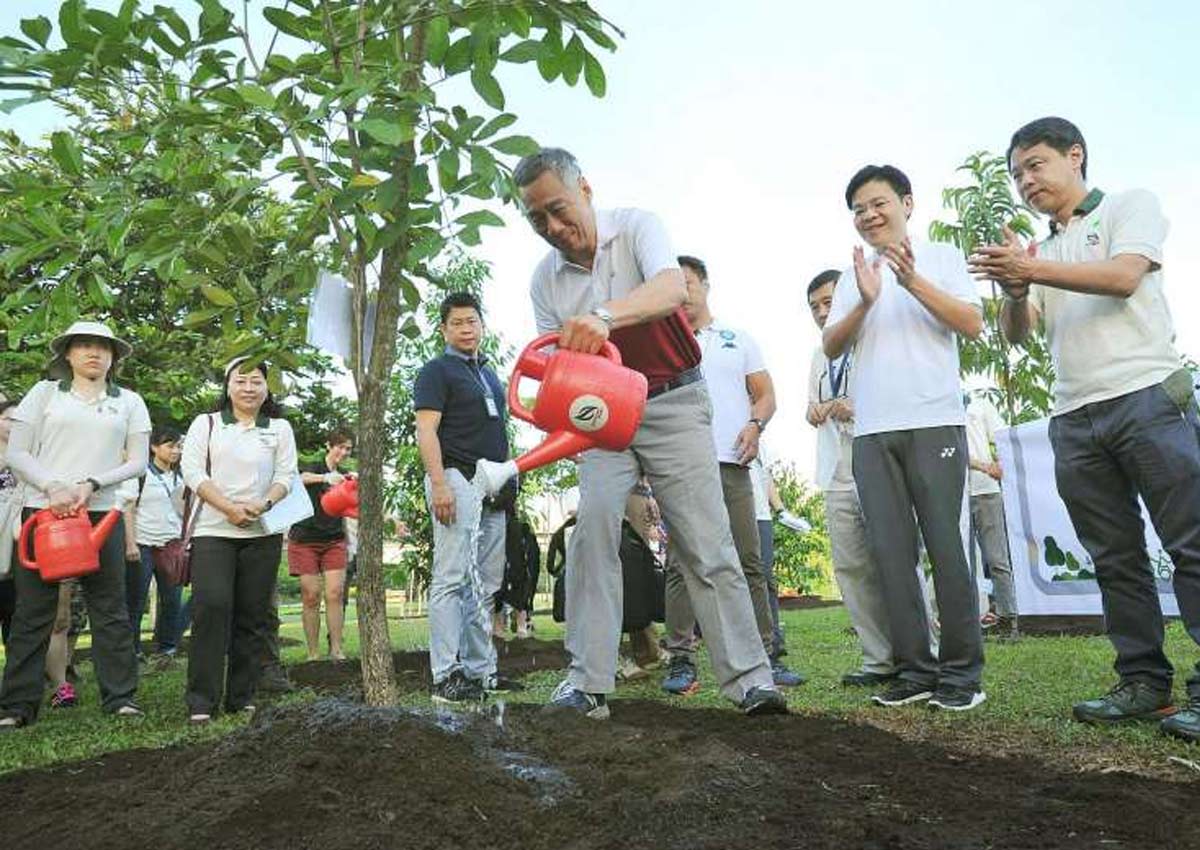
In a ceremony held yesterday morning (July 9), Prime Minister Lee Hsien Loong planted a tree at the Sengkang Riverside Park, marking the start of phase one of the Round Island Route, an idea first conceptualised in 2011.

The 150km corridor, which is more than three times the length of Singapore, will be built in three stages.

While a completion date has yet to be announced, the route will link existing natural, cultural, historical and recreational sites.

The development is part of the larger Park Connector Network (PCN), which is now over 300km in length, and the new corridor is expected to benefit about 3.5 million residents along the route.

The National Parks Board (NParks) will be calling for a tender soon for the first phase of the route.

The 60km stretch, named the Coastal Adventure Corridor, will start at Rower’s Bay at the Lower Seletar Reservoir Park and pass along the coasts of Punggol, Pasir Ris, Changi and East Coast Park, before reaching Gardens by the Bay East.

Ms Kartini Omar, group director of parks development at NParks, said efforts have been made so the Round Island Route has “seamless connectivity”.

“For the Coastal Adventure Corridor… we will have a bridge across Sungei Punggol, which will link the two parcels of Sengkang Riverside Park, so park users (cyclists) don’t actually have to dismount and (can) have a more seamless ride,” she said, citing an example.

The Round Island Route’s tracks will be mostly 6m wide – wider than the 4m paths of the park connectors.

It will also have shelters, toilets, lookout points, information kiosks, bicycle parking lots and self-help bike repair facilities.

Mr Han Jok Kwang, a cycling enthusiast and chairman of the Friends of PCN Community group, said the Round Island Route is about “connecting the dots forward”, as it will link to other PCN loops at strategic locations, feeding its users into various residential towns.

“With the route, you can also go around the whole island safely, minimising interaction with vehicular traffic,” he added.

As a 150km-long corridor, it also offers the potential for eco-tourism, giving visitors to Singapore a chance to explore the scenic coastline and other attractions along the way, he said.

Sengkang resident Eric Phua, 37, said the upcoming Coastal Adventure Corridor will give him an incentive to pick up cycling.

“I’ll consider cycling to enjoy this new facility and it can also be another form of exercise for me,” said the stock dealer.

The 150km corridor, which is more than three times the length of Singapore, will be built in three stages. While a completion date has yet to be announced, the route will link existing natural, cultural, historical and recreational sites.


This article was first published on July 10, 2016.
Get a copy of The Straits Times or go to straitstimes.com for more stories.

Image: 
Category: 
Publication Date: 
Sunday, July 10, 2016 – 15:00
Keywords: 
Send to mobile app: 
Source: 


Story Type: 
Others

Source link

Cambodian government critic shot dead in capital

0

An anti-government figure was shot dead in the Cambodian capital on Sunday, at a time of rising political tension between Prime Minister Hun Sen and an opposition hoping to challenge his grip on power in elections as soon as next year.

Kem Ley, the head of a grassroots advocacy group, “Khmer for Khmer” was shot three times in a store at a gas station in Phnom Penh, police said. “Kem Ley was shot dead,” Eng Hy, a spokesman for the National Military Police, told Reuters, but declined to provide further details.

The body lay in a pool of blood on the floor of the store, as hundreds of onlookers stood outside. A water bottle and a cellphone lay nearby, as his pregnant wife, Pou Rachana, wept.

“I don’t know what happened, somebody just called me and said that he’s shot,” Pou Rachana told Reuters. “He’s already dead,” she added, as investigators kept her away from the body of her husband.

The killing comes during a period of rising political tension between Hun Sen and the opposition Cambodia National Rescue Party (CNRP), which wants to take on the prime minister in local elections in 2017 and a general election in 2018.

A popular political commentator and researcher, Kem Ley was frequently critical of Hun Sen’s administration, having most recently commented on a report by anti-corruption pressure group Global Witness.

The report, which accused the prime minister and his family of having amassed $200 million in business interests, has been dismissed as personal propaganda by a government spokesman.

Image: 
Category: 
Publication Date: 
Sunday, July 10, 2016 – 13:17
Send to mobile app: 
Source: 


Story Type: 
Others

Source link

3 Indonesians believed to be kidnapped by armed men off Sabah coast

0

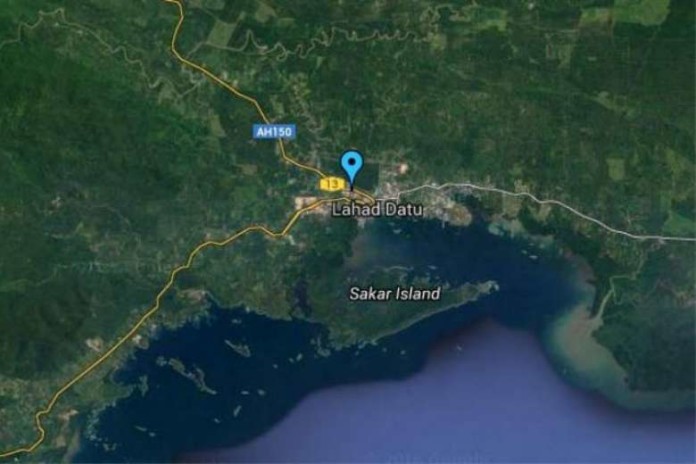
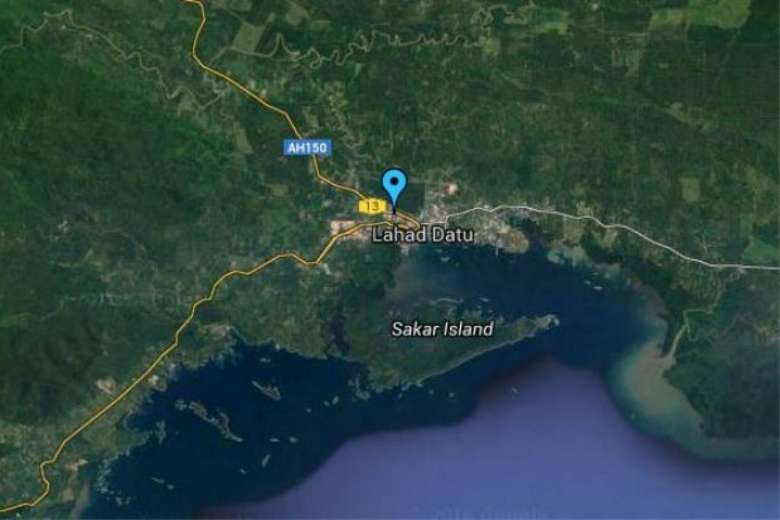
Three Indonesians were believed to have been kidnapped by five armed men off Lahad Datu late Saturday (July 9), the latest in a spree of abductions off the coast of Sabah.

It is believed that the Indonesians were on a tugboat when the incident occurred at about 11.40pm.

Sabah police commissioner Datuk Abdul Rashid Harun said a press conference would be held in Lahad Datu on Sunday afternoon, without elaborating further.

On June 20, seven Indonesian seamen were taken hostage in the Sulu Sea, allegedly by Abu Sayyaf militants.

The Abu Sayyaf, notorious for kidnapping people and demanding millions of dollars in ransom for their return, in April abducted a group of Malaysian sailors in the same waters, releasing them last month.

The militants abducted 10 Indonesian sailors on March 29, and another four on April 15. All were also released last month.

But the group has in recent months executed two Western hostages abducted from a tourist resort in the southern Philippines after ransom demands were not met.

Image: 
Category: 
Publication Date: 
Sunday, July 10, 2016 – 13:08
Send to mobile app: 
Source: 


Story Type: 
Others

Source link

Ang Mo Kio could lead way to car-lite society: PM

0

The ongoing transformation of Ang Mo Kio into a model walking and cycling town could pave the way for the rest of Singapore in the drive towards a car-lite society.

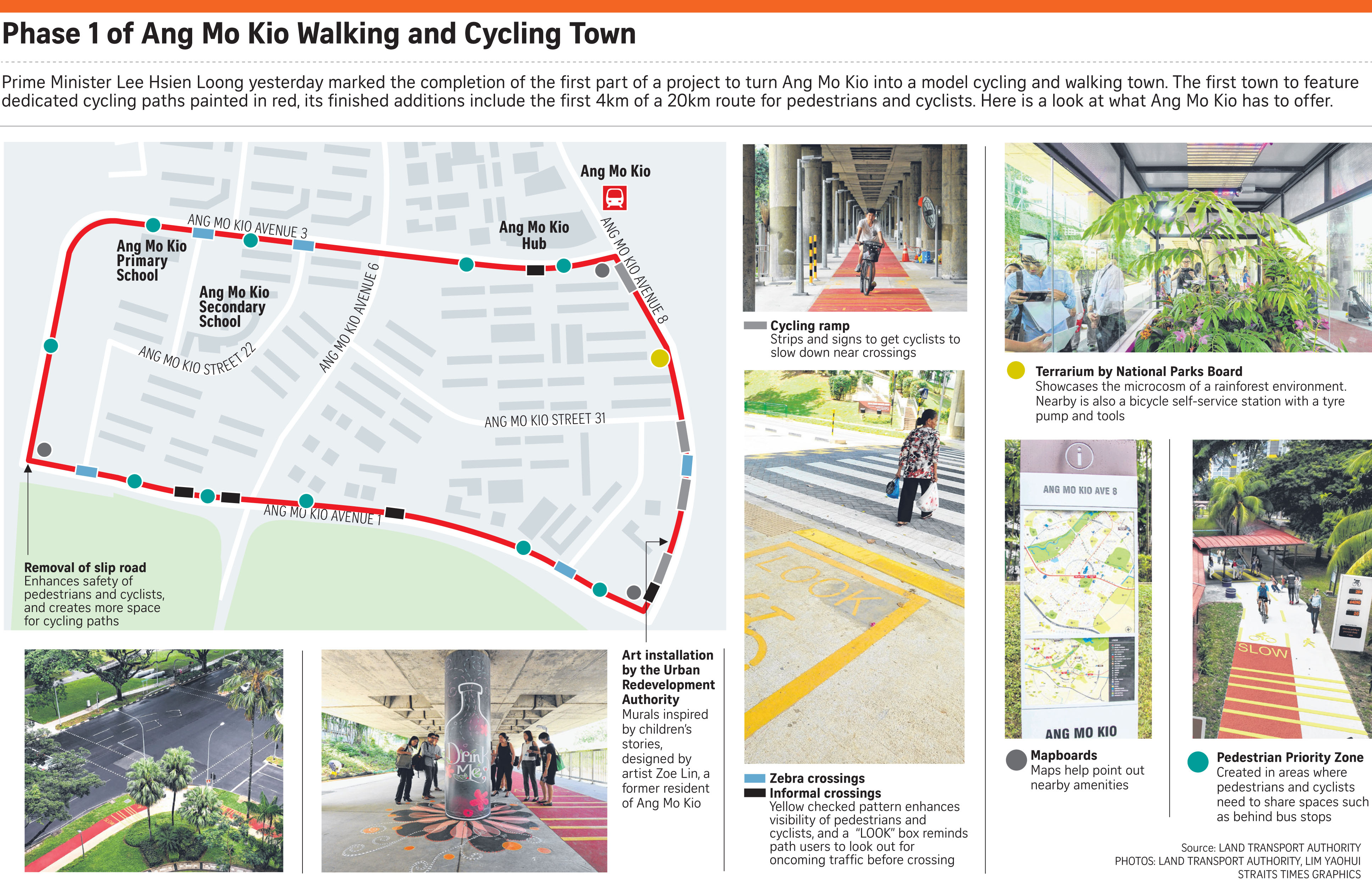
Prime Minister Lee Hsien Loong said this yesterday (July 9), after marking the completion of the project’s first phase, which includes a new 4km biking route, cycle ramps with slow- down rumble strips, and road markings so motorists can better watch out for cyclists and pedestrians.

Cycling paths are also painted red to better set them apart from footpaths, and this is one of several unique features in Ang Mo Kio, with plans afoot for roads to cede more space to cyclists.

Said Mr Lee, who took a bike ride on the new 4km path which loops around Avenues 1, 3 and 8: “I think this is going to be a success and we will do this in other towns as well, so that we can encourage people to ride more on bicycles, need cars less and also save money, and become healthier.”

While the full transformation of Ang Mo Kio will take another three years, the Land Transport Authority (LTA) told The Sunday Times that Tampines has been earmarked as the next walking and cycling town.

During the event at Teck Ghee Community Club, PM Lee, who is an MP for Ang Mo Kio GRC, also announced the start of work on the first 60km of a 150km green corridor called the Round Island Route.

This will add to the over 300km- long Park Connector Network, enhancing connectivity and creating more recreational space. The first leg, the Coastal Adventure Corridor, will link Lower Seletar Reservoir Park with Gardens by the Bay, passing along the coasts of Punggol, Pasir Ris, Changi and East Coast Park.

In Singapore, cycling accounts for just 1.5 per cent of all commutes but the plan is to increase this to between 3 and 4.5 per cent in the next five to 10 years. A raft of measures to encourage people to cycle have been announced, including a proposed bike-sharing pilot, and more bike-parking at MRT stations. The North-South Corridor – a 21.5km expressway that will connect towns in the north to the city and to be completed around 2026 – will also have a cycling trunk route.

Two years ago, Ang Mo Kio was identified as a car-lite test-bed.

A key feature is a 2.6km walking and cycling corridor that will link Yio Chu Kang MRT station to the Bishan-Ang Mo Kio Park, making use of space under the MRT viaduct. The first kilometre of this corridor – from the park to Ang Mo Kio MRT station – has been completed as part of the $7 million Phase 1, with the remaining 1.6km to be built in Phase 2.

Construction is expected to start next year, during which another 16km of cycling paths will also be added, making Ang Mo Kio the town with the longest cycling network.

Mr Lee said: “Even in a busy neighbourhood, we can carve out a little bit of space; underneath the MRT viaduct, now we have a sheltered walking and cycling path.”

Phase 1 has also seen the introduction of marked zones to better separate pedestrians and cyclists at areas such as bus stops. A slip road located at the junction of Ang Mo Kio Avenues 1 and 3 was removed to offer more space and increase safety for pedestrians and cyclists. There are plans in Phase 2 to also narrow the road along Street 44.

LTA’s director for active mobility and policy Tan Shin Gee, said: “In Singapore, where it is so built-up, the reality is that if you want to give space to one group of users, there is a trade-off” on another segment.

Ms Amy Ong, a retiree in her 50s, appreciates the new cycling path under the viaduct. “Before, there were many potholes and at some stretches we had to carry our bikes and use stairs. These have been replaced with slopes with a gentle gradient.”


This article was first published on July 10, 2016.
Get a copy of The Straits Times or go to straitstimes.com for more stories.

Image: 
Publication Date: 
Sunday, July 10, 2016 – 14:00
Keywords: 
Send to mobile app: 
Source: 


Story Type: 
Others

Source link

HPE to debut Singapore-developed tool for citizen insights

0

Hewlett Packard Enterprise will be showcasing a dashboard that aims to make sense of Twitter and Weibo posts in order to improve government engagement with citizens, as well as the services they provide.

Source link

The changing face of vice in Geylang

0

Online vice is on the rise and the authorities have changed the laws to combat it.

Changes to the Women’s Charter kicked in on July 1 and they include a new section, 146A, which targets those who operate or maintain websites which offer sexual services or allow prostitutes to advertise.

Those convicted can be fined up to $10,000 or jailed for up to five years, or both.

Section 146 was also tweaked to make clear that it is an offence for a person to live on or receive various forms of gratification in return for helping in the prostitution of another person.

The changes are a response to how the Internet has affected the world’s oldest industry – the sex trade.

Instead of having highly visible red-light districts, the shift online has made prostitution a more hidden and discreet business.

It means prostitutes no longer need middlemen – agencies and pimps – to source for clients or to provide a venue.

And many have decided to have a go at it alone.

Singapore is no exception. Over the past few years, websites where women post advertisements to solicit for paid sex have sprung up. These women operate out of Housing Board or private flats, and the advertisements are grouped according to where they are located – north, south, east, west or central Singapore.

Some websites also have a special section for Geylang. The Sunday Times found at least 60 women using condominium units in the area for prostitution.

Clients can browse the websites by the women’s location, age, bust size, height, types of sexual services offered, or how much they cost.

The women’s “business” addresses are not listed on the websites.

Customers can call or text to find out the rough location. The exact address is revealed only when the client reaches the area.

The police have, in the past, raided HDB flats in areas such as Woodlands, Jurong West and Ang Mo Kio that were being used for prostitution.

In Parliament earlier this year, during the second reading of the Women’s Charter amendment Bill, Mr Alex Yam, an MP in the Marsiling-Yew Tee GRC, asked how the law would deal with sites that are hosted abroad.

“A simple Google search will reveal that there are many such sites but there are no provisions under Section 146 for this,” he noted.

Ireland, for instance, banned the advertising of sexual services in 1994. However, it has had limited impact as the websites simply moved abroad.

In his speech, Minister for Social and Family Development Tan Chuan-Jin acknowledged the online vice problem and the challenges it posed.

He said: “The rise of online media has allowed vice syndicates to take their business online to widen their reach to clients, while hiding behind the anonymity of the Internet.

“This makes it challenging for the police to prevent and detect criminal groups conducting such a business.

“Sexual services at hotels and residences arranged by vice syndicates using new technologies also affect the public’s sense of safety and security.”

Such friction has already surfaced in Geylang.

Last year, the Urban Redevelopment Authority (URA) said that some parts of the red-light district in Geylang will be rezoned for “commercial/institution” uses to halt the development of more homes in the area.

“This is to minimise the issues arising from incompatibility of uses, and friction between residential and non-residential uses in the area,” the URA had said then.

IT manager Henry Goh, 43, said that more condominium and shoebox units in Geylang are being used for vice.

“Two to three years ago, there was one unit on my floor using it for such purposes but now, there are three on my floor alone,” said Mr Goh, who lives at Viento, a condominium in Lorong 30.

“It is obvious. Seven to eight different men visit the unit at different times at night. So I just make sure I lock my doors.”

Mr Adhi, 32, an engineer who lives at Smart Suites, off Lorong 27, said he finds it disturbing when strange men call on the intercom at night.

“We have to keep saying that it’s the wrong number.”

He added, highlighting his concern: “It is not safe as we have a four-year-old daughter.”

Ms Vanessa Ho, 28, director of sex workers’ rights group Project X, said stepped-up police patrols in areas such as Geylang in the past few years have resulted in more sex business being transacted online.

She said: “This makes it harder for us to reach out to support them in terms of their safety or health, and the changes in law further stigmatise them and give their customers more leverage to threaten or abuse them behind closed doors.”

Project X started an outreach programme two years ago for escorts who ply their trade online, mostly to inform migrant sex workers of the support services it provides.

It is also in contact with a small group of local freelancers, who are mainly students and professionals.

Meanwhile, a Ministry of Home Affairs spokesman said that the police take a pragmatic approach to prostitution, which focuses on confining vice activities within traditional red-light areas.

He said: “Enforcement action is also taken to ensure that organised groups do not gain a foothold through such activities, and that no person is forced into prostitution or exploited.”

‘Internet posting is like a job ad’
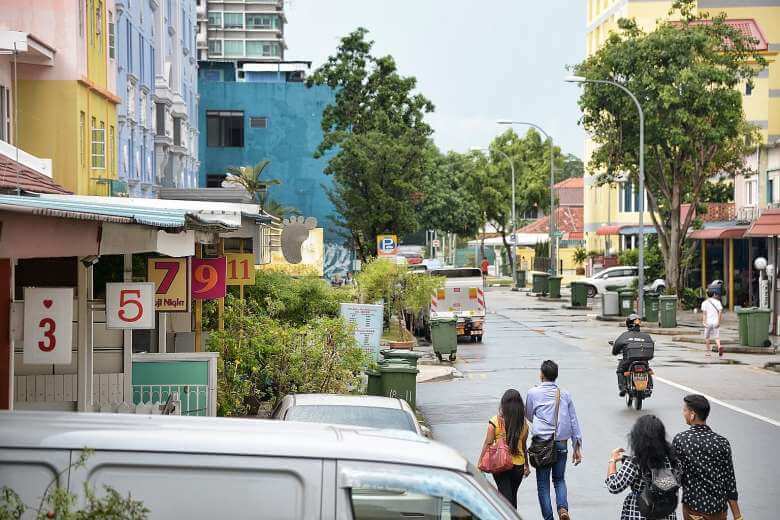
Sex workers used to be a common sight in Geylang (above) as they worked in brothels or plied the streets under the watchful eye of pimps. But the rise of the Internet has led to a new group of Geylang prostitutes – freelancers, who rent apartments both within and outside the traditional red-light districts and use the Internet to look for customers. Photo: The Straits Times

Like most 19-year-old Singaporeans, Samantha (not her real name) is smartphone- and Internet-savvy.

During the day, she uses the Internet to do research for her school work – she is pursuing a business diploma in a private institution.

But at night, she turns to the Internet to meet clients.

Samantha is a freelance social escort. She advertises her services on various local online websites and charges $500 an hour for sex.

“The Internet posting is like a job advertisement. I am a service provider,” said the petite woman with shoulder-length hair. “I am doing this to support myself.”

Samantha started working as an online social escort in July last year after graduating from the Institute of Technical Education (ITE). She could not get into a polytechnic but wanted to continue her studies.

“I have only ITE education and needed money quickly for the private diploma,” she said.

“The private diploma course fee is $10,000 a year; and I want to go to a private university eventually, which will cost much more.”

Asked why her parents did not pay for her education, she would only say: ” Family problems.”

She was introduced to an escort agency owner who then recruited her. The agency closed down at the end of last year, after a series of police raids, and she decided to strike out on her own.

“With the Internet, I am free to choose my clients and my working hours,” she said. “In an agency, I have to take clients assigned to me.”

Agencies also take a 40 per cent cut from her earnings. She charges around $500 to $600 an hour.

While the Internet postings are free, she pays the websites to ensure that her listing appears at the top of searches.

She gets about one to two clients a week through the Internet, and meets them in hotels.

“Most are locals. Some are regulars from my agency days.”

The job is not without risks. Top of her worries are clients who are violent. “I am petite and I cannot fight them,” she said.

Before meeting new clients, she screens them by asking them questions via e-mail. She also turns to a small network of friends, who are in the same trade, for support.

“I ask them if they know the client. I also message them before I go into the hotel room to meet him and after I come out, so that they know that I am safe,” she said. “I also turn to them to complain about clients.”

She spoke of one experience in which a client demanded a service she was not comfortable with. “I just closed my eyes and got on with it.”

She also recounted an incident involving another social escort, who agreed to be tied up, but the client took advantage of her immobile state. The escort did not report the incident, said Samantha, because she was worried about getting into trouble with the law.

From this month, it is an offence to operate or maintain a remote communication service that offers or facilitates the provision of sexual services.

Samantha said the Internet is her lifeline of sorts. “It is not as if I can print and distribute fliers.”

She wants to stop working as a social escort in a few years. “I will get a normal, office-based job,” she said.

But her experience as a social escort has scarred how she views relationships with men.

“After meeting these men – who cheated on their wives and partners – I can never have a normal, romantic relationship in the future,” she said. “I have trust issues.”

Prostitutes turning to less visible avenues to ply trade
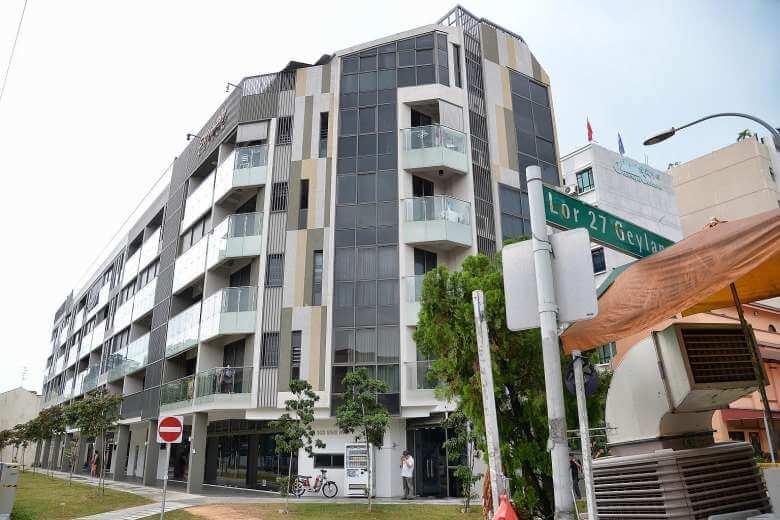
Smart Suites, one of the condominiums in Geylang where prostitutes advertising online are operating from. MHA said the police will take action against owners of residential apartments used by vice workers. Photo: The Straits Times

Geylang’s brothels and streetwalkers are the most obvious signs of its notoriety as a red-light district, but the sex trade there is expanding into areas less visible.

The Sunday Times found at least 60 prostitutes from China advertising their services online and operating in condominiums and apartments in Geylang.

The advertisements were on at least 10 websites.

Instead of relying on pimps and brothel keepers, the women post suggestive photos of themselves and ask those interested to contact them on mobile phones directly.

These freelance prostitutes enter Singapore on tourist visas and typically work for up to one month.

The websites are hosted abroad.

When The Sunday Times contacted the numbers provided by 15 different advertisements, the women who responded disclosed which lorongs they were in.

Three gave their apartment blocks readily, but none revealed their unit numbers.

“I am at a condo at Lorong 39, dear, what time can you come?” asked one by SMS. She advertised herself as being 29 years old. Her charges were $80 an hour.

“Call me when you reach and I will tell you the unit number,” said another, who advertised her age as 25.

A source familiar with these prostitutes said that these apartments are upmarket.

“These are mostly studio or one-bedroom apartments. One of them even has a private lift that stops at the doorstep of the apartments,” he said.

“There are no security guards. Residents have key cards and customers need to punch in the apartment number on the intercom and look into the camera for the women to confirm their identities before they are let in,” the source added.

“The women typically rent a room for $100 or $120 a day for a whole studio apartment.”

The Urban Redevelopment Authority (URA) said there are about 1,000 residential units within the Geylang red-light district and another 7,500 private homes nearby. It added that short-term rental of less than six months is not permitted.

“When we receive feedback on such subletting infringements, we will investigate together with related government agencies against various contraventions within their purview,” said the URA. “Cases involving suspected vice activities are referred to the police.”

The Ministry of Home Affairs (MHA) said that there has been a rise in the number of foreign women arrested for vice-related activities in apartments in Geylang.

“The police will continue to take enforcement action against any organised groups and the apartment owners who allow their apartments to be used by the vice workers,” said an MHA spokesman.

The police focus is to maintain law and order in Geylang and it has implemented measures such as better street lighting, more police cameras and stepped-up patrols. This has reduced the number of streetwalkers, said the spokesman.

Ms Vanessa Ho, director of sex workers’ rights group Project X, said that a cleaned-up Geylang is not necessarily a positive move for sex workers.

“Geylang looking clean is not indicative that the industry is getting safer (for the sex workers); they have merely moved behind closed doors,” she said.

Mr Alan Fong, chairman of the Residents’ Committee at Central Meadows in Lorong 34, Geylang, said: “It does not happen at our condo. A few years ago, there were three prostitutes from Malaysia who rented (a unit) here but they have moved out.”

However, some other Geylang residents did not know they had prostitutes as neighbours while others were concerned about it.

“Of course I feel unsafe,” said Smart Suites resident Jenny Wu, after The Sunday Times told her that a prostitute told the newspaper that she was working in the condominium at the junction of Sims Avenue and Lorong 27, Geylang.

“There are families with young children here so security and privacy can be issues when sex workers use residential units,” added the 28-year-old commodities trader, who lives alone in an apartment that she rented last year.

Govt boosts law to fight online vice

The Ministry of Home Affairs told The Sunday Times that it expects online vice to rise, given the increasing access to the Internet, but it has put more teeth into the law with new additions that will help the police to fight the problem.

“The trend has been driven by the emergence of specialist websites, apps and other Internet technologies, which have enabled vice syndicates and sex workers to reach a wider audience, hide behind the anonymity afforded by the Internet and conduct vice activities discreetly,” a ministry spokesman said.

“This presents some challenges for the police (who are working) to prevent and detect criminal groups conducting such illicit activities.”

The police have also observed an increase in the number of foreign women arrested for vice-related activities in apartments in Geylang.

But along with regular anti-vice operations, the changes to the Women’s Charter make it an offence for persons here to run any website in Singapore that offers or facilitates prostitution, or to provide a service which aids in the prostitution of another person.

The spokesman said the police will continue to take action against any organised groups and apartment owners who allow their units to be used by vice workers.

He added: “It is not realistic to expect vice… to be eliminated. The police are focused on maintaining law and order in Geylang and have taken strong enforcement actions against those involved in illicit activities.”

Initiatives, such as better lighting conditions in the lorongs and backlanes of Geylang and the installation of more police cameras, have helped to reduce the number of streetwalkers there.

He said the police will continue to conduct enforcement operations regularly to deter and detect such activities, and work closely with the community and other agencies to clamp down on vice activities and stamp out vice syndicates.


This article was first published on July 10, 2016.
Get a copy of The Straits Times or go to straitstimes.com for more stories.
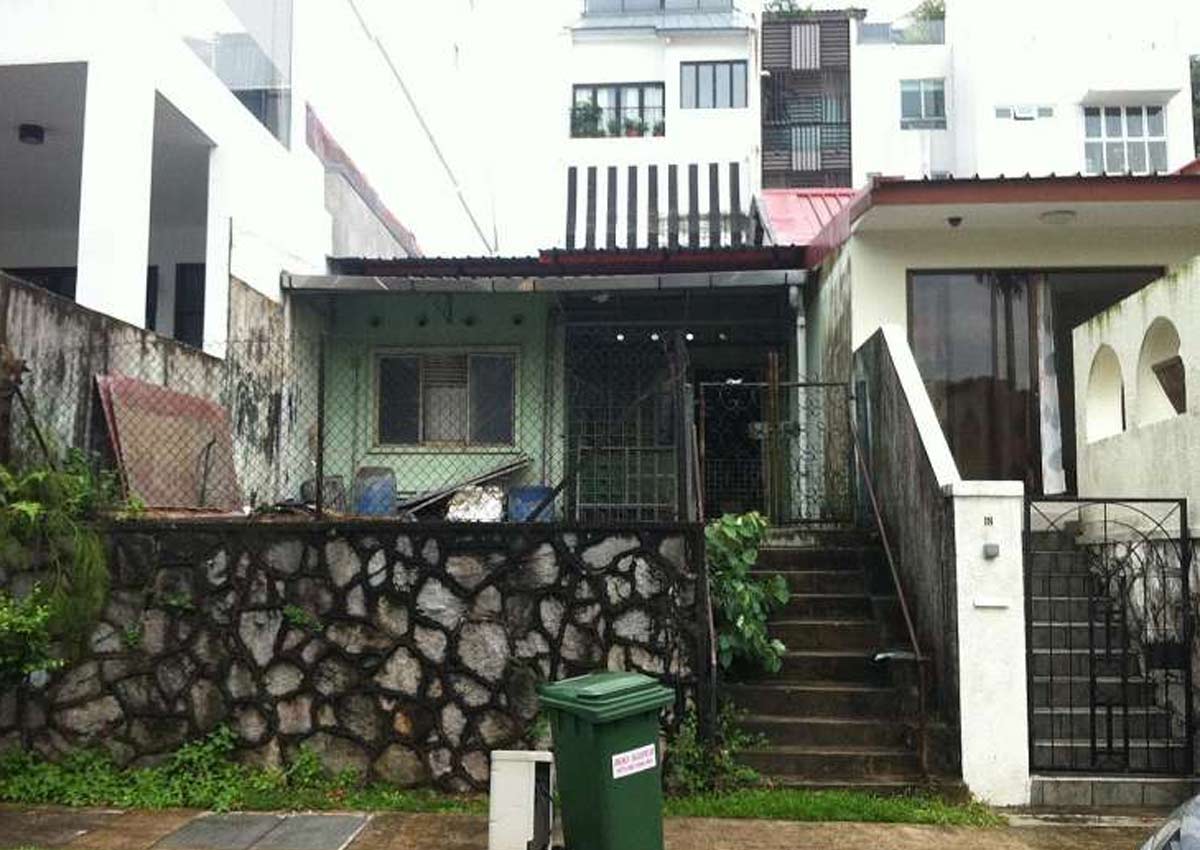

Image: 
Category: 
Publication Date: 
Sunday, July 10, 2016 – 14:00
Send to mobile app: 
Source: 


Rotator Headline: 
The changing face of vice in Geylang: Modern tech shakes up world's oldest profession
Rotator Image: 
Story Type: 
Others

Source link