Gardens by the Bay says each shuttle can seat up to 22 persons and a wheelchair passenger.
Source link
Gardens by the Bay to be equipped with wheelchair-enabled shuttles
In rare move, Pakistan bars family from 'forgiving' son for honour killing

ISLAMABAD – Pakistani authorities have barred the family of a murdered social media celebrity from legally “forgiving” their son for strangling her, sources said, in a rare stand against the so-called practice of “honour killings”.
Muhammad Waseem drugged and strangled Qandeel Baloch on Friday in a murder that has shocked Pakistan, a deeply conservative Muslim nation where the 26-year-old both titillated and outraged with her risque social media photos and videos.
Waseem told media he had “no regrets” about killing his sister as she violated the family’s honour by her social media pictures, including “selfie” photographs with prominent Muslim cleric Abdul Qavi. In a video post with Qavi, she appears to sit on his lap.
A police source said the government of Punjab, the country’s largest province, has made it impossible for the family to forgive the son who murdered her – a common legal loophole that sees many honour killings go unpunished in Pakistan. “It was done on the instructions of the government. But it happens rarely,” said the Punjab police official.
A senior government official in Islamabad confirmed the order came from the Punjab government.
Pakistani social media star killed for ‘violating family’s honour’
Click on thumbnail to view photos. Source:
AFP, Reuters


More than 500 people, almost all of them women, die in honour killings in Pakistan every year, usually at the hands of relatives acting over a perception shame has been brought on the family.
It was not immediately clear if the Punjab government’s decision would lead to any meaningful reforms. An anti-honour killings bill that aims to close the family forgiveness loophole has been bogged down in parliament.
Prime Minister Nawaz Sharif in February promised to speed up the passage of the proposed law but right groups say there has been no progress. “There is no honour in killing in the name of honour,”Sharif said about Baloch’s murder, according to his daughter, Maryam.
Baloch’s father, Muhammad Azeem, has filed a police complaint against Waseem and another one of his sons for their role in Baloch’s murder.
Police on Monday also said they were widening their investigations to include Qavi, the Muslim cleric who was removed from a prominent Muslim committee after the selfie photos were published. He has denied any wrongdoing.
Baloch built a modelling career on the back of her social media fame and was the family breadwinner. Media often described her as Pakistan’s Kim Kardashian and she called herself a modern-day feminist.
But her pictures and videos outraged religious conservatives who viewed her as a disgrace to the cultural values of Islam and Pakistan. She often received death threats.
Image:

Publication Date:
Tuesday, July 19, 2016 – 13:51
Keywords:
Send to mobile app:
Source:
Rotator Image:

Story Type:
Others
Scoot to launch flights between Singapore and Dalian
The twice-weekly flights between Singapore and the Chinese city of Dalian will start from Oct 30 this year, Scoot says.
Source link
Normal practice for ministers to get expedited clearance at checkpoints: ICA

 SINGAPORE – It is normal practice for ministers to be given expedited clearance at checkpoints, said the Immigration and Checkpoints Authority (ICA) on Tuesday (July 19) amid online debate after Minister for Family and Social Development Tan Chuan Jin and…
Source link
Sentosa to develop two new attractions
Visitors to Sentosa have two new attractions to look forward to, including a new site to be developed into a nature-based adventure attraction.
Sentosa Development Corporation (SDC) is calling for proposals to develop a 9,420 sq m forested area, located on a slope connecting Imbiah Lookout to Siloso Beach, into an attraction for thrill-seekers and nature lovers.
The flying trapeze and Trapizza restaurant at Siloso Beach Walk, run by Shangri-La’s Rasa Sentosa, will make way for a new attraction when its lease ends in the coming months.
A tender for the 2,760 sq m site was called last month for an attraction with ancillary food and beverage and/or retail offerings.
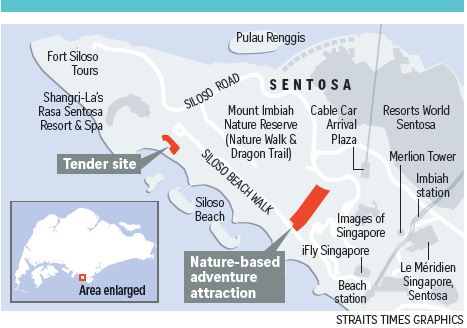
According to tender documents, the proposed attraction should complement Siloso Beach’s positioning as a destination for the hip, cool and young, as well as nearby attractions such as the Skyline Luge and the upcoming AJ Hackett Bungy attraction, touted as Singapore’s first bungy jump experience.
The tender calls for innovative concepts that are interactive, skill-based in nature and competitively priced, among other things.
Proposals for the attraction at Imbiah Lookout should combine nature and adventure elements by making use of the site’s natural gradient and profile, and have a small building footprint with minimal environmental impact.
In response to queries, SDC’s divisional director for island investment and branding Susan Ang said: “As part of our periodic reviews on site use across the island, Imbiah Lookout has been identified as a potential site for further development.”
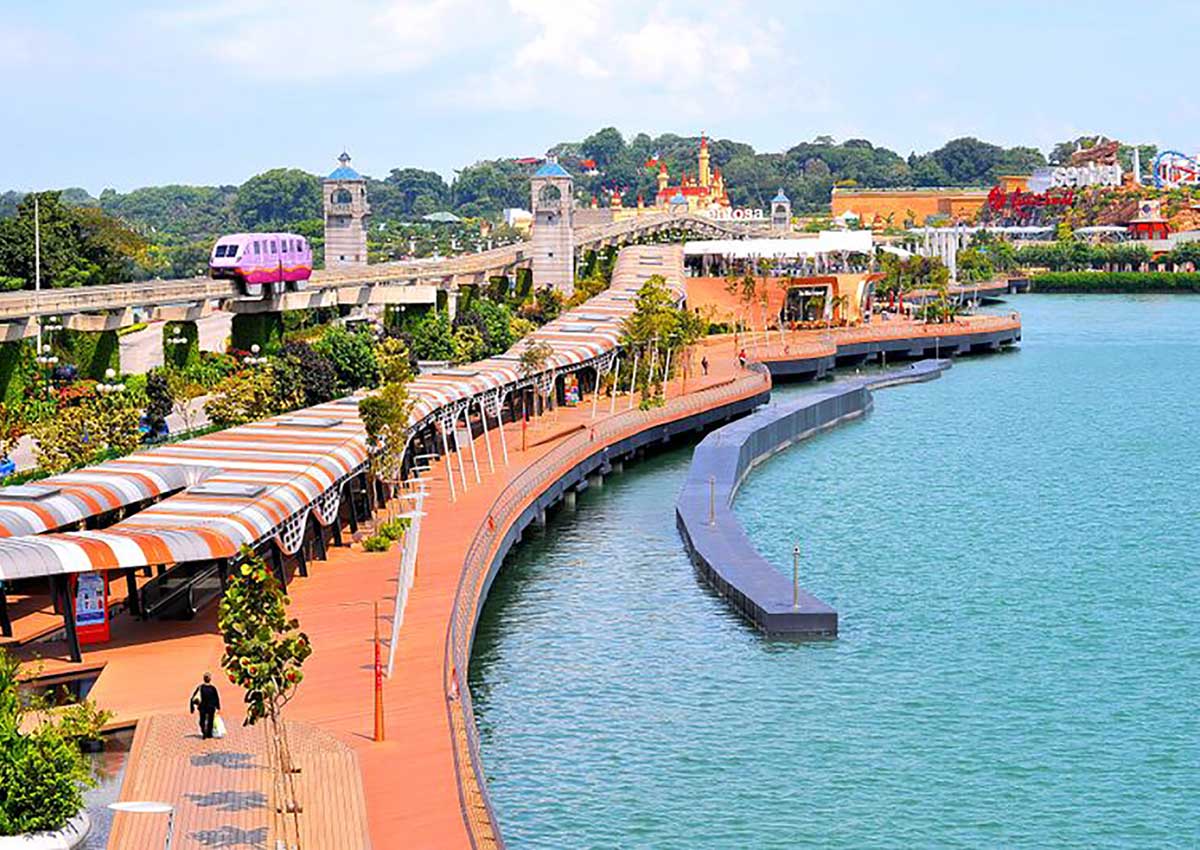
Potential re-development plans have also kicked off at the western end of Siloso Beach, which is now more accessible since the launch of the intra-island cablecar line last year, she said.
There is no timeline yet for development of the two new attractions.
A spokesman for Mega Adventure Park, located at the top of Imbiah Hill, said it does not see competition as a threat and welcomes new attractions to the resort island.
Visitorship to Sentosa increased from 18.6 million for the 2013- 2014 financial year to 19.4 million the following year.
Dr Michael Chiam, senior tourism lecturer at Ngee Ann Polytechnic, said the new offerings are likely part of an attempt to revitalise its products and stay relevant to younger visitors.
“They prefer experiential types of activities to create unique and memorable experiences,” he said.
Marketing assistant Tina Chia, who lives in Queensway and often visits the beaches on Sentosa, is looking forward to the new attractions.
“A lot of the activities in Sentosa are pricey, though,” said the 26-year-old.
“Unless the new attractions are cheaper, I will probably try them only once or twice.”
tiffanyt@sph.com.sg
oliviaho@sph.com.sg

This article was first published on July 19, 2016.
Get a copy of The Straits Times or go to straitstimes.com for more stories.
Image:
Category:
Publication Date:
Tuesday, July 19, 2016 – 14:00
Keywords:
Send to mobile app:
Source:
Regions:
Country:
State:
Interest:
Story Type:
Others
China brushes off calls for Philippines boycott after S.China Sea ruling
BEIJING – A senior Chinese official on Tuesday brushed off calls for a boycott of the Philippines after an international arbitration court found for Manila in its dispute with Beijing over the South China Sea.
China angrily rejected the verdict last week by the Permanent Court of Arbitration in The Hague, describing the case as illegal and farcical. It has repeatedly said it will not change its approach or its sovereignty claims in the South China Sea.
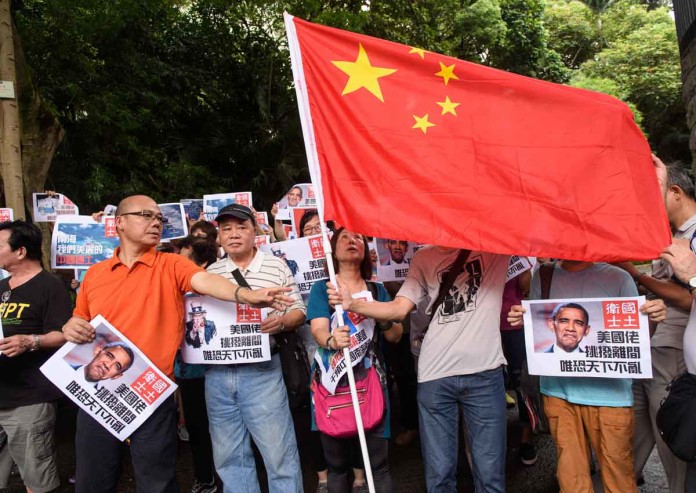
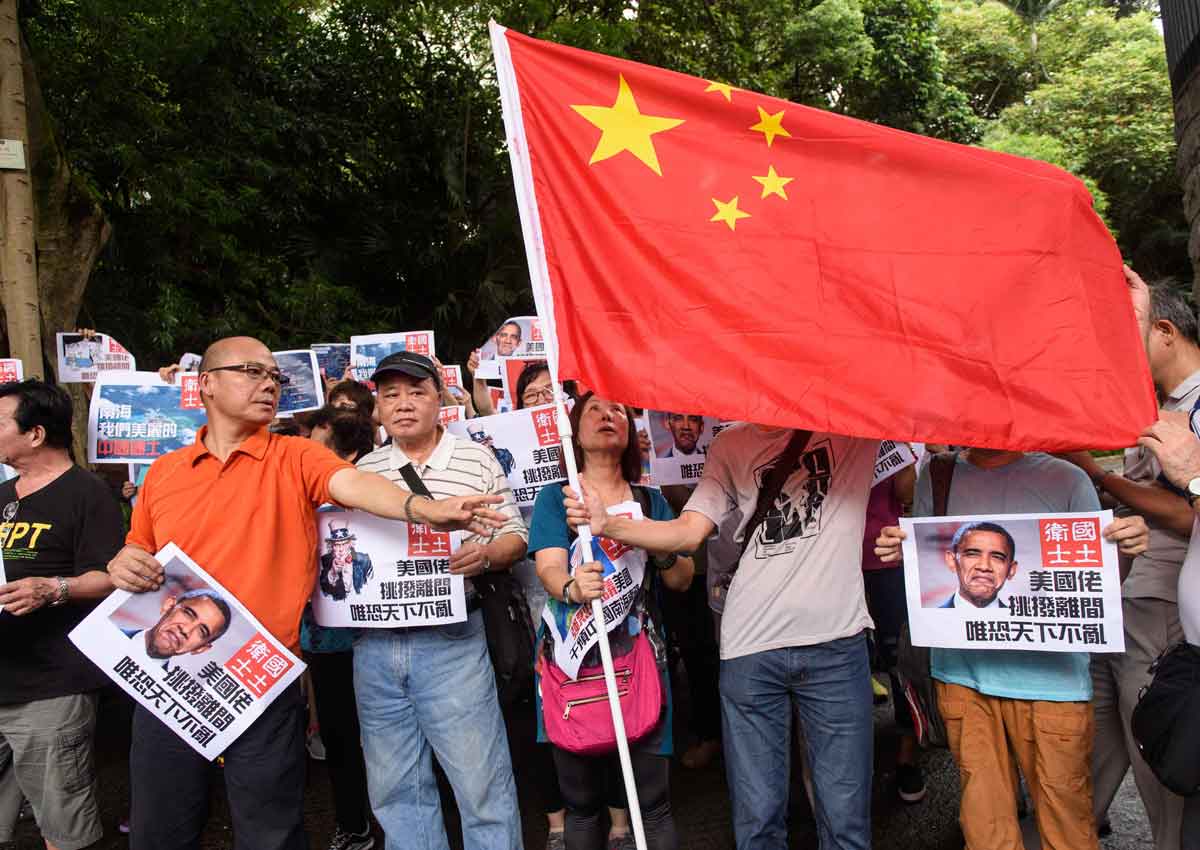
Some Chinese have reacted by calling for boycotts on products from the Philippines and the United States, which many in China blame for pushing the case. So far, there has been only sporadic evidence of these calls being heeded.
Asked if China would take retaliatory trade measures against the Philippines because of the ruling, China’s vice minister of commerce Gao Yan told reporters that trade relations with Manila were developing smoothly. “In recent years, the development of China’s trade relations with the Philippines overall has been smooth and stable. China is willing to develop mutually beneficial and diverse trade relations with the Philippines,” she said. “I should say that though some internet users have called for boycotts on products from the Philippines, in actuality this situation has not occurred.” Total two-way trade between China and the Philippines rose 5.7 per cent in the first six months of the year to $22.3 billion (S$30.1 billion), according to Chinese customs figures.
Calls for boycotts of countries deemed to have offended China are not uncommon.
Disputes with Japan over the country’s painful shared history and contested ownership of uninhabited islands in the East China Sea have in recent years bubbled over into anti-Japanese violence, and destruction of Japanese goods and restaurants.
There has been no evidence of such widespread anger in China this time, though some reports have surfaced of people in generally third tier cities holding up banners in front of US fast food restaurants including Yum! Brands Inc-owned KFC asking people not to eat there.
State media has called on people to oppose “irrational patriotism” over the case. “Other net users have levelled false accusations against public figures and have started to mislead people into blindly boycotting foreign products and brands such as Philippine bananas, iPhones and KFC,” the influential tabloid the Global Times said on Tuesday.
The government also appears to have no intention of allowing protests, as it has done in the past against Japan.
On Monday, police in Siyang in the eastern province of Jiangsu said on their microblog it was aware of calls for protests against KFC but said protests needed approval, and suggested they would be a waste of time. “Love your country, but please don’t take out your anger on its territory,” Siyang police said.
Image:
Publication Date:
Tuesday, July 19, 2016 – 13:19
Keywords:
Send to mobile app:
Source:
Story Type:
Others
'Normal practice' for ministers to get expedited clearance at checkpoints: ICA
Officers “will use their judgment on the clearance process” when ministers travel with others in a group, says the Immigration and Checkpoints Authority.
Source link
Survey on intangible cultural heritage to start soon
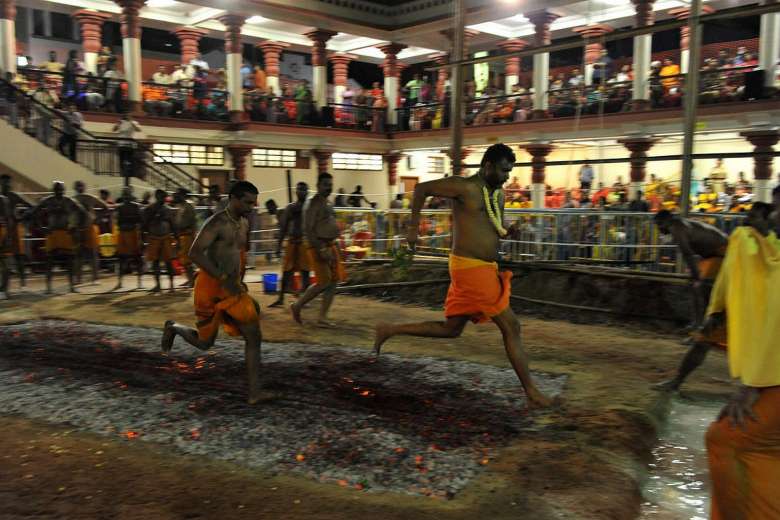
Traditional Chinese puppetry, the Hindu practice of firewalking and food – such as kaya toast and nasi padang – will soon be documented as part of Singapore’s heritage.
The National Heritage Board (NHB) will today call a tender for companies to research on such intangible cultural heritage.
The research will be done through a survey that will involve fieldwork and collating available material, and is slated to start in September. About 150 types of intangible cultural heritage are expected to be identified.
Some of these cultural aspects, like fengshui, did not originate here but have been practised widely in Singapore for decades.
The methodology of the research and implementation of the findings will be guided by members of a panel comprising architecture, geography, sociology, anthropology and history experts, the NHB said at a media briefing last week.
Intangible heritage can be classified broadly into five categories:
- Oral traditions and expressions such as folktales.
- Performing arts such as the Malay Dikir Barat.
- Social practices such as lo hei – the tossing of raw fish salad during Chinese New Year.
- Knowledge and practices concerning nature and the universe such as traditional Chinese medicine.
- Traditional craftsmanship, which includes food.
Mrs Rosa Daniel, NHB chief executive, said: “Findings from the survey will complement research done by NHB over the years and help plug the gaps in our heritage repository.”
She said the survey will not be exhaustive and information will continue to be updated.
The findings will go towards the creation of a “national inventory”, she added. The information may also be used to make documentaries or hold exhibitions.
In defining Singapore’s intangible cultural heritage, the NHB took reference from the 2003 United Nations Educational, Scientific and Cultural Organisation (Unesco) Convention for the Safeguarding of the Intangible Cultural Heritage.
On why such heritage is important, Professor Brenda Yeoh, dean of the National University of Singapore’s Faculty of Arts and Social Sciences and chair of the Heritage Advisory Panel, said that at the turn of the 20th century, South-east Asia was very interested to learn about others and rushed to learn the meaning of being modern.
“One century later, what we see is that a lot of issues are about identity (and) heritage,” she said. “The panel sees this as important work because this will give us the kinds of social and emotional strength to face a troubled future.”
The NHB also gave an update on the first comprehensive survey of Singapore’s tangible heritage.
This includes the research and documentation of buildings and sites of historic or cultural interest, which were completed in or before 1980 in mainland Singapore .
Information on 20 buildings, which are among those covered in the survey launched last September, will be put up on NHB’s heritage portal Roots.sg from today.
Among these buildings are Singapore Polytechnic in Dover Road, Changi Cottage in Netheravon Road and People’s Park Complex in Chinatown.
Currently, the tangible heritage includes Singapore Botanic Gardens, 72 national monuments and more than 7,000 conserved buildings, heritage trails and historic sites.
President of the Singapore Heritage Society, Dr Chua Ai Lin, said it is high time Singapore’s intangible cultural heritage was documented.
“Such heritage is often not properly recognised. The public may not even know about some of these intangible aspects. It’s great that they are doing it,” she said.
‘Instant messaging’ the song and dance way
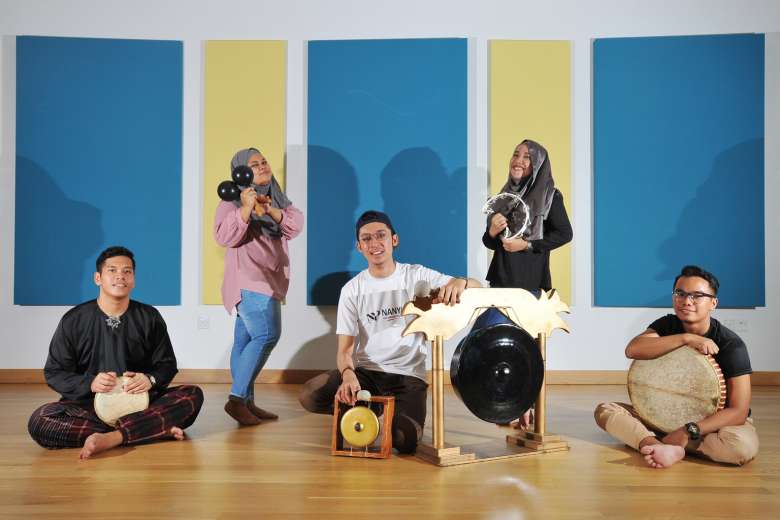
Nanyang Polytechnic’s dikir barat team members (from left) Muhammad Aidil Azman, 19, with the tok juara; Masayu Nurulhuda Mohammed Shiddek, 21, with the anak rebana; Yasser Abqari Abdul Nassir Basalamah, 24, on the gong and chanang; Siti Munirah Aman, 19, who plays the tambourine; and Muhammad Asyraf Mohammed Ibrahim, 19, hugging his ibu rebana.
Dikir barat, a traditional art form that originated in the Malaysian state of Kelantan, has a “uniquely Singaporean flavour” when performed here, and is part of the Malay culture.
Mr Muhammad Asyraf Mohammed Ibrahim, 19, who has sung and played since he was in primary school, said Singapore groups tend to be more experimental, and veer away from the basic four-count rhythm.
In charge of the male performers in the dikir barat team in the Malay Cultural Group at Nanyang Polytechnic, he plays the rebana, a traditional Malay instrument.
Dikir barat, which combines singing, dancing and literature, is a way for performers to convey messages and advice, he said.
A group usually consists of a choir, lead singers and instrument players. His group writes its own lyrics and has covered topics such as the effects of social media and the erosion of family values.
The art is part of Singapore’s intangible cultural heritage, which the National Heritage Board will soon document for a national inventory.
“We are from the generation that can continue such traditions. The older ones are retiring. It’s up to us to keep it going,” Mr Asyraf said.
Cake maker out to keep dough culture alive
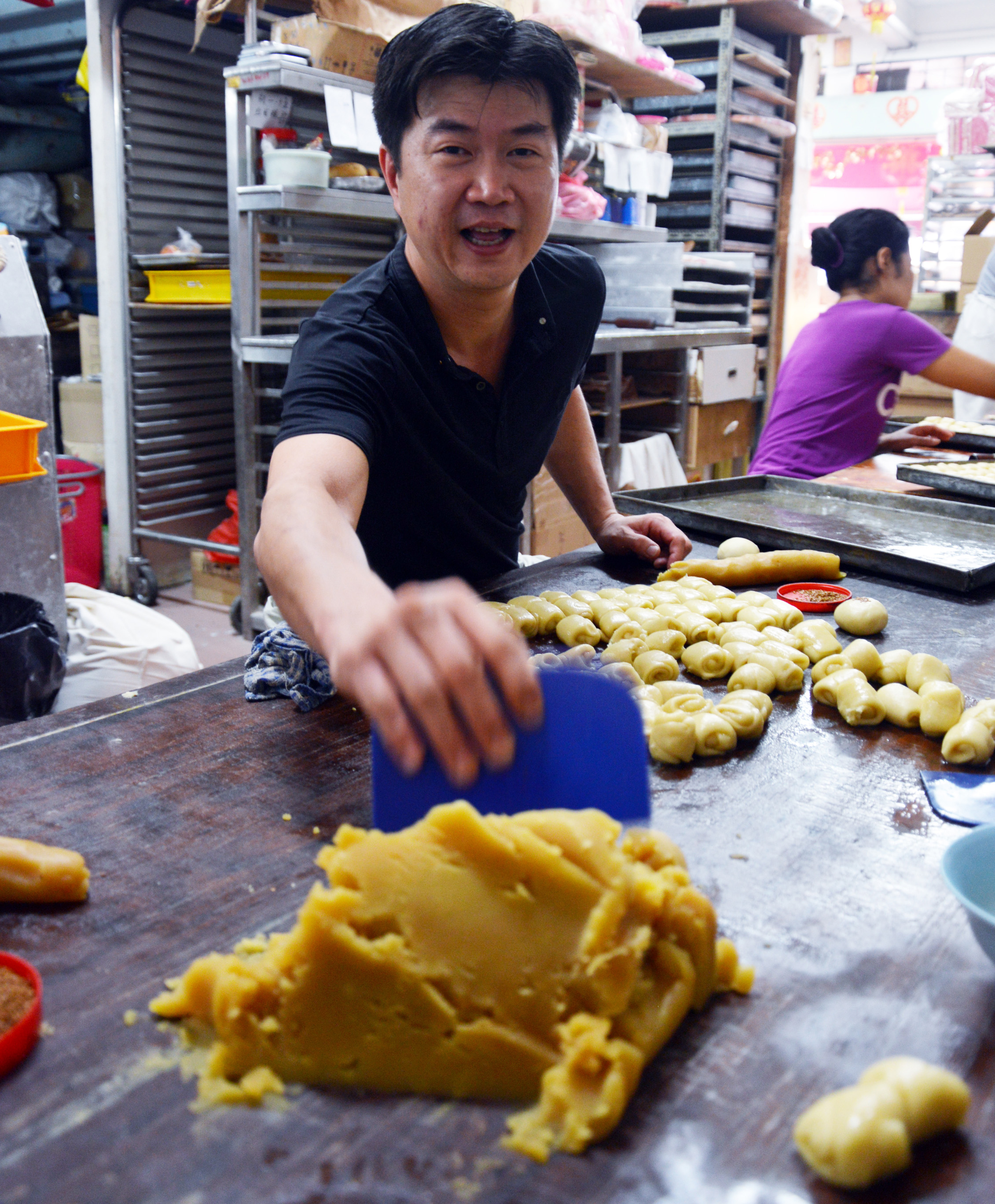
Mr Lim runs Gin Thye Cake Maker, a traditional Chinese pastries shop in Sembawang Road, with his mother. The shop, which sells baked goods, is one of only a handful that still exist.
The second-generation owner of a traditional Teochew pastry shop, Mr Lawrence Lim, 43, remembers running around the shop his father founded in 1964.
Now, he runs the shop in Sembawang with his mother, Madam Ang Sew Gek, 68. The shop, Gin Thye Cake Maker, which sells traditional baked goods, is one of only a handful that still exist.
His customers are typically couples who have to give sweetmeats to their elders as part of wedding tradition. In a traditional Teochew wedding, for instance, the bride is required to present wu se tang – a set of confections such as bean-paste pastry and sticky candy – to her grandmother.
While customers now do not order 80 boxes like they used to in the past, they still want 10 to 20 boxes, Mr Lim said. He said the customer base has grown, with the decrease in the number of such shops.
Mr Lim said he is glad the National Heritage Board will document foods like his that are part of Singapore’s heritage. “Youngsters nowadays think there is no culture, but there is,” he said.
Even so, he is planning to revamp his shop to make it more modern. He now also offers less traditional goods like durian mochi.
He hopes that his son, who is about two years old, will take over the business eventually.
This article was first published on July 19, 2016.
Get a copy of The Straits Times or go to straitstimes.com for more stories.
Image:
Publication Date:
Tuesday, July 19, 2016 – 15:00
Send to mobile app:
Source:
Story Type:
Others
Supermarket trolleys left for months in condo carpark
After lying abandoned in a condominium basement carpark for over half a year, a string of supermarket trolleys was removed yesterday, after a social media post went viral.
A Facebook user, who wanted to be known only as Mr Tan, uploaded a photo of over 20 supermarket trolleys from various chains, parked in the carpark of Silversea condominium in Marine Parade.
The trolleys, which were placed in the parking space reserved for disabled passengers, “obstructed” the way, said Mr Tan in his post which has been shared over 175 times since it was put up on Sunday.
When The Straits Times visited the condominium yesterday afternoon, workers were seen clearing the trolleys.
Mr Tan said he was surprised they had been left there for so long.
The trolleys likely came from supermarkets at Parkway Parade, about a five-minute walk away.
A maid who declined to be named said the Silversea security guards are used to residents pushing supermarket trolleys to the condominium.
“If you are a resident, there is no problem,” she said.
The condominium’s management declined to comment.
Supermarkets islandwide have long grappled with the problem of missing carts. Dairy Farm Group, which runs Giant and Cold Storage, said that between them, the two supermarkets lose an average of 1,000 trolleys a year.
NTUC FairPrice too has lost about 1,000 trolleys each year, spending an estimated $150,000 on repairing, replacing and retrieving abandoned trolleys.
Its staff start work at 7am and end as late as 11pm, retrieving trolleys. Some have had to be wheeled back from over 2.5km away.
Mr Seah Kian Peng, chief executive officer of FairPrice, said: “Not returning the trolleys is an inconvenience to retailers and shoppers.”
The three supermarket chains receive reports on abandoned trolleys through hotlines and social media.
The Municipal Services Office (MSO) OneService App also lets those who spot an abandoned trolley report it to the respective supermarkets.
Out of 150 FairPrice trolleys reported found each month, 100 are through the mobile app.
Giant and Cold Storage have also put up signs to remind shoppers that trolleys are not permitted beyond the store or carparks.
But despite these efforts, the problem remains. MSO urged the public to be responsible and return the trolleys after use.
Mr Seah stressed: “It is a societal norm and basic courtesy to take something and return it.”
rahimahr@sph.com.sg
mabrazak@sph.com.sg
This article was first published on July 19, 2016.
Get a copy of The Straits Times or go to straitstimes.com for more stories.
Image:

Publication Date:
Tuesday, July 19, 2016 – 14:00
Keywords:
Send to mobile app:
Source:
Story Type:
Others
SGX outage due to hard disk failure

SINGAPORE – A hard disk failure that was not detected by an application designed to pick up the error was the root cause of the technical disruption that caused trading on the Singapore Exchange to be shut down from late morning last Thursday for the rest of…
Source link


