Home Blog Page 3349

S'pore golf's new leader

0

Ross Tan had spent all week preparing his presentation to the Singapore Golf Association (SGA)’s 13-member governing council, in an attempt to convince them of his suitability to be their leader.

But it proved to be largely unnecessary at yesterday’s annual general meeting as his sole challenger for the SGA presidency, Low Teo Ping, withdrew at the last minute, thus clearing the way for Tan to take over the helm.

It was the first time in its 55-year history that the SGA’s top post had been contested by more than one candidate with Tan, captain at Jurong Country Club, facing Sentosa Golf Club president and veteran sports administrator Low.

While several members of the council had asked Low to reconsider his decision to pull out, Tan dismissed suggestions that it indicated a lack of faith in his abilities.

The 59-year-old businessman said: “I was quite confident of my chances before tonight and I felt my manifesto was genuine and from the heart. I believe if Teo Ping had continued, I would have done well against him.”

He also vowed to carry out his plans to make golf more accessible to the public, particularly the young, and develop a pipeline for local talent.

He replaces Bob Tan, 63, who served three two-year terms – the maximum allowed under SGA’s constitution – and leaves an association with an annual revenue of $1.5 million and about $4 million in reserves, both totals significantly higher than when he took over in 2010.

Bob Tan was caught off guard by Low’s decision but gave his backing to his successor. He said: “We had two outstanding candidates who are very passionate about golf. Ross is very well known in the golf fraternity and he clearly wants to do more for the game.

“I respect Teo Ping’s decision and if he feels he has too much on his plate at the moment, then it’s right of him to withdraw.”

The 71-year-old Low was formerly the sailing chief and now heads the Singapore Rugby Union and the lesser-known Singapore Snowboarding and Skiing Association.

Prior to his presentation at the Singapore Island Country Club (Bukit), he had informed the council of his intention to drop out.

The retired banker, who is also Singapore’s chef de mission for next month’s Olympic Games in Rio and a Singapore National Olympic Council vice-president, cited his full plate of responsibilities for his decision.

He said: “I’ve thought about this for the last month (nominations closed on June 20). I’ll be away for the next four months for the Olympics and rugby sevens and other things and with all these commitments, it would be hard to devote my full attention to the SGA as well.”

Among Ross Tan’s priorities will be to appoint his full team in the next fortnight. The post of vice-president (Kong Choong Soon) and honorary secretary (Yee Woon Yim) were filled but the honorary treasurer’s post is vacant. Only four of the eight executive board members’ slots are occupied (by Lee Lian Hong, Andrew Lim, Lyn Sen, Goh Kui Hwa).

Ross Tan said: “As I told the council, this is not a one-man show and requires a team effort. Some people think my vision is ambitious but I believe it’s achievable if we work together.

“The feeling now is one of achievement and uncertainty. I’ve never done this before, taking charge of an NSA (national sports association) but I look forward to it.”


This article was first published on July 21, 2016.
Get a copy of The Straits Times or go to straitstimes.com for more stories.
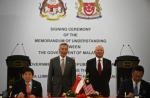
Image: 
Category: 
Publication Date: 
Thursday, July 21, 2016 – 17:00
Keywords: 
Send to mobile app: 
Source: 


Story Type: 
Others

Source link

Singapore-KL high-speed rail: Malaysian media upbeat on project but doubts remain

0

A game changer for Malaysia.

High-speed rail to provide economic spurts.

Stateside folks looking forward to rail plan.

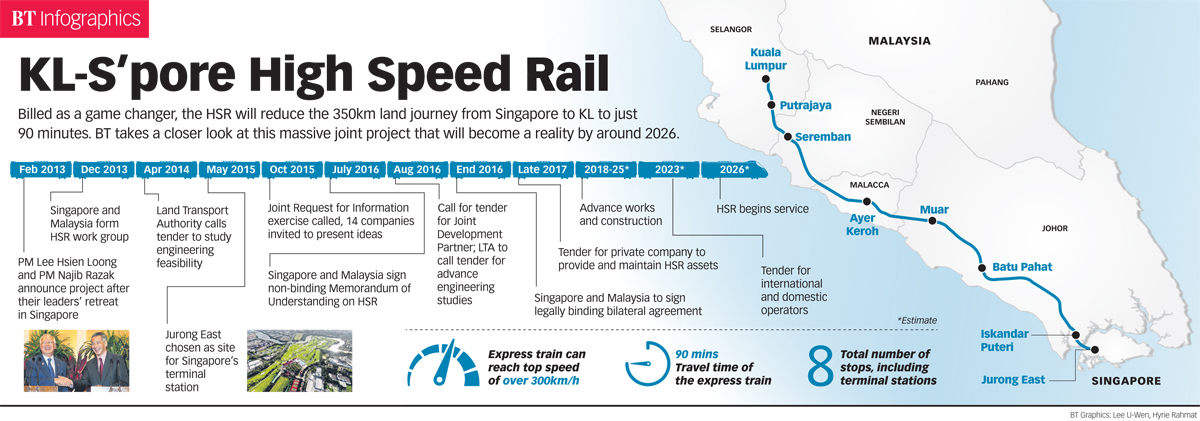
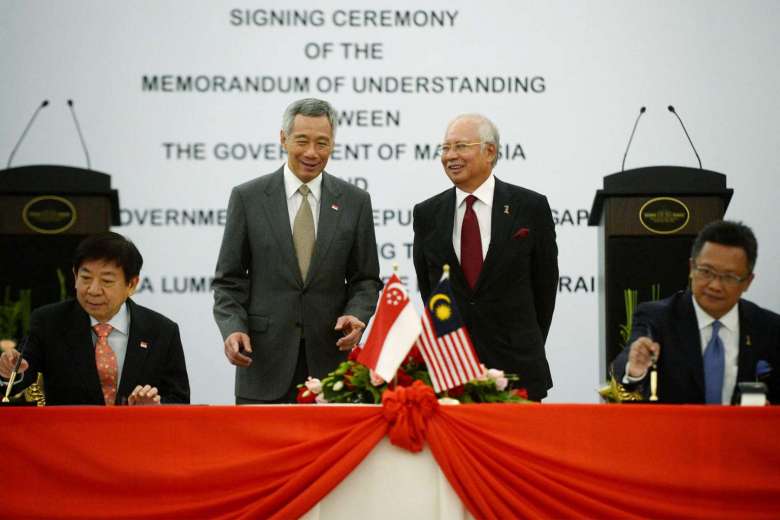
The Malaysian media yesterday gave an upbeat assessment of the signing of the memorandum of understanding on the high-speed rail (HSR) project, saying the country would witness positive development once operations start in 2026.

The faster mode of transport will increase the flow between residents of the two capitals while pit stops southwards of Kuala Lumpur can expect an economic boom, the New Straits Times (NST) pointed out.

Financial daily The Edge said property developers and construction firms stand to benefit from the plan, with companies owning land along the HSR route being potential beneficiaries.

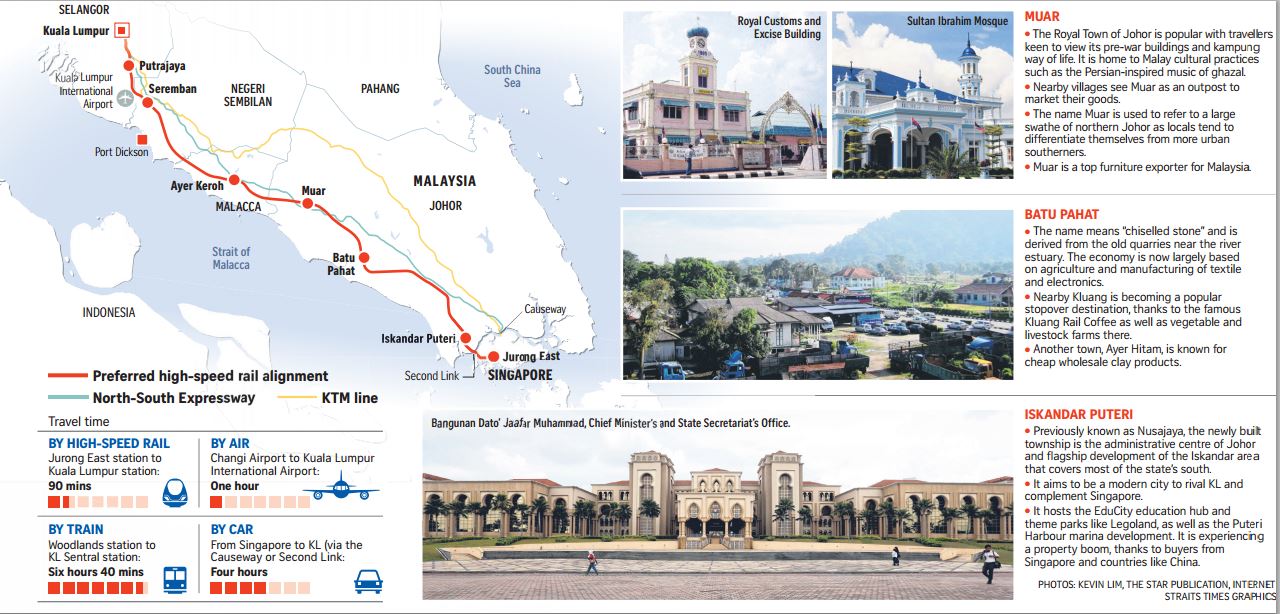
Malaysia’s line is expected to be built mostly above ground.

But there were also some questions raised. Berita Harian cited transport experts questioning some of the chosen pit stops.

The close proximity between some stations was seen as diluting the purpose of having an HSR running through.

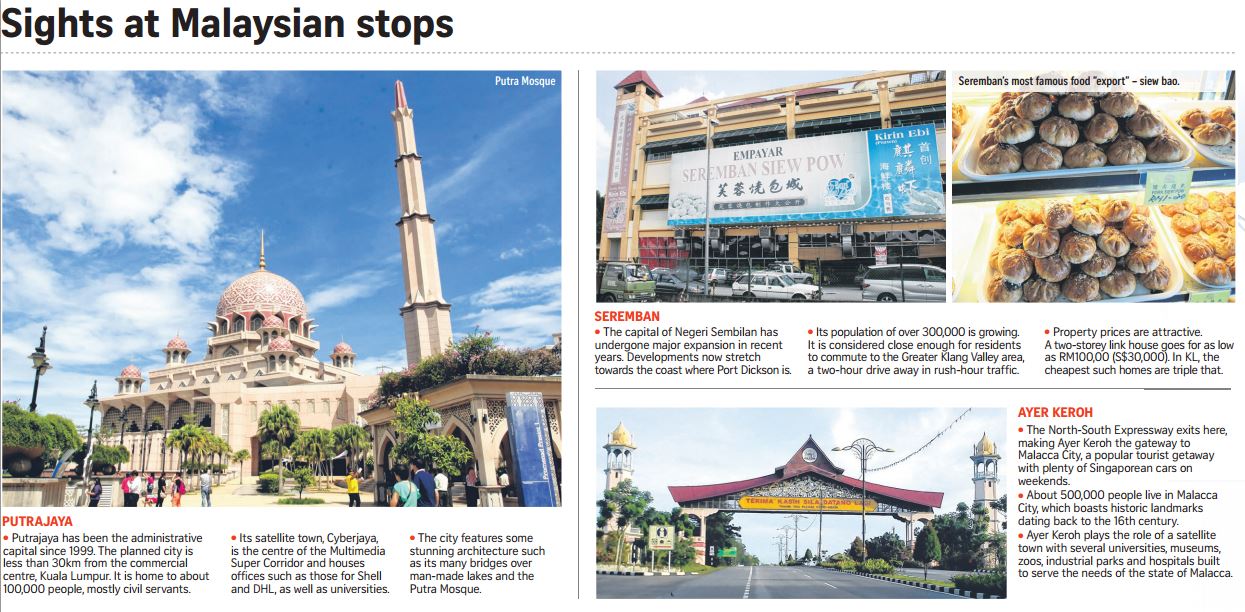
“There are views that the Putrajaya station is too close to the Bandar Malaysia terminus – that is roughly 26km and is not suitable for the HSR service that has a speed of 320kmh,” the paper wrote.

A transport expert it quoted said a distance of less than 50km between stations could disrupt the performance of the HSR and hinder it from reaching its maximum speed.

NST mentioned Minister in the Prime Minister’s Department Abdul Rahman Dahlan as saying that the unexpected inclusion of Putrajaya as a stop is to get the best deal out of the project.

Meanwhile, The Star, in an editorial, raised concerns over ticket prices.

The daily said the affordability of tickets would need to be addressed to achieve the projected 20 million users a year.

“If the HSR is to be successful, the cost of travel needs to be competitive when compared with the costs of other land-based transportation modes,” the paper wrote.

ltrinna@sph.com.sg


This article was first published on July 21, 2016.
Get a copy of The Straits Times or go to straitstimes.com for more stories.
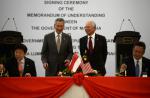
Image: 
Publication Date: 
Thursday, July 21, 2016 – 15:00
Send to mobile app: 
Source: 


Story Type: 
Others

Source link

Dogs that died had symptoms of disease, say owners

0

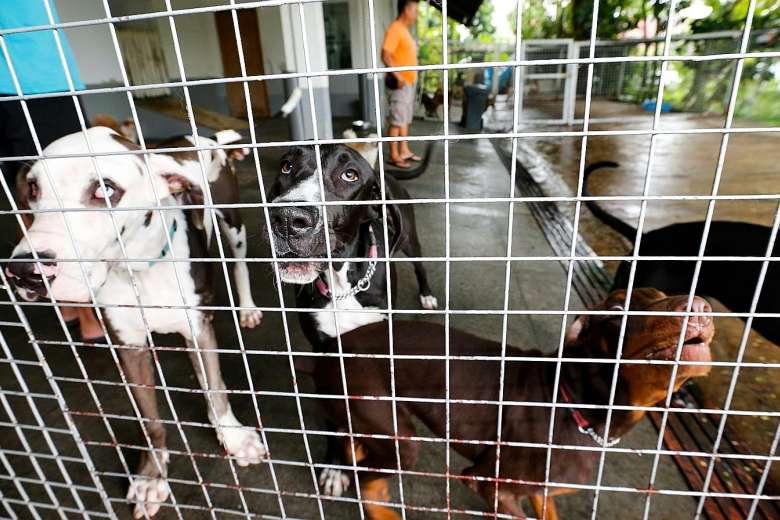
Daycare centres for dogs are stepping up precautions against a potentially deadly bacterial infection that can affect both animals and humans.

It comes after the Agri-Food and Veterinary Authority (AVA) announced yesterday that there have been 18 suspected cases of leptospirosis reported since the start of this year, after just two cases last year and none in 2014.

Twelve cases reported between June 27 and July 14 were associated with the Sunny Heights centre in Bukit Timah.

It has since been issued an isolation order, prohibiting any dogs from entering or leaving the premises during the investigation without AVA’s authorisation.

Of the 18 suspected cases, seven dogs have died, including five from Sunny Heights. The disease is primarily spread by rodents.

According to the Ministry of Health, 14 human cases have been reported so far this year, including one involving a family dog which had stayed at Sunny Heights.

About 20 to 30 human cases of leptospirosis a year were reported between 2012 and last year.

Only one of the 18 suspected cases involving dogs has tested positive for the disease so far, though a negative laboratory test result may not indicate that an animal is not infected, the AVA said.

An inspection of Sunny Heights and its vicinity did not detect any signs of rat activity and environmental samples have been taken for testing. Samples of blood from the 16 to 18 dogs quarantined in the centre have also been drawn for testing.

DOGS THAT DIED HAD SYMPTOMS OF DISEASE, SAY OWNERS

Sunny Heights owner Derrick Tan was informed of the first case at the end of June, and stopped receiving dogs at the centre on July 4 as a precautionary measure after informing clients of the suspected case. Its pool was also drained and the centre disinfected, said Mr Tan, who is also the founder of welfare group Voices for Animals.

Three dog owners whose pets frequented the daycare centre said their dogs had died between June and July of symptoms similar to leptospirosis, though only one case was confirmed through a blood test.

Lawyer Stefanie Yuen Thio’s eight-year-old golden retriever Joe was diagnosed with leptospirosis on July 1, and died the day after.

“My dogs are fully vaccinated, including for lepto, so we didn’t imagine that this would be the issue,” said Ms Yuen Thio, 46. “I called the daycare centre and they said they would tell the other owners immediately. They were concerned, solicitous and responsible.”

Project manager Robert Baan, who has been taking his three dogs to Sunny Heights for years, said that his two west highland terriers each died within three days in June and July. Both had symptoms of leptospirosis, including vomiting and liver and kidney issues, though a test for one of the dogs came back negative for the disease.

“To me, the blood results don’t say anything because there are so many strains but the symptoms are clear,” said the 48-year-old.

Ms Valerie Heng, 50, said her border collie was treated by a vet for leptospirosis and died on July 14.

“Whatever is done now cannot bring him back. But if there is negligence on the part of Sunny, they should be upfront and claim responsibility”, she said.

Other daycare centres have stepped up measures to prevent the spread of the disease.

The Wagington’s managing director, Ms Estelle Tayler, said: “We have always asked for vaccination status when dogs come for boarding and daycare, but now we are checking for swimming as well.”

Mr Hurb Leung, 35, owner of Up For Paws, a daycare and boarding centre in Bukit Timah, said a newsletter was sent to clients last week urging them to exercise caution when taking dogs out after he read social media posts about the rise in cases. Some have said that they will not take their dogs to the centre temporarily out of caution.

Mr Leung added: “I hope this doesn’t get out of hand.”

In 2012, a foreign worker’s death here was linked to leptospirosis.


This article was first published on July 21, 2016.
Get a copy of The Straits Times or go to straitstimes.com for more stories.

Image: 
Category: 
Publication Date: 
Thursday, July 21, 2016 – 14:00
Send to mobile app: 
Source: 


Story Type: 
Others

Source link

'The Wolf of Wall Street' swept up in 1MDB scandal

0

LOS ANGELES – A small Hollywood studio behind Martin Scorcese’s stinging movie about greed on Wall Street has been swept up in a multibillion-dollar financial scandal tied to the prime minister of Malaysia.

Red Granite Pictures, which produced “The Wolf of Wall Street,” starring Leonardo DiCaprio, was named on Wednesday in a federal complaint that alleges the studio was implicated in a money laundering scheme by an investment and development company called 1MDB.

The investment fund is owned by the government of Malaysia, whose prime minister Najib Razak has been targeted by the massive scandal.

Razak is the step-father of Riza Aziz, the co-founder of Red Granite Pictures, which came up with the more than US$100 million (S$135.6 million) needed to finance the film.

The production house hit back at the allegations on Thursday insisting that it was not aware of any illicit funds being funnelled through the company.

“To Red Granite’s knowledge, none of the funding it received four years ago was in any way illegitimate and there is nothing in today’s civil lawsuit claiming that Red Granite knew otherwise,” the company said in a statement.

“Red Granite continues to co-operate fully with all inquiries and is confident that when the facts come out, it will be clear that Riza Aziz and Red Granite did nothing wrong.”

According to the 136-page civil complaint filed by the US Justice Department, between June 2012 and November 2012, an investment firm tied to 1MDB sent US$238 million to an account controlled by Aziz.

About US$100 million of these funds were subsequently sent to a bank account linked to the production house and used to fund its operations, including “The Wolf of Wall Street.”

Some of the money was also used for extravagant trips to Las Vegas where hundreds of thousands of dollars where spent gambling at The Venetian casino, according to the complaint.

Among those who were invited to take part in a July 2012 gambling jaunt was “a lead actor in The Wolf of Wall Street” who won a Golden Globe for the movie, according to the complaint.

Although the court document does not name the actor, it is clearly referring to DiCaprio.

The actor won a Golden Globe in 2014 for his portrayal in the film of stockbroker Jordan Belfort, who fleeced investors of millions of dollars before ending up in prison.

Assistant Attorney General Leslie Caldwell told reporters on Wednesday that all assets and rights to the movie would be seized as they stem from laundered money.

According to comScore, the movie made US$392 million. It was nominated for five Academy Awards.

“Neither 1MDB or the Malaysian people saw a penny of profit from that film or the other assets purchased with funds syphoned from 1MDB,” Caldwell said.

“Instead, that money went to relatives and associates of the corrupt officials of 1MDB and others.”

Red Granite said the complaint should not affect its ongoing operations.

“Red Granite does not expect the lawsuit – which is limited to future proceeds generated by a single film, and which was not filed against Red Granite or any of its employees – to impact its day-to-day operations, and the company continues to move forward with exciting new projects.”

Apart from “The Wolf of Wall Street,” the company has produced several other movies including “Dumb and Dumber To,” “Horns” and “Friends With Kids.”

Image: 
Category: 
Publication Date: 
Thursday, July 21, 2016 – 13:47
Send to mobile app: 
Source: 


Story Type: 
Others

Source link

How two converts to Islam experienced first Ramadan as Muslims

0

When train captain Muhammad Joy Kumar Paul turned 25 in May, he celebrated by converting to Islam.

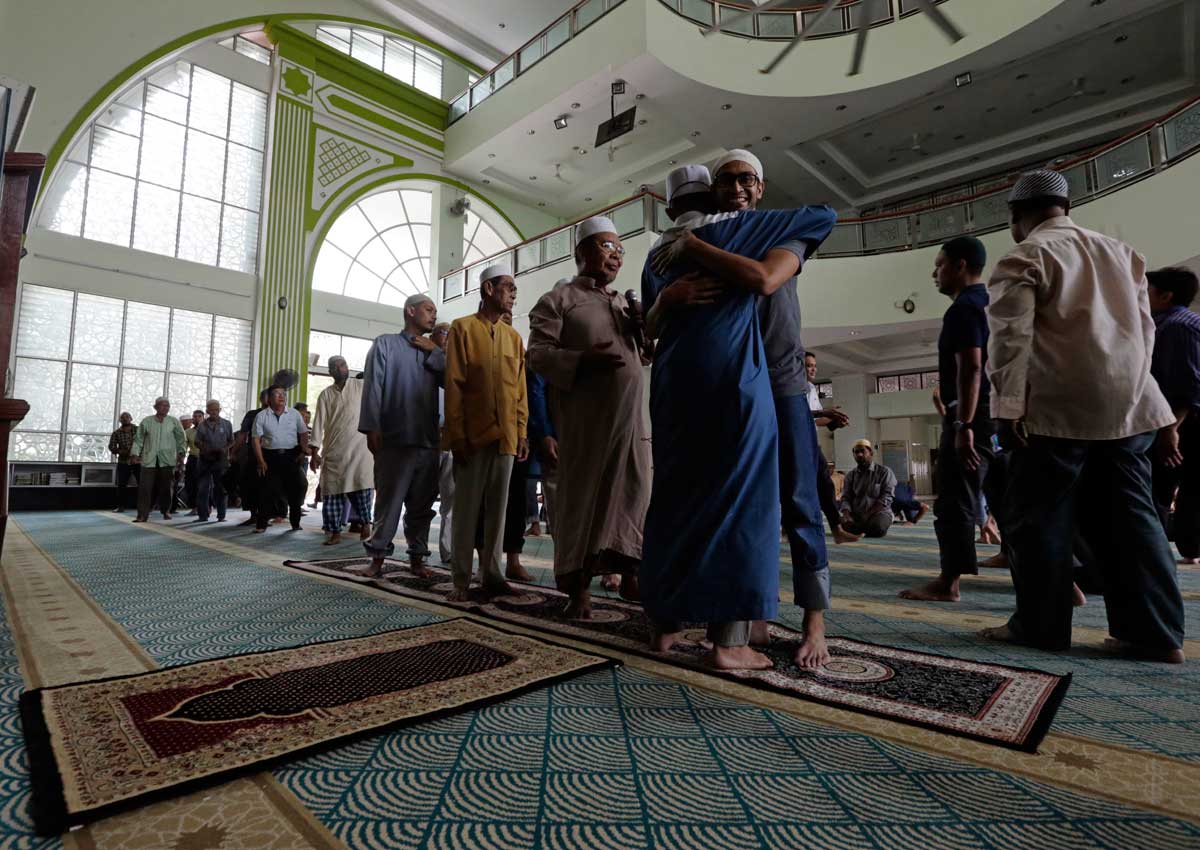
The ceremony was held at the Muslim Converts’ Association (MCAS) and witnessed by his closest friends and fiancee’s family. That same day, he attended his first Friday prayers as a Muslim at Assyakirin Mosque, near his home in Taman Jurong.

Mr Muhammad was brought up in a Buddhist family, but growing up with Malay friends, he knew “how a Muslim behaves, what they are supposed to do and what they do not do”.

Still, he never expected to become a Muslim until he met Ms Syuhaidah Sha’ada, a 24-year-old pre-school teacher.

The couple got engaged in June but it was not an easy decision. They had a serious talk about their relationship in the long term and considered breaking up.

On his own accord, however, he researched and watched videos by Islamic scholars online, as well as talked to Muslim friends, to learn more about the religion.

Mr Muhammad lives with his mother, who is divorced, and elder sister. Both felt it was his decision to make. He also attended beginner courses at MCAS last year.

Every year, about 600 people convert to Islam at the three-storey building located in Onan Road in Joo Chiat.

Also known as Darul Arqam Singapore, the one-stop centre for converts was set up in 1980 to oversee the welfare, religious guidance and problems of new converts.

All prospective converts are encouraged to take up basic courses on Islam. Mr Muhammad went through Ramadan as a Muslim for the first time this year. The ninth month of the Islamic lunar calendar, Ramadan is a holy period of fasting, reflection, devotion, generosity and sacrifice observed by Muslims around the world.

While there have been challenges, he has been touched by the support of his loved ones.

His mother, a Buddhist, cooks the food he wants to eat and made sure there was food in the morning when he woke up to break fast during Ramadan. She buys meat and produce that is certified halal for his sake.

Like Mr Muhammad, Ms Rachel Aryssa Chung, 39, converted to Islam two months ago. The customer insight and communications manager at a gas company found fasting during Ramadan to be particularly challenging.

“What’s more, coffee is not recommended because it dehydrates the body but I don’t function well without coffee. I always tell my colleagues I’m not human until I have my coffee,” she said, laughing.

Divorced for 10 years, Ms Chung has two daughters. She has been dating a Muslim for a year and is still learning about her new faith.

It was her own decision to convert. She said of her new faith: “I feel that it’s a very comprehensive and disciplined faith. How you should treat other people, how you should behave as a person. We’re encouraged to pray five times a day. When you do things like that, I feel that it changes you as a person.”

xiaobinn@sph.com.sg


This article was first published on July 21, 2016.
Get a copy of The Straits Times or go to straitstimes.com for more stories.
Image: 
Category: 
Publication Date: 
Thursday, July 21, 2016 – 16:00
Send to mobile app: 
Source: 


Story Type: 
Others

Source link

Singapore-KL high-speed rail: Bridge more likely than undersea tunnel: Experts

0

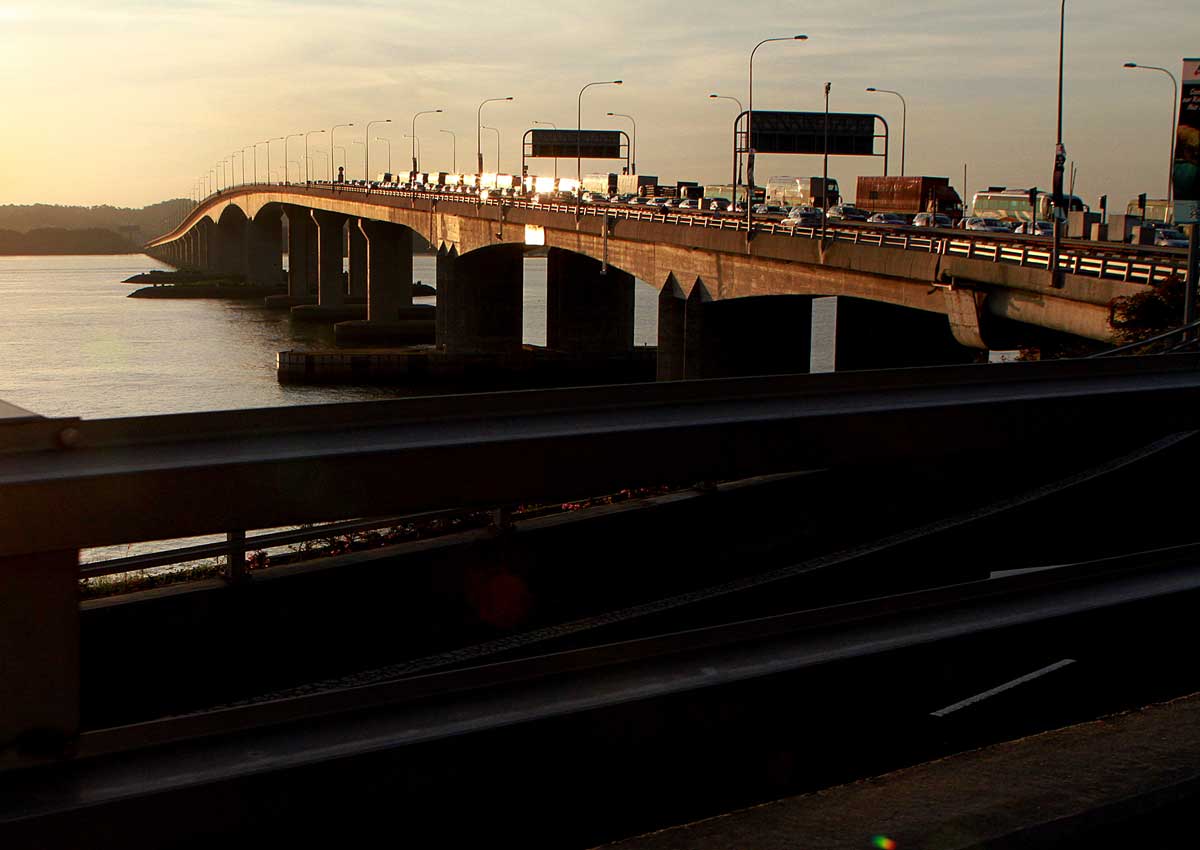
In connecting Singapore and Malaysia, will the planned high-speed rail (HSR) run across a bridge spanning the Johor Strait, or will an undersea tunnel have to be built for it?

The decision will be made jointly by the governments of both countries.

In May, however, the state government of Johor said it hoped an undersea tunnel would be built, reported Malaysian newspapers.

But experts believe a bridge is more likely as building an undersea tunnel will be more complex, costly and time-consuming.

ECAS-EJ Consultants managing director Chan Ewe Jin said an undersea tunnel is unlikely and “it’s definitely easier to have it on an elevated structure”.

He boils down the issue to either building the line on the existing Second Link from Tuas, or having a new bridge for it.

The tight deadline for completing the rail link may be a factor too.

Associate Professor Lee Der Horng of the Department of Civil and Environmental Engineering at the National University of Singapore said: “I feel a bridge is more likely because an undersea tunnel is more costly and takes more time.”

Also, with both governments aiming to have the rail line running by 2026, it would be “easier” to build a bridge than a tunnel, he added.

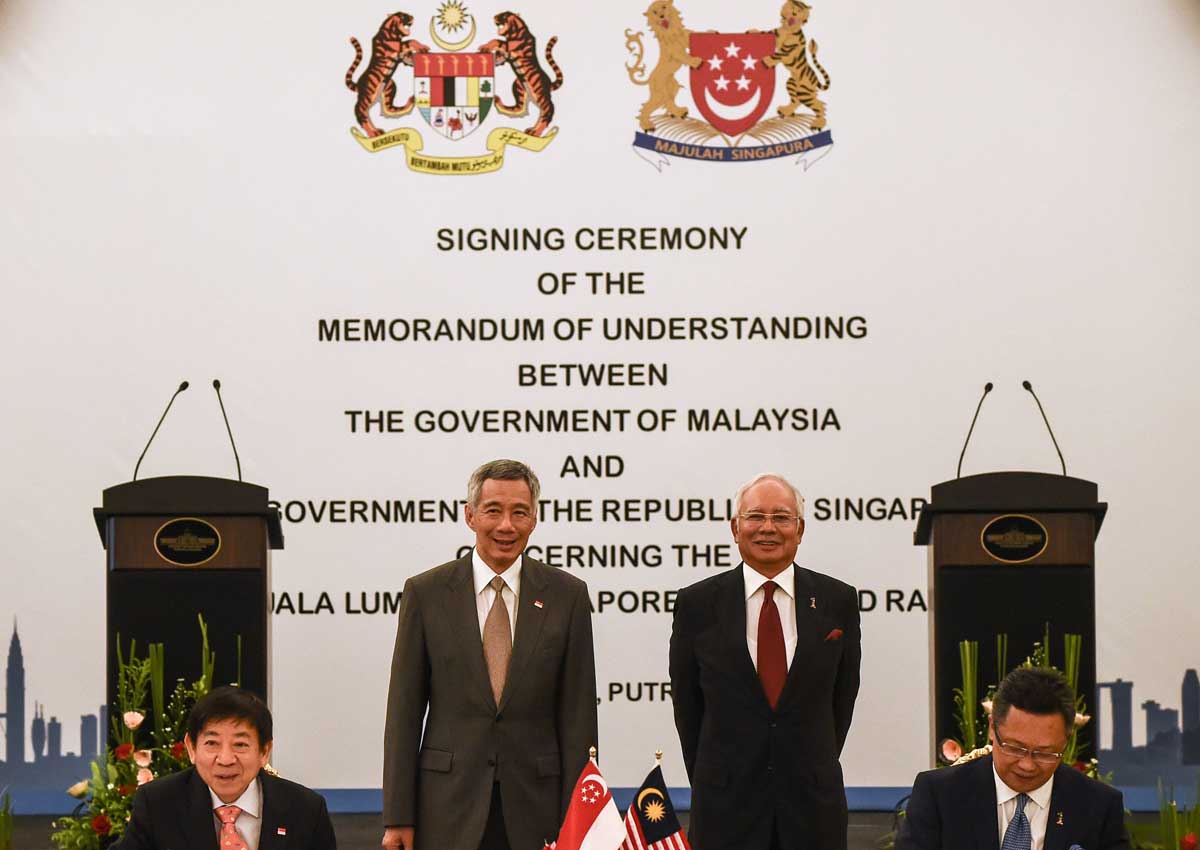
The 2026 target was one of several points of agreement in a memorandum of understanding signed by the two governments on Tuesday.

In discussing the HSR, a popular comparison is the Eurostar, which runs through a tunnel under the English Channel linking Britain and France.

One reason a tunnel was chosen is that the Channel is one of the world’s busiest shipping lanes and a bridge may be an obstacle to traffic.

But the existing 1.9 km Tuas Second Link bridge does not pose such a problem, and neither would a new rail bridge, Prof Lee said.

One cross-border rail link that relies on a bridge and undersea tunnel is that between the Danish capital Copenhagen and the Swedish city Malmo.

The trains reach speeds of up to 200kmh. The rail line runs along the Oresund bridge from the Swedish coast to an island, then finishes the last one-third of the crossing via an undersea tunnel.


This article was first published on July 21, 2016.
Get a copy of The Straits Times or go to straitstimes.com for more stories.
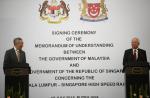
Image: 
Publication Date: 
Thursday, July 21, 2016 – 15:00
Send to mobile app: 
Source: 


Story Type: 
Others

Source link

S'pore must do better in workplace safety – far too many accidents: PM

0

Singapore needs to do better in ensuring safe workplaces, and in improving the productivity and quality of talent in the construction industry, said Prime Minister Lee Hsien Loong yesterday.

Speaking at the launch of a new research centre at the Building and Construction Authority (BCA) Academy, he said there are still “far too many” workplace accidents and deaths, and that the construction sector is a major contributor.

While major but non-fatal workplace injuries in the construction sector fell from 202 in 2014 to 157 last year, the number of fatalities remained at 27.

Overall, there were 42 workplace deaths in the first half of this year, 13 more than the number in the same period last year.

“Every life lost is too many. And when we push for higher productivity, it cannot be at the expense of safety,” said Mr Lee.

Construction methods are also still labour-intensive and time-consuming. There are now 350,000 foreign construction workers, and continuing to rely heavily on low-skilled manpower is not sustainable, he added.

He commended the BCA for driving the adoption of more productive construction methods, including the Design for Manufacturing and Assembly approach, by which structures are made off-site and then assembled on-site.

He said it is also vital to develop talent, such as by introducing new training programmes on the latest technologies.

Buildings are more than mere bricks and mortar, said Mr Lee, and reflect the ethos of society, one that is inclusive and forward- looking, and in pursuit of an environmentally sustainable and safe environment.

“Then we can have good buildings – well built, efficiently built, and safely built, meeting human needs, showing off a modern city – (as) an element of the endearing home that all of us share,” he said.


This article was first published on July 21, 2016.
Get a copy of The Straits Times or go to straitstimes.com for more stories.
Image: 
Category: 
Publication Date: 
Thursday, July 21, 2016 – 15:00
Send to mobile app: 
Source: 


Story Type: 
Others

Source link

Singapore-KL high-speed rail: Big gains for Singapore 'a decade from now'

0

The high-speed rail linking Singapore and Kuala Lumpur is expected to be a shot in the arm for the local economy when it starts running a decade from now, creating jobs and spurring growth.

But it is unlikely to have a big economic impact during construction, said experts, citing the short length of Singapore’s section of the rail.

The rail line will span 350km, but only 15km will lie in Singapore.

“To us, that’s a relatively small stretch,” said engineering firm ECAS-EJ Consultants’ managing director Chan Ewe Jin, who is also vice-president of the Institution of Engineers Singapore. “I don’t think it will have much of an impact.”

Singapore Contractors Association president Kenneth Loo agreed: “We’re building far more MRT lines than that.”

With multiple MRT lines in the works and the Singapore stretch of the high-speed rail likely to run mainly underground, one question is whether firms specialising in such work will be over-extended.

But Mr Loo does not see it as an issue. When a memorandum of understanding on the project was signed on Tuesday, it was noted that the rail construction is expected to begin in 2018. “By that time, some of the current MRT works will be near completion, so you won’t have excessive demand,” said Mr Loo.

If there are any immediate benefits, they are likely to be in terms of skills transfer, said Government Parliamentary Committee for Transport deputy chairman Ang Hin Kee.

As Singapore does not have experience with high-speed rail technology, this is an opportunity to build expertise, he said. “It will not be your typical MRT construction.”

He also said the major impact will come when the line starts running. It will create job opportunities directly, as people would be needed to run and maintain the rail system.

But Mr Loo does not see it as an issue. When a memorandum of understanding on the project was signed on Tuesday, it was noted that the rail construction is expected to begin in 2018. “By that time, some of the current MRT works will be near completion, so you won’t have excessive demand,” said Mr Loo.

If there are any immediate benefits, they are likely to be in terms of skills transfer, said Government Parliamentary Committee for Transport deputy chairman Ang Hin Kee.

As Singapore does not have experience with high-speed rail technology, this is an opportunity to build expertise, he said. “It will not be your typical MRT construction.”

He also said the major impact will come when the line starts running. It will create job opportunities directly, as people would be needed to run and maintain the rail system.

Read also:

High speed rail MoU between Malaysia and Singapore inked

Singapore-KL High Speed Rail: Shorter customs inspection for passengers

Singapore-KL High Speed Rail: What you need to know


This article was first published on July 21, 2016.
Get a copy of The Straits Times or go to straitstimes.com for more stories.

Image: 
Category: 
Publication Date: 
Thursday, July 21, 2016 – 14:00
Send to mobile app: 
Source: 


Story Type: 
Others

Source link

SMRT shares jump after Temasek’s buyout, but remain below offer price

0

SMRT shares opened at S$1.660, up 7.44 per cent from its last trading price of S$1.545 on Friday, and touched a high of S$1.670 before dipping slightly back to S$1.655 as of 10.45 am.

Source link

Trial eases travel curbs on foldable bicycles

0

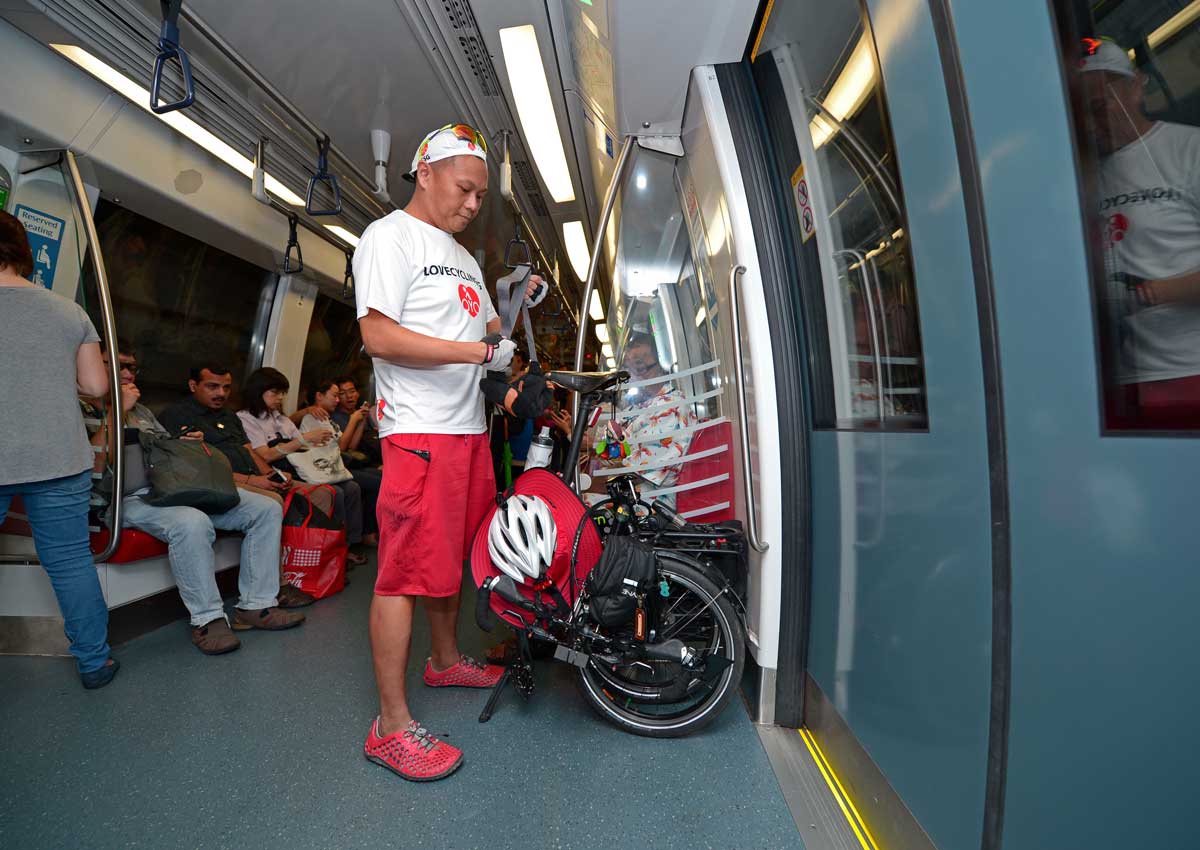
A six-month trial to allow foldable bicycles and personal mobility devices (PMDs) all-day access on buses and trains will be launched soon, in what observers say is a significant step in encouraging people to commute by bicycle.

Transport Minister Khaw Boon Wan announced the upcoming pilot, which is likely to start later this year, at the Walk Cycle Ride SG Symposium held at the Mediacorp Campus yesterday.

Currently, foldable bicycles are allowed on public transport only during off-peak hours, thus limiting their use to mainly recreational purposes.

Non-foldable bicycles are not allowed at all, but foldable bikes can be taken on board buses and trains from 9.30am to 4pm and after 8pm on weekdays. All-day access is granted on weekends and public holidays.

Observers say lifting the restrictions on access will make it viable for people to cycle to work .

Hairstylist Kenneth Tham, who cycles to work, said it will allow users to ride to the train station from home or work. “I think, given the choice, people will do this,” said the 42-year-old.

Cycling advocate Han Jok Kwang agreed, saying: “A ‘foldie’ doesn’t take up a lot of space. It’s no bigger than luggage you take to the airport.”

Although there are no figures, cycling enthusiasts say foldable bikes, such as those by Brompton, are becoming increasingly popular because of their portability. Many members of the 14,000-strong group, LoveCyclingSG, own them.

Yesterday, Mr Khaw also addressed the concerns of commuters worried about sharing space with foldable bicycles and PMDs during rush hours, when he urged cyclists to refrain from entering buses and trains that are crowded.

“For this trial to be a success, public transport commuters and those who bring their bicycles and PMDs onto the buses and trains need to give and take, and be considerate of one another,” he said.

Mr Simon Lane, SBS Transit’s executive vice-president for rail, said at a panel discussion yesterday that if bicycle users were reasonable, there would be “plenty of space”.

Mr Saktiandi Supaat, an MP for Bishan-Toa Payoh GRC, advised cyclists to be patient. “If it’s crowded, don’t push yourself in, wait for the next train,” he said.

He also suggested that MRT stations could have dedicated areas for cyclists to wait to board, and trains could have specific carriages for those with bikes.

Another idea raised at the symposium was for buses to be equipped with bike racks, as they are in a number of cities in North America and Europe.

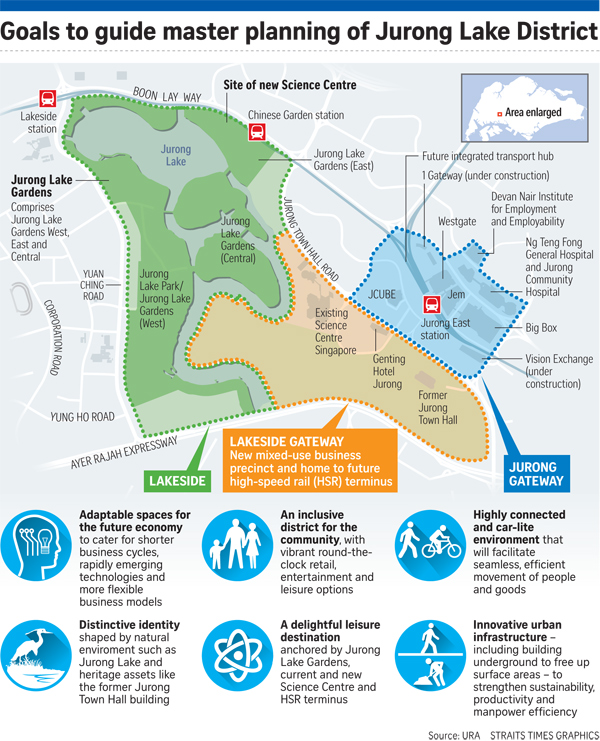
Yesterday, Mr Khaw also revealed that in the Jurong Lake District bicycle-sharing scheme to be launched next year, about 1,000 bikes will be distributed across 100 docking stations.

The stations will be within walking distance from one another and be available 24 hours a day, he said, adding that the Land Transport Authority will call a tender for the system’s operator next week.

These two steps are the latest in Singapore’s push to go car-lite.

Explaining why the traditional car-centric city model is not sustainable here, Mr Khaw said: “Cars require carparks, require roads, and both occupy large tracts of land. They are inefficiently used. For unlike public transport, private cars are typically used for only a very short period each day, and are left in the parking lots the rest of the time.”

About 12 per cent of Singapore’s land is used for roads, compared with 14 per cent for housing.

In addition, cars spend only about 4 per cent of the time in motion, according to a recent study by the Centre for Liveable Cities, a government think-tank, and the Urban Land Institute, a research organisation based in the United States.

“Cars will still have a role to play, but as shared cars, taxis and private-hire cars, rather than be largely privately owned,” said Mr Khaw.

dansonc@sph.com.sg


This article was first published on July 21, 2016.
Get a copy of The Straits Times or go to straitstimes.com for more stories.
Image: 
Publication Date: 
Thursday, July 21, 2016 – 15:00
Send to mobile app: 
Source: 


Story Type: 
Others

Source link