Home Blog Page 3328

China builds massive seaplane: state media

0

BEIJING – China has completed production of the world’s largest amphibious aircraft, state media has said, the latest effort in the country’s program to wean itself off dependence on foreign aviation firms.

The state-owned Aviation Industry Corporation of China (AVIC) unveiled the first of the new planes, dubbed the AG600, Saturday in the southern port city of Zhuhai, the official Xinhua news agency reported.

The aircraft, which has a maximum range of 4,500 km (2,800 miles), is intended for fighting forest fires and performing marine rescues, it said.

At around the size of a Boeing 737, it is far larger than any other plane built for marine take off and landing, Xinhua quoted AVIC’s deputy general manager Geng Ruguang as saying.

However, its wingspan is considerably smaller than that of the H-4 Hercules, known as the Spruce Goose, which was designed in the 1940s to carry Allied troops into battle. It is regarded as by far the largest seaplane ever built although it only ever made one flight, in 1947.

The Chinese plane, which is targeted at the domestic market, will be “very useful in developing and exploiting marine resources,” the article said, adding that it could be used for “environmental monitoring, resource detection and transportation”.

Beijing is currently locked in disputes with several of its neighbours, including Japan, Vietnam and the Philippines, over the rights to develop economic resources in waters off its shores.

The AG600 could potentially extend the Asian giant’s ability to conduct a variety of operations in the South China Sea, where it has built a series of artificial islands featuring air strips, among other infrastructure with the potential for either civilian or military use.

Xinhua said AVIC has received 17 orders for the plane so far.

China is seeking to develop its own aviation sector to reduce dependence on and even challenge foreign giants, such as European consortium Airbus and Boeing of the United States, though analysts say it could take years.

Despite a history of delays and problems, China’s aviation industry has made rapid progress in the last year.

In June, the Chinese-made ARJ21 – which stands for Advanced Regional Jet for the 21st century – made its first commercial flight, when Chengdu Airlines flew one from its home base to Shanghai, and the country’s military began using its homegrown Y-20 heavy transport plane earlier this month.

It rolled out the C919, China’s first domestically developed narrow-body passenger plane, in November last year.

Image: 
Category: 
Publication Date: 
Sunday, July 24, 2016 – 12:39
Keywords: 
Send to mobile app: 
Source: 


Hermes ID: 
2 466 461
Hermes ID String: 
VLSEAPLANE24
Hermes Author: 
GRONGLOH
Story Type: 
Others

Source link

Nepal PM appears set to lose no-confidence vote as allies depart

0

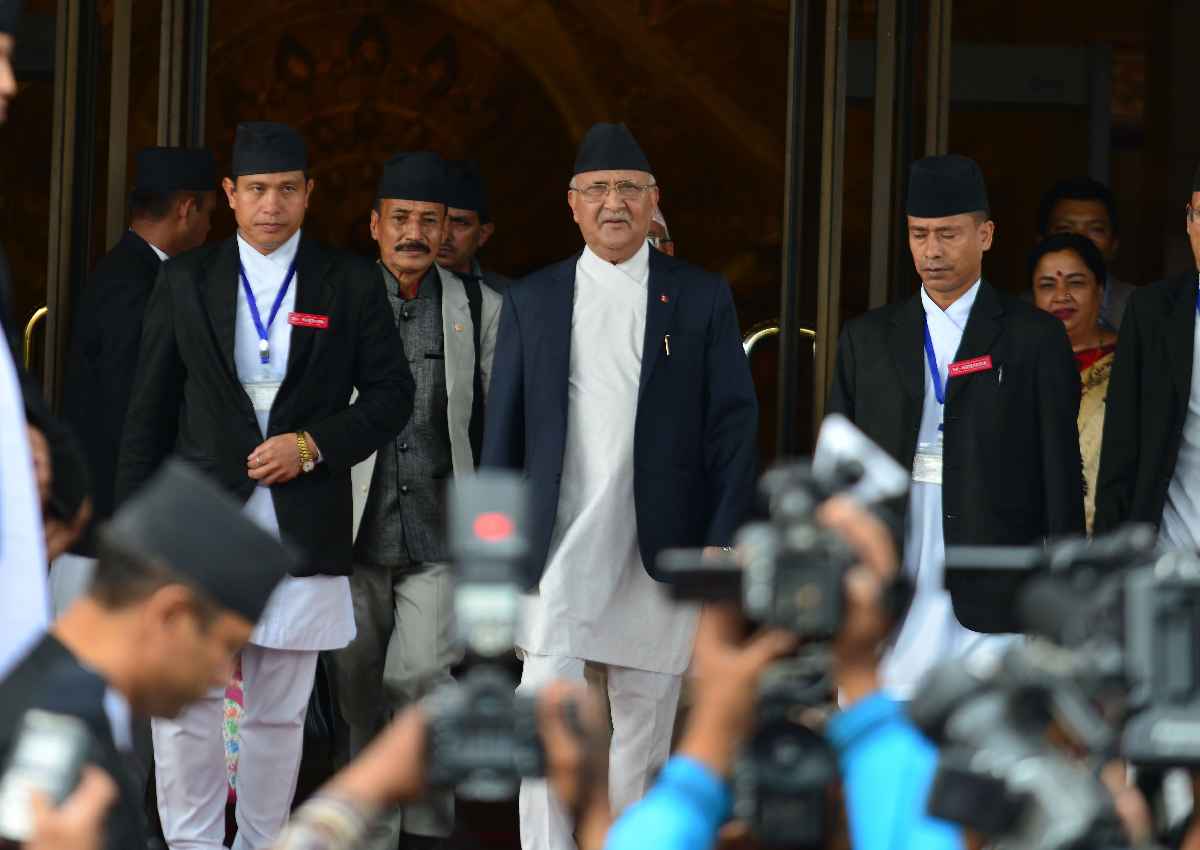
KATHMANDU – Two political parties left Nepal’s ruling coalition on Sunday, deserting the fractious alliance ahead of a vote of no-confidence that Prime Minister K.P. Oli looks likely to lose.

The no-confidence motion, lodged by former Maoist rebels who installed Oli in October but fell out with him after accusing him of failing to honour a power-sharing deal, is due to be put to a vote in the 595-member parliament later on Sunday.

Nepal has been plagued by turmoil for years and the latest uncertainty over Oli’s fate risks the further sapping of business confidence. “We were left with no alternative because of the arrogance of the prime minister and his party,” Kiran Giri, a senior official of the Rastriya Prajatantra Party (RPP) told Reuters, referring to party’s decision to abandon Oli’s coalition.

The Madhesi Janadhikar Forum Nepal (Democratic) is the other party that said it was leaving the alliance.

Both parties said they would join the opposition in Sunday’s vote aimed at toppling the Himalayan country’s 23rd government since multi-party democracy was introduced in 1990 after bloody protests.

Oli was not available for comment but aides said he would respond to opposition accusations in parliament.

Nepal’s neighbours, China and India, jostle for influence over the volatile young republic and are concerned that prolonged political paralysis could turn one of the world’s poorest countries into a haven for criminal gangs and militants.

Nepal has been flirting with crisis since September when it adopted its first republican constitution.

The ethnic Madhesi minority in the south of the country rejected the constitution, saying new federal states marginalized them by splitting their homeland.

The Maoists called off a bid to oust Oli two months ago after he said he would address the Madhesi concerns and rebuild homes destroyed in earthquakes last year.

But Oli’s critics said he did not do as he promised. “The prime minister became ego-centric and self-centred, refusing to listen,” Maoist chief Prachanda, said in parliament on Friday. “This made us unable to continue to work with him.” Prachanda, who goes by his war nom-de-guerre meaning”Fierce”, is the favourite to replace the 64-year-old Oli.

Minority Madhesis blocked border trade points with India for four months to demand the redrawing of provincial borders and a fair say in government.

They ended the blockade in February after more than 50 people were killed in clashes with police and widespread criticism of the protest that choked off supplies of vital imports from India, including fuel.

Image: 
Category: 
Publication Date: 
Sunday, July 24, 2016 – 12:37
Keywords: 
Send to mobile app: 
Source: 


Hermes ID: 
2 466 451
Hermes ID String: 
VLNEPAL24
Hermes Author: 
GRONGLOH
Story Type: 
Others

Source link

It Changed My Life: Writing her way to places – and prizes

0

In 1989, Fong Foong Mei won third prize in The Queen’s Commonwealth Essay Competition.

The triumph netted the Malaysian schoolgirl, then aged 16, an invitation to meet Queen Elizabeth II, who was in Kuala Lumpur for a Commonwealth Heads of Government meeting.

“I was allowed to bring my parents and it was the first time my father had bragging rights,” she says. “More importantly, it made me realise that writing can take me places.”

It sure has.

She became a journalist, a job which saw her traversing the globe.

Barely 10 years into her career, she – along with six other members of a team from the Wall Street Journal (WSJ) – bagged the ultimate award in journalism, a Pulitzer Prize, in 2007 for a series of reports on capitalism in China.

Now a fellow at a think-tank in the United States, Ms Fong released her first book, One Child, earlier this year. A trenchant exploration of China’s one child-policy, it received glowing reviews from the international press

The Guardian describes the book “as a harrowing account of the significance of decisions taken by a small coterie of men with too much faith in science and ideology, and too little faith in humanity”.

The engaging and self-deprecating 44-year-old – who writes under the byline Mei Fong – was born in Kuala Lumpur, the youngest of five daughters of a deputy auditor-general and a homemaker.

“Because I was the fifth child, my parents didn’t pay me much attention and nobody supervised me. I was s*** in school,” she says with a guffaw. “The only saving grace was that I liked to read,” adds Ms Fong who was in town recently as a judge of The Singapore Literature Prize (non-fiction).

But her choice of reading material was wildly inappropriate, comprising mostly trashy novels by the late romance writer Barbara Cartland and authors from the Mills & Boon stable.

Like her sisters before her, she was made to not only take piano lessons but also get a certificate teaching the instrument.

“The idea was if we didn’t do well in school, we would have a back-up. But I really had zero talent,” she says.

After her father died of a stroke when she was 18, she came to Singapore to live with one of her sisters, who was a lawyer working here.

She got into Raffles Junior College. “My results were just so-so lah, but they were interested in me because I took judo and they had a judo team.”

Singapore threw up opportunities which shaped her life.

Ms Fong enrolled in a government programme pairing young budding writers with established ones. Her mentor was the late author and neurosurgeon Gopal Baratham, who lent her books to read and introduced her to authors such as Ian Fleming and Gabriel Garcia Marquez.

“He would invite all his mentees to parties and at these parties, you’d meet people like (writer) Catherine Lim and (the late lawyer and politician) David Marshall,” she says, adding: “For an 18-year-old, that was a big deal. They were people not leading the usual Singapore corporate lifestyle, they were not straight and narrow boring, they had sparkle in their lives.”

In 1993, she entered the National University of Singapore to read English literature and psychology.

For pocket money, she started writing for women’s magazines, including Go and Her World.

“I was writing features like Is He Into You?, Should A Woman Pay On A Date?” she says, laughing.

Ms Tan Wang Joo, then editor of Her World, liked her enough to recommend her for a Singapore Press Holdings scholarship for her final year at university. That was how she ended up at The New Paper (TNP) after graduating in 1997.

She was thrown into the deep end, and assigned stories on the social and crime beats.

Interviewing bereaved relatives of accident or murder victims became par for the course.

“It was painful but you grew such a thick skin, which was really good because you really got to push sometimes if you want people to talk to you,” she says.

Because of her facility with the Malay language, she was sent to cover the reformasi movements in Kuala Lumpur and the forest fires in Indonesia.

On these assignments, she would see international correspondents from the BBC and CNN in action.

“That’s when I realised I wanted to be like them too. I wanted to be like Sydney Schanberg, the guy in The Killing Fields,” she says, referring to the 1984 war movie and the American journalist who won a Pulitzer for his reports on war-torn Cambodia in the 1970s.

She quit TNP 21/2 years later because she wanted to “play in a bigger field”.

With a grant from the Lee Foundation, she set off to do her master’s degree at Columbia University’s School of International Affairs.

To hone her reporting skills, she took on internships during her vacations. The famous news magazine television programme 60 Minutes offered her one but she turned it down. “I couldn’t afford to take on an unpaid internship, one that didn’t even pay for travel. They went, ‘But this is 60 Minutes.’ I didn’t care if it was 60 minutes or 60 seconds. I had to eat.”

Fortunately, one of her professors got her a stint on Forbes.com.

Knowing Forbes’ penchant for lists about the wealthy, she came up with a unique one in 2001: Earnings From The Crypt, a list about the highest-paid dead celebrities.

“It’s still around, and I’m quite proud of it,” she says with a grin.

Her stint at Forbes.com helped her get into a competitive summer programme at WSJ, where she was put on the telco beat.

But the dot.com bubble imploded in 2001, and the WSJ reporting job Ms Fong was hoping for proved elusive. However, the newspaper offered her a job reading proofs.

Then Sept 11 happened; her bosses fielded her as a writer.

“They wanted to see how the city was rebuilding, so they sent out the youngest and most junior reporters to City Hall. I had no office, my office was a broom closet in City Hall,” says Ms Fong, who covered New York City’s rebuilding efforts for the next one and a half years.

By then married to an American- born Chinese journalism professor, she moved to join WSJ’s bureau in Hong Kong two years later, when her husband was offered a job at the University of Hong Kong.

“Sars happened just as I landed,” she says with a grimace.

The three years she spent in Hong Kong were exciting ones.

“The ‘one country, two systems’ was falling apart. There were democracy marches and protests against Tung Chee Hwa,” she says, referring to the city’s first Chief Executive after the transfer of sovereignty from Britain to the People’s Republic of China in 1997.

But the call of the siren that was China was louder.

“The country was changing so fast. The joke was that each year in China was a dog year, the equivalent of seven years… It’s one-sixth of humanity changing at the speed of light. It was a great story,” says Ms Fong, who joined WSJ’s Beijing Bureau in 2006.

In the beginning, her lack of proficiency in Mandarin gave her a crisis of confidence. “But a colleague told me, ‘No matter what you do, there are going to be a billion people who speak better Mandarin than you do. So are you going to sit on the sidelines or are you going to get in there?'” says Ms Fong, who worked with a researcher.

Her arrival dovetailed with the city’s frenetic efforts to ready itself for the 2008 Olympics.

She decided to explore the lives of male construction workers in the big build-up to the Games.

“They were all men, out-of-towners. What was their story? What was life like inside these construction sites? I was curious,” she says

Her strategy to gain entry into their world? Find people with grievances. “I looked for those who had filed legal cases, talked to them and, through them, find more. You have to find the right sort. It took a while,” she says.

Persistence, coupled with street smarts and a high EQ, earned her the trust of a group of workers who smuggled her into their worksites.

“On one occasion, they smuggled me and my researcher into their dorm as well and cooked us a meal. We ate out of paint buckets.”

The story she filed on their lives nabbed her, among other accolades, first prize in the 2006 Human Rights Press Awards given out by the Hong Kong Correspondents Club. Together with reports by six colleagues on the adverse effects of China’s booming capitalism, it also led to WSJ’s Pulitzer triumph.

Asked how the Pulitzer has changed her life, she laughs and says: “You know what will be in your obituary.”

Life took an emotional turn the following year. Ms Fong had to cover the Sichuan earthquake – China’s worst disaster in a generation – which killed 70,000 people.

While following migrant workers back to Sichuan, she found out she was pregnant, which was a surprise because she suffered from polycystic ovarian syndrome and had had trouble conceiving.

Unfortunately, she suffered a miscarriage a couple of months later.

“This part was mixed with me writing about people losing their children, so it was a very emotional time,” she says, tearily adding that she tried but could not suppress the pain.

A change, she decided, was in order. “I thought to myself, ‘Maybe there’re more important things in life. Maybe I need to stand still and to stop for a while,'” says Ms Fong, who then sought IVF treatments in Beijing but failed to conceive.

In 2009, she went on a sabbatical and took up a position teaching journalism at the University of Southern California. She quit WSJ officially in 2013.

The more relaxed lifestyle – living by Venice Beach, doing yoga – helped, and another IVF attempt led to her giving birth to twin boys, now five years old.

In 2014, she moved to Washington to become a fellow at the New America Foundation, a think-tank which focuses on public policy issues from gender to technology.

By then, she had started work on One Child. The idea for the book started percolating after the Sichuan earthquake took her to Shifang, a testing ground for China’s one-child policy. The disaster robbed many parents of their only child. Because of her miscarriage, their loss struck a deep chord.

It explains why she decided to weave in her personal struggles with fertility as she examines the impact of China’s draconian attempts at social engineering.

Her timing – “I had a feeling that the one-child policy was coming to an end and I wanted to write the first definitive story about it” – was uncanny.

Late last year, as she was sending out media proofs of her book, China revoked the one-child policy.

The book opened new doors. There were invitations to events such as the Aspen Ideas Festival and the Hay Festival in Wales.

In March this year, she delivered the 34th Annual John Fisher Zeidman ’79 Memorial Lecture at the Sidwell Friends School, a prestigious private school in Maryland, joining a list of former distinguished presenters, including playwright Arthur Miller and ex-US secretary of state Madeleine Albright. “I’m probably the only NUS alumnus in that group,” she says, grinning.

Motherhood suits her, she adds, although she misses the adrenaline rush of journalism and does not rule out returning to its fold.

Meanwhile, she is thinking about her next book.

“I really don’t have an idea in mind but I’m confident something will come along. It’s just like the process when you’re in a newspaper. You finish one story and something else comes along and you will have five ideas to pitch.”


This article was first published on July 24, 2016.
Get a copy of The Straits Times or go to straitstimes.com for more stories.


Image: 
Category: 
Publication Date: 
Sunday, July 24, 2016 – 14:00
Keywords: 
Send to mobile app: 
Source: 


Story Type: 
Others

Source link

Thousands attend funeral of murdered Cambodian activist

0

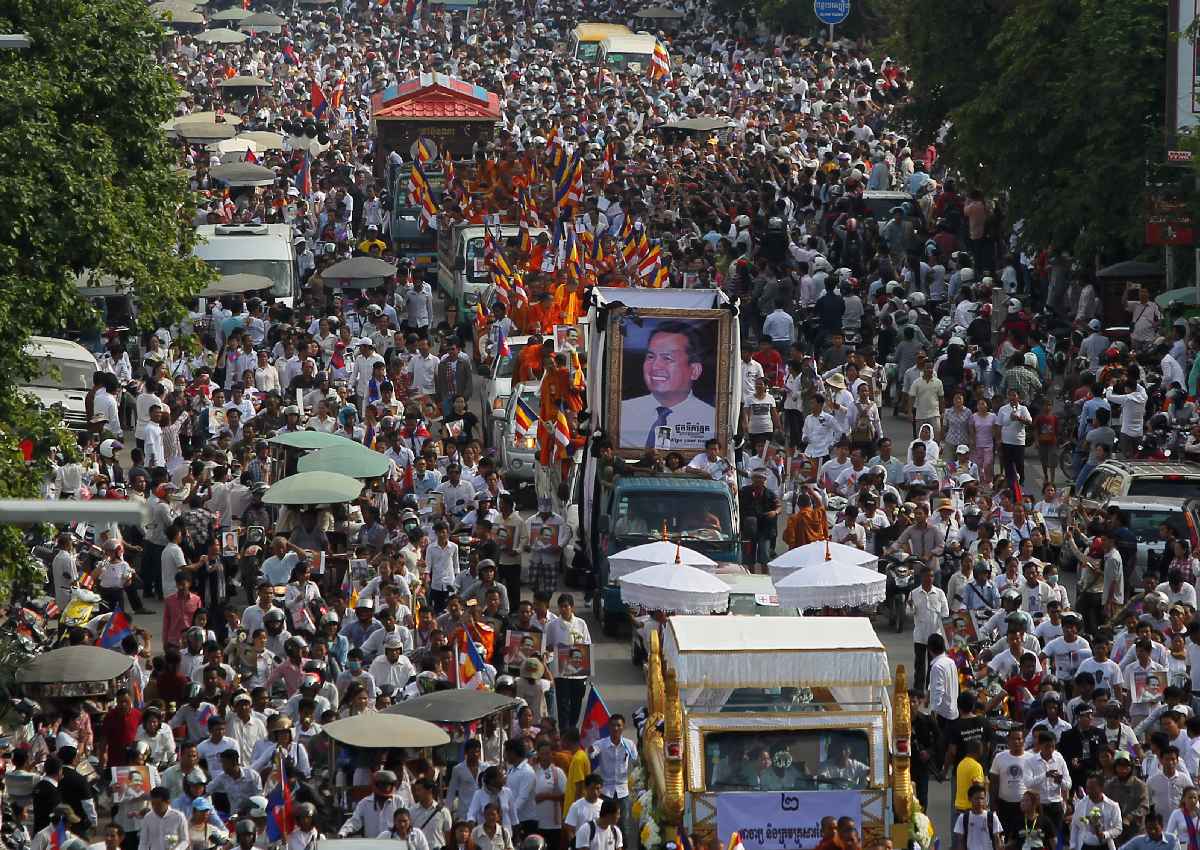
PHNOM PENH – Tens of thousands of Cambodians poured onto the streets of Phnom Penh Sunday for the funeral procession of a prominent political analyst murdered in a brazen daylight shooting that shocked the Southeast Asian nation.

Kem Ley, a popular pro-democracy voice and grassroots rights activist, was shot dead two Sundays ago while drinking coffee outside a petrol station in Phnom Penh, the capital.

The murder sent jitters across a country already brimming with political tension as premier Hun Sen faces accusations of clamping down on critics of his 31-year rule.

On Sunday a massive crowd of mourners, many carrying portraits of Kem Ley, trailed for kilometres behind Buddhist monks and a motorcade carrying the 46-year-old’s body in a transparent casket.

Tens of thousands of others lined the streets to watch the procession, which will end at the activist’s home village some 70 kilometres south of the capital.

“He was a mirror of society, a hero. His murder is a huge loss to democracy,” Hul Chan, 39, told AFP while he was walking with the peaceful procession.

Kem Ley, a popular radio commentator, was a regular critic of Hun Sen as well as the political opposition. He called for a new era of clean politics in Cambodia – one of the most corrupt countries in the world.

He was also a major advocate for land and labour rights, travelling across the impoverished country to speak directly with villagers.

Oueth Ang, a former soldier and Buddhist monk, has been charged with the murder and is facing trial in a Cambodian court.

The 43-year-old, who first identified himself with an alias that translates as “Meet to Kill”, claimed he shot Kem Ley over an outstanding debt.

But doubts about the motive persist in a country where the rule of law is weak and critics of the elite are easily silenced.

Shortly before his death Kem Ley gave a lengthy radio interview welcoming a report that detailed wealth amassed by Hun Sen and his family.

Hun Sen’s government stands accused of cracking down on critics and political rivals ahead of 2018 elections, using the courts to strongarm opponents.

He has ordered an investigation into Kem Key’s murder and urged people not to turn the case into a “political act”.

Image: 
Category: 
Publication Date: 
Sunday, July 24, 2016 – 12:33
Keywords: 
Send to mobile app: 
Source: 


Hermes ID: 
2 466 444
Hermes ID String: 
VLCAMBODIA24
Hermes Author: 
GRONGLOH
Story Type: 
Others

Source link

'Bailout' unlikely for Olympics 'live' telecast

0

The Singapore Government is unlikely to step in with additional funding to secure “live” broadcast rights to next month’s Olympic Games in Rio.

The Straits Times reported on Friday that national broadcaster Mediacorp had inked a deal with Olympics broadcast rights holder Dentsu for only delayed telecasts of the sporting action during the Aug 5-21 Games. It can air an event only after the entire session has concluded – although certain events, especially those featuring Team Singapore athletes, may be beamed minutes after they end.

A Ministry of Culture, Community and Youth spokesman told The Sunday Times yesterday: “The Government notes that prices for ‘live’ sports content of major games like the Olympics have been escalating in recent years. It has reached the point where we have assessed to be neither prudent nor value-for-money to spend more and more on escalating rights fees.”

Hence, she said, “the acquisition of rights for ‘live’ sports content will remain a commercial decision”.

She added that highlights of Team Singapore and other international athletes in action will be available on free-to-air programming.

The agreement includes digital platforms and will see Mediacorp air up to 12 hours of delayed action daily, plus highlights and feed from the Olympic news channel. Only the opening and closing ceremonies will be shown “live”.

It is believed that this will be the first time since the 1984 Los Angeles Games that there will be no “live” Olympic telecast of sports here.

In 2012, Mediacorp paid about US$2.5 million (S$3.39 million) for the fees for the London edition. This excludes technical costs, which could exceed US$1 million.

Dentsu’s asking price for the Rio Games is understood to be in the region of US$6 million, more than double the 2012 investment. It is a sizeable amount, given that United States network NBC paid US$7.75 billion for six Olympics from 2022 to 2032. Its previous 2014-2020 deal for four Games was US$4.4 billion, a hike of less than 20 per cent on a per Game basis.

Mr Low Teo Ping, Singapore’s chef de mission to the Rio Games, said the high fees are hard to justify, even if it means local viewers will have to make do without “live” telecasts.

“Taxpayers expect public money to be spent prudently. Singapore is already spending a significant amount to secure delayed broadcast rights,” he said.

The Republic is sending a 25-man contingent – its joint-largest since independence – across seven sports.

Whereas previously only the women’s table tennis team were serious contenders, the country now boasts more world-class athletes like swimmer Joseph Schooling and shooters Jasmine Ser and Teo Shun Xie. To have such credible medal prospects in Brazil but miss watching them “live” is a real pity, said Singapore’s International Olympic Committee member Ng Ser Miang.

His disappointment was shared by former swimmer and two-time Olympian Mark Chay. He said: “I remember watching the 1996 Olympics as a kid and being inspired… It’s more than just sports; it made me think I can compete among the world’s best.”

Commenting on The Straits Times Facebook page, Mr Tan Wei Jie said that not being able to watch “live” a potentially historical moment in Rio would go against recent moves to promote sports.

Yet a collection of the planet’s finest athletes is no guarantee to stir interest from advertisers, particularly in Singapore, noted Mr James Walton, head of the sports business group at consulting firm Deloitte Singapore & South-east Asia.

He added: “Football and the English Premier League are unique. It can spark a bidding war among broadcasters which know they can pay high prices and charge the customer. But the Olympics are fundamentally different. If someone told you you can’t watch rowing, gymnastics or even the football ‘live’, most people here won’t get too upset.”

Consider also the 11-hour time difference, said Facebook user Doris Tay. “Frankly how many people will stay up just to watch the Olympics ‘live’ every day when the Games are on? A delayed telecast is not a problem. It is not as though there is no telecast at all.”


This article was first published on July 24, 2016.
Get a copy of The Straits Times or go to straitstimes.com for more stories.
Image: 
Publication Date: 
Sunday, July 24, 2016 – 14:00
Send to mobile app: 
Source: 


Story Type: 
Others

Source link

'Aliens' marks 30th anniversary with marriage proposal

0

SAN DIEGO – Filmmaker James Cameron and Hollywood star Sigourney Weaver were surprised by a fan proposing to his girlfriend as they celebrated the 30th anniversary of sci-fi classic “Aliens” on Saturday.

The pair were swapping nostalgia and behind-the-scenes anecdotes at San Diego Comic-Con when the man got down on one knee during the audience Q&A section and popped the question.

The lucky lady said yes, prompting Cameron, 61, to remark: “May you be happy and have many spawn.” Cameron and Weaver, 66, were joined by other cast members including Lance Henriksen, Michael Biehn, Paul Reiser and Bill Paxton as well as producer Gale Anne Hurd.

The panel was asked for details of progress on an upcoming fifth “Alien” film to be made by “District 9” and “Elysium” director Neill Blomkamp.

Although it has not been officially announced, Blomkamp himself has given interviews confirming that he plans at least one sequel with Weaver in the lead role.

The filmmaker announced on Twitter last October that the project had been put on hold while “Alien” director Ridley Scott worked on “Alien: Paradise Lost,” – the sequel to his “Alien” prequel “Prometheus.” Weaver told Comic-Con however that a script had been completed and that Blomkamp “has work to do and I have work to do, but I’m hoping when we finish those jobs we’ll circle back and do it.” The pair started developing ideas while Weaver was shooting Blomkamp’s 2015 robot movie “Chappie,” she said.

“That whole first day we spent talking about it, and four months later, I got a script that was so amazing and gives the fans everything they are looking for, plus innovates in a lot of ways that immediately, to me, became a part of the world,” Weaver added.

Weaver made her name – and received an Oscar nomination – for playing Ellen Ripley, a tough-as-nails warrant officer and pop culture icon widely viewed as one of the most significant female protagonists in cinema history.

But the actress admitted to the Hall H audience she can’t bear to watch Hurd’s hit horror series “The Walking Dead.” Carrie Henn, who played young survivor Rebecca “Newt” Jorden in her only film role and is now a fourth grade teacher, said students’ parents show up with DVDs for her to sign.

Image: 
Category: 
Publication Date: 
Sunday, July 24, 2016 – 11:16
Send to mobile app: 
Source: 


Story Type: 
Others

Source link

SEA bloc pushes for S China Sea breakthrough

0

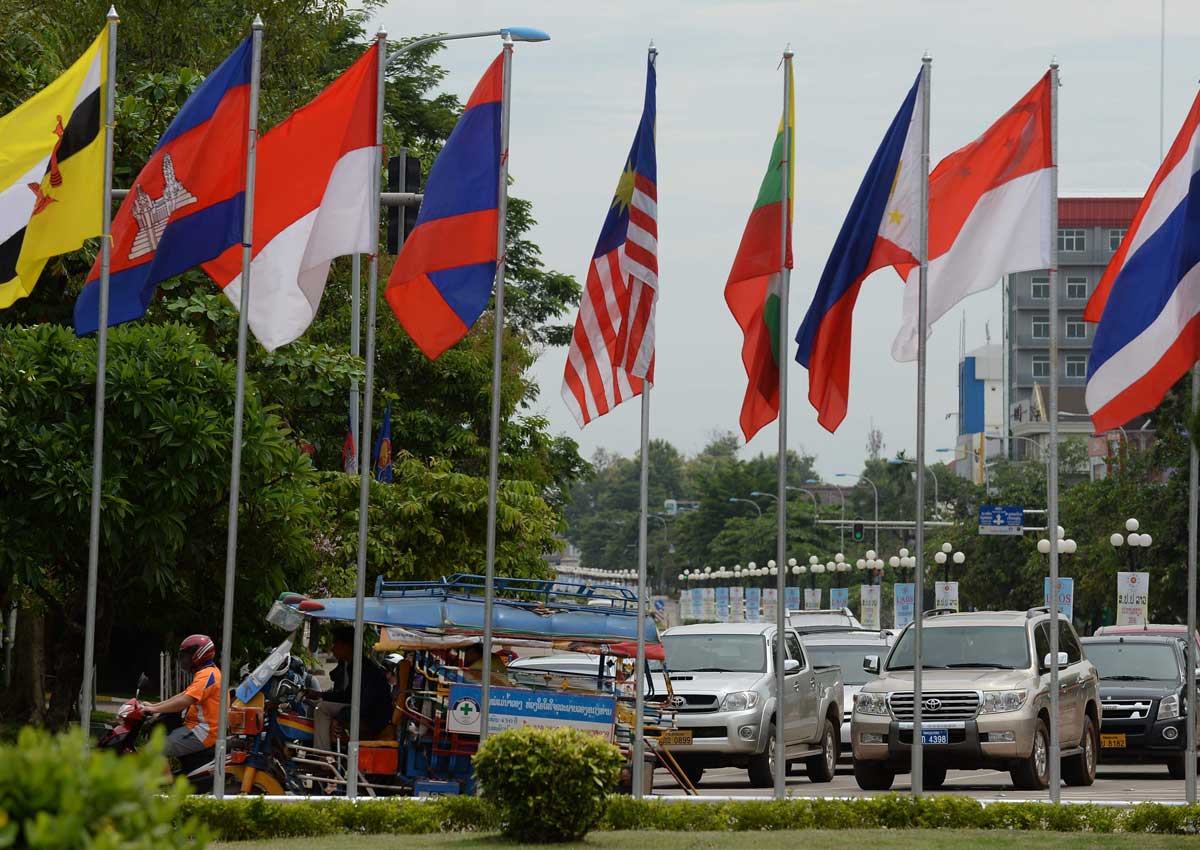
VIENTIANE, Laos – Southeast Asian foreign ministers will hold crunch talks in communist Laos on Sunday at a summit already overshadowed by infighting over Beijing’s sabre rattling in the South China Sea.

The gathering in Vientiane is the first major regional talks since the UN-backed tribunal ruled earlier this month that China did not have historic rights to vast swathes of the strategic sea.

US Secretary of State John Kerry, who arrives in Laos on Monday, and Chinese Foreign Minister Wang Yi are among the delegates attending meetings on the sidelines of the summit.

The 10-member Association of Southeast Asian Nations (ASEAN), which includes four members who have competing claims with Beijing over parts of the strategic sea, has long presented itself as the best place for China to negotiate with neighbours over disputes.

Beijing has resisted that approach, insisting that territorial disputes must be settled bilaterally.

In recent years ASEAN has struggled to present a united front against China with allegations that the regional superpower has forged alliances with smaller countries like Laos and Cambodia through aid and loans.

The UN tribunal ruling was a victory for the Philippines, which brought the case, and fellow ASEAN members Vietnam, Brunei and Malaysia who also claim parts of the South China Sea.

But it infuriated Beijing which rejected the verdict and has ramped up both its rhetoric and military manoeuvres in the disputed waters in the last two weeks.

ASEAN diplomats have been working on a joint communique to be issued at the end of the five-day meeting but disagreements have festered on how to approach the tribunal ruling.

Those involved in talks told AFP that Cambodia, a staunch Beijing ally, has so far opposed any mention of it.

A working draft of the communique obtained by AFP on Saturday showed the section titled “South China Sea” as blank.

“Our house is in a mess right now,” one diplomat involved in the talks told reporters late Saturday as the day’s attempts to reach a consensus came to a close.

Washington has backed the Philippines and other South China Sea claimants against Beijing, arguing for free passage through what it considers international waters.

A State Department official said the US would push for ASEAN to ease tensions over the South China Sea and find common ground.

But the official added: “I’d put a little more value on the conversation that happens among the ministers themselves than I do in the often lengthy and torturous prose that is pulled together by the staff afterwards.” It is not clear whether Kerry intends to meet his counterpart Wang for talks during their visit.

Chinese pressure was blamed last month for a startling show of discord by the bloc, when countries swiftly disowned a joint statement released by Malaysia after an ASEAN-China meeting.

That statement had expressed alarm over Beijing’s activities in the South China Sea. Cambodia and Laos were later fingered as being behind moves to block the joint statement.

The ongoing impasse in Vientiane has led to fears of a repeat of a 2012 summit in Cambodia where the bloc failed to issue a joint communique for the first time in its history because of disagreements over the South China Sea.

A failure by ASEAN to respond to the tribunal will do little to counter criticism that the bloc risks veering into obscurity as a talking shop with little real diplomatic clout.

Image: 
Category: 
Publication Date: 
Sunday, July 24, 2016 – 10:25
Send to mobile app: 
Source: 


Story Type: 
Others

Source link

Your Body Can Naturally Heal Itself!

0

Your Body Can Naturally Heal Itself!
Wednesday, September 26, 2018 at 8:00 PM

Kirolounge – THE SPINE PLACE

390 Victoria St #03-34, Singapore, Singapore

Source link

The Night Shift: Delivering the news

0

That’s when, just a few steps away, newspaper packer Selvi Mahendran gets down to work.

At her workplace – a corner outside a convenience store – stacks of newspapers – more than 900 copies – await the 37-year-old every…

Source link

Want live Olympic coverage? Broadcasters have to pay up

0

Unless the broadcasters here cough up more money, Singaporeans will not be able to watch “live” broadcasts of the upcoming Olympics.

In a statement yesterday, the Ministry for Culture, Community and Youth (MCCY) said the…

Source link