Home Blog Page 3326

Lessons to learn for 2020

0

It has been looming on the horizon but the time has finally come – Singapore has said no in the face of escalating broadcast rights fees.

By declining to provide extra funds for Mediacorp to secure live coverage of the Olympics, the Government is sending a clear message: It will not be held to ransom by broadcast rights holders.

One can say that the writing was on the wall. Ever since Singtel’s excessive 2009 bid for the English Premier League, Singapore’s broadcaster and pay-TV operators have earned a reputation for being able and willing to pay top dollar for televised sports.

As far as rights holders were concerned, it set the tone for future negotiations.

The 2010 World Cup was secured only 35 days before kick-off as both sides pushed for a better deal.

Last season, Spain’s La Liga was screened only four months into the campaign.

But, with less than two weeks to the Olympics, where Team Singapore could return with their best medal haul, one wonders if this fiasco could have been avoided with better planning.

Yes, bottom lines have to be respected.

If broadcasters are unable to monetise the Olympics coverage, in part due to the Games’ odd hours that are unattractive to advertisers (Rio de Janeiro is 11 hours behind Singapore), it would be unwise to fork out an astronomical sum.

Yes, with escalating broadcast rights fees, as Singaporeans have experienced first-hand with the World Cup and English Premier League, perhaps it is time to draw the line and say enough is enough.

The escalating cost is not helped by the International Olympic Committee’s decision to award broadcast rights to a third party – one whose primary concern is to maximise profit – over a national broadcaster like Mediacorp.

But there are valuable – and painful – lessons to be learnt here.

First, Dentsu was awarded the rights in 2013 and opened talks with Mediacorp the same year.

It is hard to understand how, after three years, no deal for live coverage could be struck, especially as the 16 other territories under Dentsu have already done so.

Second, for the sake of viewers, it is imperative that the Government and local broadcasters decide once and for all the importance of beaming the Olympics live, and find a balance between commercial viability and national interest.

One alternative could be the national broadcaster and the telcos combining to submit a joint bid, as was the case when Singtel and StarHub bid for the 2010 World Cup to share costs.

Last year’s Budget saw annual funding for Mediacorp rise by 28 per cent to $250 million over five years. Can more of that be set aside for major events like the Olympics, especially if Singapore continues toproduce more world-class athletes?

The private sector can also step in, by way of sponsorship for Olympic programming. Companies like Samsung, McDonald’s and Panasonic are all Olympic sponsors. Why couldn’t they be persuaded to come on board locally?

Broadcasters and pay-TV operators need to be consistent with the message they are sending.

Can Singapore claim to be serious about promoting local sports when it can pay more than $200 million for three seasons of English Premier League action, but baulk at spending less than 5 per cent of that on the Olympics, where 25 of the nation’s best athletes are pushing themselves to their limits?

Are we taking ourselves seriously as a sporting nation if we invest $40 million in high- performance athletes but, when they have reached sport’s grandest stage, deprive them of sharing the moment with their supporters?

Broadcast rights fees are only going to increase. Which is why, painful as it will be to miss out on a potentially monumental 2016 Olympics, all parties need to start planning to avoid a repeat four years from now.


This article was first published on July 24, 2016.
Get a copy of The Straits Times or go to straitstimes.com for more stories.


Image: 
Category: 
Publication Date: 
Sunday, July 24, 2016 – 16:22
Send to mobile app: 
Source: 


Story Type: 
Others

Source link

The real journey to Rio is so much more than a flight

0

You’ve been waiting for roughly 1,400 days. Doesn’t matter if you’re Usain Bolt the legend; Paulo Amotun Lokoro, the former cattle herder and now 1,500m runner from South Sudan; Kathleen Baker, the US swimmer with Crohn’s disease; or Jasmine Ser, the Singapore shooter. Everyone has to wait for the Games.

Everyone has to endure 1,400 days of alarms going off – unless you take Sundays off. You can’t explain to people that most mornings something aches. Some mornings everything aches. But this life, and these hands blotched with torn skin that rower Saiyidah Aisyah has, this is your choice. This life where you have awful days, unwell days, unlucky days, rainy days, good days, birthdays, you can’t stop.

You get up like Quah Zheng Wen at 4.45am and dive into a cold pool. You leap into a wet sandpit on a dripping day. You run past garbage in the lanes of a slum. You’re 10,000 different athletes from more than 200 nations with stories of poverty, luck, hard work, comebacks, setbacks but heading to one destination.

Rio.

You’ve been waiting 1,400 days but your journey has been much longer. Maybe 10 years or 15 and you need to thank somebody. Or blame someone. Your mother took you to gymnastics class, your teacher suggested you try rowing. That’s it. You were hooked, inspired and damned.

Your life for 1,400 days is spent driving yourself. Past anxiety, past injury, past finish lines, past the next competitor. Your desire to win is primitive, like an ancient human on a hunt. You tell people you “hate to lose” and they nod but they have no idea about the competitiveness that courses through you. If they did, they’d be appalled. You can’t explain the perfectionist that squats in your brain, till your obsessiveness feels like a curse. Joseph Schooling refuses to watch a TV series, just to keep himself from distraction.

People see the crowds in stadiums and think you’re lucky but no one watches your endless days at practice. No one sees table tennis star Feng Tianwei hit backhands on lonely evenings. No one sees the bloody blisters of the runner in Africa. No one really cares about your daily suffering. Except your mum who drops you to practice and your dad who made your lunch and your coach who can’t shut up.

You’re a natural, a thinker, a worrier, an optimist, an egotist, a choker. You come in all sizes and all neuroses. You nod when you hear that Chris Hoy kept a mattress next to his stationary cycle: When he was exhausted he just fell onto it. You grin when you hear that Herb Brooks, the US ice hockey coach at the 1980 Winter Olympics, told his team: “You don’t have enough talent to win on talent alone.”

Then you do another sit up.

You’ve spent too many days of those 1,400 days trying to shave .05 of a second from your timing or fixing a flaw in your vault, and still you can’t do it. You make the same mistakes. You lose again and again. You watch a person overtake you and it’s like your dream slipping away. You pout, swear, give up, cry. Then you try again. It’s who you are.

You’ve met a psychologist and a yogi. You’ve swallowed a capsule with a thermometer inside it to record your core body temperature. You’ve put on 14kg like sailor Griselda Khng because your event demands it. You do whatever it takes. For fear that somebody else will.

You’ve spent 1,400 days taking it step by step. You’ve stepped over your peers, into stadiums and onto podiums. You’ve stepped on a train after work like shooter Teo Shun Xie and gone to training. You’ve stepped in front of a mirror and seen yourself and 1,400 days later you look like someone else. More experienced, tougher, muscular. It’s not enough. It’s never enough.

You might be going to the Games for the last time like Michael Phelps or the first time like marathoner Neo Jie Shi. You’re both ready for the Zika virus, which makes you braver than some wusses we know of with steel-shafted clubs. You’ve got your ticket, your mosquito repellent and hopefully your nerve.

You’re just a few days away from the whistle and the bell and the command to start in Rio. You’re just a few weeks from long sleeps and hamburgers. After 1,400 days, the alarm is about to go silent.

And then you might miss it.


This article was first published on July 24, 2016.
Get a copy of The Straits Times or go to straitstimes.com for more stories.
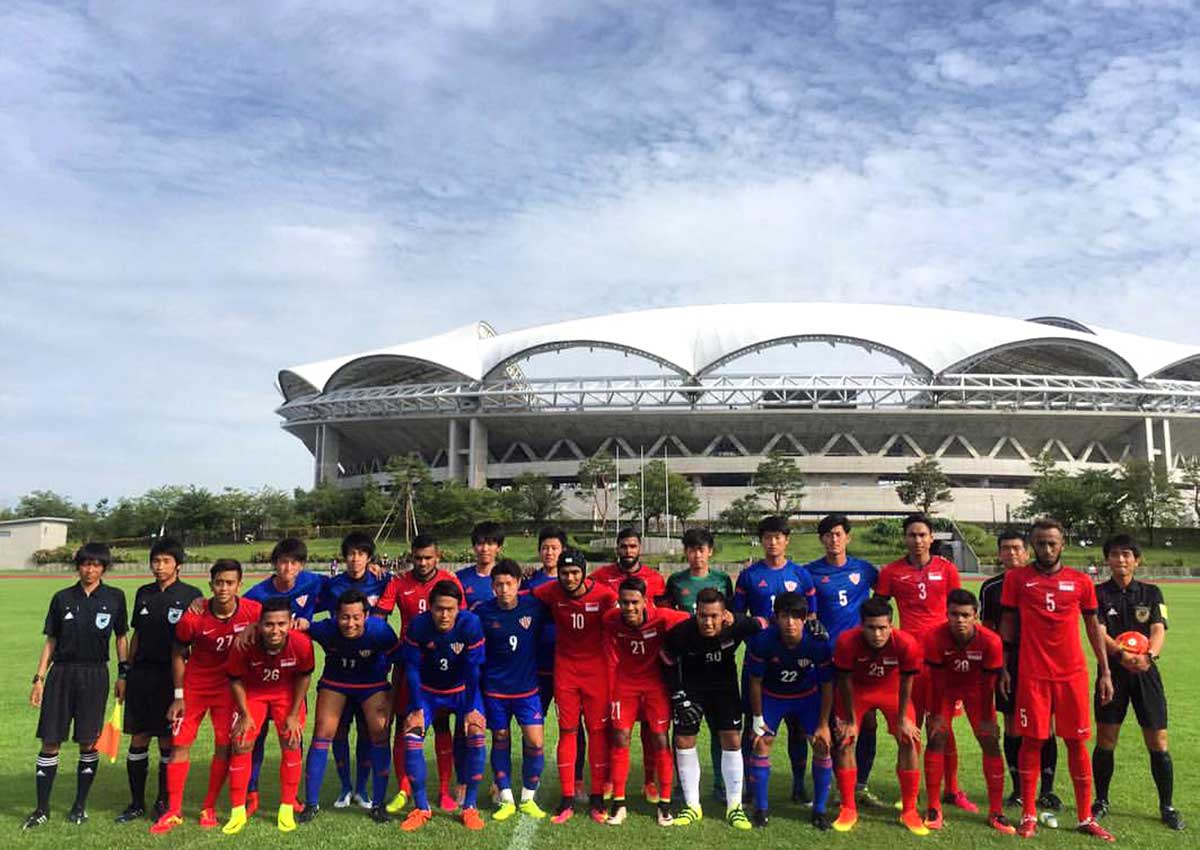
Image: 
Category: 
Publication Date: 
Sunday, July 24, 2016 – 17:00
Keywords: 
Send to mobile app: 
Source: 


Story Type: 
Others

Source link

Lions gain from tough tests in Japan

0

Despite only going up against university-level teams, the first week of the Lions’ Japan training camp proved an invaluable opportunity for national caretaker coach V. Sundramoorthy to shuffle his squad around and give them some much-needed experience.

In their two training matches against Niigata University of Health and Welfare (2-3) and Japan Football College (2-0) on Wednesday and Thursday respectively, 23 out of the 25-man Singapore squad were given playing time.

Sundram said: “This week has been useful for us to try out various formations and combinations and see how they work against strong opponents.

“We have seen many options – for example in the central defence positions – and that is a happy problem.

“It has also allowed the players to gain match time, especially for those who have not played together as an unit for the national team.

“I’m happy to see my players working hard – both in training and during the games.”

Singapore will take on Albirex Niigata at the Denka Big Swan Stadium today and Sundram is relishing the challenge.

The 50-year-old said: “This is an opportunity for the players to express themselves and show their abilities playing against a (J-League) team.”

“I hope that after the game, I will have a strong indication of the pool of players that I have and I am sure I will have a selection headache for the upcoming national team preparations. The team is motivated to do their best and put up a good fight against Albirex.”

Singapore and Garena Young Lions forward Khairul Amri also feels the team’s time in Japan will be helpful, especially with the year-end ASEAN Football Federation (AFF) Suzuki Cup looming, for which Sundram had set a semi-final target.

“Our time in Japan has been very fruitful and the boys have settled in well together. The training matches were tough tests that will be beneficial for the team and the Albirex match will be a big challenge but we are looking forward,” said the 31-year- old.

Amri also said the Lions – missing five key seniors based with overseas clubs in Hassan Sunny, Safuwan Baharudin, Hariss Harun, Shahril Ishak and Baihakki Khaizan – are still a work in progress but will rise to the occasion when it most matters.

He said: “Right now, our team have gelled together well but there is still room for improvement. It is important that we work our way up slowly and peak at the right time – that will be at the AFF Suzuki Cup.”


This article was first published on July 24, 2016.
Get a copy of The Straits Times or go to straitstimes.com for more stories.

Image: 
Category: 
Publication Date: 
Sunday, July 24, 2016 – 17:00
Send to mobile app: 
Source: 


Story Type: 
Others

Source link

Double gold for Singapore gymnastics

0

When asked about her goal for the 8th ASEAN Schools Games (ASG), 15-year-old gymnast Tan Sze En exchanged a hesitant glance with team-mate Nadine Joy Nathan yesterday, suggesting: “Should I say it?”

Sixteen-year-old Nadine nodded, and Sze En replied, after taking a deep breath: “I want to win the individual all-around gold medal and retain our team gold.”

About 30 minutes later, Sze En’s dreams were achieved as the results of the women’s artistic gymnastics competition were finalised, delivering Singapore’s first two gold medals at the ASG.

The Singapore team comprising Sze En, Nadine, Mei Togawa, Kiera Lau and Colette Chan topped the team event with a final score of 189.65.

Sze En, Nadine and Colette also finished in the top three at the individual event, but the Republic was denied a clean sweep as only two representatives from each country could stand on the podium. Sze En (gold) and Nadine (silver) were given medals.

Speaking to The Sunday Times at Rajamangala University of Technology in Chiang Mai, where the gymnastics competition was held, Sze En said: “I finished second during my first ASG in 2013 and didn’t get a medal at my second ASG the next year, because the top two were from Singapore.

“I feel so happy that my hard work paid off.”

The Raffles Girls’ School student is also relieved that her side recovered well from a shaky routine on the uneven bars. “We were all quite nervous for the bars, especially because we’d only trained for a day before the competition,” she said. “But I’m glad we managed to focus on what we were supposed to do after that.”

Fellow RGS schoolmate Kiera admitted to feeling nervous before the competition, but buoyed by her team’s victory, the 14-year-old is determined to perform better at the apparatus finals today.

“My aim was to get more experience as this is my first major tournament, but I could’ve done better for the individual event,” said Kiera, an ASG debutant.

“We did well for the team event today, so hopefully I will be more confident in my performance tomorrow.”

Clinching the team silver and bronze respectively were Vietnam, who scored 176.8, and Thailand (171.4).

Thailand’s Thidaporn Khanthara scored 45.95 to finish third in the individual event, behind Nadine (47.25) and Sze En (50.45).

Singapore’s swimmers delivered three bronzes and one silver at the swimming event at Chiang Mai’s 700th Anniversary Sports Complex. Team manager Mark Ng was pleased with his charges’ performance.

“For swimming it always comes down to the finals because in the heats you may have done better, but in the finals everyone really wants the medals and the wins are always very close,” said the 44-year-old.

“But medals are secondary. The two most important things to me are that they should qualify for the finals, and post new personal best times.”


This article was first published on July 24, 2016.
Get a copy of The Straits Times or go to straitstimes.com for more stories.
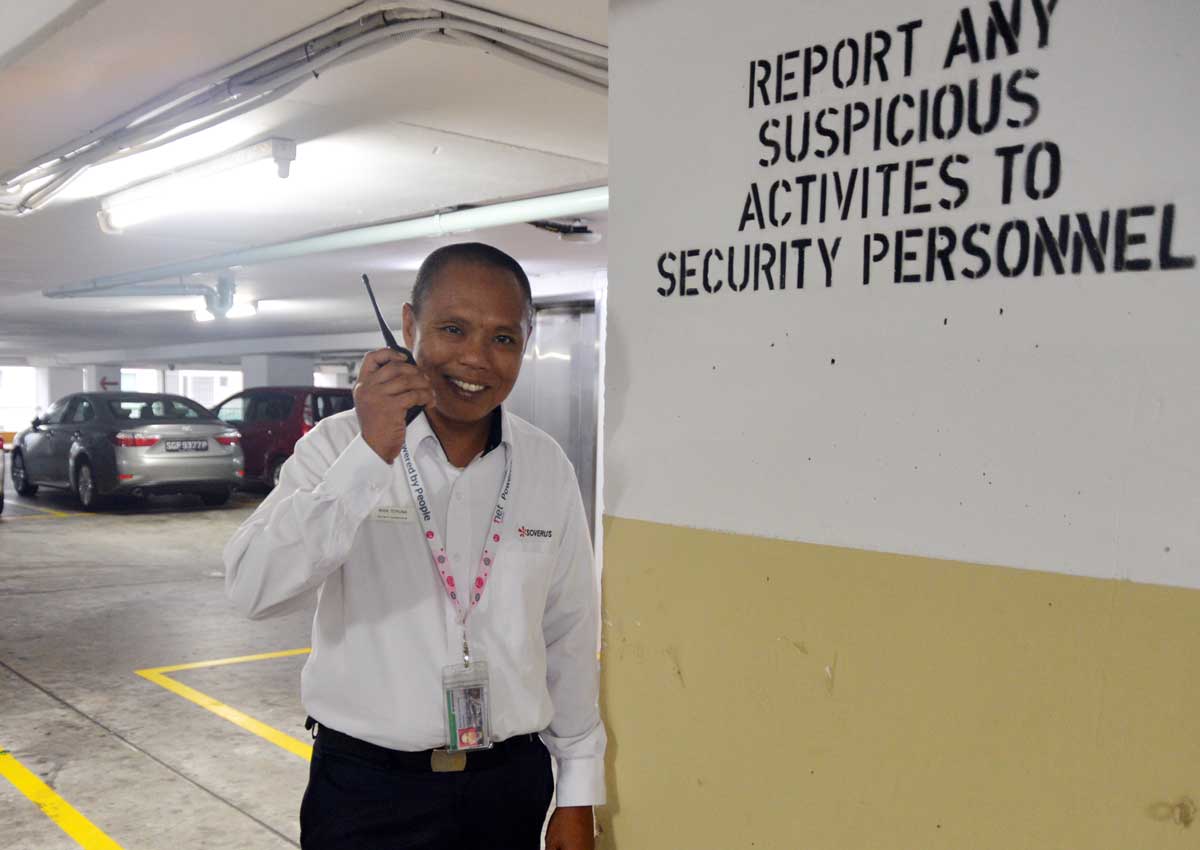
Image: 
Category: 
Publication Date: 
Sunday, July 24, 2016 – 17:00
Keywords: 
Send to mobile app: 
Source: 


Story Type: 
Others

Source link

Security firms not ready for wage ladder

0

With six weeks to go before a new wage ladder sets in to lift the pay of security officers, fewer than half the security firms here are prepared for the change.

Union of Security Employees executive secretary Steve Tan said that around 100 out of some 250 security agencies are ready to implement the Progressive Wage Model (PWM), which will be mandatory for the security sector from Sept 1.

The PWM is a framework for basic pay and career progression of low-wage workers who are Singaporeans or permanent residents so as to improve their well-being.

It is already compulsory for the cleaning and landscaping sectors.

Even though the security firms which are ready employ the bulk – or over two-thirds – of the industry’s officers, it is unclear if the remaining 150 can meet the Sept 1 deadline. Not doing so would cost them their licences to operate.

Mr Tan said there would be no further grace period for the remaining firms to implement the PWM after it comes into effect.

“In 2014, we agreed as a tripartite committee upon a two-year timeline. To move it further now would be unfair to companies that have already established the framework,” he said.

One company that recently made major adjustments is Certis Cisco, Singapore’s largest security service provider. It managed to put in place the PWM for its 16,000 officers – more than a third of the industry’s 43,000 active officers – on July 1.

Cisco vice-president of human resources Daniel Low said this meant the firm’s security officers would see their average basic pay rise by 30 per cent, with a minimum wage of $1,100 for entry-level officers.

Senior officers will get a sweetener. “For our senior security supervisors, we have adopted a minimum pay of $2,500, as opposed to the PWM basic of $1,700,” said Mr Low.

The moves were welcomed by workers like Mr Freddy Yuam, 26, who joined Cisco last year as a protection specialist. He was sent for courses to become a security supervisor after bosses saw his leadership potential. “I feel the new model acknowledges and rewards good performance,” he said.

Mr Kumaran Ramanathan, 36, who has been with Cisco for a decade and is now an assistant manager in recruitment and administration, felt the new model will help draw new joiners to the industry.

National Trades Union Congress assistant secretary-general Zainal Sapari called on security agencies to step up the pace of training for officers, and estimated the industry might be short of 3,000 security supervisors come Sept 1.

“The PWM is based on the premise that the officers are better trained and hence they should be paid higher. Without the training component, it is a bit difficult to justify to service buyers why they should be paying more,” he said.

“The labour market is very tight. Many of the security agencies… have to do what it takes to retain their officers,” he added.


This article was first published on July 24, 2016.
Get a copy of The Straits Times or go to straitstimes.com for more stories.

Image: 
Category: 
Publication Date: 
Sunday, July 24, 2016 – 17:00
Send to mobile app: 
Source: 


Story Type: 
Others

Source link

Maritime dispute looms large over meeting

0

Asean foreign ministers begin annual discussions in Laos today under intense scrutiny amid rising acrimony over the South China Sea.

A key concern is whether the territorial dispute will further splinter the 10-nation bloc and undermine its relevance.

China lays claim to almost all the resource-rich South China Sea, which is also claimed in part by four Asean states – the Philippines, Vietnam, Malaysia and Brunei – as well as Taiwan.

Beijing has vowed to ignore a legally binding ruling the arbitral tribunal at The Hague made on July 12 in a case initiated by the Philippines and which invalidated China’s historical claims to most of the area.

China has pressured its allies within Asean to avoid taking a common position on the growing dispute, which has triggered a military build-up and deepened worries over regional stability.

Asean states, though, are treading carefully, given China’s economic clout. The country is Asean’s largest trading partner, with two-way trade totalling US$472 billion (S$641 billion) last year.

The bloc’s conspicuous silence after the high-profile tribunal ruling has led analysts to believe that its stance after today’s Foreign Ministers’ Meeting in Vientiane would be muted at best.

“I don’t think that Asean will somehow miraculously produce a statement on the South China Sea,” Ms Sun Yun from US-based think-tank Stimson Centre told The Sunday Times. That would be “holding the bar too high” as it would require the consensus of all members.

As of yesterday evening, the joint communique to be issued after the meeting was still not finalised, one diplomat told The Sunday Times. 

According to Agence France-Presse, Cambodia is opposing a joint statement on the South China Sea issue. “It’s very grave. Cambodia just opposes almost everything, even reference to respect for legal and diplomatic processes which already have been in previous statements,” one South-east Asian diplomat told AFP yesterday.

Today’s Asean meeting would be complemented by discussions tomorrow between the Asean ministers and their regional dialogue partners, including the United States, the European Union, Japan and China, as well as sessions of the Asean Regional Forum and East Asia Summit on Tuesday.

US Secretary of State John Kerry has said he would urge South-east Asian countries to find diplomatic solutions, reported Reuters.

The bloc’s carefully scripted solidarity has been fraying since 2012. At a meeting in Phnom Penh, Cambodia, that year, disagreement over whether the South China Sea issue should be mentioned in a joint statement resulted in the meeting ending without a communique for the first time in Asean’s history.

China, a key source of investment and aid for then Asean chairman Cambodia, was blamed for influencing this outcome.

Laos, which chairs Asean this year, is similarly bound economically to its northern neighbour.

A repeat of the 2012 debacle, former Asean secretary-general Surin Pitsuwan told The Sunday Times, “would reinforce the idea that Asean is wobbling under stress and strain, which would be the new normal in the region”.


This article was first published on July 24, 2016.
Get a copy of The Straits Times or go to straitstimes.com for more stories.

Image: 
Category: 
Publication Date: 
Sunday, July 24, 2016 – 17:00
Send to mobile app: 
Source: 


Story Type: 
Others

Source link

Fans eager for launch of Pokemon Go here, but trespassers beware

0

With Pokemon Go’s debut in Japan on Friday, Singapore fans of the wildly popular game expect it to be launched here soon and are getting ready and set to go.

Some have already mapped out possible locations to “catch” the game’s cuddly virtual pocket monsters, and take part in the latest global mobile game sensation.

Using what is known as augmented reality, the game allows players to see these virtual creatures in real-life locations through the lens of a smartphone camera. Places where these creatures battle or gather are called “gyms” and “Pokestops”.

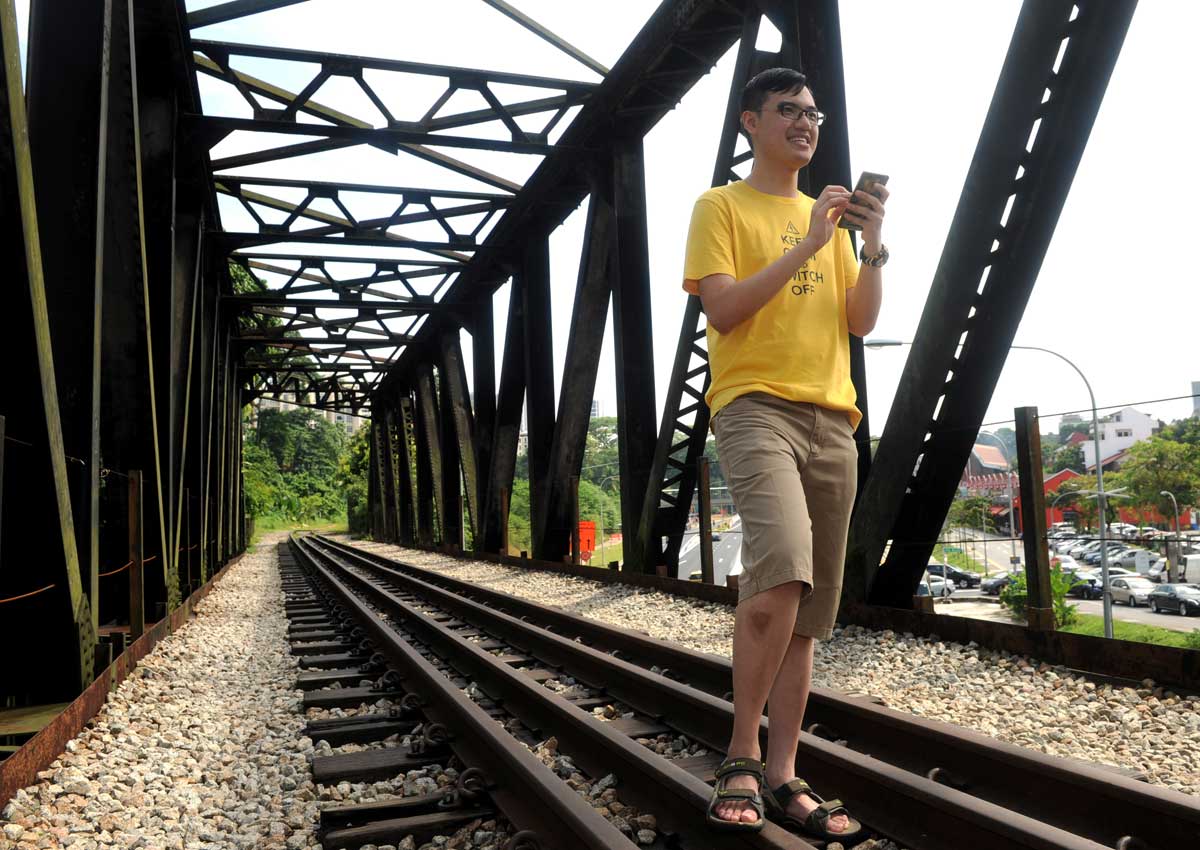
Fourteen-year-old Nicole Oo is convinced that a “Pokestop” will be at the Old Ford Motor Factory at Upper Bukit Timah Road, now closed for renovation. She said she has an advantage as she lives in a condominium behind the factory.

“I will go close to the edge of my condo to access the Pokestop at the factory to get balls to ‘catch’ any Pokemon that show up,” said the avid gamer, who aims to nab all 151 of the game’s creatures.

Mr Tan Jing Jie, 22, who is doinging national service, said he spotted two “gyms” near his home in Hillview when he downloaded the version of the game released in Australia. This worked for a while before it was locked down.

“I will be visiting these ‘gyms’ after I book out from camp every night when the game is available,” said Mr Tan.

Pokemon Go has been a global phenomenon since it was first released in the United States, Australia and New Zealand on July 6. It is now available in more than 35 countries, where it is free to download on both the iOS and Android operating systems.

However, on the flip side, the game has also led to reports of gamers breaking into private properties, raising huge security and privacy concerns.

Last Tuesday, a Frenchman was caught trespassing at a military base in Indonesia while playing Pokemon Go. In Singapore, designated gyms and Pokestops could be construction sites, army camps, school grounds and the Istana, prompting experts to warn of possible trespass.

Assistant Professor Alex Mitchell of the communications and new media department at the National University of Singapore said: “The popularity of the game will likely fade over time, only to be replaced by other augmented reality games. We need to develop social protocols for these games.”

He said property owners could put up quirky signs like: “Pokemons are here to guard the base, please leave them alone.”

Associate Professor Dion Goh of Nanyang Technological University’s Wee Kim Wee School of Communication and Information said: “If trespassing is a problem, property owners could submit requests to game maker Niantic to remove the Pokestops from their location.”

The police said it will investigate every complaint of trespass and take appropriate action. Those found guilty of trespass may be fined or jailed, or both, depending on the severity of the case.


This article was first published on July 24, 2016.
Get a copy of The Straits Times or go to straitstimes.com for more stories.

Image: 
Category: 
Publication Date: 
Sunday, July 24, 2016 – 17:00
Keywords: 
Send to mobile app: 
Source: 


Story Type: 
Others

Source link

Hunt for missing Indian Air Force plane goes into third day

0

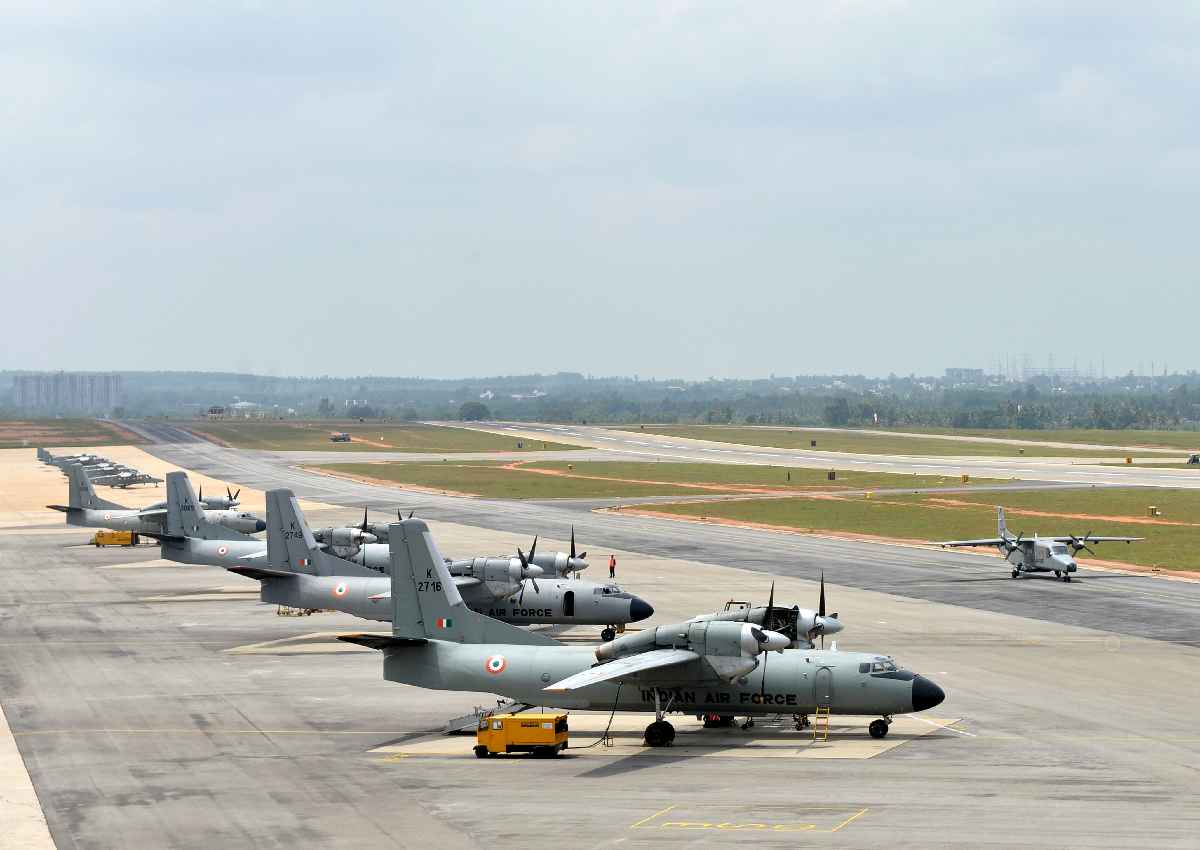
The massive hunt for an Indian Air Force plane that went missing in stormy monsoon weather over the Bay of Bengal on Friday with 29 people on board dragged into a third day on Sunday.

Air Force and Navy officials said the search was continuing but no signs of any wreckage had so far been found.

Local media channels reported that clear skies and improved weather on Sunday could aid ongoing search efforts, which India’s Defence Ministry said on Saturday were hampered by choppy seas and thick monsoon clouds in the search area.

Sixteen ships, a submarine and six aircraft are searching for the plane that disappeared on a routine re-supply flight to remote islands in the Bay of Bengal on Friday.

The Russian-made AN-32 was on its way to Port Blair, the capital of India’s Andaman and Nicobar islands, when it vanished from radar.

There were 21 military personnel on board the missing plane including six crew. The remainder were civilians and some family members of soldiers deployed on the islands.

Image: 
Category: 
Publication Date: 
Sunday, July 24, 2016 – 15:08
Keywords: 
Send to mobile app: 
Source: 


Hermes ID: 
2 466 643
Hermes ID String: 
VLIAF24
Hermes Author: 
GRONGLOH
Story Type: 
Others

Source link

Growing up and marrying at the Big Splash

0

In 1985, Mr Kee Ah Lam married Madam Ang Ah Keok at The Seafood International Market & Restaurant, where he works as a purchasing manager.

Last year, the elder of their two sons, Mr Kee Yong Ming, married his wife Connie Lee at the same restaurant.

Accountant Yong Ming, 30, says: “Big Splash has been a big part of my life. My father was already working there when I was born. As a child, I visited the water theme park and had many fond memories there.

“You can also see the sea from the restaurant. When it was time to choose a location for my wedding, it was my first choice.”

In 1983, his father started work at the restaurant as a storeman. Two years later, he married Madam Ang, who handles quality control in a factory.

Looking at his wedding photos, Mr Kee says: “See the flared trousers I was wearing? In those days, such trousers were very fashionable.

“I chose the restaurant because I worked there. Why would I want the best day of my life to be anywhere else?”

He adds: “Having your wedding dinner at a restaurant was also cheaper than at a hotel.”

A year after the wedding, he left to work in the construction industry. But three years later, he returned to work in the restaurant and has not left since.

He says: “I realised that working in a restaurant was my true calling.”

Yong Ming recalls that although his father worked at Big Splash, his family visited the attraction only a few times a year, due to his father’s busy schedule and the fact that it was not easily accessible by public transport.

But when they played there, Yong Ming says, “we really enjoyed going down the slides, playing in the pool and eating at the KFC outlet”.

“Those are among my best memories,” he adds.

Nowadays, he visits Big Splash every one or two months – usually with his wife – to eat at the restaurant.

“I have grown up with Big Splash and seen it evolve over the years. It will be sad to see it go.”


This article was first published on July 24, 2016.
Get a copy of The Straits Times or go to straitstimes.com for more stories.

Image: 
Category: 
Publication Date: 
Sunday, July 24, 2016 – 16:00
Keywords: 
Send to mobile app: 
Source: 


Story Type: 
Others

Source link

Former lifeguards still at Big Splash

0

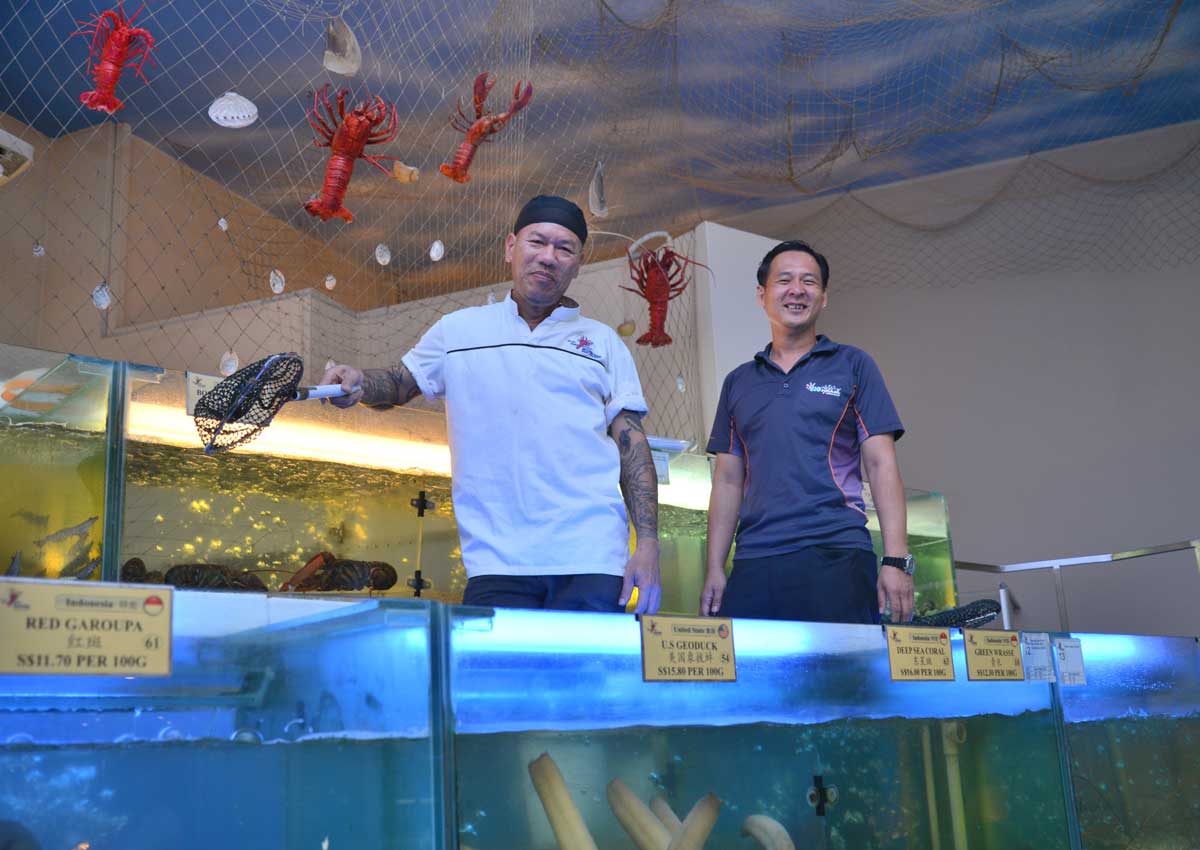
The year was 1988 and Mr Wong Tham Poh was a lifeguard at Big Splash water theme park.

On weekends, when thousands thronged the park, he strode the premises in a white T-shirt, red shorts and sunglasses.

He thought himself the king of safety – with a sculpted physique – who also knew how to have fun.

Whenever he was on a break, he would join in the water games that patrons were playing. How many invitations did he get a day? He did not keep count.

Mr Wong, now 53, says: “Back then, work felt like a party every day. The lifeguards – there were about 30 of us – felt like one big family.

“We were young, we got along. We loved the customers – the more, the merrier, really. Even if we were not on duty, many of us lifeguards showed up. Honestly, in those days, what else could you do with your free time?”

His nickname at the pool was “Spider” because of the way he swam freestyle.

“People said my body looked like a spider swimming – my limbs were all over the place. But at least I could swim fast,” says Mr Wong, who worked part time and full time as a lifeguard at Big Splash for 18 years.

Although he met many pretty lasses in the course of his work, he never dated any of them. His wife was a salesgirlhe met outside of his job and, ironically, she could not swim.

Mr Wong, who has two sons aged 18 and 13, says: “You could say I was pretty wild when I was young. But even when I was having fun, I kept one eye on the pool.”

He recalls going to the aid of children who unwittingly ended up at the deep end of the pool, but does not remember the details.

During the theme park’s heyday, there were occasional reports of customers injuring themselves while going down the slides.

He says: “If you followed the instructions – sit upright and hold the sides of the slide – you would have no problem. It was only when customers tried to do stunts – like stand up or jump from lane to lane while going down – that trouble arrived.”

Nowadays, he works full time as a lorry driver for a shipping company. In the evenings, he works as a kitchen hand at The Seafood International Market & Restaurant, killing crabs, lobsters and fish ordered by customers.

He says: “It is strange that my life came to revolve around Big Splash. But it is honestly not a bad place to be.”

Another former lifeguard at Big Splash, Mr Gary Lim, 40, also works at the lifestyle and dining enclave now, as a property maintenance executive.

Referring to his lifeguard days, Mr Wong says: “My life now is more mellow. As they say, all good things come to an end. Still, I am grateful I was that person once – young, fun, without a care in the world.”


This article was first published on July 24, 2016.
Get a copy of The Straits Times or go to straitstimes.com for more stories.

Image: 
Category: 
Publication Date: 
Sunday, July 24, 2016 – 16:00
Keywords: 
Send to mobile app: 
Source: 


Story Type: 
Others

Source link