Home Blog Page 3321

Shenzhen subway launches business-class; regular cabins become more crowded

0

When the southern Chinese city of Shenzhen launched its subway’s new Line 11 last month, it came with something not usually found in subways – a business-class section.

Photos circuating online recently showed huge disparity between the riderships for the two sections of the trains – extremely crowded regular sections and very roomy business-class sections with just a few passengers.

Shenzhen Metro’s Line 11, also known as the Airport Line, connects the city’s downtown areas and some suburban areas to its airport.

The business-class fares, between 6 and 30 yuan (between S$1.20 and S$6.10), are three times as expensive as standard fare (2 to 10 yuan). Each train has six standard train cabins and two business-class cabins.

Reacting to the photos, some people have criticised the metro company for pursuing profits over public service, Shanghaiist reported.

“The company should always have people’s best interests at heart. Public transportation is supposed to be a public service available to all residents of China,” one person wrote online.

Others have complained that social-class divides should not exist in the subway service, and called the business-class initiative a waste of public resources.

In response to calls to scrap the division, officials from the company said that the business-class cabins fill up during the weekends, even if they look to be empty on weekdays.

Shanghaiist said that Shenzhen Metro, in an effort to placate the people, has announced that it will increase train frequency on Line 11 “to better meet commuters’ needs”.

With our MRT system bursting at the seams, will something like this be adopted in Singapore?

sinsh@sph.com.sg

Image: 
Publication Date: 
Monday, July 25, 2016 – 12:40
Keywords: 
Send to mobile app: 
Source: 


Rotator Headline: 
Shenzhen subway launches business-class cabins; is this the answer to Singapore's crowded-MRT problem?
Rotator Image: 
Story Type: 
Rewritten Story

Source link

UOB 1-for-1 Dining Deals & Treats at over 25 Restaurants from 6 Jun – 31 Jul 2016

0

UOB 1-FOR-1 dining deals: buffets, main courses, treats & more

UOB 1-for-1 Dining Deals & Treats at over 25 Restaurants from 6 Jun – 31 Jul 2016

Good news for UOB cardmembers. Enjoy 1-for-1 dining deals at over 25 restaurants islandwide. Double meals for half the bill! Check out the list below

Source

Tougher measures against toll, fee evasion at checkpoints

0

SINGAPORE – Motorists who dodge tolls and fees at the Tuas and Woodlands checkpoints could be hit with a S$50 fee, while tougher enforcement measures are being considered, such as banning the entry and exit of foreign vehicles with unpaid tolls and penalties,…

Source link

Customer finds worms in Filet-O-Fish packaging, McDonalds' investigating

0

A McDonald’s customer in Singapore said she found worms in the packaging of her Filet-O-Fish burger.

Her Facebook post on July 23 showed videos and pictures of what appeared to be worms moving about in the packaging of the burger.

Ms Angela Qiqi tagged McDonald’s West Coast Park in her post.

She said she noticed the worms after she finished her burger.

In the comments section of her post, Ms Qiqi said she told the staff to “check their kitchen and food so that it won’t affect others, but they don’t seem to take it seriously. They still operate as usual and didn’t seem any action taken at all… Quite disappointed.”

She also said that after she reported the incident to them, they did not apologise but took back the “evidence” and offered a refund to try to resolve the matter.

She mentioned that McDonald’s had contacted her and are investigating the matter.

The Facebook post has so far garnered over 7,000 shares.

spanaech@sph.com.sg

Image: 
Category: 
Publication Date: 
Monday, July 25, 2016 – 11:33
Send to mobile app: 
Source: 


Rotator Image: 
video embed code: 
<iframe src="https://www.facebook.com/plugins/post.php?href=https%3A%2F%2Fwww.facebook.com%2Fcangela83%2Fposts%2F10154403632547430&width=500" width="500" height="625" style="border:none;overflow:hidden" scrolling="no" frameborder="0" allowTransparency="true"></iframe>
Video Media: 
Other Video Media
Story Type: 
Rewritten Story

Source link

Church to Duterte: Thou shall not kill

0

MANILA – More than 300 suspected drug users, pushers and dealers have been killed by police or vigilantes across the Philippines since President Rodrigo Duterte took office on June 30.

Thou shall not kill.

The Sixth Commandment is the message for Philippine President Rodrigo Duterte that will emanate from a mass which the Archdiocese of Manila will hold Monday afternoon (July 25) as he delivers his first State of the Nation Address (Sona) to Congress.

The mass will mark the launching of the “Huwag Kang Papatay” (Thou Shall Not Kill) campaign, which aims to bring together the families of the victims of extrajudicial killings that have come with the Duterte administration’s war on illegal drugs.

Those people-drug users, pushers and dealers-can no longer change their ways because they are already dead, according to an official of the Archdiocese of Manila.

“We believe, especially in the Year of Mercy, that we have a chance of showing our love of God. But because of this (the extrajudicial killings), there’s no more love because there’s no more life who will ask for forgiveness and mercy,” Fr. Atilano Fajardo said over Radio Veritas on Saturday.

Fajardo is the director of the Manila archdiocese’s Public Affairs Ministry, which will hold the Mass at St. Vincent de Paul Church on San Marcelino Street in Ermita district.

The Mass, which will start at 5pm, includes prayers for the victims of the extrajudicial killings and police operations and their families.

Churchgoers have been asked to wear black and bring candles for a programme that will start at 4:30pm, by which time President Duterte will have begun to address Congress.

Since Duterte took office on June 30, more than 300 suspected drug users, pushers and dealers have been killed by police or vigilantes across the Philippines.

More than 10,000 drug dependents have turned themselves in to police out of fear for their lives.

During the campaign for the May 9 presidential election, Duterte promised to stamp out illegal drugs and wipe out crime within the first six months of his presidency.

Duterte, who has been linked to vigilante killings in Davao City, where he served as mayor for 23 years, gave the police the go-signal for a merciless campaign against drugs even before he took office.

Catholic Church officials have slammed the “lack of moral outcry” among the public over the killing of drug suspects.

Robbed of their rights

Fajardo said the killings were equivalent to robbing the suspects of their right to due process and a chance to change their lives.

“We will pray for the souls of our slain brothers. We invite the families of those slain to attend,” Fajardo said.

He said he would make a personal appeal to Duterte concerning the extrajudicial killings.

Masses will be held at St. Vincent de Paul Church every last Monday of the month as part of the campaign against extrajudicial killings, Fajardo said.

Campaigners will wear black shirts marked “Huwag kang Papatay” and posters will be put up in schools, churches and public vehicles to drum up support for the campaign

“There will be talks and forums on the Sixth Commandment and how [extrajudicial killings are] becoming the new normal. We are consolidating all [opponents] of extrajudicial killings,” Fajardo said.

“We denounce the extrajudicial killings happening in the country, done by men in uniform, by vigilantes and other groups … under the baton of the maestro. We uphold due process of law and the dignity of human life,” he said.

The latest to fall in the government’s narcotics campaign was a suspected drug lord, Chinese national Meco Tan, who was killed by police in Valenzuela City early on Friday.

Duterte has said some local officials, including governors and mayors, are among the protectors of drug syndicates, although he has not named them.

On Saturday, Basilan Bishop Martin Jumoad urged Duterte to name those local officials in his address to Congress on Monday.

“I want to hear in the [State of the Nation Address] the names of those governors and mayors allegedly coddling illegal drug syndicates,” Jumoad said in a statement.

Duterte has named five high-ranking police officials allegedly protecting drug syndicates.

The five officials-Chief Supt. Bernardo Diaz, retired Deputy Director General Marcelo Garbo, retired Chief Supt. Vicente Loot, Chief Supt. Joel Pagdilao and Chief Supt. Edgardo Tinio-have denied the president’s accusations.

Romblon Bishop Arturo Bastes also issued a statement, saying Duterte should respect the rule of law in his campaign against drugs.

“I hope he will respect human rights by not introducing the death penalty and by following the rule of law in punishing drug offenders,” Bastes said.

Image: 
Category: 
Publication Date: 
Monday, July 25, 2016 – 11:23
Send to mobile app: 
Source: 


Story Type: 
Others

Source link

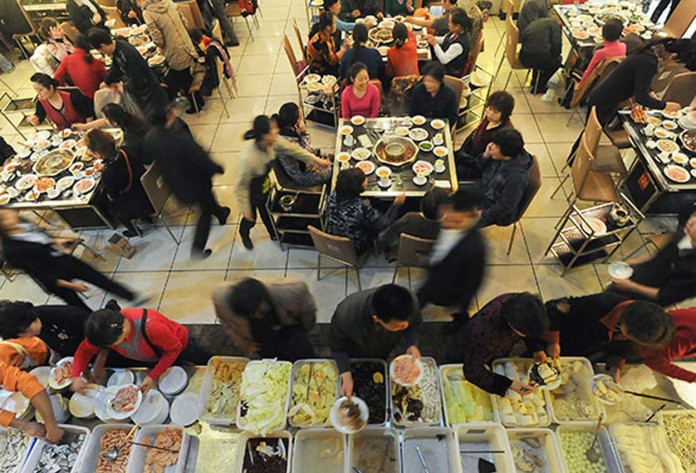
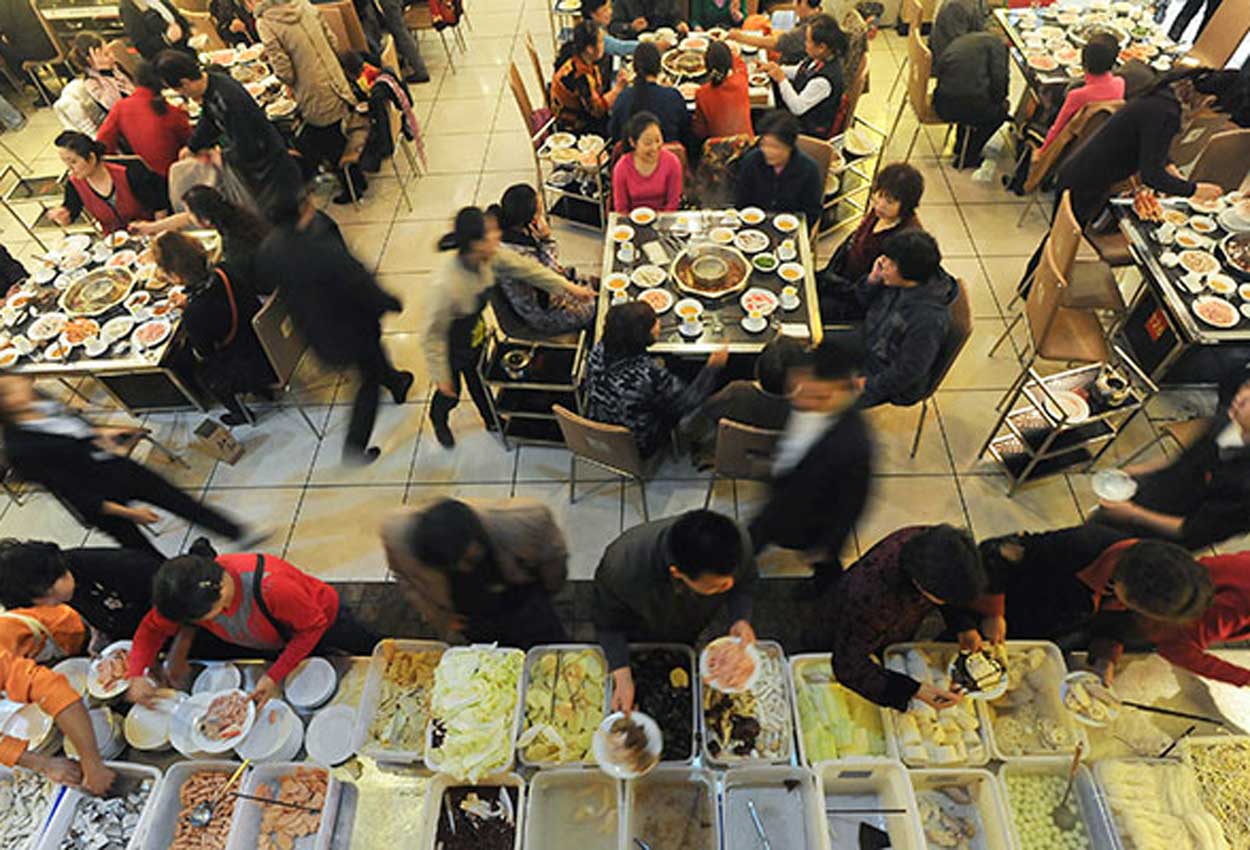
Chengdu hotpot faces regulation against use of recycled oil used in soup

0

Zhang Feng, an expert on lubricating oil at a research institute in Beijing, dined twice at a hotpot restaurant in Chengdu, Sichuan province, during his nearly five-day stay in the city. “The hotpot was one of the elements that took me to Chengdu as a tourist with my wife and daughter in the middle of the month,” he said. But he added that he had misgivings. He worried that the oil in the hotpot might not be as good as it appeared.

According to Li Zhiqiang, a restaurateur in Chengdu, “Recycled oil is used as a soup base in many hotpot restaurants to enhance the aroma.”

Now, restaurants will have to change. The provincial Health and Family Planning Commission formulated a compulsory regulation earlier this month to ban substandard materials in the hotpot soup base.

“The regulation will take effect on Jan 15, and any hotpot restaurant in the province that fails to meet its requirement will be punished,” said Fan Chuan, an information officer for the commission.

The province announced a similar regulation to standardize hotpot soup base in 2006. But it was only a recommendation to restaurants and did not impose penalties for noncompliance.

Under the new regulation, restaurants will be barred from using oils or additives containing excessive pollutants.

“Without regulation, restaurants might use oil from the guts of a pig, cat or dog instead of standard beef tallow. For aroma enhancement they might use spices grown in fields with excess chemical fertilizers or heavy metals,” said Li, who worked in the catering industry for 22 years.

Hailing the new regulation as a good measure to ensure food safety, some netizens have wondered if restaurants will comply.

“About 70 per cent of the hotpot restaurants are large ones and buy their materials for soup base from processing plants. If the government food watchdog keeps an eye on the plants, materials from them will meet the requirements,” Li said. “The other restaurants are small and might make the soup base themselves. It is difficult to monitor them.”

Image: 
Category: 
Publication Date: 
Monday, July 25, 2016 – 11:15
Send to mobile app: 
Source: 


Story Type: 
Others

Source link

Commuters can use Mastercard to pay for public transport by end-2016

0

This comes after the Land Transport Authority and Mastercard signed an agreement to launch the Account-Based Ticketing System pilot, and hope to attract at least 100,000 users for the initiative.

Source link

Win a pair of tickets to NDP Preview 2!

0

For the past decade, performances featured in the National Day Parade every year have revolved around specific themes.

Last year’s theme, for example, was Majulah Singapura, to coincide with our Golden Jubilee. Other past…

Source link

Rio scrambles to fix Olympic Village after Australia boycott

0

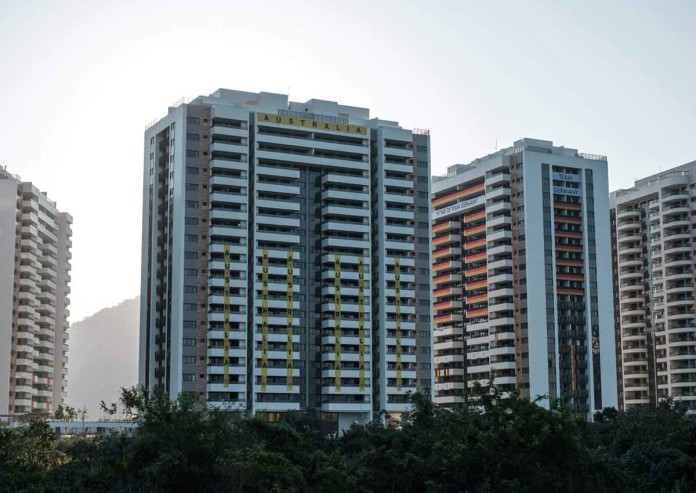
RIO DE JANEIRO – The official opening of the Olympic Village in Rio turned to fiasco Sunday with the discovery of blocked toilets and leaky pipes, prompting Australia to call the facility “not safe or ready.”

Even Brazilian athletes who were meant to have started taking up lodgings in the brand-new complex from Sunday were being kept in hotels instead.

Britain’s delegation, however, said that while it had encountered some “maintenance difficulties,” it was staying in the Village as planned.

Rio’s Olympic organizers said such teething problems plagued all Olympic Games. They promised that “adjustments” were being made to resolve the problems.

The Olympic Games – the first to be held in South America – are to open on August 5, less than two weeks away.

The lack of preparedness in the Olympic Village was another embarrassing blow for host Brazil, which is struggling to show all will be well with the Olympiad.

It is already facing low ticket sales, general public apathy amid a deep recession, fears over the Zika virus, and a spike in street crime as police complain of lack of resources.

Australia’s delegation highlighted the poor state of the Village, 31-building complex located in the Barra da Tijuca district in the west of Rio de Janeiro designed to house more than 18,000 athletes and coaching staff over the coming weeks.

“Problems include blocked toilets, leaking pipes, exposed wiring, darkened stairwells where no lighting has been installed and dirty floors in need of a massive clean,” the head of the Australian team, Kitty Chiller, said in a statement.

During a test involving taps and toilets being turned on in apartments on several floors, “water came down walls, there was a strong smell of gas in some apartments and there was ‘shorting’ in the electrical wiring.”

Chiller later told reporters: “This is my fifth Olympics Games, I have never experienced a Village in this lack of state of readiness at this point in time.”

She added that, “in our mind, our building is not habitable” and the Australian team would stay on in nearby hotels.

But she said a team of plumbers was already at work to fix the problems and “I am reasonably confident that we will be able to enter the Village on Wednesday.” The rest of the village, she said, “is one of the best” she had seen.

A spokesman for the British delegation confirmed similar problems to AFP, but noted “this is not uncommon with new build structures of this type.” As dire as the Australian description of the Village sounded, one of the 207 delegations was relieved on Sunday to find out its athletes would be able to make it to Rio at all.

Russia, whose participation had been uncertain following revelations of state-run doping, hailed a decision by the International Olympic Committee to not impose a blanket ban on all its sportsmen and women.

The IOC ordered individual sports federations to decide whether Russian competitors should take part in the Rio Games.

Russian Sports Minister Vitaly Mutko responded by telling R-Sport news agency: “I am absolutely sure that the majority of the Russian team will meet the criteria.”

If all the obstacles in the Village are surmounted, the athletes will find a self-contained community planned to have all the services they need over the 17-day Olympiad.

The official lodgings are shared rooms, all fairly basic, fitted with anti-mosquito devices to prevent the spread of Zika. Hundreds of thousands of condoms were also being supplied.

There is a gigantic eating hall, a smaller restaurant, and prayer rooms for different faiths.

There is even a “mayor” to head up the athlete welcoming ceremonies: Janeth Arcain, a retired Brazilian basketballer who won a silver Olympic medal in 1996 and a bronze in 2000.

Security, naturally, will be high around the complex, and around Rio generally.

The arrest Thursday of 10 Brazilians suspected of planning attacks during the Olympics revived memories of the Munich Games in 1972 when an armed Palestinian group took Israeli athletes hostage and killed 11 of them.

Brazilian Justice Minister Alexandre de Moraes said the suspects were “absolutely amateur,” “disorganised” and had no specific targets.

But recent attacks, such as the one on July 14 in Nice, France that killed 84 people, have prompted officials to bolster their security plans, notably by reinforcing checks and screenings.

From Sunday, some 50,000 police and soldiers are being deployed in Rio to protect sports venues, tourist spots and key transport areas.

Image: 
Category: 
Publication Date: 
Monday, July 25, 2016 – 10:37
Send to mobile app: 
Source: 


Rotator Image: 
Hermes ID: 
2 467 887
Hermes ID String: 
SP_RIOAUST
Hermes Author: 
SPANAECH
Story Type: 
Others

Source link

Man arrested for scamming women he met through dating app

0

A 22-year-old man has been arrested after allegedly scamming women he met through on online dating mobile application by claiming he was in a traffic accident or needed money for work. 

Source link