 SINGAPORE – The Monetary Authority of Singapore (MAS) is determined to fix lapses in the Republic’s financial sector with more controls and industry supervision, MAS managing director Ravi Menon said,
He added that the ongoing probe into financial…
Source link
More supervision and control towards money laundering threats: MAS
Olympics: Sport divided as Russia escapes blanket doping ban
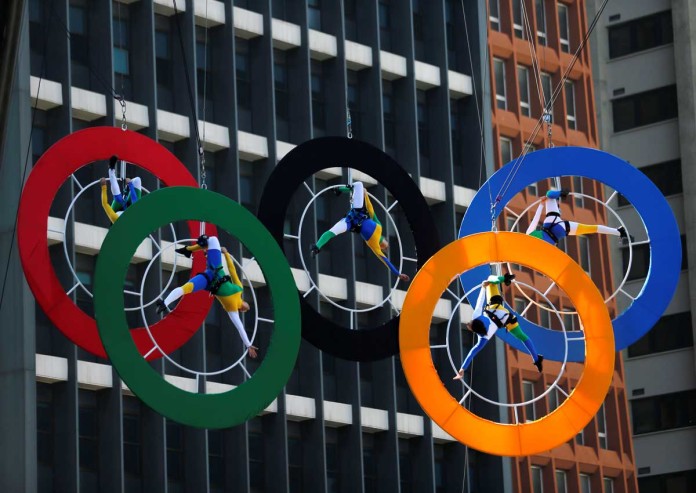
LAUSANNE – The International Olympic Committee’s decision not to ban Russia from the Rio Games over state-run doping left international sports leaders divided on Monday, less than two weeks before the opening ceremony.
Seeking to justify Sunday’s decision, IOC president Thomas Bach said an outright ban would trample the rights of clean Russian athletes who are hoping to compete at the upcoming Games.
Individual sports federations will have primary responsibility for determining every Russian athlete’s eligibility for Rio, the IOC executive said.
The World Anti-Doping Agency last week called for Russia to be banned after detailing how Russia’s sports ministry had directed a massive cheating programme with help from the FSB state intelligence agency.
United States anti-doping chief Travis Tygart – one of many who urged a total ban against Russia – accused the IOC of creating “a confusing mess” with its decision.
“In response to the most important moment for clean athletes and the integrity of the Olympic Games, the IOC has refused to take decisive leadership,” the USADA boss said in a statement.
Drug Free Sport New Zealand chief executive Graeme Steel also criticised the IOC’s decision to “pass the hot potato to international federations”.
“The fight against doping in sport requires strong international leadership, none more so in this case, where the integrity of an entire Olympic and Paralympic Games is at stake,” added Australian Sports Minister Sussan Ley.
WADA officials said they were “disappointed” with the IOC’s decision, which director general Olivier Niggli said would “inevitably lead to a lack of harmonisation, potential challenges and lesser protection for clean athletes”.
The cheating affected 30 sports, including at the 2014 Sochi Winter Olympics and other major events, WADA said, in revelations that widened the worst drug scandal in Olympic history.
Russia’s entire track and field squad has already been barred from Rio following a similar WADA report on “state-supported” doping in that sport.
Fourteen national anti-doping agencies – including the US, Germany and Japan – as well as several national Olympic committees had demanded Russia’s exclusion from Rio.
But others, including the global governing body for swimming FINA, opposed a blanket ban, as did countries such as Italy and others closer to Russia.
Pat Hickey, president of the European Olympic Committees, said the group “completely supports” the IOC decision which will “enable the participation of clean Russian athletes at the Rio 2016 Olympic Games, just days away”.
The Association of National Olympic Committees also backed the IOC, with ANOC president Sheikh Ahmad Al-Fahad Al-Sabah saying an all-out ban “would have unfairly punished many clean athletes”.
“ANOC commends the IOC for favouring individual justice over collective responsibility and giving international federations responsibility to ensure clean competitions in their sports at Rio 2016,” he said.
Bach said the IOC decision considered the severity of the misconduct while also sending “a message of encouragement to clean Russian athletes.” “This result is one which is respecting the rules of justice and all the clean athletes all over the world,” he said.
Russian sports minister Vitaly Mutko – a key player in the WADA report who has been banned from Rio – hailed the IOC’s “objective” decision.
Separately, an IOC ethics commission ruled that 800m runner Yuliya Stepanova, who turned whistleblower on doping in Russian athletics, could not go to Rio even as a neutral – a decision that both WADA and USADA denounced as likely to discourage others from coming forward.
The IOC executive implemented what Bach termed a rigorous set of criteria for each Russian Olympic hopeful.
First, athletes must be individually cleared by their respective sports federation and there should be no presumption of innocence.
An expert from the Court of Arbitration for Sport must also approve each individual decision.
Additionally, any athlete who has previously tested positive for doping is ineligible, even if they have already served their suspension.
Finally, no athletes named in the WADA report put together by Canadian law professor Richard McLaren are eligible.
But the complex screening process must be carried out for the 387 athletes nominated for Rio by the Russian Olympic Committee (ROC) before the Games start on August 5.
“This is a very ambitious timeline, but we had no choice,” Bach said.
Russians “have to clear the highest hurdles in order to have chance to compete in the Olympic Games,” he added.
Immediately following the IOC announcement, the International Tennis Federation said eight players already met the eligibility requirements.
Mutko told the R-Sport news agency he was “absolutely sure that the majority of the Russian team will meet the criteria.”
Image:
Publication Date:
Monday, July 25, 2016 – 13:32
Keywords:
Send to mobile app:
Source:
Hermes ID:
2 468 333
Hermes ID String:
SP_SPORTDIVIDED
Story Type:
Others
Get a S$194k 'reward' if you sink in this crocodile-infested pond

If you and team sink in the crocodile-infested pond, the ‘reward’ is 5 million baht (S$194,000).
Hopefully, everyone survives and you get to share the prize. Fingers crossed.
That’s a seemingly morbid monetary reward the owner of Elephant Territory Pattaya has come up with to counter claims that his crocodile-feeding activity for tourists could endanger their lives.
Thai fishery authority suspended his licence to operate the crocodile farm at the once popular attraction in mid-July to allow the tourism authority to inspect its safety measures after alarming photos and a video of snapping crocodiles surrounding a floating raft packed with Chinese tourists went viral on social media.
Tourists feed crocodiles from flimsy raft
Click on thumbnail to view photos. Source:
Weibo, Facebook screengrabs







Many netizens questioned the security features of the semi-caged platform, which looked poorly constructed and flimsy.
The participants dangled rods with meat attached to attract the crocodiles, which numbered up to 4,000 in the pond according to reports.
But the chief executive of Elephant Territory Uthen Youngprapakorn refuted allegations, claiming there had been no unfortunate incidents in the 12 years of the feeding activity for visitors. He also told Thai media said he had replaced the floating raft five times.
Uthen said each raft, which has chest-high metal barriers, can hold up to eight tonnes in weight but he usually limited entry to about 10 to 15 people to ensure safety.
He said the rafts are equipped with outboard motors as well as cables to tow them to safety quickly.
Throwing the challenge to his critics, he said the public could form teams of up to 17 people each to board the platform. The team that successfully sinks the raft in five minutes stands to pocket the 5 million baht in cash.
Upset with the suspension, Uthen claimed that visitor numbers had plunged 80 per cent, causing a six-figure revenue loss, Thailand’s Morning News reported.
Thai authorities are also inspecting other crocodile farms in the Chon Buri province. There were past reports of animal attacks at farms opened to tourists who could enjoy watching them at close range or even pose for pictures while touching them.
In 2013, Uthen’s Samut Prakan Crocodile Farm and Zoo was in the news when a crocodile closed its jaws with a trainer’s head inside its mouth.
He was fortunate to escape serious injury but the incident shocked many when they saw an online video clip of the incident.
Related: Feeding frenzy excite tourists at crocodile farm
chenj@sph.com.sg
Image:

Publication Date:
Monday, July 25, 2016 – 13:20
Keywords:
Send to mobile app:
Source:
Rotator Image:

Story Type:
Rewritten Story
ERP rates to increase by 50 cents for 2 gantries on Northbound CTE from Aug 1
SINGAPORE – Electronic Road Pricing (ERP) rates for some gantries will be revised from Monday, Aug 1.
Two gantries on the Northbound CTE after PIE will have its rates increased by 50 cents.
From 6pm – 6.30pm, rates will be increased from the current $0.50 to $1.
From 6.30pm – 7.30pm, rates will increase from $1.50 to $2.
And, from 7.30pm – 8pm, rate will rise to $1 from the current $0.50.
Rates will decrease by $1 for two gantries on the MCE westbound before the exit to Maxwell Road and on slip road to Marina Coastal Drive.
From 7.30am – 8am, rates will be $3, down from the current $2.
The rates for the other gantries will remain unchanged, said a statement by the Land Transport Authority (LTA).
The changes come after the LTA completed its quarterly review of traffic conditions on ERP-priced roads and expressways.
The next ERP review will take place in November 2016 for the fourth quarterly rate review of 2016, said the statement.
spanaech@sph.com.sg
Image:

Publication Date:
Monday, July 25, 2016 – 13:07
Keywords:
Send to mobile app:
Source:
Story Type:
Rewritten Story
Consumer prices fall for 20th straight month in June, but pace of decline slows
The pace of decline slowed in June, as the base effect associated with the disbursement of Service & Conservancy Charges (S&CC) rebates in May dissipated, say MAS and MTI.
Source link
Relocate top primary schools for more equal access: Study
Relocate the top primary schools so that access to them can be more equal in the long run – this is one of the suggestions arising from a study done by two Raffles Institution (RI) alumni last year.
Another is to reduce the priority given to groups such as children of alumni as well as parent volunteers and community leaders.
These proposals arose from a study that showed that better primary schools tend to be located in more affluent estates.
The study was done by Mr Deepak Warrier, 21, who will be going to New York University next month to read economics, and Mr Pu Liang, also 21, who is studying computer science and machine learning at Carnegie Mellon University in the United States.
Mr Warrier said: “Our study started from the initial observation that many of the supposed brand-name schools are in the Bukit Timah area.
“But previous research has shown that their presence doesn’t have much impact on nearby property prices – in other words, the presence of elite schools makes little difference.”
The duo measured schools by the number of awards they had received from the Ministry of Education, and placed them in three clusters based on the cost of homes in their locations.
The schools were given a ranking based on the number of awards they earned from 1990 to 2014.
These awards recognise academic and non-academic achievements, including school performance, teaching and administrative processes, as well as co-curricular activities.
Housing price data was gathered in July last year from the Singapore Real Estate Exchange portal, which tracks home prices.
Out of 190 primary schools, 33 were in Cluster 1, which had the highest property prices.
These schools, mostly in the Bukit Timah and East Coast areas, were on average ranked about 40 places higher than their counterparts in Clusters 2 and 3.
The next two sets of 100 and 57 schools were placed in Cluster 2 and 3, respectively, with the latter having the lowest housing prices.
Mr Warrier said there were some outliers such as Rosyth School, which was highly ranked but located in a Cluster 2 neighbourhood.
There were also some schools in Cluster 1 which were not as highly ranked but are in expensive estates.
“But the trend – that the best primary schools are concentrated in expensive estates, perhaps for historical reasons – still held overall. This creates inequities as the primary school registration system gives high priority to home-school distance,” Mr Warrier noted.
“But the good news is that there is little significant difference in school quality between Clusters 2 and 3. This means that the neighbourhoods with the mid to low property prices have a range of school types.
“It’s not the case that the cheapest neighbourhoods have all the lower-ranked schools,” he said.
He and Mr Liang worked on the research and paper over a few months last year.
They submitted the paper to the Singapore Policy Journal in September last year, and it was published earlier this year.
The journal, which was started in 2014, is run by students at the Harvard Kennedy School.
The publication invites students and researchers to write thoughtful analyses of Singapore policy.
“There are inherent inequalities in a cohort of students with different resources. Schools cannot amplify these differences,” said Mr Warrier.
“In the US, for instance, public schools are funded by local property taxes – a school in a wealthy district gets more resources,” he said.
“By and large, we’re doing better than other countries. But we still shouldn’t be magnifying inequalities by allowing children with wealthier and more well-connected parents to get into better schools,” he added.
ateng@sph.com.sg

This article was first published on July 25, 2016.
Get a copy of The Straits Times or go to straitstimes.com for more stories.
Image:
Publication Date:
Monday, July 25, 2016 – 15:00
Keywords:
Send to mobile app:
Source:
Story Type:
Others
'Too early' to lift property cooling measures: MAS chief
This is to make sure the gains “painstakingly made” over the last one to two years are entrenched, says Mr Ravi Menon, managing director at Monetary Authority of Singapore.
Source link
Property cooling measures still too early to be lifted: MAS

SINGAPORE – There is still some way to go for the property cooling measures before the Government considers any adjustments, managing director for the Monetary Authority of Singapore (MAS) Ravi Menon said on Monday (July 25) at the bank’s annual report…
Source link
S'pore to review growth forecast as economy expected to remain sluggish in 2nd half: MAS

SINGAPORE – Singapore will be reviewing its full year growth forecast as the Republic’s sluggish economic performance will continue into the second half of this year, Mr Ravi Menon, managing director for the Monetary Authority of Singapore (MAS) said on…
Source link
Banks 'unlikely' to pay phone scam victims
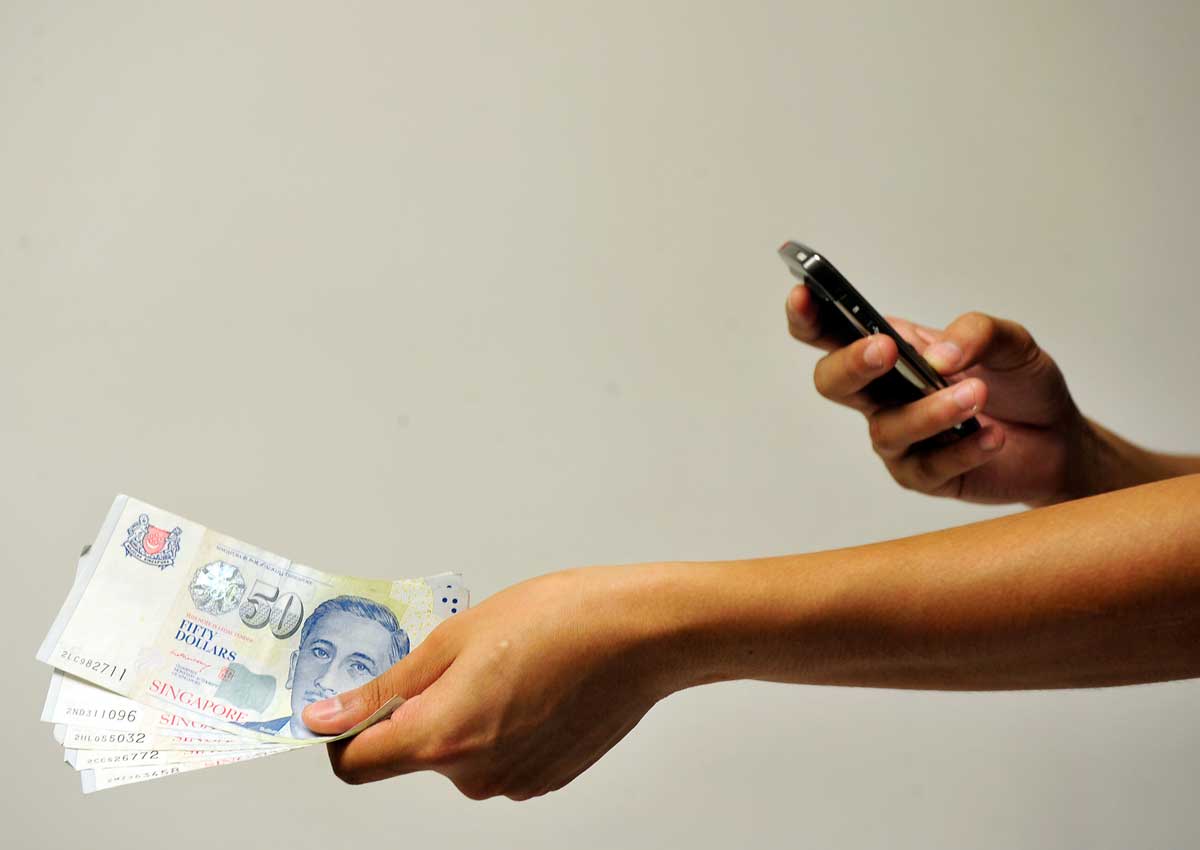
Victims of phone scams who hand their money over to crooks impersonating bank staff are unlikely to be compensated, lawyers warned yesterday.
Last Monday, OCBC Bank reported a sharp rise in scams involving conmen impersonating its employees; around 30 customers are believed to have been duped, losing tens of thousands of dollars.
However, lawyers told The Straits Times that such victims would be liable for the money they lost due to the voluntary nature of the transactions.
“If they did so fully aware of the advice and warnings, then it becomes their responsibility,” said Mr Rajan Supramaniam, a lawyer at Hilborne Law. “In helping with police investigations, the bank will provide all relevant information. But it will not compensate the victims for their losses…”
OCBC has lodged a police report about the scam and advised those who lost money to do the same.
DBS has also been affected, though POSB, Citibank, UOB and Maybank said they were not aware of any phone scams in which their staff were impersonated.
All the banks advised their customers not to reveal personal details or confidential information, such as PIN numbers, over the phone.
They also urged customers to check the legitimacy of the caller, by calling the banks’ main lines.
Mr Supramaniam explained to customers who have been cheated that the starting point for seeking legal recourse is to make a police report.
“They can also pursue the issue with the bank, by going through a lawyer,” he added. “I have handled cases involving a wrong transfer of money.”
Mr Shashi Nathan, a partner at WithersKhattarWong, said that seeking compensation from the bank depends on the facts of each case.
“The bank might have a protocol to check before any transactions are made, usually for larger amounts. Failure to follow such protocol means the bank was negligent to the customer, and the victim can make a claim for negligence.”
He also explained that the bank and police both have to trace where the money went, and find the origins of the soliciting of information.
“Criminals these days are very sophisticated, and most of the time they are based outside of Singapore,” said Mr Nathan.
“It is especially hard to track due to the multitude of transactions.”
fabkoh@sph.com.sg
This article was first published on July 25, 2016.
Get a copy of The Straits Times or go to straitstimes.com for more stories.
Image:
Publication Date:
Monday, July 25, 2016 – 14:00
Keywords:
Send to mobile app:
Source:
Story Type:
Others


