Home Blog Page 3308

Duterte's national address offers no big picture of presidency beyond war on crime

0

MANILA – With his propensity to go off script, populist firebrand Rodrigo Duterte managed to stretch his first State of the Nation Address as Philippine president to over an hour and 30 minutes.

His spokesman had said the speech was timed, during practice, at just 38 minutes.

It was long, and in a half-rambling way, sincere. But it offered few surprises.

There were a myriad of talking points in the speech on Monday (July 25), but the pieces still did not add up to a detailed big picture of Mr Duterte’s presidency outside his single-minded war on crime.

As he moved from reading off his prepared speech to talking freely, Mr Duterte spoke about crime at the beginning, middle and end of his speech.

There were also a declaration of a unilateral ceasefire with communist rebels, a heaping of praise for his environment minister, a recalibration of his view on climate change, a promise to cut personal and corporate income taxes, a push for federalism and a birth control law, as well as an appeal for Congress to grant him emergency powers to deal with metropolitan Manila’s worsening traffic problems.

But they were mostly bullet points.

Regarding China, Mr Duterte had few words to say.

He said he will “strongly affirm and respect the outcome” of an arbitration case at The Hague that handed the Philippines a sweeping verdict over China.

An international tribunal had struck down Beijing’s expansive claims over the South China Sea.

Referring to the waters as the “West Philippine Sea”, Mr Duterte said the ruling was “an important contribution to ongoing efforts to pursue a peaceful resolution and management of our disputes”.

But it was crime that was clearly on Mr Duterte’s mind as he addressed his nation.

“During my inauguration, I said that the fight against criminality and illegal drugs and corruption will be relentless and sustained. I reiterate that commitment today… We will not stop until the last drug lord, the last financier, and the last pusher have surrendered or put behind bars – or below the ground if they so wish,” said Mr Duterte.

Addressing criticisms that his war on crime has led to a culture of impunity, he said: “Human rights must work to uplift human dignity. But human rights cannot be used as a shield or an excuse to destroy the country, my country, your country,” he said.

Human rights campaigners have been alarmed by the rising body count in Mr Duterte’s war on crime.

Each day, according to the latest tally being compiled by local newspapers, 11 suspected drug traffickers and users are turning up dead.

But the overall response from a population fed up with criminals running almost unchecked has been one of wary acceptance.

Again addressing criminals, Mr Duterte said: “If you do not want to die, you do not want to get hurt, do not run to a priest or invoke human rights. They will not to be able to stop death… I keep saying, do not do it because we will have a problem. He who is the cause of the cause is the cause of them all.”

Yet, Mr Duterte also conceded that drug trafficking may even be too big for him to completely eradicate, as it crosses borders.

“The ones that we catch and run after are just the lieutenants. I want to kill the drug lords, but I will have to go to another country and ask permission from this country if I want to slaughter these idiots for destroying my country,” he said.

For political analyst Richard Javad Heydarian of De La Salle University, there are nuances to Mr Duterte’s take on human rights, as it relates to criminality.

“Human rights must be in harmony with the interest of the community. It is more collectivist, unlike in the West where the focus is on the individual.”

Veteran journalist Marites Vitug said while Mr Duterte’s speech was expansive, it lacked the big picture “and maybe the long view”.

“Everything seems subsumed under the war on drugs,” she said.

rdancel@sph.com.sg


This article was first published on July 26, 2016.
Get a copy of The Straits Times or go to straitstimes.com for more stories.

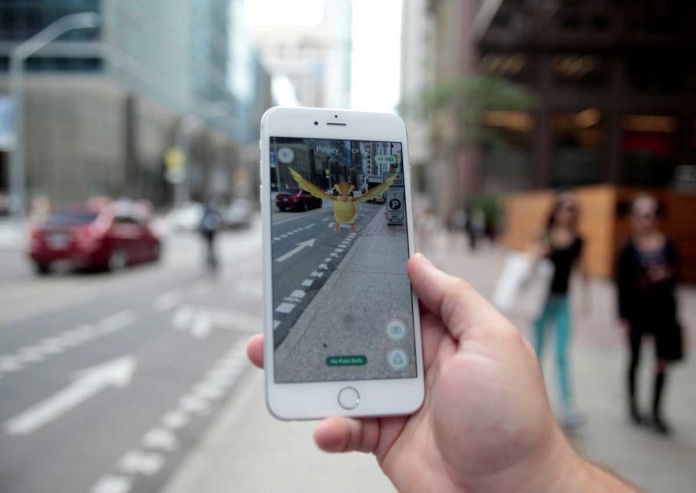
Image: 
Category: 
Publication Date: 
Tuesday, July 26, 2016 – 17:27
Send to mobile app: 
Source: 


Story Type: 
Others

Source link

Chinese army bans Hong Kong's Pokemon players from barracks

0

The Chinese army garrisoned in Hong Kong has warned people searching for Pikachu and other virtual monsters to stay off their premises, as Pokemon Go mania sweeps the smartphone-obsessed city.

The gaming app landed Monday in Hong Kong and saw residents more glued to their phones than ever, searching for the cyber creatures in locations ranging from shopping malls to the government headquarters.

The app uses satellite locations, graphics and camera capabilities to overlay cartoon monsters on real-world settings, challenging players to capture and train them for battles.

But the city’s enthusiasm to “catch ’em all” has prompted warnings from government departments and even the Chinese People’s Liberation Army (PLA) to stay off their property.

The game has prompted increasing concern worldwide over safety, with reports of players straying into restricted areas, being injured or becoming crime victims.

A PLA spokesman said the city’s barracks were closed zones.

“Military barracks are restricted areas under Hong Kong law. Without the authorisation of the commanding officer, no one is allowed to enter the restricted areas,” he told AFP.

Police also warned residents to be careful when playing the game.

“When you are capturing monsters, stay alert to your surroundings,” said a police video posted on Facebook.

“Police report rooms are for people in need of police services, players are not allowed to play the game there, be a smart player!” A sign at a construction site also forbade players to enter the area to catch Pokemon.

In Indonesia a French player was stopped and questioned for several hours after the app led him into a military base.

On the other side of the world, two youngsters were so preoccupied with catching the cartoon monsters that they wandered across the US-Canada border.

Some Pokemon Go players were even robbed after being lured to isolated locations in hopes of catching the virtual creatures, according to US reports. Other distracted players have been blamed for causing traffic accidents.

But the tales of woe and stern warnings have not stopped Hong Kongers becoming hooked on the game after eagerly awaiting its release for weeks, following its launch in Australia on July 6.

Dozens clustered in the city’s parks and office buildings Tuesday, all trying to catch the virtual monsters.

The app has now been launched in more than 40 countries including the US, Japan and much of Europe. Japanese video game company Nintendo started the mythical creature franchise 20 years ago.

Image: 
Category: 
Publication Date: 
Tuesday, July 26, 2016 – 17:17
Send to mobile app: 
Source: 


Hermes ID: 
2 472 366
Hermes ID String: 
JLPOKE26
Hermes Author: 
LJESSICA
Story Type: 
Others

Source link

Dirty water stunts millions of Indian children: Study

0

India is home to the world’s largest number of stunted children due to a lack of toilets, dirty water and poor hygiene, according to a new study published on Tuesday.

Despite high economic growth in recent years, India has more stunted children than Nigeria, Pakistan, China and the Republic of Congo combined, with 48 million under the age of five – about 30 per cent of the global total, a WaterAid report said.

Stunting is a form of malnutrition in which children are shorter than normal for their age and is largely irreversible after the age of two.

If they survive, they grow up physically and intellectually weaker than their better-fed peers.

WaterAid says a lack of toilets and clean water are causing high levels of stunting in India.

That is because high rates of open defecation lead to contamination that can spread disease and infection.

Data collated by WaterAid showed that 140,000 children die every year from diarrhoea in India, while 76 million do not have access to safe water and 774 million live without adequate sanitation.

“India has the highest number of people in the world… practising open defecation, which spreads deadly diseases and makes children more susceptible to diarrhoea and other infections,” said Megan Wilson-Jones, WaterAid health and hygiene analyst.

“So it is no surprise that so many children in India suffer from stunted growth,” she added.

Open defecation has long been a major health and sanitation problem in India, where almost 594 million people – nearly half the population – defecate in the open, according to UNICEF.

Prime Minister Narendra Modi has stressed the need to clean up India since storming to power in 2014 and has repeatedly urged every household to have a toilet within four years to end the spread of disease.

Nigeria ranked second with 10.3 million stunted children while Pakistan stood third in WaterAid’s study with 9.9 million.

Impoverished Bangladesh fared better than its bigger, wealthier neighbour India, recording 5.5 million cases in its 160 million-strong population.

The country has almost eliminated open defecation in just over a decade through a concerted campaign to build toilets.

East Timor was the country where stunting was most prevalent.

Nearly 58 per cent of the young nation’s children suffered from the condition, while Germany had the lowest rate at 1.3 per cent.

Image: 
Category: 
Publication Date: 
Tuesday, July 26, 2016 – 17:15
Send to mobile app: 
Source: 


Hermes ID: 
2 472 355
Hermes ID String: 
JLINDIA26
Hermes Author: 
LJESSICA
Story Type: 
Others

Source link

Japan stabbing spree: Country's worst mass killings

0

At least 19 people died Tuesday when a knife-wielding man went on the rampage at a Japanese care centre for the mentally disabled, the country’s worst mass killing in decades.

Satoshi Uematsu, a 26-year-old former employee at the facility, turned himself in to police over the early morning attack, reportedly saying: “The disabled should all disappear.”

Japan has one of the lowest rates of violent crime in the developed world and extremely strict gun laws. When mass killings have occurred, they typically involve knives.

Following are some of the worst mass killings in Japan:

– May 1938, rural Okayama – A 21-year-old man, Mutsuo Toi, goes on a killing spree, using a shotgun, Japanese sword, and an axe.

He kills 30 people, including his grandmother, before killing himself.


Aum Shinrikyo founder, Shoko Asahara. Photo: Reuters

– March 1995, Tokyo metro – Members of the doomsday cult Aum Shinrikyo release sarin gas in the Tokyo subway system, killing 13 people and sickening thousands of commuters in Japan’s most notorious attack.

– September 1999, Shimonoseki Station – A 35-year-old man, Yasuaki Uwabe, drives a car into the main train station in the southwestern city of Shimonoseki and then randomly stabs passers-by, killing five people and wounding 10.

– June 2001, Osaka school – A mentally disturbed man, Mamoru Takuma, armed with a kitchen knife goes on a stabbing spree at Ikeda Elementary School in the posh suburbs of Osaka, killing eight youngsters.

Tomohiro Kato being taken away by police. Photo: The Japan News

– June 2008, Tokyo shoppers – On the anniversary of the Osaka school attack, disgruntled auto worker Tomohiro Kato ploughs a truck into a crowd of shoppers in Tokyo’s bustling Akihabara district before jumping out and stabbing people, leaving seven dead and 10 wounded.

After that rampage, Japan banned possession of double-edged knives with blades longer than 5.5 centimetres (about two inches).

– October 2008, Osaka arson – An arsonist, Kazuhiro Ogawa, 46, kills 16 people in a fire at an all-night video shop which offered adult films in small rooms in Osaka.

– March 2015, Awaji Island – Five people are stabbed to death at a family home in rural Japan by “social misfit” Tatsuhiko Hirano, 40, who lived nearby.

– June 2016, northern Japan – A 33-year-old man, Nobuyuki Matsuhashi, who had been treated for mental illness, stabs a woman to death and wounds three others in an attack at a shopping mall on Hokkaido.

– Attacks on the vulnerable – In February 2016, a former nursing home worker is arrested for allegedly throwing up to three elderly residents to their deaths from balconies.

There have also been cases of family members killing ailing and ageing spouses or parents suffering from dementia in Japan’s rapidly ageing society.

Image: 
Category: 
Publication Date: 
Tuesday, July 26, 2016 – 17:12
Send to mobile app: 
Source: 


Rotator Image: 
Hermes ID: 
2 472 304
Hermes ID String: 
JLJP26
Hermes Author: 
LJESSICA
Story Type: 
Others

Source link

POSB: Get 1.55% p.a. for 6 Months with New Fresh Funds Account from 25 Jul – 4 Aug 2016

0

POSB: Get 1.55% p.a. for 6 months with fresh funds deposit. No min sum required

POSB: Get 1.55% p.a. for 6 Months with New Fresh Funds Account from 25 Jul – 4 Aug 2016

Get 1.55% p.a. interest for 6 months! Earn higher interest with the new POSB Fresh Funds Account promotion valid from 25 July 2016 to 4 August 2016, Capped at S$50,000, with no minimum amount required.

Source

More businesses putting staff on dementia-awareness training

0

Organisations like DBS, SMRT, McDonald’s, and Sheng Siong Supermarket are training frontline staff to be more dementia-friendly.

Source link

New PSC scholarship for aspiring doctors, dentists launched

0

The new scholarships aim to develop doctors and dentists to serve as future leaders in the public healthcare sector, says Health Minister Gan Kim Yong.

Source link

McDonald's seeks franchise partners for Singapore, Malaysia stores

0

McDonald’s Corp said it is seeking franchise partners for its restaurants in Malaysia and Singapore as part of its move to away from direct ownership and operation in Asia.

Source link

Qualifying salary for Employment Pass applications to be raised

0

This change is part of the Ministry of Manpower’s regular updating of the EP qualifying salary to keep pace with rising local wages, maintain the quality of our foreign workforce and to better complement the local workforce.

Source link

McDonald's says no 'conclusive evidence' to confirm origin of worms in Filet-O-Fish packaging

0

McDonald’s Singapore said it has found no “conclusive evidence” to confirm the origin of tiny worms a customer found wiggling in her Filet-O-Fish burger packaging last Friday (July 23).

Ms Patricia Yong, director of operations for the Singapore fast food chain, told AsiaOne in a statement on Tuesday (July 26) that “given the high temperatures at which our food is prepared, it is highly unlikely that larvae or eggs would have survived the cooking process.”

A Facebook Post by Ms Angela Qiqi last Friday said that she noticed wiggling worms after she had finished her burger.

She posted up videos and photos of what appeared to be worms moving about in the burger packaging

Ms Yong said: “At McDonald’s, food safety and quality are our top priorities and we take all feedback relating to the quality of our food very seriously. We have investigated this thoroughly and have also been in contact with the customer.

“We have also engaged two independent pest control agencies to inspect our restaurant and they have found no evidence of pests on the premises.”

She said that regular monthly external pest control maintenance and checks are done and inspection done on top of this.

Packaging suppliers of McDonald’s have also conducted their own investigations and confirmed that the possibility of pests being introduced to the restaurant through the packaging is “extremely unlikely” as the process of manufacturing and storage involves flat packing and temperatures between 48 – 350 °C, said the statement.

Ms Yong added: “At McDonald’s, the well-being and satisfaction of our customers is very important to us, and we recognise high hygiene standards as an integral part of our business. We institute regular cleaning and checks as part of our restaurant food safety processes and take every precaution with our suppliers to ensure that our high standards for food quality are upheld.”

spanaech@sph.com.sg

Image: 
Category: 
Publication Date: 
Tuesday, July 26, 2016 – 14:25
Send to mobile app: 
Source: 


Rotator Image: 
Story Type: 
Rewritten Story

Source link