29.1 C
Singapore, SG
Wednesday, September 2, 2026
Home Blog Page 3268

Don't even 'share' extremist views: Yaacob

0

The detention of a Singaporean who spread terrorist ideology online is a reminder to not just reject such messages, but also to be careful when encountering such material online.

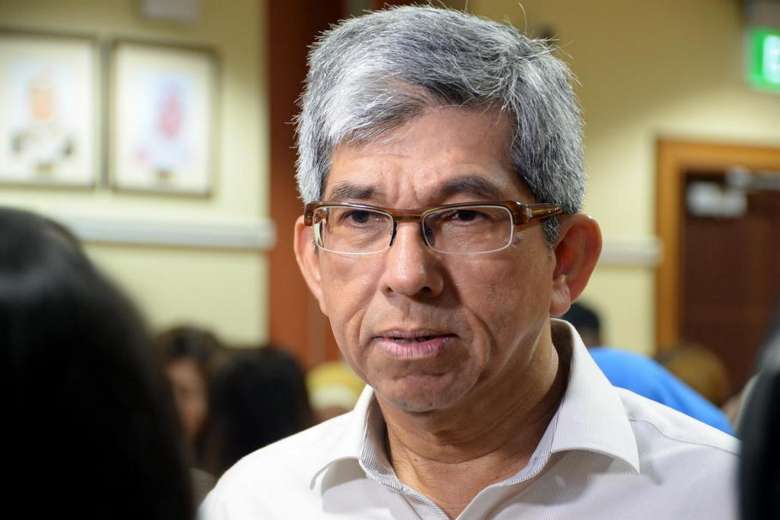
Communications and Information Minister Yaacob Ibrahim, speaking to reporters at a National Reading Day event yesterday at the National Library Building, said that even the sharing of such information is dangerous.

Dr Yaacob, who is also Minister-in- Charge of Muslim Affairs, explained: “Our position must be when we come across something online which we think is egregious, which doesn’t conform, we just delete it or just don’t share it – we can just move on. Once you begin to share, you seem to be promoting it and that’s not very healthy for us.”

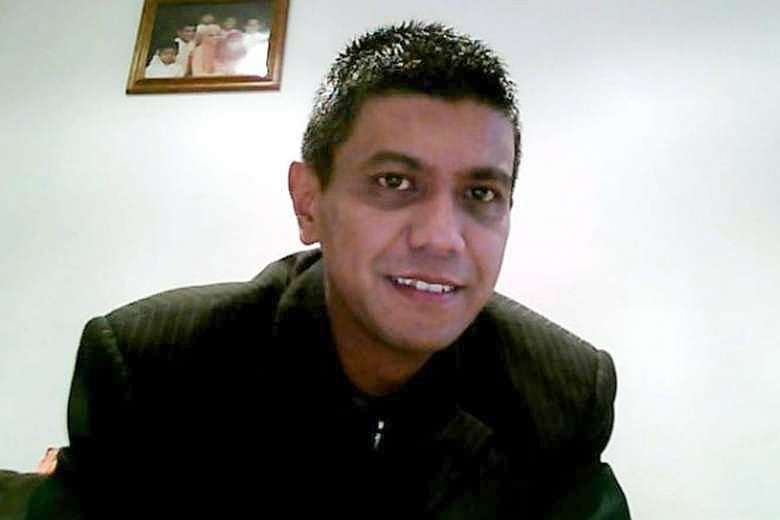
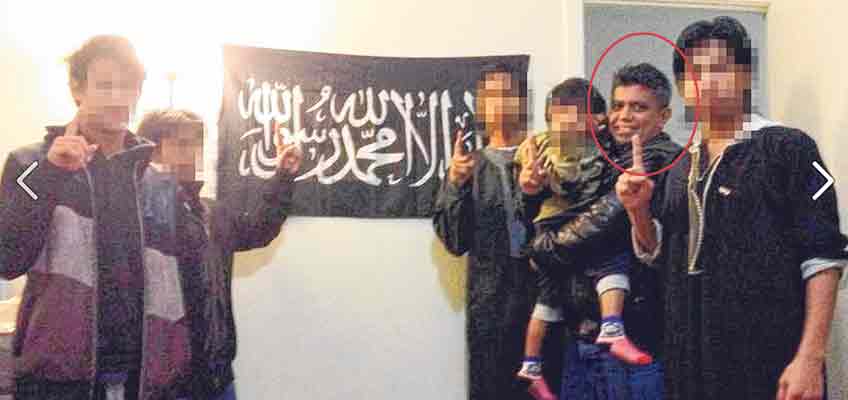
His comments came a day after it was revealed that 44-year-old Zulfikar Mohamad Shariff had been spreading radical ideology online, including support for terror group Islamic State in Iraq and Syria, and had radicalised at least two other citizens. He used Facebook to create platforms purportedly to counter the Western media. But the true intent of these pages was to agitate on Muslim issues in Singapore to spread his ideology.

Dr Yaacob said it is easy for people, including children, to stumble across extremist information on the Internet, which is “thriving” with such material.

Since it is impossible to police every website, people must be resilient and able to assess on their own the things they see, be it terrorism, pornography or other online material, he added.

“You may be reading it and then you spread the ideology because you think it’s nice to read. That’s where the danger starts, that’s where you begin to cross a very sort of soft line where you actually may not be out there in the theatres of war… but we are basically promoting that ideology by sharing it and that’s what we want to prevent from happening,” he said.

Once people begin to entertain the idea of terrorist ideology, “you are basically sailing very close to the wind”, he told reporters.

He said that the authorities have been monitoring the online situation, and are keeping tabs on people who subtly promote terrorist ideology in their writings or blog posts.

“We will continue to work with our community leaders, with our religious leaders, to ensure that the message of Islam – that we know is a religion of peace – gets embedded in the hearts and minds of fellow Singaporeans so that when they go onto the Internet, which you cannot block, they know what is right and what is wrong,” he added.

At a separate event, Parliamentary Secretary for Home Affairs Amrin Amin said he believes the Malay/Muslim community supports Zulfikar’s detention and urged Singaporeans not to take the country’s carefully built peace and harmony for granted and to work to preserve them.

“We need to pay attention to what our youth and we as well read on the Net,” he said.

“We need to get involved in citizen activities so we know our neighbours and know what it really means to live in harmony.”

Speaking on Friday, Law and Home Affairs Minister K. Shanmugam stressed how Singapore has spent decades building tolerance, acceptance and appreciation across religious and racial lines, and ensuring that minorities feel they have a stake in the country.

This includes policies that encourage different races to live alongside one another in Housing Board flats, adequate parliamentary representation through the group representation constituency system and fair participation in other aspects of life, including business and academia.

He said: “Now, we also have to say a big ‘no’ to extremism and all teachings that tend towards extremism. Otherwise, the ground would become fertile for extremist teachings to be absorbed, and then for terrorism.”


This article was first published on July 31, 2016.
Get a copy of The Straits Times or go to straitstimes.com for more stories.

Image: 
Category: 
Publication Date: 
Sunday, July 31, 2016 – 14:00
Send to mobile app: 
Source: 


Story Type: 
Others

Source link

Detained S'porean a controversial, outspoken figure

0

During his 14 years in Australia after migrating from Singapore, Zulfikar Mohamad Shariff became known as an outspoken and occasionally controversial figure who promoted Muslim causes, such as halal exports and Islamic finance, before falling out with some local community leaders.

Two of his friends interviewed by The Sunday Times expressed surprise at his detention in Singapore on terror-related charges earlier this month.

On Friday, Singapore’s Ministry of Home Affairs (MHA) said that Zulfikar, 44, a Singaporean who also took up Australian citizenship, had been detained under the Internal Security Act. He was arrested on July 1 when he returned to Singapore for a visit.

The ministry said he had actively spread radical ideology online, incited violence and radicalised at least two Singaporeans. It said he had made many Facebook posts that promoted and glorified terror group Islamic State in Iraq and Syria (ISIS) and its violent actions.

The detention made headlines in Australia yesterday.

The authorities in Australia have not commented on the case or on whether they were involved in any investigation into Zulfikar.

“The Australian government is aware of the Singaporean Government’s press statement that Mohamad Shariff Zulfikar has been arrested in Singapore for terrorism-related activities,” a spokesman for Australia’s Department of Foreign Affairs and Trade told The Sunday Times last night.

“Consular officials are seeking to provide assistance to Mr Mohamad Shariff. However, Singapore does not recognise dual nationality, and Mr Mohamad Shariff is being treated as a Singaporean citizen. For privacy reasons, no further comment will be provided on this case.”

Related: Don’t even ‘share’ extremist views: Yaacob

The Australian Federal Police would not comment yesterday on whether it had investigated Zulfikar or had any involvement in his arrest in Singapore.

“We don’t comment on individuals,” a spokesman said.

A close friend in Melbourne, who did not want to be named, said Zulfikar recently claimed that he did not believe he would face trouble if he returned to Singapore.

The friend said Zulfikar “has strong views and that may put people off”. “It is a bit of a shock,” said the friend, who is active in the Muslim community, of the arrest.

After leaving Singapore for Australia, Zulfikar spent his initial years in Melbourne as a researcher at Monash University before working at a business promoting halal products. He helped to organise a conference in Melbourne in 2007 to promote efforts to encourage Australian halal exports across the region, giving numerous interviews on the topic to local media.

He also worked in Islamic finance, doing sales and marketing from 2004 to 2006 for the Muslim Community Cooperative of Australia. He is well known in the Muslim community in Victoria state, where there are about 150,000 Muslims, who make up some 3 per cent of the population. The close friend said: “He has been under the radar (in Melbourne) for the last four or five years. He had some personality clashes with community leaders.”

In recent years, there have been numerous terror attacks and alleged plots in the state capital Melbourne, as well as in Sydney, mainly involving radicalised teenagers.

MHA said Zulfikar embarked on the path of radicalism as early as 2001 and joined hardline group Hizbut Tahrir in Australia. The global organisation, founded in Jerusalem in 1953, seeks to replace the system of nation-states with a caliphate.

In recent years, Zulfikar has been completing a PhD in international relations at La Trobe University in Melbourne and is believed to have been in his final year of studies.

Related:

Singaporean who wanted to set up Islamic State detained under ISA

2 Singaporeans planning to join ISIS arrested


This article was first published on July 31, 2016.
Get a copy of The Straits Times or go to straitstimes.com for more stories.

Image: 
Category: 
Publication Date: 
Sunday, July 31, 2016 – 14:00
Send to mobile app: 
Source: 


Rotator Headline: 
S'porean detained for glorifying Islamic State a controversial, outspoken figure
Rotator Image: 
Story Type: 
Others

Source link

Former President SR Nathan suffers stroke

0

Former President SR Nathan suffered a stroke early Sunday morning (Jul 31), said a statement from the Prime Minister’s Office. The statement added that he is in critical condition in the Intensive Care Unit at Singapore General Hospital.

Source link

Former president SR Nathan in critical condition after stroke: PMO

0

SINGAPORE  – Former President SR Nathan suffered a stroke early Sunday (July 31) morning. 
He is in critical condition in the Intensive Care Unit at Singapore General Hospital, said a statement from the Prime Minister’s Office. 
Mr Nathan, who is 92 years…

Source link

'Sexualised' uni camps spark fierce debate

0

The brouhaha over university orientation camps and whether they have become too “sexualised” has sparked a fierce debate.

The issue prompted the National University of Singapore (NUS) on Friday to suspend all such camps.

Many undergraduates are upset. They said they are old enough to decide what is appropriate for them, and do not need parents and the authorities breathing down their necks. They added that most activities follow guidelines, and while some “black sheep” push the limits of good taste – it is not fair to tar everyone with the same brush.

But there is some concern over these camps after a New Paper report highlighted how the activities include re-enacting rape scenes. There were also complaints about sexually suggestive cheers such as “itai itai yamete”, which in Japanese means “it hurts, it hurts. Stop”.

Acting Education Minister (Higher Education and Skills) Ong Ye Kung weighed in on the issue on Wednesday last week, and called some of the activities “reprehensible”.

On Tuesday, NUS said it would take “strong disciplinary action” against those found responsible, and added that it did not “condone any behaviour or activity that denigrates the dignity of individuals, and that has sexual connotations”.

But after student leaders were briefed on what was acceptable at the camps, a video showing a male and female getting dunked in a pond in Sheares Hall still surfaced online. Then came the suspension, affecting six NUS camps.

Two student groups – the G Spot from Yale-NUS College and the Gender Collective, an independent group from NUS – in a joint statement said students were “disappointed”. “To suspend all (student-organised) activities is… no less than throwing the baby out with the bathwater and will negatively affect the experiences of all incoming freshmen.”

‘MOST FOLLOW RULES’

An NUS graduate, who was part of the organising committee for a hall camp in 2012, said the Office of Student Affairs (OSA) imposes strict rules for camps, and there is the added threat of suspension or expulsion. Activities are also vetted.

A Singapore Management University (SMU) spokesman also said rules on separate sleeping arrangements between males and females during camps are strictly enforced, and there are also guidelines that ask that physical contact between the sexes be kept to a minimum during activities.

Freshmen who have attended university camps in the last two months said the bulk of activities usually involve team-building games. Those involving physical contact do not have sexual overtones. But what happens after “official” orientation activities ends every day is tougher to control, the graduate said. This is when groups decide on games such as “Truth or Dare”, which involves forfeits.

These include things like making a girl perform a pole-dance in front of a boy, or answering questions such as who in their group they would prefer to sleep with.

A female undergraduate who attended a hall camp last month said one game involved a catwalk session, in which groups design their own costumes. One male undergraduate was topless, and had a ketchup bottle positioned at his groin area. This sort of thing made her uncomfortable but the rest of the camp was fine, she added.

Orientation leaders insisted that those uncomfortable with any event can sit it out. A third-year NUS student, who wanted to be known only as Karen, has attended five camps as a freshman and a senior.

She said perceptions of university games being sexualised should not extend to the whole of NUS. “When the activities require forfeits, seniors will not force a freshman to do them if they are shy.” Another student who attended a NUS faculty camp said when a girl was uncomfortable with doing the pole dancing, two guys decided to do it instead.

“It’s supposed to be amusing, and I don’t feel like there were negative undertones as the focus was on bonding. It is the orientation leaders’ responsibility to set the boundaries clearly.”

A freshman at SMU’s School of Social Sciences, said she was asked during camp to answer who in her group she would have sex with.

Other questions included: “If you were in a threesome with someone, who would it be?”

“I took it very lightly. We bonded really well, we shared jokes, we were able to tease each other.” If anyone felt uncomfortable answering a question, the group would choose another question, she added.

Read also: What NUS students say about orientation camp debacle

PEER PRESSURE

But some undergraduates said it is sometimes difficult to say no.

A third-year Nanyang Technological University student who attended a camp run by a club in 2014 said she was labelled “uptight” when she criticised games that “reinforced the viewpoint that all females are damsels in distress”.

She said: “During Secret Pal, all the girls had to do was to doll up and sit in their own chalets, while the guys needed to perform tasks before they were allowed to meet the girl for a ‘date’.”

Mr Delane Lim, chief executive of Agape Group Holdings, which conducts talks and youth camps in schools, said peer pressure is a very serious issue. “Young people sometimes don’t have the courage to say no because they are scared to be labelled conservative or ‘chicken’.”

Dr Raymond Cheong, from the Children/Youth Learning and Counselling Clinic, said youth who feel very awkward in social situations or who have been bullied in the past may continue with games despite their discomfort with them because they are afraid of being ostracised if they opt out.

“We should respect others. Some people may not complain, but they may not be okay with (the activities).”

There also seems to be some confusion on the role of such camps. Are they to allow people to get to know one another as part of networking efforts, or are they to encourage both sexes to get more comfortable with each other?

The Social Development Network (SDN) has previously offered funding to sponsor orientation camps.

Student leaders said they were urged to include activities that had a better mix of males and females, and which involved a certain level of interaction – but not “inappropriate physical contact”.

Responding to queries from The Sunday Times, the SDN said it has stopped funding university camps and events since January this year.

But one NUS graduate said such sponsorships meant some organisers “felt compelled” to include activities that get both sexes to touch each other “more”.

The use of cheers and activities that touched on rape was especially worrying, experts said.

Clinical sexologist Martha Tara Lee said the instances of lewd and disrespectful games could be partially due to the lack of comprehensive sexuality education that emphasises consent.

“Since sex is considered a sensitive taboo, making exaggerated shows of bravado about sex might seem ‘adult’ but in reality, it is an overcompensation of their own ignorance and discomfort around sex,” she said.

Reports on games or forfeits that take on a sexual slant – such as guys doing push-ups over girls – go as far back as 2008.

The G Spot and Gender Collective urged NUS to introduce long-term measures “to foster a culture of respect and consent” to help address the underlying issues.

These include a workshop on understanding consent, sexual respect and violence, and developing a more rigorous feedback mechanism between students and staff.

Read also: Sexualised orientation activities: Would you want your daughter to do this?

HOW MUCH CONTROL?

Still, the idea of too much oversight has upset undergraduates. Even before the suspension, and after the issue was highlighted in the press, one student organiser of an NUS Arts and Social Sciences hall camp said he was told that games cannot involve any body contact.

For instance, a game in which boys and girls had their hands tied together was scrapped.

“It’s not really that the games were that bad. It’s just that, with the negative press lately, they felt, better safe than sorry,” said another student organiser.

An SMU fourth-year student said: “Such rules are a desperate move to pacify parents. People at university are adults. If there are staff members keeping watch all the time, you will be micro-managing students. What is the point of organising activities yourself?”

Some orientation activities

HUMAN CENTIPEDE

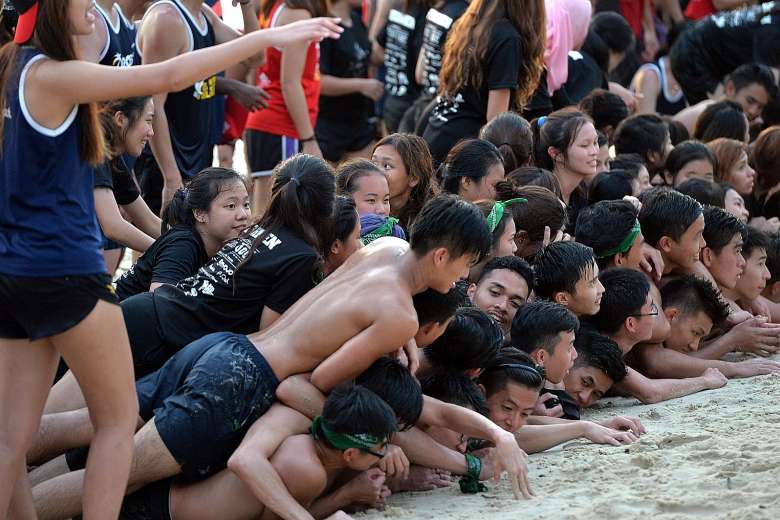
In this game typically played on the beach, students sit in a line, with their legs over the thighs of the person in front of them. They have to try to move from the shore to the water.

TRUST FALL

A student stands on an elevated platform, turns around with his back facing a group and deliberately falls. The group has to catch him to break the fall.

SECRET PAL/PARTNER

Both sexes are blindfolded and paired up to interact with each other one on one.

They are sometimes subject to a series of tasks, such as washing each other’s hair before their identities are revealed.

They may also go on “dates” after that.

GEGE MEIMEI (BROTHER/SISTER) FORFEIT

A game forfeit that is usually for a male and female. Some may opt to do it with someone of the same gender if they are uncomfortable.

The female has to lie on the floor while the male says “kor kor (big brother) coming”. She responds: “Mei mei (little sister) don’t want.”

ITAI ITAI YAMETE CHEER

A cheer in Japanese sometimes used by groups.

“Itai itai yamete” translates literally to “It hurts, it hurts, stop”.

BURNING BRIDGES

An informal game that is usually played within the group after a day’s orientation activities. Participants are asked difficult questions about others in the group such as “Who is likely to drop out of school?” or “Who is unlikely to get married?”

BUILDING BRIDGES

Sometimes played as a precursor to the Burning Bridges game.

Participants are asked questions about others that are more flattering, such as “Who is the most likely to become a millionaire?”


This article was first published on July 31, 2016.
Get a copy of The Straits Times or go to straitstimes.com for more stories.
Image: 
Category: 
Publication Date: 
Sunday, July 31, 2016 – 14:00
Send to mobile app: 
Source: 


Rotator Headline: 
'Sexualised' NUS orientation camps spark fierce debate
Rotator Image: 
Story Type: 
Others

Source link

Harry Potter magic hits Asia as fans celebrate new book

0

Singapore – Harry Potter magic hit Asia on Sunday morning, as aspiring witches and wizards crowded into bookstores to get their hands on the first copies of a new play that imagines the hero as an adult.

Launch parties for “Harry Potter and the Cursed Child” were held hours after the play’s premiere in London, setting the stage for a return of the series that has captivated readers and movie audiences worldwide.

Nearly 300 fans rushed through the doors of Kinokuniya bookstore on Singapore’s Orchard Road at 7:01 am (2301 GMT Saturday) to become one of the first people in the world to see the new script.

Student Samantha Chua, 24, who along with her boyfriend was first in line, said she had been waiting outside the fourth-floor bookstore since 5 am.

“We were here so early that the mall wasn’t even open yet so we had to come up through the cargo lifts,” she told AFP, adding that it was “all worth it”.

“I grew up reading the books and I have a special place for them on my shelves but this will be my crowning glory,” added Chua, who was wearing a Harry Potter-themed sweater.

Widely seen as the eighth Harry Potter instalment, the play is set 19 years after the end of the last book and features a grown-up Potter working at the Ministry of Magic.

Like many of his fans, Potter has now become an adult and has three children with his wife Ginny Weasley.

He still has his trademark round-rimmed glasses and the scar on his head, a permanent reminder of his nemesis Lord Voldemort, but must now help his youngest son Albus confront the family’s dark past.

The script’s global kickoff was timed to coincide with its launch at midnight in London, after the play’s world premiere at the Palace Theatre earlier in the evening. July 31 is also author J. K. Rowling’s birthday.

Hundreds of fans snaked down London’s famous Picadilly street waiting to get their hands on a copy, while others queued anxiously outside Lello, a Gothic Revival-style bookstore in Portugal’s historic center.

In Singapore, some fans held a prize-giving ceremony and a hunt for the Snitch – a type of ball used in the wizard sport of Quidditch in the Potter books.

Others were spotted sitting in nooks around the store eagerly poring over the book.

Valerie Wan, 10, was decked out in a Gryffindor robe and a wand along with a stuffed toy version of Hedwig, the snowy owl that was Potter’s pet in the books.

In Bangkok, around 40 fans, many wielding wands and other wizarding paraphernalia, gathered outside a large downtown mall overnight.

Sanpipat Huangsawat, 29, was first in line and had started queuing at 6:30 pm on Saturday evening. He finally got his hand on the book some 11 hours later.

“I feel very excited and it’s great to be the first owner of this book in Thailand,” he told AFP.

Sheryans, 16, said he was not sure he’d ever get the chance to see another Harry Potter book launch.

“I’ve been following the Harry Potter series since I was eight years old, and it’s unbelievable that after nine years they’re keeping it going,” he told AFP.

Dozens gathered at a downtown bookstore in Hong Kong to get the new title and try on Harry Potter costumes provided by the store.

Ten-year-old Adele Leung, who came with her mother, was anxious to crack into the latest Potter tome.

“I love Harry Potter and have read all of the last ones. I think I will read it in a few days,” she said.


Image: 
Category: 
Publication Date: 
Sunday, July 31, 2016 – 12:46
Keywords: 
Send to mobile app: 
Source: 


Hermes ID: 
2 484 538
Hermes ID String: 
AS0731-HARRYPOTTER
Hermes Author: 
SSANDREA
Story Type: 
Others

Source link

She gets into the minds of criminals

0

Her job involves finding the mental trigger that can set offenders back onto the right path.

But don’t tell her that her job is like being on…

Source link

Manhattan Fish Market: 1-for-1 Deals – Small Flame, Spicy Baked Cherry Snapper & More till 30 Sep

0

MANHATTAN FISH MARKET: 1-for-1 coupon deals valid till 30 Sep. Print & present to redeem

Manhattan Fish Market: 1-for-1 Deals – Small Flame, Spicy Baked Cherry Snapper & More till 30 Sep

Enjoy 1-for-1 deals at Manhattan Fish Market with the coupons below

Source

Dad's knife-point robbery sparked police career

0

Over a decade ago, his father was robbed at knife-point.

It happened in Malaysia, where the family and the young teen was based in at the time.

While Lee Chee Guan’s parents…

Source link

Stop violence against children, says Jokowi

0

President Joko “Jokowi” Widodo has asserted that violence against children must be stopped, and all Indonesian families should be on the front lines of efforts to protect the nation’s children and help them reach their full potential.

“Families, as the front line and most important aspect of children’s lives, must ensure that they carry out their function to protect children. Violence against children must be stopped and we cannot let it continue to happen,” said the President when he attended the peak celebration of the 23rd National Family Day in Kupang, East Nusa Tenggara, on Saturday.

Jokowi said he hoped that his government’s infrastructure and system improvements could benefit all Indonesian people, so that every human in the country could reach his or her maximum potential and be more productive.

“Of course, focusing only on physical development will not be enough. The role of social institutions, such as families, is very important because human development starts from the family. It is from the family that human character and personality are created,” said Jokowi.

It is in the family that personal potential can be nurtured so that Indonesian children become qualified, competitive, and well mannered, as well as having good character and strong moral values, he went on.

Jokowi said National Family Day celebrations this year should be used as momentum to strengthen the function of Indonesian families to, for example, increase children’s religiosity, social sensitivity, moral values, and level of education, as well as their knowledge about reproduction and environmental protection.

Children, he said, must be protected from the negative impacts of information technology consumption.

“I remind you that families can play an active role in the mental [moral] revolution […], changing the mindset and character of Indonesian people from pessimistic to optimistic, from lazy to industrious, and from tending to only be followers to people who are eager to become leaders wherever they are,” said Jokowi.

Image: 
Category: 
Publication Date: 
Sunday, July 31, 2016 – 11:23
Send to mobile app: 
Source: 


Story Type: 
Others

Source link