28.8 C
Singapore, SG
Wednesday, September 2, 2026
Home Blog Page 3266

Chinese police seize nearly 400 baby Siamese crocodiles

0

BEIJING – Border police seized 399 baby Siamese crocodiles, a protected endangered species, in southern China, state-owned Xinhua news agency reported on Sunday.

The roughly 25-cm long crocodiles were about 15 days old and were likely trafficked from Vietnam, the report said.

Police in Guangxi Zhuang Autonomous Region said they saw three nervous-looking men moving goods in front of the house where the crocodiles were found and approached them for questioning. One man was caught, while the two others escaped.

Siamese crocodile skin is used to produce handbags and other luxury leather goods, but the reptiles can only be raised in China with a licence and trafficking in them is illegal, according to Xinhua.

China is a major destination market for many products made using exotic, and often endangered, species. The government has held high-profile events to destroy large caches of illicit animal products in attempt to discourage trafficking in them.

Image: 
Category: 
Blurb: 
Publication Date: 
Sunday, July 31, 2016 – 16:01
Keywords: 
Send to mobile app: 
Source: 


Story Type: 
Others

Source link

Fear haunts victims, say social workers

0

A fear of being disbelieved or a sense that reporting serious sex crimes such as rape would lead to reprisals are among the key reasons why rape victims do not come forward to report the injustice, said social workers.

Ms Anisha Joseph of the Association of Women for Action and Research (Aware) said police and court processes can still be made “less lengthy and daunting”.

Some victims face difficulties in reporting such as “judgmental and insensitive remarks, as well as procedural barriers, such as recounting the incident to multiple officers, long waiting periods and lack of updates on the case”, she added.

“More awareness about the legal procedures and investigation practices that victims can expect will help debunk any myths they may have, and encourage them to come forward,” said Ms Anisha, programme coordinator of Aware’s Sexual Assault Care Centre.

The centre has seen an increasing number of people turning to it for help. In the first six months of this year, it handled 164 cases.

Last year, there were 267 cases, up from 234 in 2014.

Mrs Kim Lang Khalil, director of DaySpring Residential Treatment Centre, which helps abused teenage girls, said it can be painful for victims to recount the crime in its immediate aftermath, and it could take months before they are ready to narrate what happened in court.

“The recovery time is based on the individual… When they narrate the event, they should feel there is no longer a threat to them, and what happened was in the past,” said Mrs Khalil.

She added that in her experience the police have been sensitive and tactful.


This article was first published on July 31, 2016.
Get a copy of The Straits Times or go to straitstimes.com for more stories.

Image: 
Category: 
Publication Date: 
Sunday, July 31, 2016 – 22:00
Send to mobile app: 
Source: 


Story Type: 
Others

Source link

Breaking the silence on sexual crimes

0

When Ow Siew Hoe was sentenced to 12 years’ jail and 12 strokes of the cane for drugging and raping a woman on July 4, it was a case of justice being served.

But the 49-year-old man might have escaped punishment, if the victim, Amy (not her real name), had not agreed to share the details of her ordeal in court.

Shedding light on how rape cases are investigated and prosecuted here, the Attorney-General’s Chambers (AGC) and the police’s Serious Sexual Crime Branch (SSCB) say evidence from victims like Amy is crucial to successful convictions.

“A victim’s testimony in a rape trial is very important, as you know in rape it is very unlikely there would be eyewitnesses due to the nature of the crime,” said deputy chief prosecutor David Khoo, one of two deputy public prosecutors (DPPs) who brought Ow to justice.

The issue boils down to one of consent, in which case it would be the victim’s word against her rapist’s, said Mr Khoo.

“During the critical period of the rape, she has to (tell the court) there was penetration but no consent,” said Mr Khoo, adding that if victims do not give evidence, the prosecution’s case would be weakened considerably.

Ow, also known as Ow-Yong Siew Hoe, was a self-styled spiritual “master”. Amy, a 35-year-old sales assistant, had approached him as she believed there was a “supernatural being” in her flat.

When she visited him at his Bukit Batok flat in February 2014, Ow drugged her with a cup of “holy water” before raping her while she was unconscious.

But the crime so traumatised her, she became suicidal and blamed herself for being foolish enough to get raped. At one point, she told the police she wanted to drop charges and even terminated her phone line so they could not reach her.

But the police did not give up.

Amy was sent for treatment at the Institute of Mental Health, and the investigating officer, Assistant Superintendent (ASP) Zhang Yi Wen, would text her daily to ask how she was, and slowly gain her trust.

“She was very traumatised, she didn’t want to face the court process and talk about (the rape) in court,” said ASP Zhang.

But her evidence was crucial to bolster the circumstantial evidence found in Ow’s home – where the police had found sleeping pills – and his DNA found on her panties.

And Ow had come up with his own version of events – he claimed that they formed a connection and had consensual sex after Amy confided in him her problems.

But Amy was afraid of seeing Ow again in court. To her, he was a “shifu” (Mandarin for master) who had powers to fight ghosts, said Mr Khoo. “These are things we as prosecutors need to be very aware of… You cannot show that you belittle their beliefs or be judgmental.”

And even though Ow decided to plead guilty in the end – meaning Amy did not have to testify – the DPPs needed to prepare her to speak in court in case he changed his mind and the case went to trial.

Amy would go on to have three interviews with the DPPs.

Both prosecutors and the police learnt that two things would calm Amy down when she got hysterical – her 10-month-old toddler, and Chicken McNuggets.

She would hug her child or eat to take her mind off the memory of the rape.

So arrangements would be made to have food and her baby present.

Amy was also assured that there would be a gag order on her identity, and that prosecutors would apply for her to give evidence via a live-video feed instead of being in the same courtroom, said Mr Khoo.

DPP Stephanie Koh said arrangements were made for Amy to visit the actual courtroom and video conference room before the court date.

At her last interview in March – the most crucial before the hearing later that month – Amy recalled her experience in such vivid detail that it “came alive to her”, said Mr Khoo.

She lashed out and crawled to a corner, crying uncontrollably.

“We had to ‘ground’ her, tell her ‘Look at me, you are safe.’… (and) through her sobs and her wailing, she was able to tell me her story,” he said, adding that after that episode, Amy said she was “so relieved to get it off her chest”.

When he was sentenced on July 4, Ow bowed his head in court. Justice Chan Seng Onn told him: “Your heinous sexual acts have inflicted a lasting psychological impact on the victim.”

Said Mr Khoo: “She really is a victim. She’s probably blaming herself, yet you know in this case you really have to seek justice for her.”


This article was first published on July 31, 2016.
Get a copy of The Straits Times or go to straitstimes.com for more stories.

Image: 
Category: 
Publication Date: 
Sunday, July 31, 2016 – 22:00
Send to mobile app: 
Source: 


Story Type: 
Others

Source link

Afghan cleric arrested for marrying 6-year-old girl

0

Kabul – An elderly Afghan cleric has been arrested after he married a six-year-old girl, officials said Friday, in the latest case highlighting the scourge of child marriages in the war-battered country.

Mohammad Karim, said to be aged around 60, was held in central Ghor province as he claimed her parents gave him the girl as a “religious offering”, officials said.

But they cited the family of the girl, believed to be in shock, as saying that she was abducted from western Herat province, bordering Iran.

“This girl does not speak, but repeats only one thing: ‘I am afraid of this man’,” said Masoom Anwari, head of the women affairs department in Ghor.

The girl is currently in a woman’s shelter in Ghor and her parents are on their way to the province to collect her, the local governor’s office said.

“Karim has been jailed and our investigation is ongoing,” said Abdul Hai Khatibi, the governor’s spokesman.

The arrest comes just days after a 14-year-old pregnant girl was burned to death in Ghor, in a case that sparked shock waves in Afghanistan.

The family of that girl, Zahra, said she was tortured and set alight by her husband’s family. But relatives of the teenager’s husband insisted her death was by self-immolation.

The incidents underscore rising incidents of child marriages in Afghanistan.

“In some regions because of insecurity and poverty the families marry off their daughters at a very early age to get rid of them,” Sima Samar, head of the Afghanistan Independent Human Rights Commission, told reporters this month.

Afghan civil law sets the legal age of marriage at 16 for girls, yet 15 per cent of Afghan women under 50 were married before their 15th birthday and almost half were married before the age of 18, according to Save the Children.

“So many children who are married off at a young age are deprived of their right to education, safety and the ability to make choices about their future,” the international charity said this month.

“This is such a fundamental breach of a child’s basic rights.”

The latest case comes after a young woman was stoned to death in Ghor last November after being accused of adultery.

And in March last year a woman named Farkhunda was savagely beaten and set ablaze in central Kabul after being falsely accused of burning a Quran.

The mob killing triggered angry nationwide protests and drew global attention to the endemic violence facing Afghan women.

Image: 
Category: 
Blurb: 
Publication Date: 
Sunday, July 31, 2016 – 15:33
Send to mobile app: 
Source: 


Story Type: 
Others

Source link

National Arts Council survey: Less than half of S'poreans read at least one literary book a year

0

With the fast-paced lives that Singaporeans live, is there still time for us to read books?

No, a recent Straits Times street poll reveals.

Many people say they are too busy to read or would rather be on their phones.

A recent survey by the National Arts Council showed that less than half of Singaporeans read at least one literary book a year.

On Wednesday and Friday, The New Paper on Sunday spent a total of five hours looking out for book readers.

About 80 per cent of people in the trains were using some sort of mobile device.

The only ones reading were a few workers going through the newspapers and students on their school books. Only one person was reading a novel.

TNPS then headed for the Ang Mo Kio Public Library.

There were students with their laptops and seniors with newspapers and magazines.

Madam Molly, 67, was seated with a pile of recipe books.

She goes to the library once a month to find simple recipes that she can recreate at home.

The retiree says: “Singaporeans, especially children, have no time to read because they have a lot of homework, and they are pressured to go for extra classes like piano lessons.”

In a corner of the library, we find an elderly man seated by himself, absorbed in his book.

STARTED YOUNG

Ms Janet Thor, 20, was one of the few non-student youngsters in the library.

The Malaysian, here for a month, is an avid reader and started reading since she was young.

“Reading can change a person’s mind. By reading, you understand different situations, and if you were to ever fall into one, you would know how to solve it,” Ms Thor says.

Getting S’poreans to read

The National Reading Movement kicked off on June 3 in an effort to promote reading in Singapore.

The five-year project aims to get Singaporeans to “Read More, Read Widely, Read Together”.

Yesterday was the launch of National Reading Day, a key programme which is part of the five-year initiaitive and will be held on the last Saturday of every July.

It was launched by Minister for Communications and Information Yaacob Ibrahim at the National Library Building. Events ranged from live plays by 2Tango and a cappella performances by the Temasek A Capella Group.

Trainspotting readers

Mr Aaron Ho is the owner of MRTreads, an Instagram account that documents photos of people reading on trains.

Speaking to sg.asia-city.com, Mr Ho says he got his idea from undergroundnewyorkpubliclibrary.com, a website that documents New Yorkers who are seen reading in the subway.

Mr Ho is a PhD candidate in a New York University, specialising in Victorian literature.

He is currently in Singapore to do part of his dissertation before heading back to complete it.

Mr Ho aims to encourage Singaporeans to read more often and to get inspired to read by seeing other people read.

Along with his photos, the captions indicate the book that the person is reading and occasionally his own opinions of it.

Some people have voiced their concerns over the photos as a breach of privacy, but Mr Ho is unfazed.

“There are no laws against public photography in the world. That said, if someone’s photo is posted and they are uncomfortable about it, please write to me and I’ll take the photo down,” he tells sg.asia-city.com.

‘Closet readers’ not always seen

A 2009 study done by Ms Gladys Low of the National Library Board found that more than a third of people ranked reading as their least-preferred leisure activity.

Ms Renee Ting, manager of Books Actually, believes that people read but might not show it.

Ms Ting says: “We believe that there are people who read in Singapore, just that you don’t see them. We like to call them ‘closet readers’,” says Ms Ting.

Books Actually is a local bookstore that has been around for more than 10 years, and it has seen a steady increase in customers till today.

“We have seen the crowd grow steadily by about 10 per cent each year since five years ago,” says Ms Ting.

Singapore is also home to many book clubs and reading groups, all of which say that their membership has not fallen over the years. Bukit Batok East has a book exchange programme, Mezzo, which allows residents to exchange a book for a book.

With an initial membership of just 10 people after it was started in August 2013, it now has 80 members, mostly made up of middle-aged Bukit Batok East residents.

Ms Chan Wai Han, business development manager of publisher Ethos Books believes that there is no such thing as being too busy to read.

“For me, the best reading time is on the toilet or just before bed. We can always find the time,” she says with a laugh.


This article was first published on July 31, 2016.
Get The New Paper for more stories.

Image: 
Category: 
Publication Date: 
Monday, August 1, 2016 – 06:00
Send to mobile app: 
Source: 


Story Type: 
Others

Source link

Changi Coast road accident: Father apologises on behalf of dead son

0

His son had only four months left to serve in his national service.

Mr Hiroyuki Matsuo, 54, told reporters that there were plans to send the 21-year-old for further studies overseas.

But now, the plans will never work out for Mr Yukio Matsuo.

He was killed on Friday at around 6.30am when the SUV he was driving went out of control, smashing head-on into a tree on Changi Coast Road.

The New Paper on Sunday understands that Mr Matsuo was an engineering technician in the Navy.

The car’s five passengers, believed to be male Navy regulars in their 20s to 30s, were all injured in the accident.

According to the Singapore Civil Defence Force (SCDF), the passengers were taken to Changi General Hospital. Two of them were unconscious.

REMORSE

In an interview with chinese evening daily Lianhe Wanbao, Mr Matsuo expressed his remorse towards the five injured passengers.

He said: “I hear that the other two unconscious victims are in serious condition.

“If they die, or have some permanent disability, I will feel very bad. I’ve done them wrong.”

Mr Matsuo and his wife, Madam Grace Tham, run the Matsuo Sushi Restaurant at Goldhill Plaza. He declined to speak more when contacted by TNPS.

But Shin Min Daily News quoted Mr Matsuo as saying that his son used to take public transport, which was time-consuming.

The younger Mr Matsuo would reportedly come home close to midnight.

In order to cut down on his travelling time, he started driving to camp four months ago, in March.

In the report, his mother said the young man was a careful driver who would not speed.

The impact of the crash was so great that the younger Mr Matsuo was trapped inside the wreckage after the crash.

An SCDF spokesman told TNPS that he had to be extricated using hydraulic rescue tools. He was subsequently pronounced dead at the scene.

Mr Matsuo said he has been praying for the five injured passengers to recover.

He said: “I already lost my son, I don’t want other victim’s parents to experience the same as me.”


This article was first published on July 31, 2016.
Get The New Paper for more stories.

Image: 
Category: 
Publication Date: 
Sunday, July 31, 2016 – 21:00
Send to mobile app: 
Source: 


Story Type: 
Others

Source link

Reclaimed JB city off Singapore triggers fears of ecology disaster

0

Johor Bahru, Malaysia – A planned multi-billion-dollar new city near Singapore is attracting interest from investors with promises of luxury living but there are questions over its future owing to China’s economic woes and warnings of environmental catastrophe.

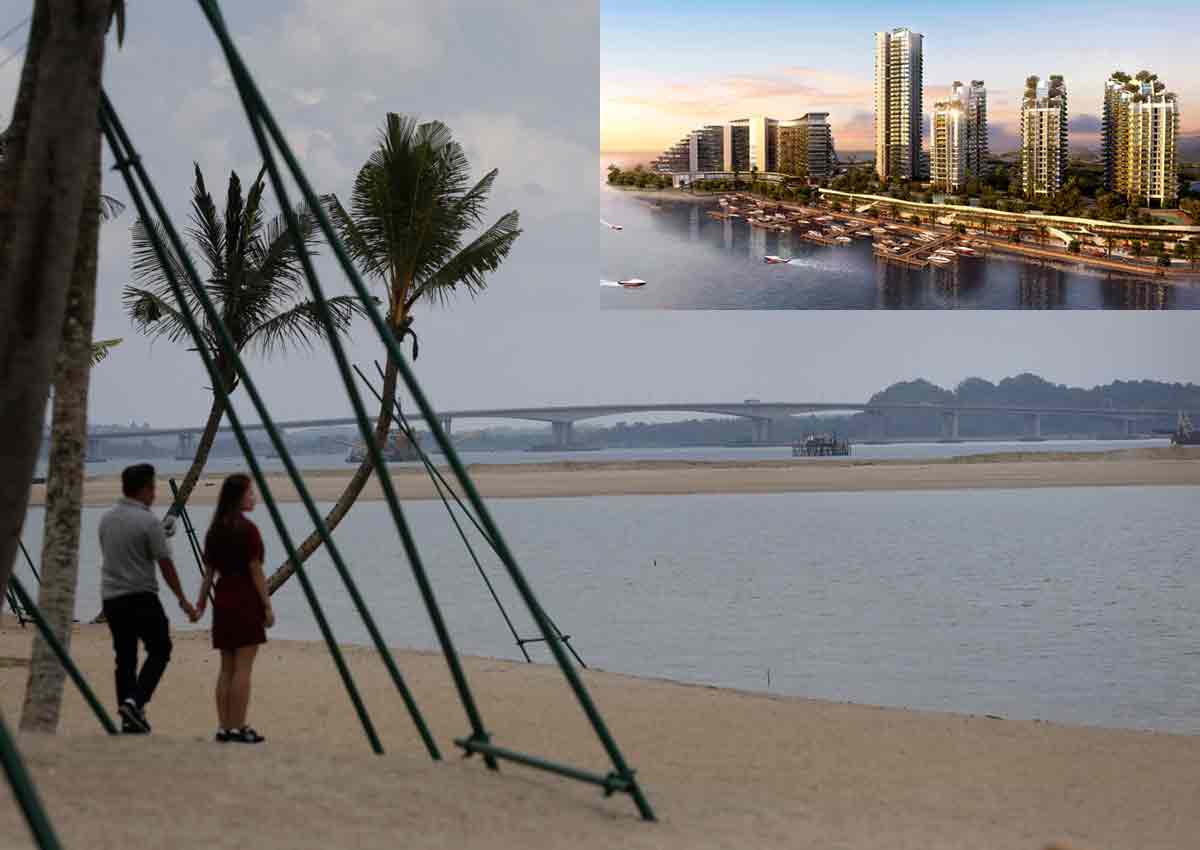
Forest City, a $42 billion futuristic “eco-city” of high-rises and waterfront villas, will sit on four man-made islands on the Malaysian side of the Johor Strait just an hour from Singapore.

Offering 700,000 residential units as well as shopping malls, international schools, hotels, convention venues and medical facilities on 3,425 acres (1,370 hectares), the city will even have its own immigration centre.

The venture is being developed by Hong Kong-listed real estate giant Country Garden and a firm partly owned by Johor’s powerful Sultan Ibrahim Iskandar with an eye on cashed-up Chinese buyers.

“It is by far one of the most enthusiastic private land reclamation projects I have heard of around the Southeast Asia region,” said Chua Yang Liang, head of research for Southeast Asia at property services and investment group Jones Lang Lasalle.

Officials say they have shifted 500 units in pre-selling already, despite the development not due to be completed until 2035. During a visit by AFP, sales executive Alex Lee said he had sold 10 properties in one sitting with a Chinese businessman, who paid cash.

Investors can pay anything from $200,000 for a two-bedroom unit, up to $1.6 million for a seaside villa.

By comparison, a mass market condominium in Singapore costs around $740,000 – which in Forest City would buy a four-room seaside villa with a function hall, two parking lots and a large garden.

Read also: Forest City developer presses ahead

But some analysts question the project’s long-term sales targets as China’s economy struggles to break out of a growth slowdown that has seen expansion fall to 25-year lows, while authorities clamp down on a flight of cash from the country.

At the same time Standard & Poor’s said it was “cautious” about Forest City after it downgraded Country Garden’s long-term corporate rating in March to “BB” from “BB+”, citing risks from its aggressive land acquisitions.

It called sales targets “somewhat ambitious given this is a new large-scale project and targets primarily mainland (Chinese) overseas buyers”.

And even if the project is a success, campaigners say it could prove to be a disaster for the local ecology and fishermen who complain of dwindling catches.

While its website describes it as a “liveable eco-city”, environmentalists say the dumping of sand to build the new city — an estimated 162 million cubic metres (5.7 billion cubic feet) — could alter tides and destroy marine life.

“It has the potential to change the ecology of the whole area in profound ways,” Greenpeace scientist Paul Johnston told AFP.

“It might change the things that are living there, it might change the vegetation that can grow there.”

Local activists say at most risk of destruction is Malaysia’s largest intertidal seagrass meadow on Merambong shoal off Johor.

The reclamation has also ruffled feathers in Singapore, with the city-state’s environment ministry saying it is “carefully” studying an impact assessment report provided by Malaysia and is seeking further clarifications.

Read also: S’pore concerned over reclamation projects in Johor Strait

An environmental study commissioned by the Forest City joint venture firm, Country Garden Pacificview Sdn Bhd, acknowledged a “permanent loss of traditional fishing ground” and damage to seagrass meadows and mangroves due to the development.

But it added that this would be balanced by the project’s economic benefits, including the creation of an estimated 62,200 jobs.

Country Garden Pacificview executive director Mohamad Othman Yusof said developers were strictly following guidelines laid down by the Malaysian government to minimise the environmental impact.

He said at least 20 simulation studies were carried out before the reclamation was approved, while the project’s original size of 5,000 acres was cut by 30 per cent and “double silt curtains” installed to prevent silt and sediment from spreading and polluting the waterway.

“No damage, no pollution has been exported to Singapore,” Othman said. “We don’t want to create any problems with anybody and we’re going to abide by the rules and regulations.”

Water quality is monitored closely following complaints by Malaysian fishermen, he said.

“We are very confident about the success of the islands,” said Othman.

Read also: Johor chief minister: S’pore has also done huge reclamation

Image: 
Publication Date: 
Sunday, July 31, 2016 – 14:48
Send to mobile app: 
Source: 


Rotator Headline: 
Reclaimed JB city off S'pore triggers fears of ecology disaster for both countries
Rotator Image: 
Story Type: 
Others

Source link

Former President S R Nathan suffers stroke

0

Former President S R Nathan suffered a stroke early Sunday morning (Jul 31), said a statement from the Prime Minister’s Office. The statement added that he is in critical condition in the Intensive Care Unit at Singapore General Hospital.

Source link

'People are so much nicer at night', says car washer

0

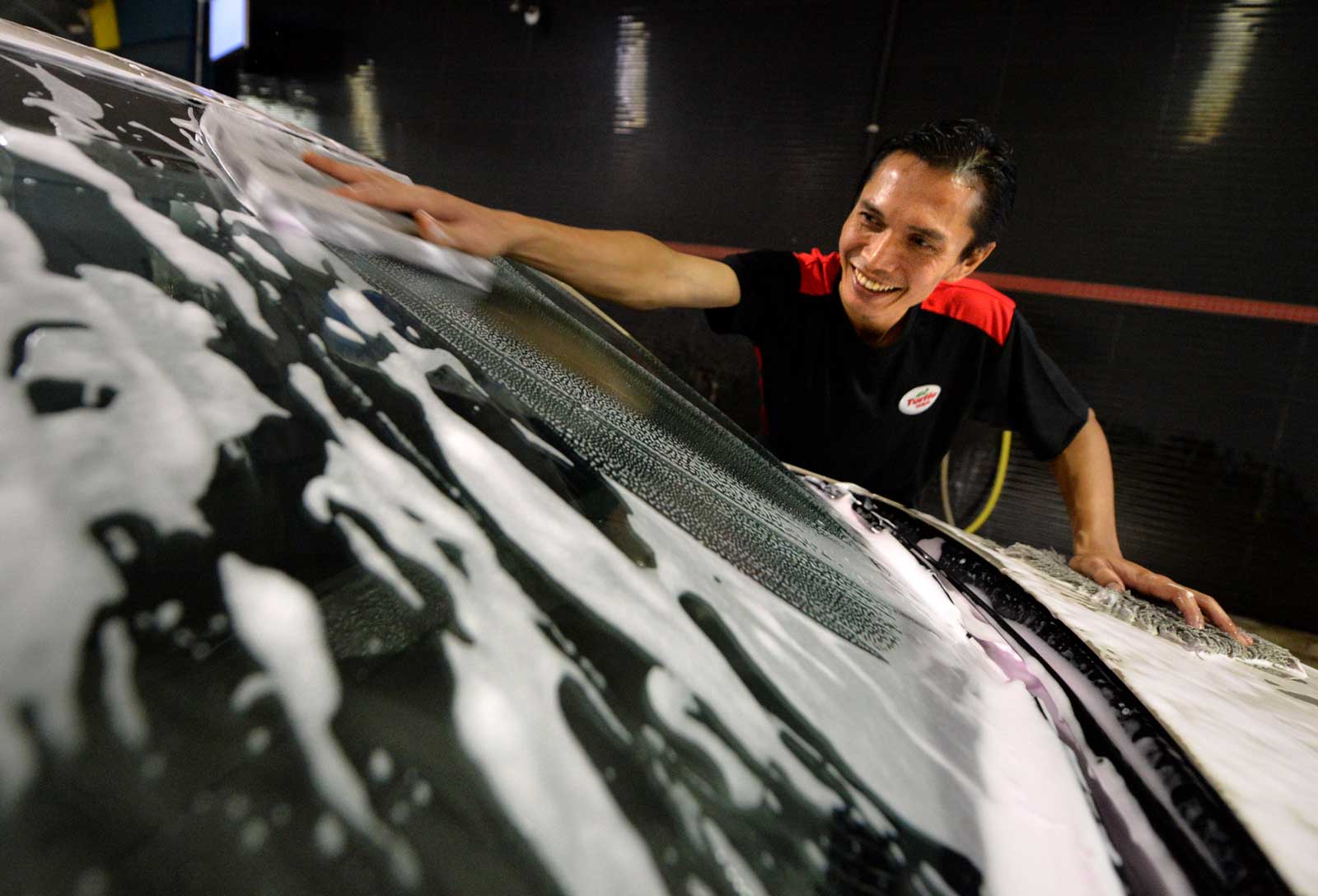
Work starts at 11pm for car washer Jaafar Karjon, who turns up fresh-faced at the Caltex petrol kiosk along Alexandra Road five days a week.

The night shift supervisor at Amaze Carcare Services has been working the 11pm to 6am shift for almost a year.

Mr Jaafar, 39, a Malaysian, tells The New Paper on Sunday: “It sounds a bit funny, but what I enjoy the most about the night shift are the lights at night.”

He adds: “People are so much nicer at night. When they are not in a rush, everyone is friendlier.”

Mr Jaafar leads a team of five to wash approximately 120 cars every night.

Amaze Carcare Services operates at five Caltex petrol kiosks, but Mr Jaafar says the service at Alexandra is one of the busiest because of its central location.

All types of cars come to the petrol kiosk, and Mr Jaafar says he has “washed every kind of car possible”.

He says: “We have many regular customers who always come back to have their cars washed by us.”

No car is spared from the dirt on the roads, and Mr Jaafar has worked on some of the most expensive sports cars around.

He says that sometimes, the owners of these sports cars are actually the nicest customers.

“You would think that people who drive Lamborghinis or BMWs would be the proudest, but I find that they can be kind,” says Mr Jaafar.

SURPRISE

“Some even buy us tea or prata when they are on their way home after supper. It’s always a pleasant surprise.”

As Mr Jaafar does not have a home here, his employers provide him with a rented room in an HDB flat in Bukit Batok.

He gets two days off a week, which he spends playing badminton with the new friends he has made near where he lives.

The journey to and from work takes about an hour each way, and he takes a bus that takes him right to the petrol kiosk.

Although this means that he gets home only at 7am, Mr Jaafar has got used to that. He even looks forward to this time of the day.

Says Mr Jaafar: “When I finish work, and I see every one heading out to start their day, I like to think about what their lives are like.

They must all have families whom they are working hard to care for.”

His own family is back in Ipoh, a 1½-hour flight away.

Every three months, Mr Jaafar makes a trip back to visit his wife and three young children.

He spends all of his annual leave on these trips home.

When asked about his family, Mr Jaafar’s smile disappears for while as he says: “I miss them. Not a single day goes by that I do not think of them.

“But I know that working here is what’s best for them.”

He adds with a smile: “It makes going back to meet them much more special.”


This article was first published on July 31, 2016.
Get The New Paper for more stories.

Image: 
Category: 
Publication Date: 
Sunday, July 31, 2016 – 21:00
Send to mobile app: 
Source: 


Story Type: 
Others

Source link

Watching delayed Olympic telecast is like eating stale bread

0

The Olympic flame will be lit in Rio de Janeiro on Aug 5 but that and the closing ceremony will be the only events you will be able to watch in Singapore when they happen.

When Usain Bolt sprints down the 100m track in a historic attempt to win gold in three successive Olympics, you can only read about it after the race.

If swimmer Joseph Schooling makes Singapore history by winning a medal in the 100m butterfly, you can’t tell anyone you saw it live, not even on television.

The 31st Olympic Games will be watched live by billions of people worldwide but not a single one here will be part of that global audience.

Is this an Olympic-size loss for Singapore when one of the most- connected countries becomes unconnected from the Games, joining the likes of Myanmar, Sudan and Syria? Or does it deserve a gold medal for standing up to ever higher fees for live television coverage of the world’s biggest sports event?

I can’t tell, going by the softly, softly reaction to the shocking news that state broadcaster Mediacorp had failed to reach an agreement with Dentsu which holds the television rights to the Games in this part of the world.

I thought the noise from those protesting against this unsporting deprivation would sound like the Kallang Roar.

Instead the silence from our sports associations and sportsmen was so deafening you could hear a referee’s whistle drop on the pitch at the Sports Hub all the way from Orchard Road.

I wanted to hear their voices because I wanted to know how much the Olympic Games meant to Singaporeans, especially those who play sports or are involved in their organisation.

I wanted to know if they believed sports was more than just an athletic activity – that it was also about building character, enriching culture and unifying communities.

I wanted to find out if Singaporeans agreed with what was written in the Olympic Charter that: “Olympism is a philosophy of life… Blending sport with culture and education, Olympism seeks to create a way of life based on the joy of effort, the educational value of good example and respect for universal fundamental ethical principles. The goal of Olympism is to place sport at the service of the harmonious development of man, with a view to promoting a peaceful society concerned with the preservation of human dignity.”

The statement above might seem like pompous hypocrisy, but if you’ve ever seen Olympic athletes perform in whatever sports they do, you know you are watching the limits of human ability, effort and endurance.

It makes me feel very human when I see superhuman athletes trying to run faster, jump higher, box harder and do whatever it takes to beat the other fellow.

There is no place like the Olympics to witness it and when you watch it knowing that millions of others are doing the same, you feel a common humanity.

(It isn’t the same with a delayed telecast, which is like eating stale bread.)

It would have been good for sports if the community here discussed this openly and let everyone know how strongly they felt about these issues.

But all I heard was how much beaming the Games live here would cost. I didn’t hear much about sports but everything about the dollars and cents.

The problem with framing the issue in monetary terms is that it drains it of everything that sports stand for. It stops the discussion in its track, like cutting off a sprinter’s legs in mid-stride.

The money is, of course, an important concern. There is a limit to how much a country should pay for television rights and it can’t be squeezed for more every four years.

Indeed, broadcast rights worldwide have risen faster than Olympic records have fallen: it was US$1.2 million for the Rome Games in 1960, rising more than 2,000 times to US$2.57 billion for London in 2012 and to at least US$3.5 billion (S$4.7 billion) for Rio.

The bottom line is that viewers everywhere will have to pay more.

All this is fair enough and I think Singaporeans understand it as well as anyone. But no one has said how much is too much.

It has been reported that Dentsu is asking US$6 million from Mediacorp. Hong Kong is paying US$25 million, Thailand US$17.4 million and Malaysia more than US$10 million.

All have agreed to pay those sums, but not Singapore. Is it too much to pay for watching the best athletes in the world perform live, including the 25 from Singapore?

In fact, the country has paid quite a bit for sports in recent years, doing more than it has ever done to promote it among the people, starting with the building of the Sports Hub which cost a record-breaking $1.3b billion.

Under the Sports Excellence Scholarship programme, the Government is committed to spending $40 million over five years to support some of our best athletes as they prepare for international competition.

Those good enough to go for Olympic glory receive up to $90,000 a year for full-time training. Last year, $324.5 million was spent to host the SEA Games for the first time in 22 years.

These are big bucks and it shows that Singapore is prepared to pay serious money to develop and promote sports because it brings benefits to the people beyond the playing fields.

I didn’t hear too many people complain then that these amounts were too much to pay.

A lot of them will have to get used to eating stale bread the next month.


This article was first published on July 31, 2016.
Get a copy of The Straits Times or go to straitstimes.com for more stories.

Image: 
Publication Date: 
Monday, August 1, 2016 – 06:00
Send to mobile app: 
Source: 


Story Type: 
Others

Source link