 SINGAPORE – The Government is exploring the need to tighten rules governing factory-converted dormitories (FCDs) to ensure the well-being of workers housed in such facilities, Minister of State (Manpower) Teo Ser Luck said on Monday (Aug 1).
Speaking to…
Source link
Govt exploring tighter rules for factory-converted dormitories

Surbana Jurong acquires Australia’s SMEC for S$400m

 SINGAPORE – Urban planning consultancy Surbana Jurong announced on Monday (August 1) that it has acquired an Australian infrastructure player for S$400 million; a move that it said makes it one of the largest firms in its field in Asia.
The acquisition of…
Source link
S Korea says North hacked government emails, stole passwords

Seoul – Seoul prosecutors on Monday accused North Korea of hacking into the email accounts of dozens of South Korean government officials this year, the latest in the series of suspected cyber attacks by Pyongyang.
Investigations showed a “suspected North Korea-operated group” attempted to hack into the emails of 90 people – including officials at the foreign, defence and unification ministries – from January to June, the Supreme Prosecutors’ Office said in a statement.
“The passwords of 56 accounts were stolen,” the statement said.
The hackers set up 27 phishing sites in January posing as popular portals like Google and South Korea’s Naver, as well as government and university websites, to steal the passwords.
The prosecutors said the malicious codes used in the latest attack were the same as the ones used by North Korea in previous attacks on the South.
An investigation is still ongoing to see if any confidential information may have been leaked.
The latest cyber attack comes just days after South Korean police said the North stole the personal data of over 10 million customers at South Korean online shopping mall Interpark.
Interpark was unaware about the attack until July 11, when it was blackmailed with threats to publicise the leaked data unless the company paid three billion won (US$2.7 million).
The National Police Agency said the North’s main spy agency — the Reconnaissance General Bureau — had organised the hack in a bid to earn hard currency.
Tensions on the divided Korean peninsula have been running high since Pyongyang carried out its fourth nuclear test in January, followed by a series of ballistic missile tests.
The provocations have put North Korea under the toughest sanctions yet from the United Nations as well as mounting individual sanctions by countries like the US, South Korea and Japan.
Seoul has in recent years blamed the North’s hackers for a series of cyber attacks on military institutions, banks, state agencies, TV broadcasters, media websites and a nuclear power plant.
The North operates an army of more than 1,000 hackers who stage hacking or cyber attacks targeting Seoul’s major institutions or key officials, according to the South’s spy agency.
A look at North Korea’s Kim Jong Un
Click on thumbnail to view photos. Source:
AFP, Reuters












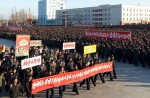


































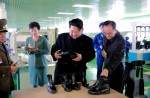
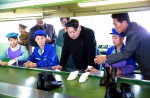




















Image:

Blurb:
Publication Date:
Monday, August 1, 2016 – 15:59
Keywords:
Send to mobile app:
Source:
Story Type:
Others
Confirm plus chop: Jetstar to go Singlish for National Day

SINGAPORE – In-flight announcements on Jetstar Asia flights flying into Singapore will be made in Singlish on National Day this year, and this time it is not a prank.
So don’t be surprised if you hear the cabin crew saying “make sure your seatbelt kiap…
Source link
Singapore launches special unit to fight money laundering
Singapore – Singapore’s central bank on Monday formally launched a unit to fight money laundering, strengthening the financial hub’s safeguards against illicit fund flows.
Officials of the Monetary Authority of Singapore (MAS) have said plans to create the special unit predated a continuing scandal involving state fund 1MDB in neighbouring Malaysia and banks operating in Singapore.
“But these recent developments have indeed underscored the merits of bringing together supervisory resources from across MAS to give a centralised focus on combating money laundering,” a spokesman for the MAS said in June when it announced the creation of the unit.
Singapore last year opened an investigation into fund flows linked to 1MDB. In May this year it expelled Switzerland’s BSI Bank for “gross misconduct” related to the Malaysian fund.
Last month Singapore revealed it had seized nearly US$180 million in assets through its investigations into suspected fraud and money-laundering linked to 1MDB.
Half those assets were connected to Low Taek Jho, a Malaysian businessman close to Malaysian Prime Minister Najib Razak.
The MAS on Monday confirmed it was examining the extent of Goldman Sachs Singapore’s involvement in 1MDB bond deals.
US regulators last week said they had issued subpoenas to the American investment bank asking for documents related to its dealings with 1MDB.
“As our financial centre grows in scale, sophistication, and connectivity, so does the risk of criminal elements abusing our financial system,” MAS managing director Ravi Menon said in June.
“We will strengthen our supervision of financial institutions’ controls to combat money laundering and illicit financing. And we will enhance our enforcement capability to deter poor controls or criminal behaviour in the industry.”
Image:

Publication Date:
Monday, August 1, 2016 – 15:49
Send to mobile app:
Source:
Story Type:
Others
Delphi to begin testing on-demand robot taxis in Singapore

 SINGAPORE – Delphi Automotive, the vehicle-electronics supplier that last year conducted the first coast-to-coast US demonstration of a self-driving car, will begin testing autonomous autos in Singapore this year that may lead to robot taxis by the end of the…
Source link
Vietnamese man claims to be father of Cambodian jungle woman

Phnom Penh – A Vietnamese man has claimed he is the real father of a woman whose plight gripped Cambodia after she apparently spent 18 years living in the jungle, her adoptive family said Monday.
The paternity claim, which the woman’s adoptive family now believe is genuine, adds a new twist to a saga which began in 2007 when a naked and filthy woman was discovered trying to steal food from a farmer.
The woman – soon dubbed “jungle woman” by Cambodians – was found hunched over like a monkey, scavenging on the ground for pieces of dried rice.
She was taken in by a Cambodian family who identified her as Rochom P’ngieng, a girl who went missing in 1989 while herding water buffalo in Ratanakiri province, around 600 kilometres (400 miles) northeast of Phnom Penh and home to some of the country’s wildest jungle.
Now a 70-year-old Vietnamese man, named Peo, claims the woman is in fact his daughter who went missing in 2006 and has a history of mental health issues.
Rochom Khamphy, a member of the adoptive family, said Peo recognised her after seeing recent photos on Facebook.
“He claimed she is his long-lost daughter,” he told AFP by telephone. “He recognises her by a spot on her lip, ear conditions and a scar on her left wrist.”
The Vietnamese man has since made two visits, the latest on Saturday, and has agreed to pay the woman’s adoptive family $1,500 for taking care of her.
Khamphy said his family were inclined to believe the man is her father and were awaiting approval from the Cambodian authorities to give her back.
“If she was not his daughter, he would not want her back because she is mentally ill. He said he feels pity for her, that is why he wants her back,” he said.
In a letter given to her Cambodian adopted family and seen by AFP on Monday, Peo said his daughter was called Tak.
“Recently some young villagers suddenly found her information and pictures online. They showed me and I discovered she is now in Cambodia, raised by Cambodians,” Peo said.
Chhay Thi, provincial coordinator for local rights group ADHOC, told AFP he was monitoring the transfer process for any signs of human trafficking, but added he was inclined to believe Peo.
“Their faces are similar. If she is not his daughter, he would not take her back because she is mentally-ill,” he said.
Image:

Blurb:
Publication Date:
Monday, August 1, 2016 – 15:39
Send to mobile app:
Source:
Story Type:
Others
Fault on antenna caused train to skip stations on BPLRT line: SMRT
The public transport operator was responding to feedback from a commuter, Ms Jacqueline Bong, about the incident which occurred on the Bukit Panjang LRT line (BPLRT) on Jul 28.
Source link
Defying party secured landslide win for Tokyo post, says Koike
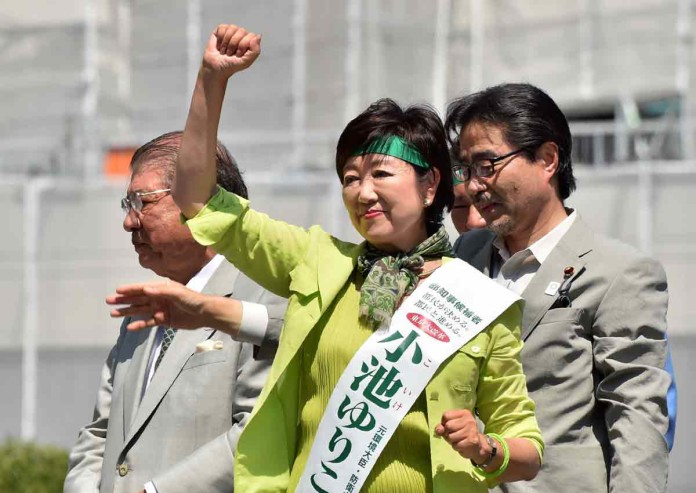
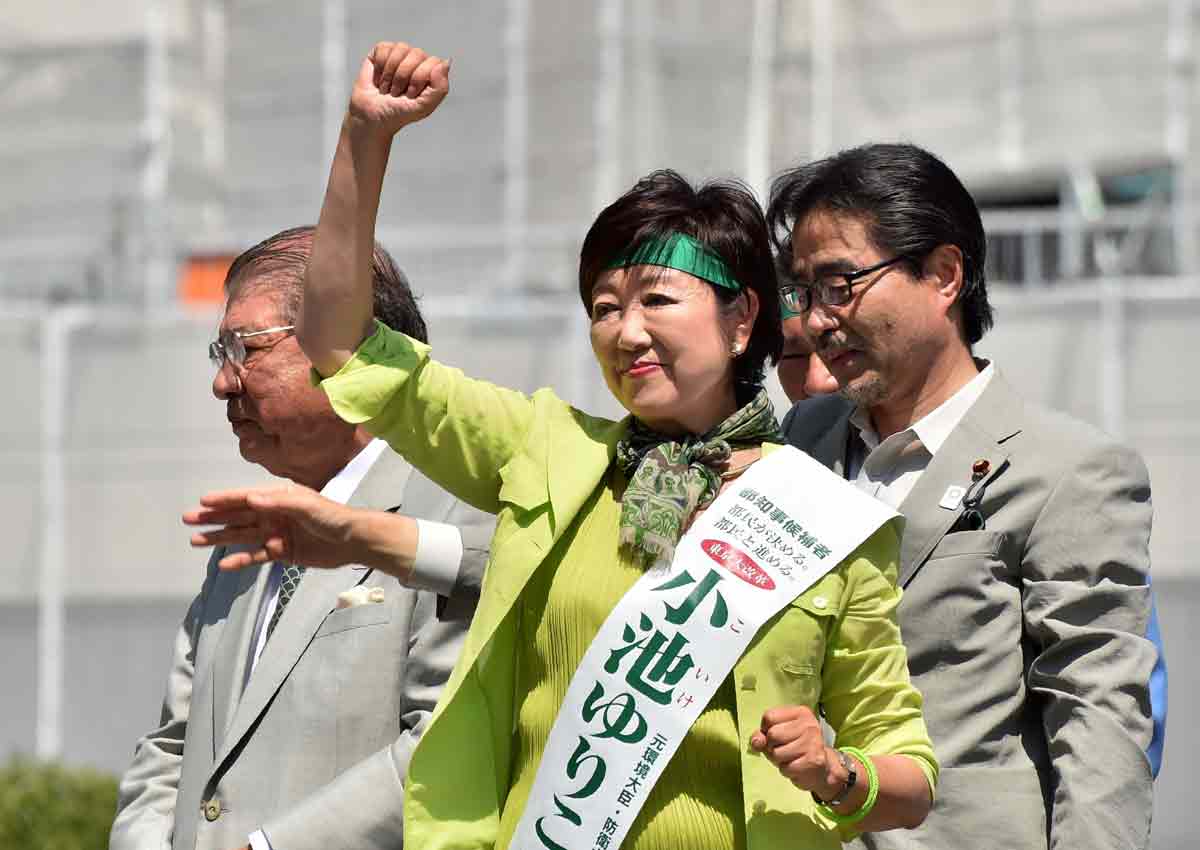
Tokyo – Tokyo’s new governor Yuriko Koike on Monday credited her landslide victory to having stood up to the powers that be in Japan’s ruling party who didn’t want her to run.
Koike, 64, was elected Tokyo’s first female governor in the Sunday vote, winning more than 2.9 million votes, far outpacing the nearly 1.8 million ballots cast for closest challenger Hiroya Masuda.
Masuda, a former governor of Iwate prefecture in northern Japan, was the favoured candidate of Prime Minister Shinzo Abe’s ruling Liberal Democratic Party (LDP) and its coalition partner.
The LDP spurned Koike, an LDP member, for failing to seek its approval before announcing her candidacy, with a top party official calling her “selfish”.
Koike, however, had the last laugh after her campaign drew huge crowds during street rallies ahead of the vote.
“I fought this race without support from the party, and people joked I was like the sole player in a theatre company,” she told reporters early Monday.
“But in the end it allowed us to move freely rather than restricting us.”
The election was called after previous governor Yoichi Masuzoe resigned over a financial scandal involving the lavish use of public funds on hotels and spa trips — the second successive Tokyo leader to quit.
A key challenge facing Koike will be to get a grip on Tokyo’s troubled path to hosting the 2020 Summer Olympics, which has been plagued by scandals and cost overruns.
She vowed late Sunday to be transparent on the budget and restore the trust of voters in the sprawling metropolis of 13.6 million people.
Her defeat of Masuda, a veteran administrator who had won plaudits as governor of northeastern Iwate for 12 years, was a huge embarrassment for the conservative party.
Chief Cabinet Secretary Yoshihide Suga, the government’s top spokesman, expressed disappointment that Masuda lost but hinted the LDP could work with Koike.
“It is important for the central government to co-operate (with the new governor) for the benefit of the Japanese people,” he said.
The party having backed the wrong horse is also embarrassing for Abe, who has vowed to improve conditions for women in male-dominated Japan so they can better contribute to the economy by taking senior positions in business and government.
But he personally never campaigned with Masuda at his street rallies, while local media reported that the prime minister, who had once placed Koike in key national security posts, may have tried to distance himself from his party’s harsh stance towards her.
Besides facing opposition from the LDP, Koike was also subject to verbal abuse from Shintaro Ishihara, who served as governor for 13 years.
“We should not allow the old, old woman with a heavily powdered face to take the reins of Tokyo politics,” Ishihara, 83, said at an LDP rally in support of Masuda.
Koike calmly refuted the attack, explaining that she has to cover a mark on her face, which observers say gathered sympathy from voters.
Image:
Blurb:
Publication Date:
Monday, August 1, 2016 – 15:13
Keywords:
Send to mobile app:
Source:
Story Type:
Others
Lift sector facing shortage of engineers, technicians
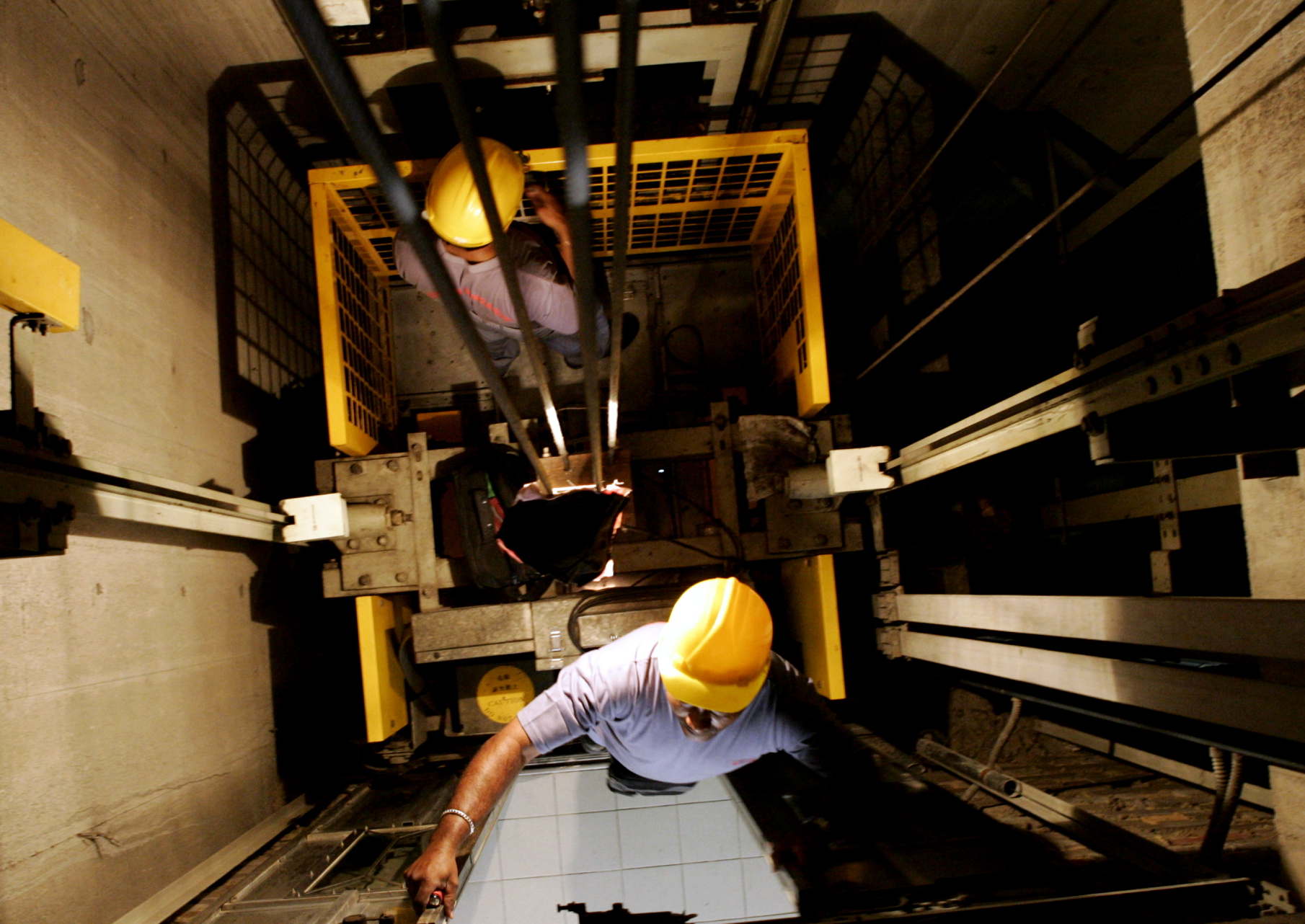
With tighter maintenance rules kicking in last week, lift technicians and engineers are more crucial than ever – yet they remain scarce.
“The whole industry has been short of manpower for the last 10 years or more,” said Mr Sugumaran Pillai, president of the Singapore Lift & Escalator Contractors & Manufacturers Association.
The new rules give more clarity on maintenance standards but the required frequency of life maintenance each month is unchanged.
Of the labour shortage, Mr Quah Eng Hing, secretary of the Singapore Lift & Escalator Contractors & Manufacturers Association, said: “We’ve always been short of people. The pace of new people joining is slow but the number of lifts is still increasing.”
The Building and Construction Authority has said it will look at building up manpower capabilities in the next phase of its review on lift safety regulations.
There are currently about 2,000 lift technicians. But a few big firms account for more than 70 per cent of all lift maintenance work. Among them is Hitachi Elevator Asia, which has lifts in commercial buildings, condominiums and hotels, but not in Housing Board blocks.
“Recruitment of locals has always been a challenge in any labour-intensive industry. But Hitachi has been able to recruit and retain manpower so far,” said a Hitachi spokesman.
Seven of Hitachi’s 10 maintenance engineers and 89 of its 118 maintenance servicemen are Singaporeans. The rest are Malaysians.
Hitachi noted that few young Singaporeans are keen to join the industry, “maybe due to a perceived tougher environment”, compared with similar-paying jobs in manufacturing, sales or administration.
The basic monthly wage – excluding overtime – is $1,160 to $2,080 for a technician with Institute of Technical Education (ITE) qualifications and $2,060 to $3,690 for a supervisor. For support engineers, the monthly basic salary starts at $2,150.
One of Hitachi’s strategies is its tie-up with ITE College East. Since 2012, three to four students from the vertical transportation course have served an internship with Hitachi yearly. There, they learn the basic skills of lift and escalator maintenance, and are attached to full-time technicians to get a taste of the job.
Another initiative is Hitachi’s “recommend a friend” scheme, with incentives for employees who do so.
Technician Omar Shamsudin, 28, is one of those recruited by a friend. Previously a dispatch rider, he joined Hitachi two years ago. “I wanted to apply (the knowledge gleaned from) my Higher Nitec in Mechatronics Engineering in my working life,” said the ITE graduate. “Since (I was) young, I’ve been using lifts. Now that I’ve entered the lift industry, I have the chance to learn how the lift works, its safety functions, and the importance of maintenance work in order to keep the lift in a working and safe operating condition.”

This article was first published on August 1, 2016.
Get a copy of The Straits Times or go to straitstimes.com for more stories.
Image:
Publication Date:
Monday, August 1, 2016 – 15:20
Send to mobile app:
Source:
Story Type:
Others


