Home Blog Page 3208

Dog daycare, linked to disease, re-opens

0

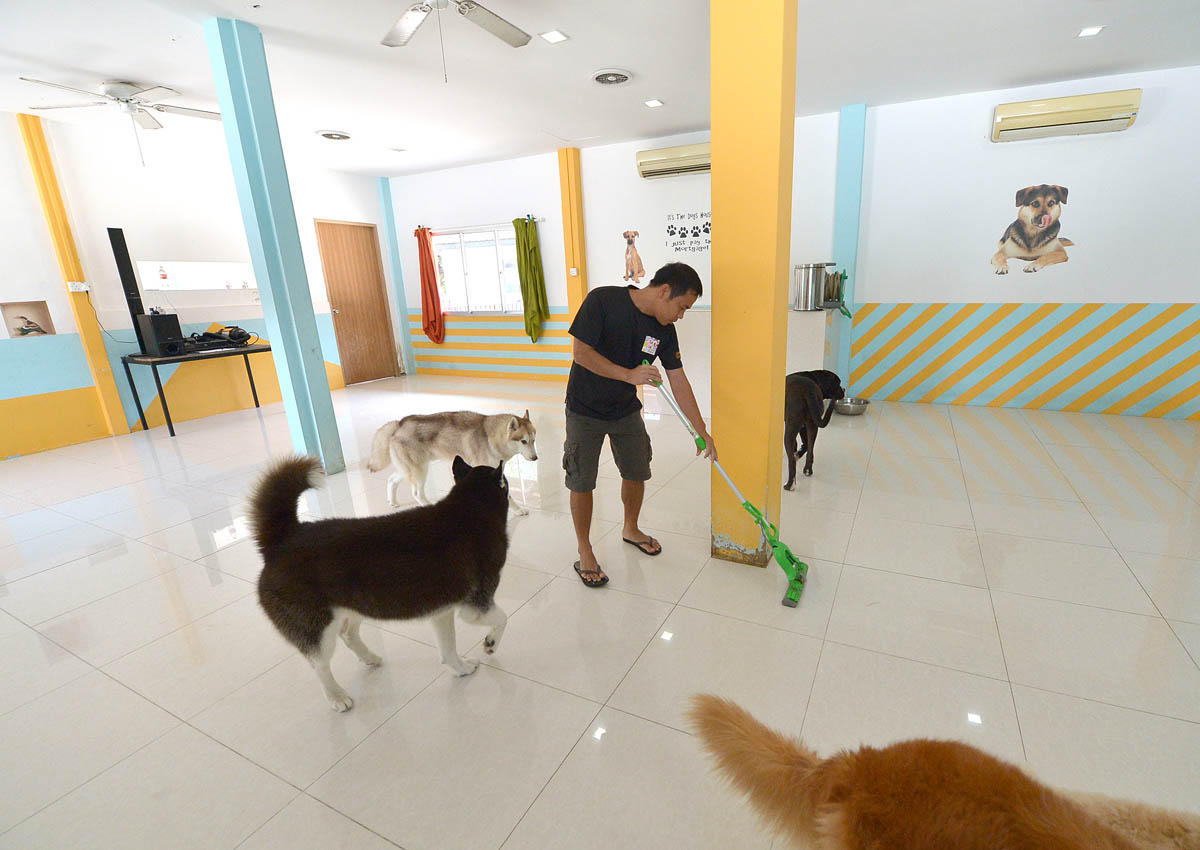
A daycare centre for dogs re-opened its doors to canine boarders on Thursday after a month-long closure to stem what was believed to be an outbreak of a serious bacterial infection.

The Agri-Food and Veterinary Authority (AVA) is allowing Sunny Heights to accept new dogs, as it is taking steps to ensure these dogs do not come in contact with those already at the centre.

It will continue to monitor the situation.

Investigators are still working to determine how canine visitors to Sunny Heights might have developed suspected leptospirosis.

The disease is usually spread by rodents, but the National Environment Agency (NEA) says no rat activity has been detected at Sunny Heights.

Environmental samples taken by the AVA have tested negative for pathogenic species of leptospires.

In addition, six rat traps deployed since the surge of suspected leptospirosis cases early last month have remained empty, said Sunny Heights owner Derrick Tan.

The AVA told The Straits Times it is still investigating the possible sources of infection.

“While there is currently no evidence linking leptospirosis cases associated with Sunny Heights to rodents, in general, infected rodents are known to be the primary source of leptospirosis, through their urine,” it said.

The AVA was notified of 27 cases of suspected canine leptospirosis between Jan 1 and last Monday, 15 of which were associated with Sunny Heights.

As of Thursday, three of the 15 have tested positive for leptospirosis, and test results from a second round of sampling are pending.

Of the 15 dogs which have died or been euthanised after developing symptoms similar to leptospirosis this year, six had visited the centre.

AVA had earlier cautioned that bacteria can remain in the soil or stagnant water for months, making it difficult to completely eliminate the risk of transmission from the environment.

It also urged dog owners to keep their dogs up to date with their vaccinations, which can reduce the chance of the dog being infected and prevent the excretion of bacteria in the dog’s urine.

The centre has also taken other precautions on top of existing measures, like disinfecting the premises twice daily, said Mr Tan, who estimated the month-long closure has cost the centre at least $80,000.

Other than segregating the dogs, staff must step into a bucket of disinfectant before entering dog holding areas.

The swimming pool has also been drained and disinfected.

Mr Tan, who is also president of animal welfare group Voices for Animals, keeps 10 rescued dogs at Sunny Heights as part of the group’s scheme to let potential adopters interact with them.

Prior to the closure, both the rescued dogs and those at daycare were kept in the same area to allow the animals to socialise.

Responding to allegations from netizens that the disease had come from the rescued animals, Mr Tan said on Thursday that initial tests showed none of them had leptospirosis.

“They were vaccinated and quarantined before they were introduced to the other dogs,” he said.

But as an extra precaution, daycare and rescued dogs are now kept in separate buildings while the authorities conduct further tests.

Before the outbreak, Sunny Heights welcomed an average of 50 dogs every day. That number has dropped to 10 since its re-opening.

Mr Tan urged all dog owners to get their pets vaccinated, as disease-causing bacteria can be found in public places such as parks.

Shipping officer Annie Lam, 47, agreed. Said Mrs Lam, who has taken her dog back to Sunny Heights: “I am very happy with their facilities and don’t feel insecure about sending Jacob in.

“Pet owners should also do their part and ensure their pets are fully vaccinated.”


This article was first published on August 6, 2016.
Get a copy of The Straits Times or go to straitstimes.com for more stories.

Image: 
Category: 
Publication Date: 
Saturday, August 6, 2016 – 17:00
Send to mobile app: 
Source: 


Story Type: 
Others

Source link

New protocol for lawyers behaving badly

0

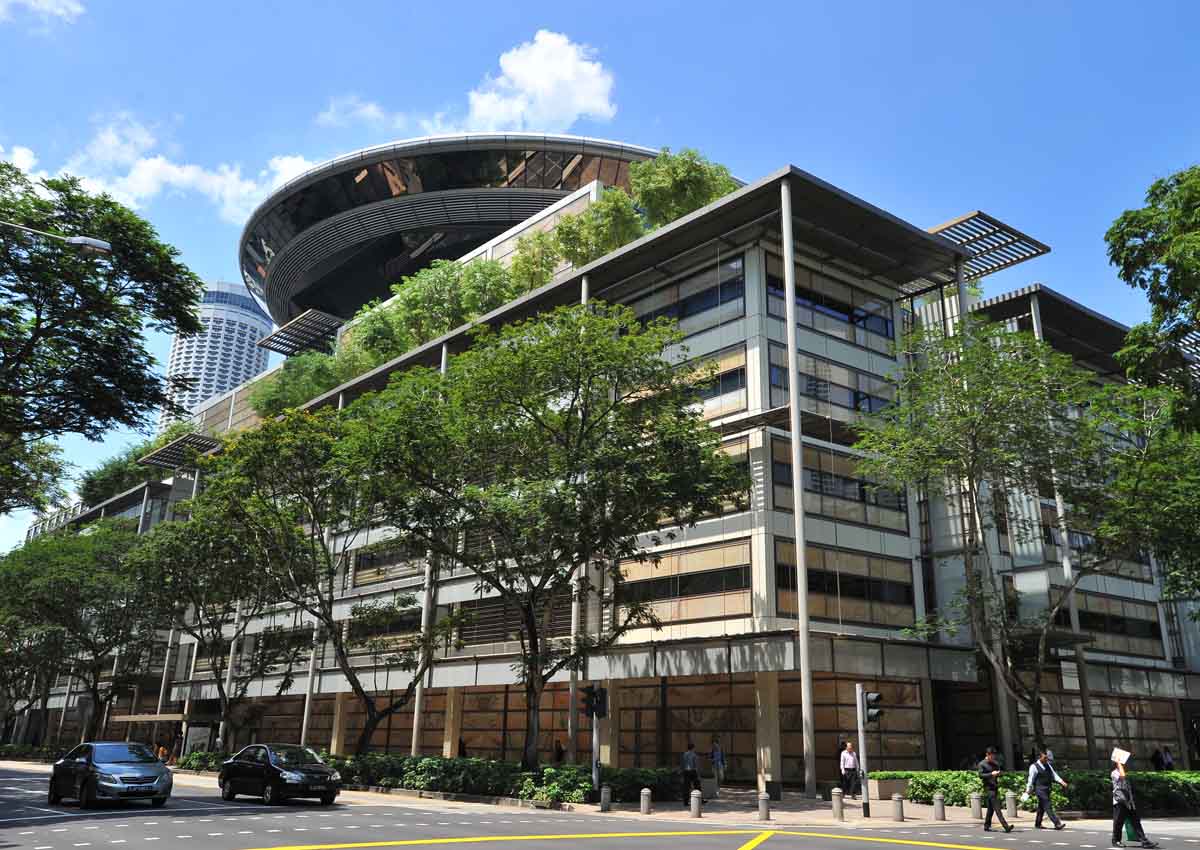
Lawyers booked for inappropriate conduct in court may have to agree to training or counselling by a senior lawyer as part of a new protocol worked out by an ad-hoc study committee.

The arrangement to be put in place provides for the Law Society to be notified by the court about the inappropriate conduct which, in turn, will be fed back to the lawyer.

As this is voluntary, it is up to the lawyer to agree to counselling or training if required and be reminded of his or her duty to the court.

Law Society president Thio Shen Yi, providing details of the new protocol in the latest issue of the society’s Law Gazette, said the arrangement agreed between the courts and the society’s governing council was meant to rectify such infractions informally.

“Moving forward, a complaint triggering the disciplinary process does not necessarily have to be both the first and last resort, but will be managed with a ‘lighter touch’.”

Senior Counsel Thio had noted last year that judges in both the High Court and State Courts had observed an increasing incidence of inappropriate conduct.

Among other things, lack of punctuality had drawn comments from the State Courts, High Court and even the Singapore International Commercial Court.

The study committee under the Singapore Academy of Law’s Professional Affairs Committee chaired by Justice Quentin Loh had concluded that the current range of formal disciplinary measures was too limited to tackle the wide variations of inappropriate conduct.

“The courts had a binary decision – complain and constitute an inquiry committee or disciplinary tribunal or simply do nothing.

“This created a situation which almost counter-productively encouraged more complaints than fewer,” he said.

“A middle ground was needed, one that could potentially lead to a de-escalation of the complaints.”

Mr Thio said if the errant lawyer accepts the feedback and the court is satisfied the lawyer has taken steps to address the issue, the matter will likely be treated as closed.


This article was first published on August 6, 2016.
Get a copy of The Straits Times or go to straitstimes.com for more stories.

Image: 
Category: 
Publication Date: 
Saturday, August 6, 2016 – 17:00
Send to mobile app: 
Source: 


Story Type: 
Others

Source link

Singapore authorities issue advisories after Pokemon Go launch

0

Players urged to stay safe and keep out of restricted areas, following the game’s launch. 

Source link

E-bus to play public route in trial lasting six months

0

An electric bus will be tested out for the first time in Singapore on a public route, in a pilot which could see more of such green vehicles being used for mass transport.

The Land Transport Authority (LTA) revealed to The Straits Times yesterday that it is working with Shenzhen-based automaker BYD and bus operator Go-Ahead Singapore on a six-month trial to assess the suitability of e-buses for public transport.

The single bus to be used in the trial is a single-deck K9 model from BYD (Build Your Dreams) which can carry a total of 80 passengers.

Commuters can hop on this bus on one of the services that will be operated by Go-Ahead Singapore, the LTA said.

While the British-based firm is set to kick off operations next month, the launch date and route which the e-bus will ply are still being worked out.

An LTA spokesman also said: “The electric bus will operate trips on top of those scheduled, and hence there will not be any adverse impact on service levels.”

Go-Ahead Singapore, which won a government bus tender last November, will run 25 bus routes in the Pasir Ris and Punggol areas.

The LTA said that BYD will implement the necessary charging infrastructure at Go-Ahead’s depot in Loyang to support the e-bus operation.

According to sources, the K9 to be used will require between five and 10 hours to be charged fully, allowing it to run for 250km.

The K9 bus is supplied by BYD Singapore and its local distributor S Dreams, which are working to promote electric vehicles (EV) here.

The e-bus trial is part of the EV test bed led by LTA and the Economic Development Board to trial fleet-based EV operations, a follow-up to the earlier phase which ended three years ago and involved individual corporate users.

Also being tested is an e-taxi pilot that will launch next month, and a nationwide electric car-sharing programme that will be rolled out next year, and will grow to 1,000 cars by 2020.

Cities such as Paris and Chicago have been progressively incorporating e-buses into their fleets.

Transport for London, the city’s transport authority, has committed to ensuring all 300 single-deck buses in central London are zero emission by 2020.

Professor Subodh Mhaisalkar, executive director of Nanyang Technological University’s Energy Research Institute, said: “Electric buses are the way to go to reduce CO2 emissions.

“Residents living near bus stops will also appreciate e-buses as they do not have emissions and are quiet.”

But he said that Singapore’s warm climate could present a challenge.

“Besides being used for driving, the battery charge of the electric bus will also have to support the air-conditioning, and this could limit the range,” he added.


This article was first published on August 6, 2016.
Get a copy of The Straits Times or go to straitstimes.com for more stories.

Category: 
Publication Date: 
Saturday, August 6, 2016 – 17:00
Send to mobile app: 
Source: 


Story Type: 
Others

Source link

Demonising racist netizens not fruitful: Academics

0

Singaporeans need to move away from knee-jerk punishments and public shaming of individuals who make racist or xenophobic comments online, several academics said yesterday.

While such people should be called out, demonising them, reporting to the police as the first response and asking for quick solutions are not fruitful, they added.

The reason is that apologies made under such pressure are very likely to be insincere.

A better approach is to confront the individual in a civil way, National University of Singapore (NUS) adjunct senior fellow Lai Ah Eng said at a conference on managing social and cultural diversity in Singapore.

“I met a retired teacher, who every morning when she goes on the Internet… reasonably and civilly answers comments that she disagrees with,” Dr Lai said.

“People should take it up as a new habit… instead of angrily saying your piece and then shutting down the computer.”

But even as individuals like Dr Lai’s teacher friend step up to the plate, the Government cannot take a step back, said Minister of State for Education and Communications and Information Janil Puthucheary, a panellist.

The way the Government proactively manages diversity has led to Singapore’s success, and should not be thrown out, he argued.

“Looking for opportunities for sacrifice and compromise, rather than a process of demanding gains – that’s a principled approach that’s served us well,” he added.

At the conference, attended by 200 scholars and civil servants and organised by the Institute of Policy Studies (IPS), 15 panellists discussed diversities in relation to race, religion, language and values.

Dr Lai recounted six incidents of public outrage against racism or xenophobia from 2011 to 2012.

For instance, Chinese national scholarship holder Sun Xu had his scholarship revoked after netizens were outraged at his comparing some Singaporeans’ behaviour to that of dogs, on his Weibo account in 2012.

A former NTUC assistant director, Ms Amy Cheong, lost her job after drawing flak over her expletive-laden Facebook rant against Malay traditional weddings.

Episodes like these underscore the importance of knowing how to manage differences in a mature manner, said the academics.

This is because as Singapore’s population evolves, new fault lines may open up between new citizens and long-time Singaporeans, the rich and the poor, and conservatives and liberals, they added.

NUS sociologist Paulin Straughan criticised some people’s tendency to take photos or videos of unacceptable behaviour and post them online for other netizens to condemn – while “hiding behind anonymity”.

She said: “That’s not being a community, that’s just being a rat… We need to take ourselves beyond that. How do we be busybodies in a constructive manner?”

Learning to do this is crucial for Singapore as it is a small country and cannot afford to fragment owing to differences, she added.

Singapore also needs to watch out for how inequalities can become entrenched via the education system.

Upper- and middle-class parents, anxious to give their children a strong head start in life, pay for tuition and enrichment classes.

Children of poorer parents who cannot afford such privileges may fall behind, said NUS sociologist Tan Ern Ser.

But he argued that it is better to “take care of the weak, rather than undermine the strong”.

Being for or against lesbian, gay, bisexual and transgender rights is another schism that has made the headlines in recent years.

The world views of people in the two camps may be fundamentally opposed, said independent political scientist Johannis Abdul Aziz, who conducted focus-group sessions on the topic earlier this year.

But both sides reject violence and hate speech, he added.

This ability to “disagree agreeably” will become important as more Singaporeans get involved in political debates and even party politics, said IPS deputy director of research Gillian Koh.


This article was first published on August 6, 2016.
Get a copy of The Straits Times or go to straitstimes.com for more stories.

Image: 
Category: 
Publication Date: 
Saturday, August 6, 2016 – 17:00
Keywords: 
Send to mobile app: 
Source: 


Story Type: 
Others

Source link

Mediacorp to broadcast National Day Programmes 'live'

0

Live captioning will be provided as an option for those watching the National Day Parade on the TV, to help the hearing-impaired. 

Source link

I regret being so careless, says hot-spot resident after her son got dengue

0

She received a WhatsApp message from her friend on Wednesday last week informing her of the number of dengue cases in her neighbourhood.

She ignored it.

The next day, one of her three sons had an unusually high fever and was later diagnosed with dengue.

The 47-year-old housewife, Ms Ivy Tan, told The New Paper in Mandarin on Wednesday: “I really didn’t expect my own son to have dengue…

“I regret being so careless.”

TNP visited two active dengue hot spots – Yishun Avenue 4 and Admiralty Drive – and found a number of households taking extra precautions to make sure dengue does not spread to them.

NEA considers both areas as red-zoned hot spots, which are high-risk areas with 10 or more dengue cases.

Yishun Avenue 4 has had 11 dengue cases since the start of the cluster while Admiralty Drive has had 67 cases.

Ms Ivy Tan lives in Block 658, Yishun Avenue 4, which has had six dengue cases.

Her middle son, Zhengda, 13, was one of them. She has two other sons, aged 10 and 15.

Last Thursday, Zhengda had rashes and a high fever that hovered around 39 deg C.

Ms Tan took him to Yishun Polyclinic and was told by the doctors that he had flu.

However, he was in so much discomfort that she insisted the doctor do a blood test.

“His condition wasn’t getting better and I needed to know exactly what the problem was.

“The worst part was that none of us suspected it was dengue, he didn’t complain of mosquito bites – it just hits you when you least expect it to.

“I think this is a good lesson learnt because we are now more conscious of dengue and what it can do,” she said.

BACK IN SCHOOL

Ms Tan even moved Zhengda out of his elder brother’s bedroom, where he usually sleeps, and into her bedroom for five nights.

Zhengda has recovered and is back in school.

The family also bought two cans of insecticide and has been spraying often in dark corners of the flat.

She said: “We don’t want to risk the same thing happening again…

“I could tell that my son was very uncomfortable from the pain.”

Ms Tan hopes her dreadful experience with dengue will be a lesson to others.

She said: “Dengue is a lot more dangerous than we think, and we shouldn’t be taking the tiny mosquito lightly.

“Everyone needs to play his part so that nobody gets hurt.”

Her neighbour, Ms Vanda Sethi, 45, a private tutor, is also not taking any chances.

She lives with her husband, her elderly parents, aged 78 and 80, and two sons, aged 15 and 18.

Flipping pails upside down and covering empty bamboo pole holders are now part of her daily routine.

She said: “I’ve heard of people who die of dengue so… I don’t want anyone in my family to risk getting dengue.”

Another resident in the block, retiree Alice Chua, 69, has been making sure that the rims and surrounding areas of her flower pots are dry.

She said: “I am a little bit worried… but as long as I keep my flat clean, it will be okay.”

However, some residents did not seem too concerned.

A designer in his 20s living in Block 467, Admiralty Drive, who wanted to be known only as Benjamin, said: “I’m not too worried since I’m generally healthy.

“If I eat healthy and exercise, I can recover quickly – all will be okay.”


This article was first published on August 6, 2016.
Get The New Paper for more stories.

Image: 
Category: 
Publication Date: 
Saturday, August 6, 2016 – 14:00
Keywords: 
Send to mobile app: 
Source: 


Story Type: 
Others

Source link

Police urge Pokemon Go players in Singapore to ‘enjoy the game safely’

0

SINGAPORE – Stay safe when playing Pokemon Go, the police urged players on Saturday (Aug 6) hours after the game was launched in Singapore.
“The Pokemon Go craze has seen reports of accidents, injuries and even crimes in countries where it has already been…

Source link

Unlicensed massage establishment in Serangoon Gardens busted for vice activities

0

SINGAPORE – Eight women were arrested following a raid at an unlicensed massage establishment at Maju Avenue in Serangoon Gardens on Thursday (Aug 4).
The police had received information on vice-related activities.
Preliminary investigations found that the…

Source link

Otter nuisance at Sentosa

0

When a Sentosa Cove resident started keeping tilapia five years ago, they bred quickly and he ended up with hundreds of them.

Now he has only two left after the rest were eaten by otters in more than 20 attacks over the past two years.

The resident, who wanted to be known only as Mr Chin, said that he and several of his neighbours have lost so many fish to the otters that they have resorted to desperate measures to keep the mammals out.
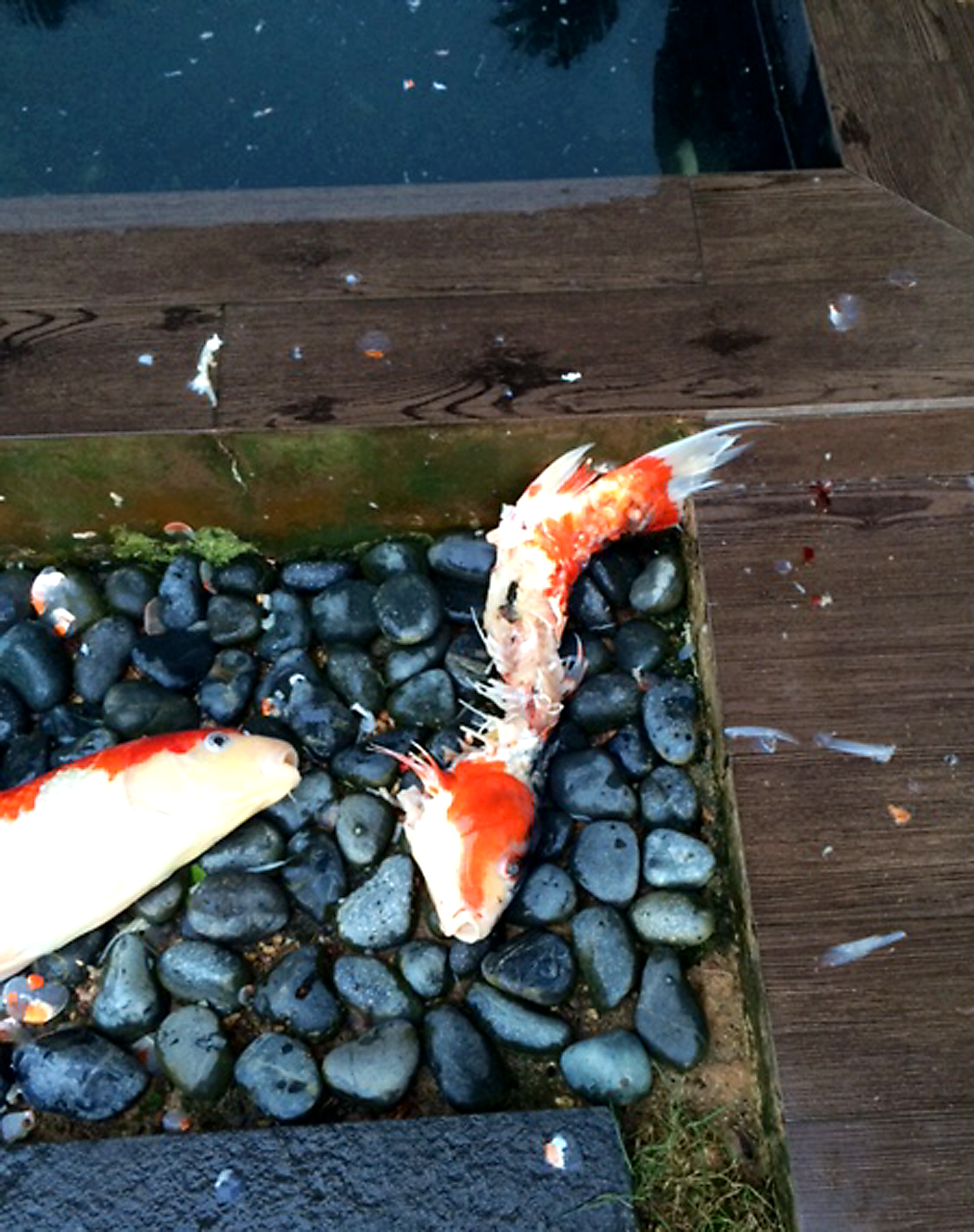
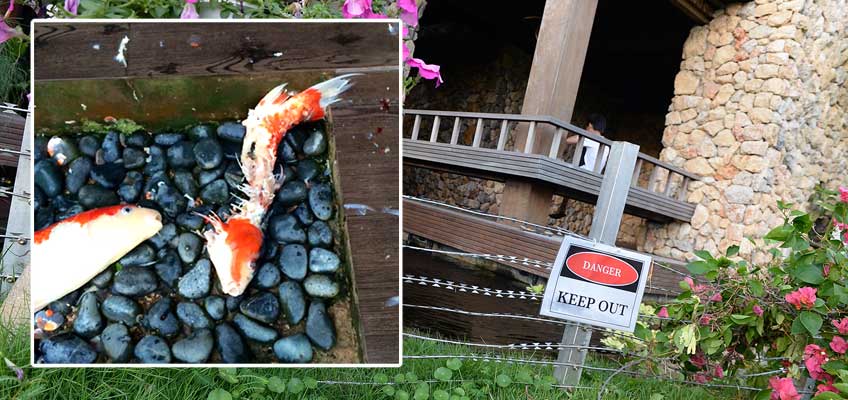
Fish carcasses around Ms Constance Cheng’s pool. Photo: Courtesy of Constance Cheng

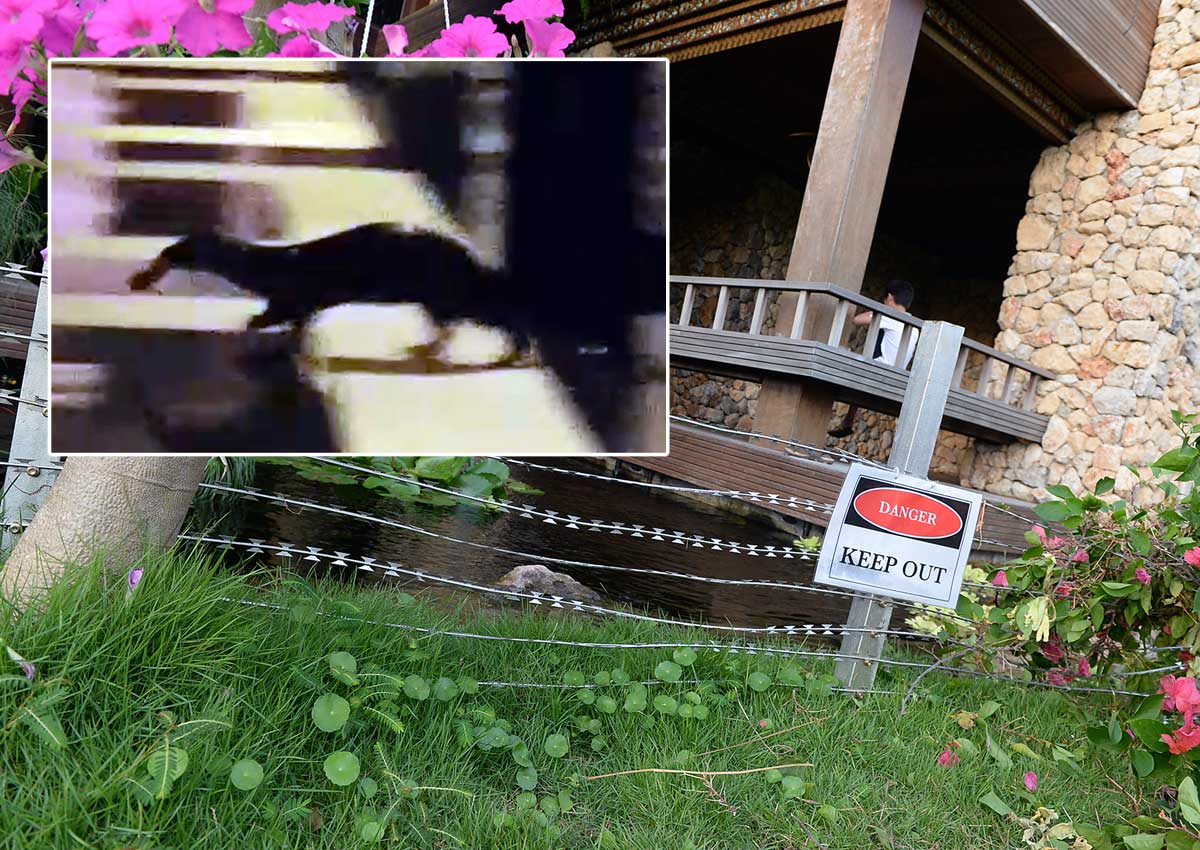
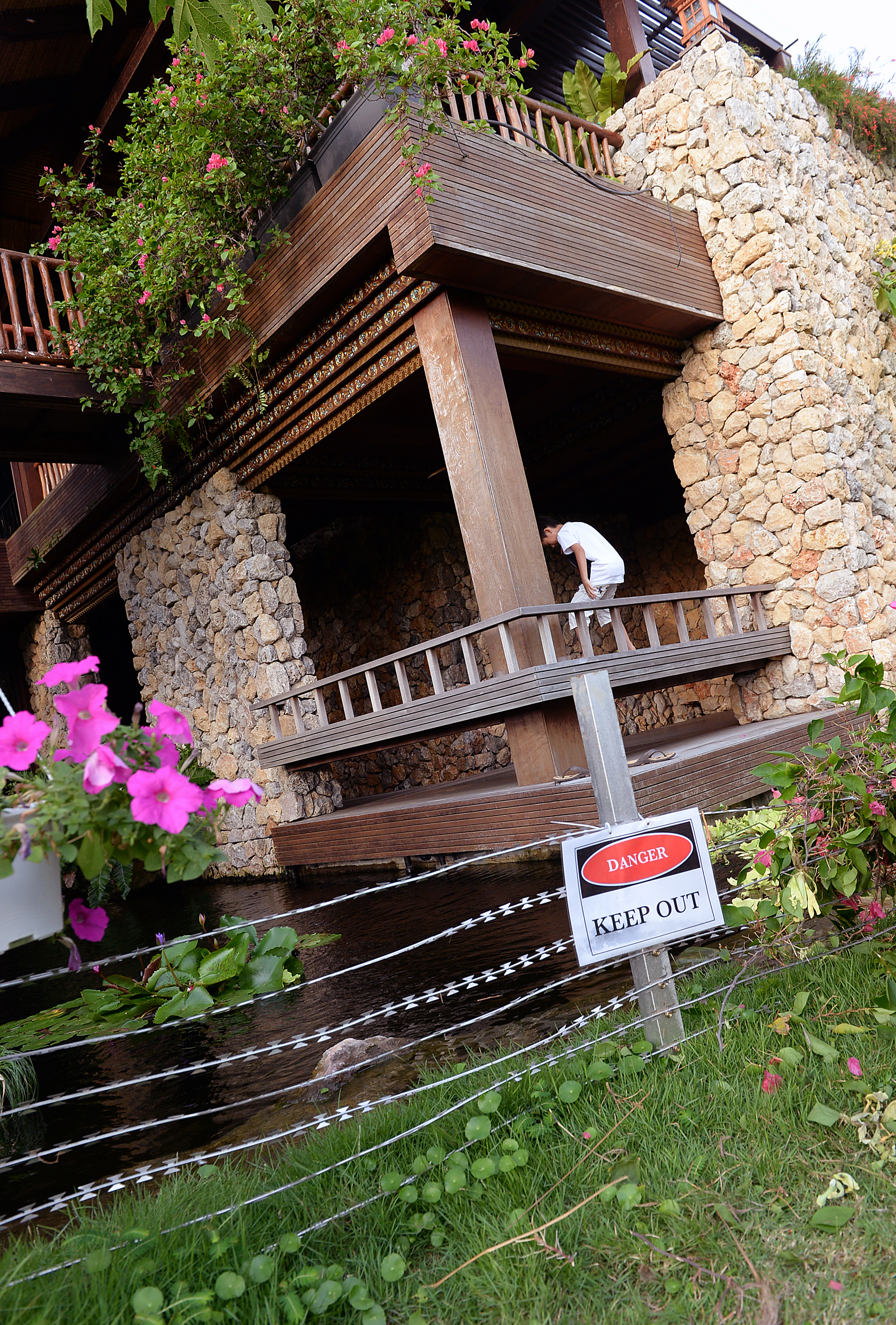
He has put up a barbed wire fence and motion sensor lights, while a neighbour has installed a low-powered electric fence.

But nature experts say these measures may not work because otters are intelligent animals that will find ways to get past these obstacles.

Last July, My Paper reported that a Sentosa Cove resident lost $64,000 after her koi ended up as otter food.

GETTING WORSE

The problem seems to have worsened since then, with about 20 home owners in the posh neighbourhood having problems with otters.

Hotels and condominiums have also been affected, with a hotel losing about $85,000 worth of fish over the past eight months.

Mr Chin told The New Paper on Wednesday that he was devastated to see his tilapia and other fish wiped out.

“Most of their bodies were not eaten.

“The otters just left the carcasses on the ground. I was shocked by the brutality and violence of the scene when I first saw it,” he said.

“Nobody is helping us. We’re so desperate. We just want to cohabit with the otters peacefully.”

In an attempt to save his remaining fish, Mr Chin installed the barbed wire fence and motion sensor lights two weeks ago.

Another resident, Ms Constance Cheng, lost 22 of her 25 koi in two attacks last October.

She gave away the three that survived.

She had bought two koi at just $8 each and the others at $60 to $80 each.

She said: “We kept the fish for seven years.

“In terms of their worth, the sentimental value is much more than anything else.”

Ms Cheng then bought five tilapia at $10 each in February.

On April 2, when she returned from Japan at about 4am, she saw an otter near her pond.

She said: “We switched on the lights and saw a dead fish on the ledge of the pond. Then we looked around and saw one otter wandering on the pontoon.

“I used the broom to chase it back into the water, but I didn’t dare to go too near to it. Eventually, it jumped into the water.”

Of the other four tilapia, three had vanished. She is left with the sole survivor and about 30 offspring.

About two months ago, Ms Cheng installed a battery-operated, low-powered electric fence, costing about $380, around her pond as a temporary measure to keep out the otters.
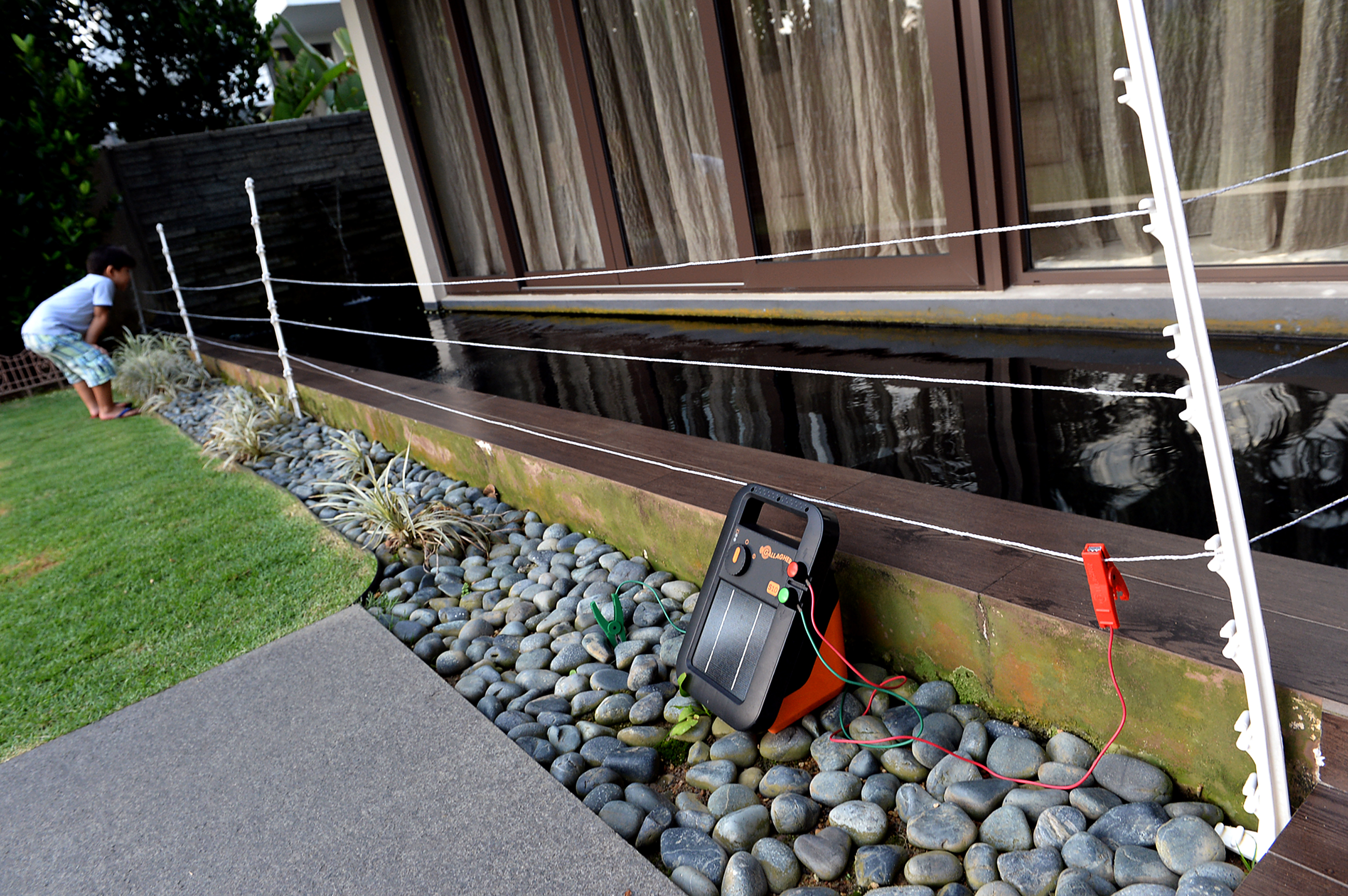
Ms Constance Cheng installed an electric fence and motion sensor lights around her pond. Photo: The New Paper

Another resident, who declined to be named, said she has seen two otters on the footpath and in her swimming pool this year.

EFFECTIVE?

The founder of nature conservation group Nature Trekker, Mr Ben Lee, 53, thinks the measures to fend off the otters would not be effective.
The battery-operated, low-powered electric fence cost about $380. Photo: The New Paper

He said: “Motion sensor lights will not bother the otters.

The electric fence may give them a scare, but otters are strong and agile creatures.

“Whether the fences will work or not depends on their height and the density of the wire.

“If there are only a few wires, the otters can just squeeze in.”

Mr N. Sivasothi, a biological sciences lecturer at the National University of Singapore (NUS), warned that such deterrents could be a hazard to children and pets such as cats and dogs.

“They are potentially dangerous in residential areas.

“Simple fibreglass barriers for koi ponds, for example, would be enough to prevent otter access,” he said.

The divisional director of operations at Sentosa Leisure Management, Mr Koh Piak Huat, said it had received only a small number of otter-related feedback in Sentosa this year.

“As Sentosa is surrounded by water, the presence of these semi-aquatic mammals can be expected at the coastal areas, and we welcome them as an integral part of our island’s wildlife,” he said.

The Agri-Food and Veterinary Authority (AVA) received 31 instances of feedback on otters, mostly about sightings, in the whole of Singapore from January last year to June this year.

Only a small number were on nuisance issues, such as the loss of fish from private ponds to animal attacks.

A spokesman said that inspections were conducted at the affected households and the residents were advised to take preventive measures.

They include covering the fish ponds with netting or erecting a small barrier around them.

AVA added that the Otter Working Group, comprising AVA, National Parks Board, PUB, NUS, Animal Concerns Research and Education Society, Wildlife Reserves Singapore and members of OtterWatch, is working on solutions to otter issues, including those in Sentosa.

Sofitel Singapore lost $85,000 worth of fishes

The otters have hit not only homes but also hotels and resorts in Sentosa.

Sofitel Singapore Sentosa Resort & Spa has suffered one of the biggest losses so far – about $85,000 worth of arowana and koi since last December.

In a video taken two weeks ago, an otter is seen swimming and scurrying out of the resort with a fish gripped in its jaws.

General manager Frederik Deman told The New Paper on Thursday: “We have regular visits of otters eating koi. They jump inside the ponds and take the fish.

“We have tried everything, including reinforcing the security and CCTVs (closed-circuit television), but it is not easy to stop the otters. We have not bought any fish since March.”

Amara Sanctuary Resort Sentosa lost more than 50 ornamental fishes during the period – late last year till June – when otters were seen in the resort.

Remains of the fishes were found around the pond after the resort’s associates saw the otters feeding on them.

Its spokesman said: “The otters were able to discern their prey by consuming only the larger fish, and (choosing) to ignore the fingerlings and smaller fish remaining in the pond. The otters have not been seen on the property since June.

“The management is reviewing these incidents and considering alternative measures to protect the fishes while not posing a risk of harming the wildlife.”

FISHES MOVED

Last year, Shangri-La’s Rasa Sentosa Resort & Spa relocated fishes in its pond after some of them disappeared during the time otters were seen on the island, The Straits Times reported.

A spokesman for the resort said it has not had problems with otters of late.

A few condominiums on the island also had their fishes taken by otters and their ponds have been empty for one to two years.

The divisional director of operations at Sentosa Leisure Management, Mr Koh Piak Huat, said: “Our priority has always been the safety of all guests and stakeholders on the island, and we urge everyone to refrain from feeding or provoking the otters in the event of an encounter, even though the mammal is generally not aggressive towards humans.”

Anyone who sees the otters may contact the Sentosa Rangers at 1800 RANGERS (726-4377) for assistance.

The Agri-Food and Veterinary Authority of Singapore (AVA) advises the public not to approach, disturb, feed or try to catch any wildlife.

To provide feedback on wildlife issues, the public can contact AVA at 1800 476-1600.

Intelligent otters look for easy prey

Otters are not only cute but also intelligent, say experts.

Mr Ben Lee, 53, founder of Nature Trekker, a nature conservation group, said: “These wild animals are native to Singapore. As strong swimmers, they can travel long distances in the water at high speeds.”

There are two species of otters here – the smooth-coated otter and the small-clawed otter.

“Smooth-coated otters are larger than cats, they’re really big,” Mr Lee said.

Sentosa Cove residents told The New Paper on Wednesday that they have seen an increase in otters around their homes over the last two years.

Mr N. Sivasothi, a biological sciences lecturer at the National University of Singapore, said there are about 50 smooth-coated otters living in Singapore.

“The current population has not increased over the past year or so.

“In captivity, the record (of an otter’s life span) is about 18 years. It may be about 12 years in the wild.”

As to the number of offspring otters can produce in their lifespan, Mr Sivasothi said: “I do not know at what age they lose their reproductive abilities or are out-competed for territory. We have not seen reports of families with more than two litters living together.”

“There are many potential predators of young cubs – birds of prey and other carnivorous birds, large monitor lizards, crocodiles and feral dogs.”

Otter enthusiast Jeffrey Teo, 45, said there are three reasons that people are seeing more otters now.

“There is more accessibility to waterways through park connectors. Also, phone cameras and social media allow immediate and regular sharing.”

Mr Lee said what the Sentosa Cove residents are experiencing may just be a congregation of otters in one place. “They will go for fishes in ponds as they are big and easy to catch,” he said.

NOT A DANGER

Deputy chief executive of Animal Concerns Research and Education Society, Ms Anbarasi Boopal, said: “Their main diet is fishes, but they also feed on invertebrates such as crustaceans, small mammals like water rats and possibly smaller birds.”

Experts agree that otters are not a danger to humans. “Otters can be aggressive by nature, but they are not prone to attacking other animals or humans unless provoked,” said Mr Lee.

Said Ms Boopal: “It is important that the public is made aware to appreciate them from a distance and to leash their dogs when walking in otter sighting areas to prevent interaction (with)… the otters.”

Sightings over the years

– Bishan-Ang Mo Kio Park, where Bishan 10, a well-known family of otters, was first sighted in 2014.

– Gardens by the Bay, where Marina 9, a pack of otters, was first sighted in 2013.

– East Coast Park, where Marina 9 has made its home since May.

– Marina Bay

– Punggol Waterway

– Pasir Ris Park

– Changi Beach

– Ulu Pandan

– Sungei Buloh Wetland Reserve

– Serangoon Reservoir


This article was first published on August 6, 2016.
Get The New Paper for more stories.

See also:

5 new pups for Bishan-Ang Mo Kio Park otter family

Six-week-old otter pup rescued, reunited with family after it almost drowned

Image: 
Category: 
Publication Date: 
Saturday, August 6, 2016 – 21:00
Send to mobile app: 
Source: 


Rotator Headline: 
Sentosa residents resort to barbed wire, electric fences as otters prey on fish in ponds
Rotator Image: 
Story Type: 
Others

Source link