On the back of the impending rise in re-employment age, the National Trades Union Congress (NTUC) U Live has launched a guidebook for companies entitled “Understanding Re-employment” on Monday (Aug 8).
Source link
Guidebook launched to help companies adopt re-employment guidelines
Air Asia: Fares fr $5* to over 45 Destinations from 8 – 14 Aug 2016
AIR ASIA: Fares fr $5* to over 45 destinations

Air Asia: Fares fr $5* to over 45 Destinations from 8 – 14 Aug 2016
Travel great to Malaysia and other international destinations with Air Asia’ latest promotion featuring base fares from $5 to Kuching, Kuala Lumpur, Kota Kinabalu, Langkawi, Miri, Penang and more
Bukit Brown cemetery gets back its 1920s gates
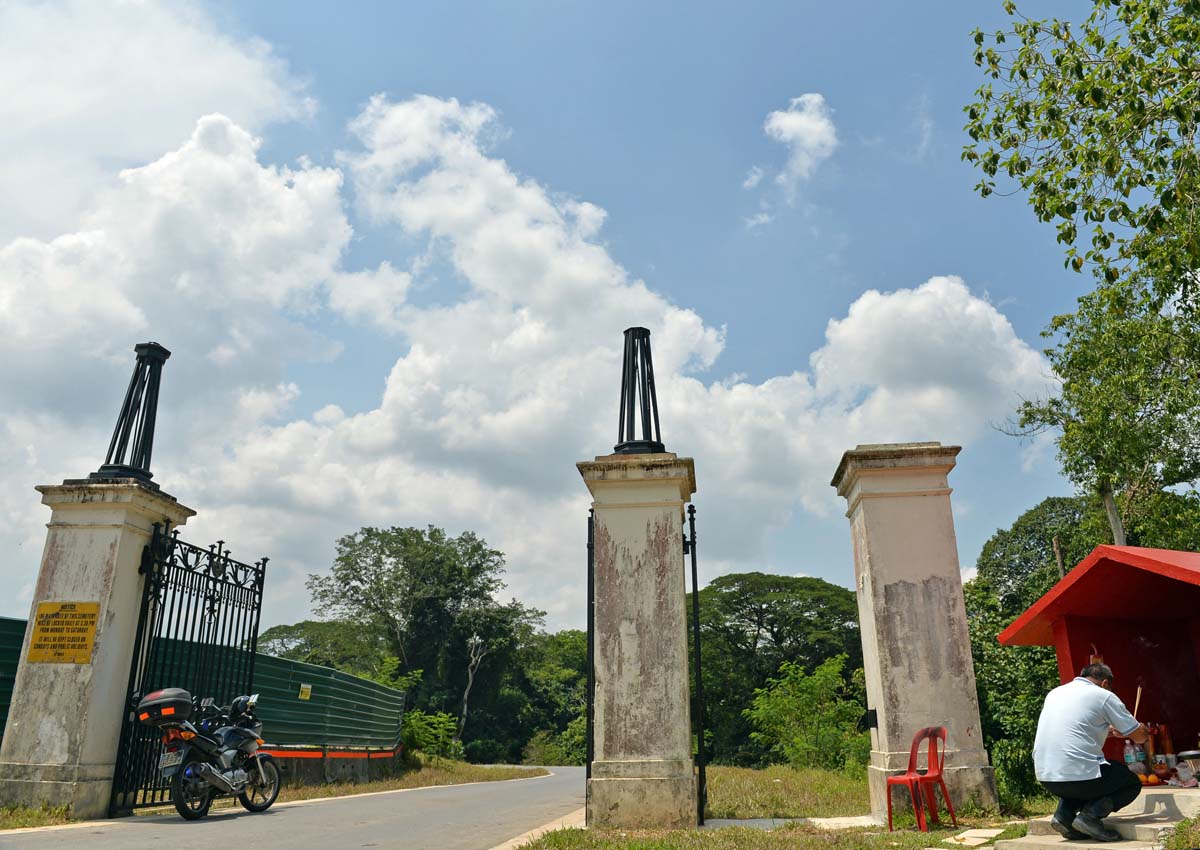
The historic 1920s cast-iron gates of Bukit Brown Cemetery have been carefully reinstalled after six months of conservation and refurbishment work.
The gates, perched on gateposts, now boast a shiny coat of black paint, a far cry from their previous state as badly corroded structures caked in layers of rust.
Years of exposure to the elements had resulted in paint deterioration, plant growth and corrosion.
The gates were reinstalled last week following the refurbishment project by a team from Fusion Clad Precision – a contractor hired by the National Heritage Board (NHB).
Fusion Clad Precision’s conservation manager Serene Lee said the gates were carefully hoisted onto their old posts at the new location – a new access road near Lorong Halwa.
Ms Lee said other precautions taken included securing the gates with specially designed frames that came with strips of padding before installation.
“The gates were loaded and then off-loaded using an overhead crane vehicle.”
The refurbishment was an initiative by a multi-agency work group that the Ministry of National Development chaired.
The group includes the NHB, the Land Transport Authority and civic organisations All Things Bukit Brown and the Singapore Heritage Society (SHS).
The heritage community is glad the gates have been reinstated.
SHS executive committee member Yeo Kang Shua said the structures were among the few historic public gates still standing.
He said: “Gates and doors demarcate and delineate boundaries both physically and conceptually.
“This is a symbolic entry way for Bukit Brown Cemetery, which does not have a fence or boundary wall.”
All Things Bukit Brown co-founder Catherine Lim said that while the gates’ fresh, new look will take some getting used to, reinstating the structure “is the first step in restoring visitors’ sense of arrival”.
The whole structure is made up of two cast-iron gates through which cars used to pass, two side gates for pedestrians and four free-standing square columns.
About 20 per cent of the structure has been replaced to fix damage to its structural integrity and functionality.
The NHB said the original structure was likely prefabricated in Britain and shipped to Singapore, while its square columns were cast on the spot.
Bukit Brown Cemetery opened its doors in 1922.
The NHB also uploaded the second video documentary of a three-part series about the refurbishment project on its heritage website Roots.sg on Saturday.
The board said the documentary will provide viewers with a behind-the-scenes look at the steps and techniques used at each stage of the refurbishment process.
NHB’s assistant chief executive of policy and community, Mr Alvin Tan, said the refurbishment project is part of NHB’s ongoing efforts to safeguard and preserve the country’s tangible heritage.
Some parts of Bukit Brown have been razed as the LTA constructs a major eight-lane road through the cemetery to connect the MacRitchie Viaduct to the Adam Flyover.
This project is expected to be completed by the end of next year.

This article was first published on August 8, 2016.
Get a copy of The Straits Times or go to straitstimes.com for more stories.
Image:
Publication Date:
Monday, August 8, 2016 – 15:00
Keywords:
Send to mobile app:
Source:
Story Type:
Others
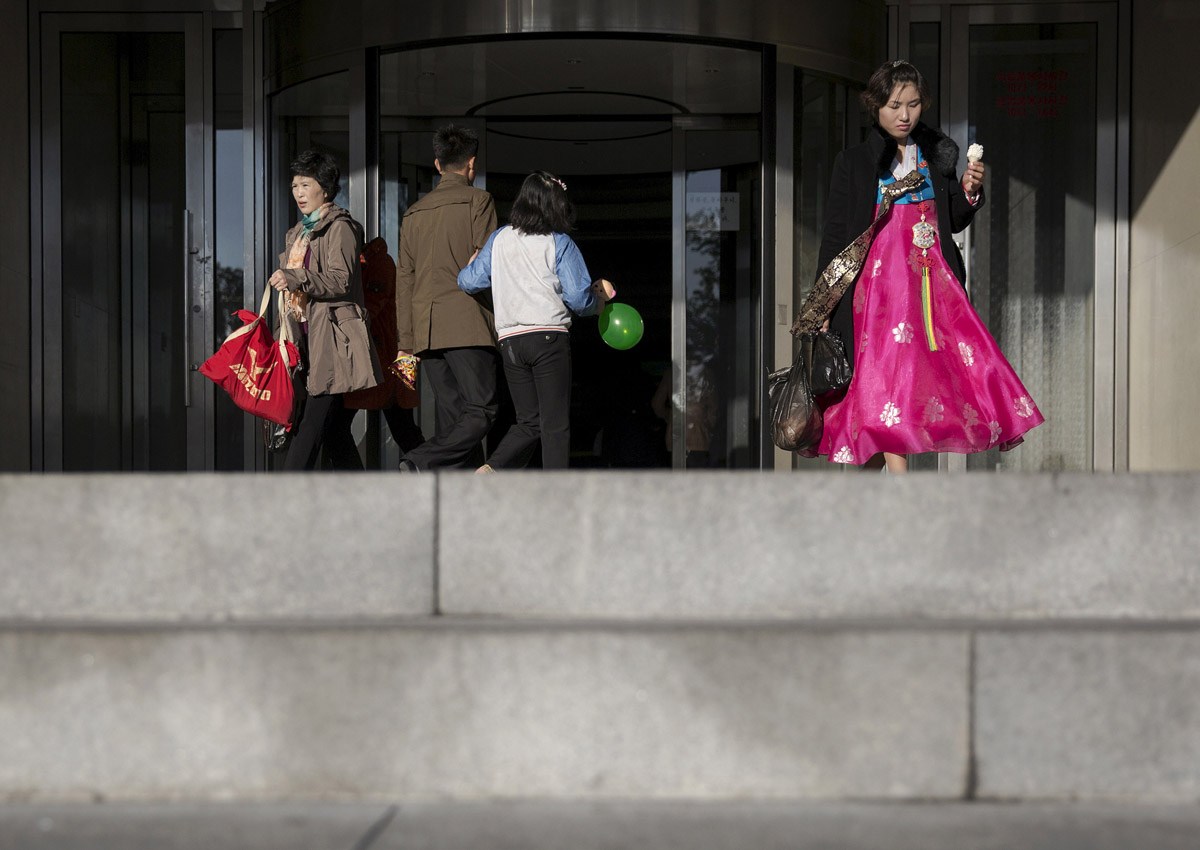
North Koreans will soon need visas to visit Singapore
Two North Korean professors went to Singapore’s Nanyang Technological University in 2014, not to teach but to learn.
Mr Pak, in his 50s, and Mr Hyon, in his 30s, lived in hostels and “studied very hard” for their master’s in business administration while adjusting to the local food and trying to make sense of Singlish.
They graduated last year and returned to their country “to share and pass on what they have learned”, said the Singapore-based non-profit group Choson Exchange that facilitated their course and organises programmes to teach North Koreans about business and entrepreneurship.
About 100 North Koreans have visited Singapore for study trips organised by the group since it started in 2009.
From October, however, these visitors will have to apply for visas before embarking on their trips.
The Immigration & Checkpoints Authority said the move was the result of a periodic review of its visa framework for foreigners with other government agencies, “taking into consideration Singapore’s international obligations”.
South Korean media and observers have linked these moves to toughened sanctions imposed on North Korea.
The 15-member UN Security Council imposed Resolution 2270 in March in response to Pyongyang’s fourth nuclear test in January and a long-range missile launch the following month.
It called for meaures including stricter monitoring of cargo to and from North Korea, bans on money transfer and trade bans on items including coal and gold.
Visa restrictions are another form of control.
Poland and the Mediterranean island of Malta have stopped issuing work visas to North Koreans.
North Korean citizens currently have visa-free or visa-on-arrival access to about 40 countries, including Singapore, Malaysia, Ecuador, and Kyrgyzstan.
Analysts said the new visa requirement will make it more difficult for North Koreans to enter Singapore, which may complicate things for those heading to the country for studies, business or medical treatment.
Mr Andray Abrahamian, the Chosun Exchange’s associate director of research, said the new rule will require them to spend more time and money preparing travel documents and application materials.
“As the visa requirements are meant to help comply with sanctions, and none of our participants are designated individuals on any sanctions lists, we do not think visa processing will be a problem,” he said.
No projects are at stake as a result of the new ruling, but he admitted it “may affect future plans”.
While Singapore serves as a good development model for socialist states like China and North Korea that are keen to develop their market economy, it also “needs to work within international legal structures and behave as a responsible global citizen”, said SIM University’s East Asia expert Lim Tai Wei.
Singapore’s monetary authority imposed new North Korea sanctions on local financial institutions in June, according to lawyer Karnan Thirupathy who advises on international trade and sanctions.
Additional sanctions that apply across the board, he said, would “likely have a more significant and direct impact on Singapore-North Korea relations and business”.
North Koreans come to S’pore to study
There are no official figures available on how many North Koreans have entered Singapore in the past.
The Immigration & Checkpoints Authority does not reveal nationality-specific figures.
The Singapore-based Choson Exchange said some 30 North Koreans travelled to Singapore last year to attend programmes organised by the non-profit group.
They included short study trips, workshops, internships and a three-month mini MBA programme that covered finance, accounting and market courses as well as visits to start-up incubators.
100
Approximate number of North Koreans who visited Singapore for study trips organised by Choson Exchange since it started in 2009.
This article was first published on August 8, 2016.
Get a copy of The Straits Times or go to straitstimes.com for more stories.
Image:
Publication Date:
Monday, August 8, 2016 – 15:00
Keywords:
Send to mobile app:
Source:
Story Type:
Others
Friend's extremist talk made me uneasy: Batam man released after anti-terror raids
Whenever his good friend of six years told him stories about suicide bombings, 19-year-old Muhammad Tegar Sucianto felt uneasy.
When that friend, Hadi Gusti Yanda, 20, tried to cajole him into joining a terror group called Katibah Gonggong Rebus, or Boiled-Snails Cell, he decided he had enough.
“All these radical stories about suicide bombings didn’t make sense to me. He asked me to join, but I refused,” Mr Tegar told reporters yesterday.
He was among six suspected militants arrested in anti-terror raids by Indonesian police last Friday, but was released the same evening as he was not “the target of capture”, he said. His friend Hadi remains in police custody.
The group’s ringleader, Gigih Rahmat Dewa, 31, is facing multiple charges, including one of plotting to fire a rocket from Batam to hit Singapore’s Marina Bay and another of aiding Indonesians to go to Syria to fight alongside Islamic State in Iraq and Syria militants.
Mr Tegar said he was persuaded by Hadi to attend the cell’s first meeting some time in 2013.
“Hadi told me that nobody there knew one another. They only communicated via chat groups in WhatsApp and Blackberry Messenger.” However, he found that the group talked only about religious issues which did not interest him, he said.
“I felt really awkward and uncomfortable. I told him (Hadi) I wanted to go home as soon as possible.”
After that, Hadi stopped talking about the group’s activities.
Mr Tegar told reporters that he and Hadi loved watching movies and attending metal music concerts together. They even worked at the same factory in Batam. But he noticed his friend had changed in the past three years.
“He prayed more often. Of course, I was happy to see that. I told him it’s okay if he taught me to pray as long as he stayed out of the group,” he said.
Mr Tegar said he had no clue the group was involved in terror activities or was planning to launch a rocket targeting Singapore until last Friday, when a police car stopped the two of them as they headed to work. Mr Tegar had gone to Hadi’s house to give him a ride on his motorcycle as Hadi’s own motorbike had broken down.
Police blindfolded and handcuffed them before taking them to the Brimob special police headquarters for questioning. When they arrived, Hadi was taken away while he was made to wait in the car, Mr Tegar said.
“The two police officers seemed more friendly towards me. They even said sorry when they arrested me,” he said. He was released that evening after questioning.
Mr Tegar’s mother, Ms Desi Fitrianti, 43, told reporters that the two young men were close friends who loved going to concerts. Hadi often visited their home.
When reporters visited Hadi’s home, his father declined to be interviewed.
Terrorism analysts have said that new extremist cells like the Katibah Gonggong Rebus illustrate how the militant network in Indonesia has become loose and fragmented, and could be formed by a small number of individuals.
Terrorism expert Noor Huda Ismail, founder of the Institute of International Peace Building, told The Straits Times that these small groups are hard to detect and that they use social media and mobile messaging to interact with one another.
An Indonesian police spokesman told Reuters news agency that the Batam cell’s Facebook posts gave police the breakthrough on the plot to strike Singapore.
“Their terrorist action plans were in Facebook,” he said, without giving details.
What also gave Gigih away was his new profile picture on the Line messaging app featuring a banner pledging “Indonesian support and solidarity for ISIS”, Reuters said.
This article was first published on Aug 8, 2016.
Get a copy of The Straits Times or go to straitstimes.com for more stories.
See also:
Militants ‘looking at various ways to attack Singapore’
Image:

Publication Date:
Monday, August 8, 2016 – 14:00
Send to mobile app:
Source:
Rotator Image:

Story Type:
Others
Lianhe Zaobao to offer free access to premium content and e-paper on National Day
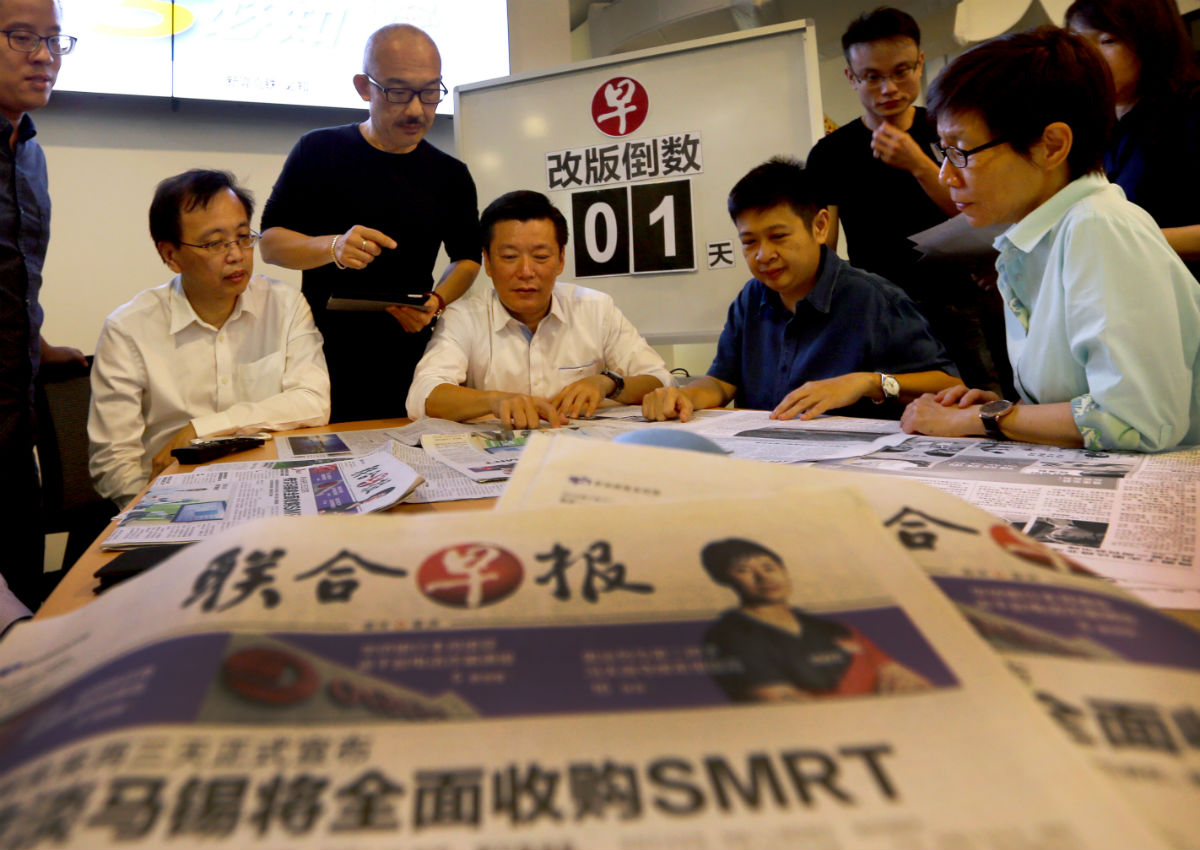
In celebration of Singapore’s 51st birthday, Chinese daily Lianhe Zaobao will offer free and full access to its premium digital content and e-paper on Aug 9 and 10.
Non-subscribers will be able to enjoy unlimited access to Lianhe Zaobao’s print edition news stories, seven-day news archive, as well as news stories scheduled for the next day from 12.01am on Tuesday to 11.59pm the next day.
Users need not have a Lianhe Zaobao subscription to access the content.
Lianhe Zaobao took on a new look on July 21 in both its print and digital formats.
The Lianhe Zaobao app has also undergone a revamp to make it more user-friendly. Breaking news, digital-exclusive content and videos are currently available on Lianhe Zaobao’s website and apps for free.
Ms Han Yong May, Digital Editor of Chinese Media Group and Associate Editor of Lianhe Zaobao said: “This is our gesture of appreciation to readers who have supported Lianhe Zaobao over the years. It is also an opportunity for us to gather feedback from our readers and continuously improve users’ experience on Lianhe Zaobao’s digital platforms.”
Readers can sign up for the Lianhe Zaobao’s All-in-One subscription package or opt for a 14-day free trial via www.zbsub.sg.
ljessica@sph.com.sg
Image:
Category:
Publication Date:
Monday, August 8, 2016 – 12:54
Keywords:
Send to mobile app:
Source:
Story Type:
Rewritten Story
SGfuture should spur citizens to co-create Singapore's future: Chan Chun Sing
The SGfuture engagement series should spur a movement, where Singaporeans come forward to co-create the future that they want, says Minister in the Prime Minister’s Office Chan Chun Sing.
Source link
Malaysian who helped murderer flee pleads guilty 10 years after
Ho Yueh Keong’s guilty plea comes more than 10 years after he drove Tan Chor Jin across the border on Feb 15, 2006, shortly after Tan had shot nightclub owner Lim Hock Soon between 6.55am and 7.11am.
Source link
1 of 6 men arrested in Batam over rocket plot released
One of the six men arrested in Batam last Friday for militant activities has been released.
Yesterday, 19-year-old Muhammad Tegar Sucianto told reporters in Batam that he was let go as he was not the “target of capture”.
Mr Tegar, whom police described as a factory worker, said that he had joined a meeting of the terror cell in 2013. This, he said, was at the insistence of a friend, who was among those arrested last Friday and remains in custody.
Indonesian police said the leader of the cell, Gigih Rahmat Dewa, had planned to fire a rocket from Batam into Singapore’s Marina Bay. Gigih is said to have planned this with Syria-based ISIS militant Bahrun Naim, who left Indonesia last year.
Mr Tegar said that, in 2013, he could not wait to leave the meeting of the cell, which called itself Katibah Gonggong Rebus or Boiled- Snails Cell. “I felt really awkward and uncomfortable,” he said.
The men at the meeting did not know one another, said Mr Tegar, but had interacted via WhatsApp and Blackberry Messenger.
Indonesian police and analysts say that social media and mobile messaging applications have enabled new, small groups like the Batam cell to form.
But these new media forms of communication have also allowed the authorities to quash them.
Police investigations found that the members of the Batam cell had been radicalised over social media, specifically using Facebook, Reuters news agency reported.
This article was first published on Aug 8, 2016.
Get a copy of The Straits Times or go to straitstimes.com for more stories.
See also:
Militants ‘looking at various ways to attack Singapore’
Image:

Publication Date:
Monday, August 8, 2016 – 14:00
Send to mobile app:
Source:
Story Type:
Others
Powering up National Stadium for Singapore's birthday bash
Without it, there would be no National Day Parade.
Almost everything depends on it – the lights, the sound, the computers, even the fireworks.
But thanks to the meticulous planning and hard work of engineers, there is no need to worry about the show running out of electricity.
For Singapore’s birthday bash tomorrow, the team from the Defence Science and Technology Agency (DSTA) has transformed the National Stadium into a practically self-sufficient power station, with enough juice for 110 three-room HDB flats.
Click on thumbnail to view photos. Source:
AsiaOne, The Straits Times, The New Paper










































“Power is very important,” said Mr Lee Eng Hua, DSTA’s director of building and infrastructure, who leads some of the engineers overseeing various aspects of the show, from power and infrastructure to the sound system and fireworks. “We can’t afford for it to go down and that’s our key worry.”
Among the more visible power gobblers are the six giant LED screens and 36 high-powered lasers.
Equally crucial are the 250 speakers, double the number used in celebrating SG50 last year.
They not only deliver crisp sound to the audience but are also painstakingly tuned to ensure that the parade contingents all hear the commands at the same time.
Not to mention the 20-odd infrared transmitters on the roof that make 55,000 spectators’ LED wristbands pulsate like a single organism.

Delivering the electricity are 21 km of cable snaking out from 14 generators churning out 18 megawatts of power.
The cables are festooned with 240 sensors that set off an alarm whenever the temperature reaches 45 deg C, well below the cables’ 70 deg C rating.
The sensors are an early-warning system that detects overloading before it trips the circuit breakers and causes a blackout.
Associate Professor Gooi Hoay Beng, from Nanyang Technological University’s School of Electrical and Electronic Engineering, said even Singapore’s power grid doesn’t have this additional layer of protection.
“This is something that we normally don’t do. They (NDP engineers) have actually gone very far.”
This is no laughing matter when the show uses 66 projectors, which Mr Lee said are some of the most power-hungry appliances in the entire stadium.
The projectors are responsible for bathing giant suspended props in three-dimensional animated imagery that follows the movements of the props in real time.
Yet, not all of the power of NDP 2016 comes directly from electricity.
Some of it comes from fire.
The quantity of indoor fireworks will be five times that used in the SEA Games last year.
But Mr Lee said they will be safe, as only non-debris fireworks are being used and his team has determined through measurements that air quality in the stadium will remain within safe limits.
NDP technical director Kenny Wong said: “It’s arguably the most technically challenging NDP we’ve ever done.”
Dr Teo Tee Hui, a senior lecturer at the Singapore University of Technology and Design, noted the additional challenge of achieving a compromise between engineering requirements and a set design that has aesthetic appeal for the audience.
The engineers had 22 days to put up everything before rehearsals.
After the NDP, they will have 10 days to return the stadium to its usual state.
Mr Lee said: “The engineers are one of the first to go in and they will be one of the last to leave the place.”
A return to the Grand Old Dame
After a decade’s absence, the National Day Parade will return to the National Stadium tomorrow as Singapore marks the first chapter after its Golden Jubilee.
This year’s parade is set to dazzle audiences with its futuristic concept, complete with indoor fireworks, 3D projections and drones.
But even as it looks forward, the show will have an added emphasis on inclusivity.
For the first time, the audience will be invited to hand-sign popular NDP songs.
The parade will also feature the largest group of special-needs participants ever; there will be 150 of them leading the crowd during this segment.
The Grand Old Dame of Kallang, as the stadium was formerly known, has played host to 18 NDP shows – the first in 1976 – and other historic events.
In 1986, it welcomed the late Pope John Paul II, and in 1993 it hosted king of pop Michael Jackson.
In the heady days of the Malaysia Cup from the 1970s to the 1990s, football fans thronged the stadium to catch the Lions in action, and created the Kallang Roar with their thunderous cheers and furious stamping of feet, which shook the structures of the arena to its core.
While festivities may have been dialled down a notch compared to last year’s pomp and circumstance, there are still numerous events for Singaporeans to celebrate the nation turning 51.
The historic Tanjong Pagar Railway Station will be open from 9am to 6pm to the public, who can view a selection of photos from the Singapore Land Authority’s contest, Celebrating Places And Memories.
For those keen on getting creative, Urban Sketchers Singapore, an informal network of artists who sketch the cityscape, will be organising a special National Day sketch walk at the Esplanade at 2pm.
There will be a music performance staged by Indonesian and Bangladeshi migrant workers in collaboration with local artists at the Esplanade’s concourse at the same time.
A National Day observance ceremony will be held at Kampong Kembangan Community Club at 7.30am, featuring a marching contingent formed by students from the Movement for the Intellectually Disabled of Singapore (Minds) and Ping Yi Secondary School.
This article was first published on August 8, 2016.
Get a copy of The Straits Times or go to straitstimes.com for more stories.
See also:
7 survival tips for those attending NDP 2016
Indoor fireworks dazzle at NDP preview show
Image:

Publication Date:
Monday, August 8, 2016 – 14:00
Keywords:
Send to mobile app:
Source:
Story Type:
Others


