Home Blog Page 317

Facing COVID-19 blues, parents of young children help each other in online chat groups

SINGAPORE: Mother Jamie Koh misses hanging out with her toddler at the playground, now sealed off with warning tape under the ‘circuit breaker’ measures.

Confined to home all day and unable to expend her energy, her restless one-year-old girl has not been sleeping well at night. Which has been tough on mum.  “Being able to go out to the playground, to the library … these trips help to break up the day,” said Jamie, 41.

“Now, the days are really long.”

Frustrated, the first-time mother turned to Parents Circle, a WhatsApp group, where another parent sent her some links on an indoor obstacle course that one can easily assemble with furniture.

“We also discussed the ways we can have our babies move around the house with limited space or structures,” said Jamie. “If I run into problems, I can just shoot a question and I know that there will be people who will respond.”

Jamie and Hannah

Jamie and Hannah (Photo: Jamie Koh)

It has been more than a month into the enhanced safe distancing measures, and this period has been overwhelming for parents – especially first-timers – who have to constantly come up with activities to keep their young kids amused and engaged.

READ: The fears and resilience of having a baby in the time of COVID-19

Some have turned to messaging and social media platforms dedicated to parents for help, where they can connect and exchange ideas such as for activities, diet information, and childhood development tips.

WEARING ON THE CARERS

Jamie recalls how her daughter once fell out of the stroller, and the first thing mum did was to reach out to the chat group for help. 

Members responded immediately and reassured her that babies are very resilient. “Sometimes, parenting can be lonely if you don’t have people with children of the same age,” said Jamie. The support group was started by doula company Four Trimesters, whose ante-natal classes she had attended previously.

Her daughter would usually spend time with the grandparents on weekends, giving Jamie and her husband some valuable alone time. But that’s no longer the case due to safe distancing rules.

Her girl also needs plenty of stimulation, and it is wearing out Jamie, her husband and their helper.

“When there are just a few carers, it becomes very tiring for them,” she said. “Just imagine every waking hour, she needs to be accompanied, she needs to have physical contact.”

Jamie's indoor obstacle course for daughter

Jamie’s indoor obstacle course for her daughter (Photo: Jamie Koh)

That’s how Amelia Yeo feels too – without vigorous outdoor play and no grandma/grandpa time, her 18-month-old son, Benjamin, has gotten more temperamental and irritable of late.

It’s all the more stressful when parents like her are busy working from home.

“Benjamin’s running around trying to get our attention, but we can’t give it to him. It’s hard to explain to a little kid how mommy’s still here but I can’t give you the attention that you want,” said Amelia, 35, a school teacher. “That’s probably why he acts up sometimes.”

READ: Circuit breaker tough on special needs children, but parents find creative ways to cope

HELP TO COPE WITH UNCERTAINTY

In the early days of the COVID-19 outbreak, Amelia, like some other parents, wondered if Benjamin would be left on his own if she and her husband were to contract the virus.

That concern was allayed when she learnt through the Parents Circle chat group, which has about 150 members, that children in isolation would be allowed a caregiver.

But such stress and anxiety is common among parents feeling lost amid the uncertainty of this period.

Amelia's family2

(Photo: Amelia Yeo)

Sher-li Torrey, 43, who started the Mums@Work portal 10 years ago to help women balance motherhood and working, said some mothers have voiced concerns like: Could their business continue? Would their husband still have a job?

She said many have written in describing how the portal has been a real pillar of support for them during this time. The social enterprise has moved all events, including career talks and training sessions, online for its 43,000 members.

“When you feel overwhelmed, in any situation … what always makes you feel better is knowing someone else feels your pain (and) understands what you are going through,” said Sher-li, a mother of two herself.

“I think as a parent support group, this has been our biggest success.”

Amelia outdoors with Ben

Amelia outdoors with Ben (Photo: Amelia Yeo)

Mother-of-one Dr Jennifer Lau originally joined the ‘Sleeping like an SGBaby’ Facebook group to get help with daughter Naomi’s sleeping problems. The group was founded by mums who wanted to share their experiences with sleep training their children, with resources made easily accessible online.

Jennifer and her husband, a fellow doctor, sometimes advise others on hygiene tips or how to keep safe during the outbreak.  “If anyone is worried about the symptoms of COVID-19, if they need to seek a doctor, we can offer some advice,” said Jennifer.

But, like many parents, she didn’t quite know what to do with her two-year-old during the circuit breaker. She came up with craft activities, a home-based gym, and other energy-expending activities – but her daughter had trouble focusing on any one of these.

“Even reading a book, she loses interest (because) she’s been doing it every day for three weeks. It’s the same books, day in, day out,” said Jennifer.

A sleep deprived Jennifer

A sleep deprived Jennifer (Photo: Jennifer Lau)

It helps being part of a smaller WhatsApp chat group of about eight mothers from the Facebook group; they regularly share ideas on activities to occupy their young children at home.

NOT ALONE ON THIS JOURNEY

Being in WhatsApp chat groups for parents has also helped pastor Kenny Lim and his wife realise that they are not the only ones scrambling on their parenting journey. Their daughter, Carice, is 16 months old.

One private chat-group he’s in has been about “providing emotional support for one another, because right now there’s just too much news and a lot of it is negative”, noted Kenny. “It’s very easy to get bogged down.”

Jamie agrees on the value of being part of a group of positive parents. “They share cheerful, encouraging and useful updates, whether it is directly related to the COVID-19 situation, or happy babies dressed up in Easter bunny clothing,” she said.

Kenny, Sukey and Carice

Kenny Lim, with wife Sukey and daughter Carice (Photo: Kenny Lim)

Another group that Kenny is a part of was created for parents living in the Boon Lay estate. During this outbreak, members were asking about masks for children, and an organiser of the group promptly shared links on where they could be bought.

The estate chat group is part of the Embracing Parenthood Movement (EPM), a community-led initiative by the People’s Association to celebrate the birth of newborns and build communities of support for young families.

It’s just one of numerous ground-up support groups that have been a valuable resource for parents in Singapore, beyond just this circuit breaker.

For instance, Kenny found useful an EPM-organised workshop where a nutritionist educated parents about basic safety precautions when introducing solids to babies.

Events like this, which help parents meet other parents, are also helpful “for us to realise we are not in this alone”, he said. “There are other parents going through this.”

READ: Commentary: COVID-19 is giving dads more opportunities to be involved at home

And some groups, like ‘Sleeping like an SGBaby’, have evolved beyond what they were initially set up for. Community members now don’t just exchange ideas about sleep training, they also share about dealing with postnatal depression for example, said group administrator Gwen Lim.

Gwen's family

 (Photo: Gwen Lim)

The mother of three young girls recalls how, when she ran low on breast milk, another mum in the group privately messaged to offer her own excess supply. “In exchange, I helped her plan her scheduling and explained to her this baby sleep science,” said Gwen.

Getting help just when they need it can also make a significant impact on the relationship between mum and dad.

For Jennifer and her husband, dealing with their daughter’s sleep-deprived crankiness used to add to the tension between them. Since the sleep training, she said, there have been “certainly fewer fights and less stress”.

“Now, (Naomi) sleeps well, we sleep well… We can do a lot more things with her without getting on each other’s nerves.  It has changed our lives dramatically.”

This story by CNA Insider was done in collaboration with Made For FamiliesWhere else parents can find support:

– Breastfeeding Mothers’ Support Group Singapore (BMSG) breastfeeding.org.sg/

– Centre for Fathering: fathers.com.sg and dadsforlife.sg/

– Families For Life www.familiesforlife.sg

– New Mothers Support Group www.nmsg-singapore.com/

– Single Parent Support Group www.facebook.com/SingleParentSupportGroupSPSG/

– Stork’s Nest Singapore www.facebook.com/groups/StorksNestSingapore/
Source link

Number of discharged COVID-19 patients in Singapore crosses 10,000 mark

Singapore also recorded the smallest number of COVID-19 cases in the ICU since the start of the circuit breaker on Apr 7.

Cochrane Lodge 04

A dorm resident at Cochrane Lodge 1 on Admiralty Road West. (Photo: Jeremy Long)

SINGAPORE: The number of discharged COVID-19 patients in Singapore crossed the 10,000 mark on Tuesday (May 19).

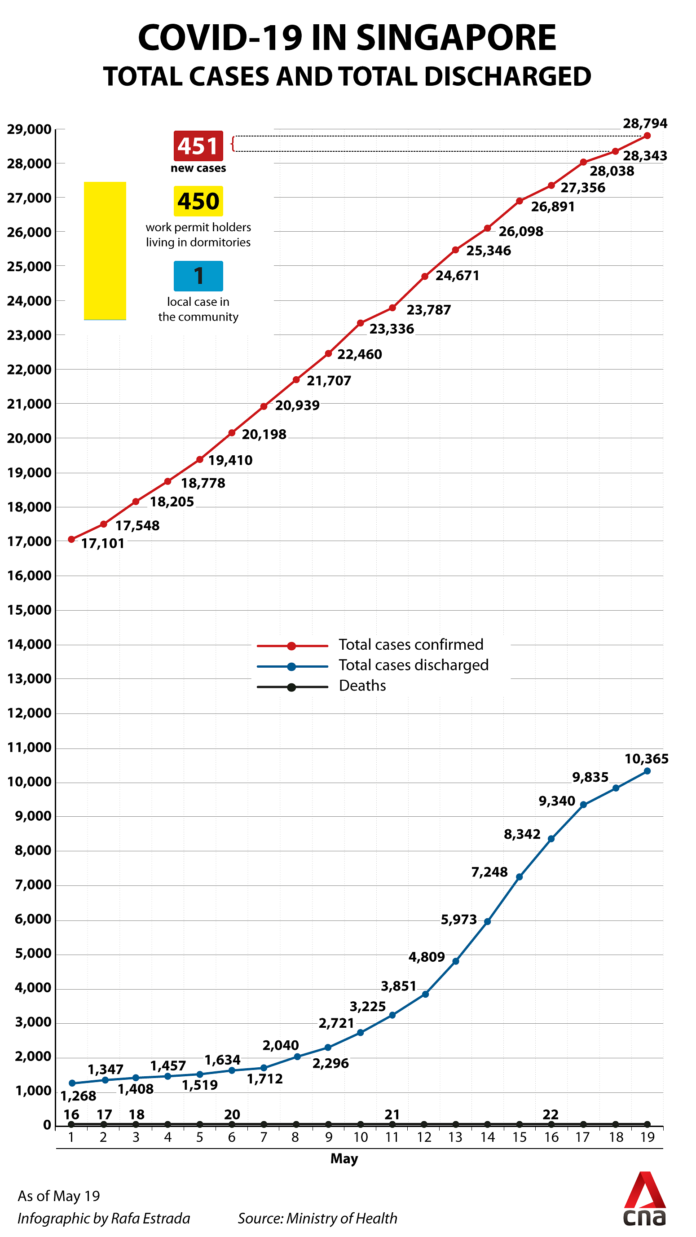
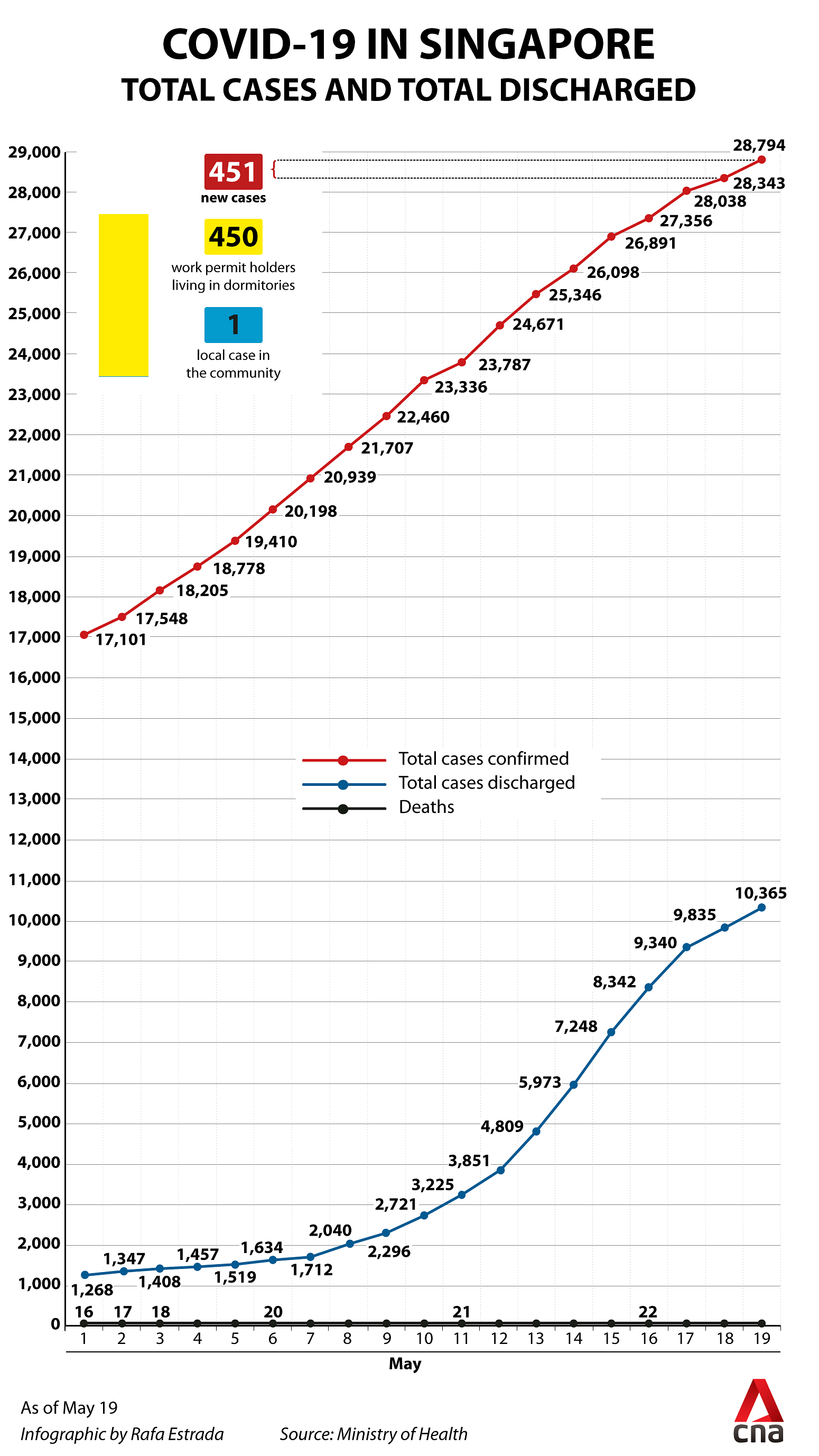
Another 530 patients have made a full recovery and have been discharged from hospitals and community isolation facilities, the Ministry of Health (MOH) said, bringing the total number of discharged cases to 10,365.

There have been an increase in the number of daily recoveries over the last month – the highest of which was 1,275 cases, as reported last Friday.

There are 1,004 cases who are still in hospital, most of whom are stable or improving, MOH reported.

COVID-19 chart gfx May 19

Ten patients are in a critical condition and in the intensive care unit, down from 12 on Monday. This is the smallest number of patients in the ICU since the start of Singapore’s “circuit breaker” on Apr 7.

The number of cases in the ICU hit 32 on Apr 10, and stayed between 21 and 29 for the rest of April. It has steadily fallen since last Friday, when 18 cases in the ICU were recorded. 

Another 17,403 are isolated and cared for at community facilities. These are people who have mild symptoms, or are clinically well but still test positive for COVID-19, the health ministry said.

READ: Singapore reports 451 new COVID-19 cases, taking country’s total to 28,794

A total of 451 new COVID-19 cases were confirmed on Tuesday, including one community case, a household contact of a woman who had gone to work at Bishan MRT after onset of symptoms.

Singapore has reported a total of 28,794 cases of COVID-19 so far.

Two clusters – NCS Hub at Ang Mo Kio Street 62 and CityWall at 34 Kaki Bukit Crescent – were closed on Tuesday, as there have been no linked cases in the past 28 days.

The number of new community cases has been on the decline, from an average of six per day in the week before to an average of three per day in the past week. 

The number of unlinked cases in the community has also fallen, from an average of two cases per day in the week before to an average of one case in the past week.

READ: Transition to a ‘new normal’ after circuit breaker: How will measures be lifted beyond Phase 1?

Singapore is set to exit its circuit breaker period as scheduled on Jun 1, but authorities have warned that the country will likely see a rise in new community cases as measures are gradually lifted.

Businesses that do not pose a high risk of COVID-19 transmission will be allowed to resume in the first of three phases starting Jun 2, MOH and the Ministry of Trade and Industry said in a joint statement on Tuesday.

BOOKMARK THIS: Our comprehensive coverage of the coronavirus outbreak and its developments

Download our app or subscribe to our Telegram channel for the latest updates on the coronavirus outbreak: https://cna.asia/telegram

Source link

Singapore reports 451 new COVID-19 cases; household contact of Bishan MRT staff member is sole community case

SINGAPORE: Singapore reported 451 new COVID-19 cases as of noon on Tuesday (May 19), taking the national total to 28,794. 

A total of 450 cases are work permit holders residing in foreign worker dormitories, said the Ministry of Health (MOH) said in its daily update. 

MOH added that it continues to pick up many more cases among work permit holders residing in dormitories, including in factory-converted dormitories, because of extensive testing in these premises, as part of its process to verify and test the status of all workers.

There were no new cases among work permit holders residing outside dormitories.

One of the new cases is a Singaporean. The 30-year-old man, identified as Case 28708, is a household contact of Case 28271, a Singaporean woman who went to work at Bishan MRT station after the onset of symptoms. 

The woman, a service ambassador for the Circle Line, tested positive for COVID-19 on Sunday.

READ: Service ambassador at Bishan station contracts COVID-19, premises ‘thoroughly cleaned and disinfected’: SMRT

READ: Singapore to gradually reopen borders, plans to resume essential travel among countries with low COVID-19 transmission rate

“The number of new cases in the community has decreased, from an average of six cases per day in the week before, to an average of three per day in the past week. 

The number of unlinked cases in the community has decreased from an average of two cases per day in the week before, to an average of one per day in the past week, said MOH. 

Of the new cases, 99 per cent are linked to known clusters while the rest are pending contact tracing. Further details can be found in the ministry’s daily situation report

Two new clusters were identified. They are at 2 Sungei Kadut Street 4 and 13 Kaki Bukit Road 4. 

MOH said it has been monitoring existing clusters for any further transmission. As there have been no more cases linked to NCS Hub (5 Ang Mo Kio Street 62) and CitiWall (34 Kaki Bukit Crescent) for the past two incubation periods, the clusters have now been closed.

A total of 530 more cases of COVID-19 infection have been discharged, taking the number of recovered patients past 10,000.

READ: Singapore to exit circuit breaker on Jun 1, visiting of parents, places of worship allowed with restrictions

READ: Transition to a ‘new normal’ after circuit breaker: How will measures be lifted beyond Phase 1?

In all, 10,365 have fully recovered from the infection and have been discharged from hospitals or community care facilities.

There are currently 1,004 confirmed cases who are still in hospital. Of these, most are stable or improving while 10 are in critical condition in the intensive care unit. 

A further 17,403 cases are isolated and cared for at community facilities. These are those who have mild symptoms, or are clinically well but still test positive for COVID-19.

To date, Singapore has confirmed 22 deaths linked to COVID-19.

COVID-19 chart gfx May 19

SINGAPORE TO EXIT “CIRCUIT BREAKER” ON JUN 1

Singapore will exit its “circuit breaker” period as planned on Jun 1, with measures to be progressively lifted in three phases from the next day. 

As the risk of a resurgence in community transmission remains high, the Government will first resume economic activities that do not pose a high risk of transmission in the first phase.

Besides the essential businesses that are already operating, businesses that operate in settings with lower transmission risks will be allowed to open. 

These include manufacturing firms, subject to the issued guidelines set for the manufacturing sectors and most offices. Nevertheless, the authorities said that tele-commuting must be used to the “maximum extent”.

READ: COVID-19: Graduating primary, secondary students to attend school on weekdays after circuit breaker ends; others to rotate weekly

READ: COVID-19: Pre-schools, early intervention centres to reopen gradually from Jun 2

Deputy Prime Minister and Minister for Finance Heng Swee Keat will deliver a ministerial statement next Tuesday on further plans to help businesses and people amid the ongoing COVID-19 outbreak.

Mr Heng had previously announced support measures to help tide businesses, workers and households through the COVID-19 outbreak during his Unity Budget speech in February, Resilience Budget speech in March and Solidarity Budget speech in April. 

BOOKMARK THIS: Our comprehensive coverage of the coronavirus outbreak and its developments

Download our app or subscribe to our Telegram channel for the latest updates on the coronavirus outbreak: https://cna.asia/telegram

Source link

Coronavirus: Surbana Jurong refutes profiteering and corruption allegations over community care facility projects

[ad_1]

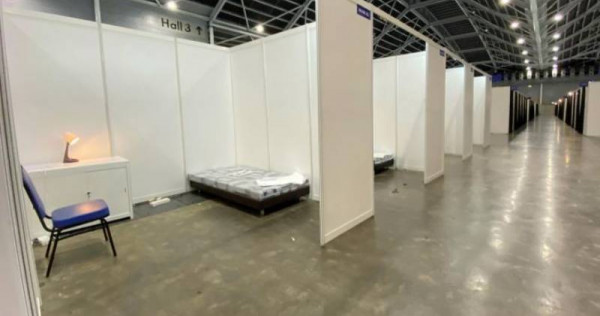
SINGAPORE – Urban and infrastructure consultancy Surbana Jurong has refuted what it called “unfounded accusations of profiteering and corruption” relating to its involvement in the setting up and operation of community care facilities (CCFs) for Covid-19 patients.

“These allegations are not only untrue, they are disrespectful of our colleagues who have made enormous sacrifices, including putting their health at risk, to deliver the projects under challenging conditions for the benefit of our community,” the Temasek-owned company said in a statement on Tuesday (May 19).

Its statement comes on the heels of several posts that have been circulating on social media and messaging platforms like WhatsApp, alleging that Surbana Jurong’s involvement in developing facilities like the one at Singapore Expo have led to conflicts of interest.

One such post concerned how Manpower Minister Josephine Teo’s husband, Mr Teo Eng Cheong, is the international chief executive in charge of Singapore, South-east Asia and North Asia at Surbana Jurong.

[ad_2]

Source link

Coronavirus: Marriage solemnisations in person allowed from June 2 and other changes to ease circuit breaker measures

[ad_1]

SINGAPORE – As the country enters the final two weeks of the circuit breaker period that is slated to end on June 1, some measures will be gradually eased, with safety measures put in place to continue reducing the spread of Covid-19 here.

But they could be amended further if the health situation changes, such as if community cases of the coronavirus rise.

Here is how some changes are being made to safe distancing measures from June 2 announced by the Government on Tuesday (May 19).

1. Home and community socialising

– Social, economic and entertainment activities that carry higher risks will remain closed. People should continue to leave home only for essential activities, and should wear a mask when doing so.

– Senior citizens should continue to stay at home as much as possible.

– The current measures limiting senior citizen services and senior-centric activities will remain. But senior activity centres will gradually resume some activities in a safe and controlled manner.

[ad_2]

Source link

COVID-19: Pre-schools, early intervention centres to reopen gradually from Jun 2

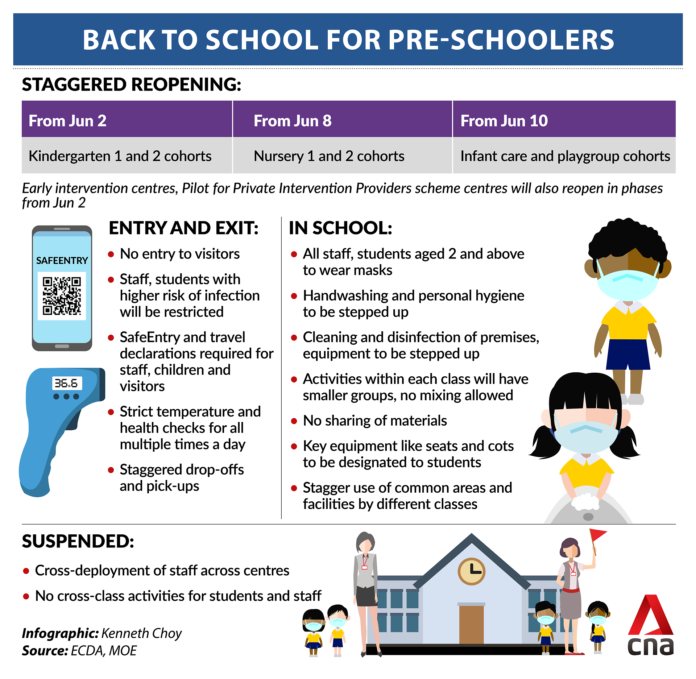
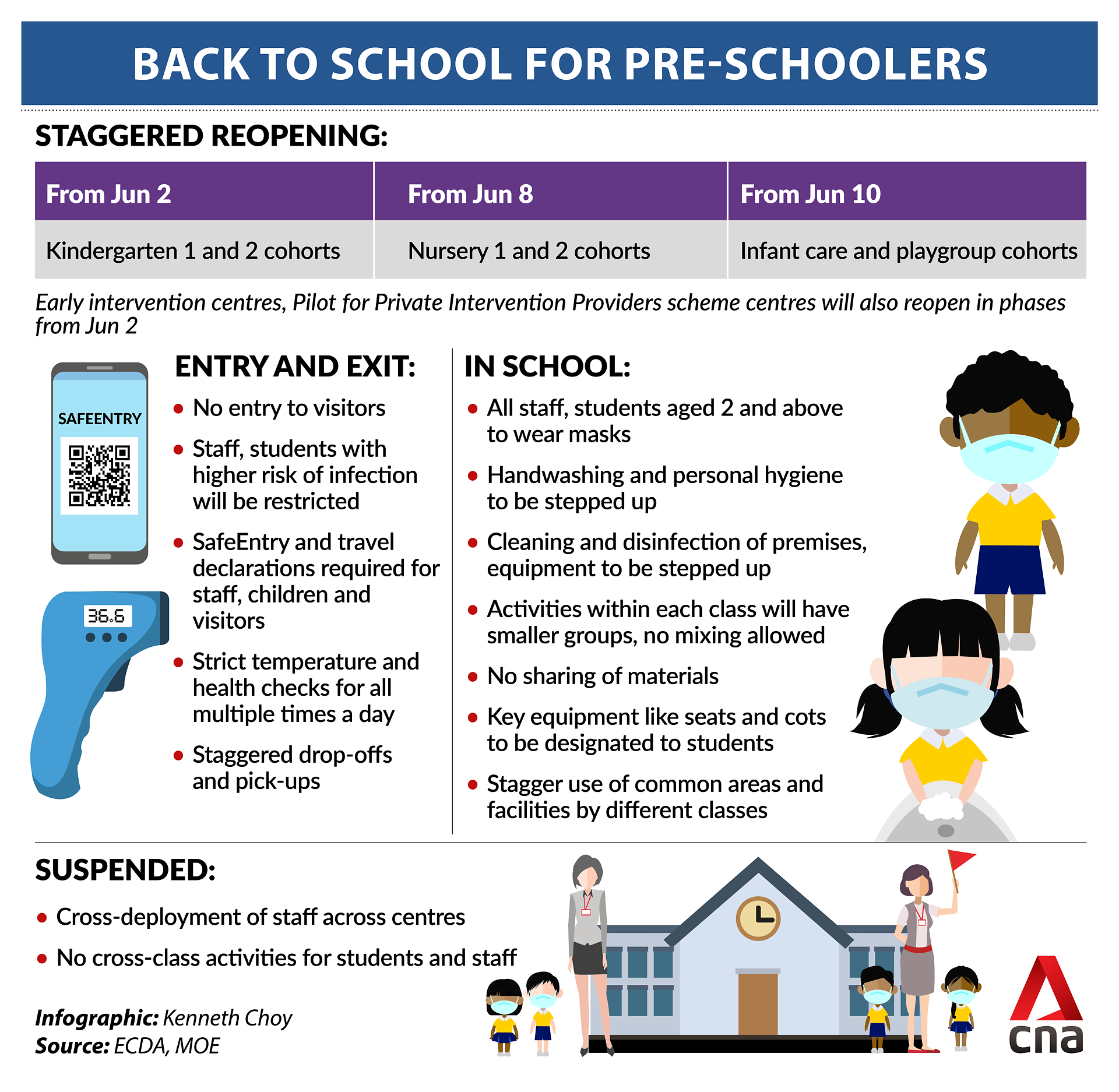
SINGAPORE: Pre-schools and early intervention centres will begin to resume classes gradually from Jun 2, beginning with children at the kindergarten level, the Early Childhood Development Agency (ECDA) announced on Tuesday (May 19).

Children in Kindergarten 1 and 2 will be allowed to return from Jun 2, while those in Nursery 1 and 2 will follow suit from Jun 8.

Children in infant care and playgroup will be able to return from Jun 10. 

“The phased reopening will better enable pre-schools to ensure that staff, children and parents adhere to the enhanced safe management measures which we refer to as ‘COVID-Safe ABCs’,” the agency said.

READ: Transition to a ‘new normal’ after circuit breaker: How will measures be lifted beyond Phase 1?

READ: Singapore to gradually reopen borders, plans to resume essential travel among countries with low COVID-19 transmission rate

COVID-Safe ABCs refer to a series of measures for daily routines in terms of Access, Behaviours and Classrooms. 

ECDA noted that supplementary programmes – such as enrichment and early intervention services – where providers move across different centres remain suspended to minimise the risk of transmission across centres and institutes. 

“We are closely monitoring the situation and will advise when it is safe to resume these activities,” it said. 

Return to school for pre-schoolers infographic

READ: All pre-school staff to be swabbed for COVID-19 before centres resume full services

Early intervention centres providing the Early Intervention Programme for Infants and Children, as well as centres on the Pilot for Private Intervention Providers (PPIP) scheme, will also reopen in phases from Jun 2, initially for in-person intervention for children with higher needs, or those who are only attending early intervention centres. 

Children who attend programmes at these early intervention centres and who also attend pre-schools, will continue to be supported with interventions remotely to reduce the risk of spreading the coronavirus. 

“We will work with providers to safely and gradually resume intervention services for these children, with priority for K2 children,” ECDA said, adding that details will be announced at a later date. 

READ: COVID-19: All pre-school operators to provide 50% off school fees for one month for Singaporean children

The first two weeks of the reopening of pre-schools and early intervention centres will be used for “strengthening public health awareness and building a culture of COVID-Safe habits among staff, children and their parents”, the agency said.

This, the agency said, will be prioritised over the resumption of the normal curriculum.

Among the measures being taken to restrict access to those with a higher risk of transmission include restricting the entry of visitors, as well as staff and children with a higher risk of infection, such as those with household members on home quarantine order or stay-home notices. 

The use of SafeEntry and travel declarations for staff, children and visitors will also be required. 

ECDA noted that the one-time COVID-19 swab tests for pre-school and early intervention centre staff are expected to be completed by the end of May.

“During this proactive testing of all staff, we expect some positive cases to be identified. In such cases, we will work with affected pre-schools and early intervention centres to adjust their staffing or reopen later when it is safe to do so,” it said. 

READ: COVID-19: Graduating primary, secondary students to attend school on weekdays after circuit breaker ends; others to rotate weekly

READ: Polytechnic lectures to remain online after circuit breaker ends, ITE students to rotate between online and on-campus lessons

The agency added it is considering the use of a “risk-based testing system” once services fully resume. 

“Under such a system, those returning from stay-home notice, for example, may have to undergo testing before returning to the centre,” noted ECDA.

In addition, all staff will be required to wear face masks or shields, as will children above the age of two. 

Group activities within classes will also be sized down, and there will be more regular cleaning and disinfection of premises and equipment, ECDA said. 

Staff and children will be kept within their own bays, floors or classes as far as possible, and the drop-off and pick-up of children will also be staggered to reduce the interaction of people at arrival and dismissal, it added. 

The agency said it is working closely with industry associations as well as others to identify tools and equipment that will help pre-schools to put in place safe management measures.

It noted the Association of Early Childhood & Training Services will facilitate bulk purchases for some items such as disinfectant, cleaning equipment and masks.

READ: ‘Minor adjustments’ to circuit breaker measures from May 5, acupuncture among services to be allowed

ECDA noted that eligible pre-schools will – until the end of this year – be able to qualify for subsidies of up to 80 per cent from the enhanced Productivity Solutions Grant to introduce approved visitor management systems and automated temperature screening systems. 

“ECDA will also look at providing some support for cleaning products and supplies that support ‘COVID-Safe Behaviours’ such as automatic hand sanitisers and soap dispensers, to help pre-schools with the transition to post-circuit breaker safe management measures,” the agency said, adding that details will be released in due course.

The agency added that even as such measures are introduced, parents and guardians should monitor their children’s health and seek medical attention if their children feel unwell, and not send them to school. 

“Our COVID-Safe ABC framework introduces strict measures to keep our pre-schools safe. However, with increased community and work interactions after circuit breaker, we anticipate some new COVID-19 cases may arise among pre-school and early intervention staff, children and parents despite these measures and centres’ best efforts,” ECDA said. 

“Our priority is to be able to detect and contain any confirmed cases quickly, and prevent new clusters from forming.”

BOOKMARK THIS: Our comprehensive coverage of the coronavirus outbreak and its developments

Download our app or subscribe to our Telegram channel for the latest updates on the coronavirus outbreak: https://cna.asia/telegram

Source link

COVID-19: Graduating primary, secondary students to attend school on weekdays after circuit breaker ends; others to rotate weekly

SINGAPORE: Students will return to school in two phases following the end of the “circuit breaker” period on Jun 1, the Ministry of Education (MOE) announced on Tuesday (May 19). 

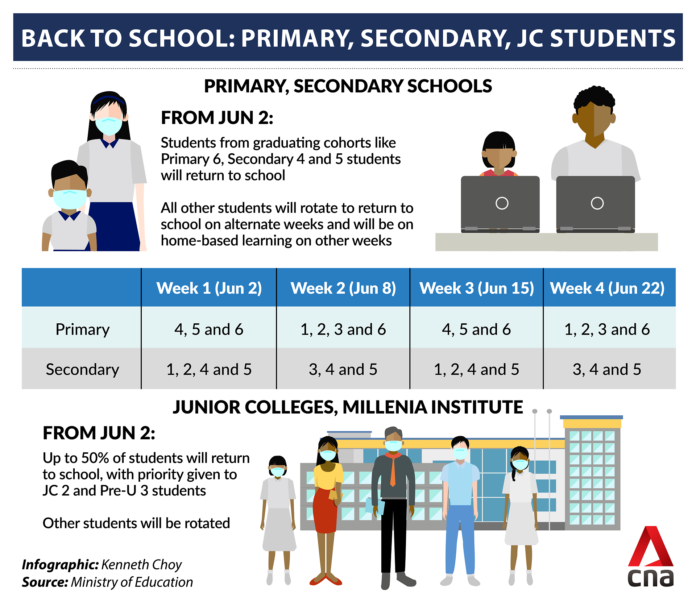
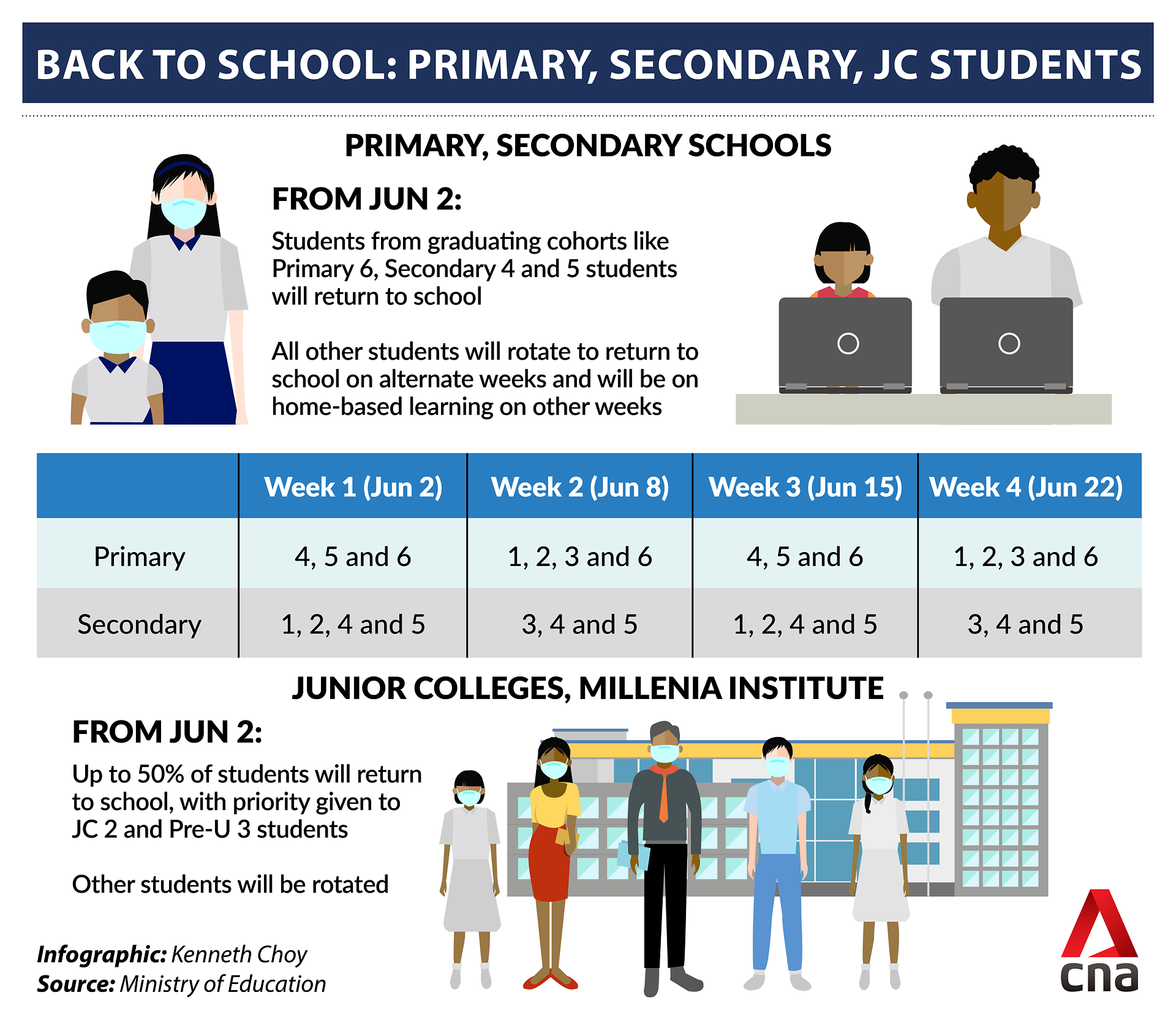
Graduating primary school and secondary students, or those in Primary 6 and Secondary 4 and 5, will attend school from Mondays to Fridays when Term 3 starts on Jun 2.

READ: COVID-19: Graduating students glad to return to school as classrooms reopen for small group lessons

READ: Early admissions exercise for ITE and polytechnics to open in May and June, selection process adjusted for COVID-19

Students in other cohorts, or those in Primary 1 to 5 and Secondary 1 to 3, will rotate weekly between home-based learning and returning to school for lessons. 

For example, in week 1 of Term 3, Primary 4, 5 and 6 students will attend lessons in school while Primary 1 to 3 students have home-based learning. In week 2, those in Primary 1 to 3 will go to school, while Primary 4 and 5 students will have home-based learning. 

For junior colleges and Millennia Institute, “arrangements will be made” for about half of the students to return to school at any one time. 

A “system of rotation” will be implemented to ensure that all students have “more than adequate” face-to-face time with their teachers, especially the graduating cohorts, said MOE.

may 19 back to school graphic

“They are taking their examinations this year. I know we’ve been trying to dial down the overemphasis on examinations, but I know these students and their parents are getting a lot more anxious,” said Education Minister Ong Ye Kung at a multi-ministry task force press conference on Tuesday. 

“We want these students to come back on a daily basis to support them because national examinations are coming.” 

Students from Assumption Pathway School (APS) and NorthLight School (NLS) will return to school from Jun 2 in a staggered process, allowing all students to be back in school by Jun 8.

“This arrangement will enable APS and NLS students to make full use of the school facilities for their learning, which is more hands-on in nature.

“Given the high level of need of students from SPED (special education) schools, we will also stagger their return to school from Jun 2 and allow all students to be back in school by Jun 8.”  

READ: COVID-19: Graduating students glad to return to school as classrooms reopen for small group lessons

READ: COVID-19: Some students to be allowed to go back to school from May 19 under easing of circuit breaker

K1 and K2 children in MOE kindergartens will also return to school from Jun 2, said the ministry. 

Phase 2 will take place “in tandem with broader easing at the national level, possibly in a few weeks’ time”, which will see all students return to school from Mondays to Fridays, said the education ministry. 

For parents who work in essential services or those who need to return to work after Jun 2 and cannot find alternative care arrangements, their children can do their home-based learning in school. 

“Contact the school, we are able to take in the child. The child will have a place to do his own home-based learning with some supervision,” said Mr Ong. 

“We have always done that for essential workers and children with high needs, and we will continue to do that and extend (it) to the parents who need to work after Jun 2 and don’t have alternate arrangements.”

READ: COVID-19: Pre-schools, early intervention centres to reopen gradually from Jun 2

READ: Polytechnic lectures to remain online after circuit breaker ends, ITE students to rotate between online and on-campus lessons

MEASURES IN SCHOOLS TO KEEP STUDENTS SAFE

With the return of students, schools will implement safe management measures to keep students safe. 

All students and staff will have their temperatures taken daily. Any students and staff members who are unwell, or have adult household members who are on home quarantine, stay-home notice or are unwell, will be required to stay at home. 

“We have 29 student infections so far since the beginning of this epidemic,” said Mr Ong. 

“Two are from overseas, two are unlinked, and the rest are from adult members from their household,” he said, adding that students will also be asked if any of their family members have respiratory symptoms. 

“If there is, we’ll isolate the child, get the child to go home. When the family member recovers, the child can come back,” he said. “I think that is really from an abundance of precaution, given the infection pattern of students so far.”

Fixed exam-style seating will be implemented in classrooms, as will spaced seating in canteens or alternative venues. Arrival, dismissal and recess timings will also be staggered to reduce crowds, said MOE. 

Staff and students will be required to wear their masks or face shields, and schools will clean high-touch surfaces more frequently and disinfect the premises daily.

To “ensure that students remain active and keep healthy”, schools will resume Physical Education (PE) lessons when students return, with “strict adherence” to safe management measures. 

READ: Direct School Admission applications to open May 12, selection process tweaked due to COVID-19

READ: COVID-19: More than a third of GCE coursework subjects to have assessment tasks reduced

“During PE lessons, students and PE teachers will not be required to wear masks when engaged in strenuous physical activities such as running and workouts,” said MOE.

“Taking into consideration that students may not be sufficiently prepared physically, the National Physical Fitness Award (NAPFA) this year will be cancelled.”

As for the upcoming GCE A Level H3 examinations on May 28, and the GCE O Level and A Level mid-year Mother Tongue Language examinations between Jun 18 and 19, candidates will be required to wear masks or face shields during the examinations, the Education Ministry said. 

Students on a home quarantine order, stay-home notice and leave of absence will not be allowed to sit for these examinations and will take year-end examinations instead.

Those who are on medical leave or are unwell with flu-like symptoms, such as fever or coughing, will also take the year-end examinations instead of mid-year ones.

READ: Transition to a ‘new normal’ after circuit breaker: How will measures be lifted beyond Phase 1?

READ: Singapore to exit circuit breaker on Jun 1, visiting of parents, places of worship allowed with restrictions

“For the examination on H3 subjects taught by Autonomous Universities, there are no year-end examinations. SEAB will apply an established procedure to derive a subject grade for students who miss these examinations due to valid reasons,” said MOE.

While all tuition and enrichment centre-based learning will continue to be suspended because they bring together students from different classes and schools, MOE centre-based lessons will resume for graduating cohorts from Jun 2, said Mr Ong. 

“There are students that attend centre-based learning to prepare for their examinations, they are part of the graduating cohort,” he said. “These could be … centres that teach Mother Tongue languages, or examinable subjects such as music and art.”

“After angsting about it, we decided for this group of (the) graduating cohort, we will allow their centre-based teaching to continue, but it will be done in small classes, 20 maximum, short periods, one-and-a-half hours, and staggered timings.” 

BOOKMARK THIS: Our comprehensive coverage of the coronavirus outbreak and its developments

Download our app or subscribe to our Telegram channel for the latest updates on the coronavirus outbreak: https://cna.asia/telegram

Source link

Covid-19: Singapore reports 451 cases on Tuesday

[ad_1]

The Ministry of Health has preliminarily confirmed 451 new coronavirus cases in Singapore today (May 19), an increase from yesterday’s 305 cases. Most of the new cases are foreign workers living in the dormitories with one Singaporean/Permanent Resident case.

Further details will be provided later tonight.

A total of 28,794 cases have been reported in Singapore so far, with 9,835 patients discharged and 22 deaths.

For the latest updates on the coronavirus, visit here.

bryanlim@asiaone.com

[ad_2]

Source link

SAF, SPF and SCDF to resume basic training with COVID-19 preventive measures from May 26

SINGAPORE: The Singapore Armed Forces (SAF), Singapore Police Force (SPF) and Singapore Civil Defence Force (SCDF) will from May 26 resume basic training with COVID-19 preventive measures in place to protect participants.

All recruits, trainees and instructors will undergo health screening, and those who show respiratory infection symptoms will be “immediately separated” and tested for COVID-19, the Ministry of Defence (MINDEF) and Ministry of Home Affairs (MHA) said in separate statements on Tuesday (May 19).

The SAF will resume Basic Military Training (BMT) for two batches of about 6,300 recruits whose training was suspended during the “circuit breaker” period. Their reporting dates start from May 26 to mid-June.

The SPF and SCDF will resume basic training for two batches of about 1,700 trainees, with reporting dates starting from May 26 to Jun 8.

“The resumption of BMT is necessary to generate operational units and select commanders for training at the Officer Cadet School and Specialist Cadet Schools,” MINDEF said.

MHA added that resuming basic training “is necessary to ensure the continued development of commanders and full-time national servicemen for deployment to frontline units in SPF and SCDF”.

This comes as the COVID-19 multi-ministry task force on Tuesday outlined plans to exit the circuit breaker as planned on Jun 2, including the opening of schools and pre-schools. 

PRECAUTIONARY MEASURES

MINDEF and MHA said they will stagger reporting dates and venues to reduce congestion and allow for safe distancing measures. Training will also be conducted in smaller groups.

The SAF will continue enforcing existing precautionary measures, such as cohorting arrangements, twice-daily temperature taking and enhanced hygiene practices.

SAF recruits returning to BMT COVID-19 measures

The Defence Ministry explains why there is a need to resume Basic Military Training. (Infographic: MINDEF)

Some SAF recruits had been doing BMT at home, through home-based instructional material on basic skills and fitness development. The suspension of BMT will count towards their full-time national service and not affect their operationally ready date.

SPF and SCDF will likewise continue with existing measures like staggered meal times, frequent cleaning of training equipment and common areas, as well as the wearing of masks at all times except during meals and strenuous activities.

“MHA remains committed to the safety and security of Singapore while ensuring the health and well-being of all Home Team officers,” it said.

BOOKMARK THIS: Our comprehensive coverage of the coronavirus outbreak and its developments

Download our app or subscribe to our Telegram channel for the latest updates on the coronavirus outbreak: https://cna.asia/telegram

Source link

Heng Swee Keat to announce latest Covid-19 support measures on May 26

[ad_1]

Finance Minister Heng Swee Keat will announce another round of Covid-19 support measures next Tuesday (May 26).

This comes after the Government’s Unity Budget in February, Resilience Budget in March and Solidarity Budget last month, which have so far totalled almost $60 billion.

Heng, who is also Deputy Prime Minister, will deliver the Ministerial Statement in Parliament at 3.30pm.

It will lay out the Government’s plans “to help businesses and individuals adapt and build resilience, in our continuing fight against the Covid-19 pandemic”.

The speech will be carried live on television and radio.

For the latest updates on the coronavirus, visit here.

tp@asiaone.com

[ad_2]

Source link