Olympic legend Michael Phelps was seeking his 23rd Olympic gold in the 100m butterfly but Singapore’s Joseph Schooling – with a record-smashing time of 50.39sec – relegated the American to silver, which he shared with Chad Le Clos and Laszlo Cseh.
Source link
Phelps on Schooling’s stunning win: ‘Hats off to him’
‘You made us very proud today’: PM Lee to Olympic gold medallist Joseph Schooling
Congratulations poured from Prime Minister Lee Hsien Loong, President Tony Tan Keng Yam and other Singapore leaders to Joseph Schooling on his historic gold medal win.
Source link
Congrats pour in for Schooling after historic win at Rio

SINGAPORE – Congratulations are pouring in fast and furious for Olympic swimming gold medalist Joseph Schooling after his historic win at the 100m butterfly race at the Rio Olympics on Saturday (Aug 13, Singapore time).
Prime Minister Lee Hsien Loong…
Source link
Philippine leader not sorry for calling US envoy 'gay'
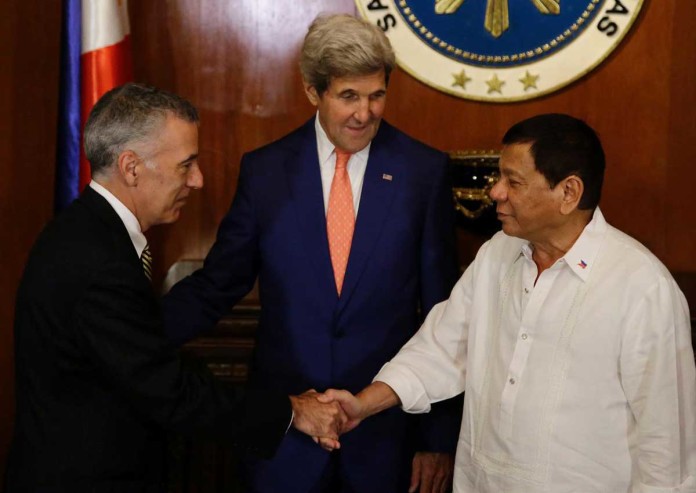
MANILA – Philippine President Rodrigo Duterte on Friday (Aug 12) refused to apologise for calling the US ambassador “gay” and “the son of a whore” in remarks that sparked a diplomatic row.
The State Department had summoned the Philippine charge d’affaires on Monday to explain why Duterte last week ridiculed ambassador Philip Goldberg in a speech before soldiers. The US embassy on Friday (Aug 12) reiterated that Duterte’s remarks were “inappropriate and unacceptable”.
But the president was defiant. “I will not apologise for anything. He did not apologise to me when we saw each other. Why should I apologise to him?”
Duterte told reporters that Goldberg started the dispute, recalling that during the campaign for May elections, the ambassador criticised him for joking about raping an Australian missionary who was sexually assaulted and murdered in a 1989 prison riot in Davao, the city he ran for two decades.
“Who would not get angry at him? It was election time and he said something like that?” Duterte said Friday during a sortie to a military camp on the strife-torn southern island of Jolo.
The US embassy warned that aid to the Philippines was tied to respect for human rights as Duterte waged a bloody war on crime that has prompted human rights groups to accuse him of tolerating extrajudicial killings.
The US embassy statement came as Philippine police confirmed that they had killed 550 drug suspects since Duterte’s election.
Top broadcaster ABS-CBN though said that almost a thousand people have been killed in anti-drug incidents, including almost 400 slain by shadowy vigilantes.
Duterte openly boasts that he has issued “shoot-to-kill” orders to police to deal with drug suspects.
The embassy said that while the United States had recently provided US$32 million (S$43 million) in aid to the Philippines for law enforcement, the funding was conditional.
“All of our security assistance promotes human rights through training content and by promoting professionalism, due process, and the rule of law,” the embassy said.
It added the US-Philippine partnership was “based on a shared respect for rule of law”.
Duterte has stepped up his anti-crime campaign, publicly accusing judges and officials of involvement in drugs and even threatened to impose martial law after the country’s top judge questioned his methods.
Duterte’s spokesmen later said his threat was just “rhetorical”.
The United States is the main defence ally and former colonial ruler of the Philippines, which is fighting domestic insurgencies while embroiled in a maritime dispute with Beijing over the South China Sea.
Image:
Publication Date:
Saturday, August 13, 2016 – 10:29
Keywords:
Send to mobile app:
Source:
Story Type:
Others
Olympics: How Singapore's giant killer Schooling beat Phelps

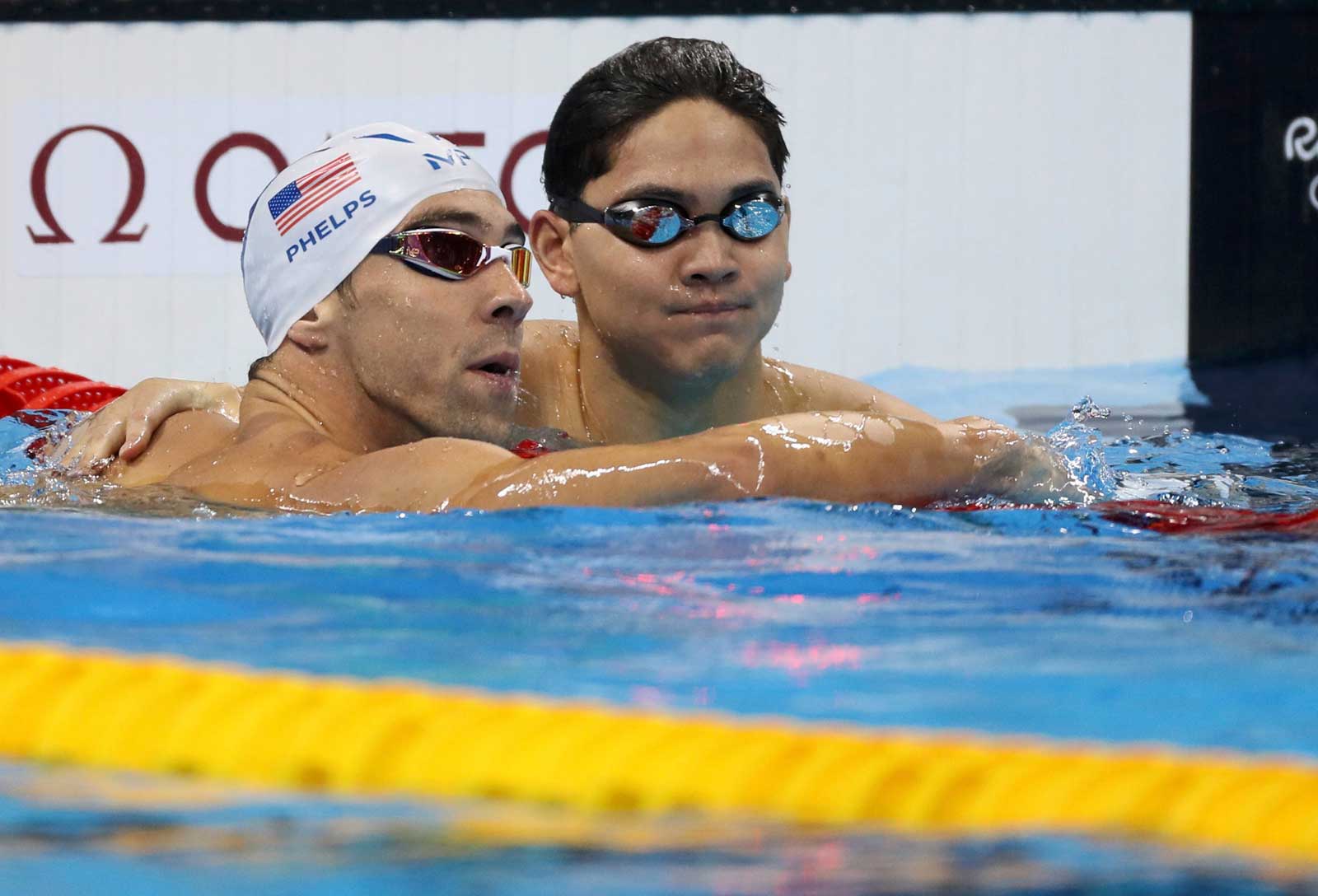
RIO DE JANEIRO – Joseph Schooling was just 13 years old when he first met his idol Michael Phelps, but was already hatching the plans that led to one of the greatest boilovers in Olympic swimming history.
Neither Schooling or Phelps knew it at the time, but that brief encounter helped inspire Schooling to not only win Singapore’s first Olympic gold medal but also slay his childhood hero in his final individual race, the 100 metres butterfly, at Rio on Friday.
Schooling was already Singapore’s best age-group swimmer with ambitions to represent his country, but his goals suddenly changed in 2008 after he met Phelps, who was in the tiny city-state attending a US training camp before the Beijing Olympics, posing for a photo with him.
By the time Phelps had finished re-writing the records books in China, Schooling’s mind was already made up. He too wanted to be an Olympic champion, but to do that, he knew he had to leave home.
Gunning for glory
Click on thumbnail to view photos. Source:
The Straits Times, The New Paper, Zaobao, SINGSOC, Singapore Sailing Federation




















His parents contacted Sergio Lopez, who won a bronze medal for Spain in breaststroke at the 1988 Seoul Olympics, but was making a name for himself as a master coach.
Schooling moved to Florida to train and live at the Bolles School, where Lopez had just been appointed head coach, and they got to work straight away.
Lopez adopted a patient approach with Schooling, resisting the temptation to get him in the gym to build more muscle, focussing instead on his technique to allow his body to grow naturally.
By 2011, Schooling was starting to make a name for himself. He won two gold medals at the Southeast Games in Indonesia and qualified for the London Olympics in the 200 metres butterfly, but didn’t make it past the preliminaries.
Schooling was faced with a dilemma in 2013 after his finished high school. He had been offered a scholarship at the University of Texas to train under Eddie Reese but had also been enlisted to start two years of National Service, a statutory requirement for all Singaporean men.
The Singapore Sports Institute asked that Schooling be allowed to defer his service for three years in order to prepare for the Rio Olympics and the ministry agreed.
“They listened to what we had to say, that he was a special talent and these people don’t grow on trees. They’re once in a lifetime, particularly in small nations,” Sport Singapore’s head of high performance Richard Gordon told AFP.
“One of the unique features of Singapore is National Service and if there’s one thing that we’re very proud of is to give him the opportunity to keep swimming.”
Click on thumbnail to view photos. Source:
Reuters, AFP

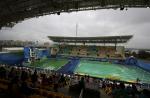

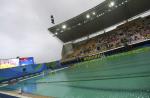
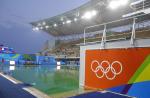

That decision paid off. With Lopez having laid the groundwork, Reese began to apply the polish as Schooling grew and matured, training and racing against the world’s best in relative anonymity.
He was already a sporting celebrity in Singapore but by remaining in the US, Schooling was also spared the daily scrutiny most sports stars experience, rather than living life in a fishbowl.
He won a silver medal in the 100m butterfly at the 2014 Commonwealth Games then became the first Singaporean man in 32 years to win a gold medal in swimming at the Asian Games in South Korea.
In 2015, he showed that he was going to be a medal contender for Rio when he finished third at the world championships in Russia, albeit with Phelps absent.
No Singaporean had ever won an Olympic medal in swimming so Schooling’s bid captured the imagination of the whole country.
Already an economic powerhouse with one of the world’s best education systems, the Singaporean government has begun investing heavily in sports and knows the impact Schooling’s win will have on nation.
Click on thumbnail to view photos. Source:
AFP, Reuters, The Straits Times








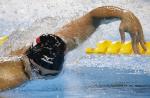


6.jpg)




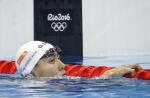
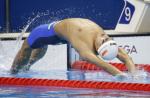
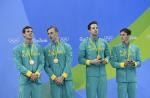
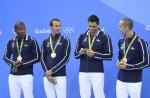







“Winning isn’t everything but it does have a galvanising impact and it inspires and that’s important,” the President of the Singaporean National Olympic Committee Tan Chuan-Jin told AFP.
“The ecosystem is important because no athlete can succeed without it. And at this high level, it’s not just working hard, it’s also working smart.”
The Singaporean President Tony Tan flew to Rio to sit poolside when Schooling won the gold medal in front of a global audience which had expected to see Phelps win his last race but instead witnessed one of the biggest sporting upsets ever and Singapore”s greatest sporting moment.
“People talk about the Kennedy moment when Kennedy was shot,” Gordon said.
“This isn’t as tragic as that but this is Singapore’s Kennedy moment, where people will remember when Joseph Schooling won gold at the Olympics.
“Now the focus will be on Joseph Schooling and how did Singapore do it.”
Image:
Publication Date:
Saturday, August 13, 2016 – 10:19
Send to mobile app:
Source:
Story Type:
Others
This one’s for you, Singapore, and all who supported me: Schooling

RIO DE JANEIRO – Joseph Schooling has dedicated his Olympic gold-medal win to Singapore and to everyone who has helped to support his dream and ambition to win the country’s first-ever gold medal at the Games.
The 21-year-old who pressed his right hand…
Source link
Schooling beats idol Phelps, wins first gold for Singapore
Joseph Schooling pulled off a stunning upset at the Rio Olympics by beating Michael Phelps in the 100m butterfly to win Singapore’s first ever gold medal.
The win gave Singapore its first Olympic gold medal and denied Michael…
Source link
Joseph Schooling wins Singapore's first Olympic gold, beating childhood idol Phelps
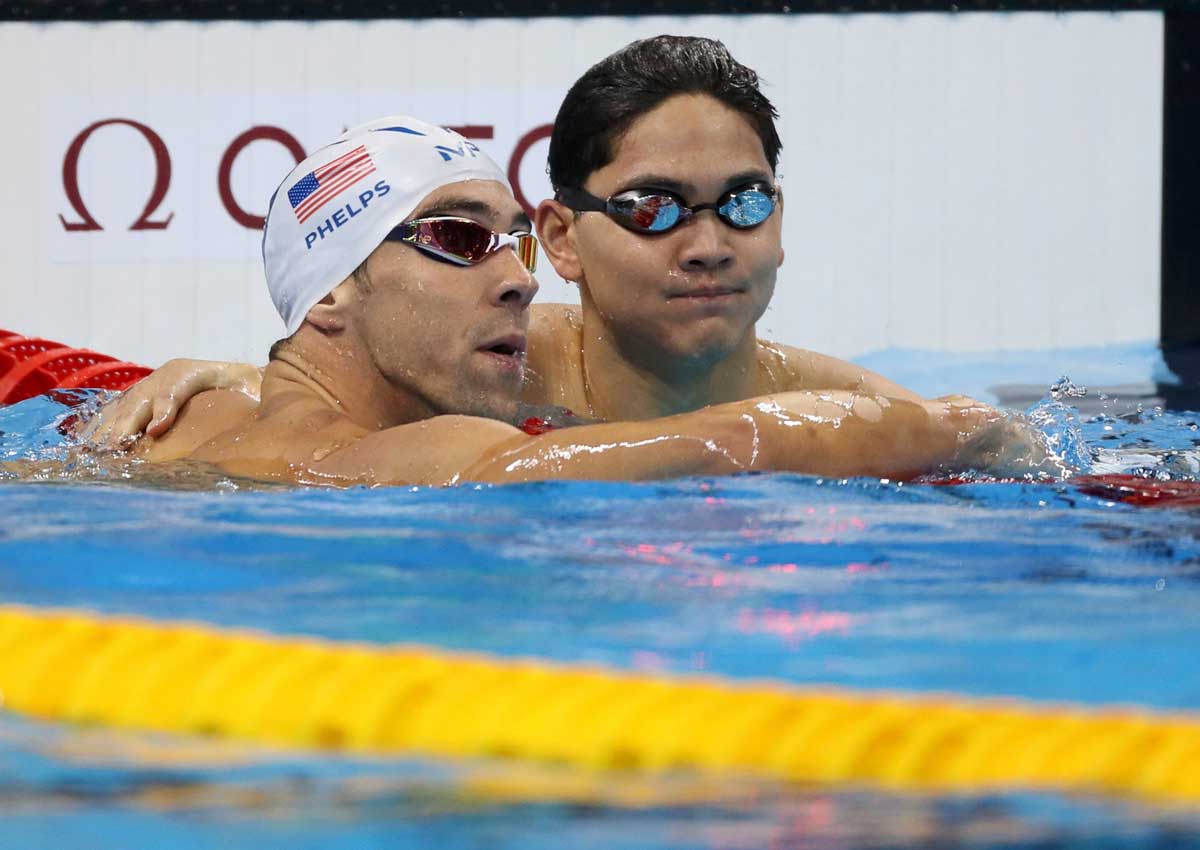
21-year-old Joseph Schooling has made history by winning Singapore’s first Olympic gold medal in the 100m butterfly, doing it in an Olympic record time of 50.39s.
He edged out Olympic great, American Michael Phelps, who clocked a time of 51.14s to come in joint second place with both South African Chad le Clos and Laszlo Cseh of Hungary.
Shortly after Schooling’s win, Prime Minister Lee Hsien Loong posted a message on social, congratulating the young athlete, and thanking Singapore’s Olympic team for “showing us what it means to work hard and never give up on our dreams”.
MPs like Tan Chuan-jin and Baey Yam Keng also took to their social networks to express their excitement at Schooling’s historic win, along with many other Singaporeans.
The moment we will always remember. #proudofyouJS #rio2016 #sgtalent #josephschooling… https://t.co/zW3vJrX9gU
— Baey Yam Keng 马炎庆 (@YamKeng) August 13, 2016
Schooling largely dominated the 100m butterfly finals, maintaining a steady lead as he powered to the finish to claim the gold medal.
In doing so, Schooling has denied childhood idol Phelps his 23rd Olympic gold.
Reuters reported that Schooling punched the water and roared with delight after his win, as Phelps swam over to pat him on the back before le Clos ruffled the youngster’s hair.
candicec@sph.com.sg
Gunning for glory
Click on thumbnail to view photos. Source:
The Straits Times, The New Paper, Zaobao, SINGSOC, Singapore Sailing Federation
Image:
Publication Date:
Saturday, August 13, 2016 – 09:34
Keywords:
Send to mobile app:
Source:
Rotator Image:
Story Type:
Rewritten Story
Joseph Schooling is Singapore's first-ever Olympics champion
The 21-year-old swimming star delivers Singapore’s first-ever Olympic gold and sets a new Games record in the process.
Source link
Victims of Thailand bomb attacks to get compensation

The Justice and Public Health ministries announced yesterday that all victims of the blasts would be provided with compensation.
The ministries have also pledged to cover all medical expenses as well as compensation for the loss of opportunity for the 30-plus people injured and four killed in the bomb attacks since Thursday.
Tawatchai Thaikyo, deputy permanent secretary of the Justice Ministry, said all victims, including those killed, were covered by the Compensation Act. The law provides compensation for all innocent people affected either physically or mentally by other people’s crimes.
Click on thumbnail to view photos. Source:
Reuters, Twitter, AFP



















He said concerned officers were now providing information to the victims about their right to seek compensation from the government.
According to law, all victims are entitled to a compensation of up to Bt30,000 (S$1,1,62) for medical expenses, up to no more than Bt20,000 for being affected physically or mentally, no more than Bt500 per day for loss of income, no more than Bt30,000 for other expenses and no more than Bt100,000 for the loss of life.
Public Health Minister Dr Piyasakon Sakolsatayadorn also said that all victims affected by the Hua Hin blast will be entitled to subsidised medical expenses, similar to the victims of the Erawan Shrine blast in Bangkok last year.
Meanwhile, governor of Trang province Detrath Simsiri yesterday visited those injured by the blast at Centre Point Market on Thursday. He said the province could not provide compensation because it was beyond the jurisdiction of local authorities. However, he added, other agencies such as the Social Development and Human Security Ministry would provide assistance instead.
Funeral rites were conducted yesterday at Wat Kuan Wiset Temple for Sergeant Pichet Wiriyanupappong, who lost his life in the blast in Trang.
At the religious rites, one of his relatives, Sujin Thongkhamtae, called on authorities to provide assistance to Pichet’s family because he was the only earning member and two of his children were still in school.
Image:

Publication Date:
Saturday, August 13, 2016 – 09:42
Keywords:
Send to mobile app:
Source:
Story Type:
Others


