Social media users posted multiple photos on Monday of the incident. Some also tweeted SMRT to ask for more details on the incident.
Source link
Smoke seen coming from train at Tanjong Pagar MRT Station
From 'stupid' to perfect GPA
An uncle once called him stupid when he was put in the EM3 stream in primary school. He was the only one from his family in it.
Then, Mr Zhang Zhirong had another blow.
In 2005, he had a score of 105 for his Primary School Leaving Examination (PSLE) and qualified only for the Normal Technical stream in secondary school.
Not wanting anyone to look down on him again, he worked hard and went to the Institute of Technical Education (ITE), where he graduated with a perfect GPA of 4.0.
He continued to study architecture at Singapore Polytechnic (SP) after serving his national service and graduated from the National University of Singapore (NUS) in June with a Master of Architecture.
Mr Zhang’s parents divorced when he was in kindergarten.
Now 28, Mr Zhang recalled how he struggled with English because no one spoke it at home. He has two siblings. His poor English results meant he could not be promoted to Normal Academic.
He told The New Paper: “I told myself that I was going to study hard, so people won’t look down on me again.” After his N levels, he entered the ITE.
He said that when he was first put in the EM3 stream, he believed that his education would stop after ITE.
He added: “I had no one to guide me or tell me that I had other options, that education doesn’t stop there.”
But when Mr Zhang, who developed an interest in design and architecture in secondary school, pursued a Nitec course in Building Drafting at ITE Bedok, he flourished, graduating with a 4.0 GPA.
After serving his NS, he studied architecture at SP.
Mr Zhang hit a stumbling block after his poly studies as his lack of an O-level pass in English made it difficult for him to apply to university.
He had taken the English O-level exam twice during his NS and poly years, but did not manage to pass.
So with the help of his neighbour, he wrote to NUS and was surprised when he was called for an interview and test, and was accepted into their architecture programme.
“I still consider myself incredibly lucky to have got in,” he said.
To finance his studies, he worked part-time as a waiter, then as a sales assistant during his ITE, poly and university years. He also took a bank loan to pay for his master’s.
And when Mr Zhang needed help with his dissertation, he contacted his former primary school teacher, Madam Jocelyn Lim, 60.
Madam Lim, who retired from teaching in 2006, told TNP: “I admire his determination. I think if I was in his place, I would have given up. But he always faces his challenges head on.”
She gave Mr Zhang weekly English lessons. He offered to pay her, but she declined.
She said: “If I can do anything for my former pupils within my means, I definitely would.”
Mr Zhang was quick to credit his teachers, friends and family for helping and supporting him throughout his journey.
He said: “Without their help, I wouldn’t be where I am today.”
Mr Zhang is another example of what Acting Minister for Education (Higher Education and Skills) Ong Ye Kung meant when he said at a SkillsFuture Study Awards ceremony last month that the education system is not designed with “dead ends”.
Mr Ong said: “If we encounter a setback, which all of us will, we do not give up, and do not let one setback define us.
“Our system is not designed with dead ends – far from it – there are multiple alternative paths to take, and we have a lifetime to walk them.”
I told myself that I was going to study hard, so people won’t look down on me again.

This article was first published on Aug 15, 2016.
Get The New Paper for more stories.
Image:

Publication Date:
Tuesday, August 16, 2016 – 08:00
Send to mobile app:
Source:
Story Type:
Others
Overpaid volunteer police a 'procedural error': K Shanmugam
Mr Shanmugam told Parliament that since the policy intent was to increase the allowance, it is fair to describe it as a “procedural error”.
Source link
Commuters flee as smoke fills train and station at Tanjong Pagar MRT station

SINGAPORE – Commuters were seen dashing out of a smoke-filled train at Tanjong Pagar MRT station this afternoon.
Photos and videos posted by eyewitnesses showed the station enveloped in smoke as well. The cause of the incident is unclear. TODAY has reached…
Source link
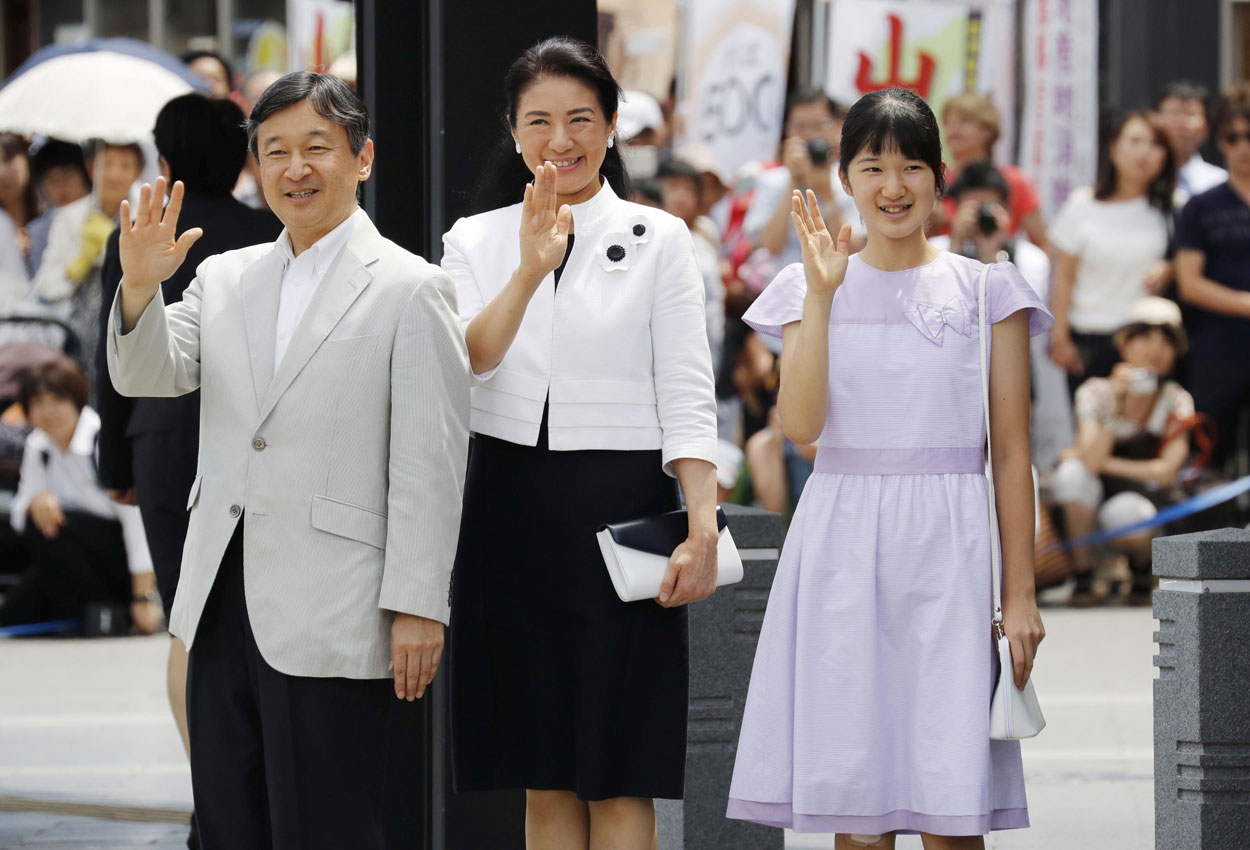
Japan's Crown Prince a champion of reforming sedate royal life

Crown Prince Naruhito, who will in time ascend the throne as Japan’s 126th Emperor, will also inherit the role of rewriting the rulebook of the world’s oldest hereditary monarch.
His father, Emperor Akihito, 82, is known for a series of firsts. Among other things, he was the first in a bloodline extending more than 2,500 years to marry a commoner, and he has a pet cause in science. The Crown Prince also married a commoner – in 1993 – after a dogged on-off courtship that lasted seven years. His wife, Crown Princess Masako, 52, was a high-flying career diplomat who turned him down twice before agreeing to take his hand in marriage.
The 56-year-old is also a fierce champion of water conservation issues, and frequently attends water conferences abroad. And like his father, Crown Prince Naruhito – whose name comprises words that mean “benevolent” and “virtuous” in Japanese – harbours staunch views that Japan needs to learn lessons from its wartime past.
He joined his father in making remarks on the 70th anniversary of the end of World War II last year, in what was widely seen as a pushback against Japan’s tilt to the right.
He said then: “Today, when memories of war are set to fade, I reckon it is important to look back on our past with modesty and pass down correctly the miserable experience and the historic path Japan took from the generation who know the war to the generation who don’t.”
Crown Prince Naruhito, who graduated with a history degree from Tokyo’s Gakushuin University and has a doctorate in civil law from Oxford, has an independent streak that is sometimes at odds with the rigid, austere lifestyle imposed on royals by the bureaucratic Imperial Household Agency.
The royal love story had, reportedly, involved him sneaking out of the Imperial Palace in a curtained van to meet his future bride, to avoid his minders and media glare.
And in a rare public spat in 2004, he told his agency minders to back off as he insinuated that they were behind a stress-related breakdown suffered by his wife, which resulted in her shying away from public appearances. He said: “It’s true that there were moves to deny Masako’s career and her personality.”
Though he later apologised for the outburst, he argued for “new royal duties” that befit the 21st century.
Last Monday, Emperor Akihito hinted at his desire, given his age, to step down from the throne in favour of his elder son.
In an address to millions of Japanese for only the second time in his 28 years of reign, the revered monarch said it was impossible to “reduce perpetually” his workload. He added that he had “wondered from time to time” if it was possible to prevent society from coming to a standstill in the transition period between eras when an emperor dies, as is the case now.
The Crown Prince, who was on a visit to Aichi prefecture, is said to have watched the broadcast in a VIP room at the JR Nagoya train station. His aides said he is taking his father’s message “very seriously”.
Japan will form an expert panel as early as next month to deliberate on changes to the Imperial Household Law to allow the Emperor to step down.
Next in line following Crown Prince Naruhito is his younger brother, Prince Akishino, 50, and then the latter’s son, Prince Hisahito, now nine.
The Crown Prince and Crown Princess have one daughter, Princess Aiko, 14, whose name was chosen by the couple instead of the Emperor in a break with tradition.
But she cannot ascend the throne as laws were rewritten in 1889 to allow only men to do so. Japan has had seven female monarchs, the last of whom ruled in 1770.
An expert panel was formed in 2005 to look at how to change the law to allow female succession, but talk of this stalled in 2006 following the birth of Prince Hisahito.
Remarks made by the brothers in that period have widely been interpreted to imply a rift in the royal family, though both are understood to have mended fences.
Prince Akishino had openly criticised his elder brother over his publicly aired grievances in 2004, and a year later he said he seldom talked to the Crown Prince.
“Regarding communication with the Crown Prince, we are not visiting the Crown Prince’s household actively from our side… since the Crown Princess is sometimes feeling good and sometimes not,” Prince Akishino said in December 2005. “We will come over whenever they call us.”
Two months later, Crown Prince Naruhito hinted at his mixed feelings over the prospect of a baby boy who could trump his daughter’s chances for the throne.
“As a parent, there are many things that go through my mind. But I would like to refrain from further comments,” he had said when asked about his daughter’s future.
The Crown Prince wedded later than his younger brother, fiercely resisting pressure to get married in 1990 by saying: “I know how to operate a washing machine without getting covered in bubbles, and I know how to handle an iron. I will be going about it at my own pace, without hurry – I don’t feel guilty about being single.”
Four years earlier, he had met his bride-to-be at a concert. Crown Princess Masako is a Harvard graduate who spent 14 years of her life overseas and can speak six languages. She agonised for eight months over whether to give up her career for the sedate royal life.
And she has had trouble adapting. Besides her stress-related breakdown, local media, which once described her as a “sassy ambitious woman” with the North American directorate at the Foreign Ministry, has since called her a “dowdy, public shadow of her former self who walks three steps behind her husband”.
A question mark still lingers over whether she is capable of succeeding her mother-in-law as Empress.
Even today, she has not assumed her full share of royal duties although she has increased her public appearances of late. Just last week, she visited Nagano prefecture to mark the new Mountain Day public holiday with her husband.
This article was first published on August 15, 2016.
Get a copy of The Straits Times or go to straitstimes.com for more stories.
Image:
Publication Date:
Monday, August 15, 2016 – 15:40
Keywords:
Send to mobile app:
Source:
Story Type:
Others
NAC's centralised bin delivered at "acceptable cost": MCCY
Had it not been for the extensive study, construction of the bin centre could have been more than final cost, said Minister Lawrence Wong
Source link
Modi, in address, chides Pakistan and urges Indian unity
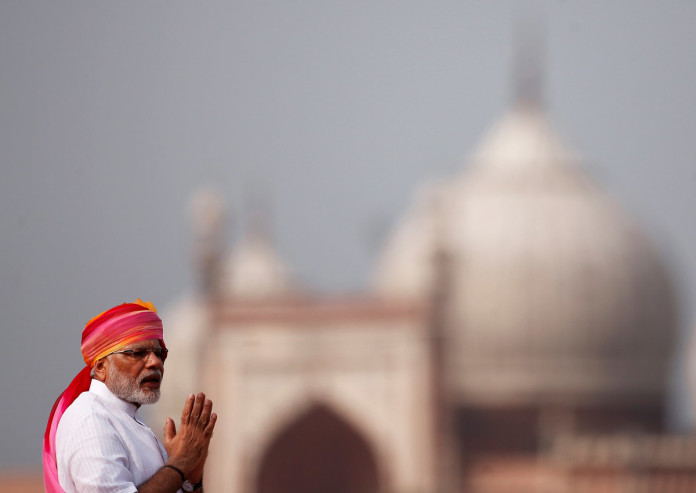
NEW DELHI – Indian Prime Minister Narendra Modi took aim at supporters of “terrorism” in his Independence Day speech on Monday, ratcheting up criticism of Pakistan while avoiding direct mention of month-long protests in Indian-ruled Kashmir.
Modi also pitched a vision of national unity and progress in his third annual address from the ramparts of the Red Fort in Old Delhi that, at 94 minutes, was the longest delivered by the 65-year-old leader.
Yet it was a broadside against Pakistan, the arch-rival also born out of independence from Britain and partition, that left the strongest impression in a speech that otherwise skirted foreign affairs and focused on his government’s own achievements.
“What kind of life is this, inspired by terrorism? What kind of government setup is it that is inspired by terrorism?” asked Modi, who delivered the open-air address amid a security lockdown in the Indian capital.
“The world will know about it and that’s sufficient for me.” As Modi spoke, two gunmen attacked a police station in Indian-ruled Kashmir, wounding six reservists. The army also said it had foiled an attempt to infiltrate two militants from Pakistan into North Kashmir, killing both.
Kashmir has witnessed violent protests since a July 8 encounter in which the security forces eliminated a commander of Pakistan-based Islamic militant group Hizbul Mujahideen. At least 54 people have been killed and thousands hurt in clashes with the security forces.
Modi met national party leaders on Friday to seek ways to end the worst unrest in Kashmir since 2010.
Both India and Pakistan rule Kashmir in part but claim it in full. The nuclear-armed neighbours have fought two wars since independence 69 years ago over the Muslim-majority region where the Line of Control, or de facto border, still runs roughly where the guns fell silent in 1948.
REPORT CARD
In keeping with earlier speeches, Modi delivered a report card on efforts to improve the lot of ordinary Indians, reeling off achievements in rural electrification, financial inclusion and health provision.
He strongly backed the fight against inflation, endorsing a 4 per cent target, within a range of 2 percentage points either way, agreed with Reserve Bank of India Governor Raghuram Rajan.
He barely mentioned his government’s latest – and arguably most significant – reform achievement: the passage of a key amendment that clears the way for the introduction of a Goods and Services Tax (GST) next year.
He said only that the GST would “give strength” to the economy, while thanking opposition parties that, after a drawn-out battle, had come on board to pass the amendment unanimously through both houses of parliament.
The GST would unite India’s $2 trillion economy and 1.3 billion people into a single market for the first time and, its backers say, boost economic growth and job creation that Modi needs to win a second term at the 2019 general election.
The tradition of delivering the annual address from the steps of the 17th-century Red Fort from where Mughal kings ruled Delhi for two centuries dates back to Jawaharlal Nehru’s historic “tryst with destiny” speech of 1947.
Modi, despite a barnstorming campaign that carried him to the biggest electoral landslide in three decades in 2014, has so far failed to touch the rhetorical heights achieved by India’s first prime minister.
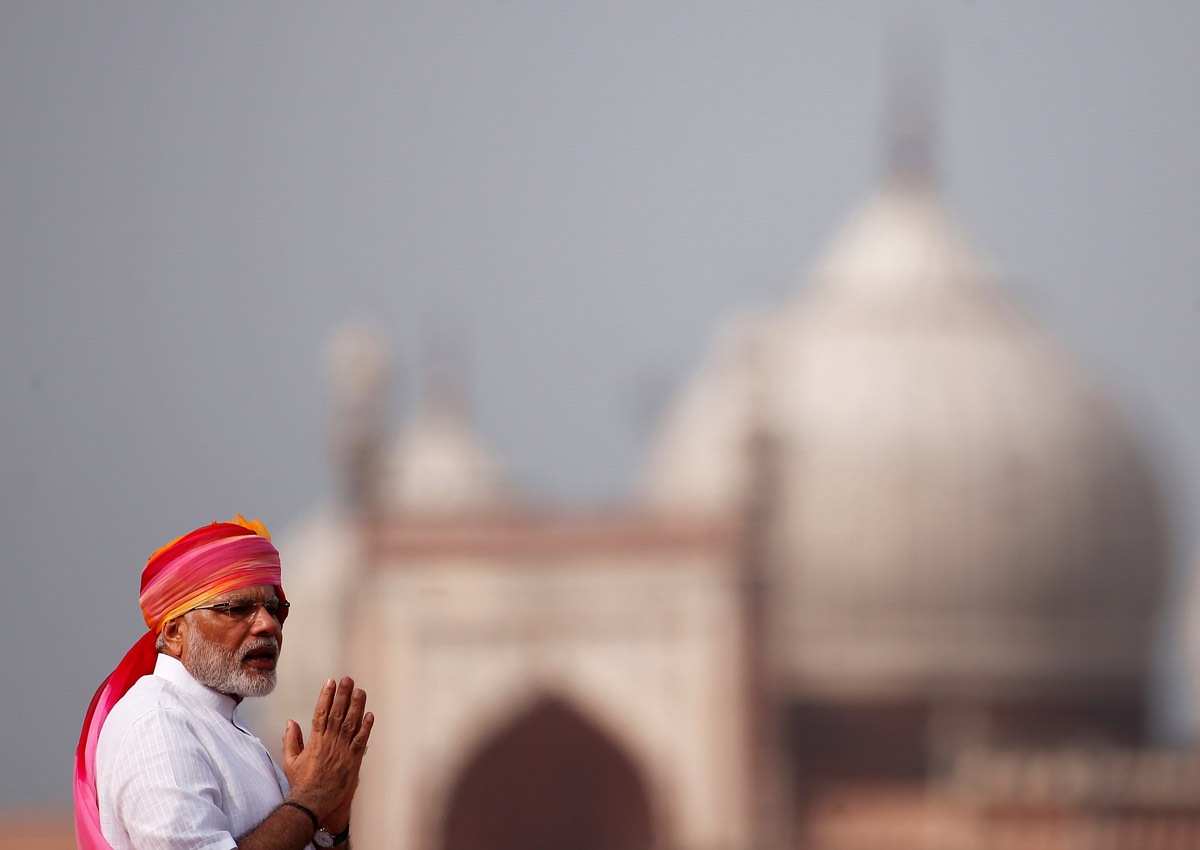
But, sporting a red, pink and yellow turban, he did indulge in some trademark wordplay to say that India was moving from”swaraj”, or self rule in Hindi, to “suraj”, or good governance. “One society, one dream, one resolution, one destiny – we proceed in this direction,” he said.
Image:
Publication Date:
Monday, August 15, 2016 – 14:32
Keywords:
Send to mobile app:
Source:
Story Type:
Others
Chinese divers get engaged on Olympic medal stage
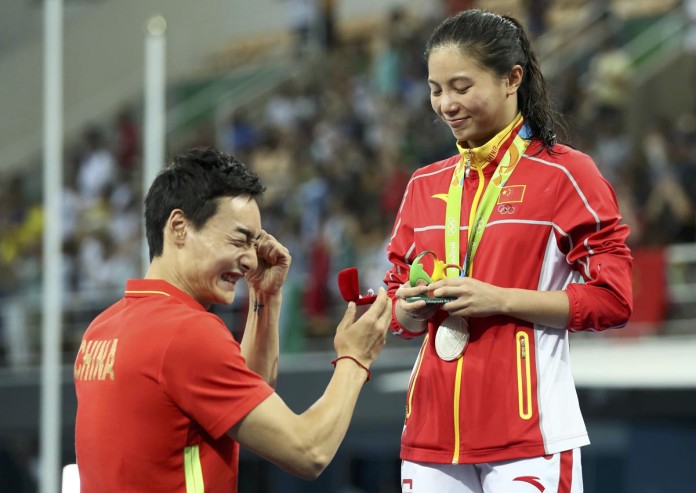
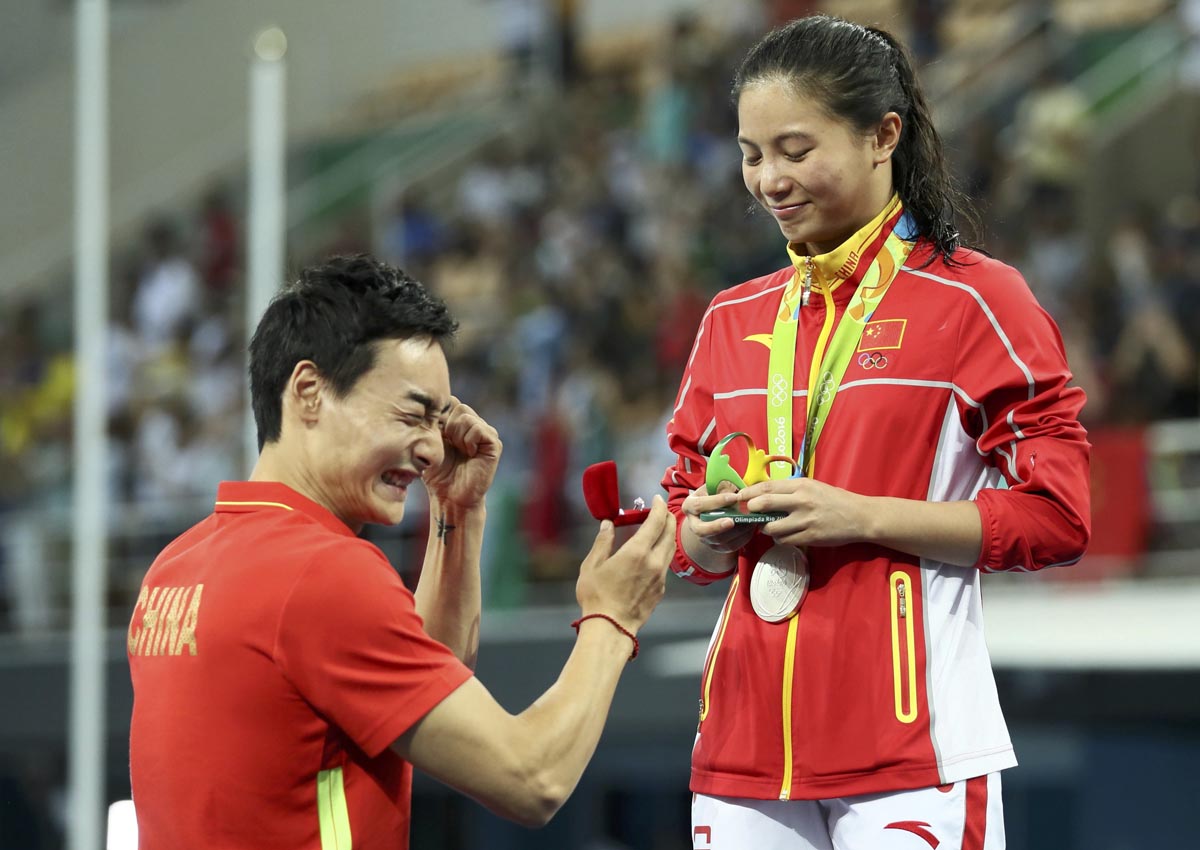
RIO DE JANEIRO – China’s He Zi received the shock of her life when teammate and boyfriend Qin Kai rushed up with a diamond ring during the medal ceremony of the women’s 3 metre springboard event, marking the second marriage proposal of the Olympics.
Qin, who won a bronze medal in his own synchronized diving event last week, climbed up to the stage after He received her silver medal, getting down on one knee while holding a red box with the ring and a glass-encased rose.
“I didn’t know he would propose today and I didn’t expect myself to marry myself out so early,” said He, who tearfully accepted the proposal with a big hug.
“I saw him during the afternoon and he seemed to be memorising something, so I asked him ‘what are you doing?’ and he said he was singing,” she told reporters.
“I’ve forgotten most of what he’s said (during the proposal), but it’s largely what you can expect like promises, but what touched me the most is that he said he was willing to be bullied by me for life,” she said.
The 25-year-old has been dating the 30-year-old Qin for the past six years, she added.
Shi Tingmao, speaking to reporters after her gold medal win in the same event, said she had knew about the proposal before the event, which Qin watched from the sidelines with the Chinese team.
“I’m really happy for them, because these years, be it career or relationships-wise, they have had to face a lot of pressure,” she said.
The engagement is the second of the Games, after Brazilian women’s rugby player Isadora Cerullo accepted a marriage proposal from her girlfriend at the medals ceremony for the first Olympic rugby sevens competition last week.
Image:
Publication Date:
Monday, August 15, 2016 – 13:44
Keywords:
Send to mobile app:
Source:
Story Type:
Others
A swim that leaves a legacy

On Saturday morning, my eight-year-old daughter spontaneously decided to pick up a Singapore flag and wave it at the TV screen. Joseph Schooling, you did that.
After standing for Majulah Singapura, she declared that she would one day be an Olympic gold medallist, because she lives in Singapore.
And Singaporeans win gold medals now.
Joseph Schooling, you did that.
Across a tiny island, a nation stopped and held its breath for 50.39 seconds, too nervous to move, too scared to let go.
But a hand touched the wall first in a Rio swimming pool, a Singaporean hand, releasing its grip on more than five million people.
And we exhaled. And then we roared. The cheers drifted from apartment to apartment, from coffee shop to coffee shop, from quiet hope to giddy reality, creating a spiritual daisy chain of celebration from one end of the country to another.
Joseph Schooling, you did that.
Across the world, myopic media agencies and western-centric commentators are learning to prefix “Olympic champion” with “Singaporean” for the first time.
OUR OWN
Click on thumbnail to view photos. Source:
The Straits Times, Reuters, AFP










































It’s no longer that guy standing next to Michael Phelps.
It’s the Singaporean guy. The guy. Our guy. The guy who beat Michael Phelps.
Bring it home. Bring it to the Little Red Dot. Singapore is on the golden map now, in our time, for all time. Joseph Schooling, you did that.
Back in Singapore, a young country understood, really understood, that sport knits a multicultural and multi racial fabric like nothing else.
Rallies, community events and impassioned speeches have a role to play, but athletes carry the flag to parts of a nation’s psyche others cannot reach.
Singaporeans watched the 100m butterfly final because they had to, they were compelled to, by the proud patriotic soul that is buried deep within even the most cynical of citizens. For 50.39 seconds, nothing else mattered beyond the athlete, the race and his flag. Joseph Schooling, you did that.
On social media, a photograph taken in 2008 continues to be tweeted, shared and idolised.
Click on thumbnail to view photos. Source:
Twitter screengrabs, Facebook screengrabs, Facebook/SGAG














It’s an image of an aspirational kid standing next to a sporting colossus, an awe-inspiring slab of lean muscle, a perfect swimming specimen beside a wide-eyed, cherubic kid.
It’s man and boy. It’s Michael Phelps, the Olympic god, and Joseph Schooling, the daydream believer.
It’s an image familiar to millions and forgettable to Phelps, just another happy snap with another dumbstruck fan, another day at the office for the greatest Olympian of all time.
But this kid was different. This kid didn’t merely idolise. He aspired. He saw more than a superstar. He saw a destination, a pathway, a role model and an end goal.
INSPIRATION
Most of all, he saw victory. Now the torch is passed, others will come.
Girls and boys will stand beside the man for photographs. When they look up, they will see what a prepubescent Schooling saw when he posed with Phelps.
They’ll see a gateway to glory, with one crucial difference. They’ll see stars, but not stripes. They’ll see a Singaporean. Joseph Schooling, you did that.
Today, an entire country walks with a spring in its step. One hundred metres for a man proved to be one giant leap for Singapore. Schooling’s butterfly effect will be felt for days, weeks and years to come.
Kids will swim, run, jump and throw further and faster, thanks to Schooling.
Parents will hopefully acknowledge the value of incorporating a practical work-life balance for their children, thanks to Schooling’s remarkably supportive and understanding family.
Most of all, Singaporeans will never forget. Everyone will remember where they were the day they walked with giants. Joseph Schooling, you did that.
And, on Saturday, a hopelessly emotional 41-year-old man had to explain to his daughter why he was crying.
Joseph Schooling, Olympic gold medallist and proud owner of the greatest moment in Singapore’s sporting history, you did that.
This article was first published on August 16, 2016.
Get The New Paper for more stories.
Image:

Category:
Publication Date:
Tuesday, August 16, 2016 – 06:00
Send to mobile app:
Source:
Story Type:
Others
Parliament moves motion to congratulate Schooling on Olympic success
Joseph Schooling’s presence in Parliament follows Defence Minister Ng Eng Hen’s announcement that the swimmer’s National Service will be further deferred until after the 2020 Olympics.
Source link


