 SINGAPORE – Transport operator SMRT Corp announced on Tuesday (Aug 16) that it has begun refurbishing escalators at 42 train stations along the North-South and East-West Lines, marking the first major work on escalators at stations since the MRT system began…
Source link
Escalators at 42 MRT stations to be upgraded for energy efficiency
Schooling goes back to school and aces visit with flying colours

 SINGAPORE – Just four days after he became Singapore’s first Olympic gold medalist, Joseph Schooling was back at school – not the University of Texas, where he is currently studying though, but his primary school, Anglo-Chinese School (Junior) where he…
Source link
Bin centre in Civic District done at acceptable cost, says minister
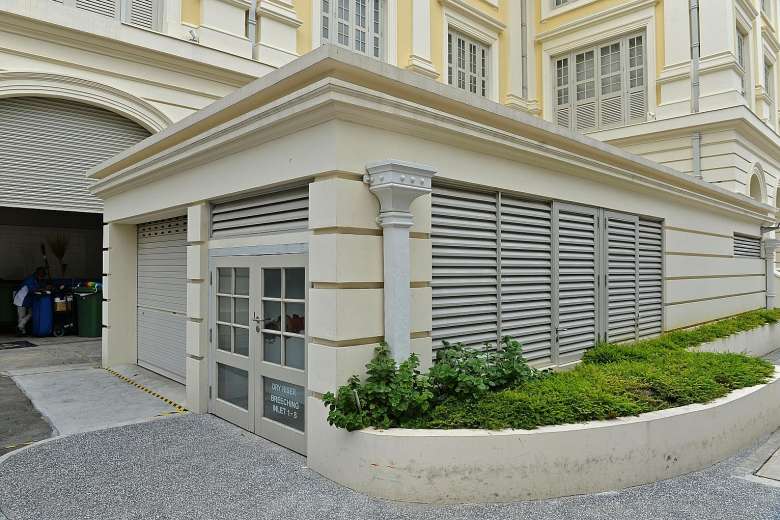
A centralised refuse-collection centre in the Civic District was delivered satisfactorily and at an acceptable cost, National Development Minister Lawrence Wong said yesterday as he addressed the controversy over the high fees paid to the consultant of the project.
He pointed out that the Auditor- General’s Office (AGO) did not conclude the consultant was overpaid, but was instead concerned about how the fees paid were assessed.
Mr Wong was responding on behalf of Minister for Culture, Community and Youth Grace Fu to a parliamentary question from Nominated MP Kok Heng Leun. Ms Fu is in Brazil at the Olympic Games.
The National Arts Council (NAC) had come under fire over the bin centre after the AGO’s annual report on public spending flagged the issue of the consultancy fees.
The AGO noted that the $410,000 paid to the consultant came up to nearly 90 per cent of what was paid to build the bin centre, which cost another $470,000.
Mr Wong said the scope of the consultant’s study was much wider than was typical for a bin centre, as an extensive feasibility study had to be done due to the historic nature of the buildings.
The original plan was to have a standalone bin centre for Victoria Theatre and Victoria Concert Hall, but it was later decided that a centralised centre that served other nearby buildings as well would be more suitable.
Moreover, the consultant’s quotation was assessed to be within the range of such fees for other complex projects in the area, he said.
The consultancy cost was 8.7 per cent of total costs to redevelop the Victoria Theatre and Concert Hall.
Mr Wong said this was within the industry benchmark of 10 per cent.
He added that the consultant had also helped to bring down the construction costs to $470,000, through “extensive value engineering”. The project’s contractors had initially quoted $890,000.
When asked by Ms Lee Bee Wah (Nee Soon GRC) if the ministry would have decided differently in hindsight, he said it would have made the same choice.
Mr Wong added that as it was not clear at the start what form the final refuse centre would take, and how much it would cost to construct, the NAC had decided against pegging the consultancy fees to the project cost. Instead, it paid a lump sum to “limit any potential escalation of costs”. He acknowledged that detailed documentation should have been provided to clearly explain the scope and complexity of the project, and pledged that this would be done in future.

This article was first published on Aug 16, 2016.
Get a copy of The Straits Times or go to straitstimes.com for more stories.
Image:
Publication Date:
Tuesday, August 16, 2016 – 14:00
Send to mobile app:
Source:
Story Type:
Others
'Smoke' fills MRT train and station after air-con system gas leak
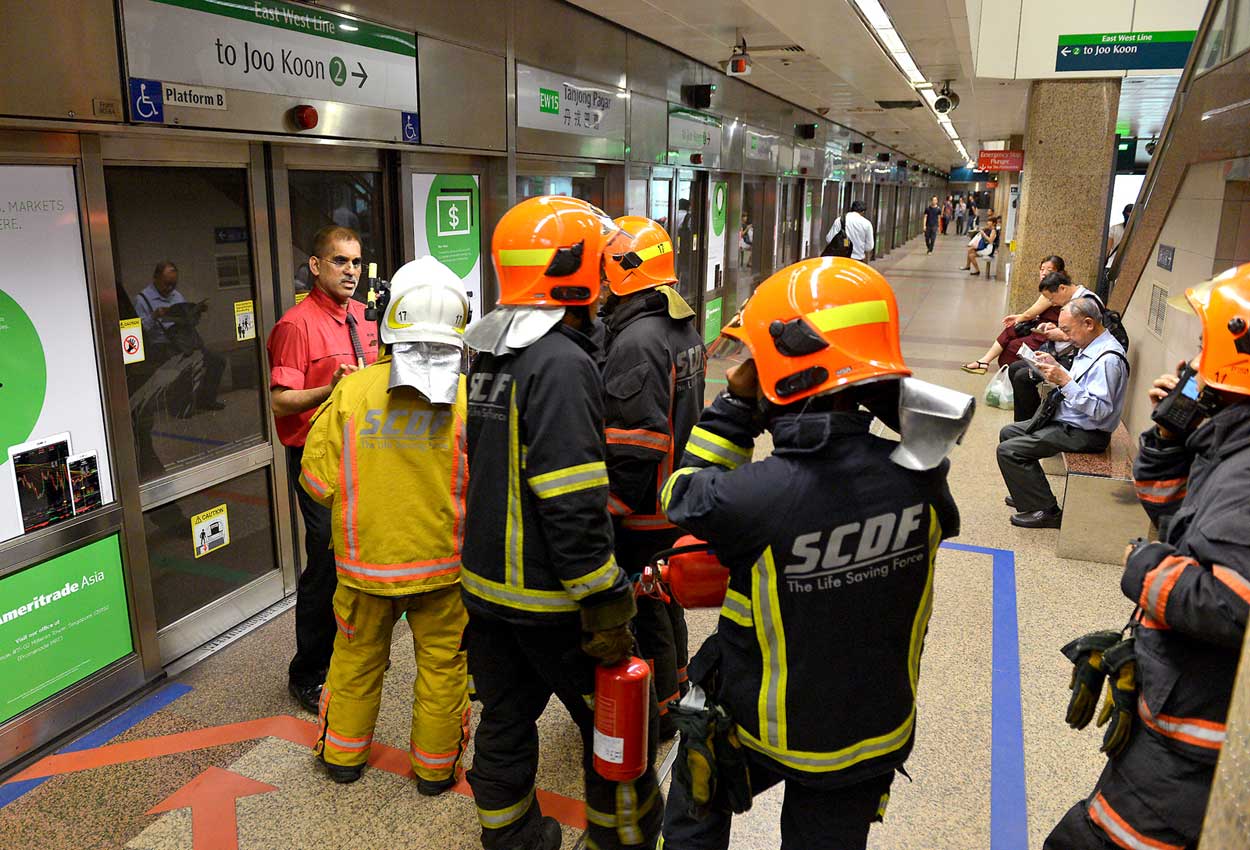
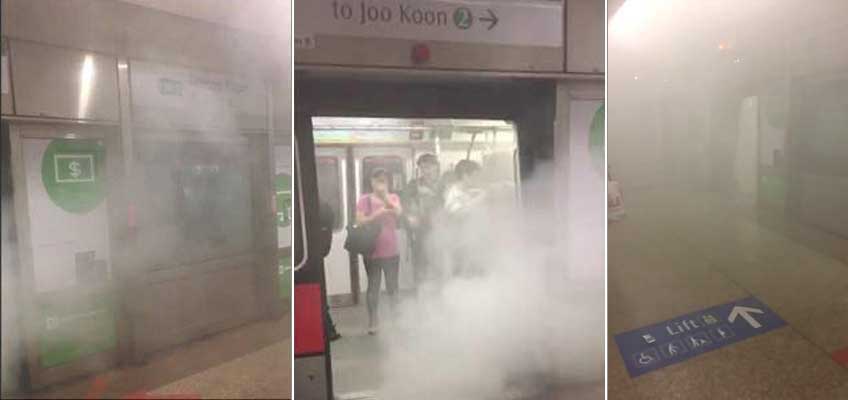
Plumes of “smoke” came out of a train when the doors opened after it pulled into Tanjong Pagar MRT station yesterday.
It filled the station as commuters rushed out, their hands cupped over their mouths and noses.
Passenger Sophia Kee told The Straits Times Online that the cabin she was in became “smoky” during the journey between Raffles Place and Tanjong Pagar stations.
Huge plumes of smoke out from the train that pulled into Tanjong pagar mrt station! pic.twitter.com/MCncDJVSkD
— ZOE RAYMOND (@zoeraymond) August 15, 2016
It appeared to be “coming from underneath the train”, between the train and the tracks, and filled the train and the station, she said. “It was really strong, thick smoke.”
The 30-year-old environmental designer told ST that she and the other passengers did not know what to do when the train stopped and the train doors opened.
“We did not know if it was more dangerous on or off the train,” she said, adding that the “smoke” made her cough.
Not sure what just happen here at Tanjong Pagar MRT!! pic.twitter.com/APiKRGVcx2
— اسوادي روس (@IswadiRos) August 15, 2016
She also said that there were no announcements telling passengers what to do while she was there.
After about a minute, Ms Kee decided to get off the train and walk to her office in Outram Park.
As she left, she saw SMRT staff members arriving to help the passengers.
Another commuter, who did not want to be named and who was at the platform when the affected train arrived, told The New Paper that the SMRT staff members asked everyone to stop taking photographs and videos.
Police on patrol also began ushering people to the concourse.
The incident was captured on video by several passengers and shared on social media platforms.
REDUCED VISIBILITY
SMRT later clarified that the “smoke” was freon gas that had leaked from the train’s air-conditioning system.
It said: “The discharge of freon into the tunnel reduced visibility at parts of the station when the platform screen doors were opened for passengers to exit the train.”
SMRT staff responded by immediately switching on the tunnel ventilation system to disperse the gas.
The Singapore Civil Defence Force, alerted to the incident through a video submitted by a commuter, sent firemen as a precautionary measure.
It said there was no fire detected at the platform and there were no signs of smoke.
The passenger who spoke to TNP said that she, along with others, got on the next train that came five minutes after the affected train left.
On her way to Tiong Bahru MRT station, she continued to see “smoke” coming towards her cabin from the front of the train.
She said: “It was a little unbearable in the train because of the smoke but most commuters were calm and simply covered their mouths and noses.”
Police said the affected train had been towed to Ulu Pandan Depot for inspection.
In its statement, SMRT said the passenger platform at Tanjong Pagar MRT station remained in service during the incident and that train services were not affected.
It also apologised to affected passengers and said that it would be investigating the cause of the incident.
Expert: Scene looks scarier than it really is
Freon, the gas that caused the scary scenes at the Tanjong Pagar MRT station, is not particularly hazardous, said an A*STAR director.
Dr Keith Carpenter, executive director of the Institute of Chemical and Engineering Sciences in A*STAR, said freon is a trade name for a range of gases.
These gases are virtually odourless, non-flammable, inert and not particularly hazardous.
They are mostly in liquid form as refrigerants in fridges, freezers and air-conditioning units.
Dr Carpenter said: “What you see in the video happened because when released, freon is vapourising and cold.”
In general, exposure to the gas needs to be at above 10 per cent in air and for a prolonged period for it to have major health effects.
“The incident looks dramatic, but it really looks scarier than it really is,” he added.

This article was first published on Aug 16, 2016.
Get The New Paper for more stories.
Image:
Publication Date:
Tuesday, August 16, 2016 – 14:00
Send to mobile app:
Source:
Rotator Headline:
'Smoke' filled MRT train at Tanjong Pagar station: Passengers didn't know to stay or get off train
Rotator Image:
Story Type:
Others
AHTC lapses show systemic failures, 'worrying' pattern of behaviour: MND
The Ministry of National Development is “deeply concerned” over the state of financial controls and systems in the Aljunied-Hougang Town Council., Senior Minister of State for National Development Desmond Lee says.
Source link
Scoot to fly to Europe from next year, starting with Athens

 SINGAPORE – Budget carrier Scoot will begin flying to Europe from next year, the airline announced on Tuesday (Aug 16).
Its first destination will be the Greek capital of Athens, due to commence from June 20, 2017. The new service marks the budget carrier’s…
Source link
Contempt of court law passed after seven-hour debate
What is the new Bill about?
The Administration of Justice (Protection) Bill seeks to put current law on contempt in statutory form.
It sets out maximum penalties in a move to provide greater clarity and certainty.
What is different?
The threshold for being in contempt by scandalising the court has been lowered.
How long did discussions take?
Calls to include it in the statute were first made 6 years ago in January 2010.
Singapore lawmakers on Monday night passed the Administration of Justice (Protection) Bill, after seven hours of heated debate.
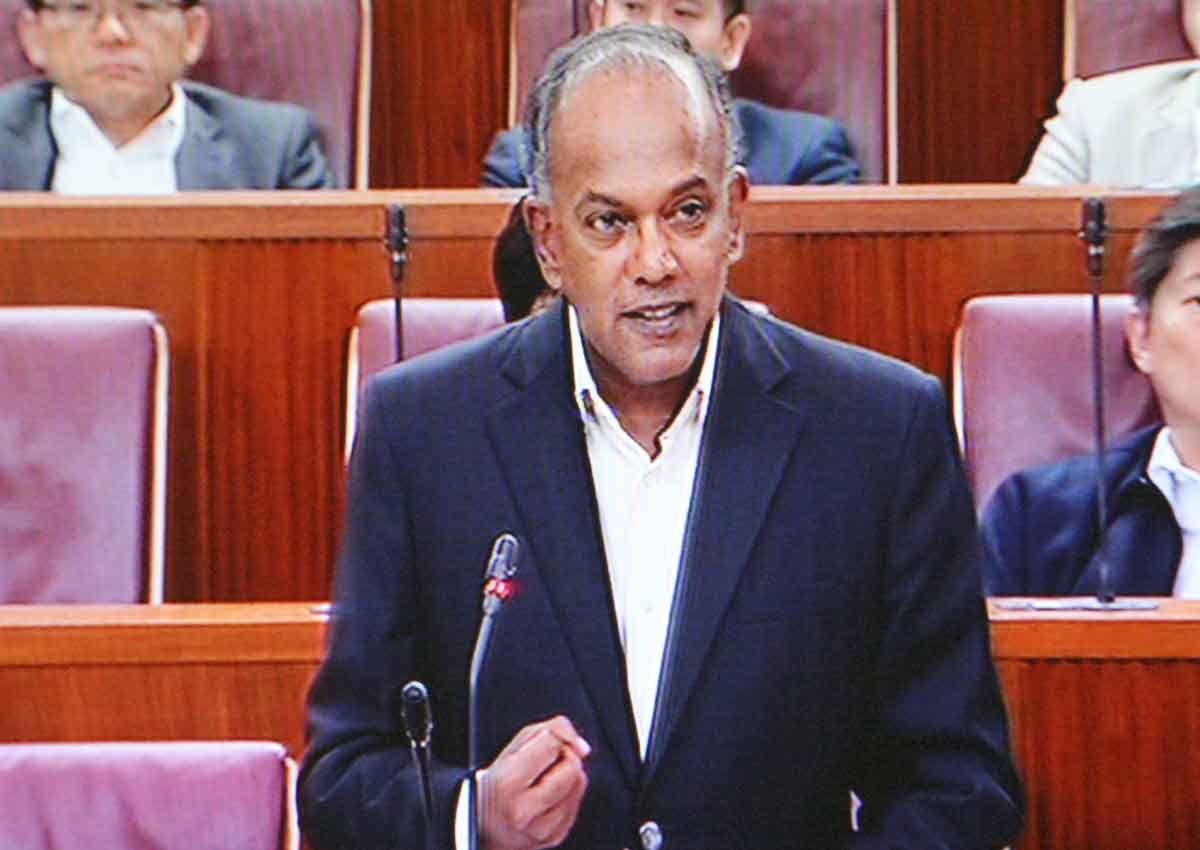
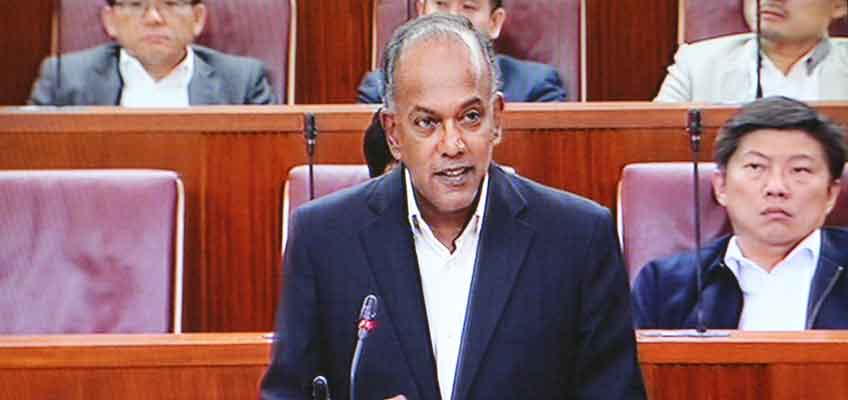
Law Minister K Shanmugam single-handedly took up two-and-a-half hours of that time, using two lengthy speeches to debunk criticism that the Bill was rushed into Parliament, curbs freedom of expression, and places the government above the judiciary.
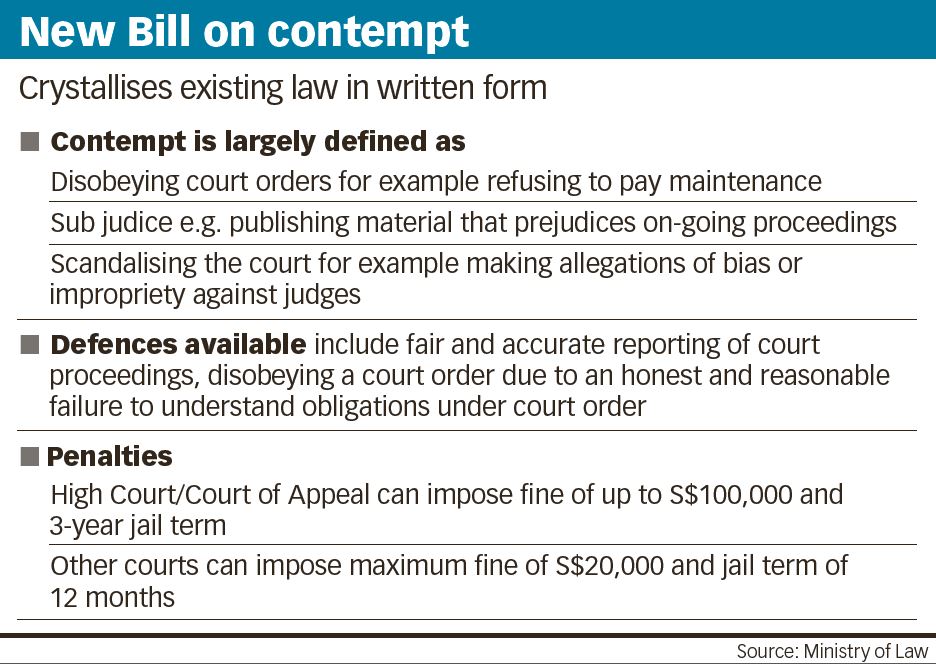
The Bill – passed with 72 votes “for” and nine “against” – puts in writing contempt of court laws that have until now been left to the courts to define. It sets out the types of conduct which amount to contempt of court: disobeying court orders, interfering with court proceedings, sub judice contempt (where ongoing court proceedings are prejudiced as a result of comments), and scandalising the court.
Explaining the government’s decision to include contempt law in the statutes – despite the Law Ministry’s assertion that “the boundaries of contempt … will not change” – Mr Shanmugam said that it is “not satisfactory” to have this as the only criminal law in Singapore that is based on case law.
Rejecting claims that the government had rushed the Bill into Parliament without sufficient public consultation, Mr Shanmugam said the genesis of the Bill was six years ago, when former chief justice Chan Sek Keong mooted the enactment of such a law. He added that the six-year timeframe was long by Singapore’s standards.
Mr Shanmugam reiterated that stakeholders such as the Judiciary, the Law Society of Singapore, academics, and media practitioners had been consulted prior to the tabling of the Bill. He also said that according to a “scientifically-valid statistical survey” by the government, a “very substantial majority” of respondents supported the Bill. Without the survey on hand, however, he was unable to quote the exact figures.
Still, he noted that only 249 members of the public had signed an online petition seeking to delay the passage of the Bill, on the grounds that it may restrict the legitimate discussion of issues that are of public interest.
Several online commentators and Members of Parliament (MPs) had also expressed concern that the government was attempting to limit citizens’ freedom of speech – fearing that they would run afoul of the law by simply commenting on a matter before the courts. Representing several opposition MPs’ views, Non-Constituency Member of Parliament Dennis Tan characterised the Bill as an “unjust and draconian piece of law”.
But Mr Shanmugam shot down such perceptions as “untrue”, stating that “the law tomorrow is the same as the law yesterday” when it comes to one’s right to criticise judgments and policies, and disagree with rulings.
Mr Shanmugam said the new law does not affect what people have already being doing – unless they decide they want to start publicly attacking witnesses, attacking judges, and trying to get certain results from the court.
He stressed that public discussions are not prohibited per se, and that the question is whether such discussions prejudice court proceedings or pose a real risk of doing so.
Indeed, the crux of Mr Shanmugam’s message was that the government has consciously chosen to stick to the law as developed by the Singapore courts, except for one change – where the threshold for being in contempt by scandalising the court has been lowered. Previously, for a statement to be in contempt, it had to have a “real risk” of scandalising the judiciary. Now, the word “real” has been dropped.
He also dismissed the notion that opinions aired over coffeeshop talk or Facebook updates could be considered contempt.

“If the law yesterday is the same as the law tomorrow, have you seen anyone being charged for sitting in a coffeeshop and talking about cases? You know, I think we want a debate that engages honestly on the facts,” said Mr Shanmugam, chiding those who had suggested that one could now be in contempt just by making a comment to a friend over a meal.
“I’ll tell you when someone sitting in a coffeeshop discussing a case could be in contempt. If you catch hold of a witness, have a beer with him, and try and influence him or threaten him in the coffeeshop, that will be contempt. But if you sit with your friends and talk to them about a case, how do you think it impacts on any case?,” asked Mr Shanmugam, urging MPs to “get real”.
He also firmly rejected speculation that the Bill places the executive branch above the judiciary. Critics had taken issue with a clause containing an exception to sub judice contempt, which states: “A statement made by a person on behalf of the government about the subject matter of or issue in a pending court proceeding is not contempt if the government believes that such statement is necessary in the public interest.”
Mr Shanmugam tried to allay those fears by stating: “I confirm for the record (that) the courts are the final arbiters … as to whether the power of the executive was exercised in accordance with the clause.” He said that this has to be the case “if the rule of law has got any meaning”.
As for suggestions to amend the bill so that contempt is actionable only if it “seriously prejudices” the court proceedings – as opposed to simply having prejudiced them – Mr Shanmugam said: “This is not right.”
“Think about it: A person is a defendant in a criminal trial. He could face years in prison. Do we really want to say it is okay to prejudice his right to a fair trial? What happens to the presumption of innocence and the basic right to a fair trial?”

This article was first published on Aug 16, 2016.
Get The Business Times for more stories.
Image:
Publication Date:
Tuesday, August 16, 2016 – 14:00
Send to mobile app:
Source:
Rotator Headline:
Parliament: Law minister shoots down MPs' concerns that new Bill clamps down on freedom of speech
Rotator Image:
Story Type:
Others
AHTC lapses ‘on much bigger scale’ than that highlighted in AGO report

SINGAPORE – There is a “world of difference” between the lapses found in Government agencies, as highlighted in the Auditor-General’s Office (AGO) report, and those in the Workers’ Party-run Aljunied-Hougang Town Council (AHTC), said Senior Minister of State…
Source link
Scoot: Fly to Athens (Greece) fr $288 all-in Promotion from 16 – 31 Aug 2016

SCOOT: Fly non-stop to Athens (Greece) fr $288 all-in!
Scoot: Fly to Athens (Greece) fr $288 all-in Promotion from 16 – 31 Aug 2016
Scoot will be flying non-stop to Athens (Greece) with all-in fares from $288. Travel from 20 Jun 2017 to 31 Oct 2017
NS deferment for Schooling is the right move

COMMENT
The “ayes” were resounding after Parliament moved a motion to congratulate swimmer Joseph Schooling.
It was an unprecedented Government action, coming just hours after Defence Minister Ng Eng Hen had said that Mindef had extended Schooling’s deferment by four years.
In October 2013, he was granted a deferment to help him pursue his Olympic dream of standing on the podium in Rio three years later.
That is due to end this month, and the new decision is to help him do just as well in Tokyo 2020, after he shocked the swimming world last Saturday.
Schooling whipped the star-studded field that included “The Greatest” Michael Phelps and two other multi-Olympic medallists, with his gold-medal victory in the 100m butterfly in Rio.
Click on thumbnail to view photos. Source:
The Straits Times, Reuters, AFP













































Many Singaporeans had written to the media and posted positive comments on the Internet, stating that Schooling deserves the deferment extension.
UNANIMOUS
In fact, there were no “nays” from the hundreds of fans I had spoken to, about this issue.
So this Government move is to be applauded, because from now to 2020, there should be no distractions for Schooling in his fresh pursuit of defending his Olympic crown.
Hundreds give Joseph Schooling triumphant homecoming at Changi Airport
Click on thumbnail to view photos. Source:
The Straits Times, AFP, Reuters, The New Paper, Hannah Alkaff, Lianhe Zaobao, AsiaOne




























































It is said that winning a title is painstaking and hard. Defending it is harder.
And Schooling has been a model swimmer who rose from bathtub frolic as a two-year-old toddler to an Olympic champion at 21.
I was sitting beside his dad Colin, at the Upper Thomson Road home of a family friend, Jimmy Teo, when Schooling called after his biggest triumph in Rio.
“I love you, son,” was how Colin ended the conversation.
Immediately, I sensed the strong bond between father and only son.
As Colin explained: “This bond is also about understanding each other’s sacrifices: How much May (mum) and I can provide in this grand mission, and his own belief in his abilities.”
Schooling was always driven towards his Olympic belief. Dare To Dream was his motto.
Despite some disappointments along the way in his 14-year journey to the swimming summit, he remained focused, leaving his dad and mum to tackle the problems.
As Colin confided: “I manage his aspirations, he has to take care of his expectations.”
A filial son, a mild-mannered gentleman and a disciplined achiever, Schooling hit the heights because he had been set a well-thought-out path to glory.
From the comfort zone at home, he was thrown at the “deep end” at 14 in the United States (Florida and Texas), balancing swimming against the best in the world, and studies.
Now that Schooling has put Singapore on the world map, I can draw a parallel with a swimmer from Suriname, who had a similar success.
BEATING BIONDI
Like how Schooling beat his idol Michael Phelps, Anthony Nesty had one over his hero Matt Biondi, the legendary water wonder from the United States, at the 1988 Seoul Olympics.
Same event: The 100m butterfly. Different manner: Schooling’s was by a massive 0.75sec, Nesty’s a mere 0.01.
Not one for excesses, the affable Nesty then told me in Seoul: “Fantastic. I owe it to my stint in the US. Now the world knows where Suriname is.”
Like Singapore’s, that was Suriname’s only Olympic gold medal in 56 years of Olympic participation (Nesty also won a bronze in 1992, though).
Like Schooling, Nesty, born in Trinidad and Tobago before migrating to Suriname, had enrolled at the Bolles School in Florida.
The Suriname government recognised Nesty’s remarkable feat by commemorating his gold-medal performance on a stamp and on gold and silver coins.
A 25-guilders bank note portraying an illustration of a butterfly swimmer was printed in his honour.
And Surinam Airways named one of its planes after Nesty, and the indoor stadium in Paramaribo was renamed for him.
So Singapore’s recognition of the feat by an invitation to Parliment after the grand homecoming at Changi Airport is a fitting gesture.
BUS PARADE
Schooling is to be hailed again with an open-top bus parade, and he has requested to delay his return to Texas by four days, so that he can attend Sunday’s National Day Rally.
It was a further tribute when Prime Minister Lee Hsien Loong, after taking a photograph with Schooling yesterday, said: “Usually people ask me for selfies, but today I felt so proud to ask Joseph for one.”
The megastar certainly deserves the Mindef deferment.
This article was first published on August 16, 2016.
Get The New Paper for more stories.
Image:

Publication Date:
Wednesday, August 17, 2016 – 06:00
Send to mobile app:
Source:
Story Type:
Others


