Home Blog Page 3111

Schooling tips Quah to be S'pore's next medal winner

0

Having blazed a trail for Singapore swimming, Olympic 100m butterfly champion Joseph Schooling believes team-mate Quah Zheng Wen can join him as an Olympic medallist sooner rather than later.

At the ongoing Rio de Janeiro Games, Quah reached the 100m and 200m fly semi-finals. The 19-year-old also clocked personal bests in both events.

Yesterday, Schooling, 21, said: “He’s improving. Two semi-finals, that’s phenomenal. He has a lot more potential.

“I think he can definitely win a medal or even win (a race) in 2020, if he keeps on this path.”

Reflecting on their time at the London Olympics as rookies four years ago, Schooling said: “We were both struggling in London. We were both starstruck, (with) all the (big names) around us.

“But now we’re among the best in the world. It’s nice seeing him grow next to me. He pushes me, I push him, we want to be better swimmers.”

Last year, Quah was granted national service deferment until the end of this month. It is unclear if the 19-year-old will have it extended until the 2020 Games.

Racing in the US and especially in the National Collegiate Athletic Association swimming meet, known to be one of the most competitive races in the world, has helped turn Schooling into a bona fide contender on the world stage.

The University of Texas at Austin student stopped short of encouraging Quah to join him in the United States, where he has been based since 2009.

But the swimmer believes the existing infrastructure in Singapore is strong enough to nurture an Olympic medallist.

Schooling’s decision to train abroad was in part due to the closure of the Centre of Excellence, where the nation’s best swimmers trained together.

But a similar system has since been revived with the formation of a National Training Centre squad that trains under national coach Sergio Lopez and his assistant Gary Tan.

“There’s no Schooling way of (success). Everyone’s different. But I do think we now have the resources, exposure, and belief now – that’s the most important,” said Schooling.

“Zheng’s good enough to succeed anywhere he goes. I’d (only) advise him to do what he thinks is right.”

With Quah and him leading the way, Schooling is optimistic about Singapore’s chances of fielding a relay team at the next Games, especially the 4x100m medley relay.

The national record is 3min 38.25sec, while the lowest qualifier in Rio was Greece in 3:34.41.

Schooling said: “We should’ve swum the relay at (this) Olympics. That’s my fault, I botched the fly leg during the medley. I just got caught up with winning the bronze, the pressure’s off. I should (have approached) the race differently.

“We’re so close. Zheng’s getting better, I’m improving, there are young guns coming up. We have a great shot at making it.”

siangyee@sph.com.sg


This article was first published on August 17, 2016.
Get a copy of The Straits Times or go to straitstimes.com for more stories.

Image: 
Category: 
Publication Date: 
Wednesday, August 17, 2016 – 16:00
Send to mobile app: 
Source: 


Story Type: 
Others

Source link

Driver of automated road sweeper escapes as fire engulfs vehicle

0

He was driving his cleaning buggy around the carpark when he saw flames from the corner of his eye.

He turned around and saw the back of his vehicle fully ablaze.

So he did what came instinctively. “I just jumped out,” the 54-year-old cleaner, who only wanted to be known as Mr Munusamy, told The New Paper.

The incident happened at about 1.50pm yesterday at the carpark in front of Block 324, Ubi Avenue 1 while he was on his regular sweeping duty.

The fire consumed his automated road sweeper. Thankfully, Mr Munusamy escaped unscathed.

When The New Paper arrived at the scene at about 3pm, only the charred remains of the vehicle were left in the parking lot.

A Singapore Civil Defence Force (SCDF) spokesman said they were alerted to the fire at about 2pm. Two fire engines and bikes were sent to the scene.

The fire was extinguished using a water jet.

When the fire erupted, Mr Munusamy said he ran two blocks away to his wife, who was using a public toilet nearby.

His wife, who only wanted to be known as Madam Devi, 51, told TNP in Tamil: “He ran and told me (what happened). He was frightened.”

“When he told me, I started trembling and got so scared,” she added.

The couple, both Malaysians, work as cleaners in the Ubi area, shuttling to and from their home in Johor Baru every day.

Mr Munusamy has been employed at cleaning company Clean Solutions for the last four years.

The manager of Clean Solutions, who identified himself only as Mr Phua, said the fire was caused by a short circuit in the vehicle.

The sound of the vehicle bursting into flames was so loud, it jolted a resident from his afternoon nap.

Mr Manivasan Rengan, 62, a service engineer, said he could hear it from his 12th storey flat at Block 324.

“I heard a loud ‘boom’ sound and ran out to look. It was a very loud noise,” he said.

BLAZE

He hurried down to the carpark and saw a huge fire blazing.

He said: “(Mr Munusamy) was so shaken. (But) he kept saying he was okay.”

The Ubi resident is friends with both Mr Munusamy and his wife. He has been bumping into them around the block for the last few years and often stops to chat with them.

Mr Manivasan said: “There was a blue car near the blazing (road sweeper) in the carpark.

“When the driver ran down (and saw the fire), he quickly got into his car and drove away.”

Another resident of the opposite Block 323, Madam Esa Aman, 66, also heard a loud sound from her ground-floor home.

Madam Esa, a housewife, said: “I went out (of my house) and just stood by the lift to see what happened because I was too scared to go closer.”

She had been getting ready to head to the nearby shops, but was so frightened by the sight before her that she hurried back into her house,

She said: “The fire was huge and clouds of black smoke were billowing (from the vehicle).”


This article was first published on August 17, 2016.
Get The New Paper for more stories.

Category: 
Publication Date: 
Wednesday, August 17, 2016 – 14:00
Keywords: 
Send to mobile app: 
Source: 


Story Type: 
Others

Source link

Cracks on China-assembled trains not safety risk: Khaw

0

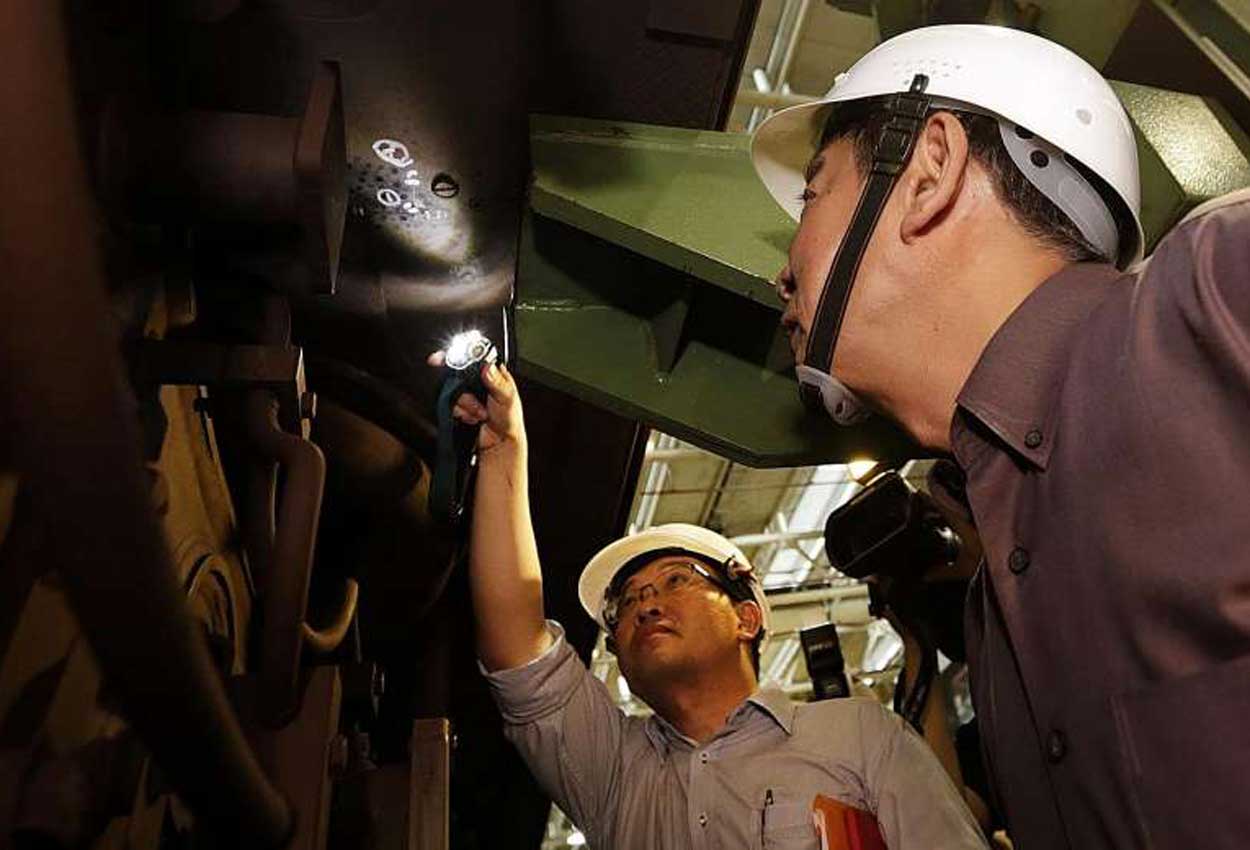
Transport Minister Khaw Boon Wan reiterated yesterday that the hairline cracks found on 26 China- assembled trains were not a safety risk, and withdrawing them from service for rectifications did not affect capacity levels on the North- South and East-West lines.

This was why the defects – brought to light last month by Hong Kong media outfit FactWire – were not publicised, he said in Parliament in response to questions from MPs.

He added that the Japanese-Chinese consortium that supplied the trains, Kawasaki-Sifang, won subsequent tenders fairly and had displayed exemplary behaviour in shipping the trains back to China to have their car bodies replaced – at its own expense.

The warranty period on the car bodies and bolster parts was also reset for five years – one year for defective liability and another four years of extended warranty, he said.

Hairline cracks were found in 2013 – some two years after the trains went into service – on the bolsters, an aluminium alloy structure under the train carriages that are welded to the car bodies.

The cracks developed due to defects in the manufacturing process that resulted in impurities being introduced in the aluminium.

Since July 2014, the trains have been sent to Qingdao progressively to be fixed, and five trains have gone through the rectifications. One train is currently in Qingdao, with the other 20 to be rectified by 2019.

“The concern about the defects had thus been resolved when we called the tender for more trains in 2014 and 2015,” he told the House.

“Our train tenders have always been conducted in an open and transparent manner, and are based objectively on quality and price assessments,” Mr Khaw said, recapitulating points he made to the media last month.

In 2009, Kawasaki-Sifang was awarded an initial $368 million contract to supply 22 new trains for the North-South and East-West lines, with more trains purchased later.

It continued to win more orders, including a $749 million contract in 2014 to supply 91 four-car trains for the upcoming Thomson-East Coast Line.

In reply to Non-Constituency MP Dennis Tan’s question about whether cracks were found on other train models, Mr Khaw said they were also discovered last year on the underframe of train cars used on the Bukit Panjang LRT.

He said that manufacturer Bombardier inspected the defects and found the trains safe to operate.

The cracks on the 19 trains are being welded here, Mr Khaw said. To date, 12 trains have been rectified, with the rest to be fixed by October.

Khaw addresses key issues raised

The cracks found on China-made MRT trains came under scrutiny in Parliament yesterday, with eight MPs questioning Transport Minister Khaw Boon Wan on the issue. Here are the key points:

WHY WAS THE ISSUE NOT MADE PUBLIC EARLIER?

Mr Sitoh Yih Pin (Potong Pasir) asked why the Land Transport Authority (LTA) and SMRT did not inform the public about cracks on the bolster – an aluminium alloy structure under the train carriage – after they were discovered in July 2013, or the subsequent decision to ship them back to China for repairs.

Mr Khaw said the LTA did not publicise the hairline cracks for three reasons:

• There was no safety risk to commuters.

• Manufacturer Kawasaki-Sifang took immediate and full responsibility for the defects and said it would pay for all replacement works, including replacing the bolsters with a new set made in Japan and welding them to new car bodies in China.

• The manufacturer accepted LTA’s replacement work schedule, which meant that train services and capacity levels are not affected by the incident.

The LTA would have publicised the defects if any of these factors had not been satisfactorily dealt with, said Mr Khaw.

WAS THERE A SAFETY RISK?

Non-Constituency MP Daniel Goh asked if the defects not being “safety-critical” meant they pose zero safety risks for commuters.

Mr Khaw said the trains can take more than three times the maximum stress they may experience during operations, and the cracks have not reduced this safety margin. An independent assessor, TUV Rheinland, confirmed that the trains are entirely safe to operate.

WHAT DID TUV RHEINLAND FIND AND WILL ITS REPORT BE MADE PUBLIC?

Mr Png Eng Huat (Hougang) asked about TUV Rheinland’s technical report. Mr Khaw said the consultant found that “an inherent defect” in certain batches of bolsters was the primary cause of the hairline cracks. The report will be published on LTA’s website if the firm agrees.

WHY DID KAWASAKI-SIFANG WIN FURTHER CONTRACTS FOR ADDITIONAL TRAINS?

Non-Constituency MP Dennis Tan asked about the consortium clinching subsequent orders for new trains. Mr Khaw said concerns about the defects had been resolved when tenders, which are based on quality and price assessments, were called.

“Kawasaki-Sifang won the subsequent tenders fairly,” he said.

WHAT IMPACT HAS THE ISSUE HAD ON THE MRT SYSTEM?

Mr Pritam Singh (Aljunied GRC) and Mr Sitoh asked if the issue has affected operations as well as plans to improve rail reliability and increase capacity.

Mr Khaw said 124 out of 140 trains for the North-South and East-West lines are put on service during peak hours. Only one train is sent back to China at a time, well within the standard 10 per cent buffer of trains for repairs, upgrading and standby. It does not affect the planned capacity expansion on these lines.

The Kawasaki-Sifang train incident has not affected the reliability of the system, as no train delays were caused by the bolsters’ hairline cracks, Mr Khaw added.

HOW LONG IS THE WARRANTY PERIOD FOR TRAINS?

Mr Yee Chia Hsing (Chua Chu Kang GRC) asked about the duration of warranty.

Mr Khaw said there is a defects liability of one year, then an extended warranty of four years.

This period is reset after the bolsters and car bodies are replaced, but the reset applies only to those train components.

WHY ARE THE BOLSTERS FROM JAPAN?

Mr Goh asked why the decision was made for bolsters to be supplied from Japan rather than China and if there is a confidence issue with train parts made in China.

Mr Khaw said the manufacturers had decided to use new bolsters from Japan, and his ministry had agreed. He said the first-generation Kawasaki trains are all on Japanese bolsters. “I don’t think we need to read anything more than that into this,” he said.

There were no cracks in those earlier trains.


This article was first published on Aug 17, 2016.
Get a copy of The Straits Times or go to straitstimes.com for more stories.


Image: 
Category: 
Publication Date: 
Wednesday, August 17, 2016 – 14:00
Send to mobile app: 
Source: 


Story Type: 
Others

Source link

Former CEO of SingPost Wolfgang Baier joins cosmetic distributor Luxasia

0

Fragrance and cosmetic distributor Luxasia announced the appointment of Dr Wolfgang Baier as its Group Chief Executive Officer (CEO) in a press statement on Wednesday (Aug 17). 

Source link

Strong community bonds necessary to face challenges: Chan Chun Sing

0

The People’s Association (PA) has a role and mission to play in mobilising people to face such challenges together, both before it happens and after the fact, says the Minister in the Prime Minister’s Office. 

Source link

Debate on foreign-born athletes grows: Former national shooter speaks up against 'xenophobia'

0

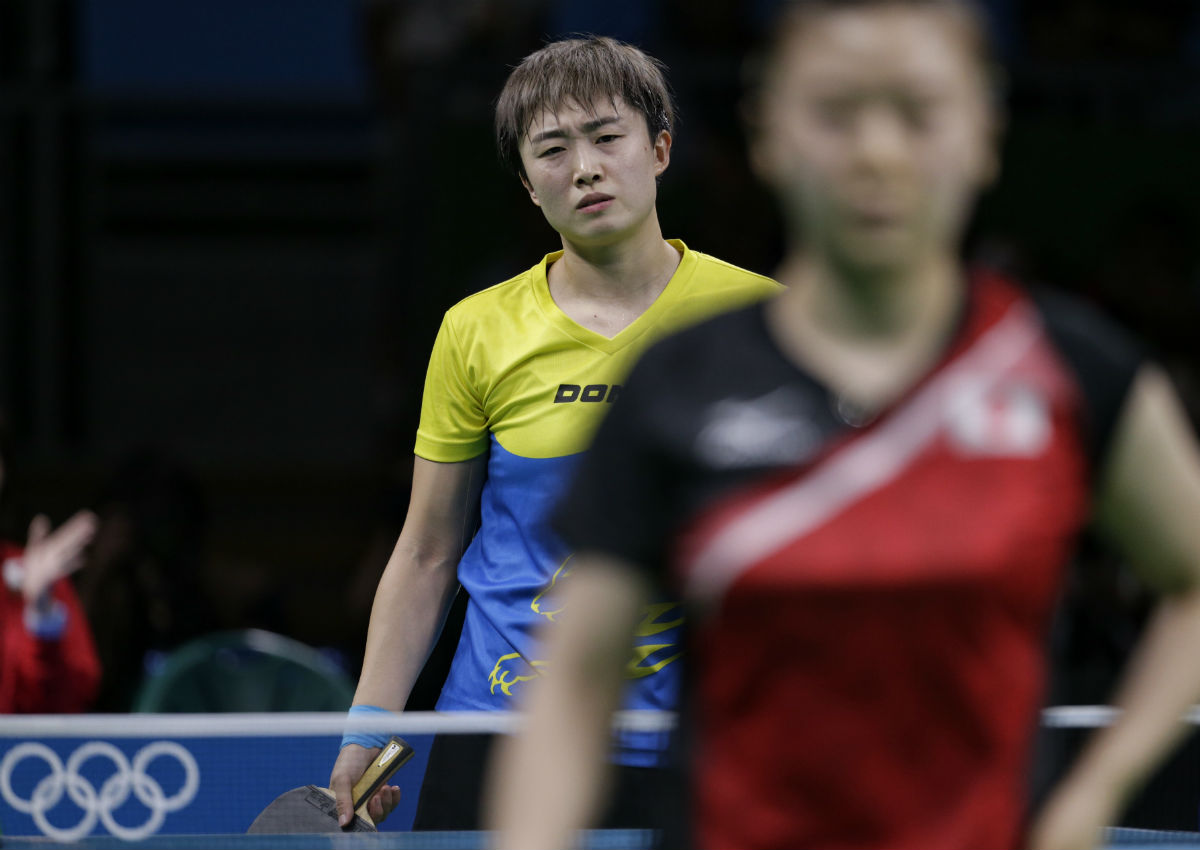
SINGAPORE – The Olympic dreams for Singapore’s women’s table tennis team have been dashed, after the trio – Feng Tianwei, Zhou Yihan and Yu Mengyu – lost the bronze medal to Japan in their final match on Aug 16.

Team Singapore will return home from the Olympics without a table tennis medal for the first time since 2008.

In a video interview published by Channel NewsAsia on its Facebook page, team captain Feng shouldered the blame for her team’s defeat.

Looking disappointed, the 29-year-old told a reporter that while her team mates performed well, she felt responsible for the loss of two sets during the match.

And while she admitted that raucous cheers from fans of the Japan team had intimidated her, she said that there were some issues with her own performance that needed to be sorted out.

After the interview was posted by the news channel on Wednesday (Aug 17) morning, many netizens left supportive comments for the team and praised Feng for being honest and taking responsibility.

But it did not take long for critics to also weigh in.

Some were unhappy that the team spoke to the media in Mandarin, while others brought up the long-drawn issue that the team is made up of foreign-born Singapore citizens.

“Nobody cares if you win or not. You’re not one of us anyway,” one comment read.

“Imported junks,” another Facebook user said.

Despite the negative comments, many Facebook users spoke up for the team.

One Facebook user by the name of Collin Tan said: “Whatever it is, these ladies sweat it out for Singapore. So what if they are from China and don’t speak English?”

Another by the name of Susan Khoo pointed out that the issue lies in a lack of homegrown talents on the international scene. “I don’t think many Singaporeans feel emotionally invested in our table tennis team. Their wins or their losses do not resonate with us. Maybe we need more homegrown talents? Just a suggestion,” she said.

The debate over foreign-born athletes in Team Singapore is not a new one, but it seems to have been rekindled after swimmer Joseph Schooling bagged Singapore’s first-ever Olympic gold on Aug 13.

In less than a week, the 21-year-old champion has returned home to a hero’s welcome, and was given a standing ovation in Parliament. But the media frenzy over Schooling has once again sparked the debate of local versus foreign talent in Singapore sport.

Former national shooter and Raffles Girls’ School student Zhang Jingna said on her Facebook page that the negativity was making her “sick”.

on Facebook

I thought the xenophobia I experienced as a child was just a number out of a pool of random experiences. Surely, I would…

Posted by Zhang Jingna on Monday, 15 August 2016

Now a multi-award-winning fashion photographer based in New York, Zhang was born in Beijing and moved to Singapore at a young age.

Once named Sports Girl of the Year in 2006, Zhang said in a Aug 16 post that she had endured xenophobic insults growing up as a foreign-born child in Singapore.

“I thought the xenophobia I experienced as a child was just a number out of a pool of random experiences. Surely, I would grow up to be in better company than the strangers who told me I was about the same as sh*t, or that I would always be of the lowest classes of citizens compared to local-born Singaporeans. I was wrong.


“The hating on foreign nationals on my feed has reached a point where I am beginning to feel sick. To realise that some of these people are ones that I had once worked with makes it all the more painful,” she said.

In a lengthy post, Zhang addresses some of the comments she had come across on Facebook in recent times.

Among these comments are netizens’ calls for the Government to spend more money training and cultivating local athletes.

While acknowledging Joseph Schooling’s “incredible” success, she points out that “it is of course easy to say all of these after he has already achieved what he has. But it doesn’t always start and end like this”. Some local-born athletes on scholarships overseas choose to never return, she says.

“If, for example, Joseph was indeed sent to the US on Singapore’s dime and a) didn’t win, b) never came back, or c) quit. I bet a lot of people would change their tune, and blame the Government for wasting money on a Singaporean who wasn’t trained on Singapore soil, by Singaporean coaches,” she adds.

Besides, it is difficult to groom young sportsmen in an academic-driven society like Singapore, Zhang points out.

Regarding those “purist” arguments that Singaporeans should not support athletes born in other countries, Zhang writes: “I sure hope your grandparents and theirs don’t hear you saying this. It’s heartbreaking.”

“We all came from somewhere, we all benefited from the immigrants that our parents, grandparents and forefathers were. So let’s stay civilised and not use racist and discriminatory words like ‘purist’.”

She also wonders if the treatment regarding Schooling’s success would be different if he was not born in Singapore.

“Before you pass judgement the next time, please remember that people don’t get to choose where they were born or what skin colour they were born with. At the end of the day, we are all the same on the inside – flesh and blood and bones, and a heart that’s only trying to find our places in the world,” she says.

ljessica@sph.com.sg

Image: 
Publication Date: 
Wednesday, August 17, 2016 – 16:16
Send to mobile app: 
Source: 


Rotator Headline: 
Debate on foreign-born athletes grows: Ex-national shooter speaks up against 'xenophobia'
Rotator Image: 
Story Type: 
Assignment

Source link

Programme to improve productivity among SMEs to be enhanced

0

Mr Tharman said the Government will work closely with the respective trade associations and chambers (TACs) to better understand the industry’s challenges and technology needs and find solutions that meet SMEs’ business needs.

Source link

Cashless payment option at more than 200 F&B outlets in the works

0

This new payment capability is part of a new Innovation Labs programme launched by PayPal on Wednesday. 

Source link

Japanese pole vaulter's Olympic dreams dashed by his own private part

0

When it comes down to determining success and failure in top-level sport, sometimes it can boil down to mere inches.

That’s exactly what a world-class athlete learned the hard way at the Olympics on Saturday (Aug 13).

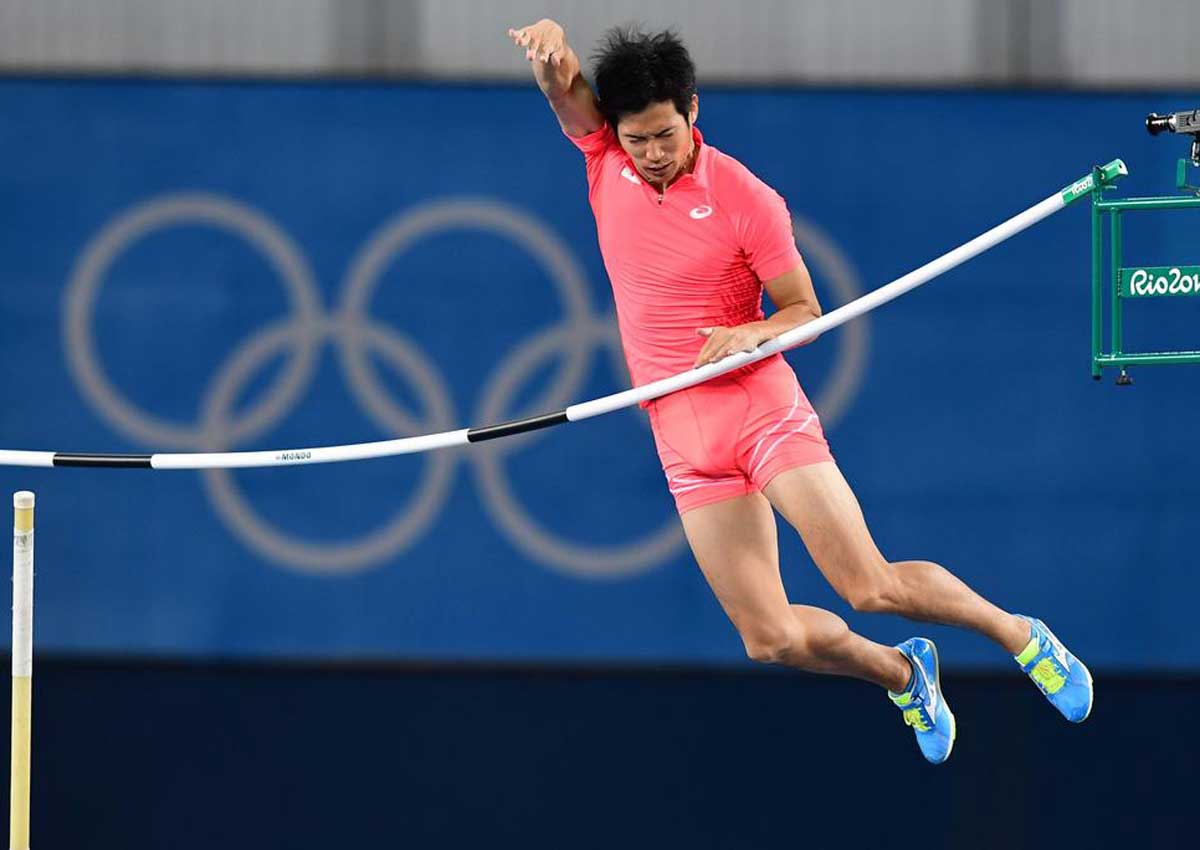
Japan’s Hiroki Ogita agonisingly missed out on a place in the pole vault final, when his genitals grazed against the bar and caused it to fall during the qualifying rounds.

In the attempt, the 28-year-old had cleared the bar, set at 5.3 metres, when his shin and thigh grazed against it. The bar wobbled slightly, but still looked like it would stay in place.

But just when it looked like he had succeeded, his manhood got in the way, hitting the bar and knocking it down to the ground.

Pain was written all over his face as he fell to the mat below, though it was uncertain whether it was merely from the heartbreak of his near-miss or of a more physical variety.

A video of Ogita’s jump, which shows the exact tragic moment in which his package cost him the chance to compete for the gold medal, was posted online, and has quickly gone viral.

Ogita got over the embarassing “equipment malfunction” to clear the bar in his second attempt. But he only managed 5.45m in his last jump and was placed 21st overall, the Daily Mail reported.

The 2016 Rio Olympics has seen no shortage of viral moments. Chinese swimmer Fu Yuanhui catapulted to worldwide internet fame with her dramatic facial expressions, while Michael Phelps’ death glare and Usain Bolt’s grin have also spawned memes aplenty.

seanyap@sph.com.sg

Image: 
Category: 
Publication Date: 
Wednesday, August 17, 2016 – 11:49
Send to mobile app: 
Source: 


Rotator Image: 
video embed code: 
<iframe width="100%" height="355" src="https://www.youtube.com/embed/AillvPe_LFQ" frameborder="0" allowfullscreen></iframe>
Video Media: 
Other Video Media
Story Type: 
Rewritten Story

Source link

World of Sports: $50.39 Off Mizuno Products Coupon from 16 – 21 Aug 2016

0

WORLD OF SPORTS: $50.39 off Mizuno products coupon till 21 Aug

World of Sports: $50.39 Off Mizuno Products Coupon from 16 – 21 Aug 2016

Be like a champion! Enjoy $50.39 off* with mimum $100 spent in a single receipt on all Mizuno products.

Source