The suspect was arrested following a break-in at an office at Blk 1092 Lower Delta Road, police say.
Source link
Man arrested after suspected housebreaking at Lower Delta Road
Singapore fiscal position strong despite lower GIC, Temasek returns: Moody's
Image:

Publication Date:
Thursday, August 18, 2016 – 15:00
Keywords:
Send to mobile app:
Source:
Story Type:
Others
Thousands turn up to support Joseph Schooling during victory parade
The nation’s first Olympic champion makes his final public appearance before heading back to the US, where he studies and trains.
Source link
10 things we complain about in Singapore but secretly adore
This article was originally on GET.com at: 10 Things We Complain About In Singapore But Secretly Adore
Try typing “Singaporeans love to complain” into Google and you’ll find a host of articles and videos discussing how Singaporeans love to complain. It has been said that Singaporeans have had too much of a good life here, having been born in a very well-managed country with little poverty, thus giving rise to a feeling of self-entitlement.
Despite that, is complaining even a bad thing? And are we sometimes complaining about things we secretly love and can’t do without? GET.com has listed 10 things that we think Singaporeans actually love more than hate about our country even when we complain.
1. MRT
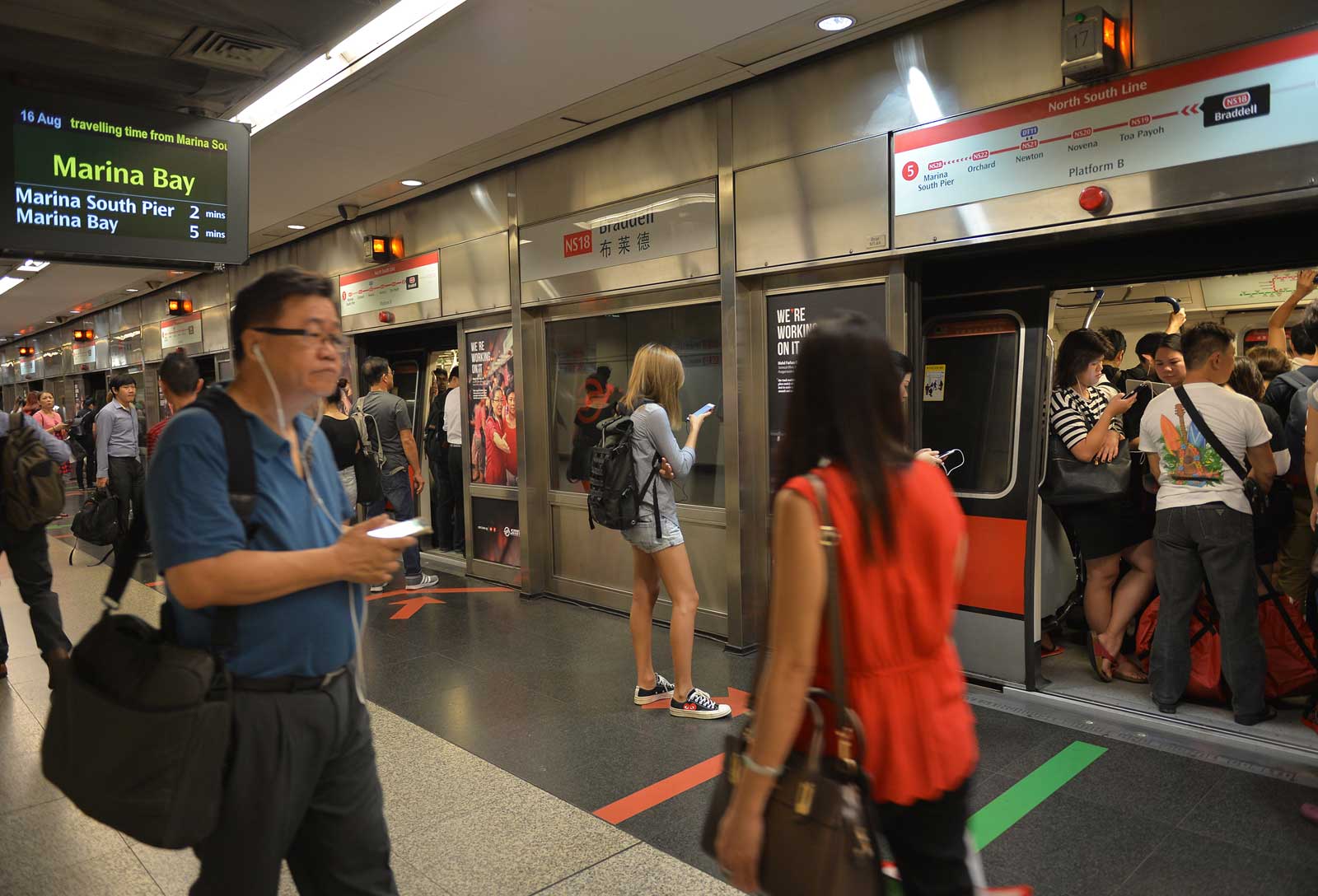
In my years of growing up in Singapore, I’ve never seen so many complaints about the MRT system in Singapore than those in the last 2 years.
In the past, we Singaporeans relied on our trusty train system to get us to work and school on time, and with no food and drinks allowed, it’s perhaps one of the cleanest subways in the world.
Somewhere along the way, I guess the increase in population and tourists might have taken a toll on the MRT.
Breakdowns become more and more frequent, causing some to be stranded for their examinations and work, and we even saw incidents where passengers had to walk on the MRT tracks.
Yes, the efficiency breaks down sometimes, but seriously, for the price we pay and the comfort we enjoy, ask any tourist and you’ll know that we should all be really grateful for what we have.
Here are 3 things SMRT can do when the MRT breaks down.
2. Singapore is “little”
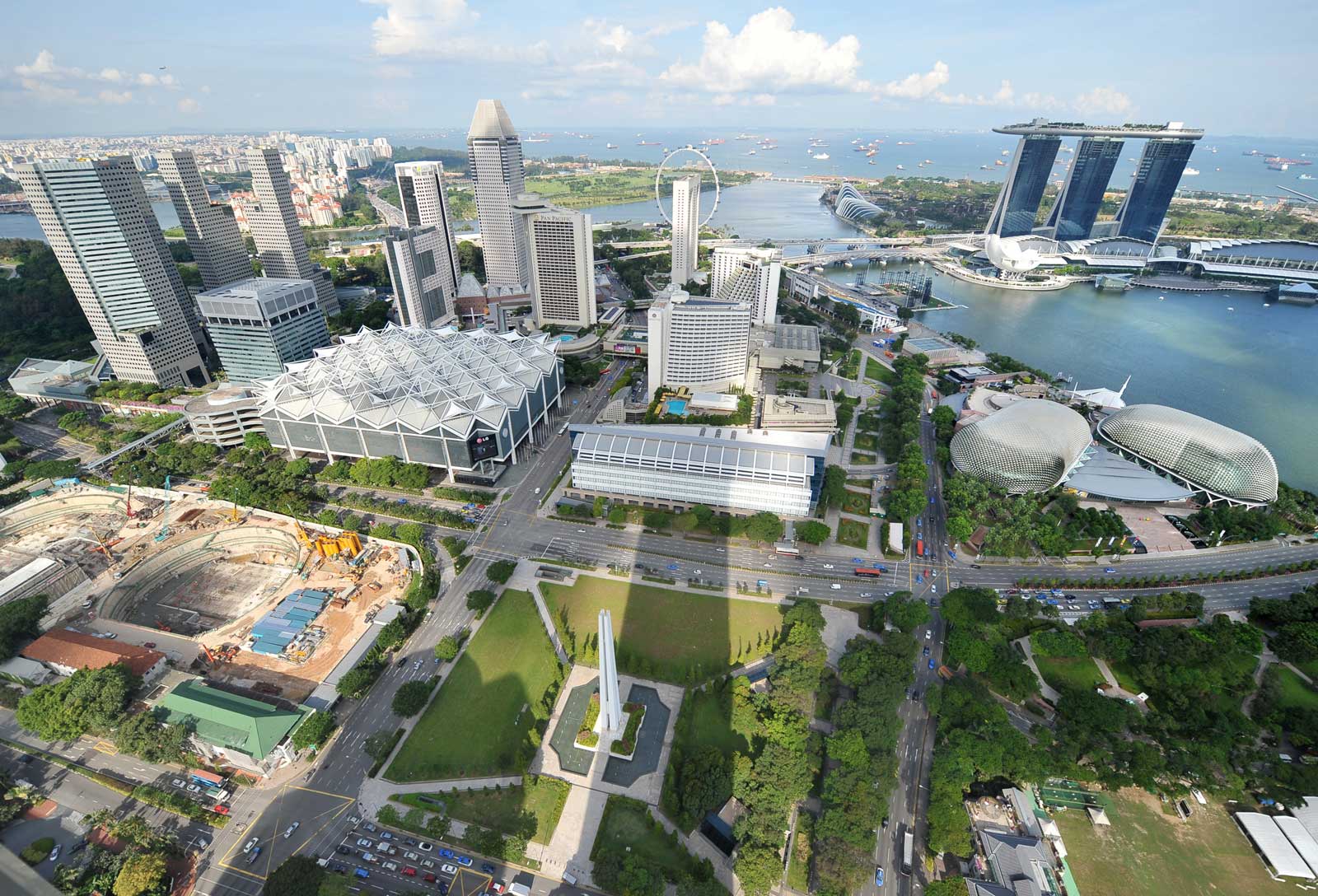
Singapore is affectionately known as the “little red dot”. And yes, admittedly, the island-state is small in size. Measuring just about 719 square kilometres, it’s certainly viable to cycle around the circumference of Singapore in a day or two.
But because it is small, it enables us to travel from the east to the west in less than 2 hours even on public transport.
The proximity we have lets us save lots of time on a daily basis – compare that to those who live in larger cities where their one-way commute to work can easily take more than 2 hours.
3. CPF

While most of us might be very grateful to our government for coming up with such a brilliant idea such as the CPF, there are some haters who feel that since it is money that is hard-earned, we should have full entitlement to how we want to use it.
Well, let’s say that there is a clear reason for locking up that money until we need it – because not all of us can trust ourselves to manage money properly, even if it is our own.
When the time comes for you to buy your own house, you should remember that it may not have been possible for you to afford it without your CPF.
4. Singlish

Love it or hate it, but Singlish has definitely established itself as a clear part of the Singaporean identity. Everywhere we go, you can identify a Singaporean just from the way they speak “English”. Isn’t that an obvious way we’ve got something uniquely Singaporean going on here?
5. City of fines
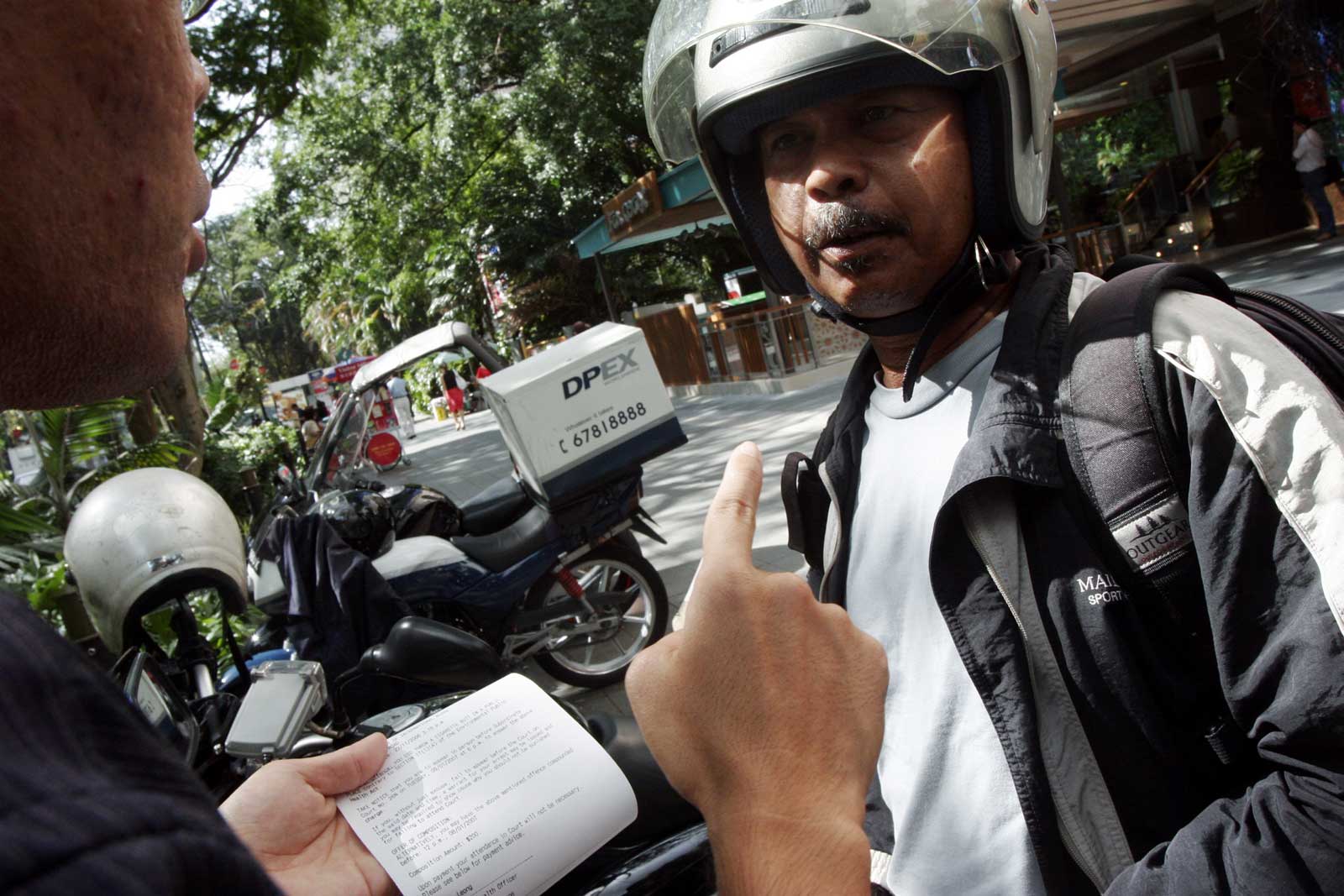
Some may feel that our country is a little obsessed with having fines for small offences such as littering, drinking in the MRT or smoking near a bus stop.
The signs may cause much anxiety for foreigners who are new to the country, but if you’ve lived here long enough, you already know that there’s a very small percentage of us that’s fined because it acts more as a deterrent.
After all, it is small things like this that make us grateful for the clean and safe city we live in.
6. Staying with the folks

In some other developed countries, people may frown upon the idea of young adults still staying with their parents past 18 years old. Not so in Singapore at all!
Indeed, we might even be a little surprised if we spoke to someone in their twenties who’s still single that’s renting an apartment/room to stay on their own.
While we complain about the pains of staying with our parents, such as having someone nag us to do out dishes, come home earlier or clean our rooms, living with our folks saves us lots of money and also helps to keep the family together.
7. Foreign talents

There’s been quite a bit of discussion with regards to foreign talents and workers in Singapore during the last election. Some Singaporeans have felt that the influx of foreign talents has taken up jobs that should be reserved for Singaporeans.
Well, let’s just say that having foreigners working in the same environment drives diversity, keeps us international and opens our perspective.
Another reason is that practically speaking, the Singapore economy can’t sustain itself without foreign talents simply because the local population is shrinking and ageing.
8. National Service

Recently there’s been some debate about whether foreigners who have been born in Singapore should fulfil their National Service duties here.
Well, judging from some of the news interviews on TV, it does seem like most guys who’ve been through the NS felt that it was a good experience to toughen themselves up.
I’ve also heard from my own relatives and friends how their sons and/brothers have changed for the better after NS.
Don’t we feel proud that our fellow Singaporeans are doing their bit at protecting their nation? You certainly do not want mercenaries doing the job in the event of war, do you?
9. Ban on gum

It has become something we’ve come to live with, sparking this obsession with chewing gum to our hearts’ content when we travel.
You just need to remember that no gum means no sticky stuff on your brand new Nike shoes when you are running outdoor and no disgusting chewed-gum stuck on your home’s public lift buttons.
10. Expensive homes

Yes, we all know that Singapore has recently emerged as one of the most expensive cities to live in for the third straight year.
With public housing selling at some $1 million for those near the city, how can you expect Singaporeans to be pleased with that?
On the other hand, the well-managed homes of Singaporeans are also top-notch compared to public housing in other parts of the world.
And judging by our home-ownership that has been hovering around 90 per cent, we have a strong reason to believe that beneath all that complaints, we still adore our housing system here.
Here you can find out how much money you need to buy your first HDB flat. If you’re looking to buy a property in Singapore, make sure to check our comprehensive home loans guide.
Here you can get the most in-depth information about Marina Bay & Chinatown properties, Tanjong Pagar properties, Tiong Bahru & Queenstown properties, Telok Blangah & Sentosa Cove properties, and Pasir Panjang & Clementi properties so that you can compare property prices and amenities and find out which area of Singapore is the best place for you to live.

This article was originally on GET.com at: HEADLINE
Other Articles You May Like From GET.com
Image:
Publication Date:
Thursday, August 18, 2016 – 13:53
Send to mobile app:
Source:
Story Type:
Others
Precious Thots: Warehouse Sale – Up to 70% Off from 18 Aug 2016

Precious Thots: Warehouse Sale w/ discounts of up to 70% off at Ubi showroom
Precious Thots: Warehouse Sale – Up to 70% Off from 18 Aug 2016
Precious Thots is having a warehouse sale at their Ubi Showroom for a limited time. Enjoy up to 70% off on selected items in the Warehouse Sale at Ubi Showroom from 18 Aug
Panel submits report on elected presidency
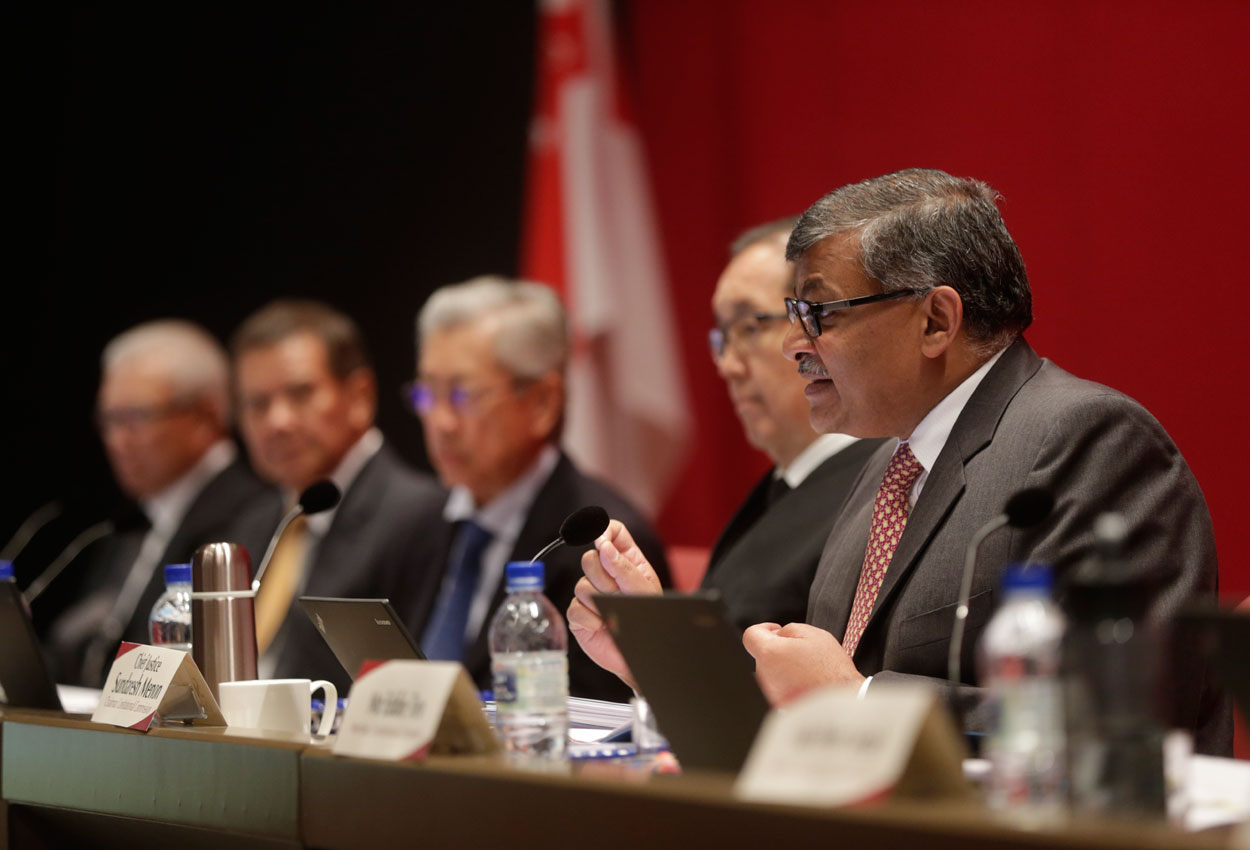
A special report recommending changes to Singapore’s elected presidency was received by Prime Minister Lee Hsien Loong yesterday, and the Government will give its response in “due course”.
The Straits Times understands that PM Lee will address the issue of the elected presidency on Sunday at the National Day Rally, an annual address where he maps out the nation’s future directions and announces policy changes.
The report comes six months after he appointed a Constitutional Commission, chaired by Chief Justice Sundaresh Menon, to review the institution so that it keeps up with the times, including the possibility of having a minority candidate elected from time to time.
Mr Lee thanked the nine-member commission “for the deliberation and care with which they have carried out their tasks”, the Prime Minister’s Office (PMO) said after getting the report earlier in the day.
“The Government will study the report. It will publish the report and give its response in due course,” added the PMO statement.
Singapore Management University law professor Eugene Tan, a former Nominated MP, said: “The National Day Rally is a valuable opportunity for the PM to share his thoughts on the elected presidency.”
Parliament may even debate the report as early as next month, he added. “The countdown to the next presidential election has started. The earlier constitutional amendments are made, the more lead time potential candidates have to adjust to them.”
The presidential election must be held by August next year.
Political observer Zulkifli Baharudin said the public also needs to be educated about the changes as “they are the ones who will be voting the next president in”.
Prof Tan was among 20 individuals and groups invited by the commission to expand on their ideas on changes they want to see in the elected presidency. They gave their views during four public hearings.
The commission also received more than 100 written submissions.
Mr Lee first spoke about the need to review the elected presidency in January, after last year’s general election. Speaking at the first sitting of the 13th Parliament, he said the head of state should remain elected.
But, he added, three areas should be studied:
– How to update the qualifying criteria of candidates for the elected presidency.
– How to strengthen the Council of Presidential Advisers, which advises the president in exercising his custodial and discretionary powers.
– How to ensure those in a minority race will have the chance to be elected as president.
During the commission’s hearings, the issue of minority representation was the most hotly debated. While most speakers broadly agreed on the need for a minority president from time to time, they were split on how to achieve it.
Some suggested reserving elections for candidates from a particular minority group that has not had a president for several terms. Others were worried that doing so would undermine meritocracy.
Constitutional law expert Kevin Tan, who spoke at the hearing, said: “It is the most difficult to manage. How are you going to engineer a situation where you will have a president from a minority race?”
Another issue was the qualifying criterion. Several said the bar for a private-sector candidate should be raised. But some felt it might shrink the pool of potential candidates, especially from the minority groups.
Currently, would-be candidates from the private sector must have run a company with a paid-up capital of at least $100 million.

This article was first published on August 18, 2016.
Get a copy of The Straits Times or go to straitstimes.com for more stories.
Image:
Publication Date:
Thursday, August 18, 2016 – 16:00
Send to mobile app:
Source:
Story Type:
Others
Operators need to take rodent control measures seriously: Amy Khor
The Senior Minister of State for Environment and Water Resources suggested three ways for the pest control industry to manage the challenges: Innovation, training and community involvement.
Source link
Maid abusers in 'simple hurt' cases may face longer jail terms
Employers who abuse domestic maids in cases of simple hurt may face longer jail terms in a new move by the court to raise deterrence.
Chief Justice Sundaresh Menon gave notice of the direction the court was moving in, in dismissing the appeal of a convicted offender jailed for 14 weeks for the “wanton bullying” of a maid.
The lawyer for Janardana Jayasankarr, Mr Rajan Nair, had argued that his client’s 14-week jail term for punching and stamping on his maid was “manifestly excessive”, according to precedents.
But the CJ disagreed, saying: “In all the circumstances, I consider the sentence in this case could have been even higher.”
He also said in his judgment grounds, released yesterday, that this area of sentencing should be reviewed, given an appropriate case.
Simple hurt draws a maximum jail term of three years, unlike grievous hurt, which is 15 years.
Janardana, 52, had pleaded guilty in February to two counts of assaulting Filipina Miezel Cagas Limbaga, 31.
In the incidents which occurred last year, Janardana, a security guard, had stamped on and punched Ms Limbaga after accusing her of stealing food.
She was left with bruises on her scalp, cheeks, chest, back and hip.
Janardana and his wife Vidya Jayasankarr, 32, who was jailed for a week, had taken turns to hit her.
District Judge Jasvender Kaur jailed Janardana for seven weeks consecutively on each charge, taking two others into consideration.
Mr Nair had asked for the sentence to be cut to eight weeks, as the individual term of seven weeks for each charge was not in line with previous cases.
But CJ Menon said the “real issue” in the case was the severity of the assaults and the injuries suffered.
He noted there were repeated assaults with “no comprehensible trigger” on the vulnerable areas of the victim’s body.
It had reached a point where she was afraid even to be seen talking to other persons.
He said: “I consider this as a serious instance of abuse. Domestic helpers cannot become an outlet for a frustrated employer to vent his or her personal frustrations.
They are human beings entitled to be accorded due dignity and respect because the human condition demands it.”
Noting that the law provides for a maximum of three years in jail and $7,500 fine for offences of simple hurt, he said the precedents showed the courts may not have sufficiently taken into account or utilised the breadth of the sentencing range prescribed by Parliament.
He said the court would take an appropriate case in the future to calibrate “the applicable benchmarks upwards” and spell out the factors to consider when sentencing.
Industry players hailed the CJ’s move, pointing out that stiffer jail terms would prompt employers to think more before they act.
Ms Shirley Ng, the owner of Orange Employment Agency, said it was a strong message being sent from the court.
Government Parliamentary Committee (GPC) for Manpower chairman Patrick Tay added that foreign maids needed protection as they are more vulnerable, working long hours in an environment out of the public eye.
He said: “This is unlike service staff, or those who work in office or public premises where there are witnesses.”
Foreign Domestic Worker Association for Social Support and Training (Fast) executive director William Chew suggested that other measures, such as assessing the employer’s suitability, also had to be considered.
Other Cases
April 2015 – Malaysian Chong Yee Ka, 32, a permanent resident, punched Myanmar maid Aye Moe Khaing, 27, in the face – among various forms of abuse-at her Rivervale Walk flat. Chong was sentenced to three weeks in jail on two counts of maid abuse.
February 2015 – Ng Tong Kok, 59, a part-time cleaner, hit his 33-year-old Indonesian maid Warda with a walking stick, and punched and kicked her. Found to be suffering from a major depressive disorder, he escaped jail time and was given a two-year treatment order to get psychiatric help.
July 2014 – Li Guizhen, 64, injured Myanmar maid Nwe Ni Hlaing, 30, by kneeing the victim in the chin. Ms Nwe Ni Hlaing was kneeling before Li, who was visiting her daughter from China, to apologise for her mistakes at work. Li was sentenced to a weekin jail.
2012 – 2014:
Filipina Thelma Oyasan Gawidan, now 40, was denied food and not allowed to go out of the house by her employers Lim Choon Hong, 47, a freelance trader, and his wife ChongSui Foon, also 47.
Madam Gawidan weighed just 29.4kg when she finally escaped in April 2014.
Lim has pleaded guilty to a charge of contravening the Employment of Foreign Manpower (Work Passes) Regulations 2012, which requires employers to provide adequate food and medical treatment for their maids. Chong has also admitted to a count of abetting Lim in committing the offence, which carries a maximum punishment of 12 months in jail and a $10,000 fine. The couple has not been sentenced.
This article was first published on Aug 18, 2016.
Get a copy of The Straits Times or go to straitstimes.com for more stories.
Image:

Publication Date:
Thursday, August 18, 2016 – 12:47
Keywords:
Send to mobile app:
Source:
Story Type:
Others
Smart bus stop prototype aims to 'make waiting fun'
Named Project Bus Stop, the prototype situated at Jurong East comes with free Wi-Fi, handphone charging points, e-books for downloading and even a swing.
Source link
Joseph Schooling shows gratitude to first coach at event

Salutations aside, they hardly spoke much.
The one-minute dialogue was largely dominated by monosyllables.
“Many thanks, Uncle Poon,” was how Joseph Schooling opened his conversation with Vincent Poon.
And Schooling’s first coach and mentor Poon replied: “Well done”.
The momentous occasion probably did not lend itself to keeping them engaged in conversation.
For everyone, in the 100-odd crowd – armed with either handphones, autograph books, caps, tee shirts or just slips of paper – wanted a part of Schooling.
Yesterday’s meeting took place at Tanah Merah Country Club’s (TMCC) Garden Lounge, where the club honoured and hailed Schooling.
There were banners, posters and a makan kechil to show the club’s gratitude for his historic Olympic gold medal – Singapore’s first – victory in Rio.
It was a private gathering where club chairman Ng Kee Choe and his general committee turned up in force to welcome home a junior member who started his swimming career at the distinguished club.
Looking weary and still jet-lagged after yet another day of sporting engagements since his arrival from Brazil on early Monday morning, Schooling’s face lit up when he met Poon.
For as the 21-year-old megastar acknowledged later, he would not be where he is – at the summit of world swimming and global fame – if not for the springboard set up by Poon at the TMCC pool when he was only four.
Poon, 69, a reputed coach who still teaches at TMCC, said: “I have never seen a student like Joe. He was always punctual.
“He followed instructions to a tee and he gave his 100 per cent at training.
FEARLESS
“What struck me most about him was his fearlessness.
“He would accept any challenge. I am truly proud of him.”
Later in an address to the gathering at TMCC’s Garden Lounge, Schooling said: “I remember Uncle Poon giving the other kids a 10-second advantage and making me do catch-up over one length of the pool.
“I got my butt kicked most of the time. But all the hard work has paid off.”
Then, in a tribute to his former coach, Schooling said: “In fact, this event belongs not to me, but to Uncle Poon.
“For he played a great part in making me what I am today.”
The applause from the crowd certainly underscored the point.
godfrey@sph.com.sg
Click on thumbnail to view photos. Source:
The Straits Times, Reuters, AFP













































Crowds gather to catch glimpse of Joseph Schooling on victory parade
Click on thumbnail to view photos. Source:
AsiaOne





















This article was first published on August 18, 2016.
Get The New Paper for more stories.
Image:

Publication Date:
Thursday, August 18, 2016 – 14:00
Keywords:
Send to mobile app:
Source:
Story Type:
Others


