Founder and designer Priscilla Shunmugam shares with Channel NewsAsia’s Genevieve Loh her vision for steering her brand forward in this economic climate.
Source link
Singapore fashion brand Ong Shunmugam designs a brighter future with new flagship store
Local fashion brand Ong Shunmugam designs a brighter future with new flagship store
Founder and designer Priscilla Shunmugam shares with Channel NewsAsia’s Genevieve Loh her vision for steering her brand forward in this economic climate.
Source link
Move over cat cafes, Hong Kong's 'rabbit cafe' hops onto the scene

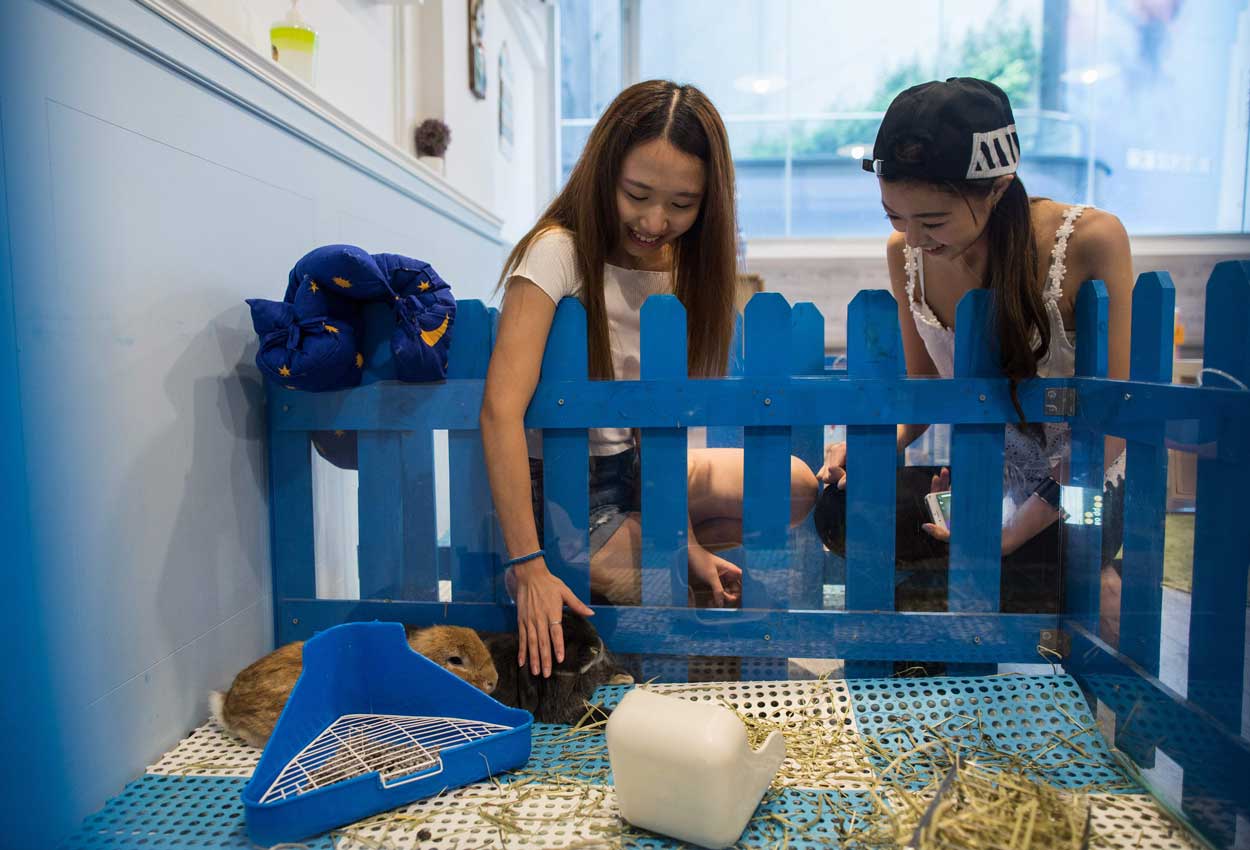
HONG KONG – The newest addition to Hong Kong’s cafe scene is taking a soft approach to business – with 12 resident rabbits for customers to pet.
The “Rabbitland” bunnies munch on grass while visitors coo over them between sips of tea and bites of toasted sandwich.
Tucked away on the third floor of a high-rise in the busy commercial district of Causeway Bay, the cafe says it gives people who have no room to keep a pet in space-starved Hong Kong the chance to bond with the fluffy animals.
Most of the rabbits have been abandoned by previous owners.
Hong Kong already has a number of “cat cafes”, but this is the first one for rabbits, inspired by a similar shop in Japan.
Click on thumbnail to view photos. Source:
AFP






“I like how soft they are and like their fur and how gentle they are when you feed them,” says Natalie Chan, 11, whose mother had brought her to find out more about keeping rabbits as she wants one as a pet.
There are a list of rules about how to behave around the animals, including not picking them up or pulling their ears.
Co-founder Teddy Chui, 29, says anyone who does not obey the rules is asked to leave.
The “Rabbitland” bunnies are not for sale, but Chui says a visit helps children understand what looking after one would involve.
“A lot of parents bring their kids here if they want to buy a rabbit, so they know it’s not all about playing with them – it’s a lot of work and responsibility,” says Chui.
Image:
Publication Date:
Friday, August 19, 2016 – 16:16
Send to mobile app:
Source:
Story Type:
Others
Veteran K-drama actors trade serious roles for comedy
Korean TV comedy series My Horrible Boss joins a long list of “boss from hell” entertainment offerings about the terrible taskmasters who make our humdrum modern corporate life a living nightmare.
Think Meryl Streep in The…
Source link
Sister of mercy

She had wanted to be a nun. But after she became a member of a convent in Bihar, she had a change of heart.
On leaving the convent, Mercy Mathew, who came from a well-to-do Catholic family in Kerala’s Pala, headed to Kolkata to work in a refugee camp. It was 1971 and Bangladeshi refugees were streaming into India due to the war. Her experience in the camp brought her closer to human suffering.
Later, she went on to work in a few NGOs and even acquired a master’s degree.
But she felt her vocation was in helping India’s tribal community. So she headed to Barul, a remote village in Chhindwara district of Madhya Pradesh.
She adopted their way of life, including their food and clothing. She began to fight against those exploiting the tribes and also educating the villagers on their rights.
The rural folk, seeing her devotion to their welfare, soon gave her the name Daya Bai. Daya means mercy and Bai is a respectful term used by the tribal people.
But life was not easy for her. She had to face the wrath of those exploiting the tribes.
Daya Bai, 76, was in Singapore recently and narrated an instance of how she was once beaten up by a police officer.
She said: “He twisted my arms, punched me and hit my face against the wall. That’s when I lost my teeth. He was going to push me into the cell. I clung to the wall.
“I was sure if he pushed me into the cell he would kick me with his huge boots and that would be the end of me and my work.
“So I used the one connection, my telephonic connection with Ooperwala (the one above, God) which I do in desperate times and as in all my previous experiences, the call was answered. People came rushing from nowhere, to help me out and I was saved in nick of time.
“I was being accused of proselytising. That complaint I have heard frequently but never have I done that,” Daya Bai told a group of Singapore residents who had gathered at a Race Course restaurant to hear her speak.
Said Daya Bai: “When I was a little girl, my father, who was involved in India’s freedom struggle, used to encourage me to visit the poor people around our place and sit with them and take part in their festivals and food. My compassion for them grew from then on.”
Daya Bai said though the Indian government had funds in place for the tribal communities, it never reached them.
Due to their illiteracy and ignorance, they were exploited. That was what led her to fight for their rights.
She was able to get the Forest Department to pay the tribal people their wages on time. Daya Bai has worked in several tribal areas, including 16 years with the Gond tribe of Tinsai village in Madhya Pradesh.
She is against receiving foreign funding as she feels the work of NGOs are more project-oriented than people-oriented.
She does organic farming, rainwater harvesting and lives a simple life with her dogs, ponies, hens and a cat.
Street theatre
Daya Bai uses street theatre to create awareness among the tribes on various social issues and takes it from village to village. She also writes poems and uses her songs as a tool to teach and create awareness.
A documentary on her named Ottayal (One Woman-Alone) by Shiny Jacob Benjamin won a National Award in 2010.
Pachaviral (green fingers), an autobiography by Daya Bai, gives insight into her fascination with farming and her advocacy of setting up small check dams, saturating arid lands and cultivating indigenous crops that will replenish the soil and be a source of nutrition round the year.
She feels disheartened every time she sees the excessive use of plastic.
“Soil is a living thing. By throwing waste we are killing the soil. We should take care of the soil like taking care of a child. We should keep it clean, prevent environmental pollution and avoid dumping plastic bags,” she said.
When the vice-chairman of IAEC Canberra CC Gangadharan Kunnon asked Daya Bai about the harassment she had recently faced in a public transport bus in Kerala, she replied: “I took the case up as I did not want the predicament and abuse I faced to happen to other hapless women. My dress and looks could have been the reason for their rude behaviour but the right to lead a decent life is not exclusive to the rich alone.”
She was full of praise for Singapore.
“Singapore looks beautiful. It is as if they have made space for everything. It gladdens my heart to see they have retained the greenery alongside the buildings.”
Daya Bai was here to receive an award for her work at the Pravasi Express Nite 2016.
Get a copy of tabla! for more stories.
Image:

Publication Date:
Friday, August 19, 2016 – 15:48
Keywords:
Send to mobile app:
Source:
Story Type:
Others
From serial entrepreneur to social impact investor
When you attain a certain status as a highly successful entrepreneur, you either continue up the corporate ladder. Or you pause and reflect, and ask yourself if this is what you want to continue doing.
Mr Prabhat Agarwal is a converted social impact investor-cum-hands-on mentor who has stepped into this comparatively smaller second category.
He was once a serial entrepreneur. He co-founded Parsec Technologies (an enterprise communications venture), Parsec Loans (a home mortgage marketing company) and Whowhere, Inc (a global people search portal). Prior to that, he worked with tech giant HCL, Feedback Ventures and RP Punj group.
Meeting him in his current simple, spartan, functional office in Gurgaon – a far cry from what he must have been used to – the 50-year-old businessman revealed how his priorities have changed over the years.
“When you work in an entrepreneurial or corporate world, you have your blinkers on. Your peer group speaks the same language, has similar aspirations and thinks that is where the world ends. Circumstances resulted in a few things happening, which made me realise this is not the real or only world.
“As I have been passionate about cycling since my childhood, I started cycling daily and got to see people around me, literally, on the street level – something I had missed seeing from an air-conditioned car. I became conscious of their problems and issues and of what was happening around me. I started doing yoga and that created self-awareness.
“In 2007 I took a year-long sabbatical, roamed the country and saw the world from a different perspective. It made me realise that I was not engaged with 90 per cent of the world around me. Neither was I contributing to solving any problems which would help those in need. That’s when I said: ‘By God’s Grace, I have enough. I need to change what I am doing.’ That’s when I realised I was also where I was, not because of my capabilities alone, but because of where I was born,” he recalled.
Mr Agarwal, a member of The Ennovent Circle (an exclusive community of impact investors, specialist service providers and mentors that collaborates to accelerate innovations for low-income markets), strongly believes education is one of the main requirements for the elevation of any society.
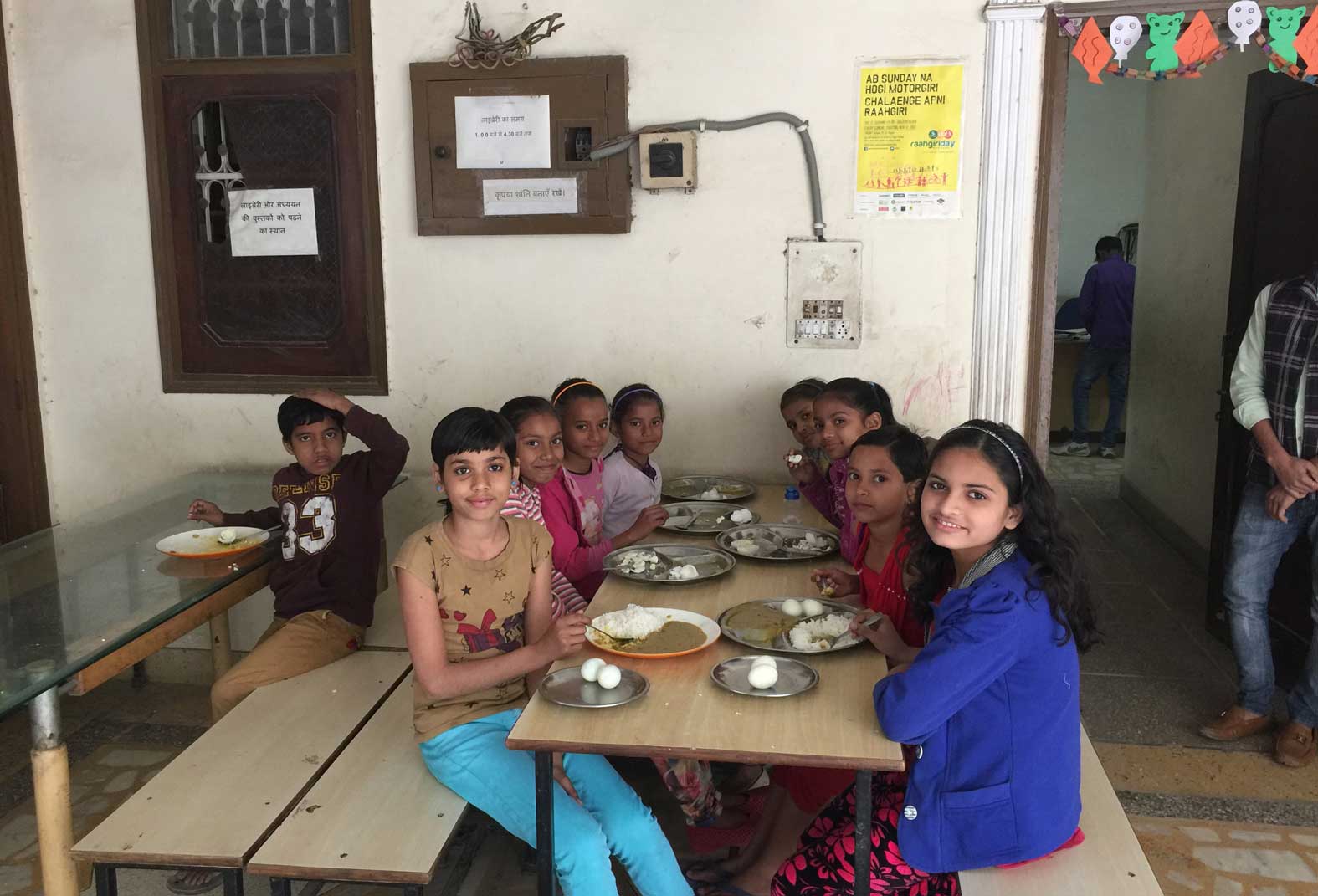
With this in mind, he set up Aravali Scholars in the lower-income Sikandarpur area of Gurgaon. Devoting eight to 10 hours a week, he mentors school-going children from classes 8 to 12. These students are referrals from other NGOs.
“These kids were as bright as my sons, and more hardworking. Yet they would perhaps never reach anywhere without a guiding hand. I help those with potential get into professional colleges and then their capabilities take them into the workforce.
“Initially I spent many hours there, but now the older kids who have since graduated and joined the workforce have formed a good network and help each other, especially their juniors. Those in good jobs have become inspirational role models for the younger ones… I am still constantly in touch with each ex-Aravali scholar and they call or meet me any time they need to,” he said.
Mr Agarwal proudly reveals that of the Mensa IQ tests conducted on 4,000 students from government and NGO schools, 102 made the mark, and of these, about 25 students are from Sikandarpur.
“We are now mentoring these Mensa kids.”
As I was being served aromatic masala chai, Mr Agarwal introduced Ms Mamta, who looks after the kitchen, and said: “Her daughter, 14-year old Varsha, has a Mensa IQ of 140+.”
And obviously, a better future awaits this Aravali scholar.
Mr Agarwal has many success stories to tell. One is about a boy from Literacy India, an NGO that he supports.
“This boy came to me at the end of his first year in college saying he wanted to take two years off to work and earn his college tuition fees. He would come and study with me regularly, even while working all day.
“Two years later, he got back into Delhi University and graduated. He has landed a job with asset management company BlackRock as a software engineer. His packet is about Rs8 lakhs per annum. Fantastic for a kid who couldn’t afford his Rs15,000 per quarter college fees.”
Mr Agarwal’s second pet project is JantaMeals.
While working in Sikandarpur, he realised there was a lacuna for reasonably priced, nutritious – and clean – meals for migrant workers.
“This idea was playing in my mind and meeting (JantaMeals founder-CEO) Jesse (van de Zand) was a blessing. He decided to take up the challenge. (The project) has snowballed into something very large, but there is still a long, long way to go,” he said.
Mr Agarwal also has a project for workers called SafeInIndia initiative.
“Daily, about 20 workers get injured, lose their hands or fingers in the Gurgaon-Manesar Automative belt. Over a year ago, a journalist friend wrote an article highlighting this issue.
“Along with two other batchmates from IIM Ahmedabad, we set up a facilitation centre to get them, especially migrant workers, better medical aid, insurance claims, social security benefits and rehabilitation.
“Safety issues are a big problem in supply chains and we need to ensure that the larger car manufacturers step in to take care of these issues. It’s like sitting on a time bomb waiting for large tragedy to happen,” he said.
Mr Agarwal, who got his Bachelor of Technology at IIT Delhi and his MBA from IIM Ahmedabad, was conferred the prestigious Significant Contribution to National Development Award by IIT Delhi Alumni Association.
Another of his initiatives is Bhagta Bharat. This is a very simple yet very scalable initiative started by a group of athletes in their 50s who were national champions.
No equipment or playing fields are required. Children from one of the most notorious parts of east Delhi were given motivation to run races. The initiative has had a positive impact on their lives and kept them off the streets and away from drugs.
Now the children are organising their own races, which gives them leadership qualities, and champions are being produced. There are about 10,000 children now involved in Bhagta Bharat. Of these, 50 are doing well at the national level.
Mr Agarwal said: “As I keep saying, if these kids weren’t organising races, they would be organising riots.”
Mr Agarwal also spoke about the other social causes he supports.
Beat of India, founded by his cousin Shefali Bhushan, goes into villages across India to preserve folk music and helps singers.
She gives them the royalties she earns from selling her research on them. Ms Bhushan has also written and directed Jugni, a travel musical film.
Captain Indraani Singh, who is Asia’s first woman commander of an Airbus-300 and is currently a pilot with Air India, is the secretary of Literacy India, which offers vocational training, education and employment to women.
“She was one of my inspirations for Aravali Scholars. I started with a chequebook involvement about 12 years ago, but now am involved as a mentor,” said Mr Agarwal.
“One of the things that came to mind was why can’t we create jobs in the villages themselves? The rural dwellers would be much happier in their own environment. We all see how these men and women migrate to cities to earn a living.
“How they sacrifice family and social life and even their meagre comforts. A friend started e-Gram Serve. There are six villages around him and kids learn e-publishing in a rural set-up,” he added.
Coming back full circle, Mr Agarwal revealed that he has closed some of his business ventures and sold others, yet still has few corporate involvements where he has made financial investments.
On a personal note, he counts his blessings: “My wife Ambika who in her first innings was in public relations, and now volunteers as a teacher trainer and teaches elementary and primary school kids in NGOs. “
Their two sons are at Doon School in Dehradun.
He said: “I want to focus on these three, four major projects and help them scale up. Hope my entrepreneurial instinct won’t nudge me to start something new yet!”
Get a copy of tabla! for more stories.
Image:
Publication Date:
Friday, August 19, 2016 – 15:36
Keywords:
Send to mobile app:
Source:
Story Type:
Others
US swimmers quit Brazil after admitting to inventing mugging

RIO DE JANEIRO – US Olympic authorities apologised to Brazil on Thursday as two US swimmers were allowed to go home having retracted a fabricated story about being mugged in Rio.
“We apologise to our hosts in Rio and the people of Brazil for this distracting ordeal in the midst of what should rightly be a celebration of excellence,” US Olympic Committee CEO Scott Blackmun said in a statement.
Four US swimmers, including six gold medal hero Ryan Lochte, have been at the centre of a media storm in Brazil since claiming they were held up at gunpoint in a Rio gas station in the early hours of Sunday.
Blackmun spoke after Brazilian police let Gunnar Bentz and Jack Conger leave the country. “Their passports have been released and they recently departed Rio,” he said.
A third swimmer, James Feigen, has also given police “a revised statement” about the fake mugging story “with the hope of securing the release of his passport as soon as possible,” Blackmun said.
Lochte, was already back in the United States when the scandal erupted.
Lochte said on Sunday that the four had been victims of a robbery by at least one armed assailant posing as a Rio policeman.
The claim forced Brazil’s Olympics organizers into an apology for the supposed security lapse.
Click on thumbnail to view photos. Source:
Reuters, AFP














Amid growing doubts, however, a Brazilian judge issued an order Wednesday that all four swimmers be kept in Brazil while the story was probed.
Brazilian police said Thursday the athletes were drunk and got into an altercation with security staff after vandalizing a gas station bathroom during a night on the town.
Blackmun indicated that the athletes, questioned by police Thursday, had confirmed the police version.
“They stopped at a gas station to use the restroom, where one of the athletes committed an act of vandalism,” the US statement said.
“An argument ensued between the athletes and two armed gas station security staff, who displayed their weapons, ordered the athletes from their vehicle and demanded the athletes provide a monetary payment. Once the security officials received money from the athletes, the athletes were allowed to leave.” Rio de Janeiro’s police chief Fernando Veloso called on the athletes to apologise.
He said CCTV footage at the gas station showed a security official pulling his weapon to restrain a drunk and angry Lochte and his teammates because they tried to leave after damaging the bathroom.
“There was no robbery of the kind reported by the athletes,” Veloso told a press conference.
“The images do not show any kind of violence against them.” He said police believed the swimmers handed over the equivalent of about $50 in cash to pay for the damage before leaving.
Veloso said it was still not decided what charges, if any, would be brought against the swimmers.
“In theory, they could end up facing charges of falsely reporting a crime and damage to property,” he said. Neither offence is punishable by prison.
“It would be noble and dignified of them to apologise. The only thing they told the truth about is that they were drunk.” Rio 2016 Olympics chief spokesman Mario Andrada, who had apologised to the athletes after the supposed robbery, was in forgiving mood Thursday.
“Let’s give these kids a break,” Andrada told a news conference. “These kids were trying to have fun… They made a mistake, it is part of life.” Lochte, one of the most visible US faces at the Olympics, said an assailant put a gun to his forehead after the swimmers’ taxi was pulled over.
“The guy pulled out his gun, he cocked it, put it to my forehead and he said, ‘Get down,'” Lochte recounted.
“He took our money, he took my wallet – he left my cell phone, he left my credentials.” His report caused the Olympic authorities huge embarrassment and overshadowed sporting action in the second week of South America’s first Olympics.
It followed numerous confirmed incidents of theft from Olympic athletes and media covering the Games.
Brazil has deployed 85,000 police and soldiers to secure the Olympics.
The Lochte affair coincided with the arrest in Rio of International Olympic Committee member Patrick Hickey on allegations of taking part in a black market ticket ring.
Hickey fell ill during his arrest Wednesday. He left hospital on Thursday in a black car following a police car.
He was expected to face interrogation.
Image:

Publication Date:
Friday, August 19, 2016 – 15:26
Send to mobile app:
Source:
Story Type:
Others
Celebrating India's independence in Singapore
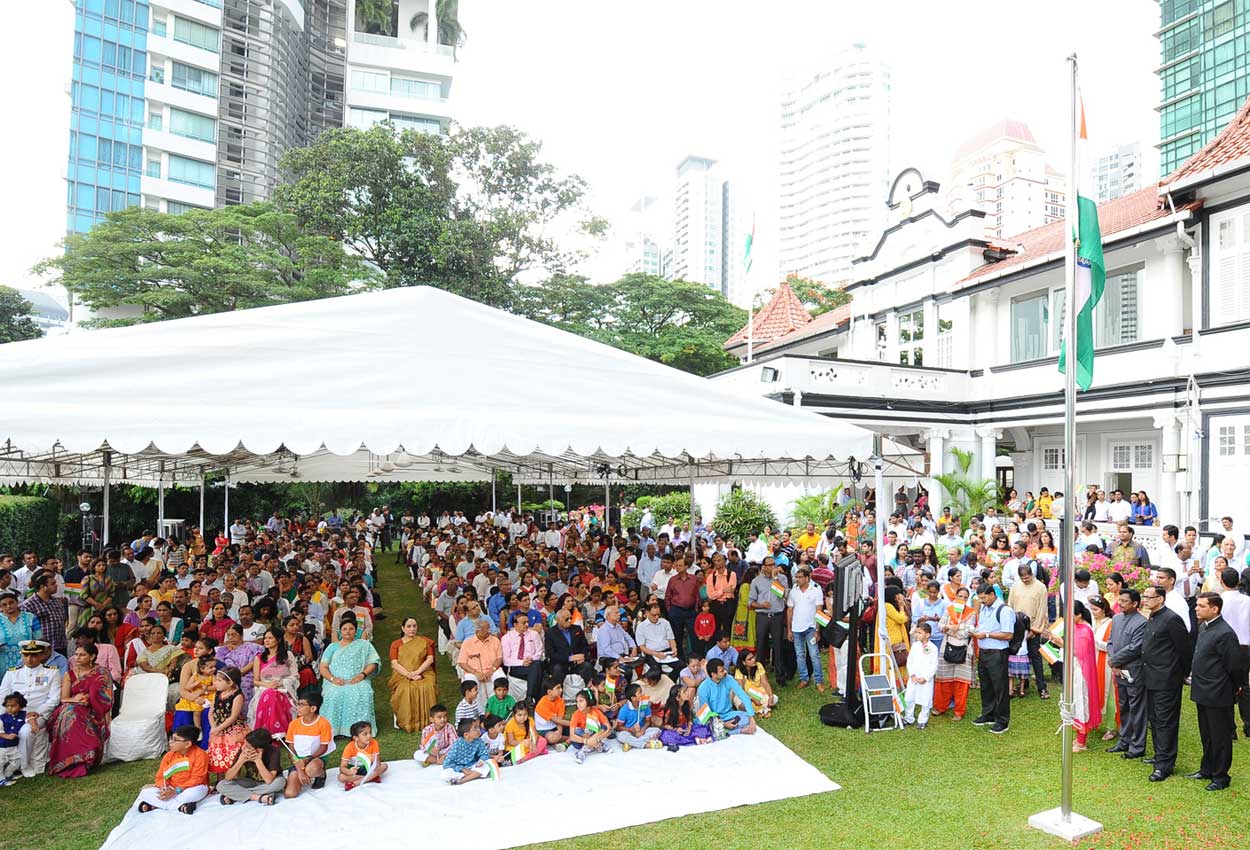
It was a working day in Singapore on Aug 15. But that did not deter a large number of Indian nationals from congregating at the Indian High Commission’s premises on Grange Road to celebrate their country’s Independence Day.
As is customary, the Indian flag was hoisted by the country’s high commissioner to Singapore, Mrs Vijay Thakur Singh.
After the Indian national anthem was sung, the high commissioner read out the Indian president’s address to his nation made on the eve of Independence Day.
In his address, he said that India is in the process of forging new relationships based on shared values and mutual benefit with all countries.
“We have reinvigorated our historic bonds of friendship with traditional partners of Africa and Asia Pacific,” he said.
“India will grow, only when all of India grows; the excluded ones have to be included in the development process.”
Students from the different Indian international schools in Singapore livened up the morning with their eye-catching cultural performances.
In addition to Indian nationals, many friends of India also turned up for the Independence Day celebration.
President, PM wish India
President Tony Tan Keng Yam had written to Indian President Pranab Mukherjee, while Prime Minister Lee Hsien Loong had written to his Indian counterpart Narendra Modi to congratulate them on India’s 70th Independence Day.
Both leaders noted that the countries share strong long- standing ties set to grow with more bilateral collaborations.
“As our people-to-people relations flourish, I am delighted by the excellent progress in bilateral projects and initiatives on various fronts, including trade, skills development, defence co-operation, and Smart Cities development,” Dr Tan wrote in his letter to Mr Mukherjee.
“The India-Singapore Strategic Partnership, together with other bilateral agreements, will create new opportunities for collaboration and elevate the bilateral relationship to a higher level.”
PM Lee said in his letter to Mr Modi that Singapore and India share a longstanding friendship “underpinned by strong historical, commercial, cultural and kinship ties”, and expressed confidence that it will continue to grow.
“I look forward to meeting you again when I visit India in October to explore new avenues of co-operation,” Mr Lee added.
Get a copy of tabla! for more stories.
Image:
Publication Date:
Friday, August 19, 2016 – 15:11
Keywords:
Send to mobile app:
Source:
Story Type:
Others
Hollywood poster blunder sparks backlash in Hong Kong

Hong Kong – A poster for upcoming Hollywood movie “Arrival” mistakenly featuring a Shanghai landmark on Hong Kong’s skyline was taken down from the film’s official Facebook page Friday after sparking outrage and ridicule.
Hong Kong is deeply divided over mainland China’s governance of the city, with many angered by what they see as Beijing’s tightening grip, and the error sparked a torrent of comments on social media under the hashtags #HongKongisnotChina and #HongKongindependence.
Others called for a boycott of the film, due for release in November.
The poster showed a giant vertical spaceship over the semi-autonomous city’s harbour with the Oriental Pearl Tower, perhaps Shanghai’s best known landmark, prominently featured in the foreground.
“Please remove this ugly tower from Victoria Harbour,” Facebook user Chin Chiu-man commented, while another angry user said: “Why don’t you put a pyramid in New York”.
The poster was still displayed on the official Facebook page on Thursday evening but was replaced by a message on Friday blaming a contractor for the gaffe.
“An error in one in a series of posters for ‘Arrival’ was made by a third party vendor,” the message read.
“We are disappointed to have not caught the error,” it added.
Hong Kong was returned to China by former colonial ruler Britain in 1997 under the agreement that its freedoms would be guaranteed for 50 years.
But there are growing concerns Beijing is no longer adhering to the deal and critics accuse it of interference in a wide range of areas, from politics to the media and education.
So-called localist groups are pushing for more autonomy for Hong Kong, characterising it as culturally separate from the mainland.
A fledgling independence movement is calling for a break from the mainland after mass pro-democracy rallies in 2014 calling for fully free leadership elections ended without concessions from Beijing.
The idea of independence is dismissed as illegal by Beijing and Hong Kong authorities, and was a taboo subject until recent months.
“Arrival” stars actors Amy Adams, Forest Whitaker and Jeremy Renner and is directed by Canada’s Denis Villeneuve. It opens in the United States and other major markets in November.
The Oriental Pearl Tower and the Hong Kong skyline are not thought to have featured in any of the film’s trailers so far released.
Image:

Publication Date:
Friday, August 19, 2016 – 14:29
Keywords:
Send to mobile app:
Source:
Story Type:
Others
Most Singaporeans try to live out multiracial ideals but racism still a problem: CNA-IPS survey
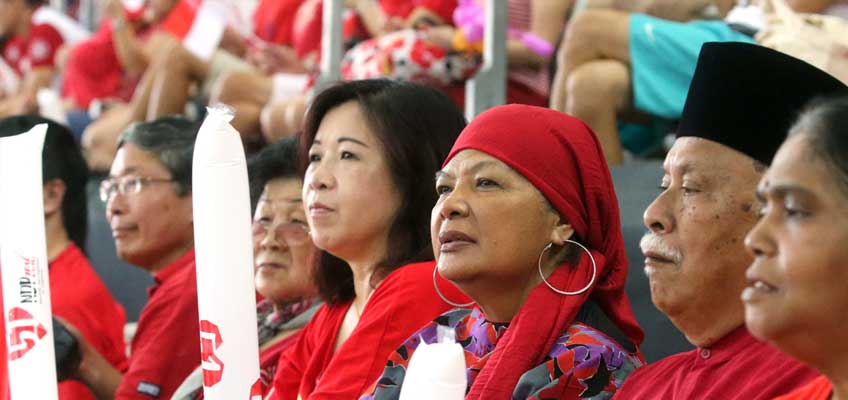
SINGAPORE – A recent survey has found that Singaporeans believe in the values of multiracialism and try to live them out, but racism in the population still exists.
For example, about 70 per cent of Chinese respondents who were surveyed by Channel NewsAsia in partnership with the Institute of Policy Studies (IPS), were open to inviting Indians and Malays to their house for a meal.
According to the survey which polled 2,000 Singapore citizens and permanent residents aged 21 and above, more minority respondents were accepting of Chinese compared to the Chinese accepting minority races.
The least preference was for new citizens, reported Channel NewsAsia.
Conducted between June and July this year, the survey was done through a “random sampling of dwelling types”. Malay and Indian respondents were oversampled to ensure sufficient representation. The results were then weighted to resemble the national population.
About 30 per cent of minority race respondents polled said they have felt racially discriminated against.
More than half of minority respondents agreed with statements such as “people have acted as if they are better than you”, said the report.
Race was the reason for such differential treatment, according to two-thirds of Malay and Indian respondents.
Among the Malays who felt that they received such treatment, half said they were differently treated because of income, religion or education.
Among Indians, 62 per cent said differential treatment was due to their skin colour.
“Overall, the survey findings highlight that Singaporeans espouse the values of multiracialism and try to live out these multiracial ideals,” said Dr Mathew Mathews, IPS senior research fellow who headed the survey.
He added that most Singaporeans are “self-aware and acknowledge that there is some racism in the community”.

maryanns@sph.com.sg
Image:

Publication Date:
Friday, August 19, 2016 – 14:01
Keywords:
Send to mobile app:
Source:
Rotator Headline:
Most Singaporeans believe in multiracial ideals but racism still a problem: Survey
Rotator Image:
Story Type:
Rewritten Story


