Saying goodbye to a loved one is never easy, especially during such trying times where circuit breaker regulations mean being unable to honour one’s passing the way it normally would.
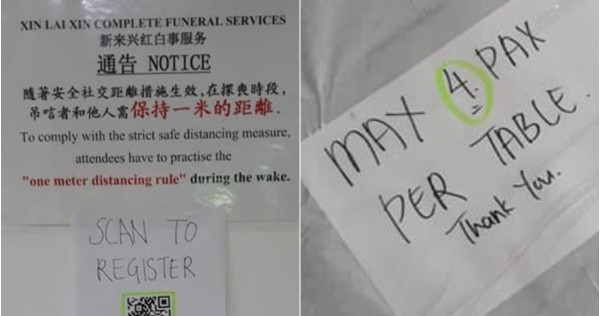
Due to the sudden passing of a relative, a family in Tampines had organised a small-scale funeral wake to allow other relatives to pay respects to the deceased.
As if to add fuel to fire, a netizen managed to snipe a photo of their funeral procession in an attempt to shame them on social media.
The now-deleted post questioned why there weren’t any actions taken against the family involved, plastering the location of the wake along with the photo.
“Not trying to be racist but what is fair should be fair,” the poster claimed.
Nuraqila Yusazli, the niece of the deceased, took to Facebook to clear the air on Sunday (May 24).
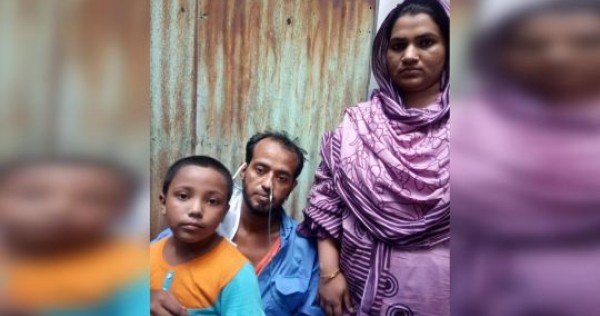
A group of Singaporeans worked feverishly to arrange a special flight to Bangladesh to grant a dying man his wish to celebrate one last Hari Raya Aidilfitri in his home town Dhaka.
Mr Sikdar Rana, a 34-year-old shipyard worker, was diagnosed last month with advanced stomach cancer at Singapore General Hospital (SGH).
He desperately wanted to go home to hold his six-year-old son one last time. He was initially due to fly home on May 19, but with the extension of a lockdown in Bangladesh on May 14, all flights to Dhaka were cancelled.
His doctors feared he might not survive the lockdown period, which is due to end on May 30.
That was when Dr Cynthia Goh came into the picture.
The senior consultant from the supportive and palliative care division at National Cancer Centre Singapore heard of his plight from her SGH colleagues last week.
She learnt that a medical evacuation flight to Bangladesh would cost around $55,000, and the next available commercial flight was some time early next month.
But Mr Sikdar’s condition was worsening by the day. They had to get him home quickly.
SINGAPORE: Public toilet hygiene standards have fallen at Singapore’s hawker centres and coffee shops, according to a new study released by the Singapore Management University (SMU) on Tuesday (May 26).
Hawker centre toilets are “significantly dirtier” while coffee shop toilets have stayed “dirty and largely unchanged” compared to findings from a similar study conducted four years ago, SMU said in a press release.
The latest study, dubbed Project Waterloo, was conducted by SMU senior lecturer in statistics Rosie Ching and a class of 157 undergraduate students. Ms Ching also led the earlier study in 2016.
This year’s study was based on fieldwork in 104 hawker centres and 1,181 coffee shops carried out by the students between January and February.
They scored the public toilets against a Toilet Cleanliness Index comprising more than 100 attributes – such as sinks, toilet paper and ventilation – that was first developed for the 2016 study.
On a scale of 0 to 100, with 100 being the cleanest, coffee shop toilets scored 46.35, making them “significantly dirtier” than hawker centre toilets, which scored 58.23.
Compared to the 2016 survey, the sharpest drop was in toilet bowl cleanliness. The study also noted a correlation with proximity to cooking facilities, as toilets located closer to such facilities tended to score lower on the cleanliness index.
“It was … disheartening to see statistical analyses reveal a marked regression in toilet hygiene from 2016, and furthermore, in almost every single attribute of toilet cleanliness on average,” Ms Ching said.
“We absolutely need to take greater care of the well-being of our toilet cleaners as well, given the daily conditions they face in tackling dirty toilets.”
Member of Parliament and Mayor of North-West Community Development Council Teo Ho Pin, who was the patron for the study, said that poor hygiene in public toilets has “serious impact on the health and well-being of our people, especially seniors”.
According to the latest survey, the dirtiest public toilets were located in Tuas, Telok Blangah and Bukit Batok coffee shops and hawker centres. The cleanest toilets were in Marina South, Tanglin and Changi.
A group of 157 Singapore Management University undergraduates conducted the nationwide study of public toilet hygiene standards in coffee shops and food centres. (Photo: Samuel Low)
POOR PERCEPTIONS
This year’s study also surveyed more than 8,000 food centre customers and workers about their perceptions of public toilet cleanliness.
Of nearly 6,000 customers interviewed at the food centres where they were eating, more than a quarter said they would not use public toilets in coffee shops and hawker centres.
More than three in five customers felt a “moderate to a complete overhaul” of toilet cleanliness was necessary.
While almost all of the more than 2,000 coffee shop and hawker centre workers interviewed said that they used the toilets there, more than half said there was a need to improve the state of the toilets.
Public Hygiene Council chairman Edward De Silva, whose organisation supported the study, said the survey findings were “not surprising”.
“They reflect the mentality of our citizens and our over-reliance on toilet cleaners. How to redress this mindset is the most challenging task,” Mr De Silva said. “At the same time, the survey indicates the onus is on the owners of these premises to improve the toilet hygiene standards.”
World Toilet Organization founder and CEO Jack Tan advised the public to “act by avoiding coffee shops with dirty toilets”, as a way to “motivate” them to keep their toilets clean.
“I hope we will be able to spur a new wave in taking care of and having pride in our public toilets in our eating places. Only then will Singapore be truly a first-class country,” said Project Waterloo participant Prabhudeva Krishnan, a first-year student at SMU School of Social Sciences.
One Yishun resident was certainly heeding the government’s call to stay home and stay safe to a tee when he helped to extinguish a fire from the comfort of his home.
The 29-year-old assisted officers from the Singapore Civil Defence Force (SCDF) by spraying water from the window of his flat after a taxi caught fire in a car park at Block 257 Yishun Ring Road on May 25, Shin Min Daily News reported.
Footage of the incident showed a police car arriving on the scene and several officers aiming fire extinguishers at the blaze.
SCDF officers then arrived and put out the fire with two hoses, assisted by a steady stream of water from the helpful resident.
SINGAPORE – Early one October morning in 1969, Singapore police officers found the body of a man dumped in a storm drain. He had been stabbed to death, police said, in what became one of the country’s most notorious gang killings.
After more than 50 years on the run, one of the men wanted for the murder, Tan Tong Meng, died of a heart attack in Denmark last month, according to former police detectives, online tributes and media reports.
The death of one of Singapore’s most high-profile gangsters, and memories of the brazen 1969 mob hit, have revived interest in the city-state’s history as a wellspring for organised crime – and surprised younger residents with no knowledge of that past in what is now regarded as one of the world’s safest cities.
Tan’s demise has also polarised opinion between those who applauded his global ambition and others who loathe criminals in a country where drug traffickers face the death sentence.
Tan was 72, and also known as Roland Tan, or by his aliases – Mr. Big and The Hainanese Kid.
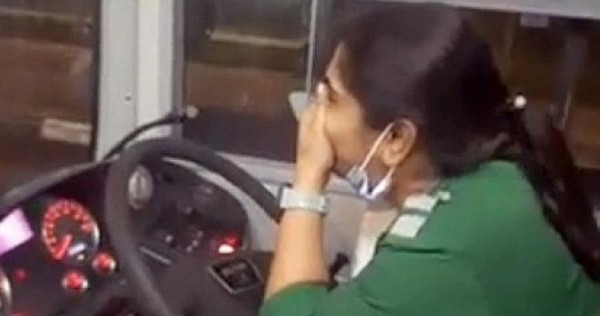
A video of a group of passers-by assisting a bus captain after she could not continue driving has gone viral.
According to the Facebook group Singapore Bus Drivers community, the Tower Transit bus driver broke down after she learnt that her husband had died.
In the video uploaded on Sunday, one of the passers-by, believed to be from a nearby block of flats, said they were alerted to the woman’s plight after they heard her crying.
TOO EMOTIONAL
The incident took place at about 11pm on May 23 at a bus stop on Clementi Avenue 1.
The bus captain, who was driving service 189, could be seen sobbing and clutching a mobile phone, with a box of tissues placed next to her.
She appeared to be too emotional to continue with the journey.
SINGAPORE – Singapore will sink into a deeper recession than earlier forecast this year amid the deterioration in global demand from the coronavirus pandemic as well as the expected impact of circuit breaker measures at home.
The economy will shrink by 7 to 4 per cent, worse than the 4 to 1 per cent contraction earlier predicted, said the Ministry of Trade and Industry (MTI) on Tuesday (May 26).
MTI said that there were significant uncertainties in the global economy, with a risk that subsequent waves of infections in major economies such as the United States and Eurozone could further disrupt economic activity. In particular, if infections start to rise and strict measures such as lockdowns and movement restrictions are reimposed, the downturn in these economies could be more severe and prolonged than expected.
Also, a growing perception of diminished ability to use fiscal and monetary stimulus in many major economies could damage confidence in authorities’ ability to respond to shocks, undermining risk appetite and driving further financial market volatility, with negative spillovers for the broader global economy, it said.
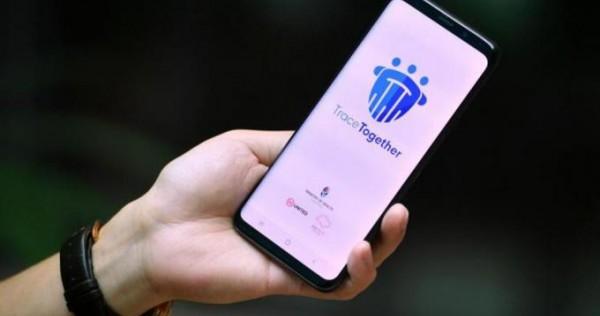
Singaporeans are willing to give up some privacy in the fight against Covid-19.
But the type of technology and how it is used also matters.
A study by the Institute of Policy Studies (IPS) released on Sunday revealed that less than half, or 49 per cent, of Singapore residents are agreeable to having their mobile phone data tracked without their consent.
When it comes to the use of closed-circuit television (CCTV) footage to monitor people’s movements during the circuit breaker period, nearly six in 10, or 58 per cent, were agreeable to the idea.
Senior research fellow and IPS Social Lab head Mathew Mathews said CCTVs symbolise safety and people see it as devices to stop crimes.
“When you think about mobile phones, you think of something personal and private… the thought that this device that is so much part of your life is also tracking your movements can be unnerving,” he said.
The IPS report, co-authored by IPS Social Lab researchers Dr Mathews, Dr Alex Tan and Mr Syafiq Suhaini, examined attitudes towards the use of surveillance technologies in the fight against Covid-19.
Singaporeans are willing to give up some privacy in the fight against Covid-19.
But the type of technology and how it is used also matters.
A study by the Institute of Policy Studies (IPS) released on Sunday revealed that less than half, or 49 per cent, of Singapore residents are agreeable to having their mobile phone data tracked without their consent.
When it comes to the use of closed-circuit television (CCTV) footage to monitor people’s movements during the circuit breaker period, nearly six in 10, or 58 per cent, were agreeable to the idea.
Senior research fellow and IPS Social Lab head Mathew Mathews said CCTVs symbolise safety and people see it as devices to stop crimes.
“When you think about mobile phones, you think of something personal and private… the thought that this device that is so much part of your life is also tracking your movements can be unnerving,” he said.
The IPS report, co-authored by IPS Social Lab researchers Dr Mathews, Dr Alex Tan and Mr Syafiq Suhaini, examined attitudes towards the use of surveillance technologies in the fight against Covid-19.
SINGAPORE: Can you imagine your HDB flat not wired for electricity, or piped with water? Doubtless, you find that notion unthinkable.
Flats are meant to come with water and electricity after all, and we have long taken that provision for granted.
Now imagine the moment we move into our flats, we can immediately log onto Wi-Fi Internet access because every apartment comes with a router. Should this latter scenario be that inconceivable?
Sixty years ago, before Singapore’s comprehensive industrialisation, electricity and filtered water were not a given in households. Only the wealthy could afford these luxuries in their homes.
Today, they are regarded as public utilities. With the United Nations’ declaration in 2011 of Internet access as a human right, is it not time to make Internet access a public utility that everyone can access as we do water and electricity?
This question is one that bears asking after our tumultuous experience with COVID-19. With the two-month long circuit breaker sequestering everyone at home, families have had to develop creative strategies to blend work-from-home arrangements with home-based learning needs.
Yet, this new norm has also amplified a technology gap that must be closed because ultimately, online inequalities have offline consequences.
As local media reports revealed, the home-based learning experience was highly uneven across families.
Whereas affluent families fretted over higher order concerns such as the quality of online instruction and children’s excessive screen time, less well-off families grappled with basic problems of device ownership and internet access.
There was a rapid response to this immediate digital access challenge. Minister in the Prime Minister’s Office and Second Minister for Education Indranee Rajah estimated that the Ministry of Education has loaned out more than 20,000 computing devices and more than 1,000 Internet access devices during this circuit breaker period.
A kid spends time on a computer (Photo: Reuters)
In addition, social service agencies rushed to help their clients apply for subsidised computers and Internet connection through the NEU PC Plus scheme, and solicit additional digital resources through donations.
But the longer-term issue we must now address is what will happen after the pandemic is over? Will students have to return the loaned devices, or can we now conceive of a world where digital access becomes a universal necessity provided as a public good?
HOME-BASED COMPUTING SET TO BECOME POST-PANDEMIC NORM
The imperative to make digital access universal is a compelling one.
According to Professor Jean Yeung’s recent Straits Times article on her study of a nationally representative sample of over 5,000 children aged six and under, although the Wi-Fi penetration rate is near universal in Singapore, 8 per cent of families in her study who lived in rental units did not have a connection, and 44 per cent lacked a computer or a laptop at home.
Most learning platforms are optimised for computers and even though mobile devices do offer connectivity, their utility for educational purposes is limited. Yet, greater home-based technology usage for teaching and learning is set to become a new post-pandemic norm.
Beyond learning for children, home-based computing will also be essential if low-income adults are to have any real chance to participate in more technology-based training or employment.
The progress of our Smart Nation drive has also translated into a greater range of government services moving online, thus making digital access even more of a need than a want.
Digital inclusion is therefore critical to prevent a growing chasm between high and low-income families, one that will further widen in a world where economic and social inequalities are already gaping.
UNIVERSAL INTERNET CONNECTION
Shifting to a paradigm of universal digital access entails making Internet connection and computing devices more universally available.
Universal Internet connection might be more easily achievable. Singapore’s Wireless@SG programme already provides free Internet access across broad swathes of public space.
File photo of a person using a laptop. (Photo: Pixabay/kropekk_pl)
With our Nationwide Broadband Network successfully in place, offering broadband access speeds of 1Gbps and more, extending free home Wi-Fi to residential areas will not involve more than a concerted coordination with telcos outfitting every home with modems and wireless routers.
Felicitously, our transition towards 5G provides a strategic opportunity to “reset” our digital infrastructure networks for universal Internet access.
Universal access to computing devices, though, might be more of a leap.
The current NEU PC Plus scheme offered by IMDA is generous and well-intentioned.
Yet, as with all mean-tested programmes with conditions, coverage will fall short. Some who need it will not apply while some who apply will not be given.
This was seen in the sudden flurry to apply for NEU PC Plus after the circuit breaker was announced. Even though this scheme has been in place since 2006, many low-income families still did not have digital resources when home-based learning was suddenly activated.
It might be that low-income families did not apply because of lack of knowledge. Some did not know about the programme, while others found the application form too complicated.
Another probable cause is that in less affluent homes, computers are less of a priority than mobile phones. As Prof Lim Sun Sun discovered from her research on low-income families’ technology use, mobile-first or mobile-only households find their communication and entertainment needs well met by mobile phones. They de-prioritise computers due to their higher costs.
A child plays a game on his phone (Photo: Reuters/Brendan McDermid)
Other families might not qualify because they already own devices. For example, households might already have a computer but these are often old, slow and poorly maintained.
One computer might also be shared among all household members, thereby leading to stiff competition for scarce resources if multiple children are engaging in home-based learning.
UNIVERSAL ACCESS TO COMPUTING DEVICES
How might a more universal approach safeguard against the above unmet computing needs? Universal provision assumes need with less concern over deservingness.
Thus, greater universalism could materialise in the form of automatic allocation, as is the case now with Baby Bonus, Workfare Income Supplement (WIS), and Silver Support.
Possible channels include building computing provision as part of school registration, ComCare benefits, or WIS. Stepped levels of subsidies according to household income and number of household members could also be introduced, similar to the subsidy ladders for childcare and baby bonus.
In terms of funding, technology companies should be mobilised to co-fund such provisions as a cornerstone of their corporate social responsibility efforts.
We can also reconsider the extent to which we need other public goods and services.
For example, landscaping and cleaning costs could be reduced by decreasing the frequency of grass-cutting and road sweeping, and the number of rubbish bins in public spaces.
ACCELERATING DIGITAL LITERACY PROGRAMMES
In this fast technologising world, we must take the bold but urgent step towards recognising basic computing as a state-supported public utility. Households would then be encouraged to assign greater priority to computers over mobile devices.
Once the basic computing infrastructure is in place, subsequent units of computers or laptops also become more affordable.
MOE’s national digital literacy programme announced in Parliament this year envisions that every secondary school student will have a personal digital device by 2028. Efforts should be made to accelerate this scheme so that all our students are sufficiently supported to access home-based learning.
The Ministry of Education building. (File photo: Ngau Kai Yan)
In tandem, digital literacy efforts must also be boosted. Invariably, better educated parents will be more tech-savvy and can therefore offer more effective guidance of their children’s digital access.
Hitherto, some donors have been reluctant to provide Internet access to needy families, citing fears that they will be vulnerable to online risks such as pornography or online gambling.
Indeed, we need more intensive in-school digital literacy programmes to help these children make up for the lack of scaffolding at home.
However, poor digital literacy should not be used as justification to deny low-income families access to a vital resource that the rest of society benefits from.
The recent slew of budgetary measures shows that the Government is committed to investing in its people and to leaving no one behind.
In a rapidly digitalising society, comprehensive digital access in the form of Wi-Fi, devices and technological literacy is a critical social leveller as a conduit for education, upskilling and employment.
The best way to ensure that everyone gets on the social mobility escalator is to make universal digital access an affordable public utility.
Download our app or subscribe to our Telegram channel for the latest updates on the COVID-19 outbreak: https://cna.asia/telegram
Irene YH Ng is Associate Professor of Social Work and Director of the Social Service Research Centre in the National University of Singapore. Lim Sun Sun is Professor of Communication and Technology and Head of Humanities, Arts and Social Sciences at the Singapore University of Technology and Design, and a Nominated Member of Parliament.