While the circuit breaker has brought to light some horror stories about neighbours from hell, Singaporeans have also been sharing heart-warming stories of neighbourliness.
Despite being stuck at home, a Malay man’s neighbour sent his family gifts to celebrate Hari Raya this year. It is something that she has done every year without fail, he said.
In a video uploaded to Facebook on May 25, Chef Bob shared an adorable exchange with his elderly Chinese neighbour, who handed him a Fred Berry bag (actually filled with chocolates), and wished him well for the holidays.
PETALING JAYA – Malaysians in Singapore are allowed to return to Malaysia to attend the funerals of their respective immediate family members without having to undergo the mandatory 14-day quarantine period as it is considered an emergency.
Those who return are allowed to be at the burial ceremony only for a maximum of three hours and they have to be clad in full personal protective equipment (PPE), Malaysia’s Senior Minister (Security) Ismail Sabri Yaakob said on Tuesday (May 26).
“They will be escorted by front-liners to their family members at the burial site for a maximum of three hours,” he said during his daily briefing on the country’s conditional movement control order. “After that, they will be sent back to Singapore.”
Datuk Seri Ismail Sabri said this was in line with present standard operating procedures and that such cases had happened before.
But whether or not they would be subjected to quarantine upon their return to Singapore is the prerogative of Singapore’s authorities, he added.
“It’s up to Singapore itself when they return,” he said.
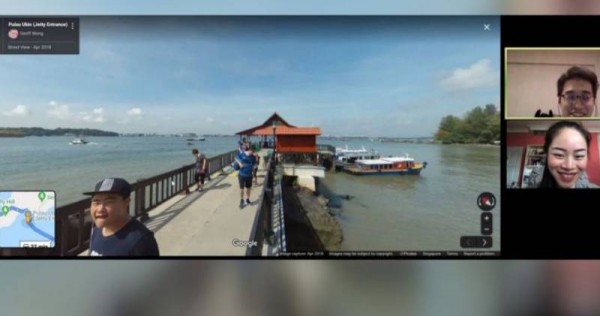
With the prospect of going out on dates scuppered due to the circuit breaker measures, Mr Kishen Ravindaran was happy to turn to video conferencing and have his first virtual date last month.
“The date was pretty fun,” says the 28-year-old, who works in the aviation industry.
Conducted on a high-quality video-conferencing platform and with the dating agency he uses – Kopi Date – helping to smooth out conversation kinks with a “starter kit”, he ended up chatting with his date for four hours.
Since the Covid-19 outbreak, many dating agencies have had to arrange virtual dates in place of outings to cafes or restaurants.
Singles are warming up to the idea as well. Popular United States-based mobile dating app Bumble, for instance, saw a 56 per cent increase in video calls from March to last month among its users from around the world.
Home-grown Kopi Date and Lunch Actually are among the dating agencies that have turned to virtual dating.
The number of daily confirmed Covid-19 cases in dormitories is likely to fall below 100 in three to four weeks’ time, Professor Teo Yik Ying, dean of the National University of Singapore’s (NUS) Saw Swee Hock School of Public Health, said yesterday.
At the peak of the coronavirus outbreak on April 20, Singapore had a total of 1,426 new cases, of which 1,369 were migrant workers staying in dormitories. In contrast, yesterday saw 383 new cases, of which 381 were migrant workers staying in dormitories.
Prof Teo told The Straits Times that the drop was because measures to stem the spread of the virus in dormitories had been “broadly effective”, pushing the basic reproduction number of the virus, or R0, to 0.5.
An R0 of one means each infected person will spread the disease to one other person every serial interval, which is the duration between successive cases of transmission.
SINGAPORE: The lunch crowd is normally a force to be reckoned with and Mr Eric Lee, who runs Arcade Fish Soup, would attest to that. The 17-year-old franchise has three stalls in the heart of the Central Business District (CBD) and the snaking queues were always a “good problem”.
But when “circuit breaker” measures to curb the spread of COVID-19 were announced in April, Mr Lee’s world turned topsy-turvy. With most workplaces closing and implementing work-from-home arrangements, Arcade Fish Soup’s sales declined as foot traffic in the CBD fell sharply.
“We’ve been at that location for so long, most people who know us work in the CBD. So it was really awful, we suffered at least an 80 per cent drop in business.”
The lunch crowd at Arcade Fish Soup’s Marine One branch outlet. (Photo: Arcade Fish Soup)
Mr Lee’s business, which thrived on word-on-mouth before, has never employed any form of advertising or delivery services. But with the new measures in place, where no dine-ins were allowed, the 37-year-old was left with “no choice”.
“We had to start offering delivery online. And that’s when I realised we had zero social media presence.”
The biggest challenge for Mr Lee, who is a self-confessed social media newbie, was the lack of product photos to post online.
“I was still using my professional photos from 15 years ago and I tried taking photos using my handphone by learning from YouTube, but they did not look good at all,” he said sheepishly.
Just when he was wondering how many times he could recycle his material, Jeryl Tan’s Facebook post caught his eye – the freelance lifestyle photographer was offering a one-time, free food photography and styling service to F&B businesses during the circuit breaker period.
Mr Lee was in disbelief. “I thought it was too good to be true for such a deal to exist because to take professional photos, it could cost you up to hundreds and thousands.”
THE POWER OF SOCIAL MEDIA
When it comes to social media presence, 28-year-old Mr Tan could not be more different than Mr Lee. The photographer has 76,000 followers on his Instagram page, which features flashy cityscapes all around the world – while the hawker has yet to get a page up and running as it is “too confusing”.
But circuit breaker measures have put them both in the same boat. Mr Tan also saw a sharp decline of about “70 per cent and more” in the number of jobs and he has been sustaining himself through small product shoots that he can do from home.
Mr Tan plating a bowl of yong tau foo. (Photo: Jeryl Tan)
The idea to offer free photography services came when he thought of how he could help others and fully utilise his time instead of “binging on Netflix”.
“I noticed that there were a lot of Facebook groups for hawkers but they may not be inclusive to those who are not social media savvy,” he said. “It actually requires good visual content for people to want to click into your business.”
“So I thought, why don’t I help these people who don’t have access to photography? Hopefully, the photos will get them the sales and clicks they need.”
Mr Tan, who started freelancing five years ago, also recognised that photography can be expensive for small businesses. He estimated that a photo could cost S$50-150, depending on the photographer’s experience and equipment needed.
For fve.sg, a private home dining brand. (Photo: Jeryl Tan)
Not everyone would find that money worth spending, Mr Tan added, if they do not understand social media as a form of advertising. Mr Lee was one of them.
“We weren’t convinced in the beginning but when I started hearing about Hawker United, I realised how powerful social media can be,” he explained. Hawkers United – Dabao 2020 is a community initiative on Facebook that provides a cost-free avenue for hawkers to promote their food and take online orders.
“Now, I’m a firm believer of social media,” said Mr Lee.
Even though he is shooting for free, Mr Tan makes sure that every business and hawker is treated as a professional client.
“I communicate a lot with the businesses to find out more about their products and what message they’re trying to get across on social media.
“It’s the photographer’s job to understand and capture the essence of their business.”
After he posted about the initiative on Facebook and Instagram last week, he received 45 requests. Mr Tan also emphasised that none of the food he receives is wasted.
“I only schedule two to three shoots a day, if not there’ll be too much food,” he said with a laugh. “After the shoot, my family and I will just heat it up and finish it.”
For Tan Ser Seng Herbs Restaurant. (Photo: Jeryl Tan)
However, not every business would “commit” to the shoot after they find out more about the process of putting it together.
“I’ll always let them know that other than the food itself, props like the bowls, cutlery, spices and ingredients – all these have to come from them, because my household items might not be sufficient,” Mr Tan explained.
“If it’s a shoot for a bakery, they would have to deliver a baking tray to me as I don’t have one.”
Mr Tan also takes care in styling the food, making sure that core ingredients are the highlight of the photos, for example.
“For fish soup, I cannot have the fish slices sinking to the bottom – I need to make sure that I have enough ingredients at the bottom so that they will stay afloat. So I had to request more cabbage to prop the fish up,” he explained.
For Arcade Fish Soup. (Photo: Jeryl Tan)
With this project, he also hopes that people will see the planning and hours that go behind a photo shoot. For one, Mr Lee was impressed by Mr Tan’s effort and professionalism, given that the photos were free.
“The photos were done really nicely – when he sent them to me, I used them immediately,” Mr Lee added. He noticed “a 50-60 per cent increase in orders” after using them on Facebook and delivery platforms.
“Through this we realised that a good product picture tells a much better story than what words can convey and Jeryl’s photos definitely had more impact than the ones I took on my handphone.”
Mr Tan said that several businesses have told him that their sales have improved ever since, which encourages him greatly.
“I was also quite surprised that some even offered to even send one more set of food another day…they really make me feel appreciated.”
For Mr Lee, Mr Tan’s kindness earned him a life-time supply of free fish soup. “I had to force him to accept since he didn’t ask for anything at all in return,” he said with a laugh.
SINGAPORE: In the Wizard of Oz, Dorothy sets off with newfound friends to find the elusive Wizard of Oz, a being said to be so powerful, he could help them out with their troubles and grant them their biggest wishes.
I was reminded of that when reading the news last week.
Even as we live in uncertain coronavirus times, an unusual set of paradoxes unfolded, which will have huge reverberations for workers and economies across the world, from Silicon Valley to Singapore.
The first is that while food deliveries have witnessed an unprecedented boom as restaurants shuttered and households stay in, local food delivery platform Grab claimed it was losing money.
We heard it first hand from the company: Grab’s total revenue was “lower than it used to be pre-COVID-19,” said co-founder Hooi Ling Tan in news reports.
We also saw some corroboration of this across the Pacific Ocean, where Uber, a shareholder of Grab, booked a loss of approximately US$2.1 billion from its investments in Didi and Grab.
Deliveroo just last month laid off 25 per cent of staff in Singapore.
The second was AirBnB’s announcement of some 1,900 job cuts, a quarter of its global workforce global, including some in Singapore, barely a month after the platform had raised US$1 billion in a new round of funding in April.
Interestingly, Airbnb is not the only game in town raising capital yet letting people go during this pandemic. Big brand names like Expedia raised US$3.2 billion in end-April yet announced a 12 per cent cut to jobs.
A woman talks on the phone at the Airbnb office headquarters in the SOMA district of San Francisco, California. (Photo: REUTERS/Gabrielle Lurie)
Even Uber, which has planned a US$900 million bond launch in its bid to acquire competitor GrubHub, announced a second round of job cuts this month, totally 6,700 roles.
If tech giants are staging takeovers and receiving huge infusions of cash amid government aid to keep workers employed, why are they laying off staff?
THE CORONAVIRUS SHOCK
If the 2010s was the story of the astounding rise of tech start-ups to become the industry behemoths they are today, the narrative of the 2020s may well be that of their great unwinding.
To be fair, the coronavirus pandemic has taken every imaginable business by surprise. The threat of a global pandemic was not something business school teaches you or a risk factor typically asked about at a start-up’s fundraising pitch. Business continuity was simply a huge blindspot.
FILE PHOTO: An Uber Eats food delivery courier closes a bag with an order during a lockdown, imposed to prevent the spread of coronavirus disease (COVID-19), in central Kiev, Ukraine April 2, 2020. REUTERS/Valentyn Ogirenko
For a long time, the main business problem facing many high-profile start-ups had been how to grow quickly and snuff out rivals. The abundance of cheap venture capital injections fuelled price wars aimed at acquiring consumers and undercutting rivals.
So it’s no surprise GrabFood, GrubHub and UberEats are losing money on delivery orders or barely breaking even today.
While food delivery apps in Singapore have come under heavy criticism for charging eateries and hawker food stalls high commission rates during this circuit breaker, the reality was that these fees could barely cover how much deliverers, the scarce resource in this competition among platforms, were compensated.
Now, when demand is brimming but almost every delivery can be loss-making, that focus has been their Achilles heel. UberEats has seen a 50 per cent jump in sales this first quarter, yet made even greater losses totally US$313 million this year.
Some will argue all COVID-19 has done is to accelerate this winnowing process where intense competition among platform firms in the same space was bound to lead to natural attrition at some point.
My view is that this dynamic between cash-rich venture capitalists and start-ups has been an unhealthy one from the outset, and a market correction is long overdue. The bigger question is whether these firms can retool their businesses quickly enough to avoid a bubble bust.
That adjustment has been rapid. Today, many VC firms, once infatuated with the idea of growing unicorns, even decacorns, with high sky-high valuations, have sobered up to the risks that recovery will not be forthcoming, and are more reluctant to pump in more money to rescue companies.
Is it any surprise therefore that VC-backed firms have come under greater pressure to focus on profitability instead of expansion? Those days of being cash flushed, of having a free hand to hire the best talent and raise more money from other investors to drive up valuations, are over.
Japan’s SoftBank Group Corp Chief Executive Masayoshi Son attends a news conference in Tokyo, Japan on Nov 5, 2018. (Photo: REUTERS/Kim Kyung-Hoon)
Softbank-backed firms in particular are likely to come under greater scrutiny after a high-profile ruckus over WeWork last year opened up questions around the Vision Fund’s mandate.
Now WeWork looks more like a cautionary tale of what happens when a charismatic founder is able to artificially inflate a company valuation despite its shaky foundations. It has even backed out of a fifth of Hong Kong leases.
Let’s not forget COVID-19 could delay IPO dates, meaning investors cannot recoup their investments any time soon.
In some way, it is a wise step for Grab to plan for “a potentially long winter” as it looks to cut down its spending and become more efficient, Tech In Asia reports.
But the blowback will be on workers who have bought into these firms for so long, pouring in endless hours of work, hoping for a huge payoff once they go public. Many are contract staff or gig workers that do not enjoy employment protections.
That reckoning is at hand, at least for Grab. Even though senior management have taken a 20 per cent paycut and staff have been urged to take no-pay leave, Grab had said earlier this month that financial support for drivers may not be forthcoming if the circuit breaker is extended.
These disruptors are scaling down almost as quickly as they were scaling up.
Grab said it has “balanced the reduced points earned on certain transport verticals with higher points earning rates for Platinum members for newer Grab services such as GrabFood”. (Photo: AFP/ROSLAN RAHMAN)
Perhaps part of the reason these firms have come under tremendous pressure is because COVID-19 has exposed many for being services companies with a long logistical train, instead of the tech firms they were masquerading as, which can expand quickly without huge costs, because of intellectual property, software and hardware owned.
After all, when high tech firms have a valuation-to-earnings ratio of 23 times, who didn’t want to be a tech firm? But are they really the Microsoft or SalesForce of today?
Still, it is too easy to cast platform giants as the villains in this narrative of job losses and what makes for a sustainable business.
We would do well to also remember we are all part of the same story – whether as consumers who reaped the rewards of discounts, deliverers who now have alternative income, or governments who proceeded cautiously but nonetheless allowed these platform giants to upend industries.
We all benefited when the cycle was in full swing, as the music continued, business hummed along and consumer spending surged.
It would be wise for us to learn the lesson that things can change very quickly, and that betting the economy on unprofitable businesses is a risky strategy when balance sheets can be wiped out and jobs can vanish in a blink of an eye.
Airbnb would know. Its market valuation went from US$31 billion to US$26 billion in barely two months.
A bright bacon shines amid this bad news as a group of established companies have come together to pledge not to lay off staff – including DBS, PayPal and SalesForce – while others – like Facebook and Amazon – will be adding more jobs.
COVID-19 has challenged many assumptions and put pressure on businesses. We all yearn for a speedy recovery of the economy – but we must accept that realistically, some business models are just not cut out for that.
Back to the Wizard of Oz. It was not a pretty sight when Dorothy pulled back the curtain, only to reveal an ordinary man with no superpowers.
But if we can recover like Dorothy did, we’ll be better for it.
SINGAPORE: How quickly things can change. At the beginning of this year, not many of us may have known what the Zoom app was let alone be familiar in using it.
Within months, as COVID-19 forced people around the world to be domesticated and turn to online options for their social and professional engagement, Zoom has become a common verb in our daily suite of vocabulary.
In March alone, the video-calling app reported more than 200 million meeting participants every single day.
I have personally also gotten on the act as I moderated my first webinar on Zoom in April.
Since then, I have been a part of Zoom sessions for the Annual General Meeting and board meetings of the Singapore Human Resources Institute, a book sharing discussion and even virtual tea sessions with my best friend.
Many of us may have noticed that even the digitally-challenged among our networks have gotten accustomed to Zoom for their social and professional needs during the circuit breaker period.
Even though some of these movement restriction measures will be eased from Jun 1, there is going to be a phased approach to resuming activities safely.
Only some employees who perform essential services will be allowed back to their places of work with most, and those who can, encouraged to continue working from home.
This means that we are looking at more Zooming for many weeks, perhaps months, to come.
VIDEO CONFERENCING IS NOT NEW
Though it may seem like a new addition to our lives, video-conferencing isn’t new.
The technology behind the video telephone was developed in the late 1920s by AT&T’s Bell Labs and John Logie Baird.
Although there were several experiments in video-telephony thereafter, the modern day version which requires advances in video compression happened only around the 1970s when the discrete cosine transform (DCT) algorithm was conceived by Nasir Ahmed, T Natarajan and K R Rao at the University of Texas.
The DCT became the basis for the first practical video coding standard that was useful for online video-conferencing.
(Photo: Unsplash/Chris Montgomery)
Over the last two decades, video-conferencing devices brands such as Polycom, Avaya and Cisco became prominent features in the boardrooms of organisations. These five-digit access setups would allow video calls to happen with someone in a different location and time zone.
Continued advancement in bandwidth and technology allowed video-conferencing to move from boardrooms to be portable on our personal computers and mobile phones that fit snugly in our pockets.
First, Skype came into the picture in 2003, allowing users to communicate over the Internet by voice, using a microphone, and by video using a webcam.
Apple’s FaceTime simplified the user experience when it was first introduced in 2010 as it used the mobile device’s built-in camera.
With 4G network, anyone can video-conference on the go on one of the many social media platforms at the touch of the screen.
But even so, these video-conferencing facilities then were used mainly for social purposes as they were riddled with latency and drop calls, while the low-quality webcam often made me look like a pixelated Minecraft character.
And that is if you were even tech-savvy enough to get through the hoops of installing the app in the first place and then setting it up to work that way you want.
For all that it was worth, socialising in person seemed more convenient and natural,
ZOOM HAS NAILED IT
Since then however, more video-conferencing apps have sprung up such as Microsoft Teams, Google Hangouts, BlueJeans, Zoho, Highfive and Houseparty.
All of them are trying to capture the global video-conferencing market size that was valued at US$3.85 billion in 2019, according to Grand View Research and is expected to grow at 10 per cent cumulatively from this year to 2027.
When Zoom founder Eric Yuen left Webex to start the company, he set out to make it a market leader.
Apps such as Zoom, Google Hangouts, Skype and Rave as well as Houseparty have seen increased use since virus lockdowns began. (Photo: AFP/Eric BARADAT)
No wonder then that, despite all this competition, Zoom is still killing it today and ahead of the pack.
According to Datanyze, Zoom is leading the market with 38.21 per cent market share – a distance ahead of competitors GoToWebinar and Webex with 21.82 per cent and 12.1 per cent respectively.
Investors have also recognised Zoom’s popularity and appeal as its share price has nearly tripled from US$68.72 at the beginning of the year to US$171.06 on May 22.
In the enterprise market for companies, it is cheaper than Webex on pricing and provides more features to allow for a better video calling experience such as Zoom Webinar.
Against the likes of Skype and Hangouts, the simplicity of the user interface puts it ahead of the competition. You will not need to search for another Skype ID to connect before a call. Just an email address with a call hyperlink would start the video call.
For users who are not tech-savvy and just want things to work, Zoom fits in nicely as it just boots up with a click on a link. No pre-call setup, no app to download beforehand if you are on the computer and no screen full of advanced features.
And quality is top notch with high-definition (HD) voice and video capabilities, which reduces occurrences of latency or lag.
To add fun to the functionality and ease, the built-in Touch Up feature allows you to give yourself an airbrushed look while one can easily add in a virtual background.
These features may sound frivolous to some but in a period such as now where there is frequent and high-usage of video-conferencing, allowing variety and functionality adds to Zoom’s appeal.
The ease and simplicity of Zoom makes it as easy to adopt as one would when you pick up an Apple phone for the first time.
Since the restriction of movement, businesses and organisations have come up with very creative ways to leverage on Zoom.
Besides organisations using it to replace their work meetings, tuition centres and schools have also used them to conduct real-time lessons.
Many events that couldn’t physically take place have been transformed to virtual ones. Even yoga and fitness teachers are hosting classes on Zoom while food sellers are using it to showcase their stuff and take orders in real-time.
On the other front, a man was sentenced to death in Singapore via a Zoom video call for his role in a drug deal – the first time such a decision has been delivered remotely here.
With every experience possibly delivered to you through your screen, is there ever going to be a need for physical engagement again?
WILL ZOOM DICTATE OUR FUTURE?
While Zoom has definitely made our social and professional engagement easier, it hasn’t been all smooth sailing.
Take the security of using Zoom for education for instance. About two weeks into home-based learning for young students in Singapore, we saw a case of Zoombombing – referring to a scenario where a Zoom meeting is hijacked and disrupted by malicious actors.
On Apr 8, hackers got into the online lesson of a school in Singapore and showed obscene messages and images to the students, prompting the Ministry of Education to suspend the use of Zoom while it investigated the incident.
Eric Yuan, CEO of Zoom Video Communications takes part in a bell ringing ceremony at the NASDAQ MarketSite in New York, New York, U.S., April 18, 2019. REUTERS/Carlo Allegri
To Zoom’s credit, they have since taken numerous steps to address these issues albeit possibly triggered by a class action lawsuit filed by investor Michael Drieu against the company.
Yuan stepped forward and issued a public apology in April and to follow up with a 90-days plan to improve Zoom’s security starting with freezing any new features so all firepower can be centred on addressing the security issues.
Since then, meeting IDs have become hidden. Passwords and manual admittance of participants are default. Hosts can also lock their call to prevent Zoombombing.
Beyond that, the company has acquired Keybase – a company that specialises in secure messaging and file-sharing services – to enhance security and privacy capabilities on its platform.
With all these measures, New York Attorney General Letitia James’ office has closed its inquiry into Zoom’s security practice and the New York City Department of Education has since lifted its ban on Zoom use for educators as it approved the software’s new security features.
With all these enhancements and features, it appears that even after the dust on COVID-19 is settled, Zoom will be here to stay.
While not all employers will adopt a complete shift to Zoom, or video-conferencing in general, for professional meetings and activities, those who realised the possibilities and benefits of remote working during the circuit breaker period will adopt it as a more permanent feature of their operations.
Outside of work, there will be those among us who will prefer to replace their face-to-face social, professional and learning pursuits with a Zoom meeting even when our post-COVID-19 lives eventually return to normal.
As it could be several more months before our phases of movement restrictions are past us, we are looking at an extended period of living with Zoom in our lives.
Socialising on Zoom by then may become a habit and, as is said, old habits die hard.
Adrian Tan is Practice Leader – Future of Work Tech at PeopleStrong after spending a decade in recruitment and outplacement. He writes regularly on HR tech.
Get 10 pieces of Chicken (Original Recipe / Hot & Crispy) for only $18! That’s a 46% savings!
This is a limited time offer, so get it while you can.
Available for Delivery & Takeaway. Not available at KFC KidZania & Singapore Zoo. Each set includes 5 drumsticks/wings and a mixture of other chicken parts. Other T&Cs apply.
Terms and Conditions
Limited time offer. Limited to 3 sets per order. Available for Delivery & Takeaway. Not available at KFC KidZania & Singapore Zoo. Each set includes 5 drumsticks/wings and a mixture of other chicken parts. Other T&Cs apply.
Find your nearest KFC outlet here or order KFC Delivery here
Hari Raya Puasa is a time for many of our Muslim brothers and sisters to celebrate spirituality and is an opportunity to reconnect with family and of course, share scrumptious treats.
But for a Singapore family with 12 children in tow, they are facing a different reality after losing their mother to cancer.
The kids are aged from a year old to 18 years old and are still schooling, wrote Facebook user Diana Hairul who runs a charity drive with over 61 beneficiaries in her list.
Music For A Cause (MFAC), Singapore’s one and only altruistic music festival that encourages giving and volunteerism through music is returning for its fifth and final edition on May 28 and 29.
The festival will go digital for the first time on Facebook Live in two sessions: 4pm to 6.15pm and 7pm to 9.15pm on both days.
Festival-goers will get to enjoy intimate performances from some of Singapore’s top music talents like Jack and Rai, MICappella, Afterhours, 53A, Tabula, Charlie Lim and more, as well as interact and live chat with their favourite music acts through the virtual meet.




 Here’s a special deal just for you